

P0747 on 2016-2022 Honda Pilot: Pressure Control Solenoid 'A' Stuck On Causes and Fixes
On a 2016-2022 Honda Pilot, code P0747 indicates the transmission's Pressure Control Solenoid 'A' is stuck on, causing harsh shifting and potential limp mode. The most common fixes are performing a transmission fluid drain-and-fill with Honda Genuine ATF DW-1 (6-speed) or ATF Type 3.1 (9-speed) or replacing the faulty solenoid assembly. For the 6-speed, this is an external dual-linear solenoid (approx. part # 28250-R97-004). For the 9-speed, it's an internal, individual solenoid. Repair costs ra
- P0747 means the Pressure Control Solenoid 'A' is stuck on, causing dangerously high pressure in the transmission.
- DO NOT drive the vehicle. You risk catastrophic transmission failure.
- The first and easiest step is to check the transmission fluid. If it's not clean, red, and full, start there. Use only the correct Honda Genuine ATF.
- The most likely repair is replacing the 'A' pressure control solenoid and its gasket/filter.
- It is critical to know if you have the 6-speed or 9-speed transmission, as the parts and labor involved are different.
What's Unique About the 2016-2022 Honda Pilot
The 2016-2022 Pilot was equipped with two different automatic transmissions: a 6-speed (LX, EX, EX-L trims through 2020) and a ZF-sourced 9-speed (Touring and Elite trims, and all trims from 2021-2022). While P0747 means the same thing for both, the diagnosis and parts are different. The 6-speed uses an externally accessible dual-linear solenoid pack (approx. OEM part # 28250-R97-004), making it a more straightforward repair. The 9-speed's solenoids are individual components located inside the transmission on the valve body, requiring more labor to access. Issues with the 9-speed's shift quality were common enough that Honda issued service bulletin 20-029 for harsh shifting, addressed with a TCM software update, and also updated the transmission's internal hardware and software for the 2019 model year refresh to improve smoothness.
Symptoms You May Notice
- Harsh, jerky, or slamming gear shifts, especially from Park into Drive or between gears.
- Flashing 'D' (Drive) indicator light 🎬 Watch: Why your Honda's D light is flashing on the instrument cluster.
- Check Engine Light is on.
- Transmission gets stuck in a single gear (limp mode or fail-safe mode, sometimes 2nd or 5th gear).
- Delayed engagement when shifting into Drive or Reverse.
- Vehicle may stall when coming to a stop.
- Unusual sounds from the transmission.
- Replacing the entire transmission without first diagnosing the fluid, solenoid, and wiring. The solenoid is often a serviceable part.
- Replacing the high-pressure transmission pump, which is rarely the cause for this specific code.
- Assuming a solenoid is good because it makes a 'clicking' sound when bench-tested. The internal plunger can still be stuck or have limited travel due to debris, which requires visual confirmation of movement.
Most Likely Causes
- Low, Burnt, or Contaminated Transmission Fluid 🔴 High Probability Honda transmissions are notoriously sensitive to fluid type and condition. Using non-OEM fluid or extending service intervals can lead to solenoid issues. Some experts recommend fluid changes as frequently as every 15,000 miles to prevent issues, far shorter than the factory interval.
How to confirm: Check the Automatic Transmission Fluid (ATF) level and condition. The fluid should be red and translucent, not dark brown, black, or smelling burnt. Use only Honda Genuine ATF DW-1 (for 6-speed) 🎬 Watch: How to change the ATF on 6-speed models or ATF Type 3.1 (for 9-speed). Draining some fluid and inspecting it for metallic debris is a key diagnostic step; significant metal particles may indicate a need for a full transmission replacement.
Typical fix: Perform a 'drain and fill' procedure. A '3x drain and fill' (draining, refilling, driving briefly, and repeating two more times) is often recommended to replace most of the old fluid. In a similar Honda application, NHTSA ODI #10441025 notes an owner performed a 9-quart ATF-DW-1 fluid and filter replacement to address erratic shifting and a P0747 code.
Est. part cost: $60-$180 - Faulty Pressure Control Solenoid 'A' 🔴 High Probability The solenoid can fail mechanically from a stuck internal plunger or electrically from a shorted coil. Debris in the fluid often causes the mechanical failure.
How to confirm: After ruling out fluid issues, the solenoid itself must be tested. A mechanic can test the solenoid's resistance with a multimeter or use a scan tool to command it on and off while monitoring pressure. For DIYers, bench testing by applying 12V and watching for plunger movement 🎬 Watch: Step-by-step guide to testing a transmission solenoid is an option. While some solenoids may pass an activation test, they can still cause issues; NHTSA ODI #11681218 describes a Honda vehicle that violently jerked when switching gears despite the solenoids passing a professional scanner activation test.
Typical fix: Replace the faulty solenoid. For the 6-speed, this is typically part of an external dual-linear solenoid assembly (Honda P/N 28250-R97-004). For the 9-speed, it is an individual solenoid on the internal valve body, requiring transmission pan removal.
Est. part cost: $150-$400 - Clogged Solenoid Filter Screens 🟡 Medium Probability Fine metallic debris from normal clutch wear can clog the small filter screens integrated into the solenoid gasket or the solenoid itself, starving it of fluid and causing it to malfunction.
How to confirm: This is typically found during the replacement of the solenoid. The screens will be visibly clogged with dark, metallic paste.
Typical fix: Clean or, more commonly, replace the solenoid gasket/screens when replacing the solenoid. It is a mandatory step. For the 6-speed, the gasket part number is often 28252-RDK-000.
Est. part cost: $20-$50 - Damaged Wiring or Connectors ⚪ Low Probability The external solenoid on the 6-speed transmission is located on the front of the transmission, an area exposed to road debris and moisture.
How to confirm: Visually inspect the wiring harness and connector leading to the solenoid for corrosion, frayed wires, or loose pins. Perform a continuity test from the TCM to the solenoid connector.
Typical fix: Repair the damaged section of the wiring harness or replace the connector pigtail.
Est. part cost: $25-$100
Rare But Worth Checking
- Failing Transmission Valve Body: More common on the 9-speed ZF transmission. A warped valve body or internal blockage can cause pressure issues that manifest as a solenoid code.
- Faulty Transmission Control Module (TCM): It is rare for the TCM to fail, but it can happen. A faulty driver circuit in the TCM could continuously send power to the solenoid, causing it to be 'stuck on'. This should be the last item to consider after all other possibilities are exhausted.
- Leaking ATF Warmer (9-Speed Models): Honda Service Bulletin 17-035 addresses an issue on 2016-2017 9-speed models where the ATF warmer can leak internally, causing engine coolant and transmission fluid to mix. This contamination degrades the ATF, leading to poor shift quality and potentially triggering various transmission codes. Honda extended the warranty for this specific part.
Diagnosis Steps
- Check the Automatic Transmission Fluid (ATF) level and condition. Ensure it is at the correct level and does not look or smell burnt. Use the correct fluid for your transmission type (DW-1 for 6-speed, Type 3.1 for 9-speed).
- If fluid is low or dirty, perform a drain-and-fill (or a 3x drain-and-fill) and re-test. Check the drained fluid for excessive metal debris by pouring it through a strainer.
- Use an OBD-II scanner to check for other related transmission codes, like P0700 or P0777.
- Inspect the wiring and connector for the pressure control solenoid. For 6-speed models, this is located on the front of the transmission, often under the battery tray.
- Test the solenoid's resistance with a multimeter. Compare the reading to the manufacturer's specification. (Note: Specs vary. 6-speeds are often cited between 12-25 Ohms, while 9-speed clutch solenoids are closer to 5 Ohms).
- If possible, perform a bench test by removing the solenoid, applying 12V power, and not only listening for a click but visually confirming the internal plunger moves freely.
- If resistance is out of spec or the plunger is stuck, replace the pressure control solenoid assembly and its associated gasket/filter screen.
- If the problem persists, especially on a 9-speed model, the issue may be with the valve body or require a TCM software update as per Honda TSB 20-029.
- On 9-speed models, check for coolant and ATF mixing, which points to a failed ATF warmer (see TSB 17-035).
- Clear the DTC and perform a test drive, noting that the 9-speed may take up to 500 miles to fully adapt after a software update.
- If all else fails, the issue could be a rare internal transmission failure or a faulty TCM.
Parts You'll Likely Need
- A/T Clutch Pressure Control Solenoid (Linear Solenoid)
(OEM #28250-R97-004 (For 6-Speed))— This is the component directly identified by the code and is the most common point of failure after the fluid itself.
Trusted brands: Honda Genuine, WVE/NTK, Rostra, Beck/Arnley
OEM price range: $250-$400
Aftermarket price range: $150-$250 - Solenoid Gasket / Filter Assembly
(OEM #28252-RDK-000 (For 6-Speed))— The integrated filter screens in the gasket are a common point of blockage from debris and should always be replaced with the solenoid.
Trusted brands: Honda Genuine, Fel-Pro
OEM price range: $20-$50
Aftermarket price range: $15-$30 - Honda Genuine ATF
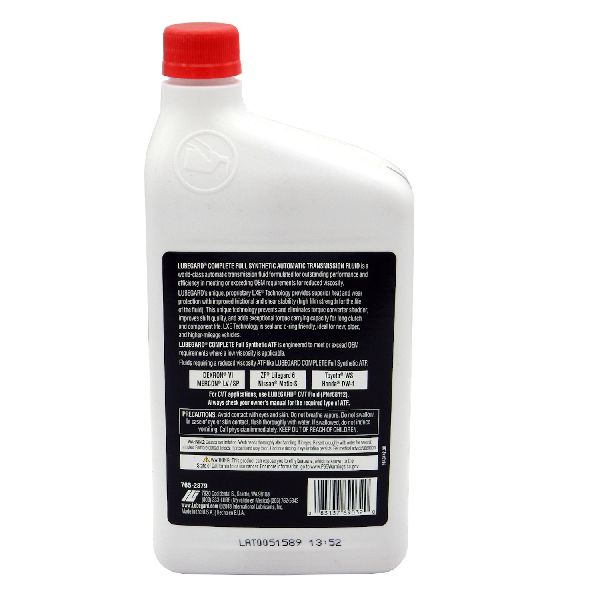
(OEM #08200-9008 (DW-1 for 6-Speed), 08200-ATF31 (Type 3.1 for 9-Speed))— Honda transmissions are highly sensitive to fluid type. Using the correct OEM fluid is critical for proper operation and longevity. A drain and fill requires 3-4 quarts.
Trusted brands: Honda Genuine
OEM price range: $15-$25 per quart
Aftermarket price range: N/A
Related Codes That Often Appear With This One
- P0700 — This is a generic Transmission Control System Malfunction code. It's an informational code that indicates the TCM has stored a specific fault, like P0747, and has requested the Check Engine Light.
- P0777 — This code is for 'Pressure Control Solenoid 'B' Stuck On'. On 6-speed models, solenoids A and B are often part of the same dual-linear solenoid pack. If debris or an electrical issue affects the assembly, both codes can appear.
- P0746 — This is for 'Pressure Control Solenoid 'A' Stuck Off'. Seeing this opposite code along with P0747 can point toward an intermittent electrical problem or a solenoid plunger that is mechanically sticking and failing in both directions.
Technical Service Bulletins (TSBs) & Recalls
- TSB 20-029: Addresses intermittent harsh or jerky upshifts on 2016-2020 Pilots with the 9-speed transmission. The corrective action is a TCM software update. It notes the TCM takes about 500 miles to adapt to driving patterns after the update.
Platform-Specific Known Issues
- For 2016-2020 Pilots with the 9-speed transmission, Honda issued TSB 20-029 for intermittent harsh shifts, which may be resolved with a TCM software update. While not directly for P0747, it shows the transmission's sensitivity to control logic.
Mechanic-Grade Diagnostic Values
- 6-Speed A/T Clutch Pressure Control Solenoid Resistance — expected: 12-25 Ohms (common spec) or 4.7-5.9 Ohms (later model spec). Note: Published specs vary widely.. Failure: A reading of infinity (OL) indicates an open coil, while a reading near zero indicates a shorted coil. Any reading significantly outside the expected range warrants replacement.
- 9-Speed (ZF 9HP) Proportional Clutch Solenoid Resistance — expected: ~5.3 Ohms. Failure: A reading significantly different from the specification suggests a faulty solenoid coil.
- 9-Speed (ZF 9HP) Proportional Dog Clutch Solenoid Resistance — expected: ~11 Ohms. Failure: A reading significantly different from the specification suggests a faulty solenoid coil.
- Solenoid Bench Test — expected: When 12V power is applied to the solenoid's terminals, a distinct 'click' should be heard AND the internal plunger/valve should be seen moving freely.. Failure: No click, or a click with no corresponding visual movement of the plunger. The plunger may be stuck due to debris.
Scan Tool Commands That Help
- Honda Diagnostic System (HDS) or equivalent professional scanner: DTC Clear & Status Monitoring — After performing a fluid change or repair, clear the code and test drive while monitoring the OBD status for P0747. If the status changes to 'FAILED', the fault has been duplicated and is still present.
- Honda Diagnostic System (HDS) or equivalent professional scanner: Pressure Switch Status Check — While diagnosing, the HDS can monitor the status of related pressure switches (e.g., 2nd, 3rd, 6th pressure switches) as you shift gears. An unexpected status or harsh engagement when a switch activates can help confirm a pressure control problem originating from the solenoid.
Wiring & Ground Locations
- 6-Speed Dual Linear Solenoid Assembly — On the front of the transmission housing. Access typically requires removing the battery and the battery tray.. This is the physical location of the component (and its connector) that needs to be inspected, tested, and potentially replaced for P0747 on 6-speed models.
- 9-Speed Solenoid 'A' — Inside the transmission, mounted on the valve body. Access requires removing the transmission pan and potentially the valve body itself.. This internal location explains the higher labor cost and complexity for repairs on 9-speed models compared to the 6-speed.
Real Owner Repair Stories
- YouTube Channel 'BundysGarage' (Honda V6 (similar J-series engine and 6-speed transmission design)) — P0747 code present.
✅ What actually fixed it The solenoid was removed and bench-tested. It made a clicking sound when 12V was applied, but visual inspection showed the internal plunger was not moving. The solenoid assembly was disassembled and thoroughly cleaned with brake cleaner, freeing the stuck plunger. The video creator emphasizes that hearing a click is not a sufficient test; visual confirmation of movement is required. - NHTSA ODI #10441025 — An owner reported that their transmission shifted erratically in and out of gear before getting stuck in first gear with no upshifts. After finding DTC P0747 stored, the owner replaced 9 quarts of ATF-DW-1 and a filter following the shop service manual procedure.
- NHTSA ODI #11681218 — A report describes a vehicle that violently jerks very badly when it is supposed to switch gears. Diagnostic codes P0741 and P0747 were present, though the owner noted that all solenoids appeared to pass activation tests when using a professional scanner.
OEM Part Supersession History
28250-R97-003→28250-R97-004— Likely an internal revision for improved reliability or manufacturing process.
Heads up: The new part number (28250-R97-004) is the correct replacement for the original.
Model Year Variations Within This Range
- 2019-2022 (9-Speed Models): For the 2019 model year refresh, Honda introduced a revised 9-speed automatic transmission with new internal hardware and new software. It was specifically retuned to be less 'shifty' and to default to starting in 2nd gear (in normal mode) for smoother launches, addressing common complaints from 2016-2018 models.
- 2016-2020 vs 2021-2022: From 2016-2020, the 6-speed automatic was standard on LX, EX, and EX-L trims, with the 9-speed on Touring and Elite. For 2021 and 2022, the 6-speed was discontinued and the ZF 9-speed became the only transmission available across all trim levels.
Diagnostic Flowchart
Other Known Issues on This Vehicle
Issues unrelated to this code that are worth knowing about as an owner of this generation:
- Fuel Injector Failure 🔴 High — Widespread on 2016-2019 models, often causing misfire codes (P0300-P0306). (Ref: TSB 20-100, 21-010; Warranty Extension to 10 years/150,000 miles.)
- Infotainment Black Screen / Popping Audio 🟠 Medium — Common on 2019-2022 models due to a faulty MOST bus network connector. (Ref: TSB 21-012; Warranty Extension to 5 years/60,000 miles.)
- Auto Idle-Stop Failure to Restart 🔴 High — Affects many 2016-2022 models, causing the engine to not restart after an auto-stop event. Can be a significant safety issue. (Ref: TSB 23-008, 23-009, 23-010.)
- Prematurely Worn Piston Rings 🟠 Medium — Caused by the Variable Cylinder Management (VCM) system, leading to oil consumption. (Ref: null)
- Connecting Rod Bearing Failure 🔴 High — Affects certain 2016, 2018, and 2019 models due to a manufacturing defect. Can lead to catastrophic engine failure. (Ref: NHTSA Recall #23V-751.)
Used vs. New Parts: Buying Guide for This Vehicle
When a used part is the smart pick: For the 6-speed transmission, the external dual-linear solenoid assembly (28250-R97-004) is a good candidate for a used part, as it is a relatively simple component and easily accessible. A used part from a reputable salvage yard can offer significant savings over a new OEM part.
Donor-vehicle mileage cap: roughly under 80000 miles for the part to have meaningful remaining life.
What to inspect on the donor part:
- Source from a vehicle with a clear history, preferably a rear or side collision, not a front-end impact.
- If possible, ask the salvage yard about the condition of the transmission fluid from the donor car.
- Visually inspect the part for physical damage, corrosion on the connectors, or signs of extreme heat.
- Ensure the part comes with a short warranty (e.g., 30-90 days) from the seller.
OEM-only on this vehicle (don't cheap out):
- Automatic Transmission Fluid (ATF): Always use Honda Genuine ATF-DW1 (6-speed) or ATF Type 3.1 (9-speed). The use of non-OEM fluid is a well-documented cause of shifting problems and solenoid failure in Honda transmissions.
Aftermarket brands forum-validated for this vehicle:
- Rostra
- WVE/NTK
- Beck/Arnley
Brands owners have reported issues with on this vehicle:
- No specific brands are consistently reported as problematic, but be wary of unbranded, deeply discounted parts from online marketplaces, as quality control can be inconsistent.
Real Owner Stories
Aggregated from forums and TSBs cited above. Mileages and costs reflect what owners reported in those sources.
2016 Honda Pilot EX-L 6-Speed
Symptoms: Owner experienced P0747 and P0777 codes simultaneously. The vehicle exhibited shifting issues that were not resolved by a standard fluid change.
What fixed it: Replacing the A/B solenoid pack (part number 28250-R97-004) and the associated gasket.
Source hint: https://www.piloteers.org/threads/p0747-and-p0777-on-2016-pilot-ex-l.172653/
2016-2020 Honda Pilot 9-Speed
Symptoms: Intermittent harsh or jerky upshifts during normal driving.
What fixed it: TCM software update as prescribed by TSB 20-029; the system required a 500-mile adaptation period following the flash.
Source hint: TSB 20-029
Related OBD-II Codes
Frequently Asked Questions
My 2016 Pilot EX-L is throwing P0747 and P0777. Is there a specific part I should look at for the 6-speed transmission?
I have a 2019 Pilot with a 9-speed transmission and it shifts harshly. Is there a software fix?
What specific transmission fluid should I use for my 2017 Pilot to avoid solenoid issues?
Could a cooling system failure cause transmission codes like P0747 on my 9-speed Pilot?
Is the P0747 code related to the fuel injector warranty extension on my 2018 Pilot?
Why is my 'D' indicator flashing along with the Check Engine Light?
Helpful Videos

We Have This Part in Stock


The information in this article is provided for general reference and educational purposes only. Vehicle specifications, procedures, and part compatibility can vary by production date, trim level, and region. Always consult your vehicle's factory service manual and verify part numbers before purchasing or performing repairs. Safety-critical components such as airbags, seat belts, and braking systems should be installed by a qualified professional.
- Honda Pilot:
- 🎬 Helpful Videos
- 🛍️ Shop This Part
- What's Unique About the 2016-2022 Honda Pilot
- Symptoms You May Notice
- Most Likely Causes
- Rare But Worth Checking
- Diagnosis Steps
- Parts You'll Likely Need
- Related Codes That Often Appear With This One
- Technical Service Bulletins (TSBs) & Recalls
- Platform-Specific Known Issues
- Mechanic-Grade Diagnostic Values
- Scan Tool Commands That Help
- Wiring & Ground Locations
- Real Owner Repair Stories
- OEM Part Supersession History
- Model Year Variations Within This Range
- Diagnostic Flowchart
- Other Known Issues on This Vehicle
- Used vs. New Parts: Buying Guide for This Vehicle
- Real Owner Stories
- 2016 Honda Pilot EX-L 6-Speed
- 2016-2020 Honda Pilot 9-Speed
- Related OBD-II Codes
- Frequently Asked Questions
- 🎟️ Get 5% Off