

P0741 on 2011-2015 Honda Civic: Torque Converter Clutch Failure Causes and Fixes
For a 2011-2015 Honda Civic, code P0741 usually points to low or degraded transmission fluid, a faulty torque converter clutch (TCC) solenoid, or a failing torque converter. Start by checking the fluid; a fluid change with genuine Honda fluid is the cheapest first step. If that doesn't work, the TCC solenoid is the next likely part to replace. On CVT models (2014-2015), a transmission software update may also be required to address related judder symptoms.
- The 2011-2015 Civic range uses both 5-speed automatic and CVT transmissions; identify which one you have before buying parts or fluid.
- Always start diagnosis with the simplest and cheapest fix: checking and changing the transmission fluid with genuine Honda fluid.
- The TCC solenoid is a common point of failure and is often accessible for DIY replacement on the outside of the transmission.
- Do not immediately agree to a full transmission replacement, as the problem is often a much less expensive component.
- Driving for extended periods with this code can cause severe, irreversible damage to your transmission.
What's Unique About the 2011-2015 Honda Civic

The 2011-2013 models use a traditional 5-speed automatic, while the 2014-2015 models switched to a Continuously Variable Transmission (CVT). While the code's meaning is the same for both, the specific components, fluids (ATF-DW1 for the 5-speed vs. HCF-2 for the CVT), and common failure points can differ. For both types, Honda transmissions are known to be very sensitive to fluid condition and type. The TCC solenoid on the 5-speed is a distinct, externally accessible part, while on the CVT, the solenoid functions are integrated into the valve body, making it more complex to service.
Generation note: Yes, this range covers two Civic generations and three distinct transmission setups. The 2011 model is the last year of the 8th generation with a 5-speed automatic. The 9th generation includes the 2012-2013 models (also with a 5-speed automatic) and the 2014-2015 models, which introduced a CVT. Diagnostic steps and parts will vary, especially between the 5-speed and the CVT. The TCC solenoid for the 5-speed is a common replacement part, while issues on the CVT are more often linked to fluid condition and software.
Symptoms You May Notice
- Check Engine Light is on
- Flashing 'D' (Drive) indicator light on the dashboard
- Vehicle may feel like it's shuddering or vibrating at highway speeds (45-65 mph) under light throttle.
- Engine RPMs are higher than usual when cruising on the highway, needle may 'dance' up and down.
- Decreased fuel economy.
- Transmission may feel like it's slipping or shifting harshly.
- Vehicle struggles to accelerate or feels sluggish.
- Replacing the entire transmission immediately. Many shops may quote a full transmission replacement when the issue could be resolved with a much cheaper fluid change or solenoid replacement.
- Replacing the torque converter when the actual problem is a less expensive TCC solenoid or dirty fluid.
Most Likely Causes

- Low, incorrect, or degraded transmission fluid 🔴 High Probability Honda transmissions are notoriously sensitive to fluid level and condition. Old fluid loses its hydraulic properties and friction modifiers, and debris can clog solenoid screens and passages. Using non-OEM fluid is a common trigger for this code.
How to confirm: Check the transmission fluid dipstick (if equipped) for level and color. The fluid should be red and translucent, not brown, black, or smell burnt. For CVTs, the procedure may be more complex. A common DIY fix is a '3x drain and fill' to replace most of the fluid.
Typical fix: Perform a transmission fluid drain-and-fill with the correct genuine OEM fluid (Honda ATF-DW1, P/N 08200-9008 for 5-speed; Honda HCF-2, P/N 08200-HCF2 for CVT). Multiple drain-and-fills are often recommended.
Est. part cost: $40-$120 - Faulty Torque Converter Clutch (TCC) Solenoid 🟡 Medium Probability The solenoid is a common failure point. It can become clogged with debris from old fluid or fail electrically over time, preventing it from properly directing fluid to engage the clutch.
How to confirm: Test the solenoid's resistance with a multimeter; it should be within the manufacturer's specification (typically 12-25 ohms for many Hondas). You can also apply 12V power to see if it makes an audible click. Inspect the solenoid's screens for metallic debris.
Typical fix: Replace the TCC solenoid and its gasket/O-rings. On 2011-2013 Civics with the 5-speed automatic, this is typically the Linear Solenoid B, Honda P/N 28260-R90-004, located externally on the transmission case. For CVT models, the solenoid is often integral to the valve body and not sold separately.
Est. part cost: $50-$150 - Failed Torque Converter ⚪ Low Probability While less common than fluid or solenoid issues, the internal lock-up clutch within the torque converter can wear out and fail completely. This is a known issue across many Honda/Acura models, with some receiving warranty extensions for this specific failure.
How to confirm: This is typically diagnosed by exclusion. If the fluid is clean, the fluid level is correct, and the TCC solenoid tests good, the torque converter itself is the likely culprit. A professional shop can use a scan tool to monitor TCC slip data to confirm.
Typical fix: Replace the torque converter. This is a major repair that requires removing the entire transmission from the vehicle.
Est. part cost: $200-$700
Rare But Worth Checking
- Clogged internal transmission fluid passages: If the transmission fluid is extremely dirty or contains a lot of debris, it can clog the small passages in the valve body, preventing the TCC from engaging even with a new solenoid. This often requires a valve body replacement or a full transmission rebuild.
- Damaged wiring or faulty PCM: Less common, but the wiring to the TCC solenoid could be damaged, or the Powertrain Control Module (PCM) could be failing to send the correct signal. This should be checked after confirming the solenoid itself is functional.
- Transmission software issue (especially CVT): For 2014-2015 CVT models, a related issue of transmission judder is addressed by Honda TSB 15-086, which calls for a software update and a fluid change. While this TSB doesn't explicitly name P0741, the underlying control logic for the TCC is affected and this procedure may resolve the code.
Diagnosis Steps
- Check the transmission fluid level and condition. If it's low, dark, or smells burnt, proceed with a fluid change.
- Perform a drain-and-fill (or three, for a more complete flush) using only genuine Honda ATF-DW1 (for 5-speed automatics) or HCF-2 (for CVTs). Do not use universal fluid.
- For 2014-2015 CVT models, check with a dealer if TSB 15-086 (software update for judder) applies and has been performed.
- Clear the code and test drive the vehicle at highway speeds (e.g., 60 mph for at least 20 seconds) to see if the code returns.
- If the code returns, locate and test the Torque Converter Clutch (TCC) solenoid. On 5-speeds, it's external. Check its resistance with a multimeter (should be ~12-25 ohms).
- Apply 12V directly to the solenoid to listen for a distinct click, indicating mechanical operation.
- Inspect the solenoid's filter screens for any metal shavings or sludge, which would indicate a more serious internal transmission problem.
- If the solenoid fails testing or is clogged, replace it. For the 5-speed, the common part is Honda P/N 28260-R90-004.
- If the fluid, solenoid, and wiring are all confirmed to be good, the issue is likely an internal failure of the torque converter or valve body, which requires professional diagnosis and repair.
Parts You'll Likely Need

- Torque Converter Clutch (TCC) Solenoid
(OEM #28260-R90-004 (For 5-Speed Automatic))— This solenoid controls the hydraulic pressure for the lock-up clutch and is a very common failure point on the 5-speed models, either electrically or by getting clogged with debris.
Trusted brands: Honda (OEM), Standard Motor Products (SMP)
OEM price range: $100-$200
Aftermarket price range: $50-$120 - Honda Genuine Transmission Fluid
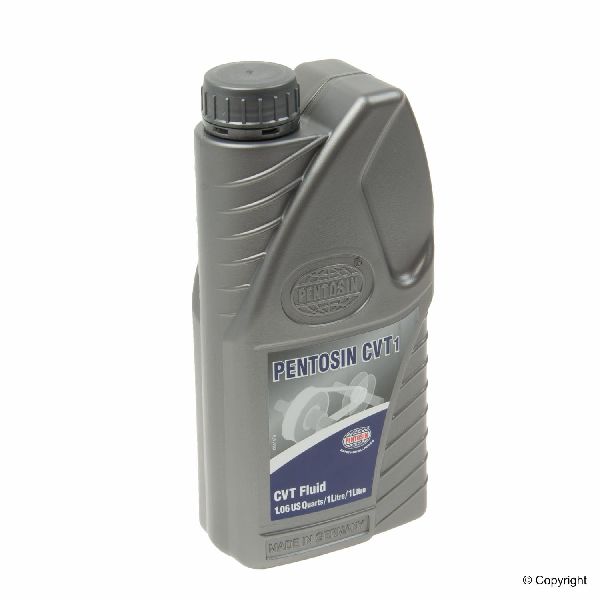
(OEM #08200-9008 (ATF-DW1), 08200-HCF2 (HCF-2))— Honda transmissions are extremely sensitive to fluid type. Using the correct OEM fluid is critical for proper operation and is the first and most important step in troubleshooting.
Trusted brands: Honda
OEM price range: $10-$15 per quart - Torque Converter — If fluid and solenoid replacement do not fix the issue, the internal lock-up clutch inside the torque converter has likely failed. This is the most expensive and labor-intensive repair for this code.
Trusted brands: Honda (OEM), Luk
OEM price range: $400-$700
Aftermarket price range: $200-$400
Related Codes That Often Appear With This One
- P0700 — P0700 is a generic code that simply means the Transmission Control Module (TCM) has stored a fault code. It's an informational code that tells you to check for more specific transmission codes, like P0741.
Technical Service Bulletins (TSBs) & Recalls
- Honda TSB 15-086: Addresses a 'surge, vibration, or judder' on 2012-14 CR-Vs (and applicable to 2014-15 Civics with CVT) under light acceleration. The fix is to update the A/T software and replace the transmission fluid. This directly relates to TCC lock-up behavior.
- Acura TSB 23-025: While for a 2017-18 RDX, it's relevant as it extends the warranty for the torque converter due to P0741 caused by a crack in the lock-up piston. This shows a history of this specific failure mode in Honda-manufactured torque converters.
Platform-Specific Known Issues
- For 2014-2015 CVT models, a transmission judder or vibration under light acceleration is a widely reported symptom that can accompany P0741. Honda addressed this with TSB 15-086, involving a software update and fluid change, which may also resolve the P0741 code.
- NHTSA ODI #11701650 describes a similar scenario in other Honda models where a transmission flush was performed but P0741 persisted, indicating a torque converter issue that may be covered by extended warranties in some vehicle lines.
Mechanic-Grade Diagnostic Values

- TCC Solenoid (Linear Solenoid B) Resistance — expected: 12 - 25 Ohms at 68°F (20°C). Failure: A reading outside this range (open circuit or short) indicates a failed solenoid coil.
- TCC Solenoid Connector Voltage (Key On, Engine Off) — expected: A brief 12V pulse when commanded by a scan tool.. Failure: No voltage when commanded suggests a wiring or PCM driver issue. Constant voltage could indicate a short.
- Live Data: TCC Slip RPM — expected: Should drop to near 0 RPM when the TCC is commanded to lock at cruising speed.. Failure: If the slip RPM remains high (e.g., >100 RPM) when the scan tool shows the TCC is commanded ON, it confirms a mechanical or hydraulic failure of the lock-up system.
Scan Tool Commands That Help
- Honda Diagnostic System (HDS): Lockup Solenoid Test (in Miscellaneous Test Menu) — This bidirectional command allows the technician to manually activate the TCC solenoid with the engine off. A distinct 'click' should be heard from the solenoid, confirming the coil and mechanical plunger are functional. No click points to a failed solenoid.
Wiring & Ground Locations
- TCC Solenoid Connector (5-Speed AT) — External on the front of the transmission case, typically with a black or brown electrical connector.. This is the primary connection point for testing the solenoid's resistance and checking for voltage from the PCM. Pin 2 is the 12V+ supply from the PCM, and Pin 1 is the ground control.
- G101 Ground — Bolted to the thermostat housing on the engine block.. This is a primary ground point for the ECU/PCM and its sensors. A corroded or loose G101 ground can cause a wide range of erratic electronic issues, including incorrect transmission control signals, potentially triggering a P0741.
- Main Transmission Ground Strap — A thick ground cable running from a bolt on the transmission case directly to the chassis, often near the battery.. This is the main ground path for the entire transmission assembly. Poor connection here can cause shifting problems and electrical noise that may interfere with solenoid operation.
Real Owner Repair Stories
- YouTube Channel 'JM Auto Repair' (Honda with 5-speed automatic, similar to 2011-2013 Civic) — P0741 and P0700 codes, hard shifting, and shift delays.
❌ Tried (didn't work) The video focuses on diagnosis rather than failed attempts.
✅ What actually fixed it The video demonstrates the proper diagnostic procedure: testing the TCC solenoid resistance (measured 16 ohms, within the 12-25 ohm spec) and performing a 12V click test, which it passed. The conclusion was that since the solenoid and its wiring tested good, the fault was likely internal to the transmission (valve body or torque converter). - YouTube Channel 'DIY car repair' (2015 Honda Civic (CVT), 85,000 miles) — Check Engine Light with P0741, 'Check emission system' and 'Check transmission' warnings on the dash.
❌ Tried (didn't work) Multiple auto shops quoted $7,000+ for a transmission replacement., Adding a catalytic converter cleaner., Adding LubeGard CVT protectant., Clearing the code with a cheap OBD2 reader (code would return after 5-10 minutes of driving).
✅ What actually fixed it The owner, an elderly lady, refused the expensive replacement. The video documents her unsuccessful attempts with additives and highlights the common misdiagnosis of immediate transmission replacement. While a final repair part is not named, the failure of simple fixes strongly implies the root cause was a more significant internal CVT component like the valve body or torque converter itself, which is a common scenario for this code on the CVT models. - NHTSA ODI #11162829 — An owner reported that their diagnostic system initially failed to register a problem, but an inspection eventually found the transmission pressure valve loose on the transmission, leading to a P0741 code and a recommendation for a full transmission replacement.
- NHTSA ODI #11681218 (Cross-model reference) — An owner described a vehicle that violently jerks when switching gears with codes P0741 and P0747; despite the symptoms, all solenoids passed activation tests with a professional scanner, suggesting an internal mechanical failure.
"I Checked Everything" — The Actual Cause
- While not a smoke test issue, a common pattern for P0741 is when the fluid is clean, the wiring is intact, and the TCC solenoid tests perfectly for resistance and activation (passes the 'click test'). In these cases, the root cause is often an internal hydraulic leak within the torque converter itself. Several Honda TSBs for other models point to a manufacturing defect where the lock-up piston develops a crack, causing a pressure bleed-down that prevents the clutch from holding, even though all external electrical components are working perfectly. NHTSA ODI #10846060 notes a case where a solenoid was replaced and the code was cleared, only for the issue to return after 50 miles of driving, further supporting the possibility of internal mechanical failure.
Documented NHTSA Reports
- NHTSA ODI #11702634 (Cross-model reference) describes a vehicle that stopped moving completely and would only move in reverse, with diagnostic results showing P0741 alongside P0780 (shift malfunction) and P0746 (pressure control solenoid).
OEM Part Supersession History
N/A→28260-R90-004— This is the established part number for the TCC Solenoid ('Linear Solenoid B') on the 2011-2013 5-speed automatic transmission.
Heads up: It is critical not to confuse this with the 'Linear Solenoid A', part number 28250-R90-003. They look similar and are often mounted near each other, but control different functions. Replacing the wrong solenoid will not fix the P0741 code.
Model Year Variations Within This Range
- 2011-2013 (5-Speed Automatic): Diagnosis heavily focuses on the externally mounted, single TCC solenoid (P/N 28260-R90-004). This part is a common failure point and is relatively easy to access and replace after removing the driver's side wheel.
- 2014-2015 (CVT): The TCC solenoid function is integrated into the valve body and is not sold as a separate, easily replaceable part. Diagnosis for P0741 on these models prioritizes fluid condition (HCF-2 fluid) and checking if TSB 15-086 (software update for judder) has been performed, as the control logic is related. If these do not solve the issue, the next step is often a costly valve body or full transmission replacement.
Diagnostic Flowchart
Used vs. New Parts: Buying Guide for This Vehicle
When a used part is the smart pick: For the 2011-2013 5-speed automatic models, purchasing a used OEM TCC solenoid (P/N 28260-R90-004) from a reputable salvage yard is a reasonable cost-saving measure. The part is external and easy to swap if the used one is faulty.
Donor-vehicle mileage cap: roughly under 80000 miles for the part to have meaningful remaining life.
What to inspect on the donor part:
- Source from a vehicle that was in a rear-end collision, suggesting the engine and transmission were likely in good running order.
- Inspect the electrical connector for corrosion or damage.
- Check the solenoid screens for heavy metallic debris. A fine gray paste is normal wear, but large flakes indicate the donor transmission was failing.
- If possible, test the resistance with a multimeter before purchase; it should be between 12-25 ohms.
OEM-only on this vehicle (don't cheap out):
- Transmission Fluid (Honda ATF-DW1 or HCF-2). Using non-OEM fluid is a leading cause of transmission problems in Hondas.
- Torque Converter. Due to the high labor cost of replacement, the risk of a used torque converter failing shortly after installation is too high. A new or professionally remanufactured unit is strongly recommended.
- CVT Valve Body. This is a complex, precision component. A used one carries a high risk of having the same or other issues.
Aftermarket brands forum-validated for this vehicle:
- Standard Motor Products (SMP)
Brands owners have reported issues with on this vehicle:
- Unbranded, 'white-box' solenoids from online marketplaces are a gamble. They often have incorrect coil resistance or use inferior seals, leading to premature failure.
Real Owner Stories
Aggregated from forums and TSBs cited above. Mileages and costs reflect what owners reported in those sources.
2015 Honda Civic — 85000 miles
Symptoms: Check engine light came on with dashboard warnings for 'Check emission system' and 'Check transmission.' The car was driving smoothly despite the P0741 code.
What fixed it: The owner was quoted $7,000-$10,000 for a transmission replacement. As a temporary workaround, they found that clearing the code with an OBD2 reader and using the 'S' (Sport) drive mode would bypass the issue.
Cost: $7,000-$10,000
Source hint: youtube_comment - Alex Lee
2011-2013 Honda Civic (5-speed automatic)
Symptoms: Check Engine Light on with code P0741, possibly accompanied by shuddering at highway speeds or higher than normal RPMs.
What fixed it: A common successful repair path is performing three consecutive drain-and-fills with Honda ATF-DW1. If that fails, replacing the TCC solenoid (P/N 28260-R90-004) is the next step that often resolves the issue.
Source hint: 9thgencivic.com / 8thcivic.com
2014 Honda Civic CVT
Symptoms: The P0741 code was present.
What fixed it: A transmission fluid and filter change did not resolve the code. The owner was next investigating the TCC solenoid, highlighting a common diagnostic path.
Source hint: Reddit r/AskMechanics - '2014 Civic CVT Transmission. Where is the torque converter lockup solenoid located?'
Acura ILX (related model)
Symptoms: Code P0741 appeared immediately after performing a transmission fluid drain-and-fill.
What fixed it: The owner was troubleshooting fluid levels, highlighting how sensitive the system is and how routine maintenance can trigger the code if not performed perfectly.
Source hint: AcuraZine - 'P0741 - Clutch Converter Clutch Circuit Performance or Stuck Off'
Related OBD-II Codes
Frequently Asked Questions
What is the first and most common fix I should try for P0741 on my Civic?
My 2014 Civic with a CVT is shuddering at highway speeds. Is this related to the P0741 code?
I've determined the TCC solenoid is bad on my 2012 Civic. What is the correct part number to buy?
Can I use a universal or multi-vehicle transmission fluid instead of the expensive Honda fluid?
How can I test the TCC solenoid myself before replacing it?
My fluid is fresh and the solenoid tests good, but the P0741 code keeps coming back. What's the problem?
Is this P0741 problem common on other vehicles besides the Civic?
We Have This Part in Stock


The information in this article is provided for general reference and educational purposes only. Vehicle specifications, procedures, and part compatibility can vary by production date, trim level, and region. Always consult your vehicle's factory service manual and verify part numbers before purchasing or performing repairs. Safety-critical components such as airbags, seat belts, and braking systems should be installed by a qualified professional.
- Honda Civic:
- 🛍️ Shop This Part
- What's Unique About the 2011-2015 Honda Civic
- Symptoms You May Notice
- Most Likely Causes
- Rare But Worth Checking
- Diagnosis Steps
- Parts You'll Likely Need
- Related Codes That Often Appear With This One
- Technical Service Bulletins (TSBs) & Recalls
- Platform-Specific Known Issues
- Mechanic-Grade Diagnostic Values
- Scan Tool Commands That Help
- Wiring & Ground Locations
- Real Owner Repair Stories
- "I Checked Everything" — The Actual Cause
- Documented NHTSA Reports
- OEM Part Supersession History
- Model Year Variations Within This Range
- Diagnostic Flowchart
- Used vs. New Parts: Buying Guide for This Vehicle
- Real Owner Stories
- 2015 Honda Civic — 85000 miles
- 2011-2013 Honda Civic (5-speed automatic)
- 2014 Honda Civic CVT
- Acura ILX (related model)
- Related OBD-II Codes
- Frequently Asked Questions
- 🎟️ Get 5% Off