

P0734 on 2020-2023 Ford Explorer: Gear 4 Incorrect Ratio Causes and Fixes
This code indicates a 'Gear 4 Incorrect Ratio' in the 10-speed automatic transmission. The most likely cause on this specific Explorer is an internal transmission issue, often related to a faulty main valve body or a failing CDF clutch drum, which are known problems addressed by multiple Ford Technical Service Bulletins (TSBs). TSB 23-2250 is the latest comprehensive bulletin covering this. This is a serious issue requiring professional diagnosis and is not a simple DIY fix, often culminating in
- P0734 on a 2020-2023 Explorer is a serious code that points to an internal transmission problem, not just a bad sensor.
- The most common causes are a faulty main valve body or a failed CDF clutch drum, both of which are known issues acknowledged by Ford in service bulletins.
- Do not continue to drive the vehicle. This can cause complete transmission failure.
- This repair is not suitable for most DIY mechanics and should be taken to a qualified transmission shop or dealership.
- Ensure the repair shop is aware of the relevant TSBs and uses the latest revised parts from Ford to prevent the issue from recurring.
What's Unique About the 2020-2023 Ford EXPLORER
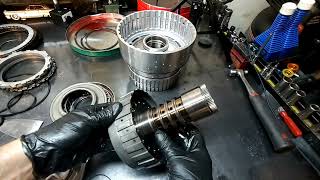
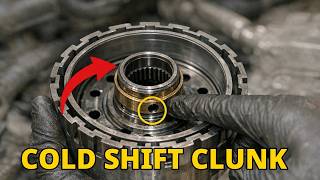
The 2020-2023 Ford Explorer uses a 10-speed automatic transmission (10R60/10R80) that was co-developed with GM. This transmission is known to have specific failure points that can trigger gear ratio codes like P0734. 🎬 Watch: Understanding common causes and fixes for the P0734 code. Ford has issued multiple Technical Service Bulletins (TSBs), with the most current being 23-2250, acknowledging issues like sticking valves in the main control body and, most notably, a design flaw with the 'CDF' (Clutch F) drum. An internal bushing/sleeve in the original drum can slide out of position, uncovering oil passages and causing a major hydraulic leak that prevents clutches from engaging properly. This known mechanical flaw makes P0734 on this platform a much more specific and serious concern than a generic sensor failure.
Diagnostic Flowchart
Tap your situation to follow the diagnostic path that matches what you're seeing on this vehicle.
Symptoms You May Notice
- Harsh or delayed shifting, particularly around 4th gear.
- Vehicle may enter 'limp mode,' limiting power and available gears.
- Transmission slipping, where engine RPMs increase but vehicle speed does not.
- Illuminated Malfunction Indicator Lamp (Check Engine Light).
- Clunking or jerky shifts, sometimes feeling like being rear-ended.
- Reduced fuel economy because the transmission cannot use its higher gears efficiently.
- Erratic shifting, such as floating between gears or attempting to downshift to a very low gear at highway speeds.
- Lugging sensation as if the transmission is in too high of a gear at city speeds.
- Replacing only the input or output speed sensors. While these sensors provide the data, they are rarely the cause of the problem on this platform. The issue is typically the mechanical or hydraulic response to the computer's commands, not the data itself.
Most Likely Causes
- Internal Failure of the CDF Clutch Drum 🔴 High Probability A bushing/sleeve inside the CDF drum is known to slide out of position, uncovering oil passages and causing a major hydraulic leak. This prevents clutches from engaging properly. Ford has released updated parts to correct this design flaw and acknowledged the issue in TSBs 22-2428 and 23-2250.
How to confirm: This requires transmission disassembly to visually inspect the CDF drum for a migrated sleeve. You can see the exposed oil hole when the sleeve has moved.
Typical fix: The transmission must be removed and partially disassembled to replace the faulty CDF drum with the updated part (Part # JL3Z-7H351-B is the current revision). This is a labor-intensive job.
Est. part cost: $150-$300 for the drum, plus seals and gaskets. - Sticking Valves in Main Control Valve Body 🔴 High Probability This is a widely documented issue for the 10R60/10R80 transmission, directly cited in Ford TSBs like 22-2102 and the superseding 23-2250 for the 2020 Explorer.
How to confirm: A technician can use a high-level scan tool (like Ford's FDRS) to run a 'Main Control Break In' routine. If the issue persists after the software routine, the valve body is the likely culprit.
Typical fix: The main control valve body must be removed, disassembled, cleaned, inspected for sticking valves, and reinstalled. In many cases, it may need to be replaced entirely.
Est. part cost: $500-$1200 - Low or Contaminated Transmission Fluid 🟡 Medium Probability
How to confirm: Check the transmission fluid level and condition. The fluid should be bright red and not have a burnt smell. Note: This transmission does not have a traditional dipstick, requiring a specific lift and temperature procedure to check the fluid level from underneath the vehicle.
Typical fix: Top off the fluid if low and inspect for leaks. If the fluid is dark, burnt, or contains metal shavings, a simple fluid change is not enough; it indicates a more severe internal problem (like the CDF drum failure) that must be addressed.
Est. part cost: $150-$300 for a fluid and filter service. - Failed Shift Solenoid ⚪ Low Probability
How to confirm: A diagnostic scan tool can command specific solenoids to activate and monitor the response. Resistance checks can also be performed on the solenoid's electrical circuit.
Typical fix: Replace the faulty shift solenoid. This is located inside the transmission oil pan, attached to the valve body.
Est. part cost: $50-$150
Rare But Worth Checking
- Faulty Transmission Control Module (TCM) or Powertrain Control Module (PCM): While rare, software glitches or hardware failure in the control module can cause incorrect commands or readings. TSBs often involve software updates as a first step.
- Damaged Wiring Harness: Damage to the wiring between the TCM and the transmission can interrupt signals to solenoids or from speed sensors, leading to ratio codes.
Diagnosis Steps
- Check the transmission fluid level and condition. This is the first and most basic step, though it requires a specific procedure on a lift.
- Use a professional-grade OBD-II scanner to check for any other transmission-related codes. Note any codes related to other gear ratios or clutch apply times, as this points towards a systemic issue.
- Review the latest relevant Technical Service Bulletins (TSBs) for your vehicle's VIN. TSB 23-2250 is the most current and comprehensive bulletin for these issues.
- If indicated by a TSB, perform the PCM - Transmission Accelerated Main Control Break-In routine using a tool like Ford's FDRS.
- If shift quality issues persist, inspect the main control valve body for sticking valves or contamination.
- If the valve body is clean and functional, the next and most probable step is to inspect for the common CDF drum failure, which requires transmission removal and disassembly.
Parts You'll Likely Need
- CDF Clutch Drum Assembly
(OEM #JL3Z-7H351-B)— The original drum has a design flaw where a sleeve can migrate, causing hydraulic leaks and multiple gear ratio faults. This is a common failure point requiring an updated part. The -B version is the updated part that supersedes -A and HL3Z-7H351-A.
Trusted brands: Motorcraft
OEM price range: $150-$300 - Main Control Valve Body — Sticking valves are a primary cause of harsh and delayed shifts, as identified by Ford in multiple TSBs for this transmission.
Trusted brands: Motorcraft
OEM price range: $700-$1200
Aftermarket price range: $500-$900 - Automatic Transmission Fluid
(OEM #XT-12-QULV)— Any internal transmission repair will require draining and refilling the system with the correct fluid (Motorcraft MERCON ULV).
Trusted brands: Motorcraft
OEM price range: $10-$15 per quart
Aftermarket price range: $8-$12 per quart
Related Codes That Often Appear With This One
- P0731, P0732, P0733, P0735 — These are incorrect gear ratio codes for 1st, 2nd, 3rd, and 5th gear, respectively. They often appear with P0734 because the underlying hydraulic or mechanical issue (like a bad valve body or CDF drum) affects multiple gear circuits.
- P2700-P2705 — These codes relate to transmission friction element (clutch) apply time range/performance. They point directly to a hydraulic or mechanical failure preventing a clutch from engaging correctly, which is the root cause of the incorrect gear ratio.
Technical Service Bulletins (TSBs) & Recalls
- TSB 26-2046
- TSB 23-2250
- TSB 22-2428
- TSB 22-2102
- TSB 21-2434
Platform-Specific Known Issues
- TSB 23-2250: This is the most current bulletin, superseding 22-2428, 22-2102, and others. It covers a wide range of Ford/Lincoln vehicles with the 10-speed transmission, including the 2020-2023 Explorer. It explicitly lists software issues, sticking valves in the main control, and 'axial movement of the CDF clutch cylinder sleeve' as the primary causes for harsh shifts and numerous gear ratio/clutch codes, including P0734.
- TSB 22-2428: This bulletin, now superseded, was significant for being one of the first to officially add the CDF clutch cylinder sleeve movement as a potential cause, confirming the widespread nature of this mechanical flaw beyond just valve body issues.
- TSB 22-2102: Specifically calls out the 2020 Explorer for harsh/delayed shifts with code P0734 due to sticking valves in the main control valve body. The prescribed fix is to perform a software break-in routine and, if that fails, overhaul the valve body.
Mechanic-Grade Diagnostic Values
- All 10R80 Solenoid Resistance — expected: 5.0 - 5.4 Ohms at 20°C (68°F). Failure: A reading outside this range indicates a faulty solenoid coil.
- Line Pressure at Idle (in any range) — expected: 72-75 psi (real-world observation). Failure: While some charts may specify 90 psi, field data suggests 72-75 psi is normal. Significant deviation could indicate pump or valve body issues.
- Shift Solenoid (A-F) Signal — expected: Complex Pulse-Width Modulated (PWM) signal with changing frequency (Hz), not just duty cycle. Requires an oscilloscope to view.. Failure: Using a standard voltmeter is ineffective. A flat line or absent signal on a scope indicates a wiring or driver fault.
- Line Pressure Control (LPC) Solenoid Current — expected: Inversely proportional; 50 mA (low current) = high pressure, 850 mA (high current) = low pressure.. Failure: Current not matching commanded state or being out of range indicates a solenoid or driver issue.
Hidden / Shadow Codes Worth Checking
- P07F7: Incorrect 10th Gear Ratio. When seen with P0734 (Incorrect 4th Gear Ratio), it strongly suggests a systemic hydraulic leak or mechanical failure affecting multiple clutch packs, such as the CDF drum or a damaged sungear shaft seal, rather than an isolated issue with the 4th gear circuit. (see via Standard professional-grade OBD-II scanner.)
Scan Tool Commands That Help
- Ford IDS/FDRS: Solenoid Body Strategy Programming — This is mandatory when the valve body, transmission assembly, or TCM/PCM is replaced. The 12-digit solenoid body ID and 13-digit strategy number, found etched on the valve body, must be programmed into the control module to ensure correct solenoid operation and shift quality.
- Ford IDS/FDRS: PCM - Transmission Accelerated Main Control Break-In — This is a software routine used as a first step when diagnosing harsh or delayed shifts. It attempts to quickly relearn valve body and clutch characteristics. If this fails to resolve the issue, a mechanical problem with the valve body is likely.
- Ford IDS/FDRS or equivalent: Clutch Adaptation Relearn / Adaptive Learning Drive Cycle — After any significant transmission repair, including fluid changes, part replacement, or software updates, the adaptive learning values must be cleared and a specific drive cycle must be performed to allow the TCM to relearn clutch fill times and pressures for smooth shifting.
Wiring & Ground Locations
- C168A — Main electrical connector on the transmission case.. This is the primary interface between the TCM and all transmission sensors and solenoids. Checking for pin fitment, corrosion, or damage here is a key step in diagnosing electrical faults.
- GD123 — Ground point located on the front left fender.. This is a chassis ground point. While not directly for the TCM, poor grounds in the engine bay can introduce electrical noise and voltage issues that can affect powertrain module behavior.
- GD115 — Ground point located on the cross-car beam.. A key chassis ground point. Intermittent or poor ground connections can cause a wide range of difficult-to-diagnose electronic issues, including erratic transmission behavior.
- TCCM (Transfer Case Control Module) — Underneath the driver's seat, requiring seat removal and pulling back the carpet to access.. While not the primary TCM for the transmission, a fault or communication loss with this module can impact overall drivetrain strategy and cause related codes or limp mode conditions. Its location under the carpet makes it susceptible to water damage.
Real Owner Repair Stories
- YouTube channel 'Tier One Transmissions' (Ford Raptor with 10R80 Transmission) — Harsh 3-4 shift, engagement issues.
❌ Tried (didn't work) The video is a teardown analysis, not a story of failed attempts.
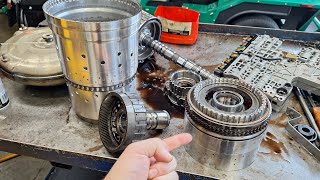
✅ What actually fixed it The root cause was identified as a dual failure: the CDF drum bushing had migrated by approximately a 1/16th of an inch, and the F-clutches had physically worn grooves into the outer drum shell. The fix is to replace the CDF drum with the updated version and replace the damaged outer shell and clutches. - Reddit user Shoplizard88 (2018 F-150 Platinum with 10R80) — Unspecified symptoms leading to a CDF drum issue diagnosis.
✅ What actually fixed it A dealer rebuilt the transmission, which included a new CDF drum. The total labor time charged was 22 hours, and the repair took one week from diagnosis to completion.
OEM Part Supersession History
HL3Z-7H351-A, JL3Z-7H351-A→JL3Z-7H351-B— The original CDF drum design allowed an internal bushing to 'walk' or migrate out of position, uncovering hydraulic passages and causing pressure loss. The updated JL3Z-7H351-B part features a machined retention lip that physically prevents the bushing from moving, providing a permanent fix.HL3Z-7A100-A→HL3Z-7A100-B— Valve body part numbers are frequently updated to reflect internal improvements to valves, solenoids, or casting to address issues like sticking valves that cause harsh shifts.
Heads up: When replacing a valve body, the Solenoid Body Strategy ID and number must be programmed into the TCM for the transmission to function correctly.
Model Year Variations Within This Range
- 2020-2023: Transmission failures related to the CDF drum and stock reaction shell are noted to be common on 10R80 units built before the 2024 model year. This suggests that later models may have incorporated the updated parts from the factory, reducing the failure rate.
Helpful Videos



Used OEM Parts in Stock


New Aftermarket Parts Available


The information in this article is provided for general reference and educational purposes only. Vehicle specifications, procedures, and part compatibility can vary by production date, trim level, and region. Always consult your vehicle's factory service manual and verify part numbers before purchasing or performing repairs. Safety-critical components such as airbags, seat belts, and braking systems should be installed by a qualified professional.
- Ford EXPLORER:
- 🎬 Helpful Videos
- 🛍️ Shop This Part
- What's Unique About the 2020-2023 Ford EXPLORER
- Diagnostic Flowchart
- Symptoms You May Notice
- Most Likely Causes
- Rare But Worth Checking
- Diagnosis Steps
- Parts You'll Likely Need
- Related Codes That Often Appear With This One
- Technical Service Bulletins (TSBs) & Recalls
- Platform-Specific Known Issues
- Mechanic-Grade Diagnostic Values
- Hidden / Shadow Codes Worth Checking
- Scan Tool Commands That Help
- Wiring & Ground Locations
- Real Owner Repair Stories
- OEM Part Supersession History
- Model Year Variations Within This Range
- 🎟️ Get 5% Off