

P0733 on 2011-2016 Hyundai Elantra: Gear 3 Incorrect Ratio Causes and Fixes
On a 2011-2016 Elantra, P0733 often points to a faulty Transmission Fluid Temperature (TFT) sensor, which is part of the internal wiring harness. Low or dirty fluid is also a common cause. Expect to pay $500-$800 for a professional to replace the sensor/harness, which often fixes the issue. Be aware that internal failure requiring a transmission replacement for $4000+ is also possible if the initial problem is ignored.
- P0733 on your Elantra means the transmission is slipping in third gear. Stop driving immediately to prevent further damage.
- The most likely causes are low/dirty fluid or a failed Transmission Fluid Temperature (TFT) sensor, which is a known issue on this model.
- This is not a simple fix. The transmission is sealed, so even checking the fluid is a complex task. Professional diagnosis is strongly recommended.
- A relatively inexpensive TFT sensor replacement ($70-$150 part) often fixes the problem, but if not, the issue could be internal, potentially requiring a costly transmission replacement as outlined in a Hyundai TSB.
What's Unique About the 2011-2016 Hyundai Elantra
The 2011-2016 Elantra uses a 6-speed automatic transmission (A6GF1) that is known for a specific issue causing this code. A very common point of failure is the Transmission Fluid Temperature (TFT) sensor. This sensor is integrated into the internal transmission wiring harness. When it fails, it sends incorrect data to the TCM (often triggering a P0711 code as well), 🎬 See how a faulty TFT sensor triggers these specific codes. which then commands incorrect hydraulic pressures, leading to slipping and incorrect ratio codes like P0733. Hyundai acknowledged this issue in TSB 14-AT-010, noting that from March 2013, the sensor is permanently integrated with the harness and not sold separately, making harness replacement the only fix. Many owners have successfully resolved this code by replacing this internal harness, which is a moderately involved but manageable repair.
Generation note: The 2011-2016 year range covers the fifth-generation Hyundai Elantra, known as the MD (2011-2013) and UD (2014-2016 facelift). The underlying A6GF1 6-speed automatic transmission and its common issues, including the P0733 fault stemming from the TFT sensor, are consistent across this entire generation and are also shared with many other Hyundai and Kia models.
Symptoms You May Notice
- Check Engine Light is on
- Transmission slipping or flaring (engine revs up between shifts), especially during the 2-3 shift
- Harsh or delayed shifting, particularly involving 3rd gear
- Vehicle enters 'limp mode' (fail-safe mode), often stuck in 3rd or 4th gear
- Inability to shift into or out of 3rd gear
- Poor or hesitant acceleration
- Reduced fuel economy
- Transmission warning light may be illuminated on the dash
- Replacing the entire transmission without first checking the fluid and replacing the inexpensive but failure-prone Transmission Fluid Temperature (TFT) sensor/harness. TSB 14-AT-010 specifically warns against replacing the transaxle for TFT sensor codes.
Most Likely Causes
- Low or Dirty Transmission Fluid 🔴 High Probability These transmissions are 'sealed' and lack a dipstick, making it easy for fluid level/condition to be neglected over the vehicle's life. Incorrect fluid level or degraded fluid directly impacts hydraulic pressure required for clutch engagement.
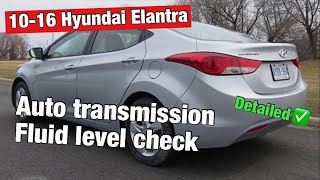
How to confirm: The fluid level and condition must be checked by a technician or experienced DIYer via the fill/check plug on the side of the transmission case with the vehicle level and at a specific temperature (typically 122-140°F / 50-60°C). 🎬 Watch: How to check the fluid level on this sealed transmission. Dark, burnt-smelling fluid indicates excessive wear or heat.
Typical fix: Perform a transmission fluid drain-and-fill or a complete fluid exchange using Hyundai/Kia SP-IV specific fluid. Replace the transmission filter if accessible.
Est. part cost: $50-$150 for fluid and a filter. - Faulty Transmission Fluid Temperature (TFT) Sensor / Internal Harness 🔴 High Probability The TFT sensor on the A6GF1 transmission is a widely documented failure point, addressed in Hyundai TSB 14-AT-010. The sensor and its wiring can degrade, sending erratic signals. On later models, the sensor is integrated into the harness, requiring replacement of the entire assembly.
How to confirm: Use a diagnostic scan tool to monitor the transmission fluid temperature reading. If the reading is erratic, stuck at an extreme value (-40°F or 250°F+), or doesn't change as the vehicle warms up, the sensor is bad. This is often accompanied by code P0711, P0712, or P0713.
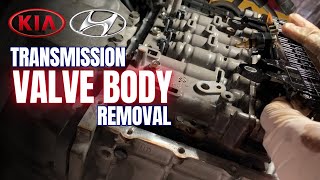
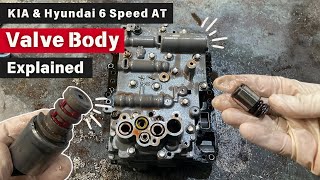
Typical fix: Replace the internal transmission wiring harness, which contains the integrated TFT sensor. This requires draining the fluid, dropping the transmission pan, and removing the valve body to access the harness. 🎬 Watch: Step-by-step guide to removing the valve body and harness.
Est. part cost: $70-$150 for the harness. - Faulty Shift Solenoid 🟡 Medium Probability Solenoids are electro-mechanical valves that control fluid flow. They are wear items that can fail electronically or stick mechanically after many cycles, leading to an inability to engage a gear properly.
How to confirm: A professional scan tool can sometimes command individual solenoids to check for a response. Often diagnosed by ruling out other causes. May be accompanied by solenoid-specific codes (e.g., P0763 for Shift Solenoid C).
Typical fix: Replace the specific solenoid responsible for 3rd gear operation. This is done by dropping the transmission pan and valve body.
Est. part cost: $50-$100 per solenoid. - Internal Mechanical Failure ⚪ Low Probability If slipping is allowed to continue, it will generate excessive heat and debris, which will burn up the clutch packs or damage other hard parts inside the transmission, leading to permanent damage.
How to confirm: This is a diagnosis of last resort after all other electronic and hydraulic causes have been ruled out. The presence of significant metallic debris or clutch material in the transmission pan is a strong indicator. Hyundai TSB 24-AT-002H outlines a diagnostic path that leads to transmission replacement if slip is confirmed.
Typical fix: Replace the entire transmission assembly with a new or remanufactured unit.
Est. part cost: $2000-$4000+ for a remanufactured or new transmission.
Rare But Worth Checking
- Faulty Input or Output Speed Sensor: While possible, a failure of one of these sensors would typically generate its own specific trouble code (like P0717 or P0722) in addition to P0733. The harness replacement often includes these sensors or their connectors.
- Damaged Valve Body: A crack, a stuck valve, or a severe clog in the valve body can cause hydraulic pressure loss to the 3rd gear clutch pack. This usually requires replacement of the valve body.
- Faulty Transmission Control Module (TCM): In rare cases, the TCM itself can fail or have corrupted software, leading to miscalculation of gear ratios. This is uncommon and should be considered only after all other possibilities are exhausted.
Diagnosis Steps
- Check transmission fluid level and condition. This is the first and most important step, though it requires lifting the vehicle and using the check/fill plug at a specific operating temperature.
- Using a quality OBD-II scanner, check for any other pending or stored transmission codes, paying close attention to P0711, P0712, or P0713.
- Monitor the live data stream for the Transmission Fluid Temperature (TFT). Check for erratic or illogical readings (e.g., stuck at -40°). If faulty, the internal harness is the cause.
- Inspect the transmission pan for leaks. If no other cause is apparent, drop the pan and inspect for excessive metal debris, which indicates internal mechanical failure.
- If TFT sensor codes are present or the live data is faulty, replace the internal wiring harness (Part No. 46386-3B900) per TSB 14-AT-010. This requires removing the valve body.
- If the fluid and TFT sensor are good, test the operation of the shift solenoids using a bi-directional scanner.
- If all other tests pass, consult Hyundai TSB 24-AT-002H, as internal mechanical failure is likely and transmission replacement may be required.
Parts You'll Likely Need
- Transmission Temperature Sensor / Internal Wiring Harness
(OEM #46386-3B900)— This is the most common specific component failure on the Hyundai A6GF1 transmission that leads to incorrect ratio codes like P0733. It is an updated part that integrates the sensor with the harness. It supersedes part numbers 46386-3B000 and 46386-3B010.
Trusted brands: Hyundai/Kia OE
OEM price range: $70-$150
Aftermarket price range: $50-$100 - Automatic Transmission Fluid (Hyundai SP-IV) — Fluid must be replaced when servicing the transmission pan or replacing internal components. Using the correct OEM-spec fluid is critical for the longevity and performance of Hyundai transmissions.
Trusted brands: Hyundai/Kia SP-IV, Valvoline MaxLife Full Synthetic (SP-IV compatible)
Related Codes That Often Appear With This One
- P0711, P0712, P0713 — These codes indicate a fault with the Transmission Fluid Temperature Sensor circuit. A bad TFT sensor is the most common root cause of the P0733 code in this vehicle, as the incorrect temperature reading leads to improper line pressure and slip.
- P0731, P0732, P0734, P0735 — These are incorrect ratio codes for other gears. If you have multiple ratio codes, it points towards a more systemic problem like low fluid, a failing temperature sensor affecting all shifts, or a failing torque converter.
Technical Service Bulletins (TSBs) & Recalls
- TSB 14-AT-010: Addresses DTCs P0711, P0712, and P0713 for the 6-speed automatic. Explicitly states not to replace the transaxle but to instead replace the oil temperature sensor/harness. Notes that as of March 2013, the sensor is integrated with the harness. This is the key document for the most common fix.
- TSB 24-AT-002H: Supersedes 20-AT-001H. Provides a diagnostic procedure for a wide range of incorrect gear ratio DTCs (P0731-P0736, etc.) across many Hyundai models. If diagnostic steps rule out external factors and confirm clutch slip, the procedure directs replacement of the transmission assembly.
Platform-Specific Known Issues
- The lack of a transmission fluid dipstick makes routine checks difficult for the average owner, often leading to problems from low or degraded fluid going unnoticed.
- The Transmission Fluid Temperature (TFT) sensor is a known weak point. Hyundai updated the part to be integrated with the internal wiring harness, meaning a simple sensor swap is no longer possible on most models, requiring a more involved valve-body-out repair.
Mechanic-Grade Diagnostic Values
- Variable Force Solenoids (VFS) Resistance — expected: Approximately 5.1 ohms. Failure: A reading significantly higher or lower than 5.1 ohms, or an open circuit.
- On/Off Shift Solenoids Resistance — expected: 10-11 ohms. Failure: A reading outside of this range, or an open circuit.
- Transmission Fluid Temperature (TFT) Sensor Resistance — expected: Approximately 1.9k ohms at 24.4°C (76°F). Failure: A reading that is drastically different at a known temperature, or an open/shorted circuit. This value will change with temperature.
Scan Tool Commands That Help
- Hyundai GDS (Global Diagnostic System): Resetting Auto T/A values — This function should be used after replacing the transmission, valve body, internal harness, or TCM to clear the old learned shift adaptations. Failure to reset adaptations can result in poor shift quality even after the repair is complete.
- Hyundai GDS (Global Diagnostic System): Relearn Adaptive Values Drive Cycle — After resetting the adaptive values, a specific drive cycle is required for the TCM to relearn shift pressures and timing. This typically involves accelerating gently to allow shifts through all 6 gears and then decelerating to a stop, repeated multiple times.
- Carista / Advanced OBD-II App: Reset automatic transmission adaptation (6-speed AT) — Some advanced consumer-level scan tools and apps offer the ability to reset the 6-speed AT adaptations. This can be used by DIYers after a fluid change or harness replacement. The procedure requires the ignition to be ON and the engine NOT started.
Wiring & Ground Locations
- ATM Solenoid Valve Connector — On top of the transaxle, where the main vehicle harness connects to the transmission's internal components.. This is the main external connector for all solenoids and sensors inside the transmission. Checking for corrosion, pin damage, or a loose connection here is a critical first step before assuming an internal failure.
- GM02 — Ground point located at the right center of the dash.. This is a shared ground point for various electronic modules. While not a primary suspect, a poor ground here could potentially cause erratic behavior in control modules that communicate with the TCM.
- GNG02 — Ground point located in the left front of the engine compartment.. This is a primary engine bay ground. A loose or corroded connection here can affect the PCM/TCM and sensor ground references, potentially leading to incorrect readings and fault codes.
- PCM/TCM Location — Located on the left rear of the engine compartment.. Knowing the physical location of the Powertrain Control Module (which integrates the TCM) is necessary for inspecting its connectors for damage or corrosion and for performing any pin-out testing of sensor or solenoid circuits.
Real Owner Repair Stories
- YouTube user comment on A6GF1 Disassembly video (Vehicle with A6GF1 transmission, mileage at failure was over 140k km (87k miles)) — Car kicks like a horse when shifting into D or R, and during up/down shifts, especially 2nd and 3rd gear. The issue was intermittent. Received a P0713 (Temp Sensor High) code.
❌ Tried (didn't work) Replaced AT fluid (fluid was in good condition, not burnt).
✅ What actually fixed it The user replaced the 'solenoid and temp sensor harness with the updated model', which resolved the P0713 code and is the correct procedure for the associated shifting symptoms. - NHTSA ODI #10576819 (Hyundai Santa Fe reference) — An owner reported the vehicle getting stuck in only third gear, describing it as a huge distraction. The diagnostic codes retrieved were P0121 and P0733, which the owner noted related to a throttle position sensor and a third gear ratio mismatch.
OEM Part Supersession History
46386-3B000→46386-3B900— The original temperature sensor was updated. The new part number often refers to the sensor integrated into the internal wiring harness, which is the standard repair procedure per Hyundai TSBs.
Heads up: The original separate sensor may not be available or recommended. The harness (46386-3B900) is the correct and most reliable replacement.46307-3B010, 46307-3B020→46307-3B650— These part numbers refer to earlier versions of the internal wiring harness. The 46307-3B650 is an updated design.
Heads up: While older part numbers may physically fit, it is critical to use the latest superseded part number for the vehicle's VIN to ensure compatibility and reliability.
Model Year Variations Within This Range
- 2014-2016: The 2014 model year marked a significant facelift (sometimes referred to as the UD generation). This included revised styling, improved interior materials, and importantly, the introduction of an optional 2.0L GDI engine (173 hp) in higher trims. While the base 1.8L engine and A6GF1 transmission remained, diagnostics could differ if working on a 2.0L model which may use the slightly beefier A6MF1 transmission.
- 2011-2013: These pre-facelift models (MD generation) primarily used the 1.8L Nu MPI engine (148 hp). The styling of the headlights and fog lights is a key external differentiator from the 2014+ models. The core transmission issue with the TFT sensor/harness is prevalent in these years.
Diagnostic Flowchart
Used vs. New Parts: Buying Guide for This Vehicle
When a used part is the smart pick: For this repair, sourcing a complete used transmission assembly from a low-mileage donor vehicle can be a cost-effective alternative to a professional rebuild, especially if significant internal hard-part damage is confirmed. A used valve body can also be considered if a specific bore is worn, but it carries the risk of having similar wear or other issues.
Donor-vehicle mileage cap: roughly under 75000 miles for the part to have meaningful remaining life.
What to inspect on the donor part:
- Check the donor vehicle's VIN to confirm it wasn't involved in a severe front-end collision.
- If possible, ask the dismantler for the fluid condition. Pink/red fluid is a good sign; dark brown or burnt-smelling fluid is a major red flag.
- Inspect the external case for cracks or damage, especially around mounting points.
- Ensure the main electrical connector and its pins are clean and undamaged.
OEM-only on this vehicle (don't cheap out):
- Internal Wiring Harness / TFT Sensor: Given the high failure rate and subsequent part updates, using a new OEM harness (46386-3B900) is the only reliable option. An aftermarket or used harness could fail quickly or be an outdated design.
Aftermarket brands forum-validated for this vehicle:
- Valvoline MaxLife Full Synthetic ATF is widely reported on forums as a compatible and high-quality alternative to the OEM Hyundai SP-IV fluid.
Brands owners have reported issues with on this vehicle:
- Unbranded or generic-looking internal wiring harnesses from online marketplaces. These often have poor quality wiring and connectors that can cause repeat failures.
Real Owner Stories
Aggregated from forums and TSBs cited above. Mileages and costs reflect what owners reported in those sources.
2013 Hyundai Elantra
Symptoms: The Check Engine Light was on with code P0711, which is often a precursor to the P0733 gear ratio error.
What fixed it: The problem was resolved by replacing the internal transmission wiring harness, which contains the updated temperature sensor. This repair required removing the valve body.
Cost: $700-$900
Source hint: Reddit - r/MechanicAdvice: Engine code P0711 On 2013 Hyundai Elantra, Transmission Fluid Temperature
2013 Hyundai Elantra
Symptoms: Vehicle presented with a P0711 code related to the transmission fluid temperature.
What fixed it: A transmission technician explained the fix is to replace the entire internal wiring harness because the old detachable sensor was superseded by a new, integrated design. The repair involves removing the valve body to access the harness.
Source hint: YouTube - A6GF1,Hyundai Elantra Code P0711
Related OBD-II Codes
Frequently Asked Questions
My 2013 Elantra is stuck in 'limp mode' with code P0733. What's the most likely cause?
I have a P0733 code, but my scanner also shows P0711. Are these related?
Why can't I find a dipstick to check the transmission fluid on my Elantra?
My mechanic says the temperature sensor failed and he has to replace the entire internal wiring harness. Is this correct?
What does Hyundai's Technical Service Bulletin (TSB) 14-AT-010 say about this problem?
If the fluid and temperature sensor are good, what does Hyundai suggest is wrong?
Helpful Videos
We Have This Part in Stock




The information in this article is provided for general reference and educational purposes only. Vehicle specifications, procedures, and part compatibility can vary by production date, trim level, and region. Always consult your vehicle's factory service manual and verify part numbers before purchasing or performing repairs. Safety-critical components such as airbags, seat belts, and braking systems should be installed by a qualified professional.
- Hyundai Elantra:
- 🎬 Helpful Videos
- 🛍️ Shop This Part
- What's Unique About the 2011-2016 Hyundai Elantra
- Symptoms You May Notice
- Most Likely Causes
- Rare But Worth Checking
- Diagnosis Steps
- Parts You'll Likely Need
- Related Codes That Often Appear With This One
- Technical Service Bulletins (TSBs) & Recalls
- Platform-Specific Known Issues
- Mechanic-Grade Diagnostic Values
- Scan Tool Commands That Help
- Wiring & Ground Locations
- Real Owner Repair Stories
- OEM Part Supersession History
- Model Year Variations Within This Range
- Diagnostic Flowchart
- Used vs. New Parts: Buying Guide for This Vehicle
- Real Owner Stories
- 2013 Hyundai Elantra
- 2013 Hyundai Elantra
- Related OBD-II Codes
- Frequently Asked Questions
- 🎟️ Get 5% Off