

P0730 on 2004-2009 Mazda 3: Incorrect Gear Ratio Causes and Fixes
On a 2004-2009 Mazda 3, code P0730 often points to low or dirty transmission fluid, failing shift solenoids, or a faulty Transmission Control Module (TCM). A fluid check is the first step, but a TCM failure is a very common and well-documented issue for this specific vehicle, often requiring replacement or repair of the module.
- P0730 on a 2004-2009 Mazda 3 indicates a serious transmission issue that should be addressed promptly.
- Always check the transmission fluid level and condition first; this is the simplest and cheapest potential fix.
- Be aware that the Transmission Control Module (TCM) is a very common failure point on this car and a likely cause of this code.
- Do not immediately assume the transmission needs to be rebuilt or replaced, as the fault is often electronic (TCM or solenoids).
- Due to the complexity, seeking a diagnosis from a reputable transmission shop is highly recommended to avoid unnecessary parts replacement.
What's Unique About the 2004-2009 Mazda 3
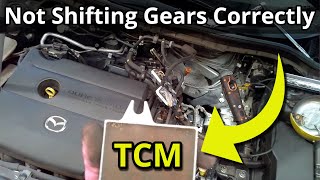
The first-generation Mazda 3 (2004-2009) uses an automatic transmission known as the FN4A-EL (Ford designation 4F27E). While P0730 can be caused by universal issues like low fluid, this specific platform is notorious for failures of the Transmission Control Module (TCM). The TCM is mounted directly on the transmission case, where it is exposed to significant heat and vibration. This constant thermal stress often leads to internal solder joint cracks and component failure, which can directly cause this code and other related transmission faults like U0101.
Symptoms You May Notice
- Harsh, jerky, or delayed shifts, sometimes feeling like a violent lurch.
- Transmission slipping (engine RPMs rise without an increase in speed).
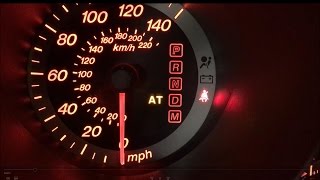
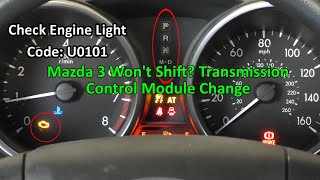
- Flashing 'AT' (Automatic Transaxle) light on the dashboard.
- Vehicle enters "limp mode," often stuck in 3rd gear and unable to exceed a certain speed.
- Check Engine Light is on.
- Reduced fuel efficiency.
- Inability to use manual shift mode ('M' mode).
- Replacing the entire transmission when the fault was a less expensive, externally-mounted Transmission Control Module (TCM).
- Replacing shift solenoids or speed sensors when the root cause was the failing TCM, which controls them.
- Assuming a remanufactured TCM is faulty when the real issue is a poor ground connection or another underlying problem.
Most Likely Causes
- Low or Dirty Automatic Transmission Fluid (ATF) 🔴 High Probability Many owners neglect fluid changes, and leaks can develop over time. Degraded fluid loses its hydraulic properties, causing slippage and pressure issues that trigger P0730.
How to confirm: Check the transmission fluid dipstick for level and condition. The fluid should be bright red and not smell burnt. If it is dark brown/black or low, this is a likely cause.
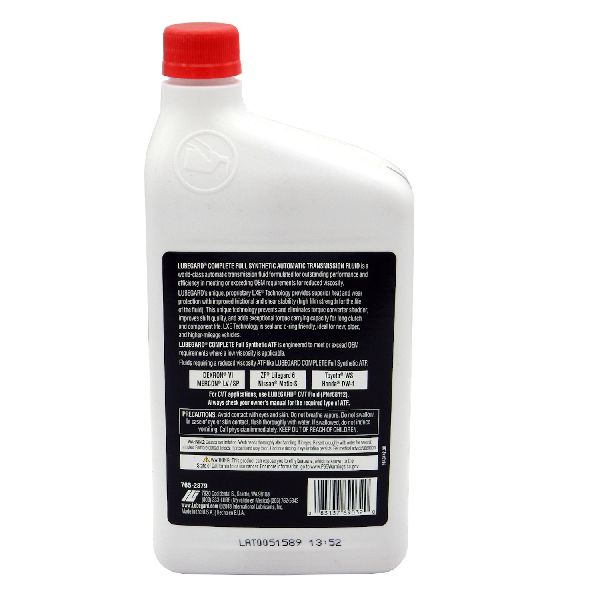
Typical fix: Perform a transmission fluid drain and fill, or a full fluid exchange if heavily contaminated. Use a fluid that meets Mazda M-V (Type M5) specifications.
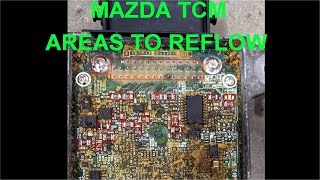
Est. part cost: $40-$100 - Failing Transmission Control Module (TCM) 🔴 High Probability The TCM on this generation is mounted on the transmission case, leading to failures from heat and vibration. This is a widely documented weak point, causing solder joints inside the module to crack 🎬 Watch: DIY soldering repair for a failing TCM circuit board and fail, especially as the car warms up.
How to confirm: Diagnosis requires a professional scan tool to check for communication errors (like U0101) with the TCM. The issue is often intermittent and worsens with heat. A common owner experience is the car drives fine when cold but starts jerking and flashing the AT light after 15-20 minutes of driving.
Typical fix: Replace the TCM with a new or remanufactured unit. Companies like UpFix and All Computer Resources offer repair services. It is critical to match the part number on the old TCM. The new module may need to be programmed to the vehicle, though many remanufactured units are sold pre-programmed and are plug-and-play.
Est. part cost: $250-$700 - Faulty Shift Solenoids 🟡 Medium Probability Solenoids are electronic valves that control fluid flow to engage gears. They can fail electrically or become clogged with debris from old fluid, leading to incorrect gear engagement.
How to confirm: A professional scan tool can often command individual solenoids to test their function. Resistance can also be checked with a multimeter if the valve body is accessed. Specific codes like P0751-P0758 often point to a specific solenoid.
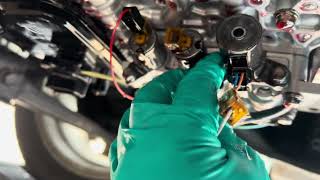
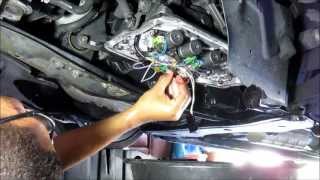
Typical fix: Replace the specific faulty solenoid or the entire solenoid pack. This requires removing the transmission oil pan 🎬 See how to replace the automatic transmission solenoids and sometimes the valve body.
Est. part cost: $150-$400 - Internal Mechanical Failure ⚪ Low Probability High mileage and a history of running with low or dirty fluid can lead to worn-out internal components like clutch packs or the torque converter.
How to confirm: This is typically a diagnosis of last resort after all external electronic and hydraulic causes have been ruled out. A transmission specialist may perform pressure tests or inspect the fluid pan for excessive metal shavings.
Typical fix: Rebuilding or replacing the entire transmission assembly.
Est. part cost: $2000-$4000
Rare But Worth Checking
- Clogged Transmission Filter: If the transmission fluid has not been changed in a very long time, the filter can become clogged with debris, restricting fluid flow and causing pressure issues. It is typically replaced during a major service or solenoid replacement.
- Damaged Wiring or Connectors: The wiring harness to the transmission can be damaged by road debris or corrosion, leading to intermittent signals between the TCM and the transmission's sensors and solenoids. Checking the ground wire for the TCM is a known diagnostic step.
Diagnosis Steps
- Check the level and condition of the automatic transmission fluid. Top off or change if necessary.
- Use an OBD-II scanner to check for any other transmission-related codes, especially communication codes like U0101 or specific solenoid codes.
- Inspect the wiring harness and connectors going to the transmission and TCM for any visible damage, corrosion, or loose connections. Pay special attention to the TCM ground wire.
- If communication codes like U0101 are present, or if symptoms worsen as the vehicle heats up, the TCM is the most likely culprit.
- A 'tap test' can sometimes identify a failing TCM. With the car acting up, lightly tapping on the TCM housing may cause a change in behavior, indicating internal broken connections.
- If fluid is clean and no communication codes are present, test the shift solenoids. This is often done by a professional with a bi-directional scan tool.
- If solenoids and wiring test good, the problem may be internal to the transmission (worn clutches, valve body issues). At this stage, professional diagnosis is strongly recommended.
Parts You'll Likely Need
- Transmission Control Module (TCM)
(OEM #L32E189E1B, L34T189E1A, LF8M189E1A (Part number varies by year/engine, must match original))— This is the most frequent cause of P0730 and other transmission issues on this specific vehicle due to its placement and susceptibility to heat failure.
Trusted brands: Mazda (OEM), Dorman, Cardone (Remanufactured), UpFix (Repair Service)
OEM price range: $600-$1200
Aftermarket price range: $250-$450 - Automatic Transmission Fluid (ATF)
(OEM #0000-77-112E-01 (Mazda M-V / M5))— Low or degraded fluid is a primary cause of shifting problems and is the first thing to check. The correct fluid type is critical.
Trusted brands: Mazda M-V (M5), Idemitsu Type-M, Valvoline MaxLife Multi-Vehicle ATF
OEM price range: $15-$25 per quart
Aftermarket price range: $8-$15 per quart - Shift Solenoid Pack — Solenoids control the gear changes. If one or more fail, it can directly cause an incorrect gear ratio error.
Trusted brands: Rostra, Genuine Mazda
OEM price range: $300-$500
Aftermarket price range: $150-$300
Related Codes That Often Appear With This One
- P07xx — Other P07xx codes often accompany P0730. For example, P0731-P0735 indicate incorrect ratio for a specific gear (1st, 2nd, etc.), which can help pinpoint the problem. Codes for specific solenoids (e.g., P0751, P0756) may also appear.
- U0101 — This code means 'Lost Communication with TCM.' It is a strong indicator that the Transmission Control Module itself is failing, a common issue on the 2004-2009 Mazda 3. Seeing this code alongside P0730 makes the TCM the primary suspect. 🎬 Watch: Diagnosing U0101 and replacing a faulty TCM
Technical Service Bulletins (TSBs) & Recalls
- Mazda TSB 05-004/11 - While not directly for P0730, this TSB addresses harsh shifting on related transmissions and involves checking solenoids and the TCM, which is relevant context.
- Mazda Special Service Program (MSP37) - Relates to reprogramming the Powertrain Control Module (PCM), which can be required after a TCM replacement on some models to ensure pro
Platform-Specific Known Issues
- The Transmission Control Module (TCM) for the first-generation Mazda 3 is known to have a high failure rate. Its location on top of the transmission exposes it to excessive heat, causing internal solder joints to crack and fail over time, leading to a host of shifting problems, including the P0730 code. Owners report that symptoms are often non-existent when the car is cold but appear suddenly after 15-30 minutes of driving as the module heats up. This is often accompanied by the 'AT' light and communication code U0101.
Mechanic-Grade Diagnostic Values
- Shift Solenoid (A, B, C, D, E) Resistance — expected: 11-15 Ohms. Failure: A reading outside this range indicates a faulty solenoid coil.
- EPC (Electronic Pressure Control) Solenoid Resistance — expected: 2.4 - 7.3 Ohms. Failure: A reading outside this range suggests a problem with the pressure control solenoid.
- Transmission Fluid Temperature (TFT) Sensor Resistance — expected: 2.44K - 1.19K Ohms at 68° - 104° F (20° - 40° C). Failure: Resistance values that do not correspond to the fluid temperature can cause incorrect shift pressure calculations.
Scan Tool Commands That Help
- Mazda IDS or equivalent professional scan tool: Reset Keep Alive Memory (KAM) — After replacing the valve body or TCM, this function should be used to clear the old adaptive learning values from memory, forcing the transmission to relearn shift patterns.
- Mazda IDS or equivalent professional scan tool: Solenoid Actuator Test — To individually command each shift solenoid on and off to verify its electrical function without removing the transmission pan. This helps isolate a specific faulty solenoid.
Wiring & Ground Locations
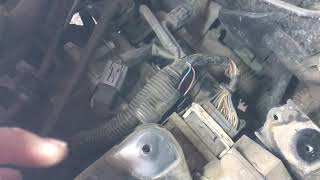
- TCM Location — Mounted directly on top of the transmission case, underneath the battery and battery tray.. This location subjects the TCM to extreme heat and vibration, which is the primary cause of solder joint failure leading to P0730 and U0101 codes.
- Valve Body Ground Strap — Inside the transmission, a ground strap from the internal wiring harness bolts directly to the valve body.. A loose or corroded internal ground can cause erratic solenoid behavior and sensor readings, leading to incorrect gear ratio calculations. This must be checked during any valve body or solenoid service.
- Main Chassis Ground — A key ground point is located on the passenger-side fender brace, near the headlight.. While not directly for the TCM in all cases, poor chassis grounds can cause a host of electrical issues, including voltage drops and communication errors on the CAN bus network that can mimic TCM failure.
Real Owner Repair Stories
- Car Talk Community Forum User (2010 Mazda 3) — Check Engine light and AT light on, loud clunk when shifting into reverse, stuck in 3rd gear (limp mode), code U0101.
❌ Tried (didn't work) Two different repair shops looked at the vehicle and suggested replacing control boards.
✅ What actually fixed it The user diagnosed the problem as a loose power input ground wire to the control module. Tightening the ground connection resolved all symptoms. - YouTube video by GerardBurke (2010 Mazda 3 BL) — Engine light on, won't shift gear properly, limp mode, code U0101 (Lost communication to the TCM).
❌ Tried (didn't work) The video focuses on the commonality of the TCM failure, implying other diagnostics often lead back to it.
✅ What actually fixed it The TCM was replaced with a remanufactured unit. The video notes this is a very common failure due to cracked solder joints from heat, and replacement is often a plug-and-play fix. After replacement, a throttle body cleaning and idle relearn was also needed to fix a fluctuating idle.
OEM Part Supersession History
L32E189E1B, L32E189E1C, L32E189E1D→L32E189E1E, LF8M189E1A, LF8M189E1B, etc.— Revisions to address internal component failures and improve heat resistance.
Heads up: It is critical to match the part number from the original TCM. While some numbers are interchangeable, using the wrong one can result in no-start conditions or incorrect shifting behavior. Remanufacturers often require the original part number to provide a compatible unit.
Model Year Variations Within This Range
- 2004-2005: Models with the 2.0L engine were typically equipped with the 4-speed FN4A-EL automatic transmission. The 2.3L engine had the 4-speed as standard with an optional 5-speed automatic (FNR5/FS5A-EL).
- 2006-2009: For the 2006 model year, the 5-speed automatic became optional on models with the 2.3L engine. This can affect diagnosis, as the 4-speed and 5-speed have some different components, though the TCM failure pattern is similar.
Diagnostic Flowchart
Other Known Issues on This Vehicle
Issues unrelated to this code that are worth knowing about as an owner of this generation:
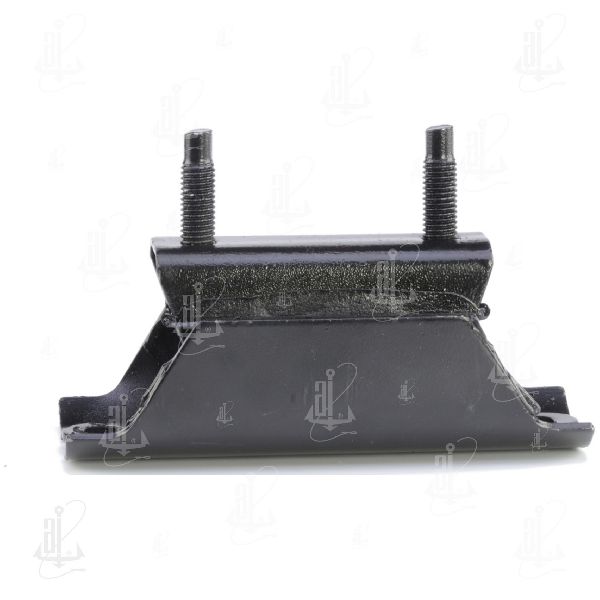
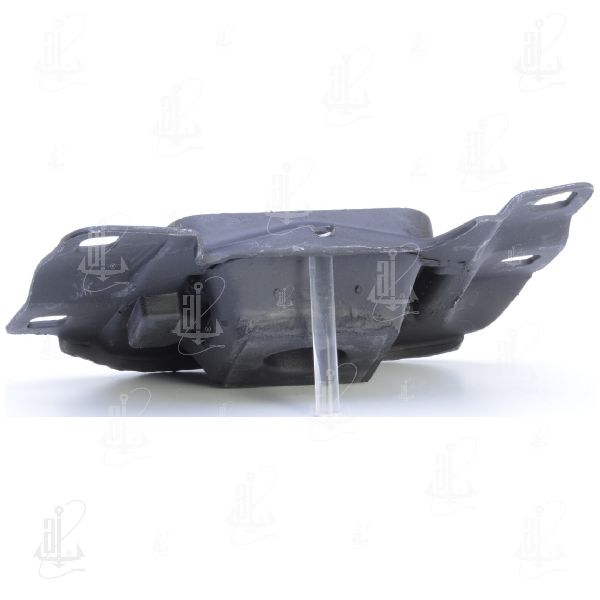
- Passenger-Side Hydraulic Engine Mount Failure 🟠 Medium — Very common; the mount is filled with fluid that leaks out, causing excessive engine vibration at idle and clunking noises. Failure can occur as early as 30,000 miles but is frequent by 90,000 miles.
- Rear Wheel Well and Fender Rust 🔴 High — Extremely common, especially in regions that use road salt. Rust often starts from the inside and bubbles the paint, indicating a more severe problem underneath. It's a notorious issue for the 2004-2009 models.
- Sticky / Melting Dashboard 🟡 Low — Common in hot, humid climates. The dashboard surface becomes sticky and shiny, causing a distracting glare. This primarily affected 2009-2010 models, but earlier models can also exhibit material degradation. (Ref: Mazda issued a warranty extension (SSP 99 for 2010 models) covering this for 10 years from the original purchase date.)
- Thermostat Stuck Open 🟡 Low — A relatively common failure where the thermostat sticks open, preventing the engine from reaching full operating temperature and often triggering a Check Engine Light.
- Failing Rear Suspension Components 🟠 Medium — Leaking rear shock absorbers and worn stabilizer bar links are common at higher mileage, leading to a bouncy ride and rattling or clunking noises from the rear of the car.
Used vs. New Parts: Buying Guide for This Vehicle
When a used part is the smart pick: For the Transmission Control Module (TCM), a used part is a significant gamble due to the high failure rate of the original design. A used part may work temporarily but is likely to fail from the same heat-related issues. A remanufactured or professionally repaired unit is a much smarter choice as they often correct the original design flaw.
Donor-vehicle mileage cap: roughly under 60000 miles for the part to have meaningful remaining life.
What to inspect on the donor part:
- For a used TCM, there are no reliable external cues. The failure is internal.
- For a complete used transmission assembly, check for clean, red fluid without a burnt smell.
- Ask for the donor vehicle's VIN to check its service history if possible.
Aftermarket brands forum-validated for this vehicle:
- UpFix (TCM Repair Service)
- All Computer Resources (TCM Repair Service)
- Rostra (Shift Solenoids)
- Sonnax (Valve Body and internal components)
Brands owners have reported issues with on this vehicle:
- Unnamed, no-brand TCMs from online marketplaces are extremely high-risk. Stick to reputable rebuilders who offer a warranty.
Real Owner Stories
Aggregated from forums and TSBs cited above. Mileages and costs reflect what owners reported in those sources.
2004-2009 Mazda 3
Symptoms: The check engine light, AT light, and traction control light all came on, and the car gets 'stuck on 3rd gear' when the AT light appears.
What fixed it: Replacing the Transmission Control Module (TCM), which is notorious for failing due to its mounting location on the transmission casing where it overheats.
Source hint: Reddit r/mazda3 & r/MechanicAdvice
2004-2009 Mazda 3
Symptoms: The 'AT' light was flashing and the scanner showed codes P0730 and U0101.
What fixed it: Repairing or replacing the failed Transmission Control Module (TCM).
Cost: $250-$700
Source hint: Mazda3Forums.com: 'The Infamous AT Light/TCM Failure Thread'
2009 Mazda 3 SP25
Symptoms: A frustrating and ongoing transmission issue that led to a difficult diagnostic journey, with the problem being misdiagnosed by mechanics.
What fixed it: After incorrectly replacing the transmission and an output sensor, the issue was finally resolved by replacing the Transmission Control Module (TCM).
Source hint: Mazda Forum (mazdaforum.com): '2009 Mazda 3 SP25 Transmission ongoing issue'
Related OBD-II Codes
Frequently Asked Questions
My 2007 Mazda 3's 'AT' light only comes on after driving for 20 minutes, then it starts jerking. Is this related to the P0730 code?
I have codes P0730 and U0101 at the same time. What does that combination mean?
What kind of transmission fluid should I use for my Mazda 3 to fix a P0730 code?
My mechanic wants to replace the entire transmission for P0730. Should I get a second opinion?
Can I just replace the TCM myself, and does the new one need to be programmed?
My Ford Focus has the same shifting problems. Is the cause likely the same as the Mazda 3?
Helpful Videos
We Have This Part in Stock


The information in this article is provided for general reference and educational purposes only. Vehicle specifications, procedures, and part compatibility can vary by production date, trim level, and region. Always consult your vehicle's factory service manual and verify part numbers before purchasing or performing repairs. Safety-critical components such as airbags, seat belts, and braking systems should be installed by a qualified professional.
- Mazda 3:
- 🎬 Helpful Videos
- 🛍️ Shop This Part
- What's Unique About the 2004-2009 Mazda 3
- Symptoms You May Notice
- Most Likely Causes
- Rare But Worth Checking
- Diagnosis Steps
- Parts You'll Likely Need
- Related Codes That Often Appear With This One
- Technical Service Bulletins (TSBs) & Recalls
- Platform-Specific Known Issues
- Mechanic-Grade Diagnostic Values
- Scan Tool Commands That Help
- Wiring & Ground Locations
- Real Owner Repair Stories
- OEM Part Supersession History
- Model Year Variations Within This Range
- Diagnostic Flowchart
- Other Known Issues on This Vehicle
- Used vs. New Parts: Buying Guide for This Vehicle
- Real Owner Stories
- 2004-2009 Mazda 3
- 2004-2009 Mazda 3
- 2009 Mazda 3 SP25
- Related OBD-II Codes
- Frequently Asked Questions
- 🎟️ Get 5% Off