

P0730 on 2003-2008 Honda Pilot: Incorrect Gear Ratio Causes and Fixes
On a 2003-2008 Honda Pilot, code P0730 almost always points to a transmission problem, starting with low or degraded fluid. If fluid is okay, suspect failing transmission pressure switches or clogged solenoid screens before assuming a full transmission rebuild is needed. A fluid change is ~$150, while pressure switches can be a few hundred dollars.
- P0730 on a 2003-2008 Pilot indicates transmission slippage. Do not ignore it.
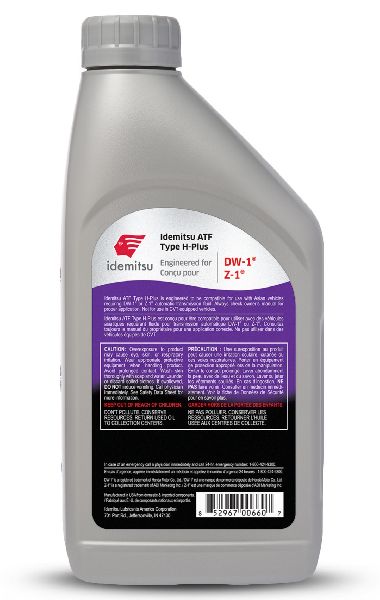
- Always start diagnosis by checking the transmission fluid level and condition. Use only Honda ATF-DW1 or a fully compatible equivalent.
- Before condemning the transmission, investigate common, less expensive failures: the external transmission fluid pressure switches and clogged shift solenoid screens.
- Always use genuine Honda parts for sensors and switches to avoid premature failure of aftermarket components.
- If fluid and external components are good, the problem is likely internal and requires a professional transmission shop for diagnosis and repair.
What's Unique About the 2003-2008 Honda Pilot

The first-generation Honda Pilot (2003-2008) uses a 5-speed automatic transmission (codes BVGA, BVLA) that is known for developing issues over time. While P0730 can mean a catastrophic internal failure, this specific platform is prone to problems with external components like transmission fluid pressure switches and clogged linear solenoid filter screens. Many owners on forums like Piloteers.org have successfully resolved P0730 by addressing these more accessible parts first, avoiding a costly transmission replacement. The issue is so common that it's a frequent topic of discussion for this vehicle generation.
Symptoms You May Notice

- Check Engine Light is on
- Flashing 'D' (Drive) indicator light
- Transmission slipping between gears, especially on the 2-3 upshift
- Harsh, erratic, or delayed shifting
- Vehicle gets stuck in one gear (limp mode)
- Hesitation or jerking during acceleration
- Engine RPMs rise but vehicle doesn't accelerate accordingly
- A 'rumble strip' or shuddering feeling, especially at steady speeds (can indicate torque converter clutch issue)
- Reduced fuel economy
- Immediately assuming a P0730 code requires a full transmission replacement without first checking fluid level/condition, pressure switches, or solenoid screens.
- Replacing the transmission due to a P0730 code when the actual fault lies with an inexpensive but faulty speed sensor giving the computer bad data.
- Using incorrect, non-Honda-spec transmission fluid after a drain and fill, which can cause shifting problems on its own.
Most Likely Causes

- Low or Degraded Transmission Fluid 🔴 High Probability These Honda 5-speed transmissions are highly sensitive to fluid condition and level. The fluid not only lubricates but also provides the hydraulic pressure needed to actuate shifts. Neglecting the service interval is a primary cause of failure.
How to confirm: Check the transmission fluid dipstick when the engine is warm and has been turned off. The fluid should be at the correct level, pink/red in color, and not have a burnt smell. Dark or brown fluid indicates it's worn out. NHTSA ODI #10372277 notes that P0730 can specifically be triggered by a low transmission fluid level or poor fluid quality.
Typical fix: Perform a series of transmission fluid 'drain and fills'. Since a single drain only removes about 1/3 of the total fluid, it is common practice to perform a '3x drain and fill': drain the fluid, refill, drive for a short period to circulate, and repeat the process two more times. This replaces the majority of the old fluid. 🎬 Watch: Step-by-step guide to a transmission fluid drain and fill. Only use Honda ATF-DW1 or a fully compatible, high-quality equivalent.
Est. part cost: $40-$80 for fluid for one drain/fill; ~$120-$240 for a 3x procedure - Failed Transmission Fluid Pressure Switches 🟡 Medium Probability These switches are a notorious failure point on Honda/Acura V6 transmissions from this era. They fail electronically, sending incorrect pressure readings to the TCM, which then causes erratic shifting and codes like P0730, even if the transmission's mechanicals are sound. NHTSA ODI #10354684 describes a scenario where a 3rd pressure switch failure occurred alongside P0730 and P0845.
How to confirm: Scan for other codes; P0847 (3rd clutch) or P0872 (4th clutch) often accompany P0730. A mechanic can test the switches, but given their high failure rate and relatively low cost, they are often replaced as a primary diagnostic step when chasing shift issues. One owner on Piloteers.org fixed a flashing D light by replacing them.
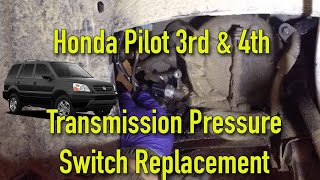
Typical fix: Replace the faulty pressure switch(es). It is common practice to replace the 2nd, 3rd, and 4th gear pressure switches at the same time. The 3rd and 4th gear switches are located on the front of the transmission, accessible from the driver's side wheel well. Using genuine Honda parts is highly recommended as aftermarket sensors have a high failure rate.
Est. part cost: $50-$120 per switch - Clogged Transmission Solenoid Screens/Filters 🟡 Medium Probability Over time, fine metallic debris from normal clutch wear can clog the tiny mesh screens on the linear and shift solenoid packs. This restricts hydraulic fluid flow, causing pressure drops that lead to slippage and codes like P0730 and P0740.
How to confirm: Remove the linear solenoid packs from the exterior of the transmission case (often under the battery tray). Inspect the small filter screens on the solenoids and the gaskets for blockage. This can be done without draining all the transmission fluid.
Typical fix: Carefully remove and clean the solenoid screens and the passages with brake cleaner and compressed air, then reinstall with new gaskets. If the solenoids themselves are faulty (can be tested with a multimeter for resistance, typically ~5 Ohms), they must be replaced. NHTSA ODI #10274004 reports a case where an owner attempted solenoid replacement after the vehicle experienced a sudden stop and recorded code P0730.
Est. part cost: $10-$30 for gaskets, if needed - Internal Transmission Failure ⚪ Low Probability These transmissions can suffer from worn internal clutch packs (especially the 3rd gear clutch pack) or torque converter failure, particularly at higher mileage or if fluid changes have been neglected. NHTSA ODI #10693871 describes a failure where the vehicle lost reverse and 3rd gear, the fluid smelled burnt, and codes P0730 and P0780 were present.
How to confirm: This is the diagnosis after all external components (fluid, switches, solenoids) have been ruled out. A transmission specialist will need to perform hydraulic pressure tests and inspect the fluid pan for excessive clutch material or metal debris.
Typical fix: The transmission will need to be rebuilt by a specialist or replaced with a new or remanufactured unit.
Est. part cost: $2500-$4500+
Rare But Worth Checking
- Faulty Input/Output Speed Sensors:
- Clogged External ATF Filter:
Diagnosis Steps
- Check the transmission fluid level and condition. If it is low, top it off with Honda ATF-DW1 and check for leaks. If it is dark, burnt, or contains debris, perform at least one drain and fill (a 3x drain and fill is recommended).
- Scan for other transmission-related codes. Specific codes for pressure switches (e.g., P0872) or solenoids can pinpoint the problem.
- If no other codes are present, inspect and clean the external shift solenoid screens. This is a low-cost, high-impact diagnostic step that has solved the issue for many owners.
- Test or replace the 2nd, 3rd, and 4th gear transmission fluid pressure switches. Given their extremely high failure rate on this platform, consider replacing them with OEM parts if they are original to the vehicle, especially if shift quality is poor. 🎬 Watch: How to replace the 3rd and 4th gear pressure switches.
- For 2003-2005 models, replace the external ATF filter (25430-PLR-003) if it hasn't been serviced in over 60,000 miles.
- If the problem persists, use a professional scan tool to monitor live data from input/output speed sensors for erratic behavior.
- If all external components and sensors check out, the issue is likely internal (worn clutch packs, torque converter). This requires professional diagnosis and probable transmission rebuild or replacement.
Parts You'll Likely Need

- Automatic Transmission Fluid (ATF)
(OEM #08200-9008)— The most common cause of P0730 is low or degraded fluid. Using the correct OEM fluid is critical for Honda transmissions.
Trusted brands: Honda Genuine ATF DW-1
OEM price range: $10-$15 per quart
Aftermarket price range: $8-$12 per quart (Use of non-OEM compatible fluid is debated and should be done with caution) - 3rd & 4th Gear Transmission Fluid Pressure Switches
(OEM #28600-RKE-004, 28610-RKE-004)— These are extremely common failure points on this platform that directly cause shifting problems and related codes. Part numbers can vary by specific year, so always verify with VIN.
Trusted brands: Honda Genuine
OEM price range: $50-$70 per switch
Aftermarket price range: $20-$40 per switch (Not recommended due to high failure rates) - Linear Shift Solenoid Gasket Set
(OEM #28252-PAX-000)— When cleaning the solenoid screens, the old gaskets are often brittle and should be replaced to prevent leaks.
Trusted brands: Honda Genuine
OEM price range: $15-$25
Aftermarket price range: $5-$15 - External ATF Filter (2003-2005 models)
(OEM #25430-PLR-003)— This serviceable filter can get clogged, restricting fluid flow. It's a critical maintenance item on early first-gen Pilots.
Trusted brands: Honda Genuine
OEM price range: $30-$50
Aftermarket price range: $15-$30
Related Codes That Often Appear With This One
- P0700 — P0700 is a generic code that simply means the Transmission Control Module (TCM) has stored a fault. It acts as a 'check engine light' for the transmission and will almost always appear alongside a more specific transmission code like P0730.
- P0740 — This code indicates a fault in the Torque Converter Clutch (TCC) circuit. It often shares the same root causes as P0730, such as bad fluid or clogged solenoid screens, as the TCC solenoid is often part of the same assembly.
- P0731-P0735 — These codes indicate an incorrect gear ratio in a specific gear (e.g., P0731 for 1st gear, P0732 for 2nd). P0730 is a general code that may appear with one of these more specific faults, helping to narrow down when the slip is occurring.
- P0847, P0872 — These are specific codes for the 3rd and 4th gear pressure switches, respectively. If you see one of these alongside P0730, it's a very strong indicator that the corresponding switch has failed.
Technical Service Bulletins (TSBs) & Recalls
- While no TSB is issued specifically for P0730, Honda has issued related bulletins. For example, TSB 02-022 addressed power steering issues but was related to work done near the transmission, and another TSB for the Acura TL (a platform mate) mentioned straining ATF to diagnose transmission issues, acknowledging debris as a known problem. These show a history of known issues with the transmission and related components on this platform. An owner in NHTSA ODI #10354684 also referenced recall "NHTSA 04V176000" regarding transmission problems for this vehicle generation.
Platform-Specific Known Issues
- Real Repair Story from Piloteers.org: A user on the Piloteers.org forum reported a P0730 code and erratic shifting. After performing a 3x drain and fill with Honda ATF-DW1 and replacing the 3rd and 4th gear pressure switches, the code was resolved and shifting performance returned to normal. This highlights the effectiveness of tackling fluid and switches first.
- Dealer Misdiagnosis on Honda-Tech: A 2004 Pilot owner on honda-tech.com with only 33,000 miles was told by a dealer they needed a new transmission based solely on the P0730 code. This serves as a cautionary tale against accepting a major repair without diagnosing the cheaper, more common causes first.
- External Filter Design Change: The 2003-2005 models use a screw-on canister filter (25430-PLR-003) located on the top/front of the transmission, which is serviceable. However, 2006-2008 models only have an internal filter that is not considered a regular service item and is only replaced during a transmission rebuild. This makes regular fluid changes even more critical on the later models.
Mechanic-Grade Diagnostic Values
- Shift Solenoid A/B Resistance — expected: 12-25 Ohms. Failure: A reading outside of this range indicates a faulty solenoid coil.
- Linear Solenoid Resistance — expected: ~5 Ohms. Failure: Significant deviation from 5 Ohms suggests the solenoid is failing.
- Pressure Switch Continuity Test (using a scan tool) — expected: With the switch connector unplugged, the scan tool data for that switch should read 'OFF'. When the pin in the harness connector is grounded, the reading should change to 'ON'.. Failure: If the reading does not change, it indicates a problem in the wiring or the TCM/PCM. If it does change, the wiring is good and the switch itself is the likely culprit.
Scan Tool Commands That Help
- Honda HDS (Honda Diagnostic System) or equivalent professional scanner: Clear DTCs / Reset Adaptive Values — After replacing components like pressure switches, solenoids, or the transmission fluid, a reset of the learned adaptive values is recommended. This forces the TCM to relearn shift points with the new components, which can resolve lingering harsh or erratic shifting.
- No Tool Procedure (ECU/TCM Reset): Battery Disconnect or Pedal Procedure — A simpler, less comprehensive reset can be performed without a scan tool. Disconnecting the negative battery terminal for 15-30 minutes can clear some adaptive memory. A 'pedal dance' procedure also exists for some Honda models to reset the TCM, often involving turning the key to 'ON', pressing the accelerator pedal for a set duration, and cycling the ignition. These are useful for minor shift quality issues but are not as thorough as a scan tool reset.
Wiring & Ground Locations
- 3rd and 4th Gear Pressure Switches — Located on the front of the transmission case. They are accessible by removing the driver's side front wheel and a plastic splash guard. The 4th gear switch is typically the higher of the two, and the 3rd gear switch is below it (often with a tan or brown connector).. These switches are a primary cause of P0730 and related shift codes. Knowing their location is critical for testing and replacement, which is a very common fix.
- Ground Point G101 — Typically located on the thermostat housing on the J-series V6 engine.. This is a primary engine and transmission ground. A loose or corroded G101 can cause a host of electrical issues, including erratic sensor readings and incorrect solenoid operation, potentially leading to transmission codes like P0730.
- PCM Connector B (51-Pin) — Located at the Powertrain Control Module (PCM), typically in the passenger cabin.. When diagnosing a pressure switch circuit fault (e.g., P0847), technicians may need to check for continuity between the switch connector and the corresponding pin at the PCM connector (e.g., pin B24 for the 2nd clutch pressure switch on some models) to rule out a wiring break.
Real Owner Repair Stories
- YouTube user comment section / Forum discussions (2005 Honda Pilot) — Flashing 'D' light and throwing code P0872 (4th gear pressure switch circuit low).
❌ Tried (didn't work) Initial diagnosis was unclear.
✅ What actually fixed it Replaced both the 3rd and 4th gear pressure switches as a pair. The user noted this is a very common failure and often the switches fail together or in close succession. - YouTube video by 'veedub360' (2005 Honda Pilot) — Flashing 'D' light, code P0848 (3rd clutch pressure switch circuit high).
❌ Tried (didn't work) The user went straight to diagnosing the specific code.
✅ What actually fixed it The user located and replaced the 3rd gear pressure switch. After clearing the codes, the problem was resolved. The video notes that only a few drops of transmission fluid were lost during the swap. - Reddit user in r/hondapilot (2003 Honda Pilot with 160k miles) — P0730 code. Engine RPMs rise in 1st/2nd gear but vehicle doesn't move forward, as if the transmission isn't engaging. Problem is worse after the car is fully warmed up (20-30 minutes of driving).
❌ Tried (didn't work) A new/rebuilt transmission was installed, but the problem persisted and worsened over months., Transmission fluid was clean., An additive (LubeCar) was used with no effect.
✅ What actually fixed it The thread concluded with the diagnosis pointing towards a persistent internal hydraulic leak or clutch pack issue within the replacement transmission, as all external components and fluid were good. This highlights a case where external fixes were not the solution and the problem was indeed internal mechanical failure. - NHTSA ODI #10453248 — An owner reported that after having the 4th gear pressure switch replaced, the check engine light returned with code P0730. Despite multiple visits to the dealer, they were eventually told a new transmission was required.
OEM Part Supersession History
Varies by year (e.g., 28600-P7Z-003)→Varies by year (e.g., 28600-P7Z-013, 28600-RKE-004)— Revisions to improve reliability and prevent premature failure.
Heads up: The pressure switches for the 2nd, 3rd, and 4th gears are often physically identical but may have different pressure specs or connector colors. It is critical to use the exact part number specified for the vehicle's VIN and the specific gear circuit. Using the wrong switch can cause continued shifting problems.25450-RAY-003 (2005 model)→None, but part is year-specific.— N/A
Heads up: The external ATF filter for the 2005 Pilot (25450-RAY-003) is a cartridge-style filter. The 2003-2004 models use a different filter, and the 2006-2008 models do not have a serviceable external filter. The commonly cited 25430-PLR-003 is a spin-on filter used on many other Honda models but is not correct for the 2005 Pilot, though it is correct for the 2003-2004 models.
Model Year Variations Within This Range
- 2003-2004: These models used the BVGA transmission and had a spin-on external ATF filter (25430-PLR-003). These early transmissions are considered the most problematic of the generation.
- 2005: The 2005 model used an updated transmission (PVGA) which was considered an improvement over the 03-04 models. It also used a unique, canister-style external ATF filter (25450-RAY-003), different from the earlier spin-on type and the later non-serviceable filter.
- 2006-2008: These models received a further improved 5-speed transmission (BVLA/PVLA) and do not have a user-serviceable external ATF filter. These are generally considered the most reliable transmissions of the first generation.
Diagnostic Flowchart
Used vs. New Parts: Buying Guide for This Vehicle
When a used part is the smart pick: Used parts can be a cost-effective option for external electronic components like shift solenoid packs or speed sensors, provided they are sourced from a low-mileage donor vehicle. A complete used transmission can be a gamble but may be considered if from a verified running vehicle with a documented service history and lower mileage (<150k miles).
Donor-vehicle mileage cap: roughly under 150000 miles for the part to have meaningful remaining life.
What to inspect on the donor part:
- For a full transmission: Check the donor vehicle's VIN for service history if possible. Inspect the fluid on the dipstick; it should be reddish and not smell burnt. Avoid units from vehicles that show signs of a major frontal impact.
- For solenoids/sensors: Inspect connectors for corrosion or damage. Ask for a warranty, even if it's just 30-60 days, from the salvage yard.
OEM-only on this vehicle (don't cheap out):
- Transmission Fluid Pressure Switches: Aftermarket pressure switches for this generation Honda are notoriously unreliable. Many owners report the check engine light returning shortly after installing non-OEM switches. It is strongly recommended to use Genuine Honda parts (e.g., part numbers like 28600-RKE-004) for this repair.
- Transmission Fluid: Only use Honda Genuine ATF-DW1 or a fully licensed, 100% compatible equivalent. Using generic multi-vehicle ATF is a leading cause of shift problems in these transmissions.
Aftermarket brands forum-validated for this vehicle:
- For external filters (2003-2005): WIX, Purolator, and other reputable filter brands are generally acceptable alternatives to the OEM Honda filter.
Brands owners have reported issues with on this vehicle:
- Generic/unbranded pressure switches and solenoids from online marketplaces. The failure rate is exceptionally high, and they often cause more diagnostic headaches.
Real Owner Stories
Aggregated from forums and TSBs cited above. Mileages and costs reflect what owners reported in those sources.
2003-2008 Honda Pilot 3.5L V6
Symptoms: A P0730 code was present along with erratic shifting.
What fixed it: The owner performed a '3x drain and fill' with Honda ATF-DW1 and replaced the 3rd and 4th gear pressure switches, which resolved the code and restored normal shifting.
Source hint: Real Repair Story from Piloteers.org
2004 Honda Pilot 3.5L V6 — 33000 miles
Symptoms: Vehicle presented with a P0730 trouble code.
What fixed it: This was a cautionary tale of misdiagnosis. A dealer recommended a full transmission replacement, but the story serves as a warning to diagnose cheaper, more common causes like fluid, switches, and solenoids first.
Source hint: Dealer Misdiagnosis on Honda-Tech
2003-2008 Honda Pilot 3.5L V6
Symptoms: P0730 code and shifting problems that only appeared after the vehicle was fully warmed up.
What fixed it: The symptoms pointed to an internal transmission issue, even on a recently replaced unit, requiring professional diagnosis beyond simple external parts.
Source hint: Reddit r/hondapilot/comments/15p1g12/p0730/
2003-2008 Honda Pilot 3.5L V6
Symptoms: Flashing 'D' (Drive) indicator light.
What fixed it: The owner fixed the issue by replacing the transmission fluid pressure switches.
Source hint: Piloteers.org, cited in Common Causes for Failed Pressure Switches
Documented NHTSA Reports
NHTSA ODI #10693871
Symptoms: An owner reported no reverse and no 3rd gear. The transmission fluid was full but smelled burnt. Diagnostic codes P0730 and P0780 were present at 139,000 miles.
Outcome: A transmission shop recommended a full transmission replacement due to the internal failure.
NHTSA ODI #10372277
Symptoms: The check engine light illuminated and a diagnostic test revealed code P0730.
Outcome: Mechanics noted that the code could indicate a faulty transmission shift control system, low transmission fluid level, or poor fluid quality.
NHTSA ODI #10453248
Symptoms: After replacing a 4th gear pressure switch, the check engine light returned with code P0730.
Outcome: Despite multiple dealer visits, the owner was ultimately told the vehicle required a new transmission.
Related OBD-II Codes
Frequently Asked Questions
My Pilot is a 2007 model. Do I need to replace the external transmission filter to fix P0730?
I'm getting a P0730 code. Should I just get a transmission fluid flush?
The dealer said I need a new transmission for $4000 because of a P0730 code. Is that right?
To save money, can I use aftermarket transmission pressure switches?
What other trouble codes often appear with P0730 on this Honda Pilot?
Is there a specific Honda TSB for code P0730 on the 2003-2008 Pilot?
Helpful Videos
We Have This Part in Stock

The information in this article is provided for general reference and educational purposes only. Vehicle specifications, procedures, and part compatibility can vary by production date, trim level, and region. Always consult your vehicle's factory service manual and verify part numbers before purchasing or performing repairs. Safety-critical components such as airbags, seat belts, and braking systems should be installed by a qualified professional.
- Honda Pilot:
- 🎬 Helpful Videos
- 🛍️ Shop This Part
- What's Unique About the 2003-2008 Honda Pilot
- Symptoms You May Notice
- Most Likely Causes
- Rare But Worth Checking
- Diagnosis Steps
- Parts You'll Likely Need
- Related Codes That Often Appear With This One
- Technical Service Bulletins (TSBs) & Recalls
- Platform-Specific Known Issues
- Mechanic-Grade Diagnostic Values
- Scan Tool Commands That Help
- Wiring & Ground Locations
- Real Owner Repair Stories
- OEM Part Supersession History
- Model Year Variations Within This Range
- Diagnostic Flowchart
- Used vs. New Parts: Buying Guide for This Vehicle
- Real Owner Stories
- 2003-2008 Honda Pilot 3.5L V6
- 2004 Honda Pilot 3.5L V6 — 33000 miles
- 2003-2008 Honda Pilot 3.5L V6
- 2003-2008 Honda Pilot 3.5L V6
- Documented NHTSA Reports
- NHTSA ODI #10693871
- NHTSA ODI #10372277
- NHTSA ODI #10453248
- Related OBD-II Codes
- Frequently Asked Questions
- 🎟️ Get 5% Off