

P0730 on 1997-2004 Dodge Dakota: Incorrect Gear Ratio Causes and Fixes
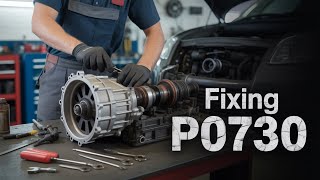
For a 1997-2004 Dodge Dakota, code P0730 is most often caused by a failing governor pressure solenoid and sensor (on V6 and 5.2L/5.9L V8 models with the 42/44/46RE transmission) or faulty input/output speed sensors (on 4.7L V8 models with the 45/545RFE transmission). Start by checking the transmission fluid level and condition, as low or burnt ATF+4 fluid is a common culprit.
- P0730 on a 2nd Gen Dakota means the transmission is slipping.
- Always check the transmission fluid level and condition first. Use only ATF+4 fluid.
- For V6 and 5.2L/5.9L V8 models, the most likely internal cause is a bad governor pressure solenoid and sensor.
- For 4.7L V8 models, faulty input/output speed sensors are a more common cause.
- Do not immediately assume you need a new transmission; the cause is often a much cheaper electronic component.
What's Unique About the 1997-2004 Dodge Dakota
The 1997-2004 Dakota generation used different automatic transmissions depending on the engine. Models with the 3.9L V6 and the 5.2L/5.9L Magnum V8s used the 42RE, 44RE, or 46RE transmissions, which are famously prone to governor pressure solenoid and sensor failures inside the transmission pan. Models with the 4.7L V8 (starting in 2000) used the 45RFE/545RFE transmission, where P0730 is more commonly linked to external input and output speed sensors. The 45RFE was used from 2000-2002, and the updated 545RFE (which added an extra overdrive gear via software) was used from 2003-2004.
Symptoms You May Notice
- Check Engine Light is on
- Transmission slipping (engine revs high with no corresponding increase in speed)
- Harsh, erratic, or delayed shifts
- Vehicle gets stuck in one gear, often 2nd or 3rd ("limp mode")
- Inability to shift into higher gears or use overdrive
- Reduced fuel economy
- Flashing overdrive OFF light on the shifter
- A shuddering sensation or the feeling that the engine is struggling for air (as noted in NHTSA ODI #10348979)
- Replacing only the output speed sensor when the input sensor is the actual cause, or vice-versa, especially on 4.7L models.
- Assuming the entire transmission is bad without first checking the fluid and testing the common electronic failure points like sensors and solenoids.
- On V6/Magnum V8 models, replacing external speed sensors when the root cause is the internal governor pressure solenoid and sensor.
Most Likely Causes
- Low or Burnt Transmission Fluid 🔴 High Probability Leaks from the pan gasket, cooler lines, or seals are common on older trucks, leading to low fluid levels. Neglecting service intervals causes fluid to break down. Only Mopar ATF+4 fluid should be used.
How to confirm: Check the transmission fluid dipstick (engine running, in neutral, on level ground after cycling through gears). The fluid should be at the 'FULL' mark, bright red, and not smell burnt. Brown, black, or burnt-smelling fluid indicates a problem.
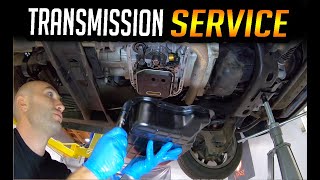
Typical fix: Top off with Mopar ATF+4 fluid if low. If the fluid is dirty or burnt, perform a transmission fluid and filter change. 🎬 Watch: How to properly change your Dakota's transmission fluid and filter.
Est. part cost: $50-$100 for fluid and a filter kit. - Faulty Governor Pressure Solenoid & Sensor (42/44/46RE Transmissions) 🔴 High Probability This is a notoriously common failure point on Dodge RE-series transmissions used with V6 and Magnum V8 engines. The solenoid and sensor are located inside the transmission and are subjected to heat and contaminated fluid. Many owners upgrade to a heavy-duty Borg-Warner (now Rostra) solenoid kit.
How to confirm: This requires a professional scan tool to monitor desired vs. actual governor pressure. However, given the extremely high failure rate, they are often replaced as a primary diagnostic step if the fluid level and condition are good. A technician can also use a pressure gauge in the governor pressure port; pressure should be 0 PSI at a stop and rise approximately 1 PSI per MPH up to about 40 MPH.
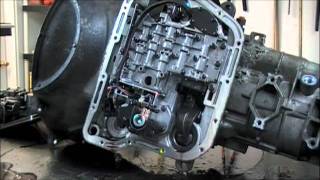
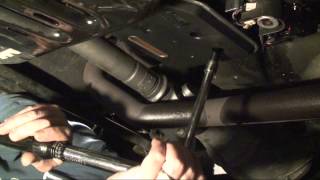
Typical fix: Drop the transmission pan and replace the governor pressure solenoid and the governor pressure sensor (transducer). 🎬 Watch: Step-by-step governor pressure solenoid and sensor replacement guide. It is highly recommended to replace both at the same time, along with the gasket.
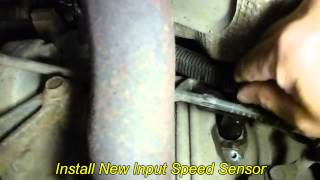
Est. part cost: $100-$250 for a quality solenoid and sensor kit. - Faulty Input or Output Speed Sensor 🟡 Medium Probability These sensors are mounted externally on the transmission case and are exposed to the elements. They are a more common cause on the 45RFE/545RFE transmissions used with the 4.7L V8. The input and output sensors are often identical parts. 🎬 See how to replace the speed sensors on 45RFE transmissions.
How to confirm: Use a scan tool to monitor the live data from both sensors while driving. A sensor that drops out, shows erratic readings, or doesn't change with vehicle speed is faulty. They can also be tested with a multimeter for proper resistance.
Typical fix: Unbolt the faulty sensor from the transmission case and replace it. The output sensor is near the tail shaft, and the input sensor is further forward. On the 45RFE/545RFE, both sensors are the same part number.
Est. part cost: $25-$70 per sensor. - Clogged Transmission Filter ⚪ Low Probability A clogged filter is usually a symptom of a larger problem, such as friction material from worn clutches shedding into the fluid. It restricts fluid flow, leading to pressure issues.
How to confirm: This is typically discovered during a transmission fluid service. A filter clogged with excessive metallic or clutch material indicates internal transmission failure.
Typical fix: Replace the filter and fluid. If the old filter is heavily contaminated, expect the P0730 code to return, indicating a deeper mechanical issue requiring a rebuild.
Est. part cost: $20-$40 for a filter and pan gasket.
Rare But Worth Checking
- Internal Mechanical Failure: This is the worst-case scenario. If fluid, sensors, and solenoids are all good, the problem is likely worn-out internal parts like clutch packs, bands, or a failing torque converter. NHTSA ODI #11169885 describes an owner who felt the vehicle was not shifting properly before P0730 was triggered, which was attributed to issues inside the transmission.
- Faulty Valve Body: The valve body directs hydraulic fluid. A blockage from debris or a warped housing can prevent proper gear engagement. Sometimes this can be cleaned, but often it requires replacement.
- Damaged Wiring or Connectors: Wiring to the external speed sensors or the main transmission connector can become damaged from road debris, heat, or corrosion, causing intermittent signals and triggering the code.
Diagnosis Steps
- Check the transmission fluid level and condition. Ensure it is full, bright red, and does not smell burnt. Use only ATF+4 fluid.
- Connect an OBD-II scanner and check for any other transmission-related codes, such as specific gear ratio faults (P0731-P0736) or sensor circuit faults (P0720, P1762, etc.).
- Using a scan tool with live data capability, monitor the Input Speed Sensor (ISS) and Output Speed Sensor (OSS) readings while driving. Both should increase smoothly with vehicle speed. Any dropouts or erratic readings point to a bad sensor or wiring.
- If a sensor reading is suspect, inspect its wiring and connector for damage, corrosion, or looseness before replacing the sensor itself.
- For V6 and Magnum V8 models (42/44/46RE), if sensors appear to be working, the next step is to inspect the governor pressure solenoid and sensor. This requires draining the fluid and removing the transmission pan for access.
- When the pan is off, inspect the fluid and the magnet for excessive metal shavings or clutch material. A small amount of fine grey material is normal, but large flakes or chunks indicate severe internal wear.
- If all electronic components test good and the fluid is clean, the issue is likely a mechanical fault within the transmission (clutch packs, torque converter, valve body), which requires professional diagnosis.
Parts You'll Likely Need
- Governor Pressure Solenoid & Sensor Kit (for 42/44/46RE)
(OEM #Solenoid: 4617210, Sensor: 56028196AD)— This is the most common point of failure on the RE-series transmissions found in V6 and Magnum V8 Dakotas, directly causing pressure regulation issues that lead to P0730.
Trusted brands: Mopar, Rostra (Borg-Warner), Standard Motor Products (SMP)
OEM price range: $150-$250
Aftermarket price range: $80-$150 - Transmission Input/Output Speed Sensor (for 45/545RFE)
(OEM #4799061AB (Note: Input and Output sensors are the same part))— Provides the crucial speed readings to the TCM for ratio calculation. A faulty sensor is the most common cause of P0730 on 4.7L V8 models.
Trusted brands: Mopar, NTK, Delphi
OEM price range: $50-$80
Aftermarket price range: $20-$50 - Transmission Filter and Pan Gasket Kit — Should be replaced any time the transmission pan is removed for service, such as when replacing the governor pressure solenoid. A clogged filter can also cause pressure issues leading to this code.
Trusted brands: Mopar, Wix, ATP
Related Codes That Often Appear With This One
- P0700 — P0700 is a generic code that simply means the Transmission Control Module (TCM) has stored a fault. It almost always appears with more specific codes like P0730.
- P0731 - P0736 — These codes indicate an incorrect gear ratio in a specific gear (e.g., P0731 for 1st gear, P0732 for 2nd gear). They help pinpoint when the slip is occurring.
- P0720 — This code indicates a fault with the Output Speed Sensor circuit. If you see P0720 with P0730, the output speed sensor is the most likely culprit.
- P1762, P1763, P1764 — These codes are specific to the governor pressure sensor circuit on 42/44/46RE transmissions. Seeing one of these strongly points to a faulty governor pressure sensor/transducer.
Technical Service Bulletins (TSBs) & Recalls
- TSB 09-05-00: Describes the official diagnostic procedure for checking for a blown intake manifold plenum gasket on Magnum engines, a common cause of poor engine performance that can be misdiagnosed.
- TSB Bulletin #21-033-14: While issued for later models, this bulletin highlights that P0730 can sometimes be addressed by selectively erasing and reprogramming the Transmission Control Module (TCM) with new software to enhance shift performance.
Mechanic-Grade Diagnostic Values
- Governor Pressure Solenoid Resistance (42/44/46RE) — expected: 3.8 - 4.0 ohms. Failure: A reading outside this narrow range indicates a faulty solenoid coil.
- Governor Pressure Sensor Output Voltage (42/44/46RE) — expected: Approximately 1.0V at 10 PSI, increasing to 3.0V at 60 PSI.. Failure: Voltage that doesn't correspond with measured governor pressure indicates a bad sensor (transducer).
- Governor Pressure (at test port on 42/44/46RE) — expected: 0 PSI at idle in Park/Neutral. Should rise ~1 PSI per MPH when driving, up to ~40 MPH.. Failure: Pressure at idle, or pressure that doesn't rise with speed, points to a faulty governor solenoid or hydraulic issue.
- Input/Output Speed Sensor Resistance (45/545RFE) — expected: Generally should read between 500 and 900 ohms, but checking against a new part is the best practice as specs can vary.. Failure: An open circuit (infinite resistance) or a short (zero resistance) indicates a failed sensor.
Scan Tool Commands That Help
- DRB III (or equivalent professional scanner): Governor Pressure Test — On RE-series transmissions, this function allows the technician to compare the 'Desired' governor pressure commanded by the PCM to the 'Actual' pressure reported by the sensor. A significant deviation confirms a fault in the governor circuit.
- DRB III (or equivalent professional scanner): Torque Converter Stall Speed Test — This test can help differentiate between a slipping clutch/band and a failing torque converter. The scanner will display engine RPM as the technician performs the stall test; if RPM exceeds the manufacturer's specification, it indicates internal transmission slippage.
Wiring & Ground Locations
- Transmission Case Connector (8-pin round) — On the driver's side of the transmission case, above the pan rail.. This is the main electrical interface. Pin 4 (White wire) is the governor pressure sensor signal, and Pin 5 (Violet wire) is the control for the governor pressure solenoid. Testing for correct voltage and continuity at these pins can diagnose wiring issues between the PCM and transmission.
- Engine Wiring Harness Splices — Inside the main engine wiring harness, particularly the section running along the firewall and under the under-hood fuse/relay box.. Early Dakotas are known for factory solder splices wrapped in non-waterproof tape, which corrode over time, causing intermittent power loss to critical components like the transmission control relay. This can cause erratic behavior and codes without any single part being faulty.
- Wiring Harness Chafe Points — Check where the harness passes over the top of the camshaft carrier cover, near the generator bracket, and around the left front upper control arm bushing.. Vibration can cause the harness to rub through on sharp metal edges, shorting out sensor signals or power feeds related to the transmission, leading to intermittent and hard-to-diagnose codes like P0730.
Real Owner Repair Stories
- Diesel Truck Resource Forums user (Dodge Ram with a built 47RE (similar architecture to Dakota's 46RE)) — Hard bang into 2nd gear, sometimes shifting from 1st to 3rd, or dropping back into 1st while accelerating.
❌ Tried (didn't work) Living with the issue, assuming it was normal for a built transmission.
✅ What actually fixed it Installed a new Borg-Warner heavy-duty governor pressure solenoid with a billet mounting plate and a new OEM pressure sensor. The truck's shifts became smooth and correct. - DodgeForum.com user (1993 Dodge Dakota 5.2L V8) — No spark, no fuel, no power to the PCM. Intermittent no-start condition.
❌ Tried (didn't work) Initial wire splice repair did not hold.
✅ What actually fixed it Located and repaired a corroded factory solder splice inside the engine wiring harness about 12 inches from the under-hood fuse box. This splice supplied activation voltage to the auto-shutdown relay, fuel pump relay, and PCM. - NHTSA ODI #10744133 — An owner reported that their vehicle was taken for diagnostic testing after experiencing issues, resulting in a P0730-Improper Gearing code, though the vehicle was not immediately repaired.
- NHTSA ODI #10978776 — An owner noted that after starting the car, everything appeared to be working fine except for the service light being on with code P0730 for an incorrect drive shift ratio, noting that there are many reports of this issue across multiple Dodge platforms.
OEM Part Supersession History
56027562→56027720 (and later 56028196AD)— Change in governor pressure sensor (transducer) design from a 3-pin to a 4-pin connector around 1998-1999.
Heads up: When replacing a 3-pin transducer on an older (pre-99) model with the newer 4-pin style, the solenoid pack (Chrysler P/N 4617463) must also be replaced to match the new connector.
Model Year Variations Within This Range
- 1997-1999: These years typically used a metal, canister-style governor pressure sensor (transducer) with a 3-pin connector.
- 2000-2004: These years used a black, plastic-bodied governor pressure transducer with a 4-pin connector. The governor solenoid housing also changed slightly to accommodate it.
- 2000-2002 vs 2003-2004 (4.7L V8 only): Models from 2000-2002 used the 45RFE (a four-speed, but marketed as a 'multi-speed' transmission). In 2003, this was updated to the 545RFE, which used the same hardware but added a fifth gear ratio through software changes in the TCM. The diagnosis for P0730 related to speed sensors remains the same for both.
Diagnostic Flowchart
Other Known Issues on This Vehicle
Issues unrelated to this code that are worth knowing about as an owner of this generation:
- Intake Manifold Plenum Gasket Leak (Magnum V6/V8) 🔴 High — Extremely common on 3.9L, 5.2L, and 5.9L Magnum engines. The steel bottom plate of the intake manifold warps, causing the gasket to fail. This leads to oil consumption, engine pinging, and fouled spark plugs. (Ref: TSB 09-05-00 describes a diagnostic procedure for this issue.)
- Cracked Dashboard 🟠 Medium — Virtually all 2nd generation Dakotas suffer from this. The plastic dashboard becomes brittle from sun exposure and cracks, often in multiple places. It is a cosmetic issue but can be severe. (Ref: No recall was ever issued, despite widespread owner complaints.)
- Heater Core Failure 🔴 High — A common failure that is very labor-intensive to fix, as the entire dashboard must be removed. Symptoms include a sweet smell of coolant in the cab, fog on the inside of the windshield, and poor heater performance.
- Premature Ball Joint Wear 🔴 High — The front upper and lower ball joints wear out prematurely, causing clunking noises, steering wander, and uneven tire wear. This is a significant safety concern. (Ref: Recalls were issued for some model years (e.g., 2000-2001) but the problem is widespread across the generation.)
- Brake Line Corrosion 🔴 High — Brake lines are prone to rusting and failing, especially in regions that use road salt. This can lead to a sudden loss of braking ability.
Used vs. New Parts: Buying Guide for This Vehicle
When a used part is the smart pick: For this repair, used parts are generally not recommended due to the high failure rate of the electronic components. A used transmission assembly from a low-mileage donor could be an option if a complete rebuild is needed, but the common failure parts (solenoids, sensors) should still be replaced with new ones before installation.
Donor-vehicle mileage cap: roughly under 80000 miles for the part to have meaningful remaining life.
What to inspect on the donor part:
- Check the fluid color and smell from the donor transmission; it should be bright red and not burnt.
- Ask for a vehicle history report if possible to check for regular maintenance.
- Inspect the transmission case for cracks or heavy corrosion, especially around sensor mounts.
OEM-only on this vehicle (don't cheap out):
- Governor Pressure Sensor (Transducer) - While aftermarket sensors exist, many forum users report higher reliability and fewer compatibility issues with genuine Mopar sensors.
Aftermarket brands forum-validated for this vehicle:
- Rostra / Borg-Warner for the heavy-duty Governor Pressure Solenoid upgrade.
- Wix or ATP for transmission filter kits.
Brands owners have reported issues with on this vehicle:
- Unbranded, no-name electronic sensors and solenoids from online marketplaces are frequently reported as being dead-on-arrival or failing shortly after installation.
Real Owner Stories
Aggregated from forums and TSBs cited above. Mileages and costs reflect what owners reported in those sources.
2001 Dakota 4.7L
Symptoms: Check Engine Light was on with codes P0730 and P0720 stored.
What fixed it: The problem was diagnosed as a faulty output speed sensor.
Source hint: https://www.dodgedakota.net/threads/p0730-and-p0720-on-a-2001-dakota-4-7.143815/ (Discussion on a 4.7L Dakota with P0730 and P0720, pointing towards the output speed sensor.)
2nd Gen Dakota 5.9L V8
Symptoms: The truck set a P0730 code.
What fixed it: The community suggested the likely cause was a failing governor pressure solenoid and sensor, which is a very common issue on the 46RE transmission.
Source hint: https://dodgeforum.com/forum/2nd-gen-dakota-tech/309322-p0730-code-help.html (A user with a 5.9L V8 gets P0730, and the community points towards the governor pressure solenoid and sensor.)
Related OBD-II Codes
Frequently Asked Questions
What is the correct transmission fluid to use for my 1997-2004 Dodge Dakota?
My Dakota has a Magnum V8 and the transmission fluid looks fine. What's the most likely cause of a P0730 code?
Are the causes for P0730 different on a Dakota with the 4.7L V8 engine?
I'm planning to replace the governor pressure solenoid. Is there anything else I should replace at the same time?
I found a lot of metal shavings in my transmission pan. What does this indicate?
Is there a TSB for an engine issue on Magnum V8s that could be mistaken for a transmission problem?
Helpful Videos
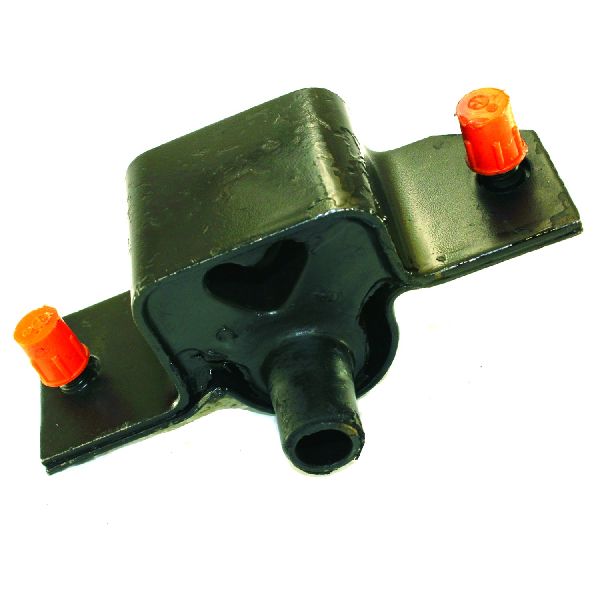
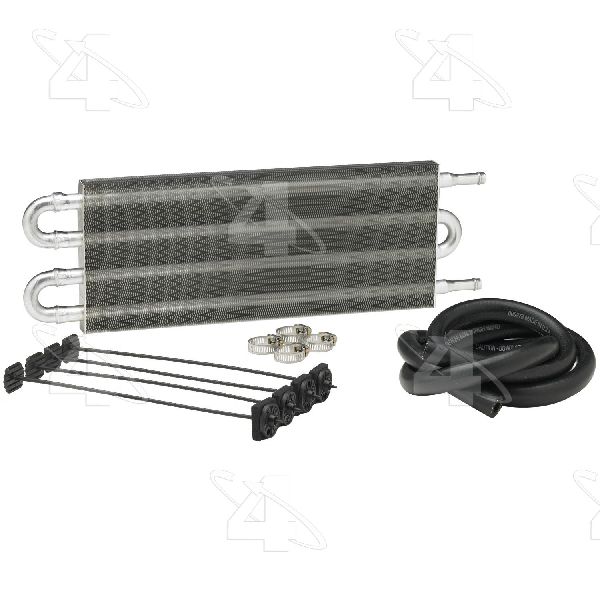
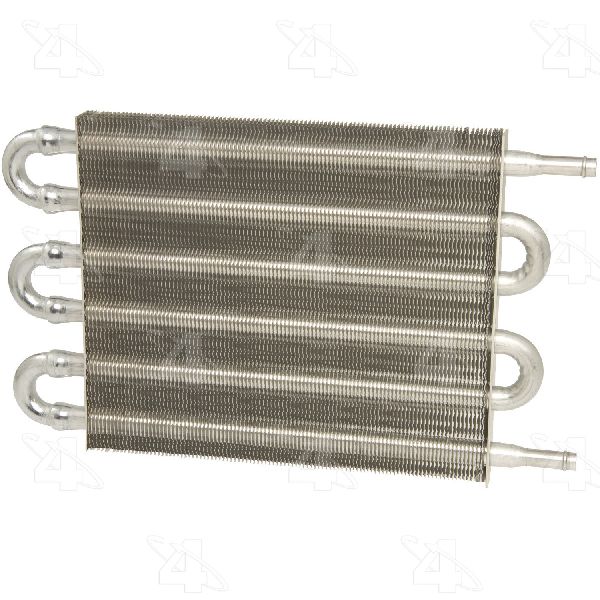
We Have This Part in Stock


The information in this article is provided for general reference and educational purposes only. Vehicle specifications, procedures, and part compatibility can vary by production date, trim level, and region. Always consult your vehicle's factory service manual and verify part numbers before purchasing or performing repairs. Safety-critical components such as airbags, seat belts, and braking systems should be installed by a qualified professional.
- Dodge Dakota:
- 🎬 Helpful Videos
- 🛍️ Shop This Part
- What's Unique About the 1997-2004 Dodge Dakota
- Symptoms You May Notice
- Most Likely Causes
- Rare But Worth Checking
- Diagnosis Steps
- Parts You'll Likely Need
- Related Codes That Often Appear With This One
- Technical Service Bulletins (TSBs) & Recalls
- Mechanic-Grade Diagnostic Values
- Scan Tool Commands That Help
- Wiring & Ground Locations
- Real Owner Repair Stories
- OEM Part Supersession History
- Model Year Variations Within This Range
- Diagnostic Flowchart
- Other Known Issues on This Vehicle
- Used vs. New Parts: Buying Guide for This Vehicle
- Real Owner Stories
- 2001 Dakota 4.7L
- 2nd Gen Dakota 5.9L V8
- Related OBD-II Codes
- Frequently Asked Questions
- 🎟️ Get 5% Off