

OBD-II Code P1762: Comprehensive Diagnosis & Repair Guide
What P1762 Means, Manufacturer Variations, and Pro-Level Fixes
- Stop driving immediately; operating in 'limp mode' overheats the transmission and escalates a $200 sensor repair into a $3,000+ full rebuild.
- Identify your vehicle's specific P1762 definition before buying parts: it flags a Governor Pressure Sensor on Dodge/Jeep, a TCM solder joint on Nissan/Infiniti, and a TCC solenoid on Subaru.
- Replace the governor pressure sensor and solenoid together on Dodge, Jeep, and Chrysler vehicles, as these two parts account for over 80% of P1762 codes on RE-series transmissions.
- Test the 5-volt reference circuit before replacing any transmission parts; a shorted upstream O2 sensor on Dodge/Jeep vehicles frequently corrupts this shared circuit and triggers a false P1762.
What Does P1762 Mean?

P1762 is a transmission-related trouble code indicating the Powertrain Control Module (PCM) detects a critical fault in the transmission's hydraulic pressure control system. For Chrysler, Dodge, and Jeep vehicles, this code specifically flags an incorrect voltage reading from the governor pressure sensor when the vehicle is in Park or Neutral. The PCM expects a baseline voltage near 0.5V but detects a value that is too high or too low, proving a sensor or circuit failure exists before the vehicle moves.
Technical definition: The Society of Automotive Engineers (SAE) definition for P1762 varies significantly by manufacturer. The most common is the Chrysler/Dodge/Jeep definition: "Governor Pressure Sensor Offset Voltage Too High or Low". Other manufacturers use the same code for entirely different faults, such as "Overdrive Band Failed Off" (Ford), "Direct Clutch Solenoid Valve Malfunction" (Nissan/Infiniti), or "Abnormal Torque Converter Clutch Duty" (Subaru). Identify the vehicle's make before starting diagnosis.
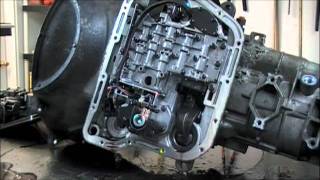
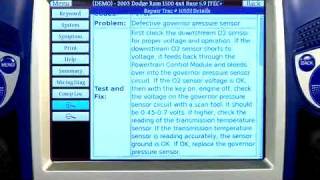
🎬 See a professional technician diagnose P1762 on a Dodge Ram.Can I Drive With P1762?
No — Do Not Drive. Driving is strongly discouraged. A P1762 code forces the transmission into 'limp mode,' locking it in 2nd or 3rd gear. This leads to dangerously poor acceleration from a stop and high engine RPMs at speed, which causes rapid overheating. Continuing to drive quickly leads to catastrophic transmission failure, turning a $200 sensor replacement into a $3,000+ transmission rebuild. Tow the vehicle to a repair shop.
Common Causes

- Faulty Governor Pressure Sensor (Transducer) (Very Common) — This sensor measures the hydraulic pressure that controls shifting. It is a notoriously high-failure part on Chrysler RE-series transmissions and is the primary cause of P1762 on those vehicles.
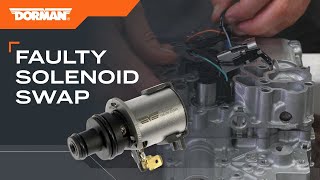
- Faulty Governor Pressure Solenoid (Common) — This solenoid works in tandem with the sensor to regulate fluid pressure. It sits next to the sensor and is typically replaced concurrently, as its failure causes identical symptoms. 🎬 Watch: Step-by-step guide to replacing the governor sensor and solenoid.
- Low, Burnt, or Debris-Filled Transmission Fluid (Common) — Degraded fluid or fluid contaminated with clutch material clogs the small passages in the valve body and solenoid screens, preventing correct operation.
- Faulty Transmission Control Module (TCM) - Nissan/Infiniti (Less Common) — On Nissan/Infiniti models with the RE5R05A transmission, this code stems from a cracked solder joint on the TCM, which is integrated into the valve body inside the transmission.
- Internal Wiring or Connector Issues (Less Common) — The wiring harness inside the transmission oil pan sits submerged in hot fluid and becomes brittle, causing wires to break or short. The main 8-pin external connector also suffers from fluid contamination.
- Faulty Upstream O2 Sensor (select Dodge/Jeep) (Rare) — On specific Dodge and Jeep models, the upstream oxygen sensors share a 5-volt reference circuit with the governor pressure sensor. A short-circuited O2 sensor corrupts this circuit and tricks the PCM into setting a P1762 code.
- Worn or Sticking Valve Body (Rare) — The valve body contains a maze of channels and valves directing fluid flow. Worn bores or valves stuck by debris lead to incorrect pressure readings and shifting failures.
- Faulty Powertrain Control Module (PCM) (Very Rare) — In rare instances, the PCM itself fails. Consider this only after exhaustively testing and ruling out all wiring, sensors, and shared circuits.
Symptoms

- Check Engine Light On — The Malfunction Indicator Lamp (MIL) illuminates on the dashboard to alert the driver of a powertrain fault.
- Poor Acceleration — Engine RPM increases significantly without a corresponding increase in vehicle speed, directly resulting from the transmission locking in the wrong gear.
- Overdrive (O/D) Off Light Flashing — On select vehicles, the O/D off indicator flashes alongside the Check Engine Light to signal a transmission-specific fault.
- Transmission Stuck in Limp Mode (also visible on scanner) — The transmission defaults to a single gear (usually 2nd or 3rd) to prevent damage. The vehicle feels extremely sluggish from a stop and cannot reach highway speeds.
- Erratic or No Shifting (also visible on scanner) — The transmission refuses to shift out of first gear, or shifts are harsh, delayed, and unpredictable. Drivers often feel a hard clunk when shifting into Drive or Reverse.
Diagnostic Flowchart
Tap your situation to follow the diagnostic path that matches what you're seeing on this code.
Common Fixes & Costs
- Replace Governor Pressure Sensor and Solenoid — Parts: $70-$250 for a kit containing the sensor, solenoid, gasket, and filter., Labor: $150-$400, ~1.5 hr book time (Intermediate)
- Replace Upstream Oxygen Sensor — Parts: $50-$150 per sensor., Labor: $80-$150, ~0.8 hr book time (DIY)
- Transmission Fluid and Filter Service — Parts: $60-$120 for ATF+4 fluid and a filter., Labor: $100-$250, ~1.2 hr book time (DIY)
- Repair Nissan/Infiniti TCM Solder Joint — Parts: <$5 for solder and supplies., Labor: $400-$800, ~4.5 hr book time (Professional)
- Replace TCC Lock-Up Solenoid (Subaru) — Parts: $80-$160 for an individual solenoid., Labor: $300-$600, ~3 hr book time (Intermediate)
- Repair Wiring Harness or Clean Grounds — Parts: $10-$50 for connectors or wire., Labor: $120-$500, ~2.5 hr book time (Professional)
Used vs. New Parts: Buying Guide
When a used part is worth it: For the most common fix (governor pressure sensor/solenoid), buying used parts is strongly discouraged. These are high-failure electronic components located inside the transmission; the risk of a faulty used part and repeat labor costs outweighs any potential savings.
Donor-vehicle mileage cap: roughly under 20000 miles for the part to have meaningful remaining life.
Donor quality checklist:
- Match part numbers exactly, especially for OEM vs. aftermarket designs.
- Avoid parts from high-mileage or unknown-condition transmissions.
- For electronic parts, new is always safer than used.
Decision logic:
- If The part is electronic and internal to the transmission (like a solenoid or sensor). → Buy a new, high-quality OEM or reputable aftermarket part (e.g., Borg Warner, Rostra). The part cost is low compared to the labor to install it.
- If The part is a complete used transmission assembly. → Ensure it comes from a low-mileage donor with a documented history and includes a warranty of at least 90 days.
Warranty tradeoff: Used parts typically offer a 30-90 day warranty at best. New aftermarket parts often carry a 1-year or limited lifetime warranty. The peace of mind and protection against repeat labor costs make new the better value.
Worst-case if a used part fails: $300-$600 if a used internal part fails after installation, requiring repeat labor for pan removal, fluid replacement, and the cost of another part.
What Happens If You Wait — Timeline
- Immediate (First Drive): Code P1762 sets. The PCM detects an invalid voltage from the governor pressure sensor during its key-on self-test. The Check Engine Light illuminates and the transmission is immediately forced into 'limp mode,' locking it in 2nd or 3rd gear. (MPG impact: 15-30%% · Added cost: $100-$300 (for a tow to a shop))
- 0-50 miles of driving: Driving in a single high gear from a stop forces the engine to lug and the torque converter to slip excessively, generating massive amounts of heat. Transmission fluid temperature skyrockets, and the fluid breaks down and loses its lubricating properties. (MPG impact: 20-40%% · Added cost: $200-$400 (cost of new ATF+4 fluid and filter, plus initial damage to clutch friction material))
- 50-200 miles of driving: Extreme heat cooks internal components. Rubber seals and o-rings become hard and brittle, causing internal pressure leaks. The friction material on clutch packs burns and delaminates, contaminating the fluid with abrasive debris. (MPG impact: 25-50%% · Added cost: $800-$1,500 (damage now includes worn clutches and seals, requiring a partial overhaul))
- 200+ miles of driving: Catastrophic failure. Extreme heat and debris-filled fluid destroy the transmission. Clutch packs are completely burnt, hard parts like the drum or planetaries warp or break, and the valve body becomes clogged and scored. The initial $200 sensor fix becomes a full transmission rebuild. (MPG impact: N/A (Vehicle is likely inoperable)% · Added cost: $2,500-$4,500+)
Cost of Not Fixing It

- Immediate (0-1 month): Vehicle is forced into 'limp mode,' resulting in unsafe acceleration and high engine RPMs. Risk of being stranded. Primary cost is a tow. (Added cost: $100-$300)
- 1-6 months: Continued driving in limp mode causes excessive heat, degrading transmission fluid and destroying clutch packs and internal seals. (Added cost: $500-$1500)
- 6+ months: Catastrophic internal transmission failure. Heat and improper pressures destroy clutch packs, warp hard parts, and contaminate the hydraulic system. A sensor-level repair escalates to a full transmission rebuild. (Added cost: $2500-$4500+)
Diagnosis Steps

- Scan for All Codes
Use an OBD-II scanner to read the P1762 code and any other stored codes. Pay close attention to codes like P1763, P1764, P0700, or O2 sensor codes (e.g., P0132) on Dodge/Jeep, as they provide critical diagnostic clues.
Tools: OBD-II Scanner (Beginner) - Check Transmission Fluid
Check the transmission fluid level and condition with the engine running and the transmission in Neutral (for most Chrysler products). The fluid must be bright red, not brown or black, and should not smell burnt. Low or burnt fluid indicates severe internal wear.
Tools: Rag, Dipstick (if equipped) (Beginner) - Live Data Voltage Check (Dodge/Jeep)
Using a scan tool with live data, monitor the 'Governor Pressure Sensor' voltage with Key On, Engine Off (KOEO). The reading must be between 0.5 and 0.8 volts. A reading of 0V or a high reading like 4.8-5.0V points directly to a failed sensor or a circuit fault. Also monitor 'Governor Pressure,' which must be 0 PSI.
Tools: Advanced OBD-II Scanner (Intermediate) - Isolate Shared Circuits (Dodge/Jeep O2 Sensor Quirk)
If driving a Dodge/Jeep, unplug the upstream O2 sensor(s), clear the codes, and perform a short test drive. If the P1762 code does not return, a shorted O2 sensor is the root cause.
Tools: Basic Hand Tools (Intermediate) - Inspect External Wiring and Grounds
Visually inspect the main transmission wiring harness connector for corrosion, pushed-out pins, or fluid contamination. On Nissan/Infiniti, check the main engine-to-chassis ground straps for corrosion or looseness.
Tools: Flashlight, Wire Brush (Beginner) - Drop Transmission Pan and Inspect
Drain the fluid and remove the transmission pan. Inspect the magnet in the pan for excessive metal shavings—a small amount of fine grey material is normal, but large flakes indicate severe internal damage requiring a rebuild.
Tools: Socket set, Drain pan, Gasket scraper, Torque wrench (Intermediate) - Test Sensor Circuit with a Multimeter (Dodge/Jeep)
With the pan off, disconnect the governor pressure sensor. Probe the terminals at the harness connector. You must find: 1) A 5-volt reference signal (approx. 4.8-5.5V) from the PCM. 2) A good ground (less than 5 ohms of resistance to chassis ground). 3) A signal wire. If the 5V supply or ground is missing, the problem is in the wiring or PCM.
Tools: Digital Multimeter (DMM) (Advanced) - Test TCM Solder Joints (Nissan/Infiniti)
For RE5R05A transmissions, remove the valve body and TCM. Visually inspect the solder points for the solenoid pins. A common failure is a cracked solder joint on the direct clutch solenoid pin. Test for continuity between the external harness pin and the solenoid's contact point on the board. An open circuit confirms the failure.
Tools: Digital Multimeter (DMM), Soldering Iron (Advanced) - Advanced: Test Solenoid Resistance (Nissan/Infiniti RE5R05A)
With the valve body removed, test the resistance of the individual solenoids. The Direct Clutch Solenoid must have a resistance of approximately 3.3 ohms (acceptable range is 3-9 ohms). A reading far outside this range indicates a failed solenoid.
Tools: Digital Multimeter (DMM) (Advanced) - Advanced: Test Solenoid Resistance (Subaru TR580/TR690)
Access the valve body from the top of the transmission. Test the resistance of the TCC Lock-Up solenoid. It must measure between 10 and 13.5 ohms at room temperature (approx. 68°F). A common failure mode is for the solenoid circuit to go open (infinite resistance) when hot. Test this by carefully heating the solenoid with a heat gun.
Tools: Digital Multimeter (DMM), Heat Gun (Advanced)
When This Code Triggers (Freeze-Frame Conditions)
- Vehicle Speed: 0 mph (For Chrysler/Dodge/Jeep, this code sets during a self-test immediately at key-on or in Park/Neutral before moving.)
- Gear Selector: Park or Neutral (The PCM checks the governor pressure sensor offset voltage when no pressure should be present.)
- Engine RPM: 1500-2500 RPM (For Ford/Subaru, the code sets during steady-state cruise when a shift or TCC lockup fails to occur as commanded.)
- Transmission Fluid Temp: 50-200°F (The diagnostic monitor for Chrysler vehicles requires the fluid temperature to be above 50°F (10°C) to run.)
Related Codes
- P1763 — Indicates Governor Pressure Sensor Voltage is Too High. Focus diagnosis on finding a short to voltage in the signal wire or a sensor that has failed in a high-output state.
- P1764 — Indicates Governor Pressure Sensor Volts Too Low. Points specifically to a low voltage condition, leading you to check for an open circuit, a short to ground, or a completely dead sensor.
- P0700 — A generic Transmission Control System Malfunction code. It is purely informational, set by the ECM to tell you the TCM stored a specific, more detailed fault code (like P1762). Always check the TCM for the underlying code.
- P0740 — Indicates a fault in the Torque Converter Clutch (TCC) Solenoid Circuit. On Dodge/Jeep, it appears alongside P1762 if debris clogs multiple solenoids. On Subaru, it is closely related as P1762 often points to the TCC solenoid itself.
Climate & Environmental Factors
- Cold Temperature: On Chrysler/Dodge/Jeep vehicles, the diagnostic test for P1762 requires the transmission sump temperature to exceed 50°F (10°C). The code rarely sets in extremely cold conditions until the fluid warms up.
- Long Periods of Inactivity: The P1762 code frequently appears after the vehicle sits unused for weeks, caused by a temporarily sticking solenoid or a minor voltage glitch. A full PCM reset often clears the code permanently in these cases.
How to Talk to a Mechanic About This Code
Say this: "My [Make/Model/Year] has a P1762 code and is stuck in limp mode. I've researched this and know it has different common causes depending on the manufacturer. For my [Dodge/Jeep], I suspect the governor pressure sensor and solenoid. For my [Nissan/Infiniti], I suspect the TCM solder joint. For my [Subaru], I suspect the TCC lock-up solenoid. Can you please start the diagnosis by confirming the specific known issue for my vehicle?"
This immediately signals to the shop that you are an informed consumer. It directs them toward the most likely, cost-effective fix and discourages them from starting with a broad, expensive, or unnecessary diagnostic path. It also helps you gauge their expertise if they seem unfamiliar with the specific quirk you mention.
Avoid saying:
- 'My transmission is broken, just fix it.'
- 'My check engine light is on, can you look at it?'
- 'I think I need a new transmission.'
Questions to ask before authorizing the repair:
- Did you test the sensor's electrical circuit (5V reference and ground) before condemning the part itself? (For Dodge/Jeep)
- What brand of replacement parts (sensor, solenoid) do you plan to use? I'd prefer OEM or a quality aftermarket brand like Borg Warner.
- For my Nissan, are you able to perform the TCM solder joint repair, or do you only replace the entire valve body assembly? What is the cost difference?
- Will you provide a written estimate with a clear breakdown of parts and labor?
- What is the warranty on this specific repair, covering both parts and labor?
Where to Take It: Dealer vs Independent vs Chain
- Dealer:
Recommended for the Ford software issue or if your vehicle is under warranty. Otherwise, a more expensive option that overlooks cost-saving component-level repairs.
Best for: Vehicles under warranty., Repairs requiring manufacturer-specific software updates (e.g., Ford 10R80 TSB)., Complex diagnostics where an independent shop is unable to identify the cause.
Downsides: Highest labor rates, often 1.5-2x more than independent shops., Defaults to replacing entire expensive assemblies (like a full valve body) instead of repairing a single component (like a solenoid or TCM solder joint). (Typical cost: +50% vs. baseline) - Independent Shop:
Best overall choice, especially for the common Dodge/Jeep repair. For Nissan/Subaru, seek an independent *transmission specialty* shop familiar with the specific TCM/solenoid issues to avoid paying for a full valve body.
Best for: The common P1762 fix on Dodge/Jeep vehicles, as it is a well-known repair., Out-of-warranty vehicles where cost is a primary concern., Finding a shop that performs component-level repairs (like a single solenoid) instead of full assembly replacement.
Downsides: Quality and expertise vary greatly. It is crucial to find a shop with a good reputation and experience with transmissions. (Typical cost: +0% vs. baseline) - Chain Shop:
AVOID for P1762. This code requires diagnostic depth beyond a simple code read. The risk of misdiagnosis, use of low-quality parts, or being sold an unnecessary and expensive repair is high.
Best for: Simple, routine maintenance like oil changes or tire rotations.
Downsides: Technician skill and experience with complex transmission diagnostics are highly variable., Lacks the specialized knowledge for manufacturer-specific quirks (Nissan TCM, Subaru solenoid)., High pressure to upsell services; recommends a transmission replacement when a simpler fix is possible. (Typical cost: -10% vs. baseline)
When to Walk Away From the Repair
If the estimated repair cost exceeds 50% of the vehicle's private-party market value, seriously consider not fixing it.
- Car worth $4000, fix is $650: Fix it. The repair cost is a small fraction of the car's value and significantly cheaper than replacement.
- Car worth $5000, fix is $2800: Borderline. The repair cost is over 50% of the vehicle's value. Get a second opinion and evaluate the car's overall condition before proceeding.
- Car worth $3000, fix is $3500: Walk away. The repair costs more than the car is worth. Sell the vehicle as-is ('mechanic's special') or scrap it.
What Scan Tool You Need for This Code
Minimum: A scanner that reads manufacturer-specific trouble codes and displays live data from the Transmission Control Module (TCM).
A basic $20 code reader only shows you the P0700 (generic transmission fault) and maybe P1762, but it cannot display the essential live voltage data from the governor pressure sensor on a Dodge/Jeep needed for diagnosis. You will be guessing at the cause without this data.
Budget: BlueDriver Pro (~$100) — Connects to your smartphone and displays live data from various modules, including the transmission, on many domestic vehicles. This is sufficient to see the governor pressure sensor voltage on a Dodge/Jeep.
Mid-range: Foxwell NT510 Elite (with Chrysler software) (~$180) — A powerful handheld tool for DIYers. It provides OE-level diagnostics for a specific brand (make sure to get the Chrysler/Jeep/Dodge version). It reads live transmission data, clears codes, and performs bidirectional controls and relearn procedures after a repair.
Professional: Autel MaxiCOM MK808S / MK808Z (~$500) — A professional-level tablet scanner offering comprehensive diagnostics for all makes and models. It provides full bidirectional control, all system access, and special functions like transmission 'Quicklearn' and adaptive value resets, highly useful after replacing internal transmission parts on Chrysler products.
Rent vs buy: For a one-time fix, some AutoZone locations have a 'Loan-A-Tool' program where you 'buy' a more advanced scanner and get a full refund upon return. Verify the loaner tool reads live transmission data, not just codes. If you plan on doing your own repairs regularly, buying a mid-range tool is a worthwhile investment.
How to Clear the Code After You Fix It
- Use an OBD-II scan tool to clear diagnostic trouble codes.
- Perform a transmission adaptive learning drive cycle if internal components were replaced.
- Perform a generic OBD-II drive cycle to run emissions readiness monitors.
Drive cycle (~30 minutes): To set emissions monitors: Let vehicle sit for 8 hours (cold soak). Start and idle for 2-3 minutes. Drive 10-15 minutes at highway speed (55-65 mph). Drive 15-20 minutes in stop-and-go city traffic with several idle periods.
Readiness monitors affected: Transmission-specific monitors, Catalyst Monitor, Oxygen (O2) Sensor Monitor
Before emissions retest: drive at least 100 miles to fully set monitors.
Watch out for:
- Clearing codes with a scanner is the only way to turn off the CEL; the underlying fault must be repaired for it to stay off.
- Simply clearing codes or disconnecting the battery resets emissions readiness monitors, causing an automatic emissions test failure if not completed.
- A transmission-specific 'adaptive relearn' procedure is required after replacing internal parts and is entirely different from an emissions drive cycle.
Will This Fail Emissions / State Inspection?
Yes — this code typically fails an OBD-II emissions inspection.
- California: An illuminated Check Engine Light is an automatic failure. After repair, most readiness monitors must be 'complete' to test. A permanent DTC may remain, but the vehicle passes if the CEL is off and it has been driven over 200 miles and 15 warm-up cycles since the last code clear.
- New York: The NYVIP3 inspection includes an OBD-II scan. An illuminated Check Engine Light causes the vehicle to fail the emissions inspection.
- Texas: In counties requiring emissions testing, an illuminated Check Engine Light results in an inspection failure. The vehicle's OBD-II system must also indicate that the required readiness monitors have run.
Most Commonly Affected Vehicles
- Dodge Ram 1500/2500/3500 (1996-2007) — Extremely common on trucks with 42RE, 46RE, 47RE, and 48RE transmissions. The governor pressure sensor and solenoid are high-failure items. For 2000+ models, an upgraded 'square' style sensor is available for better reliability under high pressure.
- Jeep Grand Cherokee (ZJ, WJ) (1996-2004) — Models with the 42RE, 44RE, and 46RE transmissions frequently exhibit this code due to the same sensor/solenoid failures as the Dodge Ram. It is a very common DIY repair for this platform.
- Dodge Dakota / Durango (1996-2003) — Utilizes the same family of RE-series transmissions (42RE, 46RE) and suffers from the identical, frequent governor pressure sensor and solenoid issues.
- Nissan Titan, Armada, Frontier (2004-2010) — On these models with the RE5R05A transmission, P1762 indicates a Direct Clutch Solenoid circuit failure, almost always caused by a cracked solder joint on the internal TCM.
- Infiniti G35, FX35, QX56 (2003-2008) — Equipped with the RE5R05A transmission, these vehicles share the same common failure: a broken solder connection on the TCM, which is mounted on the valve body inside the transmission pan.
- Ford F-150, Expedition, Ranger (1997-2021) — The definition varies. On older models like the Ranger with the 5R55E, it means 'Overdrive Band Failed Off,' a mechanical issue. On newer F-150s with the 10R80 transmission, TSB 23-2066 links P1762 to software issues fixed with a PCM reprogram.
- Subaru Outback, Legacy, Forester, Impreza (2010-2017) — On many Subarus with TR580/TR690 CVT transmissions, P1762 relates to the 'Torque Converter Clutch Duty Solenoid.' This is fixed by replacing the single TCC lock-up solenoid on the valve body, not the entire expensive assembly.
- Hyundai Elantra (2011-2017) — For Hyundai, P1762 indicates a 'Steering Wheel Angle Sensor N-Input Signal' problem, pointing to a communication breakdown between the steering sensor and the TCM, not a hydraulic fault.
Manufacturer-Specific Notes
- Chrysler/Dodge/Jeep: The cause is almost always a failed Governor Pressure Sensor and/or Solenoid inside the oil pan. A shorted upstream O2 sensor also triggers this code due to a shared 5V circuit. After repairs, a full PCM reset (disconnecting the battery and touching the cables together for 30 seconds) is mandatory to clear adaptive memory.
- Ford: The definition varies by transmission. On the 5R55E, it means "Overdrive Band Failed Off," a mechanical or hydraulic failure. On the modern 10R80, TSB 23-2066 indicates it's a software glitch in the PCM causing shift problems, fixed by reprogramming.
- Nissan/Infiniti: On models with the RE5R05A transmission, P1762 points to a Direct Clutch Solenoid circuit failure. This is most commonly caused by a cracked solder joint on the TCM, mounted directly to the valve body. TSB ITB11-030a addresses this. The fix is to resolder the joint rather than replace the expensive TCM/valve body assembly.
- Subaru: For models with CVT transmissions (TR580/TR690), P1762 indicates a problem with the Torque Converter Clutch (TCC) Lock-Up Duty Solenoid. Dealers recommend replacing the entire valve body, but the issue is solved by replacing only the individual solenoid, available from aftermarket suppliers like Dorman.
Real Owner Stories
2001 Dodge Ram 1500, 108K miles - The Classic Fix
Check Engine Light came on, transmission was stuck starting in 2nd or 3rd gear. Manual shifting worked fine.
What they tried:
- Replaced the governor pressure sensor (GPS) and solenoid, but the code and symptoms immediately returned.
- After more research, performed a PCM reset by disconnecting the negative battery cable and turning the key to 'Start' for 20 seconds.
Outcome: The PCM reset cleared the fault and the transmission began shifting normally. The Check Engine Light turned off after the reset.
Lesson: On Chrysler products, after replacing transmission components, always perform a full PCM reset to clear adaptive memory. It is the difference between a successful repair and a frustrating repeat code.
1996 Jeep Grand Cherokee ZJ - The Misdiagnosis/Bad Part Story
P1762 code appeared, causing the transmission to get stuck in 1st gear. After letting it sit, it started in 2nd gear (limp mode).
What they tried:
- A shop replaced the solenoids and serviced the transmission 6,000 miles prior.
- Owner replaced the governor pressure sensor with an ATP brand part. The fix only lasted for 30 miles before the code returned.
- Frustrated with the cheap part, the owner replaced the sensor and solenoid again, using a quality aftermarket kit from Rostra.
Outcome: After installing the quality Rostra parts, the issue resolved and did not return for over 10,000 miles.
Lesson: Avoid cheap, no-name electronic parts for this repair. The labor to drop the pan is significant, and a faulty part forces you to do the job twice. Stick with OEM (Mopar) or well-regarded aftermarket brands like Borg Warner or Rostra.
2000 Dodge Ram - The O2 Sensor Quirk
After replacing the governor solenoid and sensor, code P1762 returned within a couple of weeks. The truck had no 1st gear.
What they tried:
- Suspecting the shared 5V reference circuit, the owner disconnected the downstream O2 sensors, but the code came back.
- Next, the owner disconnected the difficult-to-reach upstream O2 sensors. With all four O2 sensors unplugged, the P1762 code did not return on a test drive.
Outcome: This test confirmed a shorted upstream O2 sensor was the root cause of the P1762 code. Replacing the faulty O2 sensor fixed the transmission shifting problem.
Lesson: If a new governor sensor/solenoid doesn't fix P1762 on a Dodge/Jeep, test the shared O2 sensor circuit. Unplugging the upstream O2 sensors is a definitive, no-cost diagnostic step before suspecting wiring or PCM failure.
2005 Nissan Titan - The Nissan/Infiniti TCM Fault
Vehicle threw a P1762 code after hitting a pothole, indicating a Direct Clutch Solenoid fault.
What they tried:
- Owner suspected a bad connection due to the impact. Research pointed to the TCM, located on the valve body inside the transmission.
Outcome: The common failure on these RE5R05A transmissions is a cracked solder joint on the TCM circuit board. The fix is to remove the valve body, access the TCM, and re-solder the weak connection points, a much cheaper alternative to replacing the entire valve body assembly.
Lesson: For Nissan/Infiniti owners with P1762, the problem is rarely the solenoid itself, but the TCM's connection to it. Investigate TCM solder joint repair before spending over $1,000 on a new valve body assembly.
How to Prevent This Code From Triggering
- Change transmission fluid and filter at recommended intervals. (Every 45,000-60,000 miles for most Ram trucks, or more often if towing.) — Clean fluid prevents debris from clogging solenoid screens and valve body passages. It provides proper cooling and lubrication, preventing the overheating that degrades electronic sensors and solenoids.
- Use only the specified fluid type (e.g., licensed ATF+4 for Chrysler). (Every fluid service.) — Incorrect fluid has the wrong viscosity and additive properties, causing improper hydraulic pressure, shifting problems, and damage to seals and solenoids.
- Install an auxiliary transmission cooler. (Once, especially if you tow or live in a hot climate.) — Heat is the #1 killer of automatic transmissions. An external cooler keeps fluid temperatures stable, dramatically extending the life of all internal components, including electronics like the governor pressure sensor.
- When replacing internal electronics, use high-quality parts. (At time of repair.) — For parts like the governor pressure sensor/solenoid, the cost difference between a cheap part and a quality OEM/aftermarket part is minimal compared to the labor. Using a quality part prevents premature failure and having to do the job twice.
- Avoid aggressive driving and excessive towing beyond vehicle limits. (Daily habit.) — Harsh acceleration and heavy loads generate excessive heat and put immense strain on the transmission's hydraulic system and mechanical parts, accelerating wear on solenoids, clutches, and bands.
Frequently Asked Questions
Can I fix P1762 myself?
For Dodge and Jeep owners, replacing the common governor pressure sensor and solenoid is a popular DIY repair requiring a pan drop. For Nissan/Infiniti, the TCM solder repair is advanced but achievable for those with strong soldering skills. Otherwise, take it to a transmission specialist.
What kind of transmission fluid do I need for a Dodge 46RE?
You must use a licensed ATF+4 fluid, a specific synthetic required for Chrysler transmissions. Using other fluid types like Dexron causes shifting problems and internal damage. A pan drop and filter change requires approximately 5 to 6 quarts.
I replaced the sensor and solenoid, but the P1762 code came back. What now?
First, verify you used a quality OEM or reputable aftermarket part, as cheap new parts are frequently defective out of the box. Next, perform a multimeter test to confirm a 5V reference and good ground at the sensor connector. Finally, unplug the upstream O2 sensors to check for a shared-circuit short, a known quirk on these vehicles.
Can a bad battery or alternator cause code P1762?
Yes. Modern transmissions rely heavily on clean electrical signals. Low system voltage from a weak battery or failing alternator causes the PCM or TCM to receive erratic data, triggering a false P1762 code.
What is the most common misdiagnosis for P1762?
For Chrysler products, shops often replace the PCM when the fault is actually a shorted O2 sensor. For Nissan/Infiniti, shops replace the entire $1,000+ valve body assembly when a simple solder repair on a cracked TCM pin fixes the issue. For Subaru, owners overpay for a full valve body instead of replacing the single failed TCC solenoid.
Why did the code appear after the vehicle sat for a long time?
This happens due to a temporary voltage glitch or a solenoid sticking from inactivity. Before replacing parts, perform a full PCM reset by disconnecting the negative battery cable and holding the key in 'start' for 30 seconds. Reconnect the battery and drive to see if the code permanently clears.
Will clearing the code fix the problem?
No. Clearing the code only erases the fault from memory and temporarily turns off the check engine light. The moment the PCM runs its self-test and detects the underlying electrical or mechanical fault, the light returns.
What does a transmission rebuild cost for a Dodge Ram with a 47RE?
If driving in limp mode causes severe damage, a full rebuild is necessary. A professional rebuild for a 47RE or 48RE transmission ranges from $2,500 to over $4,500.
Key Takeaways
- Stop driving immediately; operating in 'limp mode' overheats the transmission and escalates a $200 sensor repair into a $3,000+ full rebuild.
- Identify your vehicle's specific P1762 definition before buying parts: it flags a Governor Pressure Sensor on Dodge/Jeep, a TCM solder joint on Nissan/Infiniti, and a TCC solenoid on Subaru.
- Replace the governor pressure sensor and solenoid together on Dodge, Jeep, and Chrysler vehicles, as these two parts account for over 80% of P1762 codes on RE-series transmissions.
- Test the 5-volt reference circuit before replacing any transmission parts; a shorted upstream O2 sensor on Dodge/Jeep vehicles frequently corrupts this shared circuit and triggers a false P1762.
Helpful Videos

The information in this article is provided for general reference and educational purposes only. Vehicle specifications, procedures, and part compatibility can vary by production date, trim level, and region. Always consult your vehicle's factory service manual and verify part numbers before purchasing or performing repairs. Safety-critical components such as airbags, seat belts, and braking systems should be installed by a qualified professional.
- 🎬 Helpful Videos
- What Does P1762 Mean?
- Can I Drive With P1762?
- Common Causes
- Symptoms
- Diagnostic Flowchart
- Common Fixes & Costs
- Used vs. New Parts: Buying Guide
- What Happens If You Wait — Timeline
- Cost of Not Fixing It
- Diagnosis Steps
- When This Code Triggers (Freeze-Frame Conditions)
- Related Codes
- Climate & Environmental Factors
- How to Talk to a Mechanic About This Code
- Where to Take It: Dealer vs Independent vs Chain
- When to Walk Away From the Repair
- What Scan Tool You Need for This Code
- How to Clear the Code After You Fix It
- Will This Fail Emissions / State Inspection?
- Most Commonly Affected Vehicles
- Manufacturer-Specific Notes
- Real Owner Stories
- 2001 Dodge Ram 1500, 108K miles - The Classic Fix
- 1996 Jeep Grand Cherokee ZJ - The Misdiagnosis/Bad Part Story
- 2000 Dodge Ram - The O2 Sensor Quirk
- 2005 Nissan Titan - The Nissan/Infiniti TCM Fault
- How to Prevent This Code From Triggering
- Frequently Asked Questions
- Can I fix P1762 myself?
- What kind of transmission fluid do I need for a Dodge 46RE?
- I replaced the sensor and solenoid, but the P1762 code came back. What now?
- Can a bad battery or alternator cause code P1762?
- What is the most common misdiagnosis for P1762?
- Why did the code appear after the vehicle sat for a long time?
- Will clearing the code fix the problem?
- What does a transmission rebuild cost for a Dodge Ram with a 47RE?
- Key Takeaways
- 🎟️ Get 5% Off