

P0730 on 2011-2015 Chevrolet Volt: Incorrect Gear Ratio Causes and Fixes
P0730 is an uncommon but serious code on a Gen 1 Volt, indicating an 'Incorrect Gear Ratio' in the complex drive unit (transaxle). It's often caused by low or degraded transmission fluid, but a more severe and platform-specific cause is the failure of the stator bearing within the drive unit. Checking fluid requires a shop, and any internal repair, including the bearing, is a major service task not feasible for DIY.
- P0730 on a Volt is a serious code indicating an internal fault in the main drive unit.
- Do not continue to drive the vehicle, as this can cause catastrophic and expensive damage.
- The most common and simple potential cause is low or old transmission fluid, but a professional is needed to check it.
- Repair is not a DIY job and requires a shop with experience in hybrid/EV powertrains.
- Ensure your symptoms are not related to the more common Battery Energy Control Module (BECM) failure, which also causes power loss issues.
What's Unique About the 2011-2015 Chevrolet Volt
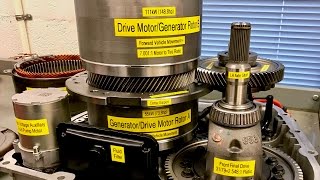
The 2011-2015 Volt doesn't have a traditional automatic transmission with discrete gears. It uses a sophisticated Voltec drive unit (transaxle), model 4ET50, that blends power from two electric motor-generators 🎬 Watch this overview of the 4ET50 transaxle components and operation and a gas engine through three planetary gear sets and multiple clutches. A P0730 code points to a fault within this sealed, complex unit. Unlike most cars, there is no dipstick to easily check the transmission fluid, making even the most basic check a task for a mechanic. Furthermore, early models (approx. 2011-2013) are known for a specific stator bearing failure that directly causes this code.
Symptoms You May Notice
- Check Engine Light illuminated.
- Noticeable slipping, shuddering, or jerking during acceleration or deceleration.
- Vehicle enters a reduced power ('limp') mode.
- Delayed engagement or harshness when switching between electric and gas power.
- A message on the driver information center indicating a propulsion power issue.
- A distinct grinding or 'saw-like' noise from the front of the vehicle that changes with speed, which is a classic symptom of a failing stator bearing.
- A false code set during transport. TSB #19NA201 for other GM models notes that P0730 can be triggered if the vehicle is rolled or towed with the power off. While not confirmed for the Volt, it's a possibility if the code appears without symptoms after vehicle transport.
Most Likely Causes
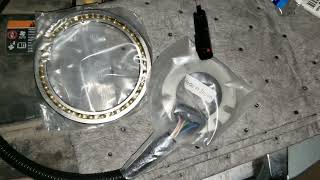
- Internal Drive Unit Mechanical Failure (Stator Bearing) 🔴 High Probability A known weakness in early (2011-2013) Gen 1 Volts is the failure of the stator support bearing assembly. The bearing fails, allowing excessive movement 🎬 Watch this step-by-step guide to replacing the stator and bearing that leads to a gear ratio error. GM revised the part in later models to address this.
How to confirm: A definitive sign is a grinding or whirring noise from the drive unit that correlates with wheel speed. A technician may also find excessive metal debris in the transmission fluid. Diagnosis often involves ruling out fluid and control system issues first.
Typical fix: Complete replacement of the 4ET50 drive unit assembly is the most common dealer repair. A specialized transmission shop may be able to replace the bearing itself, which requires full disassembly of the unit. 🎬 See how a Chevrolet Volt drive unit bearing is replaced
Est. part cost: $2500-$5000+ - Low or Degraded Transmission Fluid (ACDelco DEXRON-VI) 🟡 Medium Probability The drive unit is a sealed system without a dipstick, so fluid level is often overlooked. Low fluid reduces hydraulic pressure needed to actuate clutches, causing slippage.
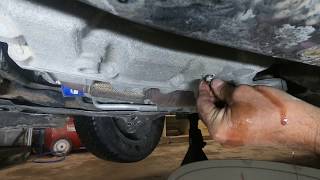
How to confirm: A technician must raise the vehicle while it's running and at a specific temperature (104-140°F) and remove the fluid level check plug on the side of the drive unit to verify the level and condition of the fluid.
Typical fix: Perform a transmission fluid drain and fill with the correct fluid. This is a service procedure, not a simple top-off.
Est. part cost: $50-$100 - Faulty Control Valve Body or Shift Solenoid ⚪ Low Probability Solenoids and valves within the valve body manage the hydraulic pressure that controls the clutches. Debris in the fluid or electronic failure can cause them to stick or fail, leading to incorrect gear application.
How to confirm: A professional technician will use a GM-specific scan tool (GDS2) to monitor solenoid commands and hydraulic pressure readings to pinpoint the faulty component.
Typical fix: Replacement of the specific solenoid or the entire control valve body assembly, which is located inside the drive unit. This is a complex job requiring removal of the side pan of the transaxle.
Est. part cost: $400-$1200
Rare But Worth Checking
- Failing Input or Output Speed Sensor: The TCM relies on these sensors to calculate the gear ratio. If one provides an erratic signal, the computer may falsely believe there is a slip.
- Transmission Control Module (TCM) Software or Hardware Fault: In rare cases, the TCM itself can fail or have corrupted software, leading to incorrect calculations and a false P0730 code.
Diagnosis Steps
- Verify the code with a professional OBD-II scanner capable of reading transmission control module data.
- Listen for a grinding or whirring noise from the drive unit while driving, which is highly indicative of the common stator bearing failure.
- Check for any other accompanying transmission codes (e.g., for solenoids or sensors).
- Have a qualified technician check the transmission fluid level and condition. This requires lifting the vehicle and following a specific temperature-dependent procedure.
- If fluid is correct, a technician should use a scan tool to monitor live data from the input and output speed sensors while driving to confirm a ratio mismatch.
- Inspect the wiring harness and connectors to the drive unit for any damage or corrosion.
- If a control issue is suspected, perform electronic tests on the specific solenoids and sensors as indicated by the scan tool data.
- If internal mechanical failure is suspected (especially the stator bearing), a fluid drain and inspection for excessive metal debris is the final diagnostic step before recommending drive unit repair or replacement.
Parts You'll Likely Need
- Automatic Transmission Fluid
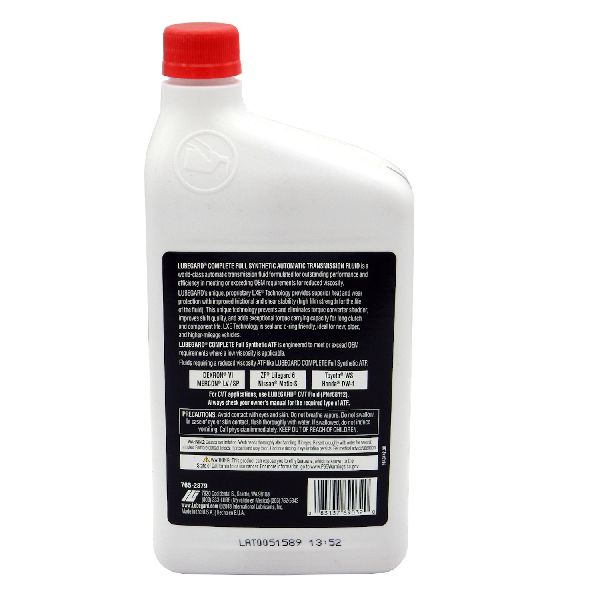
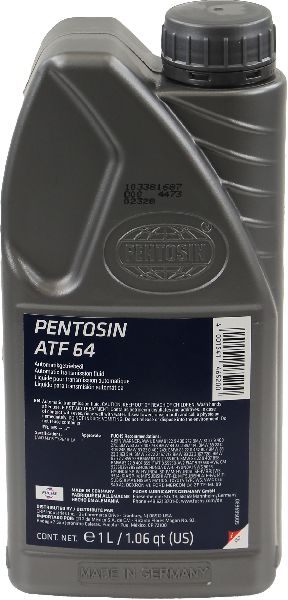
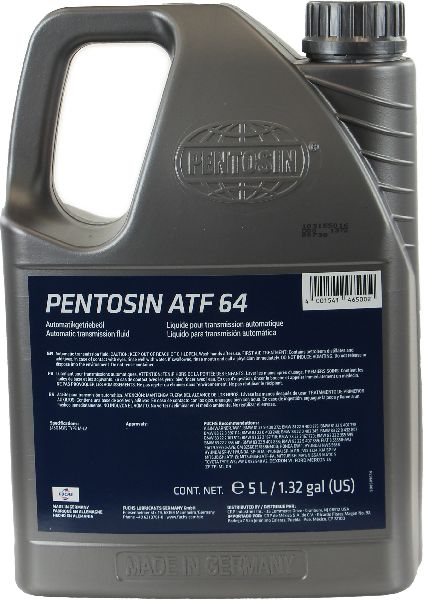
(OEM #ACDelco 10-9244 (Gallon) / 10-9306 (Quart) / GM 88865618)— The most common service item is incorrect or degraded fluid. The Volt requires a specific type, ACDelco DEXRON-VI Automatic Transmission Fluid.
Trusted brands: ACDelco
OEM price range: $10-$15 per quart
Aftermarket price range: $8-$12 per quart - Drive Unit Control Valve Body
(OEM #GM 24287422)— This assembly contains the solenoids and valves that direct hydraulic fluid. It can be a point of failure if solenoids malfunction, though less common than the stator bearing for this code.
Trusted brands: ACDelco (OEM)
OEM price range: $800-$1500
Aftermarket price range: N/A - 4ET50 Drive Unit Assembly (Transaxle) — Due to the complexity of internal repairs and the commonality of the stator bearing failure, a complete remanufactured or used drive unit is the most frequent high-cost repair.
Trusted brands: GM (Remanufactured)
OEM price range: $3000-$5000+
Aftermarket price range: $1500-$3000 (Used)
Related Codes That Often Appear With This One
- P0700 — P0700 is a generic code that means the Transmission Control Module (TCM) has stored a fault. It acts as a messenger, telling the main engine computer that a transmission-specific code, like P0730, is active.
Technical Service Bulletins (TSBs) & Recalls
- 19NA201: While for other GM models, this TSB notes that P0730 can be a false code set during vehicle transport if rolled while off, which is worth considering.
- 21-NA-003: Pertains to GM CVTs but shows that P0730 often sets alongside various pressure sensor and solenoid codes, pointing to a systemic issue within the valve body or control system.
Platform-Specific Known Issues
- The 2011-2015 Volt's 4ET50 drive unit has no transmission fluid dipstick, preventing an easy owner-level check of the fluid.
- A much more common issue on this platform causing loss of propulsion is the failure of the Battery Energy Control Module (BECM), covered by TSB 18-NA-261 for later models but also known to fail on Gen 1. While it doesn't typically set a P0730, its symptoms (reduced power, no-start) can be similar.
- Failure of the stator bearing inside the drive unit is a well-documented, though not universal, problem on 2011-2013 models that directly causes code P0730.
Hidden / Shadow Codes Worth Checking
- P0797, P0777, P079C: These are not hidden codes, but are specific fault codes for control solenoids that are often the root cause found alongside a general P0700/P0730. They are typically only readable with a dealer-level scan tool like the GM GDS2. (see via GM GDS2 or equivalent professional-grade scan tool capable of accessing the Transmission Control Module (TCM).)
Scan Tool Commands That Help
- GM GDS2 (Global Diagnostic System 2): Module Diagnostics > Transmission Control Module — To read the specific, non-generic transmission codes (like solenoid faults) that are causing the P0730 to set.
- GM GDS2 (Global Diagnostic System 2): Diagnostic Data Display — To monitor live data from the input and output speed sensors, commanded vs. actual gear state, and solenoid statuses to confirm a ratio mismatch is occurring in real-time.
- GM GDS2 / ACDelco SPS: Service Programming System (SPS) — After replacing a Transmission Control Module (TCM) or valve body assembly, the new module must be programmed to the vehicle's VIN.
Wiring & Ground Locations
- Transmission Ground Strap — A ground strap is connected to the rear of the transmission housing.. A poor or corroded ground connection for the transmission can cause erratic behavior in sensors and solenoids, potentially leading to false codes. Ensure this connection is clean and tight.
- G103, G104, G105, G106 — These are major engine bay ground points for various GM vehicles. G103 is often on the rear of the cylinder head, with others on the engine block or frame.. The TCM and its sensors rely on clean ground signals. While not specific to the Volt in the search results, GM service bulletins for other vehicles with transmission codes often point to checking these primary ground locations as a key diagnostic step.
Real Owner Repair Stories
- YouTube user Harry Nutma (2012 Chevrolet Volt) — A 'buzz saw' sound from the transmission area, a classic sign of a failing stator bearing.
✅ What actually fixed it The user performed a DIY replacement of the stator bearing. The video details lowering the engine subframe to access the transmission side cover, using a bearing puller to remove the old bearing, and pressing in a new one. The repair also involved draining and refilling about 5 liters of DEXRON-VI fluid. - Reddit user in r/volt (2013 Chevrolet Volt) — The 'dreaded saw blade sound' from the engine bay.
❌ Tried (didn't work) Taking it to a Chevrolet dealership. The dealer quoted $13,000 for a full transmission replacement and claimed they could not get the tools to do the bearing-only repair.
✅ What actually fixed it The issue was not resolved in the thread, but the confirmed diagnosis was a failed stator bearing. Other users confirmed the dealer quote was a 'go away' price and that the correct, albeit difficult, fix is the bearing replacement itself, validating this as the true cause. - YouTube user Corey Lavigne (2012 Chevrolet Volt) — Error codes related to 'sensor B' and a bad bearing.
✅ What actually fixed it Replaced the stator and the stator bearing. The video shows the location of the bearing in the transmission side cover and the process of removing the cover to access the internal components.
OEM Part Supersession History
Various (2011-2012)→Various (2013+)— GM issued a bulletin in May 2013 (PIP4840J) that shows different part numbers for 2013 models compared to 2011-2012 for multiple internal 4ET50 components, including the Motor B Stator, Motor B Position Sensor, and Valve Body.
Heads up: This indicates that when sourcing used parts or performing internal repairs, the model year is critical. Using a 2012 sensor in a 2013 transmission, for example, may not work. Always verify part numbers by VIN.
Model Year Variations Within This Range
- 2011-2013: These earlier models are significantly more prone to the stator bearing failure that can cause a P0730 code.
- 2014-2015: These later Gen 1 models reportedly use a revised stator bearing that is less prone to failure. When sourcing a used transmission, a unit from a 2014 or 2015 Volt is highly preferable.
- 2011-2012 vs 2013+: Multiple internal transmission part numbers were changed for the 2013 model year, including sensors and stators, making parts interchangeability a concern.
Diagnostic Flowchart
Other Known Issues on This Vehicle
Issues unrelated to this code that are worth knowing about as an owner of this generation:
- Battery Energy Control Module (BECM) Failure 🔴 High — Common on Gen 2 (2016-2019), but also occurs on Gen 1. Can cause a no-start or sudden loss of propulsion. (Ref: TSB 18-NA-261 (applies to Gen 2, but describes the issue well))
- 'Shift to Park' Message / Shifter Cable Bushing Failure 🟠 Medium — Very common. The plastic bushing on the transmission shift cable disintegrates, preventing the car from recognizing it's in Park and shutting down.
- Reduced Propulsion Power (P2138) 🔴 High — A frequent issue caused by corrosion in the IP-to-Body harness connector (X209), leading to a false accelerator pedal position sensor error. (Ref: TSB #07-06-04-019F)
- Charge Port and Onboard Charging Module (OBCM) Issues 🟠 Medium — Fairly common. Can manifest as an inability to charge, slow charging, or 'Unable to Charge' messages on the dash.
- High Voltage Battery Degradation / Section Failure 🔴 High — Occurs over the life of the vehicle. Individual battery sections can fail, leading to reduced electric range or error codes requiring dealer service.
Used vs. New Parts: Buying Guide for This Vehicle
When a used part is the smart pick: For a confirmed internal failure like the stator bearing, sourcing a complete, low-mileage used 4ET50 drive unit is often the most practical and cost-effective repair, as dealer replacement quotes can exceed the value of the car.
Donor-vehicle mileage cap: roughly under 80000 miles for the part to have meaningful remaining life.
What to inspect on the donor part:
- Prioritize units from 2014-2015 model year Volts due to the revised stator bearing.
- Obtain the VIN of the donor car to verify its year and check for any reported accidents.
- Purchase from a reputable salvage yard that offers a warranty (e.g., 6 months or 1 year).
- Inspect the unit for any physical damage to the case, connectors, or cooling line ports before purchase.
OEM-only on this vehicle (don't cheap out):
- Stator Bearing (if attempting internal repair)
- Transmission Control Module (TEHCM) / Valve Body
Brands owners have reported issues with on this vehicle:
- No specific brands were identified, but extreme caution is advised for any non-OEM internal transmission components for the 4ET50 drive unit.
Real Owner Stories
Aggregated from forums and TSBs cited above. Mileages and costs reflect what owners reported in those sources.
2012 Chevrolet Volt
Symptoms: Distinct grinding noise followed by the Check Engine Light and P0730 code.
What fixed it: Full transmission replacement, performed under the Voltec warranty.
Source hint: gm-volt.com thread: 'P0700 and P0730 codes, dealer says needs new transmission'
2013 Chevrolet Volt
Symptoms: Grinding or whirring noise from the drive unit that correlates with wheel speed; vehicle entered reduced power mode.
What fixed it: Complete replacement of the 4ET50 drive unit assembly.
Source hint: Article Context: Internal Drive Unit Mechanical Failure (Stator Bearing) / Forum Citations
Related OBD-II Codes
Frequently Asked Questions
I have a 2012 Volt with a grinding noise and P0730. Is this the common stator bearing issue?
Can I check the transmission fluid level myself to rule out P0730 causes?
Is the P0730 code more common on certain years of the Gen 1 Volt?
Does TSB 19NA201 mean my P0730 code is a mistake?
If I need a replacement drive unit, should I buy a used one from a specific year?
Could my P0730 code be related to the Battery Energy Control Module (BECM)?
Helpful Videos
We Have This Part in Stock


The information in this article is provided for general reference and educational purposes only. Vehicle specifications, procedures, and part compatibility can vary by production date, trim level, and region. Always consult your vehicle's factory service manual and verify part numbers before purchasing or performing repairs. Safety-critical components such as airbags, seat belts, and braking systems should be installed by a qualified professional.
- Chevrolet Volt:
- 🎬 Helpful Videos
- 🛍️ Shop This Part
- What's Unique About the 2011-2015 Chevrolet Volt
- Symptoms You May Notice
- Most Likely Causes
- Rare But Worth Checking
- Diagnosis Steps
- Parts You'll Likely Need
- Related Codes That Often Appear With This One
- Technical Service Bulletins (TSBs) & Recalls
- Platform-Specific Known Issues
- Hidden / Shadow Codes Worth Checking
- Scan Tool Commands That Help
- Wiring & Ground Locations
- Real Owner Repair Stories
- OEM Part Supersession History
- Model Year Variations Within This Range
- Diagnostic Flowchart
- Other Known Issues on This Vehicle
- Used vs. New Parts: Buying Guide for This Vehicle
- Real Owner Stories
- 2012 Chevrolet Volt
- 2013 Chevrolet Volt
- Related OBD-II Codes
- Frequently Asked Questions
- 🎟️ Get 5% Off