

OBD-II Code P0701: Transmission Control System Performance Problem
What P0701 means, why it triggers, and how to fix it
- P0701 is a master warning light; you must use an advanced OBD-II scanner to pull the specific sub-codes (like P0751 or U0101) stored in the Transmission Control Module.
- Check your transmission fluid level and test your battery voltage first, as low fluid or a battery dropping below 12 volts causes 40% of these false performance codes.
- Limit driving to under 10 miles to reach a repair shop, as operating in 'limp mode' generates excessive heat that destroys $3,500 internal clutch packs.
- Never authorize a full transmission rebuild without a verified electrical diagnosis, because the root cause is frequently a $150 speed sensor or shift solenoid.
What Does P0701 Mean?
P0701 indicates the Powertrain Control Module (PCM) detects a general malfunction in the automatic transmission's electronic controls. It acts as a master warning light requiring an advanced scan tool to pull the specific, underlying fault code stored in the Transmission Control Module (TCM).
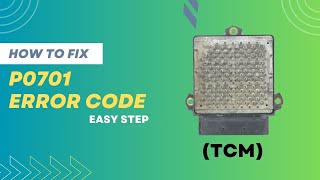
Technical definition: The official SAE/OBD-II definition is "Transmission Control System Range/Performance". 🎬 Watch: A complete overview of P0701 causes and fixes This indicates the Transmission Control Module (TCM) detects a malfunction—such as an out-of-range sensor reading, incorrect gear ratio, or communication error—and requests the Engine Control Module (ECM) to illuminate the Check Engine Light.
Can I Drive With P0701?
Yes, But With Caution. You can drive under 10 miles to a repair shop, but long trips risk severe damage. The transmission often shifts harshly, locks into a single gear ('limp mode'), or fails to engage entirely. Continuing to drive causes the transmission to overheat, destroying internal clutch packs and the torque converter. This escalates a $150 sensor repair into a $3,500+ transmission rebuild.
Common Causes
- Low, Dirty, or Incorrect Transmission Fluid (Very Common) — Low fluid prevents the transmission pump from creating the hydraulic pressure required to shift gears. Old, burnt, or incorrect fluid loses its hydraulic properties, causing slipping and triggering this performance code.
- Weak Battery or Charging System Issues (Common) — The TCM requires a stable 12V+ to function. A weak battery, failing alternator, or corroded ground strap causes voltage drops that disrupt module communication and trigger a P0701, even if the transmission is mechanically perfect.
- Faulty Transmission Speed or Range Sensors (Common) — Input/output speed sensors and range sensors tell the computer how fast the transmission spins and what gear is selected. A failed sensor provides irrational data, confusing the TCM and triggering a performance fault.
- Faulty Transmission Wiring or Connectors (Common) — Damaged, corroded, or loose wires interrupt signals between sensors, solenoids, and the TCM. The main harness connector on the transmission case is highly susceptible to water and road salt intrusion.
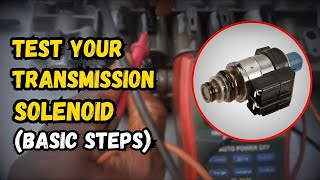
- Defective Transmission Shift Solenoids (Less Common) — Solenoids are electronic valves that direct fluid to apply clutches. A solenoid stuck open, closed, or electrically weak causes shifting failures for specific gears, 🎬 Watch: How to test a transmission solenoid step-by-step setting a performance fault.
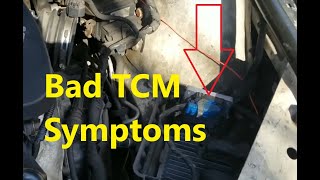
- Failing Transmission Control Module (TCM) (Less Common) — Internal circuit failures, solder joint fatigue, or voltage spike damage cause the TCM to make incorrect shift decisions or fail entirely. 🎬 See common symptoms of a failing Transmission Control Module
- Software Glitches or Outdated Firmware (Less Common) — Manufacturers release software updates to fix shift quality bugs. Outdated firmware causes the TCM to incorrectly flag normal operation as a performance issue.
- Internal Mechanical or Hydraulic Failure (Rare) — Worn clutch packs, a failing torque converter, a damaged valve body, or a clogged internal filter cause severe pressure loss. This is accompanied by loud noises, severe slipping, and metal debris in the fluid.
Symptoms
- Check Engine Light is On — P0701 always triggers the Malfunction Indicator Lamp (MIL). Some vehicles also illuminate a dedicated transmission warning light.
- Transmission Stuck in 'Limp Mode' — The transmission locks into a single gear (usually 2nd or 3rd) to prevent further damage, severely limiting acceleration and top speed.
- Harsh, Delayed, or Erratic Shifting — The vehicle shifts gears with a violent jerk, pauses for several seconds before engaging, or shifts at the wrong RPM.
- Decreased Fuel Economy — Inefficient shifting or being stuck in a lower gear forces the engine to run at higher RPMs, dropping fuel economy by 5-15%.
- Engine Stalling — The engine stalls when shifting into Drive or Reverse, or when coming to a stop, typically due to a stuck torque converter clutch.
- Transmission Overheating (also visible on scanner) — Slipping clutches generate extreme heat, triggering a transmission temperature warning light and causing a burnt smell from the fluid.
Diagnostic Flowchart
Tap your situation to follow the diagnostic path that matches what you're seeing on this code.
Common Fixes & Costs
- Transmission Fluid and Filter Change — Parts: $50-$150, Labor: $150-$300, ~1.5 hr book time (DIY)
- Replace Faulty Transmission Sensor (Speed/Range)
— Parts: $30-$150, Labor: $100-$300, ~1.5 hr book time
(Intermediate)
Chevrolet Silverado (2008, Speed Sensor): OEM {'brand': 'ACDelco/GM Genuine', 'part_number': '213-1701', 'estimated_price': '$45-$80'} (Alt: {"brand": "Dorman", "part_number": "917-637-AC", "estimated_price": "$30-$50"}) - Replace Defective Shift Solenoid
— Parts: $50-$300, Labor: $200-$600, ~3.0 hr book time
(Intermediate)
Dodge Ram 1500 (2007, Solenoid Pack): OEM {'brand': 'Mopar', 'part_number': '68353383AC', 'estimated_price': '$350-$400'} (Alt: {"brand": "Standard Motor Products", "part_number": "TCS211", "estimated_price": "$200-$250"}) - Replace Transmission Control Module (TCM)
— Parts: $200-$800, Labor: $150-$400, ~2.0 hr book time
(Professional)
GMC Sierra (2011, 5.3L): OEM {'brand': 'GM Genuine Parts', 'part_number': '24252955', 'estimated_price': '$175-$250'} (Alt: {"brand": "Dorman (Remanufactured)", "part_number": "599-120", "estimated_price": "$165-$200"}) - Valve Body Repair or Replacement — Parts: $300-$800, Labor: $500-$1,200, ~5.0 hr book time (Professional)
DIY vs Professional
- Transmission Fluid and Filter Change — Beginner:
Tools: Wrench set, drain pan, funnel, specific fluid, filter/gasket. - Replace Faulty Transmission Sensor — Beginner:
Tools: Socket set, multimeter, torque wrench, repair manual. - Replace Defective Shift Solenoid — Beginner:
Tools: Fluid change tools, multimeter, torque wrench, repair manual. - Replace Transmission Control Module (TCM) — Beginner:
Tools: Basic hand tools, dealer-level programming scan tool. - Valve Body Repair or Replacement — Beginner:
Tools: Extensive toolset, clean room environment, specialized transmission tools.
Used vs. New Parts: Buying Guide
When a used part is worth it: A used part from a reputable salvage yard is a cost-effective option for expensive electronic components like a Transmission Control Module (TCM) on a vehicle over 10 years old.
Donor-vehicle mileage cap: roughly under 80000 miles for the part to have meaningful remaining life.
Donor quality checklist:
- Verify the donor vehicle was not scrapped due to a transmission-related failure.
- Match the part number exactly. Superseded or different-year part numbers are often incompatible.
- Ensure the used TCM includes a 30-90 day warranty and confirm if it requires VIN reprogramming.
Decision logic:
- If The part is an external sensor (e.g., speed sensor) and a new aftermarket version is under $100 → buy new. The minimal savings aren't worth the risk of premature failure.
- If The part is an expensive electronic module (TCM) and the vehicle has over 150,000 miles → buy a warrantied used part to minimize repair costs, accepting the unknown lifespan.
- If The part is internal and requires dropping the transmission pan (e.g., shift solenoid) → buy a new OEM or premium aftermarket part to avoid paying $300+ in repeat labor if the used part fails.
Warranty tradeoff: Used parts offer a 30-90 day functional warranty. New aftermarket parts provide a 1-3 year warranty. New OEM parts carry a 1-year warranty, often extended if dealer-installed.
Worst-case if a used part fails: $400-$1500. The cost of repeat labor to remove the failed used part, replace lost fluid, and install a new component.
What Happens If You Wait — Timeline
- 0-1 month: Check Engine Light illuminates with P0701. Symptoms are subtle, such as a slightly delayed shift when cold. (MPG impact: 0-2%% · Added cost: $0)
- 1-4 months: Shifting becomes noticeably harsher. The transmission occasionally slips or enters 'limp mode' during hard acceleration. Fuel economy declines. (MPG impact: 3-8%% · Added cost: $50-$150 in wasted fuel.)
- 4-8 months: Slipping and harsh shifting are constant. The root cause generates excessive heat, burning the fluid and hardening internal seals. A burnt smell is noticeable. (MPG impact: 8-15%% · Added cost: $1,500-$3,500. Heat damage now requires a partial or full transmission rebuild.)
- 8+ months: Catastrophic failure occurs. Worn clutch material clogs the valve body and cooler. The transmission fails to engage gears entirely, leaving the vehicle stranded. (MPG impact: 15-25%+% · Added cost: $3,500-$6,000+. Requires full replacement and cooler line flushing.)
Cost of Not Fixing It
- 0-1 month: Erratic shifting, a 5-15% drop in fuel economy, and high risk of being stranded if the transmission enters 'limp mode' or loses gear engagement. (Added cost: Negligible, aside from increased fuel consumption.)
- 1-6 months: Operating with slipping components or incorrect fluid pressure generates excessive heat. This hardens internal seals, warps clutch plates, and degrades the torque converter. (Added cost: $1,500-$3,500. A simple sensor fix escalates into a partial or full transmission rebuild due to heat damage.)
- 6+ months: Catastrophic transmission failure occurs. Metal debris from failing components circulates throughout the system, destroying the valve body and clogging the cooler. (Added cost: $3,500-$6,000+. Requires a complete transmission replacement, a new torque converter, and flushing the cooler lines.)
Diagnosis Steps
- Scan for All Trouble Codes
Use an advanced OBD-II scanner to retrieve codes from both the PCM and TCM. P0701 is generic; look for specific companion codes (e.g., P0751 for a solenoid, U0101 for communication) to pinpoint the root cause.
Tools: Advanced OBD-II Scanner (Beginner) - Check Transmission Fluid Level and Condition
Verify the fluid is at the correct level, bright red, and smells sweet. Low fluid causes pressure loss. Dark, burnt fluid with metal flakes indicates severe internal damage requiring a rebuild.
Tools: Gloves, Rag, Dipstick (if equipped) (Beginner) - Visually Inspect Wiring and Connectors
Inspect the transmission wiring harness for frayed wires, melted insulation, or loose connections. Disconnect the main transmission case connector and check for green corrosion or transmission fluid intrusion on the pins.
Tools: Flashlight, Mirror (Intermediate) - Test TCM Power, Ground, and Battery Voltage
Verify the battery reads 12.6V resting and 13.5V-14.5V running. Use a multimeter to confirm the TCM receives this exact voltage at its power pins. Measure resistance between the TCM ground pin and the negative battery terminal; it must be under 0.5 Ω.
Tools: Multimeter, Vehicle-Specific Wiring Diagram (Advanced) - Test Transmission Sensors (Speed and Range)
If specific sensor codes exist, test them. For speed sensors, measure resistance and compare to the manual (e.g., 1500-2500 Ω). For range sensors, verify the correct voltage output on the signal wire for each gear position (Park, Reverse, Neutral, Drive).
Tools: Multimeter, Advanced OBD-II Scanner, Repair Manual (Advanced) - Test Shift Solenoids
If a solenoid code is present, measure its resistance at the transmission connector pins and compare to specs (e.g., 20-30 Ω). Use a bi-directional scanner to command the solenoid on/off and listen for a definitive 'click'.
Tools: Multimeter, Bi-directional OBD-II Scanner, Repair Manual (Advanced) - Test CAN Bus Communication
If U-codes are present, disconnect the battery and unplug the TCM. Measure resistance between the CAN High and CAN Low pins on the harness. A healthy network reads exactly 60 Ω. A 120 Ω reading indicates a broken wire.
Tools: Multimeter, Vehicle-Specific Wiring Diagram (Advanced) - Pro Tip: Analyze Sensor Waveforms
For intermittent shifting issues, use an oscilloscope to view live speed sensor waveforms. A healthy sensor produces a clean square or sine wave. Dropouts or erratic patterns indicate a failing sensor or damaged reluctor wheel.
Tools: Oscilloscope, Repair Manual with Waveform Patterns (Professional) - Pro Tip: Perform a Stall Speed Test
Firmly apply the brakes, shift to Drive, and briefly apply full throttle. Compare the maximum engine RPM to the manufacturer's spec. A significantly higher RPM confirms internal clutch slipping. Warning: Do this for a maximum of 5 seconds to prevent severe heat damage.
Tools: Tachometer (or scanner live data), Vehicle Specifications (Professional)
When This Code Triggers (Freeze-Frame Conditions)
- Engine Coolant Temp: 180-200°F (The transmission control system waits for the engine to reach full operating temperature before running its most sensitive performance checks.)
- RPM: 1500-2500 RPM (This code triggers during steady-state driving or light acceleration, where the TCM expects a precise relationship between engine speed and vehicle speed.)
- Vehicle Speed: 35-55 mph (Highway or arterial road speeds are primary trigger points, especially during a gear shift or torque converter lock-up command.)
- Transmission Fluid Temperature: 150-220°F (The fault appears once the transmission fluid warms up. Fluid viscosity changes with temperature, altering hydraulic pressure and exposing slipping or solenoid performance issues.)
Related Codes
- P0700 — P0700 is a generic request from the TCM to turn on the Check Engine Light. P0701 specifically points to a performance/range problem. If you have both, ignore P0700 and focus entirely on diagnosing the TCM codes.
- P0751, P0756, P0776 — These indicate specific shift solenoids are stuck off. P0701 triggers because the TCM detects the resulting incorrect gear ratio. Diagnosis must focus entirely on the specific solenoid mentioned in these secondary codes.
- U0101 — Indicates 'Lost Communication With TCM'. Seeing this with P0701 proves the issue is a major electrical failure, not an internal mechanical problem. Immediately test TCM power, ground, and CAN bus wiring.
- P0613 — Indicates a 'TCM Processor' error. Paired with P0701, this guarantees the Transmission Control Module has an internal hardware failure, requiring module replacement and programming.
Climate & Environmental Factors
- Cold Weather: Cold temperatures severely drop battery voltage. A cold start with a weak battery drops voltage below the TCM's 9V minimum threshold, triggering a false P0701 code.
- High-Corrosion Environments (Salt Belt): Road salt penetrates weather seals on the main transmission harness connector. This causes green corrosion on the pins, creating electrical shorts that trigger performance codes.
- High Humidity / Deep Water: Driving through deep water forces moisture into external sensor connectors or the TCM housing, causing immediate short circuits and limp mode activation.
How to Talk to a Mechanic About This Code
Say this: "I have a check engine light on and my scanner shows a P0701 code. I understand this is a generic code, so I need you to use a professional scanner to pull the specific fault codes from the Transmission Control Module to find the root cause."
This signals you know P0701 is a general code requiring TCM diagnostics. It prevents the shop from guessing or immediately quoting a $3,500 rebuild, establishing you as an informed customer.
Avoid saying:
- 'My transmission is acting weird, can you fix it?'
- 'My check engine light is on, I think it's the transmission.'
- 'Just fix whatever is wrong with it.'
Questions to ask before authorizing the repair:
- What specific trouble codes did you find in the Transmission Control Module (TCM)?
- Can you provide the freeze-frame data for those codes?
- What electrical tests did you perform to confirm the part failed, rather than just a broken wire?
- If replacing the TCM, does the quoted price include VIN programming?
- What is the warranty on the parts and labor for this specific repair?
Where to Take It: Dealer vs Independent vs Chain
- Dealer:
Recommended only if your vehicle is under warranty or requires module programming.
Best for: Vehicles under powertrain or extended warranty., Known, complex manufacturer-specific issues covered by a TSB., Repairs requiring proprietary software to program a new TCM.
Downsides: Highest labor rates, often 1.5x to 2x more than independent shops., Defaults to replacing expensive assemblies (full valve body) instead of individual solenoids. (Typical cost: +50% vs. baseline) - Independent Shop:
Best fit for most out-of-warranty vehicles. An independent transmission specialist has the diagnostic tools to pinpoint the fault without dealership markups.
Best for: Out-of-warranty vehicles where cost is a major factor., Accurate diagnosis of electronic and hydraulic faults., Access to cost-effective premium aftermarket parts.
Downsides: You MUST find a shop that specializes in transmission repair, not a general mechanic. (Typical cost: +0% vs. baseline) - Chain Shop:
AVOID. They are not equipped for the in-depth electrical and hydraulic diagnostics this code requires.
Best for: Simple, routine maintenance like oil changes or brake pads.
Downsides: Technicians lack the specialized bi-directional scanners required for TCM diagnostics., High pressure to upsell unnecessary services like transmission flushes. (Typical cost: -10% vs. baseline)
When to Walk Away From the Repair
If the estimated repair cost exceeds 50% of the car's current private-party value, sell or trade in the vehicle instead of repairing it.
- Car worth $5000, fix is $2800: Walk away. The repair is 56% of the vehicle's value. Investing this much into an older car is a poor financial decision.
- Car worth $12000, fix is $1800: Fix it. The repair is 15% of the vehicle's value. Repairing it maintains the car's utility and resale value.
- Car worth $3000, fix is $2200: Walk away. The repair is 73% of the car's value. Put the money toward a replacement vehicle.
What Scan Tool You Need for This Code
Minimum: A scanner capable of reading manufacturer-specific codes from the Transmission Control Module (TCM).
A $30 code reader only shows the generic P0701 code from the engine computer. It cannot access the TCM to find the specific underlying codes (like a bad solenoid) causing the issue.
Professional: Autel MaxiCOM MK808S (~$450-550) — A full-system diagnostic tablet offering live data graphing, bi-directional control, and transmission relearn functions. Invaluable for complex electrical diagnostics.
Rent vs buy: Auto parts stores scan codes for free, but their scanners often only pull generic engine codes. Call ahead and ask if their scanner reads Transmission Control Module (TCM) codes. If not, buying the budget pick saves you a $150 diagnostic fee at a shop.
How to Clear the Code After You Fix It
- Use an OBD-II scan tool to erase the diagnostic trouble codes.
- Reconnect the battery if disconnected during repair.
- Perform a complete drive cycle to run the vehicle's readiness monitors.
Drive cycle (~30 minutes): A standard drive cycle requires a cold start, 3 minutes of idling, 15 minutes of mixed stop-and-go city driving, and 15 minutes of steady highway driving at 50-60 mph. Shut the vehicle off and let it cool completely to finish the cycle.
Readiness monitors affected: Comprehensive Component Monitor, Catalyst Monitor, Oxygen Sensor Monitor, Evaporative System Monitor
Before emissions retest: drive at least 100 miles to fully set monitors.
Watch out for:
- Disconnecting the battery clears the code but resets all emissions monitors to 'Not Ready', guaranteeing an automatic smog test failure.
- The code returns immediately on the next drive cycle if the underlying mechanical or electrical fault remains unaddressed.
Will This Fail Emissions / State Inspection?
Yes — this code typically fails an OBD-II emissions inspection.
- California: An illuminated Check Engine Light guarantees a smog inspection failure. After repairs, the vehicle must complete a full drive cycle to set all readiness monitors before re-testing.
- New York: Active Check Engine Lights automatically fail the NYS emissions inspection. Clearing the code in the parking lot results in a failure due to 'Not Ready' monitors.
- Texas: An active P0701 fails the OBD-II test in emissions-required counties. While 2001+ vehicles allow one 'Not Ready' monitor, clearing the code resets all of them, requiring a drive cycle.
Most Commonly Affected Vehicles
- Chevrolet Silverado 2500/3500 HD (2001-2009) — Frequently caused by a failing TCM or a faulty Neutral Safety Back-Up (NSBU) switch on Allison transmissions. TSB PIP4379L notes low fluid causes a loss of pump prime, triggering this code.
- GMC Sierra (2011-2013) — TSB #PIP5100 identifies blocked orifices in the valve body separator plate as a primary cause, often appearing alongside P0877 or P2723.
- Dodge/Ram Charger, Magnum, Ram 1500 (2005-2012) — P0701 issues stem heavily from failures within the valve body solenoid pack or faulty input/output speed sensors.
- Jeep Grand Cherokee, Commander (2006-2014) — Commonly affected by electronic failures within the valve body or TCM, requiring solenoid pack replacement.
- Ford Focus, Fiesta (2011-2016) — Linked to the problematic dual-clutch 'PowerShift' transmission (DPS6), indicating TCM or clutch actuator failure. Check with a dealer for extended warranty coverage status.
- Subaru Outback, Forester (2010-2018) — Linked to a failing torque converter lock-up solenoid within the CVT valve body. TSB 16-90-13R addresses this, and Subaru extended the CVT warranty to 10 years/100,000 miles for many models.
Manufacturer-Specific Notes
- General Motors (Chevrolet/GMC): On Allison transmissions, P0701 is frequently caused by water intrusion into the Neutral Safety Back-Up (NSBU) switch or a cracked internal suction filter tube causing a loss of pump prime.
- Chrysler/Dodge/Jeep: These vehicles frequently set P0701 due to solenoid pack failures. However, TSB 21-013-06 highlights that a simple dealership software update often resolves intermittent shift quality issues without replacing parts.
- Subaru: On CVT models, P0701 points directly to a failing torque converter lock-up solenoid. Subaru issued TSB 16-90-13R and extended the CVT warranty to 10 years/100,000 miles, which covers this expensive valve body repair.
- Ford: On DPS6 'PowerShift' transmissions, P0701 is a precursor to complete TCM or clutch fork actuator failure. Due to class-action lawsuits, Ford offers extended warranty coverage on these specific components.
Real Owner Stories
2008 Dodge Ram 1500 at 130K miles - The Simple Fix
Check engine light illuminated with P0701 and a specific solenoid code. The truck shifted harshly from 1st to 2nd gear.
What they tried:
- Owner initially feared a full transmission rebuild was needed.
- Decided to visually inspect the external wiring before taking it to a shop.
Outcome: Found a corroded wire on the main transmission harness connector. Cleaning the connector and repairing the wire cleared both codes permanently and resolved the harsh shifting.
Lesson: Always start with a visual inspection of the wiring harness. A $10 wire repair saves you from a costly and unnecessary transmission teardown.
2011 Subaru Outback at 115K miles - The Warranty Save
Car threw P0701 and P2764 for a torque converter clutch solenoid. The transmission shuddered at low speeds.
What they tried:
- A general repair shop quoted $1,800 to replace the valve body.
- Sought a second opinion from an independent Subaru specialist.
Outcome: The specialist confirmed the valve body failure but informed the owner of Subaru's 10-year/100,000-mile CVT warranty extension. Although slightly over mileage, the dealer honored a 'goodwill' repair, reducing the owner's out-of-pocket cost to $300.
Lesson: For known pattern failures, always check for Technical Service Bulletins (TSBs) and warranty extensions. Specialists know these manufacturer quirks better than general mechanics.
2007 Chevy Silverado 2500HD (Allison) at 190K miles - The Loss of Prime
Vehicle intermittently showed P0701 and 'Range Shift Inhibited', refusing to engage any gear after sitting overnight.
What they tried:
- Checked transmission fluid level (normal).
- Replaced the external NSBU switch, but the problem persisted.
Outcome: A forum search revealed a known Allison issue: a cracked internal suction filter tube causing the pump to suck air and lose prime. Replacing the internal filter and tube assembly ($75 part) resolved the issue completely.
Lesson: Intermittent no-engagement issues are often hydraulic, not electronic. Vehicle-specific forums are invaluable for diagnosing unusual failures that general shops miss.
2008 Mitsubishi Lancer GTS at 85K miles - The Electrical Gremlin
P0701 code appeared with zero noticeable driving symptoms. The car ran and shifted perfectly.
What they tried:
- Checked transmission fluid (clean and full).
- A chain shop quoted $1,000 to start replacing sensors blindly.
Outcome: The owner checked all electrical grounds. They found a loose battery terminal and a heavily corroded engine ground strap. Cleaning and tightening both connections permanently cleared the code.
Lesson: Never underestimate the importance of a stable electrical system. Ensure the battery, alternator, and primary ground connections are perfect before replacing transmission parts.
How to Prevent This Code From Triggering
- Perform regular transmission fluid and filter changes. (Every 30,000 to 60,000 miles.) — Clean fluid maintains hydraulic pressure and dissipates heat. This prevents sludge buildup that clogs solenoids and valve bodies.
- Use only the manufacturer-specified transmission fluid. (Every time fluid is added or changed.) — Using the wrong formulation (e.g., Dexron VI instead of ATF+4) degrades clutch material and causes improper shifting, triggering performance codes.
- Maintain a healthy battery and clean ground connections. (Annually.) — The TCM requires a stable 12V-14.5V to function. Cleaning battery terminals and ground straps prevents voltage drops that corrupt TCM operations.
- Install an auxiliary transmission cooler. (Recommended for vehicles used for towing or frequent mountain driving.) — Heat is the primary cause of transmission failure. An auxiliary cooler keeps fluid temperatures stable, preventing premature breakdown of internal seals and clutches.
- Address engine oil and coolant leaks promptly. (As soon as they are noticed.) — Leaking oil or coolant drips onto transmission wiring harnesses, degrading the insulation and causing electrical shorts that trigger P0701.
Frequently Asked Questions
Can a weak battery cause a P0701 code?
Yes. The Transmission Control Module (TCM) requires a stable 12V+ to operate. A weak battery or failing alternator causes voltage drops that disrupt the TCM and trigger P0701, even if the transmission is mechanically perfect.
Will clearing the code fix the problem?
No. Clearing the code only turns off the light temporarily. The code returns on the next drive cycle because the underlying electrical or mechanical fault remains.
What happens if you keep driving with a P0701 code?
Driving with P0701 risks severe damage. The transmission operates at high temperatures, burning fluid and destroying internal seals, escalating a $150 sensor fix into a $3,500 rebuild.
What is the most common misdiagnosis for P0701?
Assuming the transmission needs a full rebuild without proper electrical diagnostics. The root cause is frequently a sub-$200 sensor, solenoid, or wiring issue.
What is 'limp mode'?
Limp mode locks the transmission into a single gear (usually 2nd or 3rd) to prevent further damage. It allows you to drive under 40 mph to a safe location but severely limits performance.
How much does it cost to diagnose a P0701 code?
A professional diagnostic scan of the TCM costs between $125 and $200. Shops often credit this fee toward the final repair cost if you authorize the work.
Can I fix the P0701 code myself?
You can easily check fluid levels and battery voltage yourself. However, diagnosing internal solenoids or replacing the TCM requires an advanced bi-directional scanner and specialized tools, making it a job for professionals.
My mechanic says I need a new transmission. Should I get a second opinion?
Yes. Always get a second opinion before authorizing a $3,500+ transmission rebuild. Pay a $150 diagnostic fee at an independent transmission specialist to rule out simple electrical faults first.
Key Takeaways
- P0701 is a master warning light; you must use an advanced OBD-II scanner to pull the specific sub-codes (like P0751 or U0101) stored in the Transmission Control Module.
- Check your transmission fluid level and test your battery voltage first, as low fluid or a battery dropping below 12 volts causes 40% of these false performance codes.
- Limit driving to under 10 miles to reach a repair shop, as operating in 'limp mode' generates excessive heat that destroys $3,500 internal clutch packs.
- Never authorize a full transmission rebuild without a verified electrical diagnosis, because the root cause is frequently a $150 speed sensor or shift solenoid.
Helpful Videos

The information in this article is provided for general reference and educational purposes only. Vehicle specifications, procedures, and part compatibility can vary by production date, trim level, and region. Always consult your vehicle's factory service manual and verify part numbers before purchasing or performing repairs. Safety-critical components such as airbags, seat belts, and braking systems should be installed by a qualified professional.
- 🎬 Helpful Videos
- What Does P0701 Mean?
- Can I Drive With P0701?
- Common Causes
- Symptoms
- Diagnostic Flowchart
- Common Fixes & Costs
- DIY vs Professional
- Used vs. New Parts: Buying Guide
- What Happens If You Wait — Timeline
- Cost of Not Fixing It
- Diagnosis Steps
- When This Code Triggers (Freeze-Frame Conditions)
- Related Codes
- Climate & Environmental Factors
- How to Talk to a Mechanic About This Code
- Where to Take It: Dealer vs Independent vs Chain
- When to Walk Away From the Repair
- What Scan Tool You Need for This Code
- How to Clear the Code After You Fix It
- Will This Fail Emissions / State Inspection?
- Most Commonly Affected Vehicles
- Manufacturer-Specific Notes
- Real Owner Stories
- 2008 Dodge Ram 1500 at 130K miles - The Simple Fix
- 2011 Subaru Outback at 115K miles - The Warranty Save
- 2007 Chevy Silverado 2500HD (Allison) at 190K miles - The Loss of Prime
- 2008 Mitsubishi Lancer GTS at 85K miles - The Electrical Gremlin
- How to Prevent This Code From Triggering
- Frequently Asked Questions
- Can a weak battery cause a P0701 code?
- Will clearing the code fix the problem?
- What happens if you keep driving with a P0701 code?
- What is the most common misdiagnosis for P0701?
- What is 'limp mode'?
- How much does it cost to diagnose a P0701 code?
- Can I fix the P0701 code myself?
- My mechanic says I need a new transmission. Should I get a second opinion?
- Key Takeaways
- 🎟️ Get 5% Off