

P0729 on 2020-2023 Ford Explorer: 6th Gear Incorrect Ratio Causes and Fixes
On a 2020-2023 Ford Explorer with the 10R60 or 10R80 10-speed transmission, code P0729 is almost always caused by a known internal transmission issue with the CDF clutch drum. A bushing within the drum assembly walks out of place, causing a hydraulic leak. This is a serious, well-documented problem that requires professional repair, often costing several thousand dollars. Ford has issued multiple Technical Service Bulletins (TSBs) for this specific failure.
- P0729 on a 2020-2023 Explorer is not a random sensor failure; it almost always indicates a significant internal transmission problem.
- The most likely cause is a well-documented design flaw with the CDF clutch drum, which requires extensive labor to replace.
- Ford has issued multiple Technical Service Bulletins (TSBs) that directly address this failure. Referencing these TSBs is crucial for accurate diagnosis.
- This is not a DIY-friendly repair. Due to its complexity and the need for special tools, professional service at a dealership or transmission specialty shop is required.
- Repair costs are high, typically ranging from $3,000 to $7,000, due to the high labor involved in removing and disassembling the transmission.
What's Unique About the 2020-2023 Ford EXPLORER
The 2020-2023 Ford Explorer uses the 10-speed 10R60 or 10R80 automatic transmission, which is known for a specific, widespread mechanical failure. A bushing in the 'CDF' clutch drum assembly can move out of place (an issue often called "bushing walkout"), uncovering a fluid port and causing internal hydraulic leaks. This single issue is the root cause for P0729 and a host of other shifting problems and transmission codes on this platform. Ford has acknowledged the problem through numerous Technical Service Bulletins (TSBs), such as TSB 24-2254, making this a well-documented pattern failure rather than a random occurrence. The issue is so common that it has led to class-action lawsuits 🎬 Watch: Overview of common failures in Ford 10-speed transmissions covering various Ford models with this transmission.
Diagnostic Flowchart
Tap your situation to follow the diagnostic path that matches what you're seeing on this vehicle.
Symptoms You May Notice
- Check Engine Light is on
- Wrench light on the dashboard, indicating a powertrain fault.
- Harsh, jerky, or delayed shifts, particularly into or out of 6th gear, but often affecting other gears as well (e.g., 3-5 shift flare).
- Transmission slipping in 6th gear (engine RPMs rise without an increase in vehicle speed).
- Loud clunking or banging sounds during shifting.
- Vehicle may enter "limp mode," restricting it to a single gear.
- Sensation of the transmission going into neutral and then slamming back into gear.
- Increased fuel consumption.
- Burnt smell from the transmission fluid.
- Replacing shift solenoids individually when the root cause is the mechanical failure of the CDF clutch drum or a sticking valve body.
- Replacing the entire valve body when the root cause is the CDF clutch drum. This is a common but expensive misstep, as the symptoms can be identical.
- Replacing input or output speed sensors, as the code relates to the TCM's *interpretation* of the ratio, which is usually correct based on the sensor data it receives. The slip is real, not a sensor error.
Most Likely Causes
- CDF Clutch Drum Bushing Failure 🔴 High Probability This is a well-documented pattern failure in the Ford 10R60 and 10R80 transmissions. The original design of the CDF drum allows an internal bushing to slide axially, exposing a hydraulic circuit port and causing a pressure leak. This prevents clutches from engaging correctly. Multiple TSBs, including TSB 24-2254, directly address this failure due to "axial movement of the CDF clutch cylinder (7H351) sleeve causing hydraulic circuit leaks." The issue was so prevalent that Ford introduced a redesigned CDF drum with an integrated retention lip to prevent the bushing from walking out. 🎬 Watch: A deep dive into the CDF hub failure and cure
How to confirm: Diagnosis requires a professional technician. They will first verify the code and symptoms, then check for applicable TSBs. TSB 24-2254 outlines a specific procedure to verify hydraulic circuit leakage using a Pressure Vacuum Transducer Kit (Rotunda 164-R9833). Ultimate confirmation requires transmission disassembly 🎬 See this teardown showing the CDF drum bushing failure to physically inspect the CDF clutch drum assembly for a displaced bushing.
Typical fix: The transmission must be removed and partially disassembled to replace the faulty CDF clutch drum with an updated part (Part No. JL3Z-7H351-B for the 3.0L Explorer). This is a labor-intensive job. For low-mileage, in-warranty vehicles, Ford's policy may allow for a complete transmission replacement.
Est. part cost: $200-$400 for the drum assembly itself. - Sticking Valves in Main Control Valve Body 🟡 Medium Probability Early production 2020 models were particularly prone to this issue, as noted in TSBs 20-2403 and 21-2046. Debris or manufacturing tolerances could cause valves within the aluminum valve body to stick, leading to shifting problems. Ford notes the condition may improve after the first 5,000 miles of driving as the parts break in.
How to confirm: A technician can use a Ford diagnostic scan tool (like FORScan or FDRS) to perform a "Transmission Accelerated Main Control Break In" routine to see if it frees the sticking valves. If this procedure fails to resolve the symptoms, the valve body is likely the cause.
Typical fix: The fix can range from performing the break-in procedure to overhauling or replacing the main control valve body. In many cases, a valve body replacement is attempted before diagnosing the more deeply-seated CDF drum issue.
Est. part cost: $500-$1200 for a valve body. - Low or Dirty Transmission Fluid ⚪ Low Probability While possible on any automatic transmission, this is rarely the root cause for P0729 on this specific platform, given the prevalence of the CDF drum failure. It is more often a symptom of the internal failure (e.g., fluid smelling burnt due to clutch slippage). The transmission does not have a traditional dipstick, making fluid level checks more difficult for owners.
How to confirm: Check the transmission fluid level and condition according to the manufacturer's procedure. The fluid should be at the correct level and reddish in color, not dark brown, black, or smelling burnt. Metal shavings on the pan magnet are a strong indicator of internal failure.
Typical fix: Perform a transmission fluid drain-and-fill or a full fluid exchange with the correct Motorcraft MERCON ULV automatic transmission fluid. This is often done as a first step but usually does not fix the underlying mechanical issue.
Est. part cost: $150-$300 for fluid and filter.
Rare But Worth Checking
- Powertrain Control Module (PCM) Software Issue: In some cases, particularly for delayed reverse engagement or other shift quality complaints, a simple PCM/TCM software update can resolve the problem as per TSB 23-2176. It's a less common fix for P0729 specifically but worth checking for available updates before performing mechanical repairs.
- Damaged Wiring Harness: One owner on the Explorer ST Forum reported chasing a similar set of codes and symptoms, replacing the transmission, only to find the issue was a wiring harness that was drooping and making contact with the hot exhaust, causing intermittent electrical faults.
Diagnosis Steps
- Verify the code with a quality OBD-II scanner. Note any other transmission-related codes.
- Check the transmission fluid level and condition. Burnt fluid or excessive metal shavings are a strong indicator of internal failure.
- Use a professional scan tool (like Ford's FDRS) to check for any related Technical Service Bulletins (TSBs) associated with the vehicle's VIN. For this Explorer, TSB 24-2254 is the most critical bulletin.
- If TSB 21-2046 applies (for early 2020 models), perform the "Transmission Accelerated Main Control Break In" routine with the scan tool to rule out sticking valves.
- Review live data from the input and output speed sensors while driving to confirm the slip is occurring in 6th gear.
- If TSBs point to the CDF clutch drum (like TSB 24-2254), the next step is to follow the specific diagnostic procedure outlined in the bulletin, which may involve hydraulic circuit leakage testing before authorizing a transmission teardown.
- If the CDF drum is confirmed as the cause, the transmission must be removed for inspection and repair. This is a job for a professional transmission shop or dealership.
Parts You'll Likely Need
- CDF Clutch Cylinder/Drum Assembly (Updated)
(OEM #JL3Z-7H351-B)— This is the most common point of failure on the 10R80/10R60 transmission causing P0729. The original design allows a sleeve to walk out, causing a hydraulic leak. The replacement part is an updated design with a lip to prevent this. This part number supersedes HL3Z-7H351-A and JL3Z-7H351-A and is specified for the 3.0L Explorer in TSB 24-2254.
Trusted brands: Motorcraft (OEM)
Related Codes That Often Appear With This One
- P0731-P0735 — These codes represent incorrect gear ratios for other gears (1st through 5th). The internal hydraulic leak from the CDF drum often affects multiple clutch packs and gears, causing a variety of ratio codes to appear together.
- P2700-P2705 — These codes relate to transmission clutch application time range/performance. The hydraulic leak caused by the CDF drum failure directly impacts the time it takes for clutches to apply, triggering these codes alongside P0729.
- P0751, P0756, P0761, etc. — These are codes for shift solenoid performance (e.g., 'Shift Solenoid A Stuck Off'). The control module may blame a solenoid when the real issue is the hydraulic pressure loss from the CDF drum, preventing the solenoid's command from having the correct mechanical result.
Technical Service Bulletins (TSBs) & Recalls
- TSB 24-2254
- TSB 21-2046
- TSB 20-2403
- TSB 23-2176
- TSB 24-2046
- TSB 22-2428
Platform-Specific Known Issues
- CDF Clutch Drum Failure: As detailed in TSB 24-2254, some 2020-2022 Explorers may exhibit harsh/delayed shifts and store P0729 (and other codes) due to "axial movement of the CDF clutch cylinder sleeve causing hydraulic circuit leaks." The fix is to replace the CDF clutch cylinder with the updated part.
- Sticking Main Control Valves: As detailed in TSB 21-2046 (which supersedes 20-2403), some 2020 Explorers may have harsh or delayed shifts due to sticking valves in the main control valve body. The fix involves a diagnostic break-in procedure or overhauling the valve body.
- Owner Experiences: Numerous owners on forums like
explorerforum.comand Reddit have documented their journey with this issue. One user onr/Forddescribed their 2020 Explorer exhibiting harsh downshifts and a burnt fluid smell at 45k miles, leading to a recommended transmission overhaul. Another owner on the Explorer ST Forum had to have the valve body replaced, only for the issue to return, highlighting the difficulty in distinguishing valve body vs. CDF drum issues.
Mechanic-Grade Diagnostic Values
- Shift Solenoids (A-F), TCC Solenoid, LPC Solenoid Resistance — expected: 5.0 - 5.4 Ohms at 68°F (20°C). Failure: Readings outside of this range indicate a faulty solenoid coil.
- Transmission Fluid Temperature (TFT) Sensor Resistance — expected: Approx. 37k-16k Ohms at 69-104°F (21-40°C), decreasing as temperature rises.. Failure: Highly inaccurate or open/short readings.
- Input/Output/Turbine Speed Sensor Resistance — expected: 325-485 Ohms at 70°F. Failure: Readings outside this range suggest a failed sensor.
Scan Tool Commands That Help
- Ford FDRS / FORScan: Clear Transmission Adaptive Tables — This procedure should be performed after any transmission repair, such as replacing the valve body or CDF drum, to reset the learned shift strategy and allow the TCM to relearn with the new components. It can also be used as a diagnostic step to see if clearing adaptations temporarily improves shift quality.
- Ford FDRS / FORScan: Halt Transmission Adaptive Learning — Some users choose to disable the adaptive learning feature entirely to prevent the transmission from developing harsh shifting behavior over time. However, there is mixed feedback on whether this is advisable, as it could potentially impact long-term durability.
- Ford FDRS: Programmable Module Installation (PMI) — This function is required when replacing a control module, such as the TCM or PCM. It downloads the correct software and configuration data to the new module, a necessary step for it to function correctly in the vehicle.
- Ford FDRS: Transmission Accelerated Main Control Break In — Mentioned in TSBs for early 2020 models, this routine cycles the solenoids to free up potentially sticking valves in the main control valve body, which can address some shift quality issues without replacing parts.
Wiring & Ground Locations
- Transmission Control Module (TCM) / Powertrain Control Module (PCM) — The TCM for the 10R80 is external to the transmission. On the 2020-2023 Explorer, the PCM, which controls both engine and transmission, is typically located in the engine bay near the firewall.. All sensor inputs (TSS, OSS, TFT) and solenoid outputs are routed to this module. A poor connection at the main PCM connectors or a bad ground could theoretically cause this code, although it's far less likely than the internal mechanical fault.
- Transmission Internal Harness Connector (C177) — This is the main electrical connector passing through the transmission case, connecting the external vehicle harness to the internal solenoids and sensors.. A compromised seal or pin at this connector could allow fluid intrusion or a poor connection, disrupting signals between the TCM and internal components. A technician may test solenoid resistance values from the external harness side of this connector.
Real Owner Repair Stories
- Explorer ST Forum user (2020 Ford Explorer) — Hard shift to 2nd, very hard downshifting when coming to a stop (felt like being rear-ended), high gear flaring, and hesitation at WOT.
❌ Tried (didn't work) Owner had taken the vehicle to the dealer twice before for the issues and was told it was 'normal'.
✅ What actually fixed it The dealer ultimately found the transmission was bad. The repair, performed under powertrain warranty, involved replacing clutches, addressing a blown-off snap ring, and noting that the transmission fluid was burnt and low. The owner reported the vehicle drove better than new after the repair.
OEM Part Supersession History
HL3Z-7H351-A, JL3Z-7H351-A→JL3Z-7H351-B— The original CDF clutch drum design allowed an internal bushing/sleeve to 'walk' out of position, uncovering oil passages and causing a hydraulic leak. The updated JL3Z-7H351-B part features an integrated retention lip to physically prevent the bushing from moving.
Model Year Variations Within This Range
- 2020-mid 2022: Vehicles built on or before August 15, 2022, are explicitly mentioned in TSBs related to the CDF drum failure. Ford technician Mayson Dunsford of the Flying Wrenches YouTube channel states that vehicles produced after December 23, 2022, likely have the revised CDF drum from the factory.
- 2020-2021: According to Ford technician Mayson Dunsford, the transmission tuning software on 2017-2020 models was more prone to aggressive gear skipping for fuel economy, while 2021+ models seem to have more consistent shift logic.
Helpful Videos

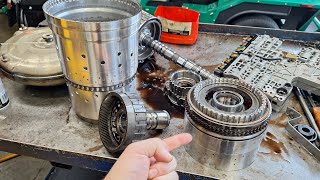

We Have This Part in Stock



The information in this article is provided for general reference and educational purposes only. Vehicle specifications, procedures, and part compatibility can vary by production date, trim level, and region. Always consult your vehicle's factory service manual and verify part numbers before purchasing or performing repairs. Safety-critical components such as airbags, seat belts, and braking systems should be installed by a qualified professional.
- Ford EXPLORER:
- 🎬 Helpful Videos
- 🛍️ Shop This Part
- What's Unique About the 2020-2023 Ford EXPLORER
- Diagnostic Flowchart
- Symptoms You May Notice
- Most Likely Causes
- Rare But Worth Checking
- Diagnosis Steps
- Parts You'll Likely Need
- Related Codes That Often Appear With This One
- Technical Service Bulletins (TSBs) & Recalls
- Platform-Specific Known Issues
- Mechanic-Grade Diagnostic Values
- Scan Tool Commands That Help
- Wiring & Ground Locations
- Real Owner Repair Stories
- OEM Part Supersession History
- Model Year Variations Within This Range
- 🎟️ Get 5% Off