

P0722 on 2016-2022 Honda Pilot: Output Speed Sensor Circuit No Signal Causes and Fixes
P0722 on a 2016-2022 Honda Pilot most often means the transmission output speed sensor has failed. This can cause harsh shifting, a flashing 'D' light, and an inoperative speedometer. Replacing the sensor (OEM Part No. 28820-RPC-013) is the most common fix, with the part costing between $25 and $100.
- P0722 on your Pilot means the transmission output speed sensor circuit has no signal.
- The most common symptoms are a Check Engine Light, a flashing 'D' light, and harsh or erratic shifting.
- The most likely cause is a failed output speed sensor itself (Part No. 28820-RPC-013), which is a relatively inexpensive part.
- Before replacing the sensor, always inspect its wiring and connector for damage, as this is another common cause.
- When replacing the sensor, ensure any required spacing washers are reinstalled correctly to prevent repeat failure.
- This is an electrical fault; do not let a shop convince you that you need a new transmission without thoroughly checking the sensor circuit first.
What's Unique About the 2016-2022 Honda Pilot

The 2016-2022 Honda Pilot uses either a 6-speed (on LX, EX, EX-L) or a ZF-sourced 9-speed automatic transmission (on Touring, Elite). The 6-speed is identifiable by its traditional gear shift lever, while the 9-speed uses a push-button gear selector. While P0722 can affect both, the 6-speed transmissions are also known for a distinct 'judder' issue, often resolved with repeated transmission fluid drain-and-fills per a service bulletin. It's important to distinguish this judder from P0722, which is almost always a hardware or wiring issue causing a complete loss of signal, rather than a fluid or software-related shift quality problem.
Symptoms You May Notice
- Check Engine Light is illuminated
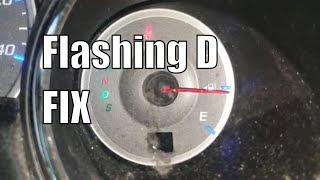
- Flashing 'D' (Drive) indicator light on the dashboard
- Harsh, erratic, or delayed gear shifts
- Transmission may get stuck in a low gear (limp mode)
- Speedometer reads 0 mph or behaves erratically
- Cruise control is inoperative
- Possible engine hesitation or stalling
- Transmission slip (engine RPMs rise without a proportional increase in vehicle speed)
- Unable to shift into Park without first turning the engine off
- Replacing the entire transmission when only a simple sensor or wire is at fault.
- Replacing the input speed sensor instead of the output speed sensor.
- Assuming a software update will fix the problem, as P0722 is almost always an electrical circuit or hardware fault.
Most Likely Causes

- Failed Output Speed Sensor (OSS) 🔴 High Probability Like any electronic sensor, the OSS is subject to failure from heat cycles and vibration. Its magnetic tip can also become coated with metallic debris from normal transmission wear, especially if fluid changes are neglected, which can block the signal.
How to confirm: After confirming the wiring is intact and receiving power, test the sensor's output with a multimeter or oscilloscope while rotating the wheels. 🎬 See this guide on how to test a transmission speed sensor An absence of a signal indicates a failed sensor. Given the low cost of the part, many DIYers and shops will replace the sensor as a primary diagnostic step after a visual wiring inspection.
Typical fix: Replace the output speed sensor. This usually involves disconnecting the electrical connector, removing a single 10mm bolt, and swapping the sensor. Ensure the o-ring is lubricated and any required washer is installed correctly.
Est. part cost: $25-$100 - Damaged Wiring or Connector 🟡 Medium Probability The wiring harness leading to the transmission is exposed to road debris, heat, and oil. Over time, this can cause wires to chafe, break, or corrode, and connector pins can become loose or contaminated.
How to confirm: Visually inspect the wiring harness from the sensor to the PCM for any signs of chafing, breaks, or corrosion. Check the connector for bent, loose, or corroded pins. Perform a continuity test on the wires between the sensor connector and the PCM connector to check for opens or shorts to ground.
Typical fix: Repair the broken or shorted section of wire. Clean or replace the damaged connector.
Est. part cost: $5-$50 - Low or Contaminated Transmission Fluid ⚪ Low Probability This is not a platform-specific issue, but a general cause. If internal transmission components wear, metal shavings circulate in the fluid.
How to confirm: Check the transmission fluid level and condition. If the fluid is dark, smells burnt, or contains visible metallic particles, it indicates a problem. The OSS is magnetic and can attract these particles, disrupting its signal.
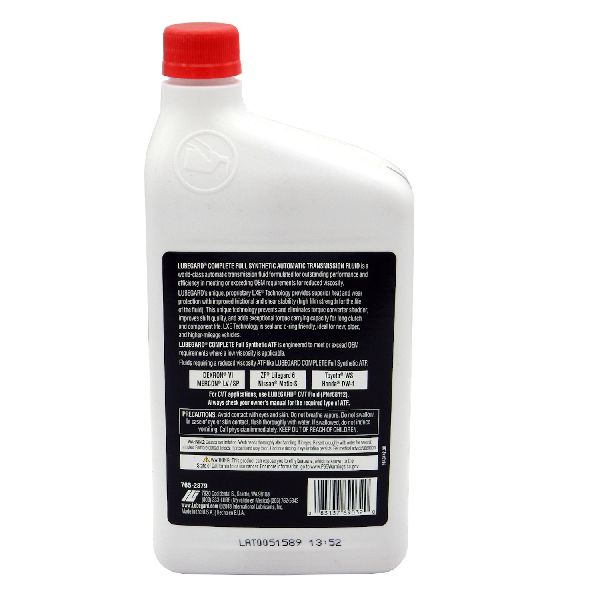
Typical fix: If heavy metal particles are found, a simple fluid change is not enough as internal damage is likely. If the fluid is just low or dirty, a drain-and-fill with Honda DW-1 fluid may help, but the P0722 code will likely persist until the sensor itself is cleaned or replaced.
Est. part cost: $50-$200 for a fluid service
Rare But Worth Checking
- Faulty Powertrain Control Module (PCM): This is very uncommon. The PCM should only be considered after the sensor and its entire circuit have been thoroughly tested and confirmed to be working correctly.
Diagnosis Steps
- Use an OBD-II scanner to confirm P0722 is the active code and check for any other transmission-related codes.
- Check the level and condition of the automatic transmission fluid. Look for signs of metal shavings or a burnt smell.
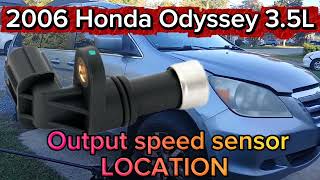
- Safely raise the vehicle and locate the output speed sensor on the transmission housing. 🎬 Watch: Finding the output speed sensor location on a Honda 3.5L The location differs between the 6-speed and 9-speed transmissions.
- Inspect the sensor's electrical connector and wiring harness for any visible damage, corrosion, or loose connections.
- Disconnect the sensor. With the ignition on, use a multimeter to check for a reference voltage (typically ~5V) at the connector.
- If voltage is present, test the sensor itself. An oscilloscope is the best tool to check for a square wave signal from the sensor while the wheels are spun. Alternatively, check the sensor's internal resistance and compare it to the manufacturer's specification.
- If the sensor and wiring test good, the final and least likely possibility is a fault within the Powertrain Control Module (PCM).
Parts You'll Likely Need

- Transmission Output Speed Sensor
(OEM #28820-RPC-013)— This sensor is the most frequent point of failure for a P0722 code. This part number is widely used across many Honda/Acura models for both input and output speed sensors and supersedes part number 28820-RPC-003.
Trusted brands: Honda (OEM), NGK/NTK, Standard Motor Products (SMP), Delphi
OEM price range: $60-$100
Aftermarket price range: $25-$60 - Sensor Washer
(OEM #28811-RJB-000)— This washer may be required for proper spacing on some models. If omitted or installed incorrectly, the new sensor tip can make contact with internal transmission components, leading to premature failure.
Trusted brands: Honda (OEM)
OEM price range: $2-$5
Related Codes That Often Appear With This One
- P0700 — P0700 is a generic code indicating that the Transmission Control Module (TCM) has stored a fault. It often appears alongside more specific transmission codes like P0722.
- P0721 — This code indicates 'Output Speed Sensor Circuit Range/Performance', meaning the signal is present but erratic or irrational, which can be caused by a failing sensor or wiring issues, similar to P0722.
Technical Service Bulletins (TSBs) & Recalls
- While Honda has issued Technical Service Bulletins (TSBs) for the 2016+ Pilot generation related to transmission issues, they primarily address a 'judder' or 'shudder' symptom in the 6-speed automatic, which is fixed with a software update and a triple fluid flush. There are no widely known TSBs that directly address the P0722 'no signal' fault, as it is consistently diagnosed as a hardware (sensor) or circuit (wiring) failure rather than a software calibration issue.
Platform-Specific Known Issues
- Repeated Sensor Failure Due to Missing/Incorrect Washer: On some Honda/Acura transmissions, a small washer (Part No. 28811-RJB-000) is required to properly space the output speed sensor. If this washer is lost during replacement or installed on the wrong side of the sensor's flange, the sensor can sit too deep in the transmission housing. This causes the sensor's magnetic tip to rub against a rotating internal part, quickly destroying the new sensor and causing the P0722 code to return. An owner on Acurazine.com experienced this exact issue, with a replacement sensor failing within a month due to the improperly installed washer.
Mechanic-Grade Diagnostic Values
- Voltage between sensor connector terminal No. 1 and body ground (Key On, Engine Off, sensor disconnected) — expected: Approximately 5 V. Failure: No voltage indicates an open in the VCC1 wire between the PCM and the sensor.
- Continuity between sensor connector terminal No. 3 and body ground (Key Off, sensor disconnected) — expected: Continuity should exist (less than 5 Ω).. Failure: No continuity indicates an open in the ground wire.
- Continuity between sensor connector terminal No. 2 and PCM connector terminal B34 (Key Off, sensor and PCM disconnected) — expected: Continuity should exist (less than 1.0 Ω).. Failure: No continuity indicates an open in the signal wire.
Scan Tool Commands That Help
- Honda Diagnostic System (HDS): A/T Data List - Compare Input Shaft (Mainshaft) Speed and Output Shaft (Countershaft) Speed — This is a primary diagnostic step. With the vehicle's wheels spinning at a steady speed (on a lift), the input and output speeds should be relatively similar and change with RPM. If the Output Shaft Speed reads 0 or is erratic while the Input Shaft Speed is reading correctly, it strongly points to a fault in the output sensor's circuit or the sensor itself.
- Honda Diagnostic System (HDS) or capable aftermarket scanner: Clear Learned Values / Reset Transmission Adapative Values — This should be performed after replacing transmission components, including sensors, or after a fluid change. It clears the learned shift parameters, allowing the TCM to re-adapt to the new/clean components, which can resolve harsh shifting that might otherwise persist after a repair.
Wiring & Ground Locations

- Output Speed Sensor (6-Speed Auto) — Typically located on the front or top of the transmission housing, accessible from underneath the vehicle after removing the splash shield.. This is the component that generates the signal. Its location is needed for inspection, testing, and replacement.
- Output Speed Sensor (9-Speed ZF Auto) — The ZF 9HP transmission has multiple speed sensors. The output speed sensor (n_ab) is typically internal to the transmission, making replacement much more labor-intensive than on the 6-speed. Diagnosis of the external wiring is critical before condemning the sensor.. The location (internal vs. external) dramatically changes the diagnostic and repair procedure, cost, and difficulty.
- PCM Connector B (Pins B34, B36, B38) — The Powertrain Control Module (PCM) is typically located in the engine bay or under the dashboard. Connector B is one of the main plugs.. On similar Honda models, these specific pins correspond to the output speed sensor signal, power, and ground wires. This allows a technician to test the entire circuit from the PCM side, confirming wiring integrity without having to access the sensor itself.
- G101 (Transmission Ground) — Typically located on the transmission housing or on the engine block near the transmission bell housing. It's a bolt securing one or more black ground wires to the chassis or powertrain.. A poor ground connection at G101 can cause a variety of transmission-related electrical issues, including sensor signal problems. Verifying this ground is clean and tight is a crucial step in diagnosing any electrical fault.
When the Usual Fixes Don't Work
- In some cases reported on forums, replacing the output speed sensor for P0722 does not fix the issue. When this occurs, the next steps according to Honda's diagnostic procedure are to meticulously test the wiring harness for opens or shorts between the sensor connector and the PCM, and to verify the ground connection is clean and secure. In one instance, a dealer quoted a full transmission replacement after a new sensor failed to fix the problem, highlighting the importance of proper circuit testing to avoid unnecessary major repairs.
OEM Part Supersession History
28820-RPC-003→28820-RPC-013— Standard part revision and consolidation by Honda.
Heads up: The part 28820-RPC-013 is used for both input and output speed sensors on various Honda models. It is critical to verify the correct application, as the sensors themselves can have different connector angles (90-degree vs 180-degree) for different functions despite sharing a base part number in some catalogs.
Model Year Variations Within This Range
- 2016-2022 (LX, EX, EX-L trims): These trims use a Honda-built 6-speed automatic transmission. The output speed sensor is typically external and relatively easy to access and replace, held by a single 10mm bolt.
- 2016-2022 (Touring, Elite trims): These trims use a ZF 9HP 9-speed automatic transmission. On this unit, the output speed sensor is often located inside the transmission case. Replacement is a major repair requiring removal of the valve body or more significant disassembly, making a wiring or PCM fault diagnosis much more critical before attempting sensor replacement.
Diagnostic Flowchart
Used vs. New Parts: Buying Guide for This Vehicle
When a used part is the smart pick: For this specific repair, a used part rarely makes sense. The primary failure part, the speed sensor, is a relatively low-cost electronic component. The small savings from a used sensor are not worth the risk of it failing prematurely or being faulty from the start.
Donor-vehicle mileage cap: roughly under 50000 miles for the part to have meaningful remaining life.
What to inspect on the donor part:
- If buying a used sensor is unavoidable, ensure it comes from a vehicle with no reported transmission issues.
- Inspect the connector for any cracks, corrosion, or broken locking tabs.
- The magnetic tip should be clean and free of heavy metallic sludge.
OEM-only on this vehicle (don't cheap out):
- Powertrain Control Module (PCM) - If the PCM is diagnosed as faulty (which is extremely rare for this code), a new or professionally refurbished OEM unit is recommended due to the need for precise programming to the vehicle's VIN and options.
Aftermarket brands forum-validated for this vehicle:
- NGK/NTK
- Standard Motor Products (SMP)
- Delphi
Brands owners have reported issues with on this vehicle:
- Generic, unbranded 'white-box' parts from online marketplaces should be avoided. Failure rates are high, and they can introduce new electrical issues.
Real Owner Stories
Aggregated from forums and TSBs cited above. Mileages and costs reflect what owners reported in those sources.
Acura RL (shared platform issue)
Symptoms: A replacement output speed sensor failed within one month, causing the P0722 code to return.
What fixed it: The root cause was an incorrectly installed spacing washer (Part No. 28811-RJB-000). The fix required replacing the sensor again and ensuring the washer was installed correctly to prevent the sensor tip from being damaged by internal transmission components.
Source hint: Acurazine.com - 'Output Shaft Speed Sensor - P0722' Thread
Related OBD-II Codes
Frequently Asked Questions
I'm replacing the output speed sensor on my Pilot myself. Is there anything specific I need to watch out for?
Are there any official Honda TSBs or recalls for the P0722 code on a 2016-2022 Pilot?
My Pilot's 'D' drive light is flashing and the speedometer is stuck at 0 mph. Is this related to code P0722?
What kind of transmission fluid should I use if I'm checking the level while diagnosing P0722?
My mechanic thinks the main computer (PCM) is the problem. How likely is that for this code?
Are aftermarket output speed sensors okay to use, or should I stick with the Honda part?
Helpful Videos
Used OEM Parts in Stock

New Aftermarket Parts Available


The information in this article is provided for general reference and educational purposes only. Vehicle specifications, procedures, and part compatibility can vary by production date, trim level, and region. Always consult your vehicle's factory service manual and verify part numbers before purchasing or performing repairs. Safety-critical components such as airbags, seat belts, and braking systems should be installed by a qualified professional.
- Honda Pilot:
- 🎬 Helpful Videos
- 🛍️ Shop This Part
- What's Unique About the 2016-2022 Honda Pilot
- Symptoms You May Notice
- Most Likely Causes
- Rare But Worth Checking
- Diagnosis Steps
- Parts You'll Likely Need
- Related Codes That Often Appear With This One
- Technical Service Bulletins (TSBs) & Recalls
- Platform-Specific Known Issues
- Mechanic-Grade Diagnostic Values
- Scan Tool Commands That Help
- Wiring & Ground Locations
- When the Usual Fixes Don't Work
- OEM Part Supersession History
- Model Year Variations Within This Range
- Diagnostic Flowchart
- Used vs. New Parts: Buying Guide for This Vehicle
- Real Owner Stories
- Acura RL (shared platform issue)
- Related OBD-II Codes
- Frequently Asked Questions
- 🎟️ Get 5% Off