

P0720 on 2009-2022 Kia Soul: Output Speed Sensor Causes and Fixes
For 2009-2019 Kia Souls with 4-speed or 6-speed automatic transmissions, P0720 usually means the internal output speed sensor has failed. For 2020-2022 models with the IVT, this code may point to more complex transmission issues covered by Service Campaign SC199. The most common fix for the conventional automatics is replacing the sensor harness, which is located inside the transmission oil pan and requires removing the valve body.
- P0720 indicates a problem with the transmission's output speed sensor circuit, leading to severe shifting problems.
- For 2009-2019 Souls, the sensor is likely inside the transmission pan, making replacement a job for a professional.
- For 2020-2022 Souls with an IVT, check with a Kia dealer about Service Campaign SC199 before assuming it's a simple sensor issue.
- Do not confuse the transmission Output Speed Sensor (OSS) with the ABS Wheel Speed Sensors (WSS).
- Driving with this code can lead to unpredictable vehicle behavior and cause more expensive transmission damage.
What's Unique About the 2009-2022 Kia Soul
The Kia Soul's 2009-2022 model range spans three generations with very different transmissions, which dictates the diagnosis for P0720. First and second-generation models (2009-2019) use a conventional 4-speed or 6-speed automatic (A6MF family). On these, the output speed sensor is typically located inside the transmission oil pan, making it a more labor-intensive fix than an external sensor. Third-generation models (2020-2022) use an Intelligent Variable Transmission (IVT) where shifting problems and related codes are often linked to software logic or internal belt-and-pulley issues, which Kia has addressed via Service Campaign SC199.
Generation note: This guide covers three generations of the Kia Soul: - First Generation (2009-2013): Typically equipped with a 4-speed (A4CF family) or 6-speed automatic (A6MF family). The OSS is internal. - Second Generation (2014-2019): Primarily uses a 6-speed automatic (A6MF1). The OSS is internal, mounted on the valve body, and part of a single wiring harness with the input sensor. - Third Generation (2020-2022): Primarily uses an Intelligent Variable Transmission (IVT). Shifting issues and related codes may be due to TCM software or internal mechanical failure, not just a simple sensor. This is addressed by Kia Service Campaign SC199.
Symptoms You May Notice
- Check Engine Light is illuminated
- Harsh, erratic, or delayed shifting
- Transmission stuck in a single gear (limp mode, often 3rd gear)
- Speedometer reads incorrectly or not at all
- Cruise control will not engage
- Engine stalling when coming to a stop
- Noticeable decrease in fuel economy
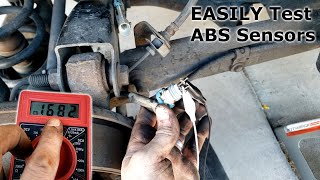
- Replacing the external Wheel Speed Sensor (WSS). The WSS is part of the ABS system 🎬 Watch this guide on testing ABS wheel speed sensors and reports individual wheel speed. The P0720 code refers to the Output Speed Sensor located on or in the transmission, which measures the transmission's output shaft speed.
Most Likely Causes
- Faulty Output Speed Sensor (OSS) / Internal Harness 🔴 High Probability On 2009-2019 models, the sensor is located inside the transmission, exposed to constant heat cycles and potentially contaminated fluid over its life, which makes the wiring harness brittle.
How to confirm: A diagnostic scan tool can monitor the OSS data stream. If the reading is zero or erratic while the vehicle is moving, the sensor or its circuit is faulty. Resistance can also be checked with a multimeter 🎬 See how to test Kia speed sensors with a multimeter against manufacturer specs after accessing the part.
Typical fix: Replace the output speed sensor. 🎬 Watch this video on diagnosing Kia speed sensor codes On 6-speed A6MF models, this requires draining the fluid, dropping the transmission pan and valve body to access the sensor. It is sold with the input sensor on a single wiring harness and should be replaced as a complete unit.
Est. part cost: $60-$150 - Damaged Wiring or Connector 🟡 Medium Probability The internal wiring harness can become brittle from constant heat cycles inside the transmission. External wiring is less common to fail but can be damaged by road debris or improper service.
How to confirm: Visually inspect the wiring harness for signs of damage, brittleness, or corrosion after removing the transmission pan. Check for continuity using a multimeter.
Typical fix: Repair the damaged section of wire or replace the entire internal transmission wiring harness.
Est. part cost: $100-$250 for a new harness - Low or Contaminated Transmission Fluid ⚪ Low Probability Neglected maintenance can lead to fluid that is burnt or contaminated with metal particles, which can interfere with sensor operation or indicate a larger internal failure.
How to confirm: Check the transmission fluid level and condition via the dipstick (if equipped). The fluid should be bright red and not smell burnt. If dark, brown, or containing metallic debris, it needs service and may indicate a more serious problem.
Typical fix: Perform a transmission fluid drain and fill, or a full fluid flush. If significant debris is found, the pan should be dropped and cleaned, and further diagnosis may be needed.
Est. part cost: $70-$200 for fluid and filter
Rare But Worth Checking
- Faulty Transmission Control Module (TCM) or Powertrain Control Module (PCM): This should be the last resort after all other possibilities (sensor, wiring, fluid) have been exhaustively ruled out. A faulty computer is rare but possible.
- Internal IVT Failure (2020+ models): On 2020-2022 models, symptoms mimicking an OSS failure may actually be the IVT's belt slipping or other internal issues. This is a known issue addressed by Kia's Voluntary Emissions Service Campaign SC199, which involves a TCM software update and, if necessary, a full transmission replacement at no cost to the owner.
Diagnosis Steps
- Use an OBD-II scanner to confirm the P0720 code and document any other codes present, such as P0717 or P073x.
- If the vehicle is a 2020-2022 model, contact a Kia dealership with your VIN to check for open service campaigns like SC199 related to the IVT transmission before attempting any other diagnosis.
- Check the transmission fluid level and condition. Low, dark, or burnt-smelling fluid can cause this issue and indicates a need for service.
- Use a scan tool with live data capability to monitor the Output Speed Sensor signal while driving (if safe). The reading should increase smoothly with vehicle speed. If it's erratic, intermittent, or stays at zero, the problem is likely the sensor or its circuit.
- For 2009-2019 models, the next step involves raising the vehicle, draining the transmission fluid, and removing the transmission oil pan to access the internal components.
- Visually inspect the internal wiring harness for any signs of damage, corrosion, or broken/brittle wires. Pay close attention to the connectors.
- If the wiring appears intact, test the sensor's resistance with a multimeter and compare it to the manufacturer's specifications.
- If the sensor tests bad or the wiring is damaged, replace the entire input/output sensor harness as a unit. This is the most reliable repair.
- After repairs, reinstall the valve body (if removed), install a new pan gasket, and reinstall the pan. Refill the transmission with the correct type and amount of Kia SP-IV fluid, clear the codes, and perform a test drive to ensure the issue is resolved.
Parts You'll Likely Need
- Transmission Input/Output Speed Sensor Harness
(OEM #42620-3B611 (for some A6MF1/A6GF1 models, verify by VIN))— For 2009-2019 models with the 6-speed automatic, this is the most common failure point. The input and output sensors are integrated into a single harness that lives inside the transmission and must be replaced as a unit.
Trusted brands: Kia Genuine, Hyundai Mobis
OEM price range: $120-$250
Aftermarket price range: $70-$150 - Transmission Pan Gasket — This must be replaced anytime the transmission pan is removed to access the internal sensors. Some technicians prefer using a high-quality RTV sealant specified for transmission fluid.
Trusted brands: Fel-Pro, Mahle, Kia Genuine
OEM price range: $20-$40
Aftermarket price range: $15-$30 - Kia SP-IV Transmission Fluid — The correct fluid type is essential when refilling the transmission after service. Using the wrong fluid can cause severe damage. A typical drain and fill for this job requires 4-5 quarts.
Trusted brands: Kia Genuine, Idemitsu, ENEOS
OEM price range: $15-$25 per quart
Aftermarket price range: $10-$18 per quart
Related Codes That Often Appear With This One
- P0717 — Input Speed Sensor No Signal. The input and output speed sensors are often on the same internal harness in the A6MF transmission, and a failure of the harness can cause both codes to trigger.
- P073x (e.g., P0731, P0732) — Gear Ratio Error codes. If the TCM doesn't know the output speed, it cannot verify if the correct gear ratio is achieved, leading to these codes. These are also common codes associated with the IVT issue on 2020+ models.
- P0722 — Output Speed Sensor Circuit No Signal. This is a more specific version of P0720, indicating a complete loss of signal rather than just an erratic one. The diagnostic path is identical.
Technical Service Bulletins (TSBs) & Recalls
- SC199: IVT Software Logic Improvement and/or IVT Replacement.
- TSB ENG222: Excessive Oil Consumption for Nu/Gamma/Theta engines.
- TSB CHA074 / CHA044: MDPS Flexible Coupling Replacement.
Platform-Specific Known Issues
- For 2020-2021 Kia Souls with the 2.0L engine and IVT, Kia issued Service Campaign SC199 to update the TCM logic. Some vehicles required a full transmission replacement under this campaign due to internal damage caused by the faulty software. Symptoms like slipping and hesitation can be related to this campaign rather than a simple P0720 sensor fault.
Mechanic-Grade Diagnostic Values
- Output Speed Sensor (Hall Effect Type) Signal Voltage — expected: A square wave that increases in frequency as vehicle speed increases. At idle, the signal wire should show a steady voltage (e.g., a test on a similar Kia showed 3.2V at idle).. Failure: The square wave signal drops out intermittently (flatlines) or is completely absent while the vehicle is moving. This indicates a faulty sensor, harness, or connection.
- Output Speed Sensor (Hall Effect Type) Reference Voltage — expected: Approximately 5V to 7.5V supplied from the TCM/PCM to the sensor.. Failure: If the reference voltage is lost at the same time the signal is lost, it points to a problem with the wiring or the control module, not just the sensor itself.
- Output Speed Sensor (Magnetic Resistance Type) Resistance — expected: While many modern Kias use Hall-effect sensors, older or different models might use a 2-wire magnetic sensor. For those, a typical resistance is between 500 and 700 Ohms.. Failure: A reading that is significantly outside the specified range (e.g., open circuit or shorted) indicates a failed sensor.
Scan Tool Commands That Help
- Kia GDS (Global Diagnostic System) or advanced generic scanner: Live Data Graphing for 'Output Speed Sensor' — This is the primary method for diagnosing P0720. Graphing the sensor's reported speed (RPM) while driving should show a smooth curve that mirrors vehicle speed. Any sudden drops to zero, spikes, or erratic readings while the car is moving at a steady pace confirms a fault in the sensor's circuit.
- Kia GDS (Global Diagnostic System): TCM Firmware Update/Re-flash — For 2020+ models with the IVT, a P0720 code may be caused by a software issue. A dealer would use GDS to check for and apply relevant updates, such as those included in Service Campaign SC199, before condemning any hardware.
Wiring & Ground Locations
- Transmission Control Module (TCM) — On many first and second-generation Souls, the TCM is located in the engine bay, under the air cleaner assembly and battery tray.. After confirming the internal harness and sensor are good, technicians must test for continuity and voltage at the TCM connector pins to rule out a wiring break in between or a faulty module. Access requires removing the battery and airbox.
- Internal Transmission Harness Connector — This is the main electrical pass-through connector on the outside of the transmission case that connects the external vehicle harness to the internal components (sensors and solenoids).. This is a critical test point. Before dropping the transmission pan, a technician can sometimes test sensor circuit continuity and resistance from this external connector to quickly determine if the fault is inside the transmission (bad sensor/harness) or outside (wiring to TCM, or the TCM itself).
Real Owner Repair Stories
- YouTube video from 'ProProjects' referenced by another Kia owner (2008 Kia Spectra (with a similar A4CF/A6MF family transmission and internal harness design)) — Harsh shifting, clunking, not upshifting or downshifting correctly, codes P0700, P0711 (Trans Temp Sensor), and P0743 (TCC Solenoid).
❌ Tried (didn't work) Initial diagnosis pointed to multiple separate component failures.
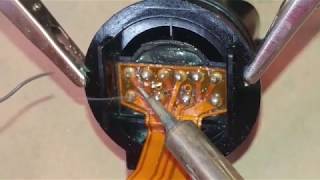
✅ What actually fixed it The root cause for all codes was the single internal transmission wiring harness. The solder joints on the back of the main connector (inside the pan) had cracked from heat and vibration. The owner re-soldered the cracked joints on the harness, which resolved all the shifting problems and codes. This highlights how a single harness failure can manifest as various sensor and solenoid codes, including P0720.
OEM Part Supersession History
42620-3B610→42620-3B611— Standard part revision by the manufacturer, likely for improved durability or material changes.
Heads up: The new part number (42620-3B611) is the correct and direct replacement for the old one. There are no known incompatibility issues when using the superseded part.
Model Year Variations Within This Range
- 2009-2013 (First Generation): These models could be equipped with either a 4-speed (A4CF family) or the newer 6-speed (A6MF family) automatic. While the P0720 diagnosis is similar (internal sensor), the specific harness part number and valve body procedure may differ. The 6-speed became standard later in the generation.
- 2020-2022 (Third Generation): These models use the IVT (Intelligent Variable Transmission). A P0720 code is less likely to be a simple sensor and more often related to the complex internal mechanics or software logic. Diagnosis should always start with checking for the SC199 service campaign, which addresses these known issues and could result in a no-cost transmission replacement.
Diagnostic Flowchart
Other Known Issues on This Vehicle
Issues unrelated to this code that are worth knowing about as an owner of this generation:
- Engine Failure / Excessive Oil Consumption (Theta II, Nu, Gamma GDI) 🔴 High — Widespread across 2012-2021 models with specific GDI engines, often appearing after 70,000 miles. Can lead to catastrophic failure. (Ref: Multiple recalls (e.g., SC176, SC209) and TSBs (e.g., ENG222) have been issued.)
- Catalytic Converter Failure 🟠 Medium — Common on 2012-2016 models with 1.6L GDI engines, often a precursor to engine damage due to high exhaust temperatures. (Ref: Recall SC176 addresses this by updating ECU logic and replacing the converter if damaged.)
- Steering Column 'Click' or 'Clunk' 🟡 Low — Very common on first and second-generation models (2009-2019). A clicking noise is heard when turning the steering wheel. (Ref: Caused by a worn flexible steering coupler (P/N 563152K000FFF). Covered by TSB CHA074 and a warranty extension.)
- IVT (CVT) Transmission Failure 🔴 High — Affects third-generation models (2020-2022). Can cause hesitation, stalling, or complete loss of power. (Ref: Voluntary Service Campaign SC199 was issued to update software and/or replace the entire transmission.)
- Vehicle Theft Vulnerability 🔴 High — Affects models up to 2021 that use a physical key and lack an engine immobilizer. Extremely high rates of theft. (Ref: Kia has offered a software update (Service Campaign 976) and steering wheel locks to affected owners.)
Used vs. New Parts: Buying Guide for This Vehicle
When a used part is the smart pick: For the 2009-2019 models, purchasing a complete used transmission with low mileage (e.g., under 60k miles) can be cost-effective if the entire transmission needs replacement. However, for just the P0720 code, buying a used internal wiring harness is risky as it may have the same heat-cycle fatigue as the original part.
Donor-vehicle mileage cap: roughly under 60000 miles for the part to have meaningful remaining life.
What to inspect on the donor part:
- Verify the donor vehicle's mileage from a reputable salvage yard.
- Ask for any available service history of the donor car.
- Inspect the transmission fluid from the donor unit if possible; it should not be dark brown, black, or smell burnt.
- Ensure the used transmission comes with a warranty (typically 30-90 days) from the seller.
OEM-only on this vehicle (don't cheap out):
- Internal Transmission Wiring Harness: Due to the high-heat environment and common failure of solder joints, using a new OEM (Kia/Hyundai) harness is the most reliable fix to avoid repeat labor.
- Transmission Fluid: Always use new fluid that meets Kia's specific SP-IV specification. Using a generic or incorrect fluid type can cause shifting problems and long-term damage.
- Gaskets and Seals: Always use a new pan gasket or the correct RTV sealant. Reusing old gaskets or using cheap aftermarket ones can lead to significant leaks.
Brands owners have reported issues with on this vehicle:
- Unbranded/White-box Harnesses: Cheap, no-name harnesses from online marketplaces are a gamble. The plastic and wiring may not withstand the high temperatures inside the transmission, leading to premature failure.
Real Owner Stories
Aggregated from forums and TSBs cited above. Mileages and costs reflect what owners reported in those sources.
2020 Kia Soul
Symptoms: The owner was notified of a Service Campaign during a routine oil change. The dealer initially had trouble applying a software update to the transmission control unit.
What fixed it: The dealer resolved the software update issue by disconnecting and reconnecting the battery to update the TCM logic as part of Service Campaign SC199.
Source hint: Reddit r/KiaSoulClub - TCU Recall / Service Campaign
2011-2016 Hyundai Elantra (Platform Mate)
Symptoms: Experienced failures related to the internal input/output speed sensor harness, which is the same design used in the Kia Soul.
What fixed it: Replacement of the internal input/output speed sensor harness assembly.
Source hint: 2011-2016 Hyundai Elantra (MD) platform mate description
Related OBD-II Codes
Frequently Asked Questions
Does Service Campaign SC199 apply to my 2020 Kia Soul with the IVT transmission?
I have a 2015 Kia Soul with a P0720 code; do I need to replace the whole transmission?
Is there a specific transmission fluid I should use for my Kia Soul after replacing the OSS sensor?
My 2013 Kia Soul has a clicking noise in the steering wheel along with transmission issues; are they related?
Can a software update fix the P0720 symptoms on a 2021 Kia Soul?
Helpful Videos
We Have This Part in Stock



The information in this article is provided for general reference and educational purposes only. Vehicle specifications, procedures, and part compatibility can vary by production date, trim level, and region. Always consult your vehicle's factory service manual and verify part numbers before purchasing or performing repairs. Safety-critical components such as airbags, seat belts, and braking systems should be installed by a qualified professional.
- Kia Soul:
- 🎬 Helpful Videos
- 🛍️ Shop This Part
- What's Unique About the 2009-2022 Kia Soul
- Symptoms You May Notice
- Most Likely Causes
- Rare But Worth Checking
- Diagnosis Steps
- Parts You'll Likely Need
- Related Codes That Often Appear With This One
- Technical Service Bulletins (TSBs) & Recalls
- Platform-Specific Known Issues
- Mechanic-Grade Diagnostic Values
- Scan Tool Commands That Help
- Wiring & Ground Locations
- Real Owner Repair Stories
- OEM Part Supersession History
- Model Year Variations Within This Range
- Diagnostic Flowchart
- Other Known Issues on This Vehicle
- Used vs. New Parts: Buying Guide for This Vehicle
- Real Owner Stories
- 2020 Kia Soul
- 2011-2016 Hyundai Elantra (Platform Mate)
- Related OBD-II Codes
- Frequently Asked Questions
- 🎟️ Get 5% Off