

P0720 on 2000-2005 Ford Excursion: Output Speed Sensor Circuit Causes and Fixes
P0720 on a Ford Excursion most often means the Output Speed Sensor (OSS) on the transmission has failed. Replacing the sensor is the most common fix. Expect to pay $40-$100 for a quality OEM part. It's a DIY job (2/5 difficulty) but the sensor can be hard to reach. However, before replacing the sensor, it is critical to test the alternator for AC ripple, as a failing alternator is a very common and misdiagnosed cause for this code on these trucks.
- P0720 on a 2000-2005 Excursion points to a problem with the Output Speed Sensor (OSS) circuit, causing serious shifting problems.
- Before replacing the sensor, have your alternator tested. A failing alternator can create electrical noise that mimics a sensor failure.
- Verify your transmission type (4R100 or 5R110W) before buying a new sensor, as the parts are different.
- Do not confuse the transmission's OSS with the Vehicle Speed Sensor (VSS) located on the rear differential; they are different parts.
- The most likely fix is replacing the OSS, but a thorough inspection of the wiring for damage is a critical diagnostic step.
What's Unique About the 2000-2005 Ford Excursion

The 2000-2005 Excursion used two main automatic transmissions: the 4R100 (on 5.4L V8, 6.8L V10, and 7.3L diesel models) and the 5R110W 'TorqShift' (on 6.0L diesel and some later 6.8L V10 models). The correct replacement Output Speed Sensor is different for each transmission. A unique and frustrating issue on these trucks is that a failing alternator can create electrical noise (AC ripple) that interferes with the OSS signal, triggering a P0720 code even if the sensor and its wiring are good. In some cases, even a failing Coil-on-Plug (COP) has been found to create enough electrical interference to trigger this code.
Symptoms You May Notice
- Harsh, erratic, or delayed gear shifts
- Flashing 'O/D OFF' (Overdrive) light on the gear selector
- Engine stalling, especially when coming to a stop or when shifting into Reverse or Drive from a standstill.
- Inaccurate or non-functional speedometer
- Cruise control not working
- Vehicle entering 'limp mode' (stuck in 2nd or 3rd gear)
- Symptoms may be intermittent or only occur during a cold start.
- Replacing the Vehicle Speed Sensor (VSS) on the rear differential. The P0720 code specifically refers to the Output Speed Sensor on the transmission, not the VSS on the axle which typically throws a P0500 code.
- Replacing the OSS sensor when the actual fault is a failing alternator creating electrical interference. This is a very common misdiagnosis on this platform.
- Replacing the OSS sensor when the problem is a damaged wire or corroded connector in the harness.
Most Likely Causes

- Failed Output Speed Sensor (OSS) 🔴 High Probability The sensor is an electronic component exposed to significant heat and vibration on the transmission housing, leading to eventual failure over the truck's long service life.
How to confirm: After visually inspecting the wiring and, crucially, testing the alternator, replacing the sensor is the most direct way to confirm. A professional can use a scan tool to monitor the OSS signal (PID) in real-time while driving to check for dropouts. The sensor's resistance can also be tested; for a 4R100 transmission, it should be between 781-1979 ohms. For a 5R110W, the resistance should be between 325-485 ohms.
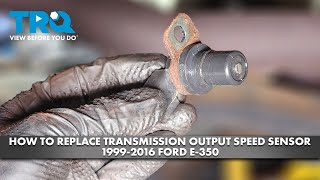
Typical fix: Replace the Output Speed Sensor. Ensure you purchase the correct sensor for your specific transmission 🎬 Watch: This video demonstrates the 5R110W TorqShift sensor replacement. (4R100 or 5R110W). On 4x4 models, the sensor is notoriously difficult to reach.
Est. part cost: $40 - $100 - Damaged Wiring or Corroded Connector 🟡 Medium Probability The wiring harness runs along the chassis and transmission, where it is exposed to heat, moisture, and potential physical damage. Wires can become brittle and break internally, or chafe against the frame or other components. A known trouble spot is the C103 inline connector, located near the air cleaner, which can corrode.
How to confirm: Visually inspect the wiring harness leading to the OSS for any signs of melting, chafing, or breaks. Unplug the connector and check for corrosion or bent pins. Use a multimeter to check for continuity between the PCM connector and the sensor connector. A user on a forum traced their P0720 issue to a bad wire after a new sensor didn't fix it.
Typical fix: Repair the damaged section of wire or replace the corroded connector pigtail. Soldering and using heat-shrink tubing is the most reliable repair method for this environment.
Est. part cost: $10 - $50 - Low or Dirty Transmission Fluid ⚪ Low Probability
How to confirm: Check the transmission fluid level and condition using the dipstick. The fluid should be at the correct level, red in color (Mercon V for 4R100/5R110W), and not smell burnt.
Typical fix: Top off the fluid to the correct level or perform a transmission fluid and filter change if the fluid is old and dirty. This is good maintenance but rarely the direct cause of a P0720 circuit code.
Est. part cost: $50 - $200
Rare But Worth Checking
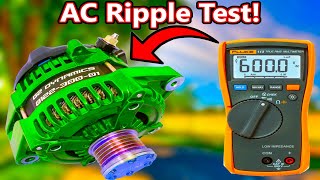
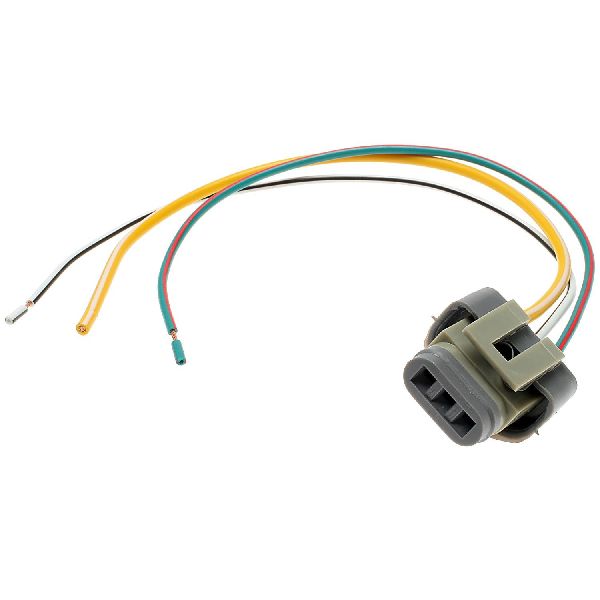
- Failing Alternator: A failing alternator with a bad diode can introduce AC voltage 'ripple' into the vehicle's DC electrical system. This electrical noise is a well-documented cause of P0720 on these trucks, as it interferes with the sensitive OSS signal. One owner on Ford Truck Enthusiasts fixed his P0720 issue by unplugging the alternator's 3-prong electrical connector and test driving; the symptoms vanished, confirming the alternator was the culprit. Testing for AC ripple with a multimeter set to AC volts across the battery terminals 🎬 See how to test your alternator for AC ripple interference. is the definitive diagnostic test. A good alternator should show less than 0.5 volts AC (500mV), with many technicians considering anything over 0.1V (100mV) to be suspect.
- Failing Coil on Plug (COP): In V10 and V8 models, a failing ignition coil can create significant RFI (Radio Frequency Interference) or a misfire condition that the PCM misinterprets as a transmission speed sensor fault, leading to a P0720 code and stalling. An owner on Ford Truck Enthusiasts diagnosed this by unplugging one COP at a time and attempting to drive; when unplugging the bad coil (#5 cylinder in his case) stopped the stalling, the problem was isolated. Another owner fixed his P0720 with a new COP on cylinder #6 after experiencing the same symptoms 8 years apart.
- Faulty Powertrain Control Module (PCM): While rare, the PCM itself can fail. This should only be considered after all other possibilities, including the sensor, wiring, alternator, and ignition system, have been thoroughly ruled out.
- Faulty Transmission Fluid Temperature (TFT) Sensor: On some Ford models, the TFT sensor may share a circuit with the OSS. A failure in the TFT sensor or its wiring could potentially trigger a P0720 code.
Diagnosis Steps

- Scan for Codes: Use an OBD-II scanner to confirm P0720 and check for any other related transmission or engine codes.
- Check Transmission Fluid: Inspect the transmission fluid level and condition. Low or burnt fluid can cause shifting problems and should be addressed first.
- Test the Alternator (Crucial Step): Before buying parts, test the alternator. Set a multimeter to a low AC Voltage scale. With the engine running, place the probes on the positive and negative battery terminals. A good alternator should show less than 0.5 volts AC (500mV AC). Many technicians consider a reading over 100mV AC to be a potential problem. A simpler field test reported by owners is to disconnect the thin 3-wire plug from the alternator and drive a short distance to see if the stalling and shifting issues disappear. If they do, the alternator is the problem.
- Inspect Wiring and Connectors: Visually inspect the entire wiring harness leading to the OSS on the transmission. Look for obvious signs of damage, melting, or corrosion. Pay special attention to the C103 connector near the air cleaner. Check for chafing near hot exhaust components.
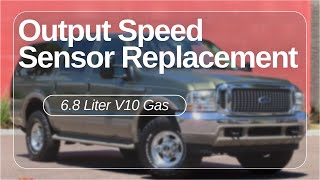
- Test and/or Replace the Output Speed Sensor: If the alternator and wiring are confirmed to be good, the sensor itself is the next most likely culprit. You can test the sensor's resistance with a multimeter. For the 4R100, expect 781-1979 ohms. For the 5R110W, expect 325-485 ohms. The sensor is located on the transmission housing. On the 4x4 4R100, it's on top of the transfer case adapter 🎬 Watch: This walkthrough shows how to replace the 4R100 sensor. and is very difficult to reach, often requiring replacement by feel.
- Advanced Diagnosis (If problem persists): Consider rare causes. Check for misfire codes that could indicate a bad Coil on Plug (COP). As a last resort, isolate a bad COP by unplugging one at a time and seeing if the stalling symptom stops.
- Test Drive: After any repair, clear the codes and perform a test drive to ensure the shifting issues and code do not return.
Parts You'll Likely Need
- Output Speed Sensor (for 4R100 Transmission)
(OEM #F81Z-7M101-AA (Motorcraft DY-1229))— This is the sensor for the 4R100 transmission, used in 5.4L, 6.8L, and 7.3L Excursions. It is the most common part to fail for this code. Note: This same part number is also used for the Turbine Speed Sensor (TSS) on the front of the transmission, so ensure you are replacing the correct (output) sensor.
Trusted brands: Motorcraft, Standard Motor Products (SMP) - Output Speed Sensor (for 5R110W 'TorqShift' Transmission)
(OEM #3C3Z-7H103-AA)— This is the 3-pin sensor for the 5R110W transmission, used in Excursions with the 6.0L diesel engine starting in mid-2003. It is not interchangeable with the 4R100 sensor.
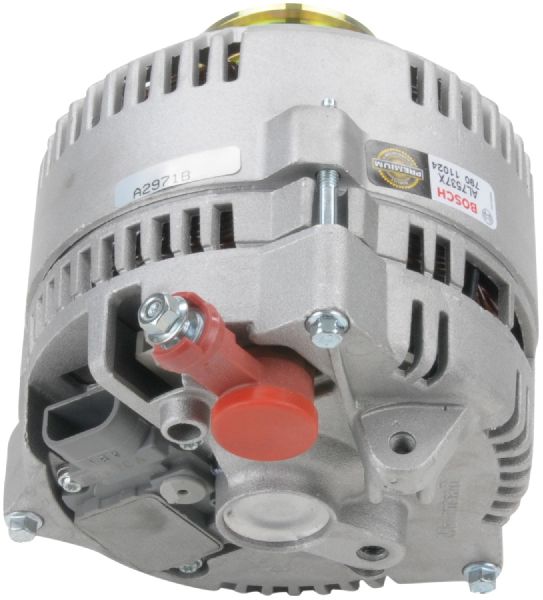
Trusted brands: Motorcraft, Standard Motor Products (SMP) - Alternator — A failing alternator with bad diodes is a frequent cause of P0720 on this platform due to AC ripple voltage interfering with the sensor signal. Owners often report that only a new, not rebuilt, alternator permanently solves the issue.
Trusted brands: Motorcraft (New), Denso
Related Codes That Often Appear With This One
- P0722 — P0722 means 'Output Speed Sensor Circuit No Signal,' which is a more specific version of the P0720 fault, often appearing together when the sensor or circuit fails completely or intermittently.
- P0500 — P0500 indicates a 'Vehicle Speed Sensor Malfunction.' Since the OSS data is often used for the speedometer, a fault in the OSS circuit can sometimes trigger a VSS-related code, especially if the PCM sees conflicting speed readings.
- P0603 — P0603 stands for 'Internal Control Module Keep Alive Memory (KAM) Error.' This code often appears after the batteries have been disconnected, which is a common step during troubleshooting, and is usually not related to the P0720 fault itself.
Technical Service Bulletins (TSBs) & Recalls
- No specific TSB for P0720 on the 2000-2005 Excursion was identified in research. However, Ford has issued TSBs for P0720 on other platforms, such as TSB 07-21-11 for the 6F50 transaxle, indicating it's a code they address when a pattern is found.
- NHTSA ODI #11578725 describes a case where a technician reprogrammed the PCM and output shaft speed sensor to address DTC P0720 and P0722.
Platform-Specific Known Issues

- The Output Speed Sensor on 4x4 models with the 4R100 transmission is located in a very tight spot on top of the transmission/transfer case adapter, making it difficult to see and replace. It is often done by feel, reaching up from behind the transmission crossmember.
- A failing alternator producing electrical noise (AC ripple) is a very common cause of P0720 on these trucks and should be checked before replacing other parts.
- A failing Coil-on-Plug (COP) on V8/V10 models can create electrical interference that the PCM misinterprets as an OSS fault, causing identical symptoms.
- NHTSA ODI #11597108 notes that a P0720 output speed sensor circuit malfunction was reported to cause engine misfires, specifically in cylinder 7.
Mechanic-Grade Diagnostic Values
- Alternator AC Ripple Voltage — expected: < 0.1 Volts AC (100mV). Failure: A reading greater than 0.5V AC (500mV) indicates a definite failure. Many technicians consider any reading consistently above 0.1V AC (100mV) as a likely cause of electronic interference.
- Output Speed Sensor (OSS) Resistance - 4R100 Transmission — expected: 781 - 1979 Ohms. Failure: A reading outside of this range indicates a failed sensor.
- Output Speed Sensor (OSS) Resistance - 5R110W Transmission — expected: 325 - 485 Ohms. Failure: A reading outside of this range indicates a failed sensor.
- Transmission Fluid Temperature (TFT) Sensor Resistance — expected: Varies with temperature. Approx. 37k Ohms at 70°F, 5k Ohms at 160°F.. Failure: A reading that is infinite (open) or near zero (shorted), or does not correspond to the fluid temperature, indicates a failure. This matters if the TFT shares a circuit with the OSS.
Wiring & Ground Locations

- OSS Sensor Connector (4R100/5R110W) — On the driver's side of the transmission, towards the rear/output shaft. On 4x4 models with the 4R100, it is notoriously difficult to access on top of the transfer case adapter housing.. This is the primary connection point for the sensor. It is exposed to heat and road debris, making it a common point of failure due to corrosion or damaged pins.
- PCM Connector — Located in the engine bay, on the driver's side firewall.. This is where the signal from the OSS terminates. A continuity test between the OSS connector pins and the corresponding pins at the PCM connector is required to rule out a wiring break.
- G101 Ground — On the left fender apron, near the battery.. This is a major engine and PCM ground point. A loose or corroded connection here can cause a host of erratic electronic issues, including phantom sensor codes like P0720.
Real Owner Repair Stories
- Ford Truck Enthusiasts Forums user (2002 Ford Excursion 6.8L V10) — Engine dying when coming to a stop in Drive or Reverse, flashing O/D light, codes P0720 and P0722.
❌ Tried (didn't work) Testing the alternator (it passed at a parts store), Checking all ground wire connections
✅ What actually fixed it A failing Coil-On-Plug (COP) on cylinder #5. The owner diagnosed it by unplugging one COP at a time and putting the truck in drive. When the bad coil was unplugged, the stalling stopped. Replacing the bad COP resolved all symptoms. - YouTube video by 'PowerStroke Tech Talk' (2000 Ford Excursion (engine not specified, likely 7.3L)) — Setting transmission codes P0720 and P0722, erratic signal and no signal from OSS.
❌ Tried (didn't work) Inspecting the OSS sensor and wiring
✅ What actually fixed it Replacing the alternator. The old alternator was introducing AC ripple voltage into the electrical system, which interfered with the OSS signal. A new alternator fixed the problem, and the owner had driven 300 miles without the code returning. - Ford Truck Enthusiasts Forums user (2000 Ford Excursion 5.4L with 87k miles) — Rough idle, occasional hard shifting, sputtering, flashing OD light, code P0720.
❌ Tried (didn't work) Previous owner had attempted other fixes.
✅ What actually fixed it Replacing a bad alternator. The owner tested the alternator, found it was bad, and replaced it, which resolved all the drivability symptoms. - Ford Truck Enthusiasts Forums user (2003 Ford Excursion 6.8L V10) — Jerking, dying at idle, running rough, flashing OD light, code P0720.
❌ Tried (didn't work) Replacing the Output Speed Sensor (OSS), Having the alternator rebuilt
✅ What actually fixed it Replacing the spark plugs and all COP boots and springs. The owner found cracks in a couple of the old boots, and theorized that the spark was arcing to ground, causing a ground signal that confused the torque converter lockup circuit and triggered the P0720 code. - NHTSA ODI #11715554 — An owner reported the vehicle downshifted from gear 6 to gear 4 and displayed a wrench icon on the dash. The vehicle would not come out of 4th gear and threw code P0720 for the output shaft speed sensor.
- NHTSA ODI #11492951 — A report indicates that at certain speeds, everything on the instrument panel stops working except for RPMs and the truck becomes stuck in 5th gear with a P0720 code.
- NHTSA ODI #11475327 — A dealer pulled multiple codes including P0720 and P0722, confirming the issue was a faulty molded lead frame.
OEM Part Supersession History
F81Z-7M101-AA→Motorcraft DY-1229— Standard part number update from Ford to Motorcraft branding.
Heads up: This part (F81Z-7M101-AA / DY-1229) is used for BOTH the Turbine Speed Sensor (TSS/Input) and the Output Speed Sensor (OSS) on the 4R100 transmission. It is critical to ensure you are replacing the correct sensor. The OSS is at the rear of the transmission.3C3Z-7H103-AA→7C3Z-7H103-A— Part number revision by Ford.
Heads up: This is the OSS for the 5R110W transmission only and is not compatible with the 4R100.
Model Year Variations Within This Range
- 2003-2005: Excursions equipped with the 6.0L Power Stroke diesel engine, introduced mid-2003, use the 5R110W 'TorqShift' 5-speed automatic transmission. All other Excursions (5.4L V8, 6.8L V10, 7.3L Diesel) use the 4R100 4-speed automatic. The Output Speed Sensors for these two transmissions are different parts and are not interchangeable. The 4R100 uses a 2-wire sensor (PN F81Z-7M101-AA), while the 5R110W uses a 3-wire sensor (PN 3C3Z-7H103-AA).
Diagnostic Flowchart
Used vs. New Parts: Buying Guide for This Vehicle
When a used part is the smart pick: For this repair, using a used part is generally not recommended for the electronic components. The cost savings on a used sensor or alternator are minimal compared to the risk of the part failing again soon. A used wiring harness pigtail from a junkyard can be a good option if you need a specific factory connector that is otherwise hard to find.
Donor-vehicle mileage cap: roughly under 80000 miles for the part to have meaningful remaining life.
What to inspect on the donor part:
- For a wiring pigtail, inspect for any signs of brittleness, cracking, or previous repairs.
- Ensure the connector's locking tabs are intact and the pins are straight and free of corrosion.
- Avoid parts from vehicles with obvious signs of flood or fire damage.
OEM-only on this vehicle (don't cheap out):
- Output Speed Sensor (OSS)
- Alternator
Aftermarket brands forum-validated for this vehicle:
- Motorcraft (for sensors and alternator)
- Denso (for alternator)
Brands owners have reported issues with on this vehicle:
- Dorman (for sensors): Multiple forum and retail site reviews indicate a high failure rate or incorrect fitment for transmission sensors on this platform.
- Rebuilt/Remanufactured Alternators: Many owner accounts state that only a brand-new alternator permanently fixed the AC ripple issue, with rebuilt units often failing again quickly or being faulty out of the box.
Real Owner Stories
Aggregated from forums and TSBs cited above. Mileages and costs reflect what owners reported in those sources.
Ford Excursion
Symptoms: The owner experienced stalling and a P0720 code.
What fixed it: The cause was a bad alternator. This was confirmed by unplugging the alternator's 3-prong connector, which made the symptoms stop immediately.
Source hint: Ford Truck Enthusiasts: 'P0720 code on Excursion..... trouble shooting details.'
Ford Excursion
Symptoms: The truck had codes P0720/P0722, a flashing O/D light, and would stall when put into Drive or Reverse.
What fixed it: After checking the alternator and grounds, the owner discovered a bad Coil on Plug (COP) was the true culprit. They isolated the bad coil by unplugging them one by one until the stalling stopped.
Source hint: Ford Truck Enthusiasts: 'P0720 & flashing OD light, dies in drive FIX'
2000 Ford Excursion 6.8L V10
Symptoms: The vehicle had a P0720 code.
What fixed it: The problem was resolved by replacing the Output Speed Sensor (OSS) on the 4R100 transmission.
Source hint: YouTube: 'Output Speed Sensor Replacement Ford 4R100 6.8 Liter Excursion...'
Ford Excursion
Symptoms: A P0720 code was present even after a new sensor was installed.
What fixed it: The owner traced the issue to a bad wire in the harness leading to the sensor and repaired it.
Source hint: Forum user mentioned in article context
Related OBD-II Codes
Frequently Asked Questions
Where is the Output Speed Sensor (OSS) located on my 4x4 Ford Excursion, and why is it so hard to replace?
I have a P0720 code but my transmission seems to shift okay. What's the first thing I should check on my Excursion before buying parts?
How can I test my alternator for the AC ripple problem that causes P0720?
My Excursion is stalling when I put it in Drive or Reverse and has a P0720 code. I checked the alternator and it's good. What else could it be?
What are the correct resistance specifications for the Output Speed Sensor on my Excursion?
Is there a specific wire or connector that is a known failure point for code P0720 on these trucks?
Is there an official Ford Technical Service Bulletin (TSB) for code P0720 on the 2000-2005 Excursion?
Helpful Videos
Used OEM Parts in Stock


New Aftermarket Parts Available


The information in this article is provided for general reference and educational purposes only. Vehicle specifications, procedures, and part compatibility can vary by production date, trim level, and region. Always consult your vehicle's factory service manual and verify part numbers before purchasing or performing repairs. Safety-critical components such as airbags, seat belts, and braking systems should be installed by a qualified professional.
- Ford Excursion:
- 🎬 Helpful Videos
- 🛍️ Shop This Part
- What's Unique About the 2000-2005 Ford Excursion
- Symptoms You May Notice
- Most Likely Causes
- Rare But Worth Checking
- Diagnosis Steps
- Parts You'll Likely Need
- Related Codes That Often Appear With This One
- Technical Service Bulletins (TSBs) & Recalls
- Platform-Specific Known Issues
- Mechanic-Grade Diagnostic Values
- Wiring & Ground Locations
- Real Owner Repair Stories
- OEM Part Supersession History
- Model Year Variations Within This Range
- Diagnostic Flowchart
- Used vs. New Parts: Buying Guide for This Vehicle
- Real Owner Stories
- Ford Excursion
- Ford Excursion
- 2000 Ford Excursion 6.8L V10
- Ford Excursion
- Related OBD-II Codes
- Frequently Asked Questions
- 🎟️ Get 5% Off