

P0720 on 2008-2017 Audi Q5: Output Speed Sensor Circuit Causes and Fixes
On a 2008-2017 Audi Q5, code P0720 is almost always caused by a failure within the transmission's Mechatronics unit, which houses the output speed sensor (G195). This is not a simple sensor swap; it typically requires a Mechatronics repair kit or a full unit replacement, making it a job for a professional specialist.
- P0720 on a 2008-2017 Audi Q5 is a serious code that points to a problem with the transmission's output speed sensor circuit.
- On the common S-Tronic (DL501) transmission, this sensor is inside the Mechatronics unit, so the fix is not a simple sensor swap.
- The most likely cause is a failed circuit board within the Mechatronics unit.
- Symptoms include harsh shifting, limp mode, and a flashing PRNDS light.
- This repair is complex and expensive, requiring a professional technician with Audi-specific tools and knowledge.
What's Unique About the 2008-2017 Audi Q5
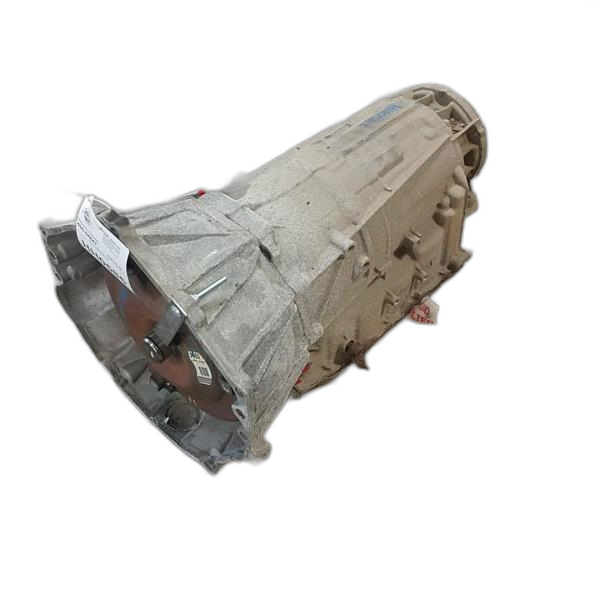
The first-generation Audi Q5 (Typ 8R) often used the 7-speed S-Tronic dual-clutch transmission, also known as the DL501 or 0B5. On this specific gearbox, the output speed sensor is not a simple, externally-accessible part. Instead, it is integrated into the complex Mechatronics unit, which combines the electronic control module (TCM), sensors, and hydraulic valve body. Consequently, a P0720 code on a Q5 with this transmission rarely points to a simple sensor replacement but rather to a more complex and costly failure of the Mechatronics unit's internal printed circuit board (PCB) or the sensor module itself.
Symptoms You May Notice
- Flashing "PRNDS" gear indicator on the dashboard
- Transmission enters "limp mode" (fail-safe), often stuck in one gear
- "Gearbox Malfunction: You can continue driving" message on the display
- Harsh, jerky, or delayed gear shifts
- Complete loss of drive or failure to engage gears, including reverse
- Inaccurate or non-functional speedometer
- Check Engine Light or EPC (Electronic Power Control) light is on
- Vehicle juddering when moving from a stop
- Inability to use manual shift mode
- Replacing the entire transmission when only the Mechatronics unit is faulty.
- Assuming the output speed sensor is a simple, separate part that can be easily replaced, without understanding it is integrated into the Mechatronics unit on the DL501 transmission.
- Replacing only the speed sensor when the underlying issue is a failing circuit board or other components within the Mechatronics unit.
Most Likely Causes
- Mechatronics Unit Internal Failure 🔴 High Probability The DL501 S-Tronic transmission used in the Q5 is widely known for failures of its Mechatronics unit. 🎬 Watch: Understanding common Audi S-Tronic gearbox problems and failures. The internal printed circuit board (PCB), which houses the speed sensors (G195), is a common failure point due to component breakdown or faulty internal connections. These units were particularly problematic in earlier models (approx. 2009-2013).
How to confirm: A professional diagnosis with an Audi-specific scan tool (like VCDS or ODIS) is required. In VCDS, navigate to the Transmission (02) module and check live data for the output speed sensor (G195). A reading that is stuck at 0 RPM or is erratic while the vehicle is moving confirms a sensor circuit problem. This, combined with the absence of wiring faults, points to an internal Mechatronics issue.
Typical fix: Replacement of the Mechatronics circuit board and solenoids with a repair kit (e.g., OEM part 0B5398048D). In severe cases, or if the hydraulic valve body is also damaged, replacement of the entire Mechatronics unit is necessary. The unit must be coded and adapted to the vehicle after installation.
Est. part cost: $600-$1800 - Damaged Wiring or Connectors ⚪ Low Probability
How to confirm: Visually inspect the main 16-pin transmission wiring harness and the connector at the transmission housing for corrosion, damage, fluid wicking, or loose pins. Test for continuity and shorts between the TCM connector pins and the main vehicle harness.
Typical fix: Repair the damaged section of the wiring harness or replace the main connector.
Est. part cost: $50-$300 - Low or Contaminated Transmission Fluid ⚪ Low Probability The DL501 shares fluid between the clutches and the Mechatronics unit. Clutch wear debris can contaminate the fluid and potentially interfere with or damage sensitive solenoids and sensors over time.
How to confirm: Check the transmission fluid level and condition according to the manufacturer's procedure. The DL501 has two separate fluid circuits (MTF for gears and ATF for clutches/hydraulics) that must be checked. Dark, burnt, or metallic-looking ATF is a sign of a problem.
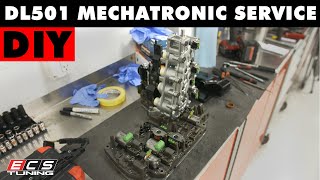
Typical fix: Perform a transmission fluid and filter service. This is unlikely to fix a persistent P0720 code but is critical preventative maintenance and required during Mechatronics replacement. 🎬 See this step-by-step DL501 Mechatronic service and fluid change.
Est. part cost: $200-$400
Rare But Worth Checking
- Faulty Powertrain Control Module (PCM): This is extremely rare. The PCM is the main engine computer. It's far more likely the fault lies with the Transmission Control Module (TCM), which is integrated into the Mechatronics unit in the Q5.
Diagnosis Steps
- Scan the vehicle for fault codes using an Audi-specific diagnostic tool (e.g., VCDS, OBDeleven). Note all codes stored in the Engine (01) and Transmission (02) modules.
- Check the transmission fluid level and condition for both the gear oil (MTF) and hydraulic fluid (ATF) sections of the S-Tronic transmission. This requires specific procedures and tools.
- Inspect the main electrical connector at the transmission for any signs of damage, corrosion, or fluid intrusion.
- Using the scan tool, monitor the live data block for the transmission output speed sensor (G195). Observe the reading while driving (if safe to do so). A reading of 0 RPM or an erratic signal while the vehicle is moving confirms a sensor circuit problem.
- If the wiring and connector are confirmed to be good, and the live data is faulty, the problem is internal to the transmission's Mechatronics unit.
- At this point, the vehicle should be taken to a qualified Audi specialist or transmission shop for Mechatronics repair or replacement.
Parts You'll Likely Need
- Mechatronics Repair Kit (Circuit Board/Sensor Module)
(OEM #0B5398048D (supercedes 0B5398048C))— This is the most common failure point for a P0720 code on the DL501 transmission. The kit replaces the faulty internal electronics that house the speed sensors, along with key solenoids. 🎬 Watch: How to use the 0B5398048D kit for Mechatronic repairs.
Trusted brands: Audi Genuine, Borgwarner
OEM price range: $700-$1200
Aftermarket price range: $600-$900 - Mechatronics Unit (Remanufactured or New)
(OEM #0B5927156K (example, varies by vehicle))— If the circuit board is not repairable or if the hydraulic portion of the unit is also damaged, a complete unit is required.
Trusted brands: Audi Genuine, ZF
OEM price range: $2500-$4500
Aftermarket price range: $1800-$3000 - S-Tronic Transmission Fluid and Filter Kit
(OEM #G052529A2 (ATF), G055532A2 (MTF))— Fluid and filters must be replaced whenever the Mechatronics unit is serviced. The DL501 has two separate fluid systems.
Trusted brands: Audi Genuine, Liqui Moly, Pentosin, Vaico
OEM price range: $250-$400
Aftermarket price range: $150-$250
Related Codes That Often Appear With This One
- P179E / P179F — These codes relate to the drive position sensor electrical error and malfunction. While not directly the output speed sensor, they are part of the same sensor module within the Mechatronics and often fail together, pointing strongly to an internal Mechatronics issue.
- P0726 — This code for 'Engine Speed Input Circuit Range/Performance' can be triggered when the TCM is failing and cannot properly process or correlate various speed inputs.
- P17D8 — Torque limitation due to clutch temperature. This can be a symptom of the Mechatronics unit failing to control the clutches properly, which can be related to the overall failure that also causes P0720.
- P0722 — This code for 'Output Speed Sensor Circuit No Signal' is a more specific version of P0720 and indicates a complete loss of signal, reinforcing the diagnosis of a failed sensor or circuit board.
Technical Service Bulletins (TSBs) & Recalls
- While no specific TSB for P0720 was found, TSBs related to DL501 Mechatronic drivability issues and malfunctions are known to exist. For example, TSB 2025282 addresses harsh engagement and noises, which can be related to the overall health of the Mechatronics unit.
Platform-Specific Known Issues
- The 7-speed S-Tronic (DL501) transmission in the 2008-2017 Audi Q5 is widely documented to have a high failure rate of its Mechatronics unit, leading to codes like P0720.
- There have been multiple Technical Service Bulletins (TSBs) and class-action lawsuits related to the reliability of this transmission, particularly concerning Mechatronics failures in the early model years (2009-2013).
Mechanic-Grade Diagnostic Values
- Resistance of VFS Solenoids (N436, N440) — expected: 4.8 Ω (± 0.1 Ω) at 25°C. Failure: Readings significantly outside this range indicate a failing solenoid coil.
- Resistance of Clutch Oil Pressure Solenoids (N435, N439) - Gen 1 Valve Body — expected: 16.0 Ω (± 0.1 Ω) at 25°C. Failure: Readings significantly outside this range suggest an issue with the solenoid.
- Resistance of Clutch Oil Pressure Solenoids (N435, N439) - Gen 2 Valve Body — expected: 14.2 Ω (± 0.1 Ω) at 25°C. Failure: Readings significantly outside this range suggest an issue with the solenoid.
- Resistance of VBS Solenoids (N471, N472) — expected: 4.2 Ω (± 0.1 Ω) at 25°C. Failure: Readings significantly outside this range indicate a failing solenoid coil.
- Mechatronics Unit Mounting Bolt Torque — expected: 10 Nm. Failure: Incorrect torque can lead to housing damage or improper sealing.
- Mechatronics PCB Screw Torque — expected: 3 Nm. Failure: Incorrect torque can damage the delicate printed circuit boards.
Scan Tool Commands That Help
- VCDS or ODIS: Basic Settings: Erase counter for start/stop processes — This is the first step in the adaptation sequence after a Mechatronics repair or fluid service. It clears learned clutch engagement points.
- VCDS or ODIS: Basic Settings: Clutch Valve Calibration — Performed with the engine on, this calibrates the operating range and pressure limits for the clutch solenoids.
- VCDS or ODIS: Basic Settings: Distance Sensor Calibration — This step calibrates the gear position sensors after a repair.
- VCDS or ODIS: Basic Settings: Adaptation of clutch kiss points — This is a critical final step where the TCM physically 'feels' for the clutch engagement point to ensure smooth takeoffs. It must be performed after the other calibrations.
- ODIS: Component Protection Removal — This is mandatory if a complete used or new Mechatronics unit is installed. It requires an online connection to Audi's servers (GEKO access) to pair the new module to the vehicle's VIN and immobilizer.
Wiring & Ground Locations
- Main Transmission Connector — The main electrical connector for the Mechatronics unit is a 16-pin plug on the side of the transmission housing.. This is the primary external electrical interface for the transmission. Corrosion, bent pins, or fluid contamination here can directly cause a P0720 by interrupting the signal from the internal speed sensor to the rest of the vehicle.
- Ground Connection 12 — In the engine compartment on the left side, located between the shock absorber strut and the water drainage box (plenum chamber).. This is a primary engine bay ground point. A poor connection here can cause a host of electrical issues, including erratic sensor readings for the transmission control system.
- Ground Connection 671 / 672 — On the left front longitudinal frame member (chassis rail).. A key chassis ground point. The TCM relies on a stable ground reference; corrosion or a loose connection here could potentially cause signal integrity problems.
Real Owner Repair Stories
- YouTube user comment on a repair video (2012 Audi S4 (uses same DL501 transmission)) — P179E00 and P179F00 codes, which are for the drive position sensor, often appearing with output speed sensor faults.
❌ Tried (didn't work) Initial diagnosis pointed to various related modules due to cascading error codes in brakes and central electrics.
✅ What actually fixed it A full DSG Mechatronics and clutch rebuild was required to resolve the internal sensor failures. - YouTube channel MechanicGuru (2012 Audi S4 (B8 chassis, DL501 transmission)) — General mechatronic failure symptoms requiring repair.
✅ What actually fixed it The problem was fixed by installing a Mechatronics repair kit (conductor plate and solenoids) and performing the necessary mechanical adjustments (setting fork alignment to 28mm) before reinstallation.
OEM Part Supersession History
0B5398048C→0B5398048D— Updated revision of the Mechatronics repair kit to improve reliability.
Heads up: The newer 'D' version is the recommended replacement for 'C'.0B5398009C/D/E→0B5398009F— Progressive updates to the wiring harness/PCB portion of the repair kit.
Heads up: These part numbers refer to the circuit board/harness assembly, which is often included in the larger 0B5398048D kit. Always use the latest revision available.
Model Year Variations Within This Range
- 2008-2017: The mechanical adjustment of the gear selector forks during Mechatronics installation depends on the unit's manufacturing date. Units made up to ID L31B1137 require a 28mm measurement, while units made after require a 32mm measurement. This is a critical step to ensure proper gear engagement.
- 2008-2017: The resistance of the clutch oil pressure solenoids (N435, N439) differs between Generation 1 and Generation 2 valve bodies. Gen 1 solenoids measure ~16 Ohms at 25°C, while Gen 2 solenoids measure ~14.2 Ohms.
Diagnostic Flowchart
Other Known Issues on This Vehicle
Issues unrelated to this code that are worth knowing about as an owner of this generation:
- Excessive Engine Oil Consumption (2.0T TFSI) 🔴 High — Very common in early EA888 Gen 2 engines (approx. 2009-2012). Can begin as early as 50k-60k miles and worsen over time. (Ref: Multiple TSBs and a class-action lawsuit settlement exist. The fix involves an oil consumption test (Stage 1) followed by piston and ring replacement (Stage 2).)
- Timing Chain Tensioner Failure (2.0T & 3.0T) 🔴 High — Common on both 2.0T and 3.0T engines, particularly pre-2013 models with the original tensioner design. Often presents as a brief rattle on cold start. (Ref: TSBs were issued recommending replacement with an updated tensioner design. Failure to address can lead to the chain skipping teeth, causing catastrophic engine damage.)
- Water Pump / Thermostat Assembly Failure 🟠 Medium — Common across multiple engines used in the Q5, often failing between 60k-100k miles. The plastic housing can become brittle and crack, leading to coolant leaks.
- Carbon Buildup on Intake Valves (Direct Injection Engines) 🟠 Medium — An inherent issue with all direct-injection engines (TFSI). Typically requires cleaning every 60k-80k miles to prevent misfires, rough idle, and loss of performance.
- PCV Valve Failure 🟠 Medium — The Positive Crankcase Ventilation (PCV) valve, or oil separator, can fail, leading to increased oil consumption, rough idle, and a whistling noise from the engine bay. It is often replaced as a preventative measure.
Used vs. New Parts: Buying Guide for This Vehicle
When a used part is the smart pick: A used part is almost never a smart choice for the complete Mechatronics unit due to Component Protection. A used unit cannot be simply installed; it requires special online programming by a dealer or specialist with a GEKO account to remove the protection and adapt it to the new vehicle. This can be costly and complex. Using the repair kit (new) on your original Mechatronics housing is the preferred method.
Donor-vehicle mileage cap: roughly under 50000 miles for the part to have meaningful remaining life.
What to inspect on the donor part:
- If forced to buy a used complete unit, obtain the VIN of the donor car to verify its history.
- Ensure the seller guarantees the unit is functional and not from a vehicle that had transmission fault codes.
- Visually inspect the main electrical connector for any corrosion, damage, or signs of fluid leaks.
- Ask for proof the unit was stored in a clean, dry environment to prevent internal corrosion.
OEM-only on this vehicle (don't cheap out):
- Mechatronics Repair Kit (Circuit Board/Solenoids)
- Complete Mechatronics Unit
Aftermarket brands forum-validated for this vehicle:
- Borgwarner (often the OEM supplier for the repair kit)
Brands owners have reported issues with on this vehicle:
- Unbranded or generic repair kits from marketplaces like Alibaba/AliExpress are reported to have a high failure rate (e.g., one in five failing shortly after install). Sticking to genuine OEM or OEM-supplier parts is highly recommended for this critical component.
Real Owner Stories
Aggregated from forums and TSBs cited above. Mileages and costs reflect what owners reported in those sources.
2009 Audi Q5 — 43496 miles
Symptoms: The owner experienced a complete S-Tronic gearbox failure requiring a rebuild.
What fixed it: Complete S-Tronic gearbox rebuild.
Source hint: AudiWorld Forums - Thread: 'Q5 Problems?'
Related OBD-II Codes
Frequently Asked Questions
My 2009 Audi Q5 is jerking and showing a 'Gearbox Malfunction' message; is there a specific repair kit for this?
Does TSB 2025282 apply to the shifting issues I'm having with my S-Tronic gearbox?
I have a 2012 Q5 with the 2.0T engine; could my high oil consumption be related to the P0720 transmission code?
Can I use a generic OBD-II scanner to diagnose the G195 sensor on my Audi?
Is the Mechatronics failure limited only to the Audi Q5?
Will changing my transmission fluid fix a P0720 code?
Helpful Videos

We Have This Part in Stock




The information in this article is provided for general reference and educational purposes only. Vehicle specifications, procedures, and part compatibility can vary by production date, trim level, and region. Always consult your vehicle's factory service manual and verify part numbers before purchasing or performing repairs. Safety-critical components such as airbags, seat belts, and braking systems should be installed by a qualified professional.
- Audi Q5:
- 🎬 Helpful Videos
- 🛍️ Shop This Part
- What's Unique About the 2008-2017 Audi Q5
- Symptoms You May Notice
- Most Likely Causes
- Rare But Worth Checking
- Diagnosis Steps
- Parts You'll Likely Need
- Related Codes That Often Appear With This One
- Technical Service Bulletins (TSBs) & Recalls
- Platform-Specific Known Issues
- Mechanic-Grade Diagnostic Values
- Scan Tool Commands That Help
- Wiring & Ground Locations
- Real Owner Repair Stories
- OEM Part Supersession History
- Model Year Variations Within This Range
- Diagnostic Flowchart
- Other Known Issues on This Vehicle
- Used vs. New Parts: Buying Guide for This Vehicle
- Real Owner Stories
- 2009 Audi Q5 — 43496 miles
- Related OBD-II Codes
- Frequently Asked Questions
- 🎟️ Get 5% Off