

P0717 on 2009-2013 Toyota Corolla: Input Speed Sensor Failure Causes and Fixes
On a 2009-2013 Corolla, P0717 is most often caused by a damaged wiring harness, frequently due to rodents chewing the soy-based wire insulation. Before replacing the sensor, inspect the wiring harness thoroughly. If the wiring is intact, the input/turbine speed sensor itself is the next likely culprit, costing around $40-$90 for an OEM part.
- For a 2009-2013 Corolla with code P0717, your first step should always be to inspect the wiring harness for damage, especially from rodents.
- Symptoms include a Check Engine Light, VSC/TRAC lights, and harsh or improper automatic shifting.
- If the wiring is good, the input speed sensor itself is the next likely failure. It can be tested with a multimeter and should read between 560-680 ohms.
- Replacing the sensor is a manageable DIY task that requires removing the airbox and battery for access.
- This issue is also common on the mechanically identical 2009-2013 Toyota Matrix and 2009-2010 Pontiac Vibe.
What's Unique About the 2009-2013 Toyota Corolla

For the 10th generation Corolla (E140 chassis) and its platform mate, the Toyota Matrix, this code has a very specific and well-documented cause beyond simple sensor failure. Toyota issued a Technical Service Bulletin (TSB T-SB-0033-11) for 2009-2011 models because rodents are known to chew the speed sensor's wiring harness where it's routed near the A/C lines. Many owners have confirmed that repairing a chewed wire resolved the code, making a wiring inspection the most critical first step in diagnosis for this particular vehicle. The transmission used, the U341E, is generally considered simple and durable, making external electronic faults like this more common than internal mechanical failures.
Symptoms You May Notice
- Check Engine Light is on
- Vehicle Stability Control (VSC) and/or Traction Control (TRAC) warning lights are on
- Harsh, erratic, or delayed gear shifts
- Transmission gets stuck in a single gear (e.g., 2nd or 3rd gear limp mode)
- Jerky acceleration
- Speedometer or odometer works intermittently or not at all
- Replacing the input speed sensor without first inspecting the wiring harness. Many owners replace the sensor only to find the P0717 code returns because the actual problem was a broken wire. 🎬 See this guide on fixing P0717 no signal codes One owner on Reddit confirmed this exact scenario: they replaced the sensor, the issue persisted, and the ultimate fix was repairing a wire chewed by a rodent.
Most Likely Causes

- Damaged Input Speed Sensor Wiring Harness 🔴 High Probability A Toyota TSB (T-SB-0033-11) was issued for 2009-2011 models due to the wiring harness being susceptible to rodent damage near the sensor connector. Multiple owner reports confirm finding chewed or severed wires. The issue is common enough that some repair shops see it frequently.
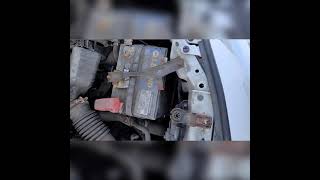
How to confirm: Visually inspect the entire length of the wiring harness leading to the input speed sensor on the transmission. The sensor is located on the driver's side of the transmission, often underneath the battery tray and airbox assembly. Pay close attention to the section near the A/C lines. Look for any signs of chewing, fraying, or breaks. One owner found their wire was 'cut in half'. Another found the damaged wire after removing some of the protective loom.
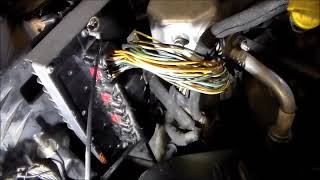
Typical fix: Repair the damaged section of the wire. Toyota created a harness repair kit for this specific issue. Alternatively, a technician can splice in a new section of wire 🎬 Watch: Step-by-step P0717 diagnosis and wiring repair and seal the connection. One owner paid around $120 for a shop to perform this repair. A connector pigtail, such as Standard Motor Products S-1530, can also be used to replace a damaged connector and a section of wire.
Est. part cost: $5-$30 for wire and connectors, or the cost of the specific TSB repair kit or a pigtail connector. - Failed Input/Turbine Speed Sensor 🟡 Medium Probability
How to confirm: If the wiring is confirmed to be intact, test the sensor. Disconnect the sensor and measure the resistance across its two pins using a multimeter. It should be between 560 and 680 Ohms at room temperature (68°F/20°C). A reading of infinity (open) or zero indicates a failed sensor. Sometimes, metallic debris can accumulate on the magnetic tip of the sensor, blocking the signal; removing the sensor and cleaning it can be a diagnostic step.
Typical fix: Replace the input/turbine speed sensor. The sensor is located on the driver's side of the transmission and is held in by a single 10mm bolt. 🎬 Watch: 2010 Corolla speed sensor diagnostic and replacement walkthrough Access often requires removing the battery and airbox assembly.
Est. part cost: $40-$90
Rare But Worth Checking
- Faulty Engine Control Module (ECM) / Transmission Control Module (TCM): This is very uncommon and should only be considered after the wiring and sensor have been tested and proven to be good. A faulty computer is the least likely cause.
- Low or Dirty Transmission Fluid: While unlikely to cause a 'no signal' code directly, incorrect fluid level or condition can cause a wide range of transmission problems and should be checked as a basic maintenance step.
- Internal Transmission Issues: Extremely rare for this code alone. If other transmission codes are present, it could point to an internal issue like a faulty valve body or solenoid. However, the U341E transmission in this Corolla is known for its durability.
Diagnosis Steps

- Scan for any other stored trouble codes to see if other issues are present.
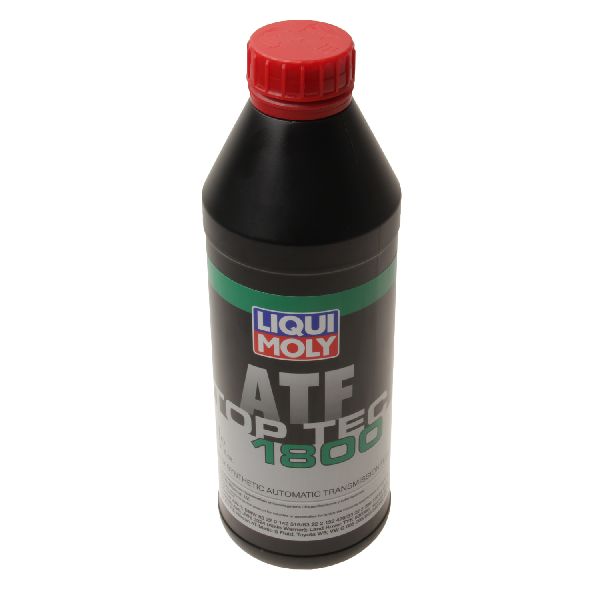
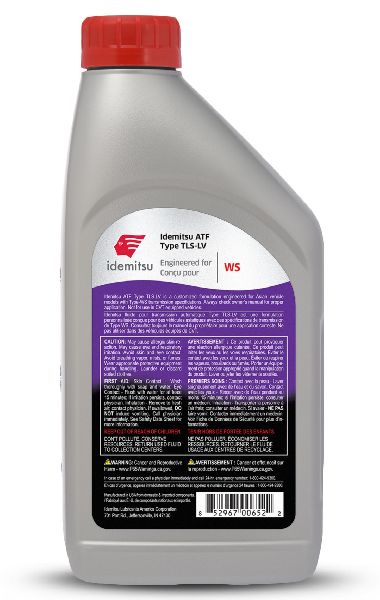
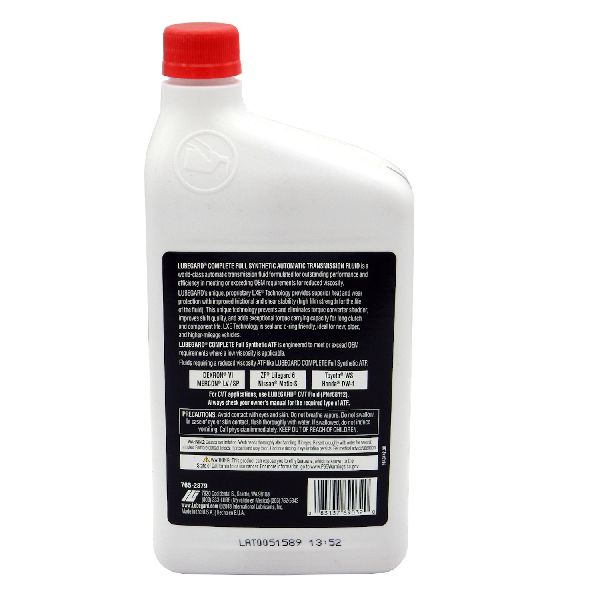
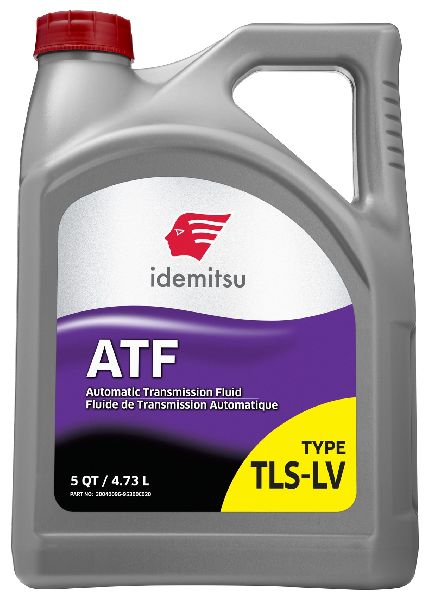
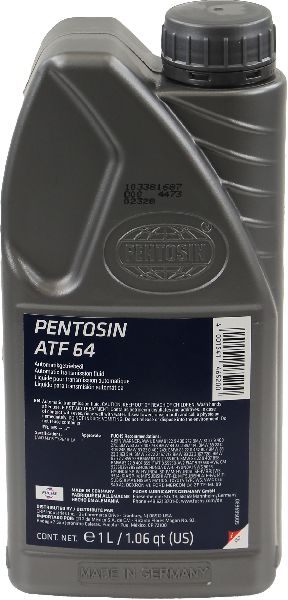
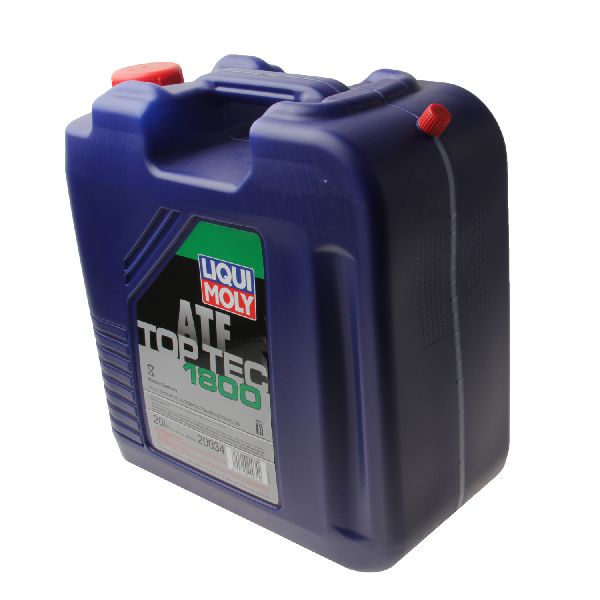
- Check the transmission fluid level and condition. Ensure it is at the proper level and does not appear burnt or dirty. The correct fluid is Toyota Genuine ATF WS (World Standard).
- Perform a thorough visual inspection of the input speed sensor wiring harness. This is the most critical step for this vehicle. Trace the wires from the sensor connector back as far as possible, looking for any signs of rodent damage, chafing, or breaks. Access may require removing the air intake and battery.
- If the wiring appears damaged, repair it. Clear the codes and test drive to see if the problem is resolved.
- If the wiring is intact, disconnect the sensor and test its internal resistance with a multimeter. The reading should be between 560-680 Ω at 20°C (68°F). If it is out of spec, the sensor is bad.
- If the sensor tests good, check for voltage at the sensor connector with the key on. You should have a reference voltage and a good ground. A healthy sensor power supply should show approximately 5 V (±0.5 V).
- If voltage and ground are present and the sensor is good, check for continuity in the signal wire between the sensor connector and the ECM connector. An open or short in this wire will cause the code.
- If all wiring and the sensor are confirmed to be good, the ECM may be at fault, which is rare.
Parts You'll Likely Need

- Input/Turbine Speed Sensor
(OEM #89413-32010 (may be superseded by 89413-0C011))— This is the second most likely cause after a wiring issue. It provides the input shaft speed reading to the ECM/TCM.
Trusted brands: Denso, Aisin, Standard Motor Products, NTK
OEM price range: $40-$90
Aftermarket price range: $20-$120 - Toyota Genuine ATF WS (World Standard) Fluid
(OEM #00289-ATFWS)— The fluid level should be checked during diagnosis. If the sensor needs to be replaced, a small amount of fluid may be lost and need topping off.
Trusted brands: Toyota, Idemitsu, Valvoline MaxLife
OEM price range: $10-$15 per quart
Aftermarket price range: $8-$12 per quart
Technical Service Bulletins (TSBs) & Recalls
- T-SB-0033-11: Addresses a MIL ON condition with DTC P0717 on 2009-2011 Corollas, often due to rodent damage to the sensor harness. A repair kit was made available.
Platform-Specific Known Issues
- A Technical Service Bulletin (TSB T-SB-0033-11) was issued for 2009-2011 Corolla and Matrix models for P0717 caused by rodent damage to the speed sensor wiring harness.
- The automatic transmission is typically the Toyota U341E, a 4-speed unit known for being simple and durable, making internal failures less likely than external sensor or wiring problems.
Mechanic-Grade Diagnostic Values
- Input/Turbine Speed Sensor (NT) Resistance — expected: 560 to 680 Ω at 20°C (68°F). Failure: A reading of infinity (open circuit) or near-zero ohms (short circuit).
- ECM Diagnostic Trigger Condition — expected: The ECM expects a signal from the input speed sensor (NT) when vehicle speed is above 31 mph (50 km/h).. Failure: If the ECM sees an input speed of less than 300 RPM for 5 seconds or more while vehicle speed is over 31 mph, it will set code P0717.
- Techstream Live Data - SPD (NT) — expected: At idle in Neutral, SPD (NT) should be nearly equal to engine RPM. With torque converter lock-up engaged, it should be equal to engine RPM.. Failure: A value of 0 RPM while driving indicates an open or short in the sensor circuit. A value that is stuck below 300 RPM while driving over 31 mph points to a sensor or intermittent connection issue.
Scan Tool Commands That Help
- Toyota Techstream: Data List > Engine and ECT > SPD (NT) — This function allows for real-time monitoring of the Input/Turbine Speed Sensor's reported RPM. It is crucial for confirming if the ECM is receiving any signal at all and for comparing the input speed to the output speed and engine RPM to diagnose intermittent faults or confirm a 'no signal' state.
Wiring & Ground Locations

- Input Speed Sensor Connector — On the driver's side of the U341E transmission case, often under the battery and airbox. It is a 2-pin connector.. This is the primary point for testing sensor resistance and checking for voltage/ground from the ECM. It is also the connector most susceptible to rodent damage mentioned in the TSB.
- ECM Connector (B30) — The ECM is located behind the glove box in the passenger compartment.. The wires from the input speed sensor (NT+ and NT-) terminate at the ECM. A service manual shows these are pins 35 (NT+) and 27 (NT-) on a specific ECM connector block (E12 in one diagram). Checking for continuity between the sensor connector and these pins is the final step to rule out a wiring break.
- Engine/Transmission Ground Points — There are multiple critical ground points. A primary ground strap typically runs from the top of the transmission case to the chassis near the driver-side motor mount. Other grounds are located on the valve cover, connecting to the frame near the strut tower.. While less likely to cause an isolated P0717, a poor or corroded main ground can cause a variety of electrical issues, including erratic sensor readings. Verifying clean and tight grounds is a best practice during any electrical diagnosis.
Real Owner Repair Stories
- Reddit user on r/MechanicAdvice (2010 Toyota Corolla S) — Check engine light and VSC light on, code P0717.
❌ Tried (didn't work) Replaced the input/turbine speed sensor., Reset the computer.
✅ What actually fixed it The user provided an update stating the final fix was repairing the wiring harness. They noted, 'It was the wiring. It looked cut in half.' This happened after the car was at a body shop, suggesting the damage may have occurred there. - Reddit user on r/MechanicAdvice (2010 Toyota Corolla) — Check Engine light, blinking VSC OFF light, traction light on, jerky driving, code P0717.
❌ Tried (didn't work) The owner took it directly to a shop for diagnosis.
✅ What actually fixed it A repair shop found that the speed sensor cable had been chewed through by a rodent. The shop repaired the wire for $120 and noted that they 'see that all the time.'
Documented NHTSA Reports
- NHTSA ODI #10108286 — While reported on a different Toyota model (4Runner), an owner described a significant safety issue where the vehicle shut down without warning, requiring the replacement of the transmission input speed sensor (P0717).
OEM Part Supersession History
89413-32010→89413-0C011— Standard part number update/consolidation by Toyota.
Heads up: Part 89413-0C011 is listed as the official replacement for 89413-32010 and should be fully compatible. However, always verify fitment with a VIN when ordering.
Model Year Variations Within This Range
- 2009-2011: These model years are specifically called out in Toyota's Technical Service Bulletin (TSB T-SB-0033-11) for the rodent-damaged wiring harness issue. While the problem can still occur on 2012-2013 models due to the use of similar soy-based wiring insulation, the TSB was only issued for the earlier years of this generation.
Diagnostic Flowchart
Other Known Issues on This Vehicle
Issues unrelated to this code that are worth knowing about as an owner of this generation:
- Excessive Oil Consumption (2.4L 2AZ-FE Engine) 🔴 High — Common on 2009-2011 models with the 2.4L engine, often appearing after 60,000 miles. Caused by defective piston rings. (Ref: T-SB-0158-14, T-SB-0094-11 (superseded), and a subsequent warranty enhancement program addressed this.)
- Water Pump Failure (1.8L 2ZR-FE Engine) 🟠 Medium — A known weak spot, with failures reported anywhere from 30,000 to 100,000 miles. Symptoms include pink coolant leaks from the passenger side and whining noises.
- Cold Start Engine Rattle (VVT Gear) 🟡 Low — A brief (1-2 second) rattle or screech upon cold startup. It is annoying but does not typically lead to engine failure. (Ref: T-SB-0087-09 was issued for 2009 models to address a faulty camshaft timing gear assembly.)
- Melting or Sticky Dashboard 🟡 Low — Common in regions with high heat and humidity. The dashboard surface degrades, becoming shiny, sticky, and emitting a chemical smell. (Ref: Toyota issued Warranty Enhancement Program ZE6, but owners reported long waits for replacement parts.)
Used vs. New Parts: Buying Guide for This Vehicle
When a used part is the smart pick: A used wiring harness connector pigtail from a junkyard is a perfectly acceptable and cost-effective repair for a damaged connector. A used sensor can be a gamble; given the relatively low cost of a new, quality aftermarket sensor, it's generally not worth the risk unless the budget is extremely tight.
Donor-vehicle mileage cap: roughly under 100000 miles for the part to have meaningful remaining life.
What to inspect on the donor part:
- For a connector pigtail, ensure there is at least 6 inches of clean, uncut wire.
- Inspect the connector for any cracks, broken locking tabs, or corrosion on the pins.
- For a used sensor, check that the magnetic tip is clean and free of heavy metallic debris.
- Ask for the donor vehicle's mileage if possible; lower is always better.
Aftermarket brands forum-validated for this vehicle:
- Denso (often the original OEM supplier)
- Aisin (another potential OEM supplier)
- NTK
- Standard Motor Products (for sensors and connectors)
Brands owners have reported issues with on this vehicle:
- Unbranded, no-name sensors from online marketplaces should be avoided. The small cost savings are not worth the risk of incorrect readings, premature failure, and the labor to replace it again.
Real Owner Stories
Aggregated from forums and TSBs cited above. Mileages and costs reflect what owners reported in those sources.
2010 Toyota Corolla
Symptoms: Check Engine light, a blinking VSC OFF light, and traction light on dashboard. The car would drive but was a little jerky.
What fixed it: A repair shop fixed the speed sensor cable, which had been chewed through by a squirrel or rat. The shop noted that they see this issue 'all the time'.
Cost: $120-$120
Source hint: Reddit r/MechanicAdvice
2010 Toyota Corolla S
Symptoms: The P0717 code and Check Engine Light appeared after the car had been at a body shop.
What fixed it: After an initial attempt to fix the issue by replacing the sensor failed, the true cause was found to be the wiring harness. An inspection revealed the wire 'looked cut in half'. Repairing the wire resolved the code.
Source hint: Reddit r/MechanicAdvice - Thread '2010 Toyota Corolla S pulling code P0717.'
Toyota 4Runner Owner
Symptoms: The vehicle experienced a sudden shutdown without warning, forcing the driver to pull to the shoulder of the road.
What fixed it: According to NHTSA ODI #10108286, the dealership determined the transmission input speed sensor (P0717) required replacement to resolve the safety issue.
Source hint: NHTSA ODI #10108286
Related OBD-II Codes
Frequently Asked Questions
My 2010 Corolla has the Check Engine, VSC, and TRAC lights on. Is this related to the P0717 code?
I heard there was a Toyota TSB for P0717. Does it apply to my 2012 Corolla?
What is the most likely cause of P0717 on this generation of Corolla?
Where is the input speed sensor located on my 2009-2013 Corolla?
How can I test the input speed sensor to see if it's bad?
Is it expensive to fix the chewed wiring harness for the speed sensor?
Helpful Videos
We Have This Part in Stock

The information in this article is provided for general reference and educational purposes only. Vehicle specifications, procedures, and part compatibility can vary by production date, trim level, and region. Always consult your vehicle's factory service manual and verify part numbers before purchasing or performing repairs. Safety-critical components such as airbags, seat belts, and braking systems should be installed by a qualified professional.
- Toyota Corolla:
- 🎬 Helpful Videos
- 🛍️ Shop This Part
- What's Unique About the 2009-2013 Toyota Corolla
- Symptoms You May Notice
- Most Likely Causes
- Rare But Worth Checking
- Diagnosis Steps
- Parts You'll Likely Need
- Technical Service Bulletins (TSBs) & Recalls
- Platform-Specific Known Issues
- Mechanic-Grade Diagnostic Values
- Scan Tool Commands That Help
- Wiring & Ground Locations
- Real Owner Repair Stories
- Documented NHTSA Reports
- OEM Part Supersession History
- Model Year Variations Within This Range
- Diagnostic Flowchart
- Other Known Issues on This Vehicle
- Used vs. New Parts: Buying Guide for This Vehicle
- Real Owner Stories
- 2010 Toyota Corolla
- 2010 Toyota Corolla S
- Toyota 4Runner Owner
- Related OBD-II Codes
- Frequently Asked Questions
- 🎟️ Get 5% Off