

OBD-II Code C1201: Engine & Stability Control System Fault
What C1201 means, why it triggers, and how to fix it comprehensively
- On Toyota and Lexus vehicles, C1201 is an informational code indicating the Engine Control Module disabled the stability system due to a primary engine fault.
- Always use an advanced OBD-II scanner to read all modules; fixing the primary powertrain (P) or chassis (C) code automatically clears the secondary C1201 code.
- For Ford, Chevrolet, and Hyundai/Kia models, C1201 is a primary fault pointing directly to a failed wheel speed sensor, damaged reluctor ring, or shorted ABS valve.
- A weak battery dropping below 9.5 volts during startup frequently triggers C1201 alongside code C1241, requiring a simple battery or alternator replacement.
- Conventional brakes remain functional, but the disabled ABS and stability control increase stopping distances and skid risk, limiting safe driving to short trips to a repair shop.
What Does C1201 Mean?

C1201 is a multifaceted code whose meaning depends heavily on the vehicle's manufacturer. On Toyota, Lexus, and Subaru vehicles, it is an informational code indicating the Engine Control Module (ECM) detected a primary fault (e.g., emissions leak or engine misfire) and commanded the ABS/VSC systems off as a safety precaution. For Ford, Chevrolet, or Hyundai, C1201 is a primary code pointing to a specific fault within the ABS itself, such as a wheel speed sensor circuit or an ABS pump valve.
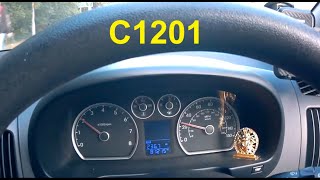
Technical definition: The official definition of C1201 varies significantly by manufacturer. For Toyota, Scion, and Lexus, it is 'Engine Control System Malfunction.' 🎬 Watch: A breakdown of the C1201 code for Toyota owners. For Subaru, it points to a 'Steering Angle Sensor' fault. For Ford and Mazda, it means 'ABS Left Front Inlet Valve Coil Circuit Short to Ground.' For Chevrolet/GMC, it means 'Left Front Wheel Speed Sensor Circuit Range or Performance.' For Hyundai and Kia, it translates to 'Wheel Speed Sensor Front-LH Range / Performance / Intermittent.'
Can I Drive With C1201?
Yes, But With Caution. Yes, but with extreme caution and only for short distances to a repair shop. Your conventional brakes function normally, but the Anti-lock Braking System (ABS) and Vehicle Stability Control (VSC) are disabled. In a panic stop or on slippery surfaces, your wheels will lock up, causing a skid and a loss of steering control. Stopping distances increase, and driving long-term in this condition significantly elevates accident risk.
Common Causes

- Primary Engine or Emissions Fault (Toyota/Lexus) (Very Common) — On Toyota and Lexus, C1201 is a secondary code triggered by a primary powertrain fault, such as a loose gas cap, faulty oxygen sensor, or engine misfire. The ECM disables stability control as a safety protocol until the primary 'P' code is resolved.
- Faulty Wheel Speed Sensor or Wiring (Common) — Sensors measuring wheel speed fail or suffer wiring damage from road debris. This sends erratic signals to the ABS computer, causing it to shut down and trigger C1201 on makes like Hyundai, Kia, and Chevrolet.
- Damaged or Corroded ABS Reluctor Ring (Common) — The toothed or magnetic tone ring that the wheel speed sensor reads cracks, corrodes, or clogs with debris. This causes an erratic signal even with a perfectly functioning sensor, a frequent issue on Hyundai and Kia models.
- Low Battery Voltage or Charging System Issue (Common) — Control modules require a stable voltage above 9.5V to communicate. A weak battery or failing alternator disrupts communication between the ECM and ABS module, logging C1201 alongside a C1241 code.
- Faulty Brake Light Switch (Less Common) — A malfunctioning brake light switch sends conflicting signals to the ABS module. The module interprets this mismatch as a system fault and disables the ABS/VSC systems.
- Damaged Wiring Harness or Poor Ground (Less Common) — Wires connecting the ECM and ABS module corrode or break at connector pins or ground points. Moisture intrusion is the primary cause of these communication failures.
- Failing ABS Control Module or Actuator (Rare) — The ABS computer or hydraulic actuator fails internally. This is the final diagnostic step after ruling out all wiring, sensor, and voltage issues.
Symptoms

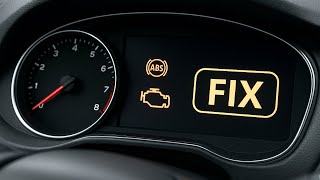
- ABS light is on — The Anti-lock Braking System warning light on your dashboard is illuminated.
- Traction Control (TC) or Vehicle Stability Control (VSC) light is on — The light indicating your traction or stability control system is off remains lit on the dash.
- Check Engine Light is on — The main engine warning light appears alongside the ABS and traction control lights, especially on Toyota and Lexus models.
- ABS and traction control do not work — During a hard stop, the wheels lock up and skid. In slippery conditions, the wheels spin easily during acceleration.
- Pulsing or spongy brake pedal — When the code points to a specific ABS valve fault (like on a Ford), the brake pedal feels spongy during braking.
Diagnostic Flowchart

Tap your situation to follow the diagnostic path that matches what you're seeing on this code.
Common Fixes & Costs
- Diagnose and repair the primary trouble code — Parts: $20-$300, Labor: $100-$200, ~1.5 hr book time (Professional)
- Replace a faulty wheel speed sensor — Parts: $50-$150, Labor: $100-$150, ~1.0 hr book time (Intermediate)
- Replace a cracked or corroded ABS reluctor ring — Parts: $20-$50, Labor: $150-$300, ~2.5 hr book time (Intermediate)
- Replace a faulty brake light switch — Parts: $20-$50, Labor: $50-$100, ~0.8 hr book time (DIY)
- Repair damaged wiring or connectors — Parts: $10-$50, Labor: $150-$400, ~2.5 hr book time (Professional)
- Replace or rebuild the ABS Control Module — Parts: $200-$450 (Rebuilt), $800-$1,500 (New), Labor: $150-$300, ~1.8 hr book time (Professional)
DIY vs Professional
- Replace a faulty brake light switch — Beginner:
Tools: Basic hand tools (socket set, pliers) - Replace a faulty wheel speed sensor — Beginner:
Tools: Jack and jack stands, socket set, torque wrench, penetrating oil. - Replace a cracked or corroded ABS reluctor ring — Beginner:
Tools: Full professional mechanic's tool set, including axle nut sockets, slide hammer or press, torque wrench. - Repair damaged wiring or connectors — Beginner:
Tools: Multimeter, wire strippers, crimpers, heat gun, soldering iron, vehicle-specific wiring diagrams. - Replace or rebuild the ABS Control Module — Beginner:
Tools: Socket set, flare nut wrenches, OBD-II scan tool with programming capabilities.
Used vs. New Parts: Buying Guide
When a used part is worth it: For expensive electronic components like an ABS Control Module, a used or rebuilt unit is a highly cost-effective option, especially for older vehicles. A used module from a reputable supplier costs a fraction of a new OEM part.
Donor-vehicle mileage cap: roughly under 100000 miles for the part to have meaningful remaining life.
Donor quality checklist:
- Match the ABS module part number exactly. Variations exist even within the same model year.
- Buy from a reputable seller that tests parts and offers a warranty and return policy.
- Avoid parts from vehicles in flood-damaged or rust-belt areas to minimize corrosion risk.
Decision logic:
- If The fix is a simple part like a gas cap or brake light switch → Always buy new; the cost is low and reliability is assured.
- If The fix is a wheel speed sensor → New aftermarket sensors offer a good balance of cost and reliability. Used is not recommended for wear items.
- If The fix is a complex ABS Control Module on an older vehicle → A rebuilt original module is the best choice. Rebuilding your own module avoids expensive VIN programming issues.
Warranty tradeoff: Used parts typically have a 30-90 day warranty. Aftermarket new parts offer a 1-year to limited lifetime warranty. New OEM parts carry a 12-month/12,000-mile warranty if installed by a dealer.
Worst-case if a used part fails: $300-$600 if a used ABS module fails after installation, accounting for repeat labor and sourcing another part.
What Happens If You Wait — Timeline
- 0-1 month: Primary fault (e.g., lazy O2 sensor, small EVAP leak) occurs. Check Engine Light and VSC/ABS lights illuminate. No perceptible change in driving, but safety systems are off. (MPG impact: 0-5%% · Added cost: $0-$25 in wasted fuel)
- 1-4 months: If caused by a bad O2 sensor, the engine consistently runs rich. Fuel economy drops noticeably. If caused by a misfire, unburned fuel begins to overheat the catalytic converter. (MPG impact: 10-20%% · Added cost: $50-$150 in wasted fuel. The risk of catalyst damage begins.)
- 4-8 months: Sustained rich condition or misfires permanently damage the catalytic converter. The internal honeycomb structure melts or becomes coated, creating exhaust backpressure. (MPG impact: 15-25%% · Added cost: $800-$2500 (Catalytic converter replacement is now required in addition to fixing the original problem).)
- 8+ months: Catalytic converter becomes completely clogged, causing severe loss of power, stalling, and potential engine damage from excessive backpressure. (MPG impact: 25-50%+% · Added cost: $1500-$3000+ (Includes catalytic converter, damaged O2 sensors, and diagnosis for performance issues).)
Cost of Not Fixing It
- Immediate: Disabled ABS and Vehicle Stability Control systems lead to a significant increase in accident risk during emergency braking or evasive maneuvers. (Added cost: $0)
- 1-6 months: If the primary cause is an engine sensor (like an O2 or MAF sensor), ignoring it leads to poor fuel economy, failed emissions tests, and permanent damage to the catalytic converter. (Added cost: $1200-$2800 (for catalytic converter replacement))
- 6+ months: If the cause is a faulty ABS module or wiring short, continued driving leads to further electrical damage or unexpected brake behavior. (Added cost: $500-$2000+ (for complex electrical diagnosis or ABS module replacement))
Diagnosis Steps
- Scan for All Trouble Codes
Use an advanced OBD-II scanner to read codes from all modules (Engine, ABS, VSC). Ignore C1201 initially and diagnose any primary powertrain (P) or chassis (C) codes, as fixing them automatically clears the C1201.
Tools: Advanced OBD-II Scanner (Beginner) - Check Battery and Charging System
Measure battery voltage with a multimeter. A healthy battery reads at least 12.4V with the engine off. With the engine running, the alternator must output 13.7V to 14.7V. Voltage below 9.5V triggers this code.
Tools: Multimeter (Beginner) - Inspect Wheel Speed Sensors and Reluctor Rings
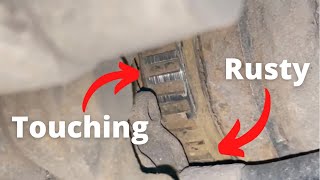
Visually inspect the wires routing to each wheel speed sensor for fraying or corrosion. Inspect the ABS reluctor ring on the axle hub for cracks, heavy rust, or missing teeth.
Tools: Flashlight, Jack and Jack Stands (Intermediate) - Test Wheel Speed Sensor Resistance
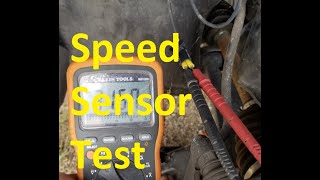
For passive 2-wire sensors, disconnect the sensor and measure resistance across the pins with a multimeter. The value must fall within the manufacturer's specification, typically 800 to 2,500 Ohms. Infinite resistance indicates a dead sensor.
Tools: Multimeter, Vehicle-specific service manual (Advanced) - Test ABS Inlet Valve Coil (Ford/Mazda)
If diagnosing a Ford or Mazda, disconnect the ABS module and measure resistance between the left front inlet valve coil pins. A reading near 0 Ohms when testing from pin to chassis ground confirms the short described by the code.
Tools: Multimeter, Vehicle-specific wiring diagram (Professional) - Inspect Module Ground Connections
Locate the main ground connections for the ECM and ABS module. Unbolt them, clean the terminals with a wire brush until shiny, and retighten. Poor grounds cause intermittent communication faults.
Tools: Socket Set, Wire Brush (Intermediate) - Analyze Wheel Speed Sensor Signal
Connect an oscilloscope to the wheel speed sensor wires. Spin the wheel by hand to verify a clean, consistent waveform. Dropouts or a flat line confirm a faulty sensor or reluctor ring.
Tools: Oscilloscope, Jack and Jack Stands (Professional)
When This Code Triggers (Freeze-Frame Conditions)
- Primary Code: P0455, P0171, C1241 (The freeze frame data for C1201 is secondary. Always analyze the freeze frame associated with the primary powertrain or chassis codes.)
- Vehicle Speed: 0 mph or 35-55 mph (Sets at startup due to low voltage, or during steady cruise when an engine sensor fault is detected.)
- Engine Load: 20-50% (Sets under normal, steady-state driving conditions rather than during hard acceleration or deceleration.)
- Engine Coolant Temp: 175-210°F (Sets when the engine is fully warmed up and the system is in closed-loop operation.)
- Fuel System Status: Closed Loop (Registers after the engine warms up and uses sensor feedback to control the fuel mixture.)
Related Codes
- C1241 — C1241 means 'Low or High Power Supply Voltage'. If you see C1241 with C1201, the power supply issue is the root cause. C1201 is simply the VSC module reporting that it shut down due to voltage dropping below 9.5V. Fixing the battery or alternator clears both codes.
- U0100 — U0100 means 'Lost Communication With ECM/PCM'. This is a direct network communication failure. C1201 is the consequence of that failure, logged by the ABS/VSC module. U0100 is the cause; C1201 is the effect.
- P0455 — P0455 indicates a 'Large EVAP System Leak'. On many Toyota/Lexus vehicles, the ECM disables VSC/TRAC as a precaution when EVAP faults occur. To fix C1201, you must diagnose and repair the EVAP leak.
- C0040 — C0040 is a specific code for the 'Right Front Wheel Speed Sensor Circuit'. On a Toyota, C0040 is the primary fault, and C1201 is the secondary informational code. Both point to a wheel speed sensor circuit issue.
Climate & Environmental Factors
- Cold Weather: Extreme cold lowers a battery's effective voltage during startup. If the voltage supplied to the ABS module drops below 9.5V, it temporarily shuts down and logs a fault code. The light often goes out after the car warms up and the alternator recharges the battery.
- High Humidity / Road Salt (Rust Belt): Moisture and salt accelerate corrosion on critical ABS components. This is a primary cause of failure for ABS reluctor rings, which crack or delaminate from rust buildup. It also corrodes wiring harnesses and module ground points.
- Snow and Ice: Accumulation of snow, ice, or mud around the wheel speed sensor or reluctor ring obstructs the signal, causing the ABS computer to see an erratic reading and trigger a fault.
How to Talk to a Mechanic About This Code
Say this: "I have a Check Engine and VSC light on, and my scanner shows code C1201. I know this code is often secondary, so I'd like to schedule a diagnostic appointment. Please perform a full system scan to identify all primary codes in the engine and ABS modules before recommending any repairs."
This signals you understand that C1201 is often not the root cause. It directs the technician to perform a comprehensive diagnosis rather than jumping to conclusions, preventing them from trying to 'fix' the C1201 code itself and saving you money.
Avoid saying:
- 'My VSC light is on, can you fix it?' (Too vague, invites a narrow and potentially incorrect diagnosis)
- 'My scanner says C1201, please fix that.' (Incorrectly assumes C1201 is the primary problem)
- 'Just fix whatever is wrong.' (This is an open invitation for upselling and unnecessary repairs)
Questions to ask before authorizing the repair:
- Can you provide me with a list of ALL the codes found in all modules?
- What is the specific diagnostic procedure you followed to determine this part is the root cause?
- If the problem is a sensor, did you test the sensor and its wiring, or just recommend replacement based on the code?
- What is the warranty on this specific repair, for both parts and labor?
Where to Take It: Dealer vs Independent vs Chain
- Dealer:
Best for: Vehicles still under powertrain or emissions warranty., Complex, manufacturer-specific electrical faults where C1201 is the primary code (e.g., Ford ABS module short)., Repairs requiring proprietary software for programming or calibration (e.g., ABS module replacement).
Downsides: Highest labor rates, often $150 to $250 per hour., May recommend expensive wholesale component replacement (e.g., entire ABS actuator) when only a smaller part has failed. (Typical cost: +50% vs. baseline) - Independent Shop:
Best fit for most situations. A trusted independent mechanic with a good all-systems scanner efficiently diagnoses the primary fault causing the C1201 code, saving you money compared to a dealer.
Best for: Out-of-warranty vehicles where C1201 is a secondary code caused by a common issue (e.g., bad O2 sensor, EVAP leak, wheel speed sensor)., Diagnosing and replacing common-failure parts like alternators, batteries, and sensors.
Downsides: Shop quality and diagnostic skill vary widely. Vet shops based on reviews and ASE certifications., May lack expensive, dealer-level programming tools for certain module replacements. (Typical cost: +0% vs. baseline) - Chain Shop:
Use with caution. Acceptable if you have already diagnosed a simple, specific failure. AVOID for initial diagnosis of the C1201 code, as they may misdiagnose the issue or replace unnecessary parts.
Best for: Simple, confirmed fixes like replacing a battery or a brake light switch., Tire services and alignments (ensure they can perform a Steering Angle Sensor reset if needed).
Downsides: High pressure on technicians to upsell leads to recommendations for unnecessary services., Technician skill varies dramatically; not ideal for complex diagnostic work required to find the true cause of C1201. (Typical cost: -10% vs. baseline)
When to Walk Away From the Repair
If the total estimated repair cost exceeds 40-50% of your car's private-party value, you should seriously consider selling or trading in the vehicle instead of repairing it.
- Car worth $3500, fix is $2000: Walk away. The repair cost is over 50% of the car's value. It's not a sound investment.
- Car worth $15000, fix is $800: Fix it. The repair cost is well below the 50% threshold and is a reasonable expense to keep a valuable car running safely.
- Car worth $5000, fix is $2200: Borderline. At 44% of the car's value, get a second opinion. If the car is otherwise in excellent condition, it might be worth it. If it has other pending issues, walk away.
What Scan Tool You Need for This Code
Minimum: An OBD-II scanner that reads and clears codes from the ABS/VSC/SRS modules, not just the engine module.
A basic $20 scanner only reads generic 'P' (powertrain) codes. It will not see the C1201 code or any primary 'C' (chassis) codes stored in the ABS module. Without this information, you cannot properly diagnose the issue.
Budget: BlueDriver Pro Scan Tool (~$100) — Connects to your smartphone via Bluetooth and reads/clears codes from all systems, including Engine and ABS. It provides repair reports based on your specific vehicle, which is extremely helpful for diagnosing the primary fault behind C1201.
Mid-range: Foxwell NT630 Plus (~$150) — A powerful handheld scanner that reads/clears ABS codes and offers bidirectional control. This allows you to perform advanced functions like ABS auto-bleeding and Steering Angle Sensor (SAS) calibration, essential fixes related to a C1201 code.
Professional: Autel MaxiCOM MK808 / MK808S (~$450-550) — A professional-level tablet scanner providing full system diagnostics, live data graphing, and a wide range of service functions. It offers dealer-level diagnostic capabilities for a fraction of the price.
Rent vs buy: Many auto parts stores have a free loaner tool program, but their basic scanners may not read ABS codes. If you plan to do your own car maintenance more than once a year, buying a capable scanner like the BlueDriver or Foxwell NT630 Plus is a smart investment.
How to Clear the Code After You Fix It
- Fix the primary fault first (e.g., replace the bad sensor, tighten the gas cap).
- Use an OBD-II scan tool to erase all codes from all modules (ECM, ABS).
- For some Toyota/Lexus models, perform a VSC zero point calibration.
Drive cycle (~20 minutes): Start the engine from cold and let it idle for 2-3 minutes. Drive in mixed city/highway conditions, including steady speeds between 40-60 mph for at least 5-10 minutes. Perform several stop-and-go cycles. The warning lights remain off if the repair was successful.
Readiness monitors affected: Evaporative System, Catalyst, O2 Sensor
Before emissions retest: drive at least 50 miles to fully set monitors.
Watch out for:
- Clearing the C1201 code without fixing the primary problem causes the light to return immediately.
- Using a basic code reader that only clears engine codes leaves the C1201 stored in the ABS module.
- Failing to perform the required VSC zero point calibration on certain vehicles causes the light to stay on.
Will This Fail Emissions / State Inspection?
Yes — this code typically fails an OBD-II emissions inspection.
- California: An illuminated Check Engine Light is an automatic failure. If C1201 is accompanied by an emissions-related code (like P0455), the vehicle fails the OBD-II smog check. The ABS light itself is a safety issue but not an emissions failure.
- New York: The NYS DMV inspection checks for illuminated ABS and Check Engine lights. Either light being on causes the vehicle to fail the safety inspection. An emissions-related primary code also causes an emissions test failure.
- Texas: In counties requiring emissions testing, an illuminated Check Engine Light results in an automatic failure. The ABS light fails the safety portion of the state inspection.
Most Commonly Affected Vehicles
- Toyota Camry (2007-2017) — Frequently reported alongside EVAP (P0455) or low voltage (C1241) codes. On hybrid models, faults in the hybrid battery system trigger C1201.
- Toyota Highlander (2008-2019) — Very common on Highlanders and is almost always a secondary code pointing to a failing oxygen sensor or a loose gas cap.
- Toyota Prius (2004-2015) — The complex interaction between regenerative braking and conventional brakes makes this code appear frequently when any related fault occurs, especially low 12V auxiliary battery voltage.
- Lexus IS250 / IS350 / RX350 (2006-2017) — Owners report the C1201 code with 'Check VSC' on the dash. Common culprits include failing alternators, bad O2 sensors, or EVAP system leaks.
- Ford F-150 / Fusion (2010-2019) — On these models, C1201 specifically points to an 'ABS Left Front Inlet Valve Coil Circuit Short to Ground'. Diagnosis requires testing the specific pins at the ABS module connector.
- Hyundai Sonata / Elantra (2010-2018) — Frequently caused by a faulty wheel speed sensor or a cracked/corroded ABS reluctor ring. The ring itself is a common failure point.
- Subaru BRZ / Forester / Outback (2013-2019) — C1201 is often a secondary code appearing with C1231, pointing to a fault with the steering angle sensor. A sensor recalibration is necessary after repairs.
- Kia Forte / Sorento (2010-2018) — Often relates to a 'Wheel Speed Sensor Range/Performance' issue. A cracked or heavily corroded ABS reluctor ring is a very common cause.
Manufacturer-Specific Notes
- Toyota / Lexus: This code is an informational 'tattletale' code. It means the Engine Control Module (ECM) detected a fault (like an O2 sensor, misfire, or EVAP leak) and told the Vehicle Stability Control (VSC) system to turn off. You must find and fix the other primary codes first.
- Ford / Mazda: C1201 points to a specific electrical problem: 'ABS Left Front Inlet Valve Coil Circuit Short to Ground.' This requires testing the wiring and connector at the ABS module for a short to ground, rather than looking for other engine codes.
- Chevrolet / GMC: The code means 'Left Front Wheel Speed Sensor Circuit Range or Performance,' indicating a problem with the sensor's signal. This is caused by a bad sensor, a damaged reluctor ring, or a wiring issue.
- Hyundai / Kia: The definition is typically 'Wheel Speed Sensor Front-LH Range / Performance / Intermittent'. A very common cause is a cracked or heavily corroded ABS reluctor ring, which provides a bad signal to a perfectly good sensor.
- Subaru: C1201 is often secondary to C1231, which indicates a 'Steering Angle Sensor Circuit Malfunction'. The VDC system disables itself and logs C1201 if there is a problem with the steering angle sensor. A sensor recalibration is required after repairs.
Real Owner Stories
2012 Toyota RAV4 with 220,000 km
The vehicle was intermittently hard to start when hot. It cranked but did not turn over. The only trouble code found was C1201 in the ABS module.
Outcome: Replacing the #3 ignition coil resolved the hard starting issue. The owner replaced the full set of ignition coils, and the C1201 code permanently cleared.
Lesson: On a Toyota, C1201 is a secondary code. An underlying engine problem, even a single failing ignition coil, disables the VSC system and triggers this code without initially setting a primary engine code.
2016 Hyundai Sonata with multiple ABS codes
After replacing control arms and coilovers, the owner experienced loose steering. A scan revealed codes C1201 and C1202 related to wheel speed sensors.
Outcome: The shop that performed the post-repair alignment failed to reset the Steering Angle Sensor (SAS). A dealer reset the SAS, clearing the codes and restoring normal handling.
Lesson: Major suspension work or a simple alignment causes C1201 if the Steering Angle Sensor is not recalibrated. The system flags a fault when steering angle and wheel speed data conflict.
2007 Lexus IS350 with recurring 'Check VSC' light
The 'Check VSC' message, ABS light, and Check Engine Light appeared intermittently. The codes pulled were P0420 (Catalyst System Efficiency Below Threshold) and C1201.
Outcome: The owner drove the car for 100,000 miles with this intermittent issue. The lights cleared themselves whenever the catalytic converter efficiency temporarily improved.
Lesson: A marginal component like an aging catalytic converter triggers a fault under specific conditions. On Toyota/Lexus, C1201 is just a messenger for these intermittent primary faults.
2010 Ford F-150 with ABS light
The ABS light illuminated, and a scan showed only code C1201. For this Ford model, this is a primary code pointing to a specific fault.
Outcome: The technician tested the wiring harness at the ABS module connector and found a short to ground on the specified pin. Repairing the short restored ABS function.
Lesson: Manufacturer-specific definitions are critical. On a Ford, C1201 is a specific ABS circuit problem requiring targeted electrical diagnosis, not a search for engine codes.
How to Prevent This Code From Triggering
- Change brake fluid every 2-3 years (Every 2-3 years) — Brake fluid absorbs moisture over time, corroding internal ABS module components and solenoid valves from the inside out, leading to expensive failures.
- Clean wheel speed sensors and reluctor rings (During every tire rotation or brake service) — Magnetic sensors and toothed rings attract metallic brake dust and road grime. This buildup obstructs the signal, causing false ABS activation or fault codes.
- Use high-quality, Top Tier gasoline (Every fill-up) — Better fuels contain detergents that keep fuel injectors clean. This prevents lean/rich conditions and misfires that trigger engine faults and secondary C1201 codes.
- Address engine oil leaks promptly (As needed) — Leaking oil contaminates and degrades wiring harnesses and connectors for wheel speed sensors and O2 sensors, leading to shorts or open circuits.
- Replace engine air filter per service interval (Every 15,000-30,000 miles) — A clogged air filter restricts airflow, altering the air-fuel mixture and triggering engine management faults that lead to a secondary C1201 code.
Frequently Asked Questions
Can I just clear the C1201 code and keep driving?
You can clear the code, but it will return immediately or after a short drive. The C1201 code is a symptom, not the root cause. Until you fix the underlying problem, your safety systems remain disabled.
Why are my ABS and VSC lights on if the problem is just a loose gas cap?
The vehicle's stability control relies on accurate engine data to function safely. If the engine computer detects an emissions fault like a loose gas cap, it shuts down the stability system to prevent erratic braking behavior. This pre-programmed safety feature triggers the C1201 code.
My scanner only shows C1201 and no other codes. What now?
You are likely using a basic scanner that only reads generic engine codes and cannot access the ABS module's memory. Upgrade to an advanced scanner that reads all modules to find the primary fault. Alternatively, you own a Ford or Chevy where C1201 is the primary ABS circuit fault.
Can a bad battery cause a C1201 code?
Yes. Modern vehicle modules require a stable power supply to communicate correctly. If battery voltage drops below 9.5V during startup, communication is disrupted, causing the ABS system to log C1201 and shut down.
What is the most common misdiagnosis when dealing with C1201?
On Toyota and Lexus, the biggest mistake is trying to diagnose C1201 directly instead of fixing the primary engine codes. On Hyundai and Kia, mechanics often replace a perfectly good wheel speed sensor when the actual problem is a cracked or rusted ABS reluctor ring.
Can a bad alignment cause a C1201 code?
Yes. If the steering wheel is off-center after an alignment, the Steering Angle Sensor sends data that conflicts with the wheel speed sensors. The stability system interprets this conflict as a failure, shuts down, and logs C1201.
My brake lights work, so can the brake light switch still be bad?
Yes. Modern brake light switches contain multiple internal contacts for different systems. One set of contacts operates the brake lights correctly, while a separate faulty set sends incorrect signals to the ABS module, triggering a fault.
Is C1201 an expensive fix?
It depends entirely on the root cause. Fixing a loose gas cap or brake light switch costs under $100, while replacing a faulty wheel speed sensor averages $250. If the ABS control module failed, the repair easily exceeds $1,000.
Key Takeaways
- On Toyota and Lexus vehicles, C1201 is an informational code indicating the Engine Control Module disabled the stability system due to a primary engine fault.
- Always use an advanced OBD-II scanner to read all modules; fixing the primary powertrain (P) or chassis (C) code automatically clears the secondary C1201 code.
- For Ford, Chevrolet, and Hyundai/Kia models, C1201 is a primary fault pointing directly to a failed wheel speed sensor, damaged reluctor ring, or shorted ABS valve.
- A weak battery dropping below 9.5 volts during startup frequently triggers C1201 alongside code C1241, requiring a simple battery or alternator replacement.
- Conventional brakes remain functional, but the disabled ABS and stability control increase stopping distances and skid risk, limiting safe driving to short trips to a repair shop.
Helpful Videos

The information in this article is provided for general reference and educational purposes only. Vehicle specifications, procedures, and part compatibility can vary by production date, trim level, and region. Always consult your vehicle's factory service manual and verify part numbers before purchasing or performing repairs. Safety-critical components such as airbags, seat belts, and braking systems should be installed by a qualified professional.
- 🎬 Helpful Videos
- What Does C1201 Mean?
- Can I Drive With C1201?
- Common Causes
- Symptoms
- Diagnostic Flowchart
- Common Fixes & Costs
- DIY vs Professional
- Used vs. New Parts: Buying Guide
- What Happens If You Wait — Timeline
- Cost of Not Fixing It
- Diagnosis Steps
- When This Code Triggers (Freeze-Frame Conditions)
- Related Codes
- Climate & Environmental Factors
- How to Talk to a Mechanic About This Code
- Where to Take It: Dealer vs Independent vs Chain
- When to Walk Away From the Repair
- What Scan Tool You Need for This Code
- How to Clear the Code After You Fix It
- Will This Fail Emissions / State Inspection?
- Most Commonly Affected Vehicles
- Manufacturer-Specific Notes
- Real Owner Stories
- 2012 Toyota RAV4 with 220,000 km
- 2016 Hyundai Sonata with multiple ABS codes
- 2007 Lexus IS350 with recurring 'Check VSC' light
- 2010 Ford F-150 with ABS light
- How to Prevent This Code From Triggering
- Frequently Asked Questions
- Can I just clear the C1201 code and keep driving?
- Why are my ABS and VSC lights on if the problem is just a loose gas cap?
- My scanner only shows C1201 and no other codes. What now?
- Can a bad battery cause a C1201 code?
- What is the most common misdiagnosis when dealing with C1201?
- Can a bad alignment cause a C1201 code?
- My brake lights work, so can the brake light switch still be bad?
- Is C1201 an expensive fix?
- Key Takeaways
- 🎟️ Get 5% Off