

P0717 on 2006-2015 Honda Civic: Input Speed Sensor Failure Causes and Fixes
On a 2006-2015 Honda Civic, code P0717 is almost always caused by a failed transmission input shaft speed sensor. This triggers a flashing 'D' light and limp mode. Replacing the sensor is a common DIY fix, with the part costing between $30 and $100.
- P0717 on a Honda Civic (2006-2015) is overwhelmingly caused by a failed input speed sensor.
- Key symptoms are a flashing 'D' light, Check Engine Light, and the transmission entering limp mode with harsh shifts.
- The fix is typically replacing the sensor, which is a manageable DIY job for many, located on the exterior of the transmission.
- It is critical to buy the correct sensor, as the part differs between the standard automatic transmission (2006-2013) and the CVT (2014-2015).
- Always rule out wiring/connector issues before replacing parts, and check for metal debris on the old sensor, which indicates a more severe internal problem.
What's Unique About the 2006-2015 Honda Civic

For the 2006-2015 Honda Civic, this code is a very common and well-documented issue. The vehicle range spans the 8th generation (2006-2011) with a conventional 5-speed automatic transmission and the 9th generation (2012-2015), which used both a conventional automatic and later introduced a Continuously Variable Transmission (CVT) for some models in 2014-2015. While the cause is almost always the sensor itself, the specific part number and location can vary between the conventional automatic and the CVT. It is crucial to distinguish it from the output speed sensor, as they look similar but perform different functions.
Generation note: This guide covers the 8th generation (2006-2011) and 9th generation (2012-2015) Honda Civic. The 8th gen primarily used a 5-speed automatic with its R18A1 engine. The 9th gen used a 5-speed automatic for 1.8L models from 2012-2013, then switched to a CVT for most non-Si models from 2014-2015. The input speed sensors differ between these transmission types, so verifying the correct part is essential.
Symptoms You May Notice

- Flashing green 'D' (Drive) light on the instrument cluster.
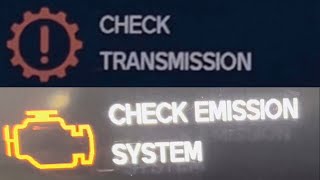
- Check Engine Light is on.
- Vehicle enters 'limp mode', with reduced engine power and limited speed.
- Harsh, jerky, or delayed gear shifts.
- The transmission may feel like it's stuck in one gear (often 2nd or 3rd).
- Erratic or non-functional speedometer (less common, usually associated with the output sensor, but can occur).
- Reduced fuel efficiency.
- Replacing the entire transmission. The code P0717 specifically points to an electrical signal failure, not a catastrophic internal mechanical problem. 🎬 See why you should check the sensor before replacing the transmission. Always diagnose the sensor and wiring first.
- Replacing the wrong sensor. The input (mainshaft) and output (countershaft) speed sensors often look similar and are located near each other. Replacing the output sensor will not fix a P0717 code.
Most Likely Causes

- Failed Input/Turbine Speed Sensor 🔴 High Probability This is a very common failure part on this platform due to age and heat cycles from the transmission. The internal electronics of the sensor simply wear out and fail to produce a signal.
How to confirm: After confirming power and ground at the sensor connector, the sensor itself is the culprit. An advanced test involves using an oscilloscope to see the erratic or missing signal while driving or spinning the wheels. A simpler test is to check the sensor's internal resistance with a multimeter and compare it to the manufacturer's specification (if available).
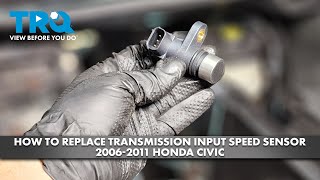
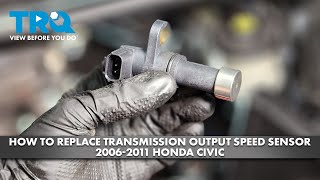
Typical fix: Replace the input shaft speed sensor. The sensor is located on the outside of the transmission housing, usually accessible after removing the air filter box assembly. 🎬 Watch: Step-by-step guide to replacing the input speed sensor. On many Civics, the input sensor has a grey connector, while the output sensor has a black connector. 🎬 Watch: How to identify the input vs output sensors on your Civic.
Est. part cost: $30-$100 - Wiring Harness or Connector Issue 🟡 Medium Probability Vibrations and heat can cause wires to break or the connector pins to become loose or corroded over time. The harness can also be damaged by road debris or improper servicing.
How to confirm: Visually inspect the wiring leading to the sensor for any breaks, chafing, or heat damage. Unplug the connector and check for corrosion, moisture, or bent/backed-out pins. Use a multimeter to test for continuity on the signal wire and to confirm 5V power and ground at the connector with the key on.
Typical fix: Repair the broken wire or clean/replace the damaged connector pigtail.
Est. part cost: $5-$25
Rare But Worth Checking
- Faulty Powertrain Control Module (PCM): This is very rare. Before condemning the PCM, you must be 100% certain that the sensor and all wiring between the sensor and the PCM are good. A PCM failure is the last possibility to consider.
- Metal Debris on Sensor: The input speed sensor is magnetic. If there is a significant internal transmission failure, metal shavings can stick to the sensor's tip, disrupting its ability to read the reluctor wheel. If you remove the sensor and find it covered in metal, it's a sign of a much more serious internal transmission problem that requires a rebuild or replacement.
Diagnosis Steps

- Read the trouble codes with an OBD-II scanner to confirm P0717 is present.
- Check the transmission fluid level and condition. While unlikely to cause a 'no signal' fault, low or burnt fluid indicates other potential issues.
- Locate the input shaft speed sensor on the transmission housing. For the 8th and 9th gen automatic, it is typically on the upper part of the transmission, accessible after removing the air intake duct and air filter housing. It often has a grey electrical connector.
- Inspect the sensor's electrical connector and wiring harness for any visible signs of damage, corrosion, or loose connections.
- Disconnect the sensor. With the ignition in the 'ON' position, use a multimeter to test the connector terminals. You should find a 5-volt reference wire, a ground wire, and a signal wire.
- If voltage and ground are correct, the sensor is the most likely cause of failure. You can remove the sensor and inspect its magnetic tip for excessive metal shavings, which would indicate a larger internal transmission problem.
- If voltage or ground is missing, there is an open or short in the wiring harness that must be traced back to the PCM and repaired.
- After replacing the sensor, clear the codes with the scanner and perform a test drive. The test drive should include multiple gear shifts to ensure the flashing 'D' light and check engine light do not return.
Parts You'll Likely Need
- Transmission Input Shaft Speed Sensor (Auto Trans)
(OEM #28810-RPC-013)— This is the most common failure point for the P0717 code on 8th generation (2006-2011) and early 9th generation (2012-2013) Civics with conventional automatic transmissions. This part number supersedes the earlier 28810-RPC-003.
Trusted brands: Honda (Genuine), NTK, Standard Motor Products (SMP), Beck/Arnley, WVE
OEM price range: $40-$60
Aftermarket price range: $25-$50 - Transmission Input Shaft Speed Sensor (CVT)
(OEM #28810-RZ2-014)— This sensor is for 9th generation (2014-2015) Civics equipped with the Continuously Variable Transmission (CVT). Always verify the correct part for your specific transmission type as they are not interchangeable. This part may also be cross-referenced with 28810-P7Z-004.
Trusted brands: Honda (Genuine), Duralast, NTK, X AUTOHAUX
OEM price range: $50-$70
Aftermarket price range: $30-$85
Related Codes That Often Appear With This One
- P0700 — P0700 is a generic code that simply means the Transmission Control Module (TCM) has stored a fault. It acts as a 'check engine light' for the transmission and will almost always be present alongside a more specific transmission code like P0717.
Technical Service Bulletins (TSBs) & Recalls
- Honda Service Bulletin 15-086: Addresses a software update for 2014-2015 Civic CVT models to prevent damage to the drive pulley shaft.
- Honda Service Bulletin 10-048: While not directly related to P0717, this was a major issue for 2006-2009 Civics. It extended the warranty to 10 years for engine blocks prone to cracking due to a casting defect.
Platform-Specific Known Issues
- For 2014-2015 Civic models with a CVT, be aware of Honda Service Bulletin 15-086 (NHTSA ID 10143929). This addresses a software issue that could damage the transmission drive pulley shaft, causing a loss of propulsion. While it's a separate issue from P0717, it's a known problem for these specific transmissions and worth checking with a dealer to see if the software update has been performed.
- On 2014-2015 CVT models, a pressure switch on the transmission has been known to back out, causing a massive fluid leak. This is due to being under-torqued from the factory and can leave a vehicle stranded.
Mechanic-Grade Diagnostic Values
- Sensor Connector Power Supply Voltage — expected: ~5 Volts. Failure: A reading of 0V indicates an open in the power wire from the PCM or a PCM fault. A reading significantly lower than 5V could indicate a short or wiring issue.
- Sensor Connector Ground Wire to Chassis Ground — expected: Less than 0.5 Ω. Failure: High resistance (>1 Ω) indicates a compromised ground path in the harness, which will prevent the sensor from working correctly.
- Sensor Internal Resistance (for 28810-RPC-013) — expected: Not specified in common service literature.. Failure: While a resistance test is common for many sensors, Honda does not widely publish a specific Ohm range for this part. Diagnosis relies primarily on voltage and signal output tests.
Scan Tool Commands That Help
- Honda Diagnostic System (HDS) or equivalent professional scanner: PCM/TCM Reset or Clear Learned Values — This function should be used after replacing the transmission speed sensor or performing other transmission repairs. It forces the control module to erase old adaptive learning data and relearn the characteristics of the new components, ensuring smooth shifting and optimal performance.
Wiring & Ground Locations

- G101 — Bolted to the thermostat housing on the cylinder head, under the air intake assembly.. This is a primary ground termination point for the ECU/PCM and engine harness. If this ground is loose or corroded, the PCM can lose its stable reference, causing erratic behavior and potentially setting false 'no signal' codes from perfectly good sensors. It is a common source of difficult-to-diagnose electrical issues on this platform.
- Transmission to Chassis Ground — A ground strap or cable connecting the transmission case directly to the vehicle's chassis/frame, often near the battery tray or strut tower.. Ensures the entire transmission assembly, including its externally mounted sensors, has a solid ground path to the battery negative terminal. A corroded or broken strap can cause intermittent signal issues and shifting problems.
Real Owner Repair Stories
- Reddit user on r/Cartalk (2007 Honda Civic) — Vehicle in 'limp mode', Check Engine Light on, and a flashing green 'D' light on the dash.
✅ What actually fixed it The user accidentally cleared the P0717 code with an OBD-II scanner. Afterward, the car shifted correctly and drove normally for a short period. This demonstrates the intermittent nature of the fault; clearing the code temporarily restores function until the PCM detects the 'no signal' condition again, at which point it re-triggers limp mode. The underlying cause (the failing sensor) was not fixed, but the story highlights the temporary effect of a code clear. - YouTube diagnostic video (2006-2015 Honda Civic) — Check Engine Light with code P0717.
❌ Tried (didn't work) Visual inspection of the wiring harness and connector showed no visible damage, corrosion, or loose connections.
✅ What actually fixed it A road test while monitoring live data showed the input shaft speed readings would intermittently drop out. A multimeter test confirmed power and ground at the connector were good. The final diagnosis was made by back-probing the sensor with a lab scope during a road test, which showed an erratic signal. Replacing the transmission input shaft speed sensor resolved the issue, and the codes did not return after a final test drive. - NHTSA ODI #11646484 — An owner of a similar Honda model reported a message on the car stating "engine system problem" and was advised not to drive the vehicle. A diagnostic scan revealed DTC code P0717 for Input/Turbine Speed Sensor A Circuit No Signal.
OEM Part Supersession History
28810-RPC-003→28810-RPC-013— Standard part revision by the manufacturer for improved reliability or manufacturing process change.
Heads up: The parts are interchangeable; 28810-RPC-013 is the correct service replacement for 28810-RPC-003.
Model Year Variations Within This Range
- 2006-2013: These years use a conventional 5-speed automatic transmission and take input speed sensor part number 28810-RPC-013.
- 2014-2015: Most non-Si models in these years use a Continuously Variable Transmission (CVT). They require a different input speed sensor, part number 28810-RZ2-014. The sensors are not interchangeable.
Diagnostic Flowchart
Other Known Issues on This Vehicle
Issues unrelated to this code that are worth knowing about as an owner of this generation:
- Cracked Engine Block (R18A1) 🔴 High — Affects 2006-2008 and some early 2009 models. A casting defect causes a coolant leak, leading to overheating. Onset can be anywhere from 80k miles onward. (Ref: Honda TSB 10-048 extended the warranty to 10 years/unlimited miles, but this has now expired for all affected vehicles.)
- Failing Clear Coat / Peeling Paint 🟡 Low — Extremely common across both 8th and 9th generations, especially on dark colors. The clear coat fails, causing large patches of peeling and fading on the roof, hood, and trunk. (Ref: Honda issued a warranty extension (not a recall) for 7 years on certain colors/models, but this has also expired for most vehicles.)
- Drooping / Broken Sun Visors 🟡 Low — Very common on the 8th generation (2006-2011). The internal plastic cracks, causing the visor to droop and not stay in place.
- Failing Passenger Side Engine Mount 🟠 Medium — Common on the 8th generation. The hydraulic mount fails, causing excessive vibration at idle and a clunking noise. (Ref: Honda TSB 06-060 addresses this issue.)
- Cracked Air Intake Hose 🟡 Low — Common on 9th generation (2012-2015) models. The flexible rubber intake tube cracks, causing a vacuum leak that can lead to a lean code, hesitation, and a rough idle.
- CVT Judder / Pulley Shaft Failure (2014-2015) 🔴 High — Affects 2014-2015 models with the CVT. A software issue could lead to high hydraulic pressure, damaging the drive pulley shaft and causing loss of motion. (Ref: Honda TSB 15-086 and a recall were issued for a software update to prevent the failure.)
Used vs. New Parts: Buying Guide for This Vehicle
When a used part is the smart pick: For this specific repair, a used part is generally not recommended. The cost of a new, quality aftermarket sensor is low (typically $25-$50), and the labor to access it is the same. A used sensor comes with unknown age and wear, and could fail again shortly after installation.
Donor-vehicle mileage cap: roughly under 80000 miles for the part to have meaningful remaining life.
What to inspect on the donor part:
- If considering a used part, source it from a vehicle with the lowest possible mileage.
- Inspect the connector housing for any cracks or brittleness.
- Ensure the O-ring is present and not flattened or damaged, though it should ideally be replaced anyway.
- Avoid sensors from vehicles that show signs of major fluid leaks or front-end collision damage.
OEM-only on this vehicle (don't cheap out):
- Powertrain Control Module (PCM) - Due to immobilizer programming and software matching requirements, a new or professionally refurbished and programmed OEM unit is the only reliable option.
Aftermarket brands forum-validated for this vehicle:
- NTK (often sold as NGK)
- Standard Motor Products (SMP)
- Denso
Brands owners have reported issues with on this vehicle:
- Unbranded, 'white-box' sensors from online marketplaces should be avoided. While very cheap, they have a high rate of out-of-box failure or inaccurate signal generation that can cause persistent shifting problems.
Real Owner Stories
Aggregated from forums and TSBs cited above. Mileages and costs reflect what owners reported in those sources.
2009 Honda Civic
Symptoms: The green 'D' (Drive) light on the instrument cluster was flashing and the scanner showed code P0717.
What fixed it: The issue was resolved by replacing the input speed sensor, specifically part number 28810-RPC-013. The repair was done as a DIY job, with the sensor located under the airbox.
Source hint: 8thCivic.com: Numerous threads discuss the flashing 'D' light and P0717
2014 Honda Civic CVT
Symptoms: Transmission problems and a check engine light for code P0717.
What fixed it: The owner had the input speed sensor replaced and also had the dealership perform the software update from TSB 15-086 at the same time to prevent potential future CVT issues.
Source hint: 9thGenCivic.com: Discussions for 2014-2015 models
2014 Honda Civic
Symptoms: Vehicle threw a P0717 'Tran problem' code.
What fixed it: The problem was diagnosed as an electrical issue with the input shaft speed sensor circuit, not an internal mechanical transmission failure. The fix involved addressing the faulty electrical signal from the sensor.
Source hint: Honda-Tech.com: A thread titled 'P0717 Tran problem' from 2014
Related OBD-II Codes
Frequently Asked Questions
My 2014 Civic has a P0717 code. Is there a specific TSB I should be aware of?
What is the most common reason for a P0717 code and a flashing 'D' light on my 2008 Civic?
How can I tell the difference between the input and output speed sensors on my Civic's transmission?
Is replacing the input speed sensor a difficult job on a 2010 Honda Civic?
I checked the wiring to the sensor and it looks fine. What's the next step to confirm the sensor is bad?
My 2007 Civic has a P0717 code. Is this related to the well-known cracked engine block issue?
Helpful Videos
We Have This Part in Stock



The information in this article is provided for general reference and educational purposes only. Vehicle specifications, procedures, and part compatibility can vary by production date, trim level, and region. Always consult your vehicle's factory service manual and verify part numbers before purchasing or performing repairs. Safety-critical components such as airbags, seat belts, and braking systems should be installed by a qualified professional.
- Honda Civic:
- 🎬 Helpful Videos
- 🛍️ Shop This Part
- What's Unique About the 2006-2015 Honda Civic
- Symptoms You May Notice
- Most Likely Causes
- Rare But Worth Checking
- Diagnosis Steps
- Parts You'll Likely Need
- Related Codes That Often Appear With This One
- Technical Service Bulletins (TSBs) & Recalls
- Platform-Specific Known Issues
- Mechanic-Grade Diagnostic Values
- Scan Tool Commands That Help
- Wiring & Ground Locations
- Real Owner Repair Stories
- OEM Part Supersession History
- Model Year Variations Within This Range
- Diagnostic Flowchart
- Other Known Issues on This Vehicle
- Used vs. New Parts: Buying Guide for This Vehicle
- Real Owner Stories
- 2009 Honda Civic
- 2014 Honda Civic CVT
- 2014 Honda Civic
- Related OBD-II Codes
- Frequently Asked Questions
- 🎟️ Get 5% Off