

P0715 on 2008-2012 Chevrolet Malibu: Input Speed Sensor Fault Causes and Fixes
P0715 on a 2008-2012 Malibu indicates a fault with the transmission's Input Speed Sensor (ISS). While the sensor itself can fail, this code is frequently a symptom of a much larger, common problem: a failed 3-5-R wave plate inside the 6T40 transmission, which contaminates the fluid with metal debris. This is a well-documented design flaw acknowledged by GM through a special warranty extension. This is not a simple DIY fix and usually requires professional transmission repair or a complete rebuil
- P0715 on a 2008-2012 Malibu is a serious code that points to a transmission problem.
- Do not assume it's just a bad sensor. The most likely root cause is a major internal failure of the 3-5-R wave plate.
- Immediately check the transmission fluid. If it's dark or has metallic glitter, stop driving and seek professional diagnosis.
- Repair is complex and expensive, often requiring a transmission rebuild. This is not a simple DIY sensor swap.
- Owners of 2008-2009 models should have been covered by a special warranty (14404B), though it has likely expired for most vehicles by now.
What's Unique About the 2008-2012 Chevrolet Malibu
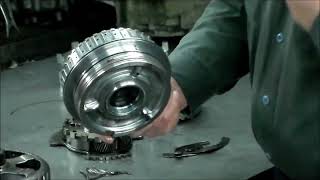
The 2008-2012 Malibu uses the GM 6T40 6-speed automatic transmission, which is infamous for a specific major failure. 🎬 Watch: A breakdown of common 6T40 transmission failure points. A part called the '3-5-R wave plate' is prone to fracturing and breaking apart. When it fails, it sheds hardened metal debris throughout the transmission fluid, which looks like excessive metallic 'glitter'. This debris contaminates the magnetic Input Speed Sensor, causing it to send faulty signals and trigger a P0715 code. Therefore, the code is often not just a bad sensor, but a direct indicator of a severe internal transmission problem that requires a rebuild. The issue was so widespread on 2008-2009 models that GM issued Special Coverage Adjustment 14404B, extending the warranty to 10 years/120,000 miles for this specific failure.
Symptoms You May Notice
- Harsh, erratic, or delayed gear shifts
- Transmission getting stuck in one gear (limp mode), often 3rd gear.
- Complete loss of 3rd, 5th, and Reverse gears (a key sign of wave plate failure).
- Check Engine Light is on
- Flashing transmission gear selector indicator
- Engine revs higher than normal between shifts
- Reduced fuel economy
- Replacing only the Input Speed Sensor without checking for a failed wave plate. If the transmission is full of debris, the new sensor will soon fail or the transmission will suffer a complete failure.
- Replacing the Transmission Control Module (TEHCM) when the root cause is mechanical (wave plate) or a debris-fouled sensor.
Most Likely Causes
- Internal 3-5-R Wave Plate Failure 🔴 High Probability The 6T40 and 6T70 transmissions used in this era of GM vehicles have a well-documented design flaw with the 3-5-R clutch wave plate, which is prone to fracturing. GM issued a special coverage program (14404B) for this issue on 2008-2009 models, extending the warranty to 10 years/120,000 miles.
How to confirm: Check transmission fluid for excessive metallic debris (a 'glitter bomb' appearance). A definitive diagnosis requires transmission disassembly. Loss of 3rd, 5th, and Reverse is a strong indicator. Some owners reported that dealers would not confirm the issue under warranty until the reverse gear was completely gone.
Typical fix: Complete transmission disassembly, thorough cleaning of all components and the case, and replacement of the broken wave plate and any collaterally damaged parts (like the drum housing). Many specialists recommend replacing the OE-style plate with an improved aftermarket design from a brand like Sonnax, which eliminates the failure-prone teeth of the original design.
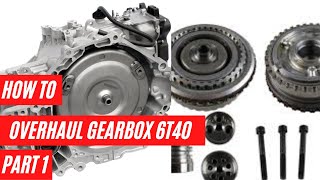
Est. part cost: $50-$200 for rebuild kits including the plate, but this does not include extensive labor or other damaged hard parts. 🎬 See this step-by-step 6T40 gearbox overhaul and rebuild process.
- Failed Input Speed Sensor (ISS) 🟡 Medium Probability The sensor itself can fail electrically, but on this platform, failure is most often induced by metallic contamination from the aforementioned wave plate issue. The magnetic tip of the sensor becomes coated in metal particles, disrupting its ability to read the reluctor wheel.
How to confirm: After confirming the wiring is intact, a diagnostic scan tool can monitor the ISS data stream. If the reading is zero or erratic while the engine is running, and the wave plate is known to be good, the sensor is likely faulty. The sensor itself can be tested with a multimeter for resistance against manufacturer specs.
Typical fix: Replacement of the Input Speed Sensor. This requires removing the transmission side cover to access the sensor. If the fluid is full of metal, replacing the sensor is only a temporary fix.
Est. part cost: $25-$70 - Low or Contaminated Transmission Fluid ⚪ Low Probability Fluid becomes heavily contaminated with metal shavings from a failing wave plate. While low fluid can cause shifting issues, severe contamination is the more specific and common problem for this platform that leads to P0715.
How to confirm: Check the transmission fluid level and condition. The fluid should be red and clear. If it is dark, burnt-smelling, or contains visible metallic particles, it is contaminated.
Typical fix: If the fluid is contaminated, a simple fluid and filter change will not fix the disintegrating wave plate. This is a sign of the larger problem requiring a transmission rebuild.
Est. part cost: $100-$250 for fluid and filter service.
Rare But Worth Checking
- Faulty Transmission Control Module (TEHCM): The TCM is integrated into the valve body (TEHCM) inside the transmission. While it can fail, it is much less common than the wave plate or sensor. All other possibilities should be exhausted before condemning the TEHCM. Debris from the wave plate can also damage the TEHCM's solenoids or pressure switches.
- Damaged Wiring or Connectors: Since the sensor wiring runs from the sensor to the TEHCM all within the transmission housing, any wiring damage would be an internal transmission issue, likely discovered during a teardown.
- Damaged Reluctor Ring: The reluctor ring on the input shaft that the sensor reads can be damaged, but this is very rare and would likely only occur during a catastrophic transmission failure.
Diagnosis Steps
- Scan for all codes. Note if P0700, P0716, P0717, or P0776 are present with P0715.
- Check the transmission fluid level and condition. Pull the dipstick and wipe it on a clean white towel. Look for a dark color, burnt smell, or the presence of metallic 'glitter'. This is the most critical diagnostic step for this vehicle.
- If fluid is heavily contaminated, a 3-5-R wave plate failure is almost certain. Professional diagnosis is required, as the transmission must be removed and disassembled for repair.
- If the fluid looks clean, use a professional scan tool to monitor the Input Speed Sensor (ISS) and Output Speed Sensor (OSS) data in real-time. The ISS reading should correlate with engine RPM in gear.
- If the ISS signal is absent or erratic with clean fluid, the problem is more likely to be the sensor itself or its internal wiring. This still points to a repair that requires opening the transmission side cover. 🎬 Watch: How to replace the input shaft speed sensor.
- To replace the sensor, the transmission side cover must be removed. Once inside, the sensor can be unbolted and replaced.
- After any repair, the transmission adaptive learn values should be reset using a scan tool like a GM GDS2. This can be done via the 'Transmission Service Fast Learn' procedure.
Parts You'll Likely Need
- 3-5-R Clutch Wave Plate
(OEM #24254103 (Updated Plate))— This is the part that breaks in the common 6T40 transmission failure, leading to debris that causes the P0715 code. The original design is flawed.
Trusted brands: ACDelco, Sonnax (offers improved 'toothless' designs like kit 144555K).
OEM price range: $20-$40
Aftermarket price range: $30-$60 (for Sonnax kit) - Transmission Input Speed Sensor (TSS)
(OEM #24259853)— This is the sensor that the code directly refers to. It may fail on its own but more often fails due to contamination from a wave plate failure.
Trusted brands: ACDelco, Delphi
OEM price range: $40-$70
Aftermarket price range: $25-$50 - Transmission Filter and Gasket Kit — Required for any transmission service, especially a rebuild. A new filter is critical after a wave plate failure to ensure no leftover debris circulates.
Related Codes That Often Appear With This One
- P0700 — P0700 is a generic code that simply means the Transmission Control Module (TCM) has stored a fault code. It will almost always be present alongside a specific transmission code like P0715.
- P0716 — This code indicates 'Input/Turbine Speed Sensor 'A' Circuit Range/Performance', meaning the signal is erratic or irrational, which is a common result of debris on the sensor magnet.
- P0717 — This code means 'Input/Turbine Speed Sensor 'A' Circuit No Signal', which can happen if the sensor fails completely or is disconnected.
- P0776 — This code for 'Pressure Control Solenoid 'B' Stuck Off' is also frequently caused by the same wave plate failure. Debris can jam the solenoids in the valve body. GM's own TSBs link this code directly to the broken wave plate.
Technical Service Bulletins (TSBs) & Recalls
- GM Special Coverage Adjustment 14404B: This document details the extended warranty (10 years / 120,000 miles) for the fractured 3-5-R wave plate in 2008-2009 Malibus (and other models). It confirms the condition, symptoms (loss of 3rd, 5th, Reverse), and repair procedure at no charge to the customer.
- GM TSB 11-06-01-001E (or similar): A technical service bulletin that notes a broken 35R wave plate can cause DTC P0776, and that debris can subsequently affect speed sensors, causing codes like P0716 and P0717.
Platform-Specific Known Issues
- A widespread and well-documented failure of the 3-5-R wave plate in the 6T40 transmission is the most significant issue. This failure generates metal debris that contaminates the entire transmission, often causing speed sensor codes like P0715 as a secondary symptom. GM issued Special Coverage Adjustment 14404B which extended the warranty for this specific failure to 10 years or 120,000 miles on affected 2008-2009 vehicles, but this has since expired for all eligible cars.
Mechanic-Grade Diagnostic Values
- Resistance of the six pressure control solenoids in the TEHCM — expected: 3 to 5 Ohms. Failure: A reading outside this range indicates a faulty solenoid.
- Resistance of the single large shift solenoid in the TEHCM — expected: 16 to 20 Ohms. Failure: A reading outside this range indicates a faulty solenoid.
- 3-5-R Clutch Pack Clearance after repair — expected: .020–.060 inches (0.5-1.5 mm). Failure: Excessive clearance may indicate an incorrect or distorted piston is installed, which will lead to premature failure.
Scan Tool Commands That Help
- GM GDS2 (or equivalent high-level scanner): Transmission Service Fast Learn — This procedure must be performed after replacing the transmission, TEHCM, or internal components to reset and relearn the transmission's adaptive pressure values. Failure to do so can result in poor shift quality or damage to the new components.
- GM GDS2 (or equivalent high-level scanner): Automated Solenoid Cleaning Process — If a solenoid performance code is present and debris is suspected but a full teardown is not yet confirmed, a capable scan tool can command the TEHCM to cycle the solenoids while the system is pressurized to attempt to dislodge small amounts of debris.
Wiring & Ground Locations
- TEHCM Main Connector (14-pin) — On the side of the transmission case, where the main vehicle harness connects to the internal transmission control module.. This is the primary electrical interface for the entire transmission. A poor connection here can cause P0715 and many other codes. Pin 6 & 7 are GMLAN High Speed Serial Data (+), and Pin 8 & 14 are GMLAN High Speed Serial Data (-). Pin 1 is Battery +12V, Pin 2 is Ground, and Pin 12 is Ignition voltage.
OEM Part Supersession History
24223806→24254103— The original 3-5-R wave plate was prone to fracturing. The updated part is shot-peened for increased durability, though some failures still occur.
Heads up: The aftermarket Sonnax kit 144555K is a popular alternative that uses a 'toothless' design to eliminate the stress points that cause failure in the OE-style plates.
Model Year Variations Within This Range
- 2008-2009: Vehicles in these model years were covered by GM's Special Coverage Adjustment 14404B, which extended the warranty for the 3-5-R wave plate failure to 10 years or 120,000 miles. 2010-2012 models, while still susceptible to the same failure, were not included in this specific warranty extension.
- 2012 and later (Gen 2 6T40): Starting in 2012, GM began phasing in the 'Gen 2' version of the 6T40 transmission. A key difference was the elimination of the pressure switches on the TEHCM, which were a source of failure in Gen 1 models. While the wave plate issue can still occur, diagnostics may differ slightly as pressure switch codes will not be present on Gen 2 units.
Diagnostic Flowchart
Other Known Issues on This Vehicle
Issues unrelated to this code that are worth knowing about as an owner of this generation:
- Timing Chain Stretch (3.6L V6 and 2.4L I4) 🔴 High — Very common, especially on the 3.6L V6. Often occurs between 70,000 and 120,000 miles. Can cause codes like P0008, P0017, P0018. Repair costs are high, often $1,500-$3,000+. (Ref: GM Special Coverage #11340C (for 3.6L V6))
- Sudden Loss of Electric Power Steering (EPS) 🔴 High — Common enough to trigger multiple safety recalls. Can happen at any mileage and results in a sudden increase in steering effort, especially at low speeds. (Ref: GM Recalls N140115, 14116, 14117, 14118)
- Steering Column Clunk/Noise 🟡 Low — A common complaint where a clunking or popping noise is heard and felt through the steering wheel, especially when turning at low speeds. Often traced to a worn intermediate steering shaft.
- Excessive Oil Consumption (2.4L Ecotec) 🟠 Medium — The 2.4L Ecotec engine can develop issues with piston rings leading to high oil consumption. Owners may need to add oil between changes. This was subject to a class-action lawsuit. (Ref: PI0562D)
Used vs. New Parts: Buying Guide for This Vehicle
When a used part is the smart pick: For this specific failure, purchasing a complete used transmission is a very high-risk option. It only makes sense if the donor vehicle is a later model year (e.g., 2013+) with a known lower-mileage Gen 2 transmission AND you can get a warranty from the seller. A used TEHCM module is also not recommended as it is VIN-locked and requires professional programming.
Donor-vehicle mileage cap: roughly under 60000 miles for the part to have meaningful remaining life.
What to inspect on the donor part:
- Verify the donor vehicle's year to ensure it's a later model, preferably 2013 or newer.
- Ask for a video of the donor car running and driving, if possible.
- Drain a small amount of fluid from the donor transmission. If it is dark, burnt, or contains any metallic glitter, reject it immediately.
- Check the main electrical connector for any bent or corroded pins.
OEM-only on this vehicle (don't cheap out):
- Transmission Electro-Hydraulic Control Module (TEHCM) - Aftermarket or used units are problematic; a new ACDelco unit is the only reliable option, and it requires programming by a dealer or specialist with GM software.
Aftermarket brands forum-validated for this vehicle:
- Sonnax: Widely regarded in the transmission industry for providing superior, re-engineered solutions to common failure points. Their 3-5-R Drum Saver Kit (144555K) is the preferred fix over the OEM wave plate.
Brands owners have reported issues with on this vehicle:
- Unbranded, no-name rebuild kits or solenoids from online marketplaces. Many forum users report that cheap solenoids fail quickly, forcing them to do the labor-intensive job a second time.
Real Owner Stories
Aggregated from forums and TSBs cited above. Mileages and costs reflect what owners reported in those sources.
2009 Chevrolet Malibu
Symptoms: Transmission issues that prompted a dealer visit, where the diagnostic criteria for warranty coverage required the complete loss of the Reverse gear before the repair would be approved.
What fixed it: Warranty repair for the fractured 3-5-R wave plate under GM's Special Coverage Adjustment 14404B.
Source hint: Saturn Forum - '14404B trans wave plate – Communicating w GM'
2010 Chevrolet Malibu
Symptoms: Intermittent loss of reverse, 3rd, and 5th gears.
What fixed it: A DIY repair attempt that required transmission disassembly to access and replace the failed components within the 3-5-R clutch pack.
Source hint: Reddit r/transmissionbuilding - '6T40 Gen 2'
Related OBD-II Codes
Frequently Asked Questions
My 2009 Malibu is having harsh shifting and a check engine light. Is there a special warranty for this?
What are the most specific symptoms of the common wave plate failure in the 2008-2012 Malibu?
My mechanic found a lot of metal 'glitter' in my transmission fluid. What does that mean?
If the wave plate needs to be replaced, should I use an original GM part?
The dealer won't confirm the wave plate failure under warranty until my reverse gear is completely gone. Is that right?
Does the P0715 code on my Malibu mean I just need to replace the input speed sensor?
After a transmission repair for P0715, is there a final step required?
Helpful Videos

We Have This Part in Stock

The information in this article is provided for general reference and educational purposes only. Vehicle specifications, procedures, and part compatibility can vary by production date, trim level, and region. Always consult your vehicle's factory service manual and verify part numbers before purchasing or performing repairs. Safety-critical components such as airbags, seat belts, and braking systems should be installed by a qualified professional.
- Chevrolet Malibu:
- 🎬 Helpful Videos
- 🛍️ Shop This Part
- What's Unique About the 2008-2012 Chevrolet Malibu
- Symptoms You May Notice
- Most Likely Causes
- Rare But Worth Checking
- Diagnosis Steps
- Parts You'll Likely Need
- Related Codes That Often Appear With This One
- Technical Service Bulletins (TSBs) & Recalls
- Platform-Specific Known Issues
- Mechanic-Grade Diagnostic Values
- Scan Tool Commands That Help
- Wiring & Ground Locations
- OEM Part Supersession History
- Model Year Variations Within This Range
- Diagnostic Flowchart
- Other Known Issues on This Vehicle
- Used vs. New Parts: Buying Guide for This Vehicle
- Real Owner Stories
- 2009 Chevrolet Malibu
- 2010 Chevrolet Malibu
- Related OBD-II Codes
- Frequently Asked Questions
- 🎟️ Get 5% Off