

P0712 on 2011-2015 Kia Optima: Transmission Temperature Sensor Causes and Fixes
On a 2011-2015 Kia Optima, code P0712 is almost always caused by a failed transmission fluid temperature sensor located inside the transmission. The fix involves replacing the sensor, which is a moderately difficult DIY job requiring draining the fluid and removing the side valve body cover. Expect to pay $20-$50 for the part.
- P0712 on your Optima almost certainly means the transmission fluid temperature sensor has failed.
- This is a known issue with a TSB from Kia, so don't let a shop convince you that you need a new transmission.
- The repair is internal to the transmission but can be done without removing the entire unit from the car.
- While replacing the sensor, it is highly recommended to also replace the internal wiring harness (P/N 46307-3B650) as it is also a common failure point.
- Using the correct fluid (SP-IV) and following the proper fluid level check procedure at operating temperature is critical for transmission health post-repair.
What's Unique About the 2011-2015 Kia Optima
This is a very common issue on Kia and Hyundai vehicles from this era that use the 6-speed automatic transmission (A6GF1/A6MF1/A6LF1 family). Kia acknowledged the problem by releasing Technical Service Bulletin (TSB) TRANS 043, which advises technicians to replace the sensor itself rather than the entire transmission. The sensor is located inside the transmission on the valve body, making the repair more involved than a simple external sensor swap. When the code is present, the TCM often defaults to a fixed temperature value (e.g., 176°F or 80°C) for its calculations, regardless of the actual fluid temperature.
Symptoms You May Notice
- Harsh or abrupt shifting, especially when cold
- Delayed gear engagement from Park to Drive or Reverse
- Transmission getting stuck in 'limp mode' (fail-safe mode, often 3rd gear)
- Illuminated Check Engine Light
- Illuminated transmission temperature warning light (less common)
- Improper or inhibited torque converter clutch operation
- Poor fuel economy due to incorrect shift strategy
- Replacing the entire transmission. Kia specifically issued TSB TRANS 043 to prevent this, advising to replace the sensor first.
- Replacing the valve body. The sensor is attached to the valve body but is a separate, replaceable part for this model year range.
Most Likely Causes
- Failed Transmission Fluid Temperature (TFT) Sensor 🔴 High Probability The original sensors are a known high-failure item across many Kia/Hyundai models of this period, as documented in TSB TRANS 043. The internal thermistor degrades from heat cycles, leading to an internal short.
How to confirm: Use a scan tool to monitor live transmission fluid temperature data. A reading of -40°F or a similarly low, static number confirms the sensor circuit is shorted. You can also test the sensor's internal resistance directly at the transmission connector pins 🎬 Watch: How to test the sensor circuit with a multimeter. (pins 9 and 13). At a typical ambient temperature of 68°F (20°C), the resistance should be approximately 2.5 kΩ. A reading near zero ohms indicates a shorted sensor.
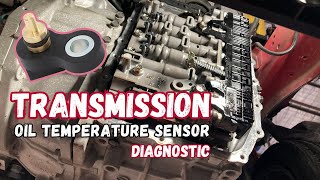
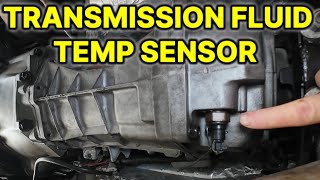
Typical fix: Replace the transmission fluid temperature sensor. This requires draining the fluid, removing the driver's side wheel, and removing the side valve body cover to access the sensor. 🎬 See this walkthrough for replacing the sensor and fixing hard shifts.
Est. part cost: $20-$50 - Damaged Internal Transmission Wiring Harness 🟡 Medium Probability The internal harness (a ribbon-style cable) connects to the TFT sensor and solenoids. It can become brittle from heat and age, leading to shorts or breaks in the wiring. Damage can also occur during a clumsy sensor replacement, as the connector is fragile.
How to confirm: After confirming the sensor itself is good (by testing or replacement), if the code persists, the internal harness is the next logical suspect. A visual inspection of the harness for cracks, delamination, or damage is necessary after removing the valve body cover.
Typical fix: Replace the internal transmission wiring harness. This part is often replaced preventatively along with the sensor. The OEM part number is 46307-3B650.
Est. part cost: $100-$200 - Damaged External Wiring or Connector ⚪ Low Probability Road debris or improper service can damage the main harness leading to the transmission. The main connector can also suffer from corrosion or poor pin tension, though this is less common than internal failures.
How to confirm: Visually inspect the wiring harness leading to the transmission for any signs of chafing, melting, or physical damage. Disconnect the main transmission connector and check for corroded, bent, or loose pins, specifically pins 9 and 13 for the TFT sensor circuit.
Typical fix: Repair the damaged section of the wiring harness or clean/tighten the connector pins.
Est. part cost: $10-$100
Rare But Worth Checking
- Faulty Powertrain Control Module (PCM) or Transmission Control Module (TCM): This is very uncommon and should only be considered after all other possibilities (sensor, internal harness, external wiring) have been definitively ruled out through testing.
Diagnosis Steps
- Connect an OBD-II scanner and confirm P0712 is present. Check for any other transmission-related codes like P0711, P0713, or solenoid codes.
- Use the scanner's live data function to view the Transmission Fluid Temperature. If it reads -40°F or another fixed, illogical low temperature, it strongly suggests a shorted sensor or circuit.
- Visually inspect the main external wiring harness and connector going to the transmission. Look for any obvious damage, corrosion, or loose connections.
- If external wiring is intact, test the sensor and its circuit from the main transmission connector. Disconnect it and use a multimeter to measure resistance between pins 9 and 13 on the transmission side. A reading near 0 ohms confirms the internal circuit/sensor is shorted. A correct reading would be around 2.5 kΩ at 68°F/20°C.
- If the resistance test confirms an internal short, the next step is to access the sensor. This involves draining the transmission fluid, removing the driver's side wheel and splash shield, and removing the side valve body cover (10mm bolts).
- Once the cover is off, the sensor and its ribbon harness are visible. Disconnect the harness from the sensor and re-test the sensor pins directly. If it now tests bad, replace the sensor. If the sensor tests good, the internal ribbon harness is the culprit.
- After replacing the faulty component(s), reinstall the valve body cover. Use a new gasket or the specified RTV sealant (Kia P/N UM010 CH046) and torque bolts to spec.
- Refill the transmission with approximately 5 quarts of Kia SP-IV automatic transmission fluid.
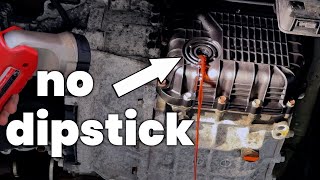
- Perform the fluid level check procedure: with the engine running, warm the transmission to the specified temperature (122-140°F or 50-60°C), remove the overflow plug, and add fluid until it trickles out. 🎬 Watch: A complete guide to testing and replacing the temp sensor.
- Clear the trouble codes and perform a test drive to ensure the shifting is smooth and the code does not return.
Parts You'll Likely Need
- Transmission Fluid Temperature Sensor
(OEM #46386-3B900)— This is the component that fails most often, causing the P0712 code. The part number 46386-3B900 supersedes older numbers like 46386-3B000 and 46386-3B010.
Trusted brands: Genuine Hyundai/Kia
OEM price range: $25-$50
Aftermarket price range: $15-$40 - Kia SP-IV Automatic Transmission Fluid
(OEM #UM013 CH059)— The transmission must be drained to access the sensor. You will need approximately 5 quarts for a drain and refill.
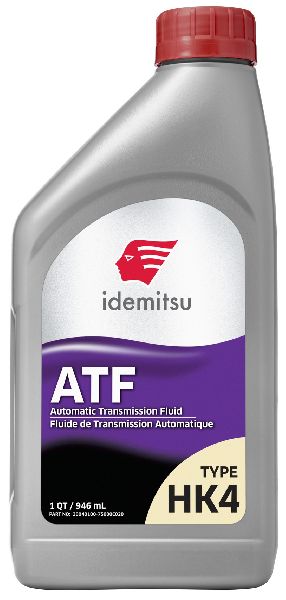
Trusted brands: Genuine Kia/Hyundai, Idemitsu TLS-LV, ENEOS ECO ATF
OEM price range: $15-$25 per quart
Aftermarket price range: $10-$20 per quart - Valve Body Cover Gasket or Sealant
(OEM #UM010 CH046)— The valve body cover must be removed and re-sealed. TSB TRANS 043 specifies Kia RTV gasket maker for metal covers. Some models may have a reusable rubber gasket.
Trusted brands: Permatex Ultra Black RTV, Genuine Kia RTV
OEM price range: $20-$30
Aftermarket price range: $10-$20 - Internal Transmission Wiring Harness
(OEM #46307-3B650)— This is the second most likely failure point after the sensor itself. It's a ribbon-style cable that becomes brittle. Many owners replace it along with the sensor as a preventative measure.
Trusted brands: Genuine Hyundai/Kia
OEM price range: $120-$180
Aftermarket price range: $80-$130
Related Codes That Often Appear With This One
- P0711 — P0711 ('Range/Performance') indicates an erratic or stuck signal, while P0712 indicates a signal that is stuck low. Both point to a problem with the same sensor and are often listed in the same TSBs.
- P0713 — P0713 ('Circuit High') is the opposite of P0712, indicating an open circuit (e.g., unplugged sensor or broken wire). It's common to see all three codes (P0711, P0712, P0713) addressed in the same service information as they all relate to the TFT sensor circuit.
Technical Service Bulletins (TSBs) & Recalls
- TSB TRANS 043 (Rev 2, May 2012): Addresses DTCs P0711, P0712, & P0713 for various models including the 2011+ Optima. It provides the procedure for replacing the oil temperature sensor, specifies using ~5 quarts of SP-IV ATF, and lists the RTV sealant part number for re-sealing the valve body cover.
- Bulletin #TSBTRA043R2 (dated 2013-02-25): This manufacturer bulletin provides specific information related to replacing the transaxle oil temperature sensor on 6-speed automatic transaxles when DTC P0711, P0712, or P0713 is present.
Platform-Specific Known Issues
- On Kia-Forums.com, in a thread titled 'P0711, P0712, P0713 Transmission Temp Sensor', multiple users with 2011-2013 Optimas confirm that replacing only the sensor (P/N 46386-3B900) resolved their harsh shifting and check engine light.
- A YouTube video by 'Carbo-Fix' titled 'KIA OPTIMA TRANSMISSION FLUID TEMP SEN
Mechanic-Grade Diagnostic Values
- TFT Sensor Signal Voltage (DTC Trigger Condition) — expected: > 313mV. Failure: A voltage reading of less than 313mV for 2.5 seconds will set the P0712 code.
- TFT Sensor Resistance — expected: Approx. 2.5 kΩ at 68°F (20°C). Failure: A reading near 0 Ω indicates a shorted sensor.
- TFT Sensor Circuit Reference Voltage — expected: Approx. 5V at the harness connector with sensor unplugged and key ON.. Failure: Significantly less than 5V may indicate a wiring issue or a faulty TCM.
Scan Tool Commands That Help
- Kia GDS/KDS: Resetting Auto T/A Values (or 'Init Of TCU Learning') — This function must be performed after replacing the transmission, TCM, temperature sensor, or internal harness to clear the learned shift adaptation values. Failure to reset adaptations can result in continued poor shift quality even after the repair.
- Kia GDS/KDS: Dynamic Test (Relearn Procedure) — After using the 'Resetting Auto T/A Values' function, a specific drive cycle must be performed to allow the TCM to relearn shift points. This typically involves accelerating gently (10-20% throttle) through all gears and decelerating slowly to a stop, repeated multiple times.
Wiring & Ground Locations
- Main Valve Body Connector — On the exterior of the transmission case, where the main vehicle harness connects to the internal components. On the A6MF1, this is a large, black, lever-lock style connector.. This is the primary external test point. The TFT sensor circuit can be tested for resistance at pins 9 and 13 on the transmission side of this connector, isolating the fault to inside or outside the transmission without disassembly.
- TCU Fuse #1 — In the under-hood fuse box, labeled 'TCU 1'. It is a 20A fuse.. While a blown fuse typically causes an open circuit code (P0713), checking power supply is a fundamental step in diagnosing any module-related electrical issue.
- TCU Fuse #2 — In the interior fuse box (driver's side kick panel), labeled 'IG1'. It is a 20A fuse.. This fuse also supplies power to the transmission control circuits. Verifying it is intact is crucial when diagnosing transmission control system faults.
Real Owner Repair Stories
- YouTube channel 'Carbo-Fix' (2012 Kia Optima) — Check engine light on with codes P0711 and P0713, and very hard shifting.
✅ What actually fixed it The problem was resolved by replacing the transmission fluid temperature sensor. The video documents the process of removing the airbox and battery for access, draining the fluid, removing the side valve body cover, and replacing the sensor. - NHTSA ODI #11245752 — An owner of a related Kia model reported that when the vehicle is still cold, it experiences rough shifting, noting that the issue is covered under the Kia Technical Service Bulletin for transaxle oil temperature sensor DTCs P0711, P0712, and P0713.
OEM Part Supersession History
46386-3B000, 46386-3B010→46386-3B900— Updated design to improve reliability and prevent premature failure.46307-3B610, 46307-3B620→46307-3B650— Improved materials and construction for the internal ribbon-style wiring harness to better withstand heat and fluid exposure.
Diagnostic Flowchart
Other Known Issues on This Vehicle
Issues unrelated to this code that are worth knowing about as an owner of this generation:
- Theta II GDI Engine Seizure/Failure 🔴 High — Widespread across multiple model years, leading to a class-action lawsuit. Can occur at various mileages, often without warning. (Ref: NHTSA Recalls 17V-224, SC172; Class-action lawsuit settlement (In re: Hyundai and Kia Engine Litigation, No. 8:17-cv-00838) extended warranties and provided reimbursements.)
- Flexible Steering Coupler Degradation 🟠 Medium — Extremely common. Owners typically notice a distinct clicking or clunking sound from the steering column when turning the wheel, which worsens over time. Usually appears after 60,000 miles. (Ref: Hyundai TSB #14-ST-002-1 addresses the identical part in the sister vehicle, the Sonata. No specific Kia recall, but it is a well-documented failure.)
- Hydraulic Electronic Control Unit (HECU) Fire Risk 🔴 High — Affects a wide range of Kia/Hyundai vehicles. An internal electrical short in the HECU can occur, creating a fire risk even when the vehicle is parked and off. (Ref: NHTSA Recall 23V-652000 (Kia recall number SC284). Owners were advised to park outside and away from structures until the recall repair is performed.)
- Fuel Pipe Leaks After Engine Replacement 🔴 High — Specifically affects vehicles that had their engines replaced under the Theta II recall (17V-224). The high-pressure fuel pipe may have been damaged or misaligned during the repair. (Ref: NHTSA Recall SC172 was issued to inspect and replace the fuel pipe on previously repaired vehicles.)
Used vs. New Parts: Buying Guide for This Vehicle
When a used part is the smart pick: For this specific repair, only cosmetic or simple mechanical parts like the transmission valve body cover or external connector housings are suitable for purchase from a salvage yard. The core electrical components that cause this code should not be sourced used.
Donor-vehicle mileage cap: roughly under 50000 miles for the part to have meaningful remaining life.
What to inspect on the donor part:
- For a valve body cover, inspect for cracks, warping, or deep gouges on the sealing surface.
- For any wiring connectors, check for brittle plastic, broken locking tabs, or heavy corrosion on pins.
OEM-only on this vehicle (don't cheap out):
- Transmission Fluid Temperature Sensor
- Internal Transmission Wiring Harness
Aftermarket brands forum-validated for this vehicle:
- Valvoline MaxLife Multi-Vehicle ATF (SP-IV compatible)
- Castrol Transmax Multi-Vehicle ATF (SP-IV compatible)
- Pennzoil Platinum LV ATF (SP-IV compatible)
Brands owners have reported issues with on this vehicle:
- Generic or universal transmission fluids that do not explicitly state compatibility with Kia/Hyundai SP-IV or SP4-M specifications.
Real Owner Stories
Aggregated from forums and TSBs cited above. Mileages and costs reflect what owners reported in those sources.
2012 Kia Optima
Symptoms: Harsh shifting and the check engine light was on.
What fixed it: Replacing only the transmission temperature sensor (P/N 46386-3B900) resolved the issue.
Source hint: Kia-Forums.com thread titled 'P0711, P0712, P0713 Transmission Temp Sensor'
2012 Kia Optima EX
Symptoms: Experienced harsh shifting and had P0711, P0712, and P0713 codes stored.
What fixed it: The problem was resolved by a successful replacement of the temperature sensor.
Source hint: Kia Forums - '2012 Optima EX Transmission Issues P0711'
2012 Kia Optima
Symptoms: Hard shifting and a check engine light for codes P0711 and P0713.
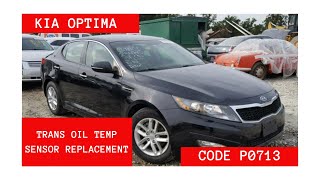
What fixed it: The repair shown was a transmission fluid temperature sensor replacement.
Source hint: YouTube - 'KIA OPTIMA TRANSMISSION FLUID TEMP SENSOR REPLACEMENT P0713 P0711 - HARD SHIFTING FIXED'
Related OBD-II Codes
Frequently Asked Questions
Is there an official Kia TSB for the P0712 code on my 2012 Optima?
My scanner is showing a transmission fluid temperature of -40°F. Does this confirm the sensor is bad?
What is the part number for the transmission temperature sensor that commonly fails?
If the sensor isn't the problem, what is the part number for the internal wiring harness?
How much and what type of transmission fluid do I need after replacing the sensor?
How can I test the sensor without removing the transmission pan?
Do other Kia or Hyundai vehicles have this same P0712 sensor issue?
Helpful Videos
Used OEM Parts in Stock


New Aftermarket Parts Available




The information in this article is provided for general reference and educational purposes only. Vehicle specifications, procedures, and part compatibility can vary by production date, trim level, and region. Always consult your vehicle's factory service manual and verify part numbers before purchasing or performing repairs. Safety-critical components such as airbags, seat belts, and braking systems should be installed by a qualified professional.
- Kia Optima:
- 🎬 Helpful Videos
- 🛍️ Shop This Part
- What's Unique About the 2011-2015 Kia Optima
- Symptoms You May Notice
- Most Likely Causes
- Rare But Worth Checking
- Diagnosis Steps
- Parts You'll Likely Need
- Related Codes That Often Appear With This One
- Technical Service Bulletins (TSBs) & Recalls
- Platform-Specific Known Issues
- Mechanic-Grade Diagnostic Values
- Scan Tool Commands That Help
- Wiring & Ground Locations
- Real Owner Repair Stories
- OEM Part Supersession History
- Diagnostic Flowchart
- Other Known Issues on This Vehicle
- Used vs. New Parts: Buying Guide for This Vehicle
- Real Owner Stories
- 2012 Kia Optima
- 2012 Kia Optima EX
- 2012 Kia Optima
- Related OBD-II Codes
- Frequently Asked Questions
- 🎟️ Get 5% Off