

P0712 on 2016-2022 Honda Pilot: Transmission Temp Sensor Circuit Low Causes and Fixes
P0712 on a 2016-2022 Pilot means the transmission fluid temperature (TFT) sensor has an electrical short. This is most often a failed internal sensor or damaged wiring. The fix requires dropping the transmission pan and replacing the sensor, which is a job best left to a professional. Expect costs to range from $300 to $600 depending on the transmission type.
- P0712 is an electrical fault (short circuit) in the transmission temperature sensor circuit, not a sign of a major mechanical failure.
- The fix is not DIY-friendly as the sensor is located inside the transmission pan on both the 6-speed and 9-speed models.
- It is critical to identify whether your Pilot has the 6-speed or 9-speed transmission, as the required parts may differ.
- Always use the correct Honda-specific transmission fluid (DW-1 for 6-speed, Type 3.1 for 9-speed) when refilling after the repair.
- Before approving repairs, ask the shop to confirm they have tested the wiring for a short to ground to avoid unnecessarily replacing a good sensor.
What's Unique About the 2016-2022 Honda Pilot

The 2016-2022 Honda Pilot is unique because it was offered with two different automatic transmissions, and the fix depends on which one your vehicle has. Lower trims (LX, EX, EX-L) typically have a Honda-built 6-speed automatic (6AT), while higher trims (Touring, Elite) have a 9-speed automatic (9AT) made by ZF. While the code's meaning is the same for both, the specific temperature sensor part and its accessibility can differ. The 9-speed, in particular, had a number of software updates and owner complaints about shift quality early in its life cycle, as well as a warranty extension for a faulty ATF warmer that could cause coolant and ATF to mix (TSB 17-035).
Symptoms You May Notice

- Check Engine Light is on
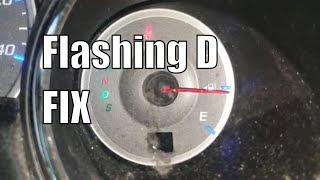
- Flashing 'D' (Drive) indicator light on the dashboard
- Harsh, erratic, or delayed gear shifts
- Transmission may get stuck in one gear (limp mode)
- Reduced fuel economy
- Transmission temperature warning light may be illuminated
- Improper torque converter clutch operation
- Replacing the transmission fluid. While old or low fluid can cause other issues, it will not directly cause a 'Circuit Low' code like P0712. This code points specifically to an electrical fault.
Most Likely Causes

- Failed Internal Transmission Fluid Temperature (TFT) Sensor 🔴 High Probability The sensor is a thermistor that can fail internally, creating a short circuit that sends a constant low voltage signal to the PCM. This is the most common point of failure for this code.
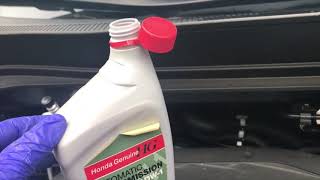
How to confirm: Using a scan tool, observe the live data for the TFT sensor. If it reads an illogical, fixed low temperature (like -40°F) even when the engine is warm, the sensor has likely failed. 🎬 Watch: Diagnostic walkthrough for P0712 on a Honda Pilot A technician can also test the sensor's resistance directly at the transmission connector pins.
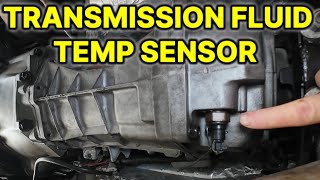
Typical fix: Replace the transmission fluid temperature sensor. This requires draining the transmission fluid, removing the transmission pan, and accessing the sensor, which is often attached to the valve body or internal harness.
Est. part cost: $40-$100 - Damaged Wiring or Connector 🟡 Medium Probability The wiring harness leading to the transmission can be damaged by road debris, heat, or improper repairs, causing a short to ground. Pins in the connector can also corrode, creating a voltage drop.
How to confirm: Visually inspect the wiring harness running to the transmission for any signs of chafing, melting, or corrosion. A technician will perform a continuity test to check for a short to ground between the sensor connector and the PCM.
Typical fix: Repair the damaged section of the wire or replace the faulty connector. In severe cases, a portion of the wiring harness may need to be replaced.
Est. part cost: $10-$200
Rare But Worth Checking
- Faulty Powertrain Control Module (PCM): This is extremely rare. The PCM's internal circuit for reading the sensor could fail, but all other potential causes, especially the sensor and wiring, should be exhaustively ruled out before considering PCM replacement.
Diagnosis Steps

- Connect a professional OBD-II scan tool to the vehicle.
- Read the fault codes and confirm P0712 is present. Check for any other related transmission codes.
- View the live data stream for the Transmission Fluid Temperature Sensor 'A'. A P0712 code will typically show a very low, static temperature reading (e.g., -40°F) or a voltage below 0.07V.
- Inspect the transmission fluid level and condition. While not a direct cause, it's good practice.
- Visually inspect the external transmission wiring harness and connectors for any obvious signs of damage, corrosion, or loose connections.
- If wiring appears okay, the next step is to test the sensor circuit. This involves disconnecting the sensor (if accessible) and checking for voltage changes, or testing for continuity to ground on the signal wire between the PCM and the sensor connector.
- If the wiring is confirmed to be good, the TFT sensor itself is faulty and must be replaced.
Parts You'll Likely Need

- Automatic Transmission Fluid Temperature Sensor (For 6-Speed)
(OEM #28650-RWE-003)— This is the most common failure point for this code on the Honda-built 6-speed transmission. It fails internally, causing a short circuit.
Trusted brands: Honda (Genuine), Carquest Premium, Duralast
OEM price range: $60-$90
Aftermarket price range: $40-$60 - Transmission Fluid Temperature Sensor (For 9-Speed)
(OEM #28650-RT4-003)— For the ZF 9-speed transmission, the sensor is also a common failure point. Part number 28650-RT4-003 is listed for this application, though some sources note it may be part of a larger assembly or located in the AWD differential on some models. Professional diagnosis is required to confirm the exact part needed.
Trusted brands: ZF (OEM), Honda (Genuine), Mopar (for other vehicles using the same transmission)
OEM price range: $100-$250+
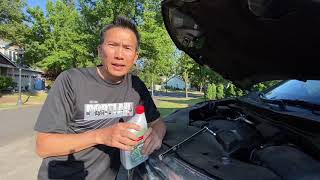
Aftermarket price range: Varies - Honda Genuine ATF DW-1 (For 6-Speed) or ATF Type 3.1 (For 9-Speed) — The transmission fluid must be drained to perform the repair and refilled with the correct OEM-specific fluid to ensure proper transmission function. 🎬 Watch: How to change ATF on 6-speed LX and EX trims
Trusted brands: Honda (Genuine)
OEM price range: $12-$20 per quart
Aftermarket price range: N/A
Related Codes That Often Appear With This One
- P0713 — This is the opposite code, 'Circuit High,' indicating an open circuit. Seeing them together or intermittently could point to a loose connection or a failing sensor that is fluctuating between states.
- P0711 — This code means 'Circuit Range/Performance,' indicating the sensor's readings are erratic or illogical. It's another sign that the sensor itself or its wiring is failing.
Technical Service Bulletins (TSBs) & Recalls
- A23073 (NHTSA ID 10242219) - Service Bulletin for 2016-2020 Pilot: 'Transmission Temp Too Hot' message on the MID with no DTCs.
- 17-035 (NHTSA ID 10117329) - Warranty Extension for 2016-2017 Pilot with 9-speed A/T: Addresses defective ATF warmer causing poor shift quality or overheating.
Platform-Specific Known Issues

- Be aware of Honda Service Bulletin 23-073 for 2016-2020 Pilots. It addresses a 'Transmission Temperature Too Hot' message appearing *without* a DTC, caused by fluid foaming. The fix is a PCM software update and a triple ATF flush. While it doesn't cause P0712, it's a related temperature issue for this platform.
- For 9-speed models, TSB 17-035 extended the warranty on the ATF warmer due to internal leaks causing coolant and ATF to mix, leading to poor shifting and overheating. While not a direct cause of P0712's electrical fault, it's a critical transmission issue for these specific trims.
Mechanic-Grade Diagnostic Values
- TFT Sensor Signal Voltage (KOEO - Key On, Engine Off) — expected: Changes with temperature. Should not be static.. Failure: A static reading below 0.07 volts indicates a short circuit, triggering P0712.
- TFT Sensor Reference Voltage at Harness Connector — expected: Approximately 5.0 volts DC with the sensor disconnected and key on.. Failure: Significantly less than 5.0 volts points to a wiring issue or a problem with the PCM's 5V reference circuit.
- TFT Sensor Resistance — expected: Resistance changes with temperature. For example, a similar sensor shows ~2.5 kΩ at 20°C (68°F), with resistance decreasing as temperature rises.. Failure: An extremely low or near-zero resistance reading across the sensor terminals indicates an internal short. An open circuit (infinite resistance) would trigger P0713.
Scan Tool Commands That Help
- Honda Diagnostic System (HDS): Data List for A/T — To monitor the live voltage and temperature reading from the 'ATF Temperature Sensor' to confirm the fault. A reading below 0.07V is a key indicator.
- Honda Diagnostic System (HDS): Jumping the SCS (Service Check Switch) line — This is an advanced diagnostic step used before testing continuity at the PCM connector. It forces the system into a diagnostic mode.
- Honda Diagnostic System (HDS): Clear DTCs — After the repair is complete, the HDS is used to clear the fault code from the PCM's memory.
Wiring & Ground Locations

- PCM Connector B (51-Pin) — Located in the engine bay, connected to the Powertrain Control Module (PCM).. This connector contains the wire for the TFT sensor signal. Technicians disconnect this to test for a short to ground on the wire between the PCM and the transmission.
- Transmission Main Connector (Valve Body Connector) — The main external electrical connector on the transmission case that routes to the internal valve body and sensors.. This is the primary point for testing the sensor circuit without opening the transmission. A technician can check for reference voltage and test sensor resistance from this connector's pins.
Diagnostic Flowchart
Other Known Issues on This Vehicle
Issues unrelated to this code that are worth knowing about as an owner of this generation:
- Fuel Injector Failure 🔴 High — Can occur at relatively low mileage (as early as 25k miles), often causing misfires (P030x) and air-fuel ratio codes (P219A/B). (Ref: TSB 20-100 (extends warranty to 10 years/150k miles for this issue).)
- Auto Start/Stop System Failure 🟠 Medium — Common owner complaint where the engine fails to restart after stopping, or the system deactivates prematurely due to a weakening battery. Can sometimes be caused by water intrusion into the starter motor in cold climates. (Ref: TSB A23-008 / A23-009 address a no-restart condition.)
- Infotainment System Glitches (Blank Screen/Rebooting) 🟠 Medium — Widespread issue where the center display screen goes blank, freezes, or reboots randomly. Caused by a software issue in the gauge control module. (Ref: TSB 20-047 (Noncompliance Recall for a software update).)
- ZF 9-Speed Transmission Shift Quality 🟠 Medium — Prevalent on 2016-2020 Touring/Elite trims. Owners report harsh shifts, hesitation, and surging. Multiple software updates were released to improve behavior. (Ref: TSB 17-035 (ATF Warmer) and others address shift quality.)
- Direct Injection Carbon Buildup 🟡 Low — An inherent issue with the J35Y6 direct injection engine. Over time (typically 60k-100k miles), carbon can build up on intake valves, leading to rough idle and reduced performance.
Used vs. New Parts: Buying Guide for This Vehicle
When a used part is the smart pick: For this repair, using a used part is generally not recommended. The Transmission Fluid Temperature (TFT) sensor is a relatively inexpensive electronic component that is critical for proper transmission function. The labor to access it by dropping the transmission pan is significant. The risk of a used sensor failing prematurely outweighs the small cost savings over a new part.
Donor-vehicle mileage cap: roughly under 50000 miles for the part to have meaningful remaining life.
What to inspect on the donor part:
- Verify the part number from the donor vehicle matches the required part for your 6-speed or 9-speed transmission.
- Inspect the connector pins for any signs of corrosion, damage, or oil contamination.
- If possible, test the resistance of the used sensor with a multimeter before purchase to ensure it's not shorted or open.
OEM-only on this vehicle (don't cheap out):
- Transmission Fluid Temperature Sensor: Given the high labor cost for replacement, using a Genuine Honda (or ZF for the 9-speed) part is the safest choice to ensure longevity and correct performance.
- Automatic Transmission Fluid (ATF): Always use the Honda-specified fluid (DW-1 for 6-speed, Type 3.1 for 9-speed). Using incorrect fluid can cause shifting problems and long-term damage.
Brands owners have reported issues with on this vehicle:
- Unnamed/no-brand sensors from online marketplaces. The quality control is often poor, and they may not have the correct resistance curve, leading to incorrect temperature readings even if they don't set a code.
Real Owner Stories
Aggregated from forums and TSBs cited above. Mileages and costs reflect what owners reported in those sources.
2018 Honda Pilot J35Y6 3.5L V6
Symptoms: A 'Transmission System Problem' light came on.
What fixed it: The issue was diagnosed by the dealer and resolved under warranty.
Source hint: Piloteers.org forum thread
2019 Honda Pilot J35Y6 3.5L V6
Symptoms: The multi-information display showed a 'Transmission Temperature Too Hot' message, but no Check Engine Light was on.
What fixed it: The issue was resolved with a PCM software update and a triple ATF flush, as specified by the service bulletin.
Source hint: Honda Service Bulletin 23-073
2016 Honda Pilot J35Y6 3.5L V6
Symptoms: The vehicle experienced poor shift quality and signs of the transmission overheating.
What fixed it: The defective ATF warmer was replaced under the manufacturer's warranty extension.
Source hint: Honda TSB 17-035
Related OBD-II Codes
Frequently Asked Questions
My 2017 Pilot has harsh shifting. Is this definitely caused by the P0712 code?
I got a 'Transmission Temp Too Hot' message but no Check Engine Light. Is this related to the P0712 sensor fault?
How can a mechanic tell if the P0712 code on my Pilot is from a bad sensor or bad wiring?
Is it a good idea to use a used TFT sensor to save money on this repair?
My 2019 Acura MDX has a P0712 code. Is the diagnosis the same as for the Honda Pilot?
Besides the Check Engine Light, what are the most obvious symptoms of a P0712 fault?
Helpful Videos


Used OEM Parts in Stock

New Aftermarket Parts Available


The information in this article is provided for general reference and educational purposes only. Vehicle specifications, procedures, and part compatibility can vary by production date, trim level, and region. Always consult your vehicle's factory service manual and verify part numbers before purchasing or performing repairs. Safety-critical components such as airbags, seat belts, and braking systems should be installed by a qualified professional.
- Honda Pilot:
- 🎬 Helpful Videos
- 🛍️ Shop This Part
- What's Unique About the 2016-2022 Honda Pilot
- Symptoms You May Notice
- Most Likely Causes
- Rare But Worth Checking
- Diagnosis Steps
- Parts You'll Likely Need
- Related Codes That Often Appear With This One
- Technical Service Bulletins (TSBs) & Recalls
- Platform-Specific Known Issues
- Mechanic-Grade Diagnostic Values
- Scan Tool Commands That Help
- Wiring & Ground Locations
- Diagnostic Flowchart
- Other Known Issues on This Vehicle
- Used vs. New Parts: Buying Guide for This Vehicle
- Real Owner Stories
- 2018 Honda Pilot J35Y6 3.5L V6
- 2019 Honda Pilot J35Y6 3.5L V6
- 2016 Honda Pilot J35Y6 3.5L V6
- Related OBD-II Codes
- Frequently Asked Questions
- 🎟️ Get 5% Off