

P0711 on 2011-2014 Hyundai Sonata: Transmission Temperature Sensor Causes and Fixes
On a 2011-2014 Sonata, P0711 almost always means the internal transmission wiring harness, which contains the integrated transmission temperature sensor, has failed. This is a well-documented pattern failure. The fix requires dropping the transmission pan and valve body to replace the entire harness. Expect to pay $150-$220 for the OEM harness and $600-$1200 for a professional repair.
- P0711 on your Sonata is a serious code that points to a failed transmission temperature sensor.
- The most likely cause is a faulty internal wiring harness, not just a simple sensor.
- This is not a simple DIY fix; it requires removing the transmission valve body and should be handled by a professional mechanic.
- The correct OEM part for the fix is the wiring harness, part number 46307-3B650.
- Do not ignore this code, as continued driving can lead to severe transmission damage.
What's Unique About the 2011-2014 Hyundai Sonata

The 2011-2014 Sonata, equipped with the A6MF1 6-speed automatic transmission, has a very common and well-documented issue with this code. Unlike many vehicles where the temperature sensor is a simple, externally accessible part, Hyundai integrated the sensor into the main internal wiring harness. This design choice means that a simple sensor failure requires a much more involved repair: the transmission's valve body must be removed to replace the entire harness assembly. This is a known pattern failure for this transmission, and Hyundai eventually updated the part to be a single, integrated harness to prevent connection issues at the sensor which were a common source of the problem.
Symptoms You May Notice

- Check Engine Light is on
- Harsh, erratic, or delayed gear shifts, especially when cold
- Jerking or hesitation during acceleration
- Transmission gets stuck in one gear (limp mode, often 3rd gear)
- Transmission overheating warning light may illuminate
- Loud clunk when shifting from Park to Drive or Reverse
- Replacing only the transmission solenoids. The harness connects to the solenoids, but the solenoids themselves rarely cause the P0711 code.
- Replacing the entire valve body. The valve body itself is usually not the problem; only the wiring harness attached to it needs replacement.
- Replacing the entire transmission. This is an unnecessary and extremely expensive repair for what is typically a component-level failure.
Most Likely Causes

- Failed Internal Transmission Wiring Harness 🔴 High Probability The temperature sensor is integrated into this harness, which is located inside the transmission and exposed to constant heat cycles and fluid, leading to eventual failure of the thermistor or wiring. Hyundai issued Technical Service Bulletin 14-AT-010 specifically for this issue, instructing technicians to replace the harness. Early versions had a separate sensor and harness, but due to connection problems, the part was updated to a single integrated assembly.
How to confirm: Use a scan tool to monitor the Transmission Fluid Temperature (TFT) live data. With a cold engine (off for several hours), the TFT should be very close to the Engine Coolant Temperature (ECT) and ambient air temp. Start the car; if the TFT is stuck at a fixed value (e.g., -40°F, -34°F, or a very high number) and does not increase as the car warms up, the harness/sensor assembly has failed.
Typical fix: Replace the entire internal transmission wiring harness (OEM Part No. 46307-3B650). 🎬 Watch: Step-by-step guide to fixing P0711 on a Sonata This requires draining the fluid, removing the transmission side pan, and then removing the valve body to access and replace the harness.
Est. part cost: $140-$220 - Low or Degraded Transmission Fluid 🟡 Medium Probability While not a specific vehicle prone-ness, these transmissions are specified as 'lifetime fill,' leading some owners to neglect fluid changes. Over time, fluid breaks down and can't manage heat properly, potentially causing erratic sensor behavior or overheating, though this is less common than outright harness failure.
How to confirm: Check the transmission fluid level and condition. The fluid should be at the correct level, bright red, and not smell burnt. Dark, burnt-smelling fluid indicates a problem. Note that many of these models do not have a traditional dipstick, so checking requires removing a fill plug on the side of the transmission.
Typical fix: Perform a transmission fluid drain and fill using the correct Hyundai-specific fluid (SP-IV-M). If the fluid is severely degraded, this may be a symptom of a larger internal issue.
Est. part cost: $80-$150
Rare But Worth Checking
- Transmission Control Module (TCM) Failure: While rare, the TCM itself can fail or have software glitches that misinterpret the sensor's signal. This should only be considered after the wiring harness and fluid have been ruled out, as it is the least likely cause.
- Corroded External Connector or Wiring: The main harness connector on the outside of the transmission case can become corroded or damaged, interrupting the signal. This should be inspected before beginning the internal repair.
Diagnosis Steps

- Connect an OBD-II scanner and confirm P0711 is the primary code. Note any other related codes like P0712 or P0713.
- Using the scanner's live data function, view the Engine Coolant Temperature (ECT) and Transmission Fluid Temperature (TFT) with the engine off and cold. They should be within a few degrees of each other and the ambient air temperature.
- Start the engine and monitor the TFT. It should climb steadily as the vehicle warms up and is driven. If it remains static (often at -40°F), jumps erratically, or reads an illogical value, the sensor/harness is faulty. 🎬 See how to test and replace the temperature sensor
- If the sensor data appears normal, inspect the external transmission wiring harness connector for any signs of corrosion, damage, or loose pins.
- If the external wiring is okay and sensor data is erratic, the next step is to replace the internal wiring harness, which is the most likely point of failure as per TSB 14-AT-010.
Parts You'll Likely Need

- Internal Transmission Wiring Harness
(OEM #46307-3B650)— This is the primary point of failure. It contains the integrated transmission fluid temperature sensor that triggers the P0711 code. This part number supersedes older versions like 46307-3B610 and 46307-3B620.
Trusted brands: Hyundai (Genuine OEM)
OEM price range: $140-$220
Aftermarket price range: $70-$150 - Automatic Transmission Fluid (ATF)
(OEM #00232-19057)— The transmission must be drained to perform the repair. It must be refilled with approximately 5-6 quarts of the correct fluid.
Trusted brands: Hyundai/Kia SP-IV-M, Valvoline MaxLife ATF (compatible)
OEM price range: $20-$25 per quart
Aftermarket price range: $12-$18 per quart - Transmission Oil Pan Gasket
(OEM #45283-3B810)— The oil pan must be removed, and the gasket should always be replaced to prevent leaks upon reassembly. Some technicians may reuse the original if it is in perfect condition, but replacement is best practice.
Trusted brands: Hyundai (Genuine OEM)
OEM price range: $20-$50
Aftermarket price range: $15-$30
Related Codes That Often Appear With This One
- P0712 — This code indicates 'Transmission Fluid Temperature Sensor Circuit Low,' meaning the signal is shorted to ground. It often appears with P0711 as part of the same sensor/harness failure.
- P0713 — This code indicates 'Transmission Fluid Temperature Sensor Circuit High,' meaning the signal circuit is open. It also points directly to the same sensor/harness failure.
Technical Service Bulletins (TSBs) & Recalls

- Hyundai TSB 14-AT-010: Addresses DTCs P0711, P0712, and P0713 on 6-speed automatic transaxles, including the 2011-14 Sonata. It provides the procedure for replacing the integrated wiring harness.
- Hyundai TSB 17-ST-002: Describes the procedure to replace the flexible steering coupler (56315-2K000-FFF) to fix a clicking noise and extends the warranty for the part.
Platform-Specific Known Issues
- A known issue on 2011-2014 Sonatas where the TFT sensor, integrated into the wiring harness, fails and requires valve body removal for replacement.
- Hyundai Technical Service Bulletin (TSB) 14-AT-010 was released specifically to address this problem on these and other models with the 6-speed automatic transmission.
Mechanic-Grade Diagnostic Values
- Transmission Fluid Temperature Sensor (TFT) Voltage — expected: Approximately 3.2V at 104°F (40°C) and 0.29V at 302°F (150°C).. Failure: Voltage that is stuck, does not change with temperature, or reads as an open/short (e.g., 0V or 5V). A common failure mode is the sensor reading a static, illogical temperature like -40°F.
- TFT Sensor Circuit Test at Case Connector — expected: Approximately 5V reference signal from the TCM to the sensor.. Failure: No voltage or significantly lower voltage may indicate a wiring issue between the TCM and the transmission case connector, or a faulty TCM.
Scan Tool Commands That Help
- Hyundai GDS (Global Diagnostic System): Resetting Auto T/A values — This function must be performed after replacing the transmission, valve body, or internal wiring harness to clear the old adaptive shift data. Failing to do this can result in poor shift quality even after the hardware is replaced. The function is found under 'Option Treatment' in the A/T menu.
- Hyundai GDS (Global Diagnostic System): AT Adaptation Mode (Relearn Procedure) — After resetting the adaptive values, a specific drive cycle must be performed to allow the TCM to relearn shift points and pressures. This involves accelerating gently from a stop to allow shifts through all gears, repeating the process multiple times.
Wiring & Ground Locations

- Case Connector Pin 13 — On the main round connector on the outside of the A6MF1 transmission case.. This pin provides the power (signal) to the internal transmission fluid temperature sensor. Probing this pin can help determine if the external wiring to the transmission is intact.
- Case Connector Pin 9 — On the main round connector on the outside of the A6MF1 transmission case.. This is the ground pin for the temperature sensor. A continuity test between this pin and chassis ground can verify the ground path for the sensor circuit.
- TCM (Transmission Control Module) — On the A6MF1, the TCM is integrated into the PCM (Powertrain Control Module), which is typically located in the engine bay.. Since the TCM is the source of the 5V reference and the destination for the sensor's signal, any corrosion or damage at the main PCM connectors could theoretically cause this code, although it is much rarer than the internal harness failure.
Real Owner Repair Stories
- YouTube video by 'Fix It All' (2012 Hyundai Sonata) — Intermittent P0711 code.
❌ Tried (didn't work) The owner did not report trying other fixes first, proceeding directly to the known pattern failure.
✅ What actually fixed it The problem was fixed by replacing the internal transmission wiring harness, which includes the integrated temperature sensor. The video details the process of removing the battery, air intake, transmission pan, and valve body to access and replace the harness. - NHTSA ODI #11407975 — An owner reported that the transmission oil temperature sensor and harness malfunctioned, which led to violent and rough shifting.
- NHTSA ODI #11055621 — A report involving a similar Hyundai model noted that the check engine light came on with code P0711 and the car was jumping and slipping; the owner noted a technical bulletin has existed for this part since June 2014.
OEM Part Supersession History
46307-3B610, 46307-3B620→46307-3B650— The original design may have used a separate sensor and harness, which was prone to connection issues. The updated part is a single, integrated harness and sensor assembly to improve reliability. TSB 14-AT-010 notes that as of March 2013, the sensor was integrated with the harness.
Heads up: The newer, integrated harness (46307-3B650) is the correct and more reliable replacement part for all 2011-2014 models, replacing the older, separate components.
Model Year Variations Within This Range
- 2011-Early 2013: Some very early models may have had a temperature sensor that was technically separate from the main harness, though still internal. However, due to the high failure rate of the connection, Hyundai's official repair procedure and updated parts consolidate this into a single harness assembly for all model years in this range.
Diagnostic Flowchart
Other Known Issues on This Vehicle
Issues unrelated to this code that are worth knowing about as an owner of this generation:
- Catastrophic Engine Failure (Theta II Engines) 🔴 High — Very common on 2.0L and 2.4L GDI engines. Manufacturing debris can block oil passages, leading to connecting rod bearing failure and engine seizure, often between 70,000 and 130,000 miles. (Ref: Multiple recalls (e.g., NHTSA 17V-226) and a class-action lawsuit settlement extended the engine short block warranty to lifetime for qualifying vehicles.)
- Worn Steering Coupler 🟠 Medium — Extremely common. The flexible rubber coupler in the electronic power steering column disintegrates over time, causing a noticeable 'clicking' or 'clunking' sound when turning the steering wheel. Typically occurs after 50,000 miles. (Ref: Hyundai issued TSB 17-ST-002 and extended the warranty on this part to 10 years/100,000 miles. The part number is 56315-2K000-FFF.)
- Peeling White and Blue Paint 🟡 Low — Common on vehicles with specific paint codes, particularly pearl white. The paint delaminates and peels off in large sheets, often starting on the roof and hood. This is a known factory paint adhesion issue. (Ref: No official recall, but Hyundai has offered goodwill repairs on a case-by-case basis and faced lawsuits over the issue.)
- Faulty Cabin Fuse Box / BCM 🟠 Medium — A known issue where an internal malfunction in the fuse box (also called a Body Control Module or BCM) causes the parking lights to stay on, draining the battery.
Used vs. New Parts: Buying Guide for This Vehicle
When a used part is the smart pick: For this specific P0711 repair, using a used part is strongly discouraged. The failure is due to heat-cycle fatigue of the internal wiring harness. A used harness from a junkyard will have experienced the same wear and is highly likely to fail soon, if it doesn't arrive already faulty. The labor involved is too significant to risk on a used part.
What to inspect on the donor part:
- Not applicable, as a used harness should not be considered for this repair.
OEM-only on this vehicle (don't cheap out):
- Internal Transmission Wiring Harness (46307-3B650): Given the critical function and high-labor cost to access this part, using a Genuine Hyundai OEM harness is the only recommended path. Aftermarket internal electronics can have questionable quality control and may not last, forcing you to do the entire job over again.
Brands owners have reported issues with on this vehicle:
- Any non-OEM brand for the internal wiring harness should be treated with extreme caution. Forum discussions and mechanic consensus point towards OEM as the only reliable fix.
Real Owner Stories
Aggregated from forums and TSBs cited above. Mileages and costs reflect what owners reported in those sources.
2013 Hyundai Sonata
Symptoms: The car was jerking during acceleration and when shifting into drive, which triggered the Check Engine Light for code P0711.
What fixed it: The definitive fix reported by owners for this issue is replacing the internal transmission wiring harness (part number 46307-3B650).
Source hint: Reddit (r/MechanicAdvice) - Thread Title: 'P0711 Code | Car jerking| Hyundai Sonata'
2011-2014 Hyundai Sonata
Symptoms: Owners consistently report symptoms like harsh or erratic shifting, hesitation, and the transmission getting stuck in one gear (limp mode).
What fixed it: Owners confirm that replacing the internal transmission wiring harness (46307-3B650) is the definitive fix for the P0711 code on the A6MF1 transmission.
Source hint: Hyundai-Forums
2013 Hyundai Elantra
Symptoms: The vehicle set a P0711 engine code, indicating a problem with the transmission fluid temperature.
What fixed it: The confirmed repair was replacing the temperature sensor, which is now integrated with the main internal harness and requires removing the valve body for access.
Source hint: Reddit (r/Hyundai) - Thread Title: 'Engine code P0711 On 2013 Hyundai Elantra, Transmission Fluid Temperature'
NHTSA Documented Reports
NHTSA ODI #11244780: An owner reported the check engine light came on with code P0711 and questioned why there is not a recall for the transmission temp sensor given how often the problem occurs.
NHTSA ODI #11103012: A report noted that after the engine light came on with codes P0713 and P0711, a repair facility verified the sensor needs to be replaced.
Related OBD-II Codes
Frequently Asked Questions
Is there a recall for the P0711 code on my 2013 Hyundai Sonata?
My mechanic says the transmission temperature sensor is bad. What is the correct part number for a 2011-2014 Sonata?
How can I confirm the temperature sensor is the problem before paying for a repair?
My Sonata is shifting very harshly when cold. Could it just be old transmission fluid?
Is the P0711 transmission problem related to the common Theta II engine failures on these Sonatas?
Does this P0711 transmission harness issue affect other cars besides the Sonata?
Helpful Videos
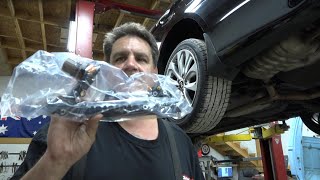
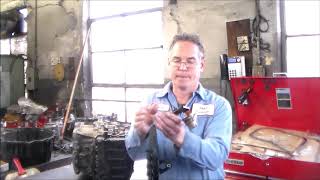
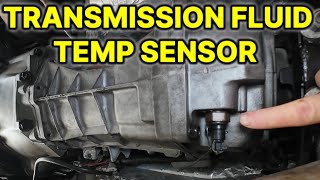
We Have This Part in Stock

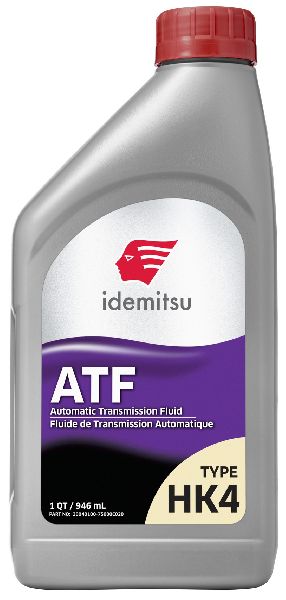



The information in this article is provided for general reference and educational purposes only. Vehicle specifications, procedures, and part compatibility can vary by production date, trim level, and region. Always consult your vehicle's factory service manual and verify part numbers before purchasing or performing repairs. Safety-critical components such as airbags, seat belts, and braking systems should be installed by a qualified professional.
- Hyundai Sonata:
- 🎬 Helpful Videos
- 🛍️ Shop This Part
- What's Unique About the 2011-2014 Hyundai Sonata
- Symptoms You May Notice
- Most Likely Causes
- Rare But Worth Checking
- Diagnosis Steps
- Parts You'll Likely Need
- Related Codes That Often Appear With This One
- Technical Service Bulletins (TSBs) & Recalls
- Platform-Specific Known Issues
- Mechanic-Grade Diagnostic Values
- Scan Tool Commands That Help
- Wiring & Ground Locations
- Real Owner Repair Stories
- OEM Part Supersession History
- Model Year Variations Within This Range
- Diagnostic Flowchart
- Other Known Issues on This Vehicle
- Used vs. New Parts: Buying Guide for This Vehicle
- Real Owner Stories
- 2013 Hyundai Sonata
- 2011-2014 Hyundai Sonata
- 2013 Hyundai Elantra
- NHTSA Documented Reports
- Related OBD-II Codes
- Frequently Asked Questions
- 🎟️ Get 5% Off