

P0707 on 2006-2018 Ram 1500: Transmission Range Sensor Circuit Low Causes and Fixes
The P0707 code on a 2006-2018 Ram 1500 most often indicates a failed Transmission Range Sensor (TRS) or a problem with its wiring. On many Ram transmissions, the sensor is internal, requiring removal of the transmission pan and valve body to replace it as part of the solenoid pack.
- P0707 on a Ram 1500 is a serious code that can prevent the truck from starting or cause unsafe driving conditions.
- The most likely cause is a faulty Transmission Range Sensor, which on most 2006-2018 Ram 1500s is part of the internal transmission solenoid pack.
- Before assuming the internal sensor has failed, always inspect the main external transmission wiring harness and connector for corrosion or damage, as this is a known weak point.
- Due to the complexity of accessing internal transmission components, this repair is not recommended for DIY beginners and professional service is advised.
What's Unique About the 2006-2018 Ram 1500

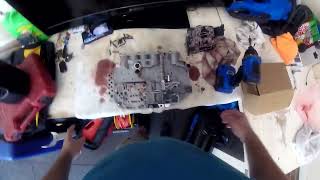
For many Ram 1500s in this year range, particularly those with the 545RFE, 65RFE, or 68RFE transmissions, the Transmission Range Sensor is not a simple, externally-mounted switch. Instead, it is integrated into the transmission solenoid pack (also called the solenoid body), which is located inside the transmission on top of the valve body. This makes replacement more complex than on vehicles with an external sensor, as it requires draining the fluid, dropping the oil pan, and removing the valve body assembly. Later models with the 8-speed ZF (8HP70/845RE) transmission also have an internal range sensor as part of the more complex and expensive mechatronic unit.
Generation note: This range covers the end of the 3rd Generation (2006-2008) and the entire 4th Generation (2009-2018) Ram 1500. - 3rd Gen (DR/DH): Primarily used 45RFE and 545RFE 5-speed automatic transmissions. The TRS is typically part of the internal solenoid pack. - 4th Gen (DS/DJ): Early models continued with the 545RFE/65RFE. Around 2013, the 8-speed ZF 8HP70/845RE became common. Both transmission families feature an internal range sensor, making the diagnosis and repair process similar across generations despite different transmission hardware.
Symptoms You May Notice
- Engine will not start, or only starts in Neutral instead of Park.
- Ability to start the engine in any gear, creating a safety hazard.
- Transmission enters "limp mode," often getting stuck in a single gear (like 2nd or 3rd).
- Harsh or erratic shifting between gears.
- The gear indicator on the dashboard is blank or does not match the selected gear.
- Illuminated Check Engine Light.
- Reduced fuel efficiency as the transmission may not be in the optimal gear.
- Replacing the entire transmission when only the internal solenoid pack is faulty.
- Replacing the PCM without first verifying that the wiring and sensor circuits are functioning correctly.
- Condemning the internal solenoid pack before thoroughly inspecting and cleaning the external 23-pin harness connector, which is a very common and much cheaper point of failure.
Most Likely Causes

- Failed Transmission Range Sensor / Solenoid Pack 🔴 High Probability On RFE and ZF transmissions used in these Rams, the TRS is integrated into the solenoid pack/mechatronics unit, which is a common failure point due to constant exposure to heat and contaminated fluid over time.
How to confirm: Use a high-end scan tool to monitor the live data for the transmission range sensor voltage. If the reading is stuck, irrational, or shows a voltage below the manufacturer's minimum (typically < 0.5V) regardless of gear position, the sensor/solenoid pack is likely faulty.
Typical fix: Replace the transmission solenoid pack, which includes the integrated range sensor. This requires draining the fluid, dropping the transmission pan, and removing the valve body.
Est. part cost: $250-$500 - Damaged Wiring or Corroded Connector 🟡 Medium Probability The main 23-pin transmission harness connector, located on the driver's side of the transmission case, is highly exposed to road salt, moisture, and debris. Water intrusion leads to corrosion on the pins, causing a poor connection and low voltage signals that trigger P0707.
How to confirm: Visually inspect the large, round 23-pin electrical connector at the transmission case for green or white corrosion, bent pins, or fluid contamination. Disconnect it and check the terminals. Perform a continuity test on the wires between the transmission connector and the PCM/TCM.
Typical fix: Clean the connector pins thoroughly with an electrical contact cleaner. If corrosion is severe, the connector pigtail may need to be replaced. Repair any broken or chafed wires in the harness. Applying dielectric grease during reassembly helps prevent future moisture intrusion.
Est. part cost: $20-$100 - Misadjusted Shift Linkage ⚪ Low Probability While less common on newer trucks, a stretched or misadjusted shift cable can cause a mismatch between the gear lever position and the actual position of the manual valve in the transmission, leading to an incorrect reading from the range sensor. This can sometimes happen after other transmission work if not realigned correctly.
How to confirm: Check if the gear indicator on the dash accurately reflects the shifter position. If not, inspect the shift cable and linkage from the column/console shifter to the transmission for looseness or damage.
Typical fix: Adjust or replace the shifter cable and linkage.
Est. part cost: $50-$150
Rare But Worth Checking
- Faulty Powertrain Control Module (PCM) or Transmission Control Module (TCM): This is rare. The module should only be suspected after all other possibilities, including the sensor and wiring, have been thoroughly tested and ruled out. A faulty TCM can fail to process the signal correctly even if the sensor and wiring are good.
Diagnosis Steps

- Scan the vehicle's computer for P0707 and any other related transmission codes.
- Check the transmission fluid level and condition. Burnt or very dark fluid can indicate internal problems that might affect electronic components.
- Perform a thorough visual inspection of the main transmission wiring harness and the large round 23-pin connector on the driver's side of the transmission case. Disconnect and inspect for corrosion, damage, or loose pins.
- Use a scan tool with live data capability to view the Transmission Range Sensor voltage or position (PRNDL). Shift through all the gears and ensure the reading on the scan tool matches the gear selected. A reading that is stuck or shows low voltage (under 0.5V) points to a problem.
- If the external wiring looks good, the next step is to test the circuit at the transmission connector. This requires a vehicle-specific wiring diagram to identify the correct pins for the range sensor.
- If the wiring and connector test good, the fault is almost certainly internal to the transmission, pointing to the range sensor which is part of the solenoid pack/valve body assembly.
- After repair, use a scan tool to clear adaptations and perform a quick learn procedure if applicable to your transmission model to ensure proper shift quality.
Parts You'll Likely Need
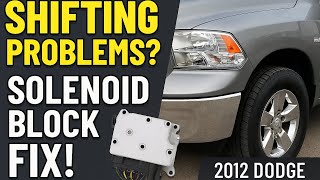
- Transmission Solenoid Pack / Block (for 545RFE/65RFE)
(OEM #68002342AD (or latest supersession like 68002342AG))— On most 5 and 6-speed transmissions in this Ram 1500, the Transmission Range Sensor is integrated into this assembly, which is the most common internal failure point for code P0707.
Trusted brands: Mopar, Sonnax, Rostra
OEM price range: $350-$550
Aftermarket price range: $200-$400 - Transmission Mechatronic Unit (for 8HP70/845RE) — For later models with the 8-speed ZF transmission, the range sensor is part of the entire mechatronic assembly (valve body and TCM). This is a much more expensive part and repair.
Trusted brands: Mopar, ZF
OEM price range: $1000-$1800
Aftermarket price range: $700-$1200 - Transmission Connector Pigtail — If the main 23-pin harness connector is too corroded to be cleaned, replacing the pigtail is necessary to ensure a solid connection.
Trusted brands: Mopar, Dorman
OEM price range: $50-$120
Aftermarket price range: $30-$70
Related Codes That Often Appear With This One
- P0705 — P0705 indicates a general malfunction in the TRS circuit, while P0707 specifically points to a low voltage condition. 🎬 Watch: Understanding the causes and fixes for the P0707 code. They often appear together when the sensor is failing.
- P0706 — This code indicates the TRS signal is 'out of range/performance,' which can be caused by the same failing sensor or wiring issues that trigger P0707.
- P0708 — This is the opposite of P0707, indicating a high circuit input. Seeing both intermittently could point to a severe wiring short or internal sensor failure.
Technical Service Bulletins (TSBs) & Recalls
- TSB 21-013-08: Addresses the transmission solenoid connector and seal, which can be a source of fluid intrusion leading to various electrical fault codes.
Platform-Specific Known Issues
- A known issue on Dodge/Ram trucks is corrosion and moisture intrusion at the main transmission harness connector (23-pin round connector), which can mimic the symptoms of a failed internal sensor. Always inspect this connector thoroughly before condemning internal parts.
- TSB 21-013-08 was released for some Chrysler vehicles, addressing issues with the solenoid pack connector seal, which could leak and cause electrical faults. While not directly for P0707, it highlights the known vulnerability of this connection point to fluid/moisture intrusion.
Mechanic-Grade Diagnostic Values
- Transmission Range Sensor (TRS) 'A' Circuit Voltage via Scan Tool Live Data — expected: A distinct, stable voltage for each gear position (e.g., Park: ~3.1V, Reverse: ~2.7V, Neutral: ~2.3V). Values vary by specific model and transmission.. Failure: A voltage reading that is stuck, does not change when shifting, or is consistently below 0.5V.
- Continuity/Voltage check at the 23-way transmission case connector (RFE Transmissions) — expected: With the key on, back-probing the specific TRS signal pins should show changing voltages as the shifter is moved. The TRS uses a combination of open/ground signals across multiple pins to indicate position.. Failure: No voltage or a constantly low voltage on one or more of the signal pins when it should be high, indicating an open or short in the harness or a failed internal sensor.
Scan Tool Commands That Help
- wiTECH (dealer) or equivalent high-end bidirectional scanner (e.g., Autel): Quick Learn — This procedure is mandatory after replacing the solenoid pack, valve body, mechatronic unit, or the entire transmission. It is also used to resolve harsh shifting complaints. The function resets and relearns clutch fill times and pressures.
- wiTECH: Reset Adaptive Values — On some models, particularly the 8-speed 845RE, this function must be performed before running the 'Quick Learn' procedure to clear the old adaptation memory cells from the TCM.
Wiring & Ground Locations

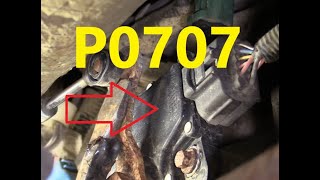
- Transmission Case Connector — Large, round 23-pin connector located on the driver's side of the transmission case (for RFE series).. This is the primary external connection point for all transmission electronics, including the TRS. It is highly susceptible to corrosion from road spray and moisture, which can directly cause the low voltage condition of P0707.
- TRS Signal Pins (at 23-way RFE connector) — Pins 18 (T41), 19 (T42), 21 (T3), 22 (T1), and 23 (T2) on the transmission case connector.. These are the specific pins that carry the range sensor signals to the TCM. Testing for voltage and continuity at these exact pins is necessary to isolate a fault between the external harness and the internal solenoid pack.
- G301 / G302 — Located on the left front body structure, often near the battery or under-hood fuse box area.. These are major body and chassis ground points. A poor connection at these locations can cause floating voltages and intermittent electrical issues throughout the vehicle, potentially affecting the reference voltage or ground for the transmission sensors and control module.
"I Checked Everything" — The Actual Cause
- While not a smoke test, a common scenario is for the wiring harness to pass a static continuity test, leading a mechanic to condemn the internal solenoid pack. However, the actual fault is an intermittent short or open in the harness that only occurs with engine vibration or heat. Wiggling the harness while monitoring live data is crucial to finding these faults. Another cause that can be missed is a failing Totally Integrated Power Module (TIPM), which can intermittently fail to provide correct power to the transmission control relay, causing limp mode and various transmission codes without any fault in the transmission itself.
OEM Part Supersession History
68002342A(A-F)→68002342AG— Revisions to improve reliability and address failure points in the solenoid block for 45RFE/545RFE/65RFE transmissions.
Heads up: Early (pre-2004) 45RFE/545RFE used a black electrical connector. This was updated to a white connector. If replacing a black connector solenoid, it must be updated to the white connector style, which also requires replacing the TRS cam plate. Later 65RFE transmissions used a gray connector, which is known to be less reliable; many shops will retrofit the more robust white connector pack in its place.
Model Year Variations Within This Range
- 2006-2012 (approx.): These years predominantly use the 5-speed 545RFE or 6-speed 65RFE. The P0707 fault is almost always traced to the external 23-pin connector or the internal solenoid pack which contains the TRS. The solenoid pack is a distinct, replaceable part separate from the valve body.
- 2013-2018: These years saw the widespread adoption of the 8-speed ZF 845RE/8HP70 transmission. On these models, the TRS is integrated into the 'mechatronic' unit, which combines the valve body and Transmission Control Module (TCM) into one assembly. A P0707 fault often requires replacement of this entire expensive unit, and a mandatory 'Quick Learn' procedure must be performed with a scan tool.
Diagnostic Flowchart
Other Known Issues on This Vehicle
Issues unrelated to this code that are worth knowing about as an owner of this generation:
- 5.7L Hemi Camshaft/Lifter Failure ('Hemi Tick') 🔴 High — Commonly occurs between 80,000 and 150,000 miles. The issue is often attributed to failed lifter roller bearings, which then damage the camshaft lobes.
- Exhaust Manifold Bolt Breakage 🟠 Medium — Extremely common. The rear-most bolts on both manifolds are prone to breaking due to thermal expansion and contraction, causing an exhaust leak and a ticking noise, especially on cold starts. (Ref: TSB 11-002-11 was an early bulletin for this issue on 2009 models.)
- Totally Integrated Power Module (TIPM) Failure 🔴 High — Widespread on 2006-2012 models. A failing TIPM (the vehicle's main fuse and relay center) can cause a vast array of random electrical problems, including no-start conditions, fuel pump failure, erratic wipers, horn, and lights. (Ref: Multiple lawsuits and investigations, but recalls were often limited in scope.)
Used vs. New Parts: Buying Guide for This Vehicle
When a used part is the smart pick: Used parts are a reasonable option for wiring harnesses and connector pigtails, provided they are in good physical condition with no corrosion or damage. A complete used transmission from a low-mileage, verified running and driving donor vehicle can also be a cost-effective solution.
Donor-vehicle mileage cap: roughly under 80000 miles for the part to have meaningful remaining life.
What to inspect on the donor part:
- For a solenoid pack or mechatronic unit, visually inspect all electrical connector pins for any green/white corrosion or bent pins.
- If possible, inspect the transmission fluid from the donor vehicle. It should be reddish-pink and not smell burnt. Black or dark brown fluid indicates severe internal wear.
- Check the donor vehicle's VIN to confirm compatibility, especially for the complex mechatronic units in later models.
OEM-only on this vehicle (don't cheap out):
- Transmission Solenoid Pack / Mechatronic Unit
Aftermarket brands forum-validated for this vehicle:
- Sonnax (for rebuild kits and upgraded valve body components)
- Rostra (for solenoid packs)
Brands owners have reported issues with on this vehicle:
- Unbranded, low-cost solenoid packs from online marketplaces are a significant risk and frequently lead to premature failure or compatibility issues.
Real Owner Stories
Aggregated from forums and TSBs cited above. Mileages and costs reflect what owners reported in those sources.
2011 Ram 1500 — ~115000 miles
Symptoms: The check engine light came on, the gear indicator on the dash went blank, and the transmission was stuck in limp mode. The truck would only start in Neutral.
What fixed it: The problem was severe green and white corrosion inside the main 23-pin round transmission harness connector. Cleaning the pins thoroughly with electrical contact cleaner and applying dielectric grease before reconnecting it solved the issue without replacing any parts.
Source hint: Vehicle Specific Issue: Corrosion at the main 23-pin transmission harness connector.
2014 Ram 1500 — ~135000 miles
Symptoms: Truck suddenly went into limp mode and was stuck in 3rd gear. The scan tool showed P0707 and live data confirmed the range sensor voltage was stuck below 0.5V regardless of shifter position.
What fixed it: After confirming the external wiring and connector were clean and had continuity, the transmission solenoid pack, which includes the integrated range sensor, was replaced. This required draining the fluid and dropping the transmission pan and valve body.
Cost: $250-$500
Source hint: Common Cause: Failed Transmission Range Sensor / Solenoid Pack.
2008 Dodge Ram 1500 — ~95000 miles
Symptoms: After driving through a heavy rainstorm, the transmission started shifting erratically and the Check Engine Light came on for P0707.
What fixed it: The mechanic found that the solenoid pack connector seal had failed, allowing water to get into the connection. Replacing the seal and cleaning the contacts resolved the code, a known issue highlighted by a technical service bulletin.
Source hint: TSB 21-013-08: Addresses the transmission solenoid connector and seal.
Related OBD-II Codes
Frequently Asked Questions
My 2012 Ram 1500 won't start in Park but starts in Neutral. Is this a symptom of P0707?
I have a P0707 code. Should I immediately replace the transmission solenoid pack?
Where is the Transmission Range Sensor (TRS) located on my Ram 1500?
Is it safe to drive my truck with an active P0707 code?
What does TSB 21-013-08 cover and does it apply to my P0707 code?
How can I confirm the range sensor is bad without just replacing parts?
Helpful Videos

We Have This Part in Stock



The information in this article is provided for general reference and educational purposes only. Vehicle specifications, procedures, and part compatibility can vary by production date, trim level, and region. Always consult your vehicle's factory service manual and verify part numbers before purchasing or performing repairs. Safety-critical components such as airbags, seat belts, and braking systems should be installed by a qualified professional.
- Ram 1500:
- 🎬 Helpful Videos
- 🛍️ Shop This Part
- What's Unique About the 2006-2018 Ram 1500
- Symptoms You May Notice
- Most Likely Causes
- Rare But Worth Checking
- Diagnosis Steps
- Parts You'll Likely Need
- Related Codes That Often Appear With This One
- Technical Service Bulletins (TSBs) & Recalls
- Platform-Specific Known Issues
- Mechanic-Grade Diagnostic Values
- Scan Tool Commands That Help
- Wiring & Ground Locations
- "I Checked Everything" — The Actual Cause
- OEM Part Supersession History
- Model Year Variations Within This Range
- Diagnostic Flowchart
- Other Known Issues on This Vehicle
- Used vs. New Parts: Buying Guide for This Vehicle
- Real Owner Stories
- 2011 Ram 1500 — ~115000 miles
- 2014 Ram 1500 — ~135000 miles
- 2008 Dodge Ram 1500 — ~95000 miles
- Related OBD-II Codes
- Frequently Asked Questions
- 🎟️ Get 5% Off