

P0707 on 2007-2016 Nissan Altima: Transmission Range Sensor Causes and Fixes
P0707 on a 2007-2016 Nissan Altima indicates a low voltage signal from the Transmission Range Sensor (TRS), also known as the neutral safety switch or inhibitor switch. This commonly causes a no-start condition, incorrect gear display, or erratic shifting. The most likely fix is replacing the TRS itself, which is an external part on the transmission and costs around $30-$100 for an aftermarket part.
- P0707 on your Altima means the computer doesn't know what gear the car is in, which is a serious safety issue.
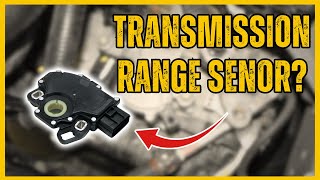
- The most common cause is a faulty Transmission Range Sensor (also called an inhibitor switch) located on the outside of the transmission.
- Before replacing the sensor, always inspect the wiring and connector for corrosion or damage, as this is also a frequent cause.
- Driving is not recommended, as the car may not start or could shift erratically.
What's Unique About the 2007-2016 Nissan Altima
The 2007-2016 Nissan Altima spans two generations, both primarily using a Continuously Variable Transmission (CVT), specifically the Jatco RE0F10A (also known as JF011E) in many 4-cylinder models. On these CVT-equipped models, a P0707 code can be particularly concerning as it can sometimes lead to a sudden loss of power while driving. The Transmission Range Sensor (TRS), also called an inhibitor switch on these vehicles, is often the primary culprit. While the sensor itself is a common failure point, its location on the exterior of the transmission case makes it and its wiring connector highly susceptible to moisture, road salt, and corrosion, which can mimic a sensor failure.
Generation note: This range covers the fourth generation (L32, 2007-2012) and the fifth generation (L33, 2013-2016) Altima. Both generations are known to experience this code. The Transmission Range Sensor (also called an inhibitor switch or neutral safety switch) is the primary component. While the part's function is the same, the specific part number and location on the transmission may differ slightly between the L32 and L33 models. For example, some 2013+ models use part number 31918-1XK0A, which was later superseded.
Symptoms You May Notice
- Check Engine Light is on
- Engine will not start, or only starts in Neutral.
- Incorrect or no gear indicator on the dashboard.
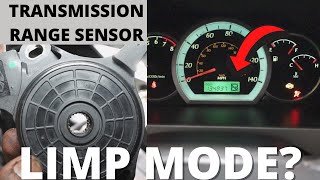
- Transmission may be stuck in 'limp mode' (fail-safe).
- Harsh or erratic shifting.
- Delayed engagement when shifting into Drive or Reverse.
- Reverse lights do not turn on.
- Replacing the entire transmission when only the external range sensor is faulty.
- Replacing the TCM before verifying that the sensor and its wiring are in good condition.
- Replacing the battery or starter when a no-start condition is caused by the TRS not sending the 'Park' or 'Neutral' signal.
Most Likely Causes
- Faulty Transmission Range Sensor (Inhibitor Switch) 🔴 High Probability The sensor is an electronic component with internal moving parts (a potentiometer or Hall-effect element) that can wear out or short internally over time. Its location on the transmission makes it susceptible to heat, vibration, and moisture intrusion, which accelerates failure.
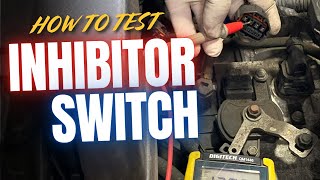
How to confirm: Use a scan tool to monitor the sensor's output voltage while moving the gear selector. If the voltage is consistently low (typically < 0.5V) or does not change, the sensor is likely bad. You can also test the sensor's internal continuity with a multimeter according to the service manual. Wiggling the shifter while trying to start the car may temporarily make a connection, pointing to a bad switch. 🎬 Watch: How to test and replace the inhibitor switch
Typical fix: Replace the Transmission Range Sensor. This part is located on the outside of the transmission where the shift cable connects.
Est. part cost: $30-$100 - Corroded or Damaged Wiring/Connector 🟡 Medium Probability The wiring harness leading to the sensor is located underneath the vehicle and is exposed to road salt, moisture, and debris. This can cause corrosion (often a visible green crust) on the connector pins or damage to the wires themselves, leading to a low voltage or open circuit condition.
How to confirm: Visually inspect the entire length of the wiring harness from the sensor to the TCM. Unplug the connector and check for corrosion, bent pins, or moisture. Use an electrical contact cleaner and a small brush to clean terminals. 🎬 See why you should check the connector before replacing parts A multimeter can be used to check for continuity between the sensor connector and the TCM connector.
Typical fix: Clean the connector terminals with an electrical contact cleaner and apply dielectric grease. If wires are broken, they must be repaired or the harness section replaced.
Est. part cost: $5-$50 for cleaning supplies or wiring repair kits - Misadjusted Transmission Range Sensor or Shift Linkage ⚪ Low Probability If the sensor or the shift cable has been recently serviced or disturbed, it may not be properly aligned with the manual shaft of the transmission. This is less a 'prone' issue and more of an installation error.
How to confirm: Ensure the shift linkage is secure and not damaged. When installing a new sensor, there is a specific alignment procedure. Typically, this involves placing the transmission in Neutral and aligning marks on the sensor body with the shaft before tightening the bolts.
Typical fix: Loosen the sensor mounting bolts, correctly align it according to the service manual procedure, and retighten.
Est. part cost: $0-$20
Rare But Worth Checking
- Faulty Transmission Control Module (TCM): This is a rare cause and should only be considered after the sensor and wiring have been thoroughly tested and confirmed to be good. The input circuit within the TCM can fail, causing it to misread the signal from a perfectly good sensor.
Diagnosis Steps
- Read the codes with an OBD-II scanner and note any other codes present, especially P0705 or P0708.
- Check the transmission fluid level and condition. While not a direct cause, low or burnt fluid indicates broader transmission health problems.
- Use a scan tool with live data to view the voltage from the Transmission Range Sensor ('TRS A Voltage').
- Cycle the gear shifter slowly through all positions (P, R, N, D, L) and observe the voltage reading. It should change predictably. A reading stuck below ~0.5V confirms the P0707 fault.
- Locate the sensor on the side of the transmission case. Visually inspect the sensor's connector and wiring for any signs of corrosion (green crust), moisture, or physical damage like chafed wires.
- Disconnect the connector and inspect the pins for damage or corrosion. Clean with electrical contact cleaner if necessary.
- Using a vehicle-specific wiring diagram, test for reference voltage and ground at the connector with a multimeter. This confirms the TCM is sending power to the sensor.
- If wiring and power/ground are good, the sensor itself is the most likely culprit. Replace the Transmission Range Sensor, making sure to follow the proper alignment procedure (usually in Neutral). 🎬 Watch this walkthrough on replacing the sensor without special tools
- After replacement, clear the codes and perform a test drive to ensure the fix was successful.
- If the problem persists, a rare fault in the Transmission Control Module (TCM) may be the cause.
Parts You'll Likely Need
- Transmission Range Sensor / Inhibitor Switch
(OEM #31918-1XK0A (fits some 2013+ models, verify with VIN))— This is the most common component to fail and cause a P0707 code.
Trusted brands: Hitachi, Dorman, Rostra, Genuine Nissan
OEM price range: $80-$150
Aftermarket price range: $30-$100
Related Codes That Often Appear With This One
- P0705 — P0705 is a general 'Circuit Malfunction' for the TRS. P0707 is more specific, indicating a 'Circuit Low' condition. They often point to the same root cause but are triggered by slightly different fault criteria.
- P0708 — This is the opposite of P0707, indicating 'Circuit High'. Seeing them together or intermittently could point to a severe wiring issue, internal sensor short, or water intrusion in the connector.
Technical Service Bulletins (TSBs) & Recalls
- TSB TRA 055 (October 2014) - While for a different vehicle, it provides a diagnostic flowchart for P0705 and inhibitor switch issues that are highly relevant, noting heat soak can worsen the problem.
Platform-Specific Known Issues
- On some Nissan models, a technical service bulletin (TSB) was issued for P0705, which has similar diagnostic steps. The TSB mentions that these symptoms can be more frequent after a heat soak or during summer months.
Mechanic-Grade Diagnostic Values
- Transmission Range Sensor 'A' Circuit Voltage (Live Data) — expected: Should change predictably as the shifter is moved through P-R-N-D-L. Specific voltages vary by gear.. Failure: Voltage is stuck low, typically below 0.5V, regardless of shifter position.
- Inhibitor Switch Continuity Test — expected: With the switch connector unplugged, there should be continuity (near zero ohms) between specific pins for each gear position, as defined in the factory service manual. For example, Park may require continuity between pins 3 and 4.. Failure: No continuity (Open Line or infinite resistance) on a circuit that should be closed, or continuity on a circuit that should be open, indicates a failed switch.
- TRS Power Supply Voltage at Connector — expected: With the key on, one pin on the harness-side connector should show a reference voltage, typically 5V or 12V depending on the system design.. Failure: No voltage or significantly low voltage indicates a problem with the wiring from the TCM/PCM or the TCM/PCM itself, not the sensor.
Scan Tool Commands That Help
- Nissan CONSULT: Work Support > Inhibitor Switch Check — This function in the dealer-level scan tool allows the technician to view the on/off status of each individual circuit within the inhibitor switch (P, R, N, D) as reported by the TCM. This is more precise than just watching a single voltage PID and can quickly confirm if the switch is sending the correct combination of signals for each gear.
Wiring & Ground Locations
- Main Transmission Ground — A ground cable typically runs from the negative battery terminal to a bolt on the transmission case, often near the top or side.. A corroded or loose main transmission ground can cause a floating ground, leading to unstable sensor readings across the transmission, including the TRS. This can cause intermittent low voltage signals and trigger a P0707.
- Inhibitor Switch Connector — Located directly on the inhibitor switch, which is mounted to the exterior of the transmission case where the manual shift linkage connects.. This is the primary point of failure for wiring issues. It is exposed to road spray, salt, and debris, making it highly susceptible to corrosion (green crust) and moisture intrusion, which can short the signal wire to ground, causing a low voltage reading.
- Chassis Ground Point — The main battery ground cable also connects to the chassis/frame, typically near the battery tray or on the strut tower.. While less direct, a poor chassis ground can affect the entire vehicle's electrical system. The TCM relies on a stable ground reference, and if the main chassis ground is weak, it can cause the TCM to misinterpret sensor voltage levels.
OEM Part Supersession History
31918-3XX0A→31918-1XK0A— Part revision or manufacturer change.31918-X420A→31918-1XK0A— Part consolidation and revision.31918-1XG0A→31918-1XG0B— Part revision for L32 (4th Gen) models.31918-3VX0C (2013-2015)→31918-29X0C (2016-2018)— Part update for the L33 facelift models.
Heads up: The switches for 2013-2015 and 2016-2018 L33 Altimas may have different part numbers and are not interchangeable. Always verify by VIN.
Model Year Variations Within This Range
- 2007-2012 (L32 Generation): These models often use a different inhibitor switch part number (e.g., 31918-1XG0B) than the later generation. While functionally identical, the physical housing and connector may differ.
- 2013-2015 (L33 Pre-facelift): Uses specific part numbers like 31918-1XK0A or 31918-3VX0C.
- 2016 (L33 Facelift): The part number changed for the facelift year to 31918-29X0C. Using the earlier L33 switch may not work correctly.
Diagnostic Flowchart
Other Known Issues on This Vehicle
Issues unrelated to this code that are worth knowing about as an owner of this generation:
- Premature CVT Failure 🔴 High — Very common across both generations. Symptoms include shuddering, hesitation, whining, and complete loss of power. Onset can be as early as 60,000 miles, but is frequent before 120,000 miles. (Ref: Nissan extended the CVT warranty to 10 years/120,000 miles for many early models due to widespread issues.)
- Electronic Steering Column Lock (ESCL) Failure 🔴 High — Extremely common on 2009-2010 models. The failure prevents the car from starting, leaving the driver stranded. (Ref: Nissan initiated a voluntary service campaign (not a full recall) to replace the faulty ESCL unit.)
- Melting / Sticky Dashboard 🟠 Medium — Widespread on 2008-2009 models, particularly in hot climates. The dashboard material degrades in sunlight, becoming sticky and creating a dangerous glare on the windshield. (Ref: A class-action lawsuit resulted in a settlement where Nissan would cover most of the replacement cost for affected owners in Florida, but the claim period has long since passed.)
- Faulty Camshaft/Crankshaft Position Sensors 🟠 Medium — A common failure item across many Nissan models of this era, including the Altima. Can cause stalling, rough idle, and no-start conditions. (Ref: A recall was issued for the crankshaft position sensor on some early models due to a manufacturing defect.)
- Cracked Radiator / Leaking Coolant 🟠 Medium — Reported at higher mileage on the L32 (2007-2012) generation. The plastic filler neck or radiator tanks can crack, leading to coolant loss and potential overheating.
Used vs. New Parts: Buying Guide for This Vehicle
When a used part is the smart pick: A used inhibitor switch from a junkyard can be a cost-effective option, as it is an external, bolt-on part that does not require programming. It makes the most sense if the budget is tight and you can verify the donor vehicle's history.
Donor-vehicle mileage cap: roughly under 80000 miles for the part to have meaningful remaining life.
What to inspect on the donor part:
- Check the connector pins for any signs of green or white corrosion. Do not buy if corrosion is present.
- Inspect the plastic housing for cracks or heat damage.
- If possible, verify the donor vehicle did not have transmission-related trouble codes.
- Choose a donor vehicle from a dry, salt-free climate if possible to minimize the risk of corrosion.
OEM-only on this vehicle (don't cheap out):
- Transmission Control Module (TCM) - Aftermarket or used TCMs often have programming and compatibility issues. If the TCM is the confirmed cause, a new or professionally remanufactured, VIN-programmed unit is the only reliable fix.
Aftermarket brands forum-validated for this vehicle:
- Hitachi - Widely considered to be the Original Equipment Manufacturer (OEM) for many Nissan electronic parts, including sensors. Buying Hitachi is often equivalent to buying the Genuine Nissan part without the dealer markup.
- Rostra Powertrain
- Standard Motor Products (SMP)
Brands owners have reported issues with on this vehicle:
- Ultra-cheap, no-name brands from online marketplaces should be avoided, as they have a high failure rate and may not have the correct internal resistance or voltage output, leading to the code returning quickly.
Related OBD-II Codes
Frequently Asked Questions
My 2009 Altima won't start and is showing code P0707. Could this be related to the common steering lock (ESCL) failure?
Is the P0707 code covered under the Nissan CVT warranty extension?
My Altima only has trouble starting and shows the P0707 code when it's very hot outside. What could cause that?
The gear indicator on my dashboard is gone and the reverse lights don't work. Is replacing the Transmission Range Sensor the only fix?
I tried wiggling the shifter and my car started. Does this confirm the Transmission Range Sensor is bad?
Can I just clean a part to fix P0707 on my Altima?
Helpful Videos

We Have This Part in Stock

The information in this article is provided for general reference and educational purposes only. Vehicle specifications, procedures, and part compatibility can vary by production date, trim level, and region. Always consult your vehicle's factory service manual and verify part numbers before purchasing or performing repairs. Safety-critical components such as airbags, seat belts, and braking systems should be installed by a qualified professional.
- Nissan Altima:
- 🎬 Helpful Videos
- 🛍️ Shop This Part
- What's Unique About the 2007-2016 Nissan Altima
- Symptoms You May Notice
- Most Likely Causes
- Rare But Worth Checking
- Diagnosis Steps
- Parts You'll Likely Need
- Related Codes That Often Appear With This One
- Technical Service Bulletins (TSBs) & Recalls
- Platform-Specific Known Issues
- Mechanic-Grade Diagnostic Values
- Scan Tool Commands That Help
- Wiring & Ground Locations
- OEM Part Supersession History
- Model Year Variations Within This Range
- Diagnostic Flowchart
- Other Known Issues on This Vehicle
- Used vs. New Parts: Buying Guide for This Vehicle
- Related OBD-II Codes
- Frequently Asked Questions
- 🎟️ Get 5% Off