

P0707 on 2016-2017 Kia Optima Hybrid: Transmission Range Sensor Causes and Fixes
P0707 on a 2016-2017 Kia Optima Hybrid most often indicates a faulty transmission range sensor, also known as an inhibitor switch. This is a known issue covered by a Kia Service Action (SA317B/C). Replacing the sensor is the typical fix, with the part costing approximately $50-$70. Owners report symptoms like intermittent no-start conditions and the gear indicator failing to show 'P' for Park.
- P0707 on your Optima Hybrid is a serious issue that should be addressed immediately to avoid being stranded.
- The most likely cause is a faulty inhibitor switch (transmission range sensor), which is a known issue for this vehicle.
- Check if your vehicle's VIN is covered under Kia's Service Action SA317B/C, as the repair might be performed by a dealer, especially if still under warranty.
- Symptoms include the car not starting, harsh shifting, and an illuminated Check Engine Light.
- The correct OEM replacement part is likely part number 42700-26700, which supersedes 42700-26500.
What's Unique About the 2016-2017 Kia Optima Hybrid
For the 2016-2017 Optima Hybrid, this code is frequently linked to a known issue with the inhibitor switch (another name for the range sensor). Kia issued a Service Action (SA317B/C) to address this problem on certain 2017 Optima Hybrid vehicles produced between June 27, 2016, and April 4, 2017. This means the sensor itself is a common failure point, more so than wiring or computer issues, and the manufacturer has a documented procedure for replacing it. This service action is a repair program performed during the warranty period without customer notification unless a related issue is reported.
Symptoms You May Notice
- Check Engine Light is on
- Intermittent no-start or no-crank condition
- Erratic or harsh shifting
- Vehicle may enter 'limp mode', getting stuck in one gear
- Gear position indicator on the dashboard may be incorrect or not display the 'P' for Park
- Backup/reverse lights may not turn on
- Engine may only start in Neutral
- EPB (Electronic Parking Brake) and Auto Hold lights may illuminate intermittently
- Replacing the transmission valve body when the issue is an external sensor.
- Replacing the starter motor when a no-start condition is caused by the inhibitor switch not signaling that the car is in Park or Neutral.
Most Likely Causes
- Faulty Transmission Range Sensor (Inhibitor Switch) 🔴 High Probability Kia issued a Service Action (SA317B/C) specifically to replace faulty inhibitor switches on some 2017 Optima Hybrids (produced June 2016 - April 2017) and other models, indicating a known component issue.
How to confirm: A technician can use a scan tool to monitor the sensor's output data while moving the gear selector. If the data is stuck, erratic, or doesn't correspond to the selected gear, the sensor is likely bad. The TSB provides a specific list of affected VINs for dealers to check. A multimeter can also be used to test voltage at the sensor's connector pins.
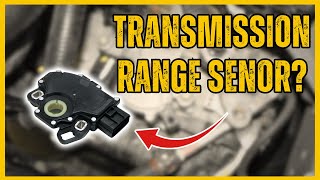
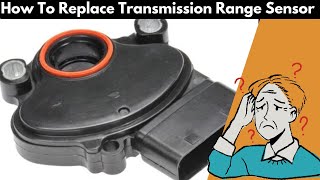
Typical fix: Replace the inhibitor switch located on the outside of the transmission. This requires removing the air intake, battery, and battery tray for access. 🎬 See how to replace the sensor without special tools
Est. part cost: $50-$70 - Damaged Wiring or Corroded Connector 🟡 Medium Probability The sensor is located on the transmission, where it is exposed to the elements. Moisture intrusion into the connector can cause corrosion and a low voltage signal.
How to confirm: Visually inspect the wiring harness and connector going to the transmission range sensor for any signs of corrosion, moisture intrusion, or physical damage. A multimeter can be used to check for continuity and proper voltage at the connector.
Typical fix: Repair the damaged section of the wiring harness or clean/replace the connector.
Est. part cost: $5-$50 - Misadjusted Transmission Range Sensor ⚪ Low Probability
How to confirm: If the sensor has been recently replaced or the shift linkage has been serviced, it may be out of alignment. The sensor's physical position must match the gear selector's position. A guide pin or 5mm bolt can be used to ensure correct alignment during installation.
Typical fix: Loosen the sensor mounting bolts and adjust its position until the scan tool shows the correct gear position, then retighten.
Est. part cost: $0
Rare But Worth Checking
- Faulty Powertrain Control Module (PCM): This is very uncommon. The PCM should only be considered after the sensor, wiring, and adjustment have all been confirmed to be good. A faulty PCM might also present with other, unrelated trouble codes.
Diagnosis Steps
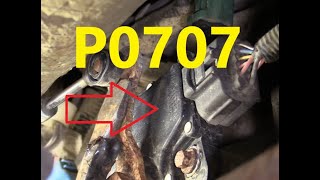
- Connect an OBD-II scanner and confirm P0707 is the primary code. 🎬 Watch: Causes and fixes for code P0707 Check for other related codes like P0705 or C2243.
- Use the scanner's live data function to monitor the Transmission Range Sensor output. Cycle the gear selector through P, R, N, and D.
- Observe if the sensor reading on the scan tool matches the gear selector position. If the reading is stuck, erratic, or incorrect, the sensor or its circuit is faulty.
- Check if the vehicle's VIN falls under Kia Service Action SA317B/C. If so, a dealership visit is the recommended course of action.
- Visually inspect the inhibitor switch and its electrical connector on the transmission for corrosion, damage, or loose connections. Access will likely require removing the air intake, battery, and battery tray.
- If the visual inspection is clear, use a multimeter to test for proper voltage and ground at the sensor's connector according to the vehicle's service manual.
- If voltage and ground are present, and the sensor is providing an incorrect signal, the sensor itself has failed and needs replacement.
- When installing a new sensor, ensure it is properly aligned. A 5mm bolt or guide pin can be inserted into the alignment hole to lock it in the neutral position before tightening the mounting bolts.
- If all other steps fail, the issue may be with the Powertrain Control Module (PCM), which requires advanced diagnostics.
Parts You'll Likely Need
- Inhibitor Switch (Transmission Range Sensor)
(OEM #42700-26700, 42700-26500 (superseded))— This is the component identified in Kia's Service Action (SA317B/C) as the cause for range sensor circuit faults on this vehicle. Part number 42700-26500 is an earlier version that is often superseded by 42700-26700.
Trusted brands: Kia (Genuine OEM), Hyundai (Genuine OEM), Standard Motor Products (NS623), Dorman
OEM price range: $60-$80
Aftermarket price range: $45-$65
Related Codes That Often Appear With This One
- P0705 — P0705 indicates a general malfunction in the Transmission Range Sensor circuit. P0707 is a more specific version of this code 🎬 Watch this guide on P0707 diagnosis and DIY clearing tips, indicating the circuit voltage is low. Kia's TSB SA317 for the inhibitor switch explicitly lists P0705 as a primary symptom.
- C2243 — This is a CAN (Controller Area Network) communication-related code that is specifically mentioned in TSB SA317 as a possible accompanying code for hybrid models with a faulty inhibitor switch.
Technical Service Bulletins (TSBs) & Recalls
- SA317B/C: Service Action for Inhibitor Switch Replacement, which addresses the root cause of codes like P0705 and P0707 on affected vehicles, including the 2017 Optima Hybrid.
- SA317A: An earlier version of the service action, corroborating the issue with the inhibitor switch and listing a wider range of symptoms.
- Hyundai TSB 17-AT-005: A related bulletin for Hyundai vehicles, including the platform-mate Sonata Hybrid, that details diagnostic procedures for inhibitor switch codes P0705-P0708.
Platform-Specific Known Issues
- A Kia Service Action (SA317B/C) was issued for some 2017 Optima Hybrid models (produced June 2016 - April 2017) to replace the inhibitor switch due to it sending incorrect gear position signals. This is not a recall, but a repair performed under warranty if the issue arises.
Mechanic-Grade Diagnostic Values
- Inhibitor Switch - Power Supply Voltage — expected: Battery Voltage (approx. 12V) with ignition ON. Failure: Voltage is significantly below 12V or is 0V. This indicates a problem with the power feed to the sensor, likely a blown fuse or wiring issue.
- Inhibitor Switch - Signal Voltage in PARK — expected: Battery Voltage (approx. 12V) on the 'P' signal wire. Failure: 0V on the 'P' signal wire when the shifter is in Park. This is a direct cause of P0707 and no-start conditions.
- Inhibitor Switch - Signal Voltage in REVERSE — expected: Battery Voltage (approx. 12V) on the 'R' signal wire. Failure: 0V on the 'R' signal wire when the shifter is in Reverse. This can cause no-start in neutral and no reverse lights.
- Inhibitor Switch - Signal Voltage in NEUTRAL — expected: Battery Voltage (approx. 12V) on the 'N' signal wire. Failure: 0V on the 'N' signal wire when the shifter is in Neutral. This can cause a no-start condition.
- Inhibitor Switch - Signal Voltage in DRIVE — expected: Battery Voltage (approx. 12V) on the 'D' signal wire. Failure: 0V on the 'D' signal wire when the shifter is in Drive. This can cause limp mode or erratic shifting.
Hidden / Shadow Codes Worth Checking
- C2243: This is a CAN (Controller Area Network) communication code. (see via This code may be stored in the ABS/ESC or other modules and is viewable with a professional-grade scan tool. Kia's Service Action SA317 explicitly lists this as a potential accompanying DTC for hybrid models with a faulty inhibitor switch.)
Scan Tool Commands That Help
- Kia GDS or equivalent professional scanner: Clear DTCs and Confirm Repair — After replacing the inhibitor switch, clear all codes. Per Hyundai TSB 17-AT-005, a proper confirmation involves driving the vehicle for two full drive cycles (two separate key-on to key-off trips) to ensure the code does not return. This implies no special adaptation or programming is required.
Wiring & Ground Locations
- Inhibitor Switch Connector — On top of the transmission, underneath the battery and battery tray.. This is the primary point for testing voltage and signals. Corrosion or damage here is a common cause of the code. Access requires removing the battery and its tray.
- Rear Combination Lamp Ground — In the trunk area, near the tail light assemblies.. A related Hyundai TSB for these codes (P0705-P0708) specifically lists 'Check the rear combination lamp ground for tightness' as a diagnostic step. A loose or corroded ground here can cause unexpected electrical issues that may manifest as a P0707 code.
Real Owner Repair Stories
- Hyundai Forums user (2007 Hyundai Sonata 3.3L V6 (platform relative)) — Intermittent no-start. Turning the key would result in nothing, but wiggling the gear shifter would sometimes allow it to start. The problem eventually became permanent.
❌ Tried (didn't work) Replacing the ignition switch., Replacing the neutral safety switch (inhibitor switch) itself did not solve the problem.
✅ What actually fixed it The owner's friend was able to get the car started by wiggling wires near the interior fuse box and floorboard. This indicates the final root cause was a bad connection or damaged wire in the harness between the switch and the computer, not the switch itself.
When the Usual Fixes Don't Work
- While the faulty inhibitor switch is the most common cause, especially on vehicles covered by the service action, it is not the only cause. In one documented case on a similar Hyundai, replacing the switch did not fix the no-start symptom. The problem was ultimately traced to a wiring issue near the interior fuse box. This highlights the importance of performing voltage tests at the connector before assuming the switch is the culprit, even when a TSB points to it being a common failure item.
OEM Part Supersession History
42700-26500→42700-26700— Component revision and improvement. The original part is associated with the failures leading to Kia's Service Action SA317.
Heads up: None found. The 42700-26700 part is a direct, backward-compatible replacement for 42700-26500.42700-26000→42700-26500, and subsequently 42700-26700— Earlier component revision.
Heads up: None found. This is an older superseded part number. If you have this part, it should be replaced with 42700-26700.
Model Year Variations Within This Range
- 2017 (specifically): 2017 Kia Optima Hybrid vehicles produced between June 27, 2016, and April 4, 2017, are specifically called out in Kia Service Action SA317B/C for having a high failure rate of the inhibitor switch. While the part can fail on other years, vehicles within this production window are exceptionally prone to this issue.
Diagnostic Flowchart
Other Known Issues on This Vehicle
Issues unrelated to this code that are worth knowing about as an owner of this generation:
- Engine Failure / Excessive Oil Consumption 🔴 High — Common on models with the 2.4L GDI and 2.0L Turbo engines. The Hybrid uses a 2.0L GDI which has also been subject to recalls for connecting rod bearing wear. (Ref: NHTSA Recall 21V844 (SC218): Addresses premature connecting rod bearing wear that can lead to engine seizure and/or fire.)
- Hybrid System Power Loss 🔴 High — Affects certain 2017-2018 Optima Hybrid and PHEV models. (Ref: NHTSA Recall 18V161000 (SC162): A faulty Voltage Protection Device (VPD) could activate inadvertently, causing a loss of power in EV mode.)
- ABS Module Fire Risk 🔴 High — Part of a massive recall affecting millions of Kia/Hyundai vehicles, though the 2016-2017 Optima Hybrid is not explicitly listed in the specific recall cited (23V-652), earlier Optima Hybrids are. Owners should verify their VIN. (Ref: NHTSA Recall 23V-652: The ABS module can leak brake fluid internally, causing an electrical short and fire risk, even when the car is off.)
- Lack of Engine Immobilizer ('Kia Boyz' Theft) 🟠 Medium — Affects many 2011-2021 Kia models with a traditional turn-key ignition. The 2016-2017 Optima Hybrid typically has a push-button start, which includes an immobilizer and is not vulnerable to this specific theft method. (Ref: Software update available from dealers for affected models.)
- Internal Trunk Latch Failure 🟡 Low — A recall was issued for 2017-2018 Optima Hybrid models. (Ref: NHTSA Recall 20V790: The trunk latch base may crack, preventing the internal trunk release from working.)
Used vs. New Parts: Buying Guide for This Vehicle
When a used part is the smart pick: For this specific repair, buying a used inhibitor switch is strongly discouraged. The part is a known high-failure item, prompting a manufacturer service action for a specific production range. A used part may have the same internal defect or be near the end of its operational life.
What to inspect on the donor part:
- Not applicable, as a used part is not recommended.
OEM-only on this vehicle (don't cheap out):
- Inhibitor Switch (Transmission Range Sensor)
Aftermarket brands forum-validated for this vehicle:
- While OEM (Kia/Hyundai) is the safest choice, brands like Standard Motor Products (SMP) and Dorman are generally considered reliable alternatives if an OEM part is unavailable.
Brands owners have reported issues with on this vehicle:
- Avoid unbranded, 'white box' parts from online marketplaces. Given the low cost of a reliable aftermarket or OEM part, the savings are not worth the risk of premature failure and repeating the labor-intensive replacement.
Real Owner Stories
Aggregated from forums and TSBs cited above. Mileages and costs reflect what owners reported in those sources.
2017 Optima Hybrid
Symptoms: The vehicle experienced an intermittent no-start condition and the 'P' indicator failed to appear on the dashboard display.
What fixed it: The dealership diagnosed a faulty inhibitor switch and replaced it under Service Campaign SC199 (related to the inhibitor switch service action).
Source hint: Kia-Forums thread titled '2017 Optima Hybrid No Start - P0705'
Related OBD-II Codes
Frequently Asked Questions
Is there a specific service action for the inhibitor switch on my 2017 Kia Optima Hybrid?
My dashboard isn't showing 'P' for Park and the car won't start. Is this related to P0707?
Can I use a used inhibitor switch from a salvage yard to fix this code?
Why are my Electronic Parking Brake (EPB) and Auto Hold lights on along with the check engine light?
Does the Hyundai Sonata Hybrid share this same inhibitor switch issue?
What is the recommended alignment procedure when replacing the sensor?
Helpful Videos
Used OEM Parts in Stock


New Aftermarket Parts Available




The information in this article is provided for general reference and educational purposes only. Vehicle specifications, procedures, and part compatibility can vary by production date, trim level, and region. Always consult your vehicle's factory service manual and verify part numbers before purchasing or performing repairs. Safety-critical components such as airbags, seat belts, and braking systems should be installed by a qualified professional.
- Kia Optima Hybrid:
- 🎬 Helpful Videos
- 🛍️ Shop This Part
- What's Unique About the 2016-2017 Kia Optima Hybrid
- Symptoms You May Notice
- Most Likely Causes
- Rare But Worth Checking
- Diagnosis Steps
- Parts You'll Likely Need
- Related Codes That Often Appear With This One
- Technical Service Bulletins (TSBs) & Recalls
- Platform-Specific Known Issues
- Mechanic-Grade Diagnostic Values
- Hidden / Shadow Codes Worth Checking
- Scan Tool Commands That Help
- Wiring & Ground Locations
- Real Owner Repair Stories
- When the Usual Fixes Don't Work
- OEM Part Supersession History
- Model Year Variations Within This Range
- Diagnostic Flowchart
- Other Known Issues on This Vehicle
- Used vs. New Parts: Buying Guide for This Vehicle
- Real Owner Stories
- 2017 Optima Hybrid
- Related OBD-II Codes
- Frequently Asked Questions
- 🎟️ Get 5% Off