

P0707 on 2011-2015 Kia Optima: Transmission Range Sensor Failure Causes and Fixes
P0707 on a 2011-2015 Kia Optima almost always points to a faulty Transmission Range Sensor, also known as an Inhibitor Switch. This can cause a no-start condition, incorrect gear display, or erratic shifting. Replacing the sensor is the most common fix, with the part costing between $45 and $70. The repair involves accessing the switch on the top of the transmission, which requires removing the battery and air intake assembly.
- P0707 on a 2011-2015 Kia Optima is a strong indicator that the Transmission Range Sensor (Inhibitor Switch) has failed.
- Primary symptoms include the car not starting in Park (but possibly in Neutral), getting stuck in gear, or having an incorrect gear display.
- Do not drive the vehicle, as it can become unpredictable and unsafe.
- The most common fix is replacing the sensor, which is a moderately difficult DIY job as it requires removing the battery and airbox for access. Professional service is recommended to ensure proper adjustment.
- This generation of Optima has several other well-documented, serious issues including catastrophic engine failure and steering coupler wear, which are covered by recalls or warranty extensions.
What's Unique About the 2011-2015 Kia Optima
For the 2011-2015 Kia Optima (TF generation), the Transmission Range Sensor, often called an 'Inhibitor Switch' by Kia, is a common failure point. It is an external component mounted on top of the 6-speed automatic transmission, making it susceptible to moisture and corrosion, but also reasonably accessible for replacement once the battery, battery tray, and air cleaner assembly are removed. Owners frequently report a no-start condition (especially in Park), the gear indicator on the dash not matching the selected gear, or the car only starting in Neutral as the primary symptoms before the sensor fails completely.
Symptoms You May Notice
- Engine will not start, or only starts in Neutral but not Park.
- Check Engine Light is illuminated.
- Vehicle gets stuck in one gear (limp mode).
- Harsh or delayed shifting between gears.
- Gear indicator on the dashboard is incorrect or does not display.
- Inability to shift out of Park.
- Reverse lights do not illuminate.
- Replacing the starter when the vehicle won't start. The root cause is often the inhibitor switch not sending the 'Park' or 'Neutral' signal to allow the starter to engage.
- Assuming an internal transmission failure. The symptoms can mimic serious internal issues, but the P0707 code specifically points to the sensor circuit, which should be the first area of diagnosis.
Most Likely Causes
- Faulty Transmission Range Sensor (Inhibitor Switch) 🔴 High Probability The sensor is mounted externally on the transmission case, making it vulnerable to moisture, road salt, and debris, which can lead to internal corrosion and failure. It is a widely reported failure item for this platform.
How to confirm: With a scan tool, check the live data for the Transmission Range Sensor. If the voltage is stuck low (typically <0.5V) or does not change as you move the gear selector, the sensor is likely bad. You can also test the sensor's resistance with a multimeter to see if it matches manufacturer specifications.
Typical fix: Replace the Transmission Range Sensor (Inhibitor Switch). This requires removing the air intake, battery, and battery tray to access the switch on top of the transmission.
Est. part cost: $45-$70 - Corroded or Damaged Wiring/Connector 🟡 Medium Probability The wiring harness leading to the sensor is located under the hood and exposed to heat and the elements, which can cause corrosion on the connector pins or physical damage to the wires.
How to confirm: Visually inspect the wiring harness and connector for the sensor. Look for green/white corrosion, frayed wires, or loose pins. Use a digital multimeter to check for proper voltage and ground at the connector.
Typical fix: Clean the connector terminals with electrical contact cleaner or repair/replace the damaged section of the wiring harness.
Est. part cost: $5-$50 - Misadjusted Sensor or Shift Linkage ⚪ Low Probability
How to confirm: If the sensor or shift cable has been recently replaced or disturbed, check for proper alignment. The sensor's reading should correspond correctly to each gear selector position. The new sensor must be correctly aligned (often using a pin or bolt in an alignment hole) in the Neutral position before tightening.
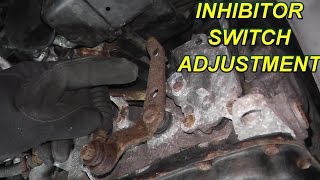
Typical fix: Loosen the sensor mounting bolts and rotate it until the alignment marks are correct for the Neutral position, then retighten. 🎬 See how to properly adjust and align an inhibitor switch. Adjust the shift linkage cable if necessary.
Est. part cost: $0
Rare But Worth Checking
- Faulty Powertrain Control Module (PCM) or Transmission Control Module (TCM): This is extremely rare. Before condemning the control module, all other possibilities (sensor, wiring, adjustment) must be exhaustively ruled out. A module failure would typically be accompanied by other trouble codes.
Diagnosis Steps
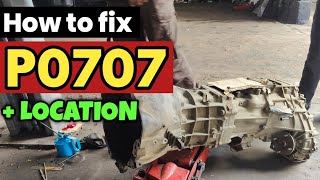
- Connect an OBD-II scanner and confirm the P0707 code is present. 🎬 Watch this overview of common causes and fixes for code P0707. Check for any other related codes like P0705, P0706, or P0708.
- Using the scanner's live data function, monitor the voltage from the Transmission Range Sensor 'A' circuit. The voltage should change distinctly as you move the gear selector through P, R, N, and D.
- If the voltage is stuck low (near 0V) or doesn't change, the problem is likely the sensor or its wiring.
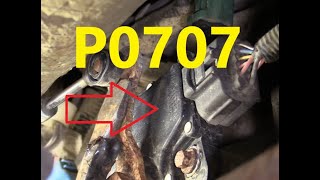
- Raise the vehicle safely or access the engine bay from above. To get a clear view of the inhibitor switch, you will likely need to remove the air intake duct, the battery, and the battery tray (held by several 12mm bolts). 🎬 Watch this step-by-step inhibitor switch replacement guide.
- Locate the inhibitor switch on the top side of the transmission, where the shift linkage connects.
- Visually inspect the sensor's connector and wiring harness for any signs of corrosion, moisture intrusion, or physical damage.
- If the wiring looks good, disconnect the sensor. Test for a reference signal (often 5V or 12V) and a good ground at the connector with the key on.
- If the reference voltage and ground are present, the sensor itself is the most likely culprit.
- If reference voltage or ground is missing, the issue is in the wiring between the sensor and the TCM/PCM, which will require tracing using a wiring diagram as outlined in TSB 17-AT-005.
Parts You'll Likely Need
- Transmission Range Sensor / Inhibitor Switch
(OEM #42700-26700)— This sensor is the most common failure item that causes the P0707 code on this vehicle. The part number 42700-26700 supersedes several previous numbers including 42700-26500, 42700-3B700, and 42700-3B710.
Trusted brands: Kia (Genuine), Hyundai (Genuine), Dorman, Standard Motor Products (SMP)
OEM price range: $60-$70
Aftermarket price range: $45-$60
Related Codes That Often Appear With This One
- P0705 — P0705 indicates a general malfunction in the transmission range sensor circuit, while P0707 specifies a 'low input'. They often appear together as they point to the same root cause: a failing sensor or wiring issue.
- P0706 — Indicates a range/performance issue with the sensor circuit. Can be set along with P0707 if the signal is erratic before failing low.
- P0708 — Indicates a 'high input' from the sensor circuit. While the opposite of P0707, it can appear intermittently if the sensor is failing and sending erratic signals.
Technical Service Bulletins (TSBs) & Recalls
- Hyundai TSB 17-AT-005: Addresses diagnostic procedures for a group of codes including P0707 related to the inhibitor switch on numerous Hyundai and by extension Kia models, including the Sonata and Santa Fe platform mates.
Mechanic-Grade Diagnostic Values
- Transmission Range Sensor 'A' Circuit Voltage (Live Data) — expected: Changes with gear selection. Failure: Stuck below 0.5V regardless of gear position.
- Inhibitor Switch Power Supply Voltage — expected: 12V (Battery Voltage) at Pin 3 of the switch connector with key on.. Failure: 0V or significantly low voltage, indicating a problem with the power feed from the interior fuse box.
- Inhibitor Switch Output Signal Voltage (Back-probing) — expected: When a gear is selected, its corresponding signal pin should read ~12V (Battery Voltage) while the others read 0V.. Failure: No voltage on the correct pin when a gear is selected, or voltage present on multiple pins at once.
- Wiring Harness Continuity (Sensor to TCM) — expected: 0-2 kΩ. Failure: An open or high-resistance reading (OL or much higher than 2 kΩ) indicates a wiring fault.
Hidden / Shadow Codes Worth Checking
- C2243: A CAN (Controller Area Network) communication code that can appear alongside P0705/P0707, indicating the inhibitor switch failure is disrupting communication between modules. (see via A professional scan tool. This was noted in a TSB for 2017 models but highlights how a sensor failure can cause network codes.)
Wiring & Ground Locations
- Inhibitor Switch Connector (C-215) — On top of the transmission, where the shift linkage connects.. This is the main connection point for all power, ground, and signal wires for the sensor. Testing at these pins is the primary diagnostic method.
- Pin 3 (Power Supply) — On the inhibitor switch connector.. This pin supplies 12V power to the switch from a fuse in the instrument panel fuse box. No power here means the switch cannot operate.
- Pins 1 & 2 (Starter Circuit) — On the inhibitor switch connector.. These pins complete the circuit to allow the starter to engage only when in Park or Neutral. A fault here causes a no-start condition.
- Pins for Signals 1, 2, 3, 4 — On the inhibitor switch connector (e.g., Pin 8 for Signal 1/Park, Pin 7 for Signal 3/Neutral, Pin 9 for Signal 4/Drive).. These are the individual output signal wires to the TCM for each gear position. A 'low input' code means one or more of these signals is missing or incorrect.
OEM Part Supersession History
42700-26000, 42700-26500, 42700-3B100, 42700-3B500, 42700-3B700, 42700-3B710→42700-26700— Part has been updated and consolidated by the manufacturer.
Heads up: None found. The latest part number (42700-26700) is the correct service replacement for all previous versions on this vehicle.
Model Year Variations Within This Range
- 2014-2015: The 2014 model year introduced a mid-cycle refresh with cosmetic changes (fascia, grille, lights, interior controls). However, the 2.4L and 2.0T engines and the 6-speed automatic transmission remained the same. The inhibitor switch part number and the P0707 fault are identical across the 2011-2015 range.
Diagnostic Flowchart
Other Known Issues on This Vehicle
Issues unrelated to this code that are worth knowing about as an owner of this generation:
- Theta II GDI Engine Failure 🔴 High — Widespread on 2011-2015 models with 2.0L and 2.4L GDI engines. Can occur at any mileage, often under 100,000 miles. Caused by metallic debris from manufacturing restricting oil flow, leading to bearing failure and engine seizure. (Ref: Safety Recall SC147; Subject of a class-action lawsuit resulting in a lifetime warranty on the engine short block for qualifying vehicles.)
- Steering Coupler Wear 🟠 Medium — Common issue causing a clicking or knocking noise in the steering column when turning the wheel, especially when stopped. The flexible rubber coupler inside the electronic power steering motor deteriorates over time. (Ref: Kia Customer Satisfaction Program CS1604 (also TSB CHA072) extended the warranty for this part to 10 years/unlimited mileage.)
- Peeling 'Snow White Pearl' Paint 🟡 Low — Very common on vehicles with the 'Snow White Pearl' color. The paint delaminates and peels in large sheets, often starting around the windshield or roof. This is widely reported to be a factory paint/primer adhesion defect. (Ref: No official recall, but numerous owner complaints filed with the NHTSA. Some owners report getting assistance from Kia corporate after filing a case.)
- Engine Starter Failure 🟠 Medium — The 2013 model year is noted for starter problems where the engine suddenly fails to start.
Used vs. New Parts: Buying Guide for This Vehicle
When a used part is the smart pick: A used inhibitor switch can be a cost-effective option if sourced from a low-mileage vehicle that was not in a flood and is from a region without heavy road salt use. Since it's an external electronic part, its condition is easy to visually inspect.
Donor-vehicle mileage cap: roughly under 60000 miles for the part to have meaningful remaining life.
What to inspect on the donor part:
- Check the connector pins for any signs of green or white corrosion.
- Inspect the plastic housing for cracks or heat damage.
- Ensure the manual lever shaft where the linkage attaches is not bent or damaged.
- If possible, verify the donor vehicle did not have transmission-related trouble codes.
OEM-only on this vehicle (don't cheap out):
- For this repair, OEM is not strictly necessary. Reputable aftermarket brands are widely used and available.
Aftermarket brands forum-validated for this vehicle:
- Dorman
- Standard Motor Products (SMP)
- Duralast
- Beck/Arnley
- Rostra
Real Owner Stories
Aggregated from forums and TSBs cited above. Mileages and costs reflect what owners reported in those sources.
2013 Kia Optima
Symptoms: The engine suddenly fails to start, which is a noted problem for this specific model year.
What fixed it: Replacement of the engine starter.
Source hint: known_issues section regarding 2013 model year starter failure
2011 Kia Optima 2.4L GDI — ~95000 miles
Symptoms: Engine seizure caused by metallic debris from manufacturing restricting oil flow, leading to bearing failure.
What fixed it: Replacement of the engine short block under Safety Recall SC147.
Source hint: known_issues section regarding Theta II GDI Engine Failure
Related OBD-II Codes
Frequently Asked Questions
Does Hyundai TSB 17-AT-005 apply to my 2011-2015 Kia Optima?
Why does my Optima only start when the shifter is in Neutral but not in Park?
Is the P0707 code related to the Theta II engine failure recall (SC147)?
Can I use an aftermarket part like Dorman or Standard Motor Products to fix this?
Where is the inhibitor switch located on my 2011-2015 Optima?
Why is the gear indicator on my dashboard blank or showing the wrong gear?
Helpful Videos


Used OEM Parts in Stock


New Aftermarket Parts Available



The information in this article is provided for general reference and educational purposes only. Vehicle specifications, procedures, and part compatibility can vary by production date, trim level, and region. Always consult your vehicle's factory service manual and verify part numbers before purchasing or performing repairs. Safety-critical components such as airbags, seat belts, and braking systems should be installed by a qualified professional.
- Kia Optima:
- 🎬 Helpful Videos
- 🛍️ Shop This Part
- What's Unique About the 2011-2015 Kia Optima
- Symptoms You May Notice
- Most Likely Causes
- Rare But Worth Checking
- Diagnosis Steps
- Parts You'll Likely Need
- Related Codes That Often Appear With This One
- Technical Service Bulletins (TSBs) & Recalls
- Mechanic-Grade Diagnostic Values
- Hidden / Shadow Codes Worth Checking
- Wiring & Ground Locations
- OEM Part Supersession History
- Model Year Variations Within This Range
- Diagnostic Flowchart
- Other Known Issues on This Vehicle
- Used vs. New Parts: Buying Guide for This Vehicle
- Real Owner Stories
- 2013 Kia Optima
- 2011 Kia Optima 2.4L GDI — ~95000 miles
- Related OBD-II Codes
- Frequently Asked Questions
- 🎟️ Get 5% Off