

P0700 on 2005-2010 Pontiac G6: Transmission Control System Malfunction Causes and Fixes
P0700 on a Pontiac G6 means the transmission computer (TCM) has detected a fault. The most likely causes are a failing shift solenoid or a faulty Transmission Control Module (TCM), especially on 4-speed models. You must scan the TCM for specific secondary codes (like P075x or U0101) to find the exact problem.
- P0700 is a general alert from your transmission; it's not the root problem.
- You MUST use a scanner that can read transmission codes to find the specific issue.
- For the Pontiac G6, the most likely culprits are bad shift solenoids, a faulty TCM, or low/dirty fluid.
- Always check wiring and ground connections, as these are known weak points on the G6.
- Do not drive the vehicle extensively with this code, as you risk severe transmission damage and unpredictable shifting.
What's Unique About the 2005-2010 Pontiac G6

The 2005-2010 Pontiac G6 was equipped with different automatic transmissions, most commonly the 4-speed 4T45-E and later the 6-speed 6T40/6T70. On models with the 4-speed 4T45-E, failures of the shift solenoids and the external Transmission Control Module (TCM) are very common causes for a P0700 code. For 6-speed models, the TCM is integrated into the valve body inside the transmission (called a TEHCM), making its replacement more involved and susceptible to heat-related failure. Wiring issues, particularly poor grounds at the G105 stud on the transmission housing and corroded connectors, are also a known weak point on this platform that can cause P0700 and communication codes like U0101.
Symptoms You May Notice
- Check Engine Light is on
- Harsh, erratic, or delayed shifting
- Vehicle is stuck in one gear (limp mode), often 2nd or 3rd gear
- Inability to shift into certain gears or failure to downshift
- Delayed engagement when shifting from Park to Drive or Reverse
- Reduced fuel economy
- Vehicle may stall, especially when coming to a stop
- Engine RPMs flare up between shifts
- Replacing the entire transmission without first diagnosing the specific electronic fault. Many P0700 issues are caused by relatively inexpensive external components, solenoids, or wiring.
- Replacing the TCM without first verifying its power and ground circuits are intact. A bad ground at G105 can mimic a failed TCM.
- Clearing the P0700 code and assuming the problem is fixed. The code will return until the underlying fault stored in the TCM is addressed. 🎬 Watch: Understanding the P0700 code and how to fix it.
Most Likely Causes


- Failed Shift Solenoid(s) 🔴 High Probability The 4T45-E transmission used in many G6 models is known for shift solenoid failures due to wear, heat, and contamination from old fluid. The 1-2 and 2-3 shift solenoids are common culprits. NHTSA ODI #11051514 describes a situation where a vehicle computer displayed P0700 alongside P0776, indicating a control solenoid valve stuck off.
How to confirm: Scan the TCM for specific solenoid-related codes (e.g., P0751, P0753, P0756, P0758, P0974). A mechanic can perform resistance checks on the solenoid circuit; for example, a healthy solenoid should read around 19-24 ohms, while a failed one might read much lower (e.g., 4-6 ohms).
Typical fix: Replace the faulty shift solenoid(s). This is often done as a set and requires removing the transmission side cover 🎬 See this walkthrough on replacing G6 transmission shift solenoids., which can be a labor-intensive job.
Est. part cost: $40-$100 for a solenoid kit - Faulty Transmission Control Module (TCM) 🔴 High Probability The external T42 TCM on 4-speed models is prone to failure from heat, vibration, and internal solder joint cracks. This can also manifest as communication loss codes like U0101. On 6-speed models, the internal TEHCM fails from being constantly submerged in hot fluid.
How to confirm: After ruling out all other possibilities (wiring, sensors, solenoids), and if codes like U0101 (Lost Communication with TCM) are present or if the module fails to communicate with a capable scan tool, the TCM is the likely cause. Voltage drop tests on the power and ground pins at the TCM connector can also reveal an internal short.
Typical fix: Replace the Transmission Control Module. The new module will require programming to the vehicle's VIN using manufacturer software.
Est. part cost: $150-$400 for a remanufactured TCM - Low or Dirty Transmission Fluid 🟡 Medium Probability Neglected maintenance leads to fluid breakdown, causing poor hydraulic pressure, overheating, and solenoid contamination. The 4T45-E does not have a traditional dipstick, making fluid level checks less convenient and more likely to be overlooked.
How to confirm: Check the transmission fluid level via the fill plug on the side of the transmission case. The fluid should be up to the bottom of the plug hole, bright red, and not smell burnt. Dark fluid or fluid with metal flakes indicates a more serious internal problem.
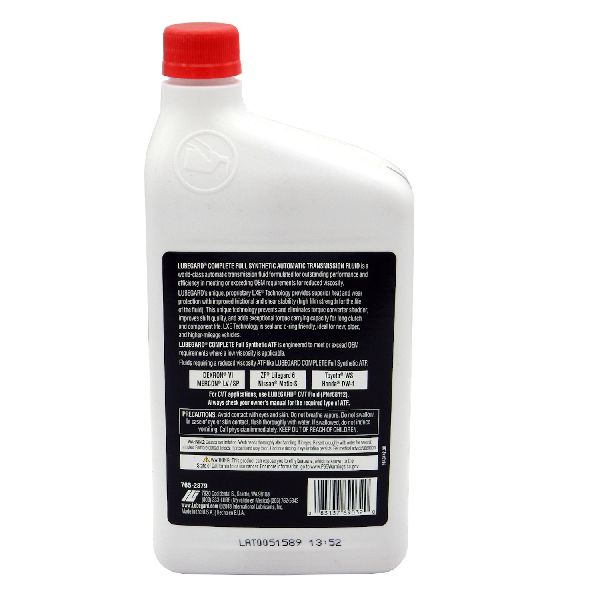
Typical fix: Perform a transmission fluid and filter change using DEXRON-VI fluid. If the fluid is very burnt or contains metal, internal damage is likely and a simple fluid change will not suffice.
Est. part cost: $50-$120 for fluid and a filter kit - Damaged Wiring Harness or Poor Ground Connection 🟡 Medium Probability GM platforms of this era can suffer from fretting corrosion in connectors and failing ground straps. The main TCM ground (G105), located on a transmission stud, is a known failure point that can cause a host of shifting and communication issues.
How to confirm: Visually inspect the wiring harness going to the transmission for chafing, melting, or corrosion. Perform a voltage drop test on the ground circuit for the TCM; any significant voltage reading on the ground wire 🎬 Watch: How to diagnose G6 wiring and ground connection issues. indicates a bad ground. Wiggling the harness near the ground stud may cause the symptoms to appear or disappear.
Typical fix: Repair the damaged section of the harness. Clean and secure the ground connection (G105 on the transmission stud) to bare metal. In some cases, a new ground wire must be run.
Est. part cost: $5-$50 for wiring repair supplies
Rare But Worth Checking
- Failed Input/Output Speed Sensor: A failure of one of the transmission speed sensors can provide incorrect data to the TCM, causing shifting errors and triggering a P0700. This will be accompanied by a specific sensor code (e.g., P0717, P0721).
- Internal Mechanical Failure: Although less common than electronic issues, worn clutches, a failing pressure control solenoid, or a bad torque converter clutch solenoid can cause shifting problems that set a P0700 code. Metal shavings in the transmission fluid are a strong indicator of this. In a related GM platform report, NHTSA ODI #10576252, a P0700 was diagnosed as a failure of the 3-5 clutch wave plate.
- Failed Transmission Range Sensor (Neutral Safety Switch): If the TCM receives incorrect gear position data from a faulty range sensor, it can cause erratic shifting and trigger a P0700, often alongside a sensor-specific code.
Diagnosis Steps
- Connect an OBD-II scanner capable of reading transmission-specific codes to the vehicle.
- Read and record all codes from both the Engine Control Module (ECM) and the Transmission Control Module (TCM). The codes in the TCM (e.g., P0758, U0101) are essential for diagnosis.
- Check the level and condition of the automatic transmission fluid via the side fill plug. The fluid should be at the correct level, bright red, and free of debris or a burnt smell.
- Inspect the wiring harness and connectors between the TCM and the transmission. Look for any signs of damage, corrosion, or loose connections, paying close attention to the main connector on the transmission case.
- Inspect and test the main TCM ground connection (G105), typically located on a transmission housing stud below the upper coolant hose, for tightness and corrosion. Perform a voltage drop test on this ground.
- Using the specific codes from the TCM as a guide, perform targeted tests. For a solenoid code, check the resistance of the solenoid at the transmission connector pins. For a U0101 code, verify power and ground at the TCM connector itself.
- If all wiring, sensors, and solenoids test correctly, and especially if communication codes are present, the issue may be with the Transmission Control Module itself.
Parts You'll Likely Need
- Transmission Shift Solenoid Kit — Shift solenoids are a very common failure point in the 4T45-E transmission, leading to specific shifting faults that trigger P0700.
Trusted brands: ACDelco, Rostra, Bosch
OEM price range: $100-$180
Aftermarket price range: $40-$100 - Transmission Control Module (TCM)
(OEM #24239926 (Verify by VIN))— The external TCM on 4-speed models is a known failure item. It is the brain of the transmission and a fault here will set a P0700, often with a U0101.
Trusted brands: ACDelco (OEM), Dorman, Flagship One
OEM price range: $300-$500
Aftermarket price range: $150-$400
Related Codes That Often Appear With This One
- P0750-P0774 — These codes point to specific issues with shift solenoids A, B, C, etc. For example, P0758 or P0753 often point to a bad 1-2 or 2-3 shift solenoid on the 4T45-E.
- P0715-P0723 — These codes indicate faults with the transmission input or output speed sensors, which can cause the TCM to report a general fault.
- U0101 — This code indicates a loss of communication with the Transmission Control Module, often pointing to a wiring issue, a bad ground, or a completely failed TCM.
- P0973, P0974, P0976, P0977 — These are additional codes that specifically point to electrical circuit issues (low or high voltage) for the shift solenoids, reinforcing a solenoid or wiring diagnosis.
- P2637 & P0013/P0014 — As noted in NHTSA ODI #10423408, these codes can sometimes appear alongside P0700 during diagnostic checks when multiple engine and powertrain issues are present.
Technical Service Bulletins (TSBs) & Recalls
- TSB 08-07-30-021B (and later revisions like 08-07-30-021H): While not exclusively for P0700, this bulletin addresses widespread issues with GMLAN high-speed communication loss on many GM vehicles, including the G6. Symptoms include various warning lights, no-start conditions, and the transmission not shifting. It points to potential terminal corrosion in the main transmission harness connector as a primary cause for codes like U0101, which frequently accompanies P0700.
Platform-Specific Known Issues
- Recall 09077A was issued for some 2009 G6 models with the 4-speed automatic transmission for a faulty transmission shift cable end fitting. This could cause the gear shifter position not to match the actual transmission gear, potentially leading to a rollaway risk.
- The 4T45-E transmission does not have a dipstick for checking fluid, requiring the owner to check the level at a fill plug on the side of the case. This inconvenience can lead to neglected fluid level checks.
- In related Pontiac models, owners have reported severe symptoms alongside P0700; NHTSA ODI #10874402 notes a vehicle jerking hard as if the brakes locked when slowing down, while NHTSA ODI #10533966 describes a sudden braking sensation associated with P0700 and P2637.
Mechanic-Grade Diagnostic Values

- 4T45-E Shift Solenoid (A or B) Resistance — expected: 19-24 Ohms. Failure: A reading significantly outside this range, or open/shorted, indicates a failed solenoid.
- 4T45-E TCC PWM Solenoid Resistance — expected: 10-11 Ohms. Failure: A reading of 12.5 Ohms or higher could indicate a partially failed solenoid, though minor deviations can be due to meter accuracy.
- 6T40/6T45 Pressure Control Solenoid (PCS) Resistance — expected: 3-5 Ohms at 70°F. Failure: Readings outside this range indicate a faulty solenoid. The solenoid should be removed from the TEHCM for testing to prevent damage.
- 6T40/6T45 Shift Solenoid Resistance — expected: 16-20 Ohms at 70°F. Failure: Readings outside this range indicate a faulty on/off shift solenoid.
- TCM Ground Circuit Voltage Drop (G105) — expected: Less than 0.1 Volts. Failure: A reading higher than 0.1V indicates high resistance in the ground circuit, which can cause intermittent communication loss and mimic a failed TCM.
- CAN Bus Network Resistance — expected: ~60 Ohms. Failure: Measure between Pin 6 and Pin 14 of the DLC with the battery disconnected. A reading of ~120 Ohms indicates a break in the CAN circuit or a faulty terminating module.
Scan Tool Commands That Help
- Tech2 / GDS2 (or equivalent): Service Fast Learn Adapts — This procedure is mandatory for 6-speed (6T40/6T70) models after replacing the transmission, valve body, TEHCM, or performing any internal service. It allows the TCM to learn the hydraulic characteristics of the clutches to ensure smooth shifting. Failure to perform this may result in poor shift quality and new DTCs.
- Tech2 / GDS2 (or equivalent): Solenoid ON/OFF Command — During advanced diagnostics, a technician can command individual solenoids on and off to verify their mechanical function. For the 6T40, this can be combined with a special tool (DT-48616) to measure air pressure changes, confirming the valve is not stuck. For the 4T45-E, commanding solenoids while listening for an audible click can help confirm electrical operation.
Wiring & Ground Locations

- G105 — Located on a transmission stud. On 2006 models, it's on the left rear side of the engine compartment, below the upper coolant hose. On other models, it is found directly under the throttle body on a transmission-to-engine stud. This ground serves the TCM, ECM, and Park/Neutral Position Switch.. This is the most critical ground for the transmission control system. Corrosion or looseness here is a very common cause of P0700 and U0101 codes, mimicking a complete TCM failure. A voltage drop test is essential before condemning the TCM.
- TCM Main Connector (49-way) — Connected to the external T42 TCM, which is mounted on the front of the 4-speed (4T45-E) transmission assembly.. This is the central connection point for all power, ground, and communication lines to the TCM. The terminals can suffer from fretting corrosion or pins backing out, causing intermittent faults. Power and ground should be load-tested at this connector.
- G103 — On top of the left (driver's side) front strut tower in the engine compartment.. Serves as a ground for the Body Control Module (BCM) and Instrument Panel Cluster (IPC), which communicate with the TCM. A poor ground here can cause wider network communication issues.
Real Owner Repair Stories
- YouTube user 'southmain auto' (Pontiac G6 (year not specified, but with 4T45-E)) — No communication with TCM, no-start condition, multiple communication codes.
❌ Tried (didn't work) Initial diagnosis pointed towards a failed TCM.
✅ What actually fixed it The G105 ground connection on the transmission stud under the throttle body was corroded and broken. Wiggling the wire bundle temporarily restored connection. The final fix was repairing the ground wire terminal and cleaning the stud. - YouTube user 'Sterling M' (2007 Pontiac G6 GT 3.5L V6 with 4T45-E transmission) — Car would not go into 1st gear unless manually selected, where it would lunge and jerk. 4th gear would not engage at all, causing engine to rev freely.
❌ Tried (didn't work) The user opted to replace the transmission with a used unit, but proactively replaced the electronics before installation.
✅ What actually fixed it Before installing a used transmission, the owner purchased a complete solenoid kit for ~$95 online (including shift solenoids A & B, EPC solenoid, TCC solenoid, and manifold pressure switch) and installed it into the used transmission. This preemptively fixed the most common failure points.
OEM Part Supersession History
10478124→24207236— Part update/revision for the 1-2 / 3-4 (A/B) shift solenoid for the 4T45-E transmission.
Model Year Variations Within This Range
- 2005-2010: The base transmission for most 4-cylinder and some V6 models was the 4-speed 4T45-E (RPO code MN5). This uses an external T42 Transmission Control Module (TCM) mounted on the front of the transmission case.
- 2007-2010: A 6-speed automatic transmission became available, first on the V6 GTP in 2007 (3.6L with 6T70) and later as an option on 4-cylinder models starting in 2009 (2.4L with 6T40, RPO code MH8). These transmissions use an internal Transmission Electro-Hydraulic Control Module (TEHCM), where the TCM and valve body are a single unit inside the transmission pan.
- 2009.5: A mid-year refresh for 2009 resulted in a '2009.5' model with revised front/rear fascias and an updated dashboard/radio with Bluetooth. This does not significantly change the P0700 diagnosis but can affect part numbers for non-drivetrain components.
Diagnostic Flowchart
Used vs. New Parts: Buying Guide for This Vehicle
When a used part is the smart pick: A complete used transmission from a low-mileage donor can be a cost-effective solution if there is hard part damage. However, the electronics are the most common failure point. A smart strategy is to purchase a used transmission and proactively install a new aftermarket solenoid master kit (~$100) before installing the transmission in the vehicle.
Donor-vehicle mileage cap: roughly under 80000 miles for the part to have meaningful remaining life.
What to inspect on the donor part:
- Check the color and smell of the fluid from the donor transmission. It should be reddish and not smell burnt.
- Ask for a vehicle history report if possible to check for regular maintenance.
- Inspect the transmission case for cracks or damage from the donor vehicle's accident.
- Ensure the main electrical connector and pins are not damaged or corroded.
OEM-only on this vehicle (don't cheap out):
- Transmission Control Module (TCM/TEHCM): While aftermarket options exist, they must be from a reputable rebuilder (e.g., Flagship One) and must be programmed to your vehicle's VIN *before* installation. An incorrect or non-programmed module will not work.
Aftermarket brands forum-validated for this vehicle:
- Shift Solenoids: ACDelco (OEM), Rostra, Bosch, Standard Motor Products (SMP), ATP. It is highly recommended to buy a complete kit rather than a single solenoid.
Real Owner Stories
Aggregated from forums and TSBs cited above. Mileages and costs reflect what owners reported in those sources.
2006 Pontiac G6
Symptoms: The check engine light was on with codes P0758 and P0753, and the transmission was shifting harshly and getting stuck in one gear.
What fixed it: The faulty shift solenoids were replaced. This required removing the transmission side cover to access them.
Source hint: YouTube video titled 'Pontiac G6: Shift Solenoid Replacement 4T65E! P0758 P0753 Fixed!!'
2008 Pontiac G6
Symptoms: The vehicle was experiencing multiple electrical issues, including erratic transmission shifting and communication problems.
What fixed it: The problem was traced to a bad main TCM ground at the G105 stud on the transmission. The fix was to clean and secure the ground connection to bare metal.
Source hint: YouTube video titled 'PONTIAC G6 BAD GROUND'
2009 Pontiac G6
Symptoms: The vehicle had various warning lights on, the transmission would not shift correctly, and sometimes it would be a no-start condition. A U0101 code was present with the P0700. NHTSA ODI #11051514 also reports a P0700 occurring alongside P0776 (control solenoid valve 2 stuck off).
What fixed it: The issue was caused by terminal corrosion in the main transmission harness connector, which was disrupting communication. Repairing the corroded terminals in the connector resolved the problem.
Source hint: TSB 08-07-30-021B
Related OBD-II Codes
Frequently Asked Questions
My 2007 Pontiac G6 doesn't have a transmission dipstick. How am I supposed to check the fluid level?
I have a 2009 G6 and my shifter feels off. Is this related to the P0700 code and is there a recall?
My mechanic says the Transmission Control Module (TCM) is bad. Can I just buy a used one and plug it in?
Where is the specific ground wire for the transmission that commonly fails on the Pontiac G6?
What type of transmission fluid should I use for a fluid change on my G6?
My scanner shows a shift solenoid code along with P0700. Is this a common failure on the G6?
What does it mean if my G6 has both a P0700 and a U0101 code?
Helpful Videos


We Have This Part in Stock




The information in this article is provided for general reference and educational purposes only. Vehicle specifications, procedures, and part compatibility can vary by production date, trim level, and region. Always consult your vehicle's factory service manual and verify part numbers before purchasing or performing repairs. Safety-critical components such as airbags, seat belts, and braking systems should be installed by a qualified professional.
- Pontiac G6:
- 🎬 Helpful Videos
- 🛍️ Shop This Part
- What's Unique About the 2005-2010 Pontiac G6
- Symptoms You May Notice
- Most Likely Causes
- Rare But Worth Checking
- Diagnosis Steps
- Parts You'll Likely Need
- Related Codes That Often Appear With This One
- Technical Service Bulletins (TSBs) & Recalls
- Platform-Specific Known Issues
- Mechanic-Grade Diagnostic Values
- Scan Tool Commands That Help
- Wiring & Ground Locations
- Real Owner Repair Stories
- OEM Part Supersession History
- Model Year Variations Within This Range
- Diagnostic Flowchart
- Used vs. New Parts: Buying Guide for This Vehicle
- Real Owner Stories
- 2006 Pontiac G6
- 2008 Pontiac G6
- 2009 Pontiac G6
- Related OBD-II Codes
- Frequently Asked Questions
- 🎟️ Get 5% Off