

P0700 on 2007-2018 Mercedes-Benz Sprinter: Transmission System Fault Causes & Fixes
P0700 on a Sprinter indicates a fault in the transmission, usually stored in the Transmission Control Module (TCM). The most common causes are a failed conductor plate or a leaking 13-pin electrical connector. Expect to spend $600-$1200 at a shop for a conductor plate replacement.
- P0700 is a general code; you MUST scan the Transmission Control Module (TCM) for the specific, underlying fault codes.
- The most likely cause on a 2007-2018 Sprinter is a failed transmission conductor plate or a leaking 13-pin electrical connector.
- Immediately check the 13-pin connector for fluid leaks. If it's leaking, fix it before it causes a much more expensive TCM failure.
- This repair is not for beginners. It requires special tools, a scanner capable of reading TCM codes, and careful work inside the transmission.
- Always use the correct specification transmission fluid (MB 236.14).
What's Unique About the 2007-2018 Mercedes-Benz Sprinter

The 2007-2018 (NCV3) Sprinter, especially models with the 3.0L V6 diesel, predominantly uses the Mercedes-Benz 722.6 (also known as NAG1 or 5G-Tronic) 5-speed automatic transmission. This transmission is known for two very common failure points that trigger a P0700 code: a faulty internal conductor plate and a leaking 13-pin electrical connector. The connector leak is notorious for allowing transmission fluid to wick up the wiring harness and damage the Transmission Control Module (TCM), which is often located under the driver's seat.
Generation note: This guide covers the NCV3 (or 906) generation Sprinter (2007-2018). While the 3.0L V6 with the 722.6 transmission is the most common powertrain, later models (approx. 2014+) also offered a 2.1L 4-cylinder with a 7-speed (722.9/7G-Tronic) transmission. The issues described here, particularly the conductor plate and 13-pin connector, are most prevalent on the 722.6 transmission. The 722.9 has its own, often more expensive, conductor plate issues which require programming.
Symptoms You May Notice
- Check Engine Light is on
- Vehicle enters 'limp mode' (stuck in a single gear, usually 2nd).
- Harsh or erratic shifting.
- Delayed engagement when shifting from Park to Drive or Reverse.
- Transmission slipping (engine RPMs increase but speed does not)
- Transmission warning light may be illuminated on the dashboard
- Inability to shift gears at all.
- Dashboard gear indicator may show an incorrect gear or go blank.
- Replacing the entire transmission when only the conductor plate is needed.
- Replacing the TCM without first fixing the 13-pin connector leak that caused the failure.
- Clearing the P0700 code without reading the underlying, specific codes from the TCM, which leads to the problem returning immediately.
- Mistaking a conductor plate failure for a bad valve body.
Most Likely Causes

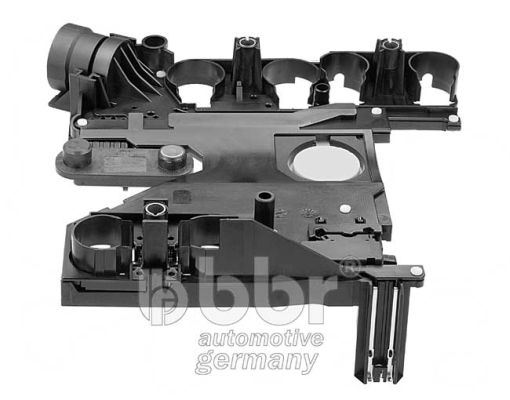
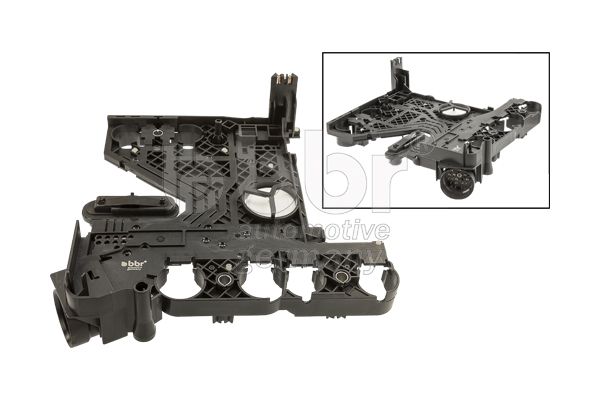
- Failed Transmission Conductor Plate 🔴 High Probability The 722.6 transmission's conductor plate, which houses the input/output speed sensors and solenoid connections, is made of plastic that becomes brittle from constant heat cycles. This leads to hairline cracks in the plastic housing or failure of the molded-in speed sensors.
How to confirm: Scan the TCM for codes related to speed sensors (e.g., P0715 - Input Speed Sensor, P0720 - Output Speed Sensor) or solenoid faults (P0740-P0770 range). These codes strongly point to a failed conductor plate.
Typical fix: Replace the conductor plate, along with the transmission filter, pan gasket, and 13-pin connector. This requires draining the fluid and removing the valve body. It is a common DIY job for experienced mechanics, but novices should be cautious.
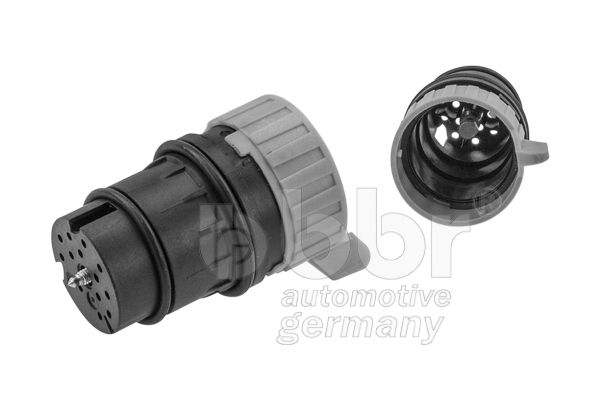
Est. part cost: $150-$350 - Leaking 13-Pin Electrical Connector (Pilot Bushing) 🔴 High Probability The two O-rings on the connector that plugs into the transmission case fail over time, allowing Automatic Transmission Fluid (ATF) to leak. This is one of the most common leaks on any vehicle equipped with the 722.6 transmission.
How to confirm: Visually inspect the connector where the wiring harness attaches to the front passenger side of the transmission. If it is wet with red or brown fluid, it is leaking. This is a very inexpensive part and should be checked regularly.
Typical fix: Replace the 13-pin connector. It is highly recommended to do this whenever the conductor plate or transmission fluid is changed. If the leak is severe, inspect the TCM and wiring harness for fluid contamination all the way to the module.
Est. part cost: $15-$40 - Low or Contaminated Transmission Fluid 🟡 Medium Probability Often a direct result of a leaking 13-pin connector or pan gasket. Low fluid levels cause poor hydraulic pressure, leading to slipping, overheating, and erratic shifting.
How to confirm: These transmissions do not have a dipstick from the factory. A special service tool (dipstick, often marked in millimeters) is required to check the fluid level through the filler tube. The level must be checked with the engine running, in Park, at a specific fluid temperature (usually 80°C). The fluid should be bright red (for MB 236.14 spec); if it is dark brown, black, or smells burnt, it is degraded and may contain clutch material.
Typical fix: Top off or replace the transmission fluid and filter. Use only approved fluid (e.g., Shell ATF 134, Fuchs Titan ATF 4134, MB 236.14 specification). If the level was low, you must find and fix the leak.
Est. part cost: $80-$150 for fluid - Failed Transmission Control Module (TCM) ⚪ Low Probability Usually a secondary failure caused by ATF wicking up the wiring harness from a leaking 13-pin connector and shorting out the module's electronics. The TCM is located under the driver's seat, and fluid can travel the entire length of the harness to reach it.
How to confirm: After confirming the 13-pin connector is leaking, unplug the TCM (under the driver's seat) and check its electrical connector for any signs of oil. If the TCM will not communicate with a scanner, and it has power and ground, it may have failed internally.
Typical fix: Replace the TCM. This often requires programming (SCN coding) by a dealer or a specialized shop with the correct equipment. A used TCM from another vehicle will not work without reprogramming. If replacing, the fluid leak must be fixed first.
Est. part cost: $400-$800
Rare But Worth Checking
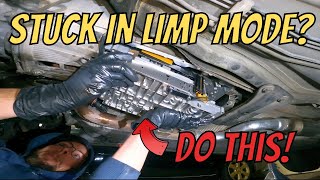
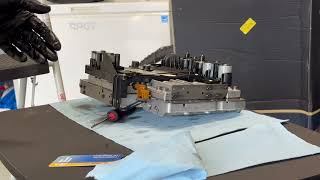
- Failed Valve Body or Shift Solenoids: While solenoids can fail individually, they are often replaced as part of the conductor plate service. 🎬 Watch: Detailed solenoid service and valve body assembly guide. A true valve body failure (e.g., a cracked housing or stuck valve) is less common than the electronic conductor plate itself.
- Internal Wiring Harness Damage: The internal harness that connects the conductor plate to the 13-pin connector can become brittle and crack from heat, causing intermittent shorts. This is less common than the plate or external connector failing.
Diagnosis Steps

- Obtain a full diagnostic scan from a tool capable of reading Mercedes-Benz Transmission Control Module (TCM) codes. A generic OBD-II reader will only show P0700.
- Record all codes stored in the TCM. Codes like P0715 or P0720 are strong indicators of a conductor plate issue.
- Visually inspect the 13-pin electrical connector on the transmission for signs of fluid leakage. This is located on the front passenger side of the transmission pan.
- If the connector is wet, unplug the wiring harness from the TCM (usually under the driver's seat) and inspect for fluid contamination. Any oil present means the harness has been compromised.
- Using a service dipstick tool (not included from factory), check the transmission fluid level and condition. The level must be checked at a specific temperature (usually 80°C) with the engine running in Park.
- If codes point to the conductor plate, plan to replace the plate, filter, pan gasket, and 13-pin connector as a complete service.
- If the TCM is contaminated with fluid, it will likely need to be replaced and programmed after the leak is fixed.
- If no codes are present but symptoms persist, consider a fluid and filter change as a first step, especially if the service history is unknown.
Parts You'll Likely Need

- Transmission Conductor Plate
(OEM #1402701161)— This is the most common internal electrical failure point for the 722.6 transmission, causing sensor and solenoid codes. There are multiple superseding part numbers, always verify by VIN.
Trusted brands: Mercedes-Benz (Genuine), OEM Supplier (e.g., Siemens/VDO, often sold by FCP Euro with MB logo removed), Febi Bilstein - 13-Pin Electrical Connector (Pilot Bushing)
(OEM #2035400253)— The O-rings on this connector are a guaranteed failure point over time, causing the most common fluid leak on this transmission.
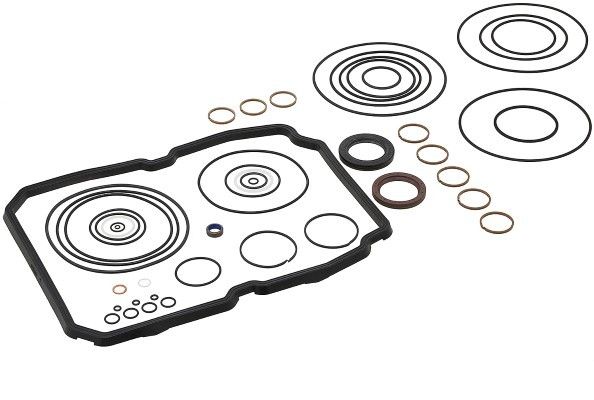
Trusted brands: Mercedes-Benz (Genuine), Elring, Febi Bilstein - Transmission Filter and Pan Gasket Kit — Must be replaced any time the transmission pan is removed for service.
Trusted brands: Mercedes-Benz (Genuine), Mann, Mahle, Elring
Related Codes That Often Appear With This One
- P0715 — Indicates a fault with the transmission's input speed sensor (Y3/6n2), which is physically located on the conductor plate. This is a very strong indicator the plate has failed.
- P0720 — Indicates a fault with the transmission's output speed sensor (Y3/6n3), also located on the conductor plate. Another very strong indicator of a failed plate.
- P0730 — Indicates an incorrect gear ratio, which the TCM flags when it sees a mismatch between input speed and output speed, often caused by internal slipping or a faulty speed sensor on the conductor plate.
- P0740-P0770 — This range of codes points to issues with various shift solenoids or the torque converter clutch solenoid, which are controlled by the conductor plate.
Technical Service Bulletins (TSBs) & Recalls
- While no specific TSB numbers were found in the search, multiple sources confirm that Mercedes issued design updates. For the 13-pin connector, a later design uses thicker, more robust O-rings to prevent leaks. For the 722.9 transmission, multiple valve body and conductor plate iterations exist, sometimes requiring replacement of both if an early version fails.
Platform-Specific Known Issues
- ATF Contamination of TCM: The NCV3 Sprinter's placement of the TCM under the driver's seat makes it particularly vulnerable to damage from a leaking 13-pin connector. The wiring harness acts like a straw, drawing fluid from the transmission directly into the module's sensitive electronics over time, causing a much more expensive secondary failure.
- 722.6 vs. 722.9 Conductor Plate Differences: It is critical to distinguish which transmission the Sprinter has. The 5-speed 722.6 conductor plate is a relatively affordable, non-theft-relevant part. The 7-speed 722.9 conductor plate is integrated with the TCM (called a VGS), is a theft-relevant part, costs significantly more, and MUST be programmed online (SCN Coded) by a dealer or authorized specialist. A DIY replacement is not feasible for most owners.
- Difficulty of 13-Pin Connector Installation: While the 13-pin connector is a simple part, it can be difficult to install correctly. The new O-rings make for a very tight fit, and if it's not perfectly aligned and seated before tightening the 7mm center bolt, the plastic can crack or the pins can be damaged, leading to a conductor plate replacement.
Mechanic-Grade Diagnostic Values
- Resistance of 722.6 Shift Solenoids (1-2/4-5, 2-3, 3-4) — expected: 2.5 - 6.5 Ohms. Failure: A reading outside this range indicates a failed solenoid coil.
- Resistance of 722.6 Torque Converter Lock-up (TCC) Solenoid — expected: 2.0 - 4.0 Ohms. Failure: A reading outside this range indicates a failed solenoid coil.
- Resistance of 722.6 Pressure Control Solenoids — expected: 4.5 - 5.5 Ohms (approx.). Failure: A reading significantly different from this range suggests a fault.
Hidden / Shadow Codes Worth Checking
- 2767 / 2768 (722.9 Trans): Code 2767: The signal from component Y3/8n2 (Internal speed sensor (VGS)) is not available. Code 2768: The component Y3/8n2 (Internal speed sensor (VGS)) is defective. Both point directly to a failed conductor plate/VGS unit. (see via Mercedes-Benz STAR/Xentry diagnostic system or a high-end professional scanner (Autel, Launch, iCarsoft MB) capable of deep-scanning the Transmission Control Module (ETC/EGS).)
- Manufacturer-Specific Solenoid Codes (e.g., P0748, P0753, etc.): While these are standard P-codes, a generic scanner may only show P0700. A more advanced scanner will reveal the specific solenoid circuit fault (e.g., Pressure Control Solenoid 'A' Electrical), which is necessary for diagnosis. (see via Any scanner that can read manufacturer-specific transmission codes, not just generic powertrain codes.)
Scan Tool Commands That Help
- Mercedes STAR/Xentry: Reset transmission adaptations — Required after replacing transmission components like the conductor plate or valve body to make the TCM relearn shift pressures and timing. Performing this on a faulty transmission can make shifting much worse.
- Mercedes STAR/Xentry: SCN Coding (Software Calibration Number) — This is mandatory when replacing the conductor plate on a 722.9 (7-speed) transmission. It programs the new, 'virgin' module to the vehicle's VIN and anti-theft system. A used module cannot be coded unless it has been 'virginized' first.
- Mercedes STAR/Xentry: Initial Startup — A guided function for installing a new 722.9 mechatronic unit. It walks the technician through SCN coding, drive authorization learning, and teaching the selector range sensor.
- Key-on / Pedal Method (DIY): Throttle/Transmission Adaptation Reset — A widely circulated DIY procedure to reset adaptive driving style settings. Turn key to 'ON' (position 2), press accelerator to floor for 20+ seconds, turn key 'OFF' (do not remove), release pedal, wait 2+ minutes. Its effectiveness is debated, with many technicians stating only a proper scan tool reset works.
Wiring & Ground Locations

- TCM Connector (722.6) — Under the driver's seat. The wiring harness runs from here to the 13-pin connector on the transmission.. This is the ideal location to perform electrical tests on the solenoids and speed sensors without dropping the transmission pan. It is also the component that gets damaged by fluid wicking from the 13-pin connector leak.
- TCM Connector Pins (for testing) — At the TCM module under the driver's seat.. A technician can test the entire transmission electrical system from here. Pin 38 is the common ground for all solenoids. Test resistance between pin 38 and the following pins for specific solenoids: Pin 36 (Line Pressure), Pin 16 (2-3 Shift), Pin 15 (3-4 Shift), Pin 37 (Shift Modulating), Pin 17 (Lockup Clutch), Pin 14 (1-2/4-5 Shift).
Real Owner Repair Stories
- PeachParts Forum / YouTube (Mercedes with 722.9 7G-Tronic Transmission) — Transmission faults, likely limp mode and codes pointing to conductor plate.
❌ Tried (didn't work) Getting a quote from the dealer for $2,500-$3,500 for a new, coded conductor plate.
✅ What actually fixed it The owner removed the valve body and sent the original conductor plate to a third-party repair service. The service fixed the faulty speed sensors on the original plate for about $250. Because the original, coded plate was used, no SCN coding was required upon reinstallation. The owner cleared the codes with an Autel scanner and the transmission worked perfectly. - Reddit r/mercedes (2006 E320 CDI with 722.6 Transmission) — Transmission issues requiring conductor plate replacement.
❌ Tried (didn't work) Considering a cheap, unknown aftermarket part.
✅ What actually fixed it The owner purchased an 'OE Supplier' conductor plate from FCP Euro. The part arrived and was clearly an original Mercedes part, but with the Mercedes-Benz logos and part numbers physically ground off. It was installed and fixed the problem without any issues. - MHH Auto Forum (Mercedes with 722.6 Transmission) — Limp mode, transmission codes.
❌ Tried (didn't work) Replacing the conductor plate fixed the initial codes.
✅ What actually fixed it After replacing the conductor plate, the user reset the transmission adaptations using a STAR/Xentry tool. This caused extremely harsh shifting and the transmission getting stuck in gear. The story highlights that a hardware fix can sometimes uncover or create software/adaptation problems. The final resolution was not posted, but it serves as a critical warning about performing adaptation resets without being prepared for the relearn drive cycle or potential issues with the new part.
OEM Part Supersession History
1402700861 (and others)→1402701161— Part has been updated over the years to improve reliability of the speed sensors and plastic housing.
Heads up: For the 722.6 transmission, these parts are generally interchangeable, but it's always best to use the latest revision. Part numbers 1402700561 and 1402700761 are also associated with this part.
Model Year Variations Within This Range
- 2007-2018 (V6 models with 722.6 5-Speed): Conductor plate replacement does NOT require programming (SCN coding). The TCM is a separate module under the driver's seat. The repair is mechanical and involves clearing codes afterward.
- 2014-2018 (4-Cylinder models with 722.9 7-Speed): The conductor plate IS the TCM (a mechatronic unit called VGS) and is located inside the transmission. It is a 'theft-relevant part' and replacement requires SCN coding with dealer-level software to program it to the vehicle's VIN. Early versions (VGS1) may also require replacement of the entire valve body to fit the updated conductor plate design, dramatically increasing cost.
Diagnostic Flowchart
Used vs. New Parts: Buying Guide for This Vehicle
When a used part is the smart pick: For the 722.6 (5-speed) transmission, a used conductor plate from a reputable salvage yard can be a cost-effective option, as it does not require programming. A used external TCM (for the 722.6) is also a possibility if part numbers match exactly. For the 722.9 (7-speed), buying used is NOT recommended unless you are sending it to a specialist to be 'virginized' and then have access to a STAR/Xentry system for SCN coding. A better option for the 722.9 is to have your original plate repaired by a mail-in service, which avoids the need for any programming.
Donor-vehicle mileage cap: roughly under 120000 miles for the part to have meaningful remaining life.
What to inspect on the donor part:
- For a used conductor plate, ask for the donor vehicle's VIN to check its service history if possible.
- Visually inspect the plastic for any obvious cracks or heat damage.
- Ensure all connector pins are straight and free of corrosion.
- If possible, test the resistance of the speed sensors and solenoids before purchase.
OEM-only on this vehicle (don't cheap out):
- Transmission Conductor Plate (722.9 / VGS): Due to the complex SCN coding, using a new Genuine Mercedes part or having your original OEM part repaired are the only reliable options. Aftermarket clones often fail to program correctly.
- 13-Pin Connector: While aftermarket versions exist, the Genuine Mercedes or OEM (Elring) part is inexpensive and known to fit perfectly, preventing future leaks.
Aftermarket brands forum-validated for this vehicle:
- Conductor Plate (722.6): OEM Supplier parts from vendors like FCP Euro are often genuine parts with the logo removed and are highly reliable.
- Gaskets/Seals: Elring, Victor Reinz.
- Filter: Mann, Mahle, Hengst.
- Valve Body Repair Kits: Sonnax (e.g., overlap control valve sleeves).
Brands owners have reported issues with on this vehicle:
- Unbranded, low-cost conductor plates from online marketplaces. These frequently have out-of-spec sensors or are dead on arrival, wasting the significant labor required for installation.
Real Owner Stories
Aggregated from forums and TSBs cited above. Mileages and costs reflect what owners reported in those sources.
2012 Mercedes-Benz Sprinter
Symptoms: The vehicle went into limp mode, triggering the P0700 code, which led to a diagnosis of a failed conductor plate.
What fixed it: A dealer quoted for a conductor plate replacement. Forum members stressed the importance of also replacing the leaking 13-pin connector at the same time.
Cost: $1170-$1170
Source hint: mbworld.org thread titled 'Transmission Conductor Plate replacement'
Mercedes-Benz Sprinter
Symptoms: Owner experienced bizarre electrical issues and transmission faults. Upon inspection, automatic transmission fluid was found in the TCM connector under the driver's seat.
What fixed it: The owner traced the fluid source back to a leaking 13-pin connector on the transmission. The fix required replacing the connector and cleaning or replacing the fluid-contaminated TCM and wiring harness.
Source hint: benzworld.org discussions on the fluid wicking phenomenon
Mercedes-Benz Sprinter
Symptoms: The van was stuck in limp mode (a single gear) and had a P0700 Check Engine Light.
What fixed it: The owner had success by replacing the conductor plate, the 13-pin connector, and the transmission fluid and filter all together as a kit.
Source hint: sprinter-source.com threads on P0700
Related OBD-II Codes
Frequently Asked Questions
My Sprinter doesn't have a transmission dipstick. How can I check the fluid level for a P0700 code?
I'm a DIY mechanic. Can I replace the conductor plate myself on my Sprinter?
My mechanic says my Transmission Control Module (TCM) is bad. Can I just install a used one to save money?
I see fluid around the 13-pin electrical connector. Is this related to my P0700 code and limp mode?
I replaced the 13-pin connector myself, but it seems difficult to install. What's the trick?
What type of transmission fluid should I use in my 2007-2018 Sprinter?
Helpful Videos
We Have This Part in Stock

The information in this article is provided for general reference and educational purposes only. Vehicle specifications, procedures, and part compatibility can vary by production date, trim level, and region. Always consult your vehicle's factory service manual and verify part numbers before purchasing or performing repairs. Safety-critical components such as airbags, seat belts, and braking systems should be installed by a qualified professional.
- Mercedes-Benz Sprinter:
- 🎬 Helpful Videos
- 🛍️ Shop This Part
- What's Unique About the 2007-2018 Mercedes-Benz Sprinter
- Symptoms You May Notice
- Most Likely Causes
- Rare But Worth Checking
- Diagnosis Steps
- Parts You'll Likely Need
- Related Codes That Often Appear With This One
- Technical Service Bulletins (TSBs) & Recalls
- Platform-Specific Known Issues
- Mechanic-Grade Diagnostic Values
- Hidden / Shadow Codes Worth Checking
- Scan Tool Commands That Help
- Wiring & Ground Locations
- Real Owner Repair Stories
- OEM Part Supersession History
- Model Year Variations Within This Range
- Diagnostic Flowchart
- Used vs. New Parts: Buying Guide for This Vehicle
- Real Owner Stories
- 2012 Mercedes-Benz Sprinter
- Mercedes-Benz Sprinter
- Mercedes-Benz Sprinter
- Related OBD-II Codes
- Frequently Asked Questions
- 🎟️ Get 5% Off