

P0700 on 1996-2001 Jeep Cherokee: Transmission Malfunction Causes and Fixes
P0700 on a Jeep Cherokee XJ means the transmission computer (TCM) has stored a specific fault code. You must use a scanner that can read TCM codes to find the real problem. Common causes are faulty transmission solenoids, a bad Neutral Safety Switch (NSS), poor grounds, or low fluid. Expect to spend $50-$250 on parts for a DIY fix.
- P0700 is a messenger code; you MUST find the specific code stored in the Transmission Control Module (TCM) to know the real problem.
- Do not buy any parts until you have the specific TCM code, which requires a scan tool more advanced than a basic code reader.
- The most likely culprits on a 1996-2001 Cherokee are the transmission solenoids or the Neutral Safety Switch (NSS).
- Always check the simple things first: transmission fluid level/condition and the integrity of the wiring and connectors.
- The Neutral Safety Switch can often be cleaned and repaired for free, saving the cost of a new part.
What's Unique About the 1984-2001 Jeep Cherokee

This code applies to the 1996-2001 OBD-II equipped Jeep Cherokee XJ models, which primarily used the durable Aisin-Warner AW4 automatic transmission. While the AW4 is known for its longevity, its electronic controls are common failure points as these vehicles age. The Neutral Safety Switch (NSS) is particularly notorious for causing shifting issues and triggering this code, often accompanied by P0705. Additionally, failing transmission solenoids and aging, brittle wiring harnesses with poor grounds are frequent culprits that owners encounter.
Generation note: The 1984-2001 range covers the entire Jeep Cherokee XJ generation. However, the P0700 code is only applicable to models from 1996-2001 that are equipped with OBD-II diagnostics. Pre-1996 models use an OBD-I system with different codes. The AW4 transmission was used from 1987-2001.
Symptoms You May Notice
- Check Engine Light is on
- Transmission is stuck in one gear (usually 2nd or 3rd, known as 'limp mode')
- Harsh or erratic shifting
- Failure to upshift or downshift
- No torque converter lockup at highway speeds
- Reduced fuel economy
- Inability to start the engine unless the shifter is wiggled (points to Neutral Safety Switch)
- No reverse lights (also points to Neutral Safety Switch)
- Intermittent no-crank, no-start condition
- Replacing the Powertrain Control Module (PCM) instead of the Transmission Control Module (TCM).
- Replacing parts like the Neutral Safety Switch or speed sensors without first confirming the specific TCM code, leading to unnecessary expense.
- Clearing the P0700 code without reading the underlying TCM codes and assuming the problem is fixed. The code will often return immediately or after a short drive.
- Replacing the entire transmission when the issue is a simple, inexpensive electrical component like a solenoid or wiring ground.
Most Likely Causes

- Faulty Transmission Solenoids (Shift or TCC) 🔴 High Probability The solenoids inside the AW4 transmission can fail electrically or become clogged with age and debris, leading to shifting problems like being stuck in gear or no torque converter lockup.
How to confirm: Use a capable scan tool to check for specific solenoid codes (e.g., P0753, P0758, P0740). You can also test the resistance of the solenoids at the TCM connector or directly at the solenoid after dropping the pan. The correct resistance should be between 11-15 ohms. A reading outside this range indicates a bad solenoid.
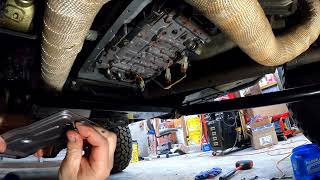
Typical fix: Replace the faulty solenoid(s). They are typically sold in a master kit containing all three (Solenoid 1, Solenoid 2, and TCC Lock-Up). This requires draining the fluid, dropping the transmission pan, and removing the filter to access them. Many owners recommend replacing all three at once. 🎬 Watch: Step-by-step guide to replacing your AW4 transmission solenoids.
Est. part cost: $60-$150 - Faulty Neutral Safety Switch (NSS) 🔴 High Probability The NSS is mounted externally on the passenger side of the transmission and is exposed to road grime, water, and heat, causing internal contacts to corrode and fail. It's a very common failure point on the XJ.
How to confirm: Check for specific code P0705. Other symptoms include no reverse lights or the engine only starting in Neutral, not Park. The switch can be removed and tested for continuity in each gear position according to a specific pinout chart.
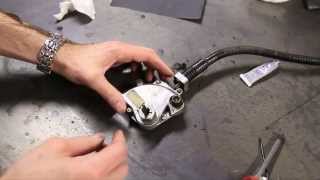
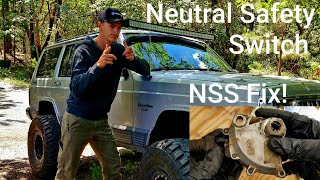
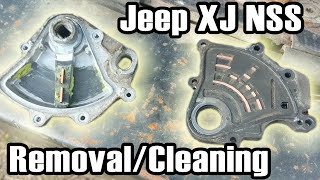
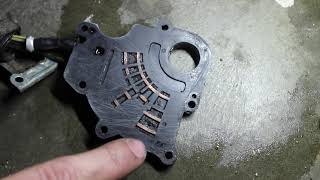
Typical fix: The NSS can often be restored. The process involves removing it from the transmission, carefully prying it open, cleaning the old, hardened grease and corrosion from the internal copper contacts with a contact cleaner and a small brush or emery paper, then re-lubricating with dielectric grease 🎬 See how to properly clean and restore your NSS. and reassembling. If it's too corroded or damaged, it must be replaced.
Est. part cost: $50-$200 - Damaged Wiring or Poor Connections 🟡 Medium Probability Aging wiring harnesses become brittle. A common issue is poor ground connections, which can cause a variety of electrical gremlins. Corroded battery terminals have also been found to cause P0700 and shifting problems.
How to confirm: Visually inspect the wiring harness leading to the transmission for any signs of melting, chafing, or broken wires. Unplug, clean, and apply dielectric grease to the main transmission connectors near the dipstick. Check and clean the main engine and chassis ground points, especially G101 at the ignition coil bracket which grounds the TCM. Test battery terminal connections for tightness and corrosion.
Typical fix: Repair the damaged section of the harness or clean the connectors. In many forum-documented cases, simply cleaning the two large 🎬 Watch: How we fixed P0700 and P0758 codes on an XJ. transmission connectors or improving the main grounds resolved the issue. If battery terminals are corroded, replace them.
Est. part cost: $5-$50 - Low or Burnt Transmission Fluid 🟡 Medium Probability Often overlooked, low fluid levels can cause slipping and overheating, while old, burnt fluid loses its hydraulic properties and can lead to solenoid and valve body issues. The AW4 is sensitive to fluid level and condition.
How to confirm: Check the transmission fluid level with the engine running, transmission warm, and in Neutral. The fluid should be bright red and not smell burnt. Dark, brown, or burnt-smelling fluid indicates it is overdue for a change.
Typical fix: Top off with the correct fluid (Dexron III/Mercon is commonly used for the AW4). If the fluid is dark or smells burnt, perform a fluid and filter change. Do not use RTV sealant on the pan gasket, as it can break off internally and clog passages.
Est. part cost: $40-$80 - Faulty Transmission Speed Sensors (Input/Output) ⚪ Low Probability
How to confirm: Check for specific codes related to the input or output speed sensors (e.g., P0720). A failing output speed sensor can cause the speedometer to malfunction and prevent upshifting. The output speed sensor can be tested with an ohmmeter while rotating the output shaft; the reading should fluctuate.
Typical fix: Replace the faulty speed sensor. The output speed sensor is located on the transfer case tail housing, making it relatively easy to access.
Est. part cost: $30-$70
Rare But Worth Checking
- Failing Transmission Control Module (TCM): While rare, the TCM can fail, often due to cracked solder joints on the circuit board, particularly around the main connector pins from years of vibration and thermal cycles. This should only be considered after all other possibilities, including wiring, grounds, and sensors, have been thoroughly ruled out.
- Faulty Brake Light Switch: A misadjusted or faulty brake light switch can prevent the torque converter clutch (TCC) from locking up. The TCM uses the brake switch signal to unlock the converter when the brakes are applied. If the switch is sending a constant 'brakes applied' signal, the TCC will never lock, which can eventually trigger a TCC-related code (like P0740) and the master P0700 code.
Diagnosis Steps
- Connect a scan tool capable of reading manufacturer-specific codes to the OBD-II port.
- Navigate to the Transmission Control Module (TCM) to retrieve the specific P07xx codes. DO NOT proceed without this information. A basic scanner may only show P0700.
- Check the transmission fluid level and condition. With the engine warm and running in Neutral, ensure the fluid is at the full mark, is bright red, and doesn't smell burnt.
- Based on the specific code(s) found, inspect the corresponding component's wiring and connectors for damage, corrosion, or loose connections. Pay special attention to the two large connectors near the transmission dipstick and all chassis/engine grounds.
- Test the component indicated by the code. For solenoids (P074x, P075x), check resistance (should be 11-15 ohms). For the NSS (P0705), test for continuity in each gear position.
- If only P0700 is present, or if wiring and components test good, thoroughly inspect all ground wires and battery terminals. Poor electrical connections are a known cause of intermittent transmission issues on XJs.
- If a TCC lockup code (P0740/P0743) is present, check the brake light switch for proper adjustment and function.
- If all else fails, the TCM itself may be faulty, but this should be the last resort after exhausting all other diagnostic paths.
Parts You'll Likely Need

- Transmission Solenoid Kit (AW4)
(OEM #56041403AA (This number is often associated with governor pressure solenoids on other Chrysler transmissions but is sometimes cross-referenced to AW4 kits; verify with supplier). A more direct cross-reference is to Toyota part 85420-22080.)— The shift and lock-up solenoids are a very common failure point that causes specific shifting issues and triggers a P0700.
Trusted brands: Aisin (OEM), Rostra, Bulkpart, Whatever Man
OEM price range: $150-$250
Aftermarket price range: $60-$120 - Neutral Safety Switch (NSS)
(OEM #56028181AB)— This switch is known to fail due to its location, causing starting and shifting problems. It is often the cause of a P0705 code accompanying the P0700.
Trusted brands: Mopar, Crown Automotive, Standard Motor Products
OEM price range: $200-$300
Aftermarket price range: $50-$150 - Dielectric Grease and Contact Cleaner — Essential for cleaning the NSS and all electrical connectors to ensure a good, corrosion-free connection, which can often resolve the fault without replacing parts.
Trusted brands: Permatex, CRC
OEM price range: $10-$20
Aftermarket price range: $10-$20
Related Codes That Often Appear With This One
- P0705 — Indicates a fault in the Transmission Range Sensor (Neutral Safety Switch) circuit. This is one of the most common companion codes to P0700 on an XJ.
- P0740, P0743 — Indicates a fault with the Torque Converter Clutch (TCC) solenoid circuit, often caused by a bad solenoid or wiring.
- P0753, P0758 — Indicates an electrical fault in the Shift Solenoid 'A' or 'B' circuit, respectively. These are common codes pointing to solenoid failure.
- P0720 — Indicates a fault with the Output Speed Sensor circuit, which can cause shifting and speedometer issues.
- P1694, P1698 — These codes indicate a loss of communication between the TCM and PCM, often pointing to a wiring harness issue, a bad ground, or a failing TCM.
Technical Service Bulletins (TSBs) & Recalls
- TSB 21-007-00: Addresses flashing transmission indicator light and/or DTCs P0700, P0740, or P0743. The solution involves reprogramming the Transmission Control Module (TCM) with updated software. This applies to some 1999-2000 models.
Platform-Specific Known Issues
- The Neutral Safety Switch (NSS) is notoriously prone to failure but can often be repaired by cleaning the internal contacts rather than replacing the entire unit.
- Poor electrical grounds are a common source of many phantom electronic issues on the XJ platform. Cleaning and securing all major ground points in the engine bay is a recommended preventative and diagnostic step.
Documented NHTSA Reports
- A manufacturer service bulletin notes that for some Jeep models, the P0700 code may be accompanied by U0404, and in some instances, the failure codes may resolve themselves after driving for a period (NHTSA ODI #11308068).
- An owner reported that the P0700 code was associated with the transmission slipping or "free wheeling" (NHTSA ODI #10992967).
- NHTSA ODI #11376167 describes a situation where the transmission occasionally ceased in first gear, with a diagnosis of P0700 and P0734 (Incorrect Gear Ratio).
- A manufacturer report indicates that high RPMs before shifting can be associated with P0700, P0562, and P0750; in this case, the owner replaced the battery, throttle body, and transmission fluid/filters (NHTSA ODI #11268694).
- NHTSA ODI #10984300 mentions that the P0700 Transmission Control System malfunction is a known issue discussed on multiple Jeep forum sites as an unsafe condition.
Mechanic-Grade Diagnostic Values
- Transmission Solenoids (Shift & TCC) Resistance — expected: 11 - 15 ohms. Failure: A reading outside of this range indicates a faulty solenoid.
- NSS Circuit Voltage at TCM Connector — expected: Battery Voltage (approx. 12V). Failure: Low or no voltage indicates a faulty NSS or wiring.
- TCM Power Supply — expected: Switched 12V+ at Pin 26 of the TCM connector. Failure: No voltage at this pin can cause a P1698 (No CCD Bus Message from TCM) and prevent communication.
Scan Tool Commands That Help
- DRB-II (or DRB-III): SYSTEM TEST Mode — This function performs a stationary test that monitors transmission data, switch failures, and current solenoid faults. It then guides the technician through a road test to check all solenoids and the speed sensor. This is useful for a comprehensive check when the specific fault isn't immediately obvious.
- DRB-II (or DRB-III): Erase DTCs from TCM — Used to clear codes from the TCM memory after a repair. The manual specifically notes to disconnect the TCM connector for 15 seconds as an alternative, and warns NOT to disconnect the battery, as this will erase data from other modules.
Wiring & Ground Locations

- G101 — On the engine block at the ignition coil attachment bracket studs, near the alternator.. This is the main ground point for both the PCM and the TCM. A poor connection here is a very common cause of P0700 and communication codes like P1694/P1698.
- G100 — Main battery-to-fender ground point in the engine bay.. A weak chassis ground can cause a variety of floating ground issues and electrical problems that manifest as transmission faults.
- G102 — A bolt on the engine block near the Camshaft Position Sensor.. This grounds the capacitor for the ignition system and the OBD-II Data Link Connector. A poor connection can cause communication issues.
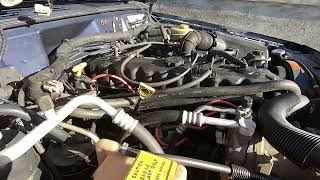
- Transmission Connectors — Two large, grey or black rectangular connectors located in the engine bay, near the transmission dipstick tube.. These are the main interface between the engine wiring harness and the transmission harness. They are prone to corrosion and contamination. Cleaning these connectors with electrical contact cleaner and applying dielectric grease is a common, simple fix for P0700.
- TCM Connector (C-26) — The 26-pin connector at the Transmission Control Module, located under the dashboard on the passenger side.. This is the central point for testing inputs (NSS, Speed Sensor) and outputs (Solenoids) without having to access the transmission directly. Probing specific pins here is a key diagnostic step.
Real Owner Repair Stories
- YouTube channel 'YONKE' (Jeep Cherokee XJ (year not specified)) — P0700 and P0758, sluggish acceleration, delayed shifting from a stop. Manually shifting from 1st worked normally. Later developed a no-crank, no-start condition.
❌ Tried (didn't work) Cleaning the two large transmission connectors near the dipstick initially seemed to work but then the no-crank issue appeared.
✅ What actually fixed it Replacing the corroded and poor-quality battery terminals. After replacement, the Jeep started immediately, the check engine light and all codes went away, and shifting returned to normal over a 90-mile test drive. - CherokeeForum user 'murad habibi' (1998 Jeep Cherokee XJ) — P0700 code present.
✅ What actually fixed it The user cleaned the two large electrical plugs near the automatic transmission dipstick. The mechanic also found and tightened loose bolts between the engine and transmission, which may have been affecting a ground connection. After this, the code cleared and the transmission worked well. - Reddit user on r/CherokeeXJ (1997 Jeep Cherokee Sport) — P0700, P1694, P1698, faulty gauge cluster, airbag light on. Gauges would go haywire when adjusting dash dimmer.
❌ Tried (didn't work) Cleaning and greasing the gauge cluster connectors., Cleaning and greasing the three main engine ground points (battery, dipstick, firewall).
✅ What actually fixed it The user discovered the ground on the back of the cylinder head was loose after a valve cover gasket job. Tightening this ground connection resolved the communication codes and gauge cluster issues. - YouTube channel 'dzlfreek' (Jeep Cherokee XJ (year not specified, likely 97+)) — Persistent P1698 (No CCD Bus message from TCM), which would also trigger P0700.
❌ Tried (didn't work) Testing multiple circuits from the junction box to various components like the ASD relay and fuel pump relay.
✅ What actually fixed it Using a wiring diagram, the owner traced the circuits and found that pin 26 on the TCM connector was not receiving its required 12V switched power from the ignition. He created a jumper wire from a known-good switched power source in the junction box to pin 26, which immediately resolved the P1698 code.
OEM Part Supersession History
56027951→N/A - 1997 is a one-year-only part.— The 1997 model year used a unique TCM. While the 1996-1997 transmissions are mechanically very similar, they use different electrical connectors. The 1998-2001 models are also different, adding an input speed sensor.
Heads up: A 1997 TCM (p/n 56027951) is required for a 1997 Cherokee. TCMs from 1996 or 1998-2001 are not directly compatible due to wiring and sensor differences.Various (e.g., 56028196AD)→56041386AB— Part consolidation and minor updates through the model years.
Heads up: TCMs from 1998-2001 are generally interchangeable with each other, as they all support the AW4 with an input speed sensor. However, it is always best to match the part number from your original module. A module from a 1997 or earlier XJ will not work.
Model Year Variations Within This Range
- 1996 vs 1997: The 1996 and 1997 AW4 transmissions are mechanically similar but use different main electrical connectors. The TCMs are also specific to each year and are not interchangeable without splicing wires.
- 1998-2001: Starting in 1998, the AW4 transmission was updated to include an input speed sensor. The TCMs for these years (e.g., part number 56041386AB) are programmed to use this sensor's data. These modules are interchangeable within the 98-01 range but are not backward compatible with 97 or earlier models.
Diagnostic Flowchart
Used vs. New Parts: Buying Guide for This Vehicle
When a used part is the smart pick: For the Neutral Safety Switch (NSS) and the Transmission Control Module (TCM), a used part from a junkyard is a very common and cost-effective strategy. Many owners pull a spare NSS to rebuild at their leisure. Since TCM failure is rare, a used, matching part number TCM is often a reliable replacement.
Donor-vehicle mileage cap: roughly under 150000 miles for the part to have meaningful remaining life.
What to inspect on the donor part:
- For an NSS: Inspect the plastic housing for cracks, especially around the mounting points, as they can become brittle and break upon removal. Ensure the electrical connector and pigtail are not damaged.
- For a TCM: Match the OEM part number exactly, especially for the 1997 model year. Check the connector pins for any signs of corrosion or damage.
- For Solenoids: Pulling used solenoids is possible but risky. It's often better to buy a new aftermarket kit due to the labor involved in dropping the pan.
- General: Look for donor vehicles that appear well-maintained and are from a dry climate to minimize corrosion.
Aftermarket brands forum-validated for this vehicle:
- For Solenoids: Aftermarket kits from brands like Rostra or those sold by reputable transmission parts suppliers are generally considered reliable. Many owners have reported long-term success with inexpensive solenoid kits found on eBay and Amazon.
- For NSS: While rebuilding the OEM switch is preferred, if a replacement is needed, some users have had success with mid-range aftermarket options, while noting that some of the cheapest versions can be poor quality.
Brands owners have reported issues with on this vehicle:
- For NSS: Some of the lowest-cost ($50 range) Neutral Safety Switches have been reported as being 'trash' or failing prematurely. One user specifically mentioned a poor experience with an Omix-Ada version.
Real Owner Stories
Aggregated from forums and TSBs cited above. Mileages and costs reflect what owners reported in those sources.
1997 Jeep Cherokee XJ
Symptoms: Check Engine Light with codes P0700 and P0705.
What fixed it: The root cause was identified as the Neutral Safety Switch (NSS) based on the P0705 code. The recommended fix was to clean the internal contacts of the existing NSS.
Source hint: NAXJA Forums - 'P0700, P0705 97 XJ'
Jeep Cherokee XJ
Symptoms: P0700 and P0758 codes, shifting issues, and eventually an intermittent no-crank condition.
What fixed it: The ultimate cause was found to be corroded battery terminals, which were cleaned or replaced to resolve all issues.
Source hint: YouTube - 'How We Fixed P0700 & P0758 On A Cherokee XJ'
Jeep Cherokee XJ
Symptoms: P0700 transmission fault code appeared.
What fixed it: The owner resolved the code by finding and repairing a cut ground wire in the main wiring harness.
Source hint: Jeep Cherokee Forum - 'Error code p0700 transmission fault code'
Jeep Cherokee XJ
Symptoms: Symptoms related to a faulty Neutral Safety Switch, such as no-start in Park or no reverse lights.
What fixed it: Many owners reported long-term success by cleaning the internal contacts of the NSS rather than replacing the entire unit.
Source hint: Jeep Cherokee Forum - 'Clean or replace Neutral Safety Switch?'
Related OBD-II Codes
Frequently Asked Questions
My Cherokee won't start unless I wiggle the shifter, and the reverse lights don't work. Is this related to the P0700 code?
Can I just clean the Neutral Safety Switch (NSS) on my XJ instead of buying a new one?
My scanner only shows P0700. How do I find the real problem?
I heard bad grounds are a problem on these Jeeps. Could a bad ground cause my P0700 and shifting issues?
What should the resistance be for the transmission solenoids in my Cherokee's AW4 transmission?
Is there a TSB for P0700 on my 2000 Jeep Cherokee?
What kind of transmission fluid should I use for a fluid change on my Cherokee?
Helpful Videos

We Have This Part in Stock

The information in this article is provided for general reference and educational purposes only. Vehicle specifications, procedures, and part compatibility can vary by production date, trim level, and region. Always consult your vehicle's factory service manual and verify part numbers before purchasing or performing repairs. Safety-critical components such as airbags, seat belts, and braking systems should be installed by a qualified professional.
- Jeep Cherokee:
- 🎬 Helpful Videos
- 🛍️ Shop This Part
- What's Unique About the 1984-2001 Jeep Cherokee
- Symptoms You May Notice
- Most Likely Causes
- Rare But Worth Checking
- Diagnosis Steps
- Parts You'll Likely Need
- Related Codes That Often Appear With This One
- Technical Service Bulletins (TSBs) & Recalls
- Platform-Specific Known Issues
- Documented NHTSA Reports
- Mechanic-Grade Diagnostic Values
- Scan Tool Commands That Help
- Wiring & Ground Locations
- Real Owner Repair Stories
- OEM Part Supersession History
- Model Year Variations Within This Range
- Diagnostic Flowchart
- Used vs. New Parts: Buying Guide for This Vehicle
- Real Owner Stories
- 1997 Jeep Cherokee XJ
- Jeep Cherokee XJ
- Jeep Cherokee XJ
- Jeep Cherokee XJ
- Related OBD-II Codes
- Frequently Asked Questions
- 🎟️ Get 5% Off