

P0700 on 1998-2002 Honda Accord: Transmission Control System Malfunction Guide
P0700 on a 1998-2002 Accord signals a transmission problem detected by the Transmission Control Module (TCM). It's a general alert, often accompanied by a flashing 'D4' light and other codes like P0730, P0740, or P0780. The most common causes are faulty shift or lock-up solenoids, but it can also point to serious internal transmission failure, a known weak point on this generation due to design flaws in clutch packs and lubrication.
- P0700 means 'check the transmission computer for more codes.' It is not a specific diagnosis.
- The most common symptoms are a Check Engine Light and a flashing 'D4' indicator.
- Always check the transmission fluid level and condition first. Use only Honda genuine ATF.
- The most likely repair for this generation Accord is replacing a faulty shift or lock-up solenoid.
- Be aware that these transmissions have a high failure rate, and a P0700 code could be an early warning of a need for a complete rebuild or replacement.
What's Unique About the 1998-2002 Honda Accord

The 1998-2002 (6th generation) Honda Accord, particularly models with the 4-speed and 5-speed automatic transmissions, is widely known for having severe transmission issues. These transmissions are prone to premature failure, often related to the 2nd or 3rd gear clutch packs wearing out due to design or material defects. This widespread problem led to multiple class-action lawsuits and warranty extensions from Honda. As a result, a P0700 code on this specific vehicle is a major red flag, often preceding catastrophic failure and requiring more than just a simple fluid change.
Symptoms You May Notice
- Check Engine Light is on
- Flashing 'D' or 'D4' light on the instrument cluster
- Harsh, delayed, or erratic shifting
- Transmission slipping between gears, especially between 1st and 2nd when cold
- Vehicle gets stuck in one gear (limp mode)
- Hesitation, stuttering, or stalling, particularly if the torque converter locks up incorrectly
- Reduced fuel economy
- Inability to shift into 4th gear
- Replacing the entire transmission without first diagnosing specific solenoids or checking fluid condition.
- Clearing the P0700 code and assuming the problem is fixed without reading the underlying, specific codes from the TCM.
- Performing a high-pressure transmission flush, which can dislodge debris and cause blockages in these known-to-be-fragile units.
Most Likely Causes

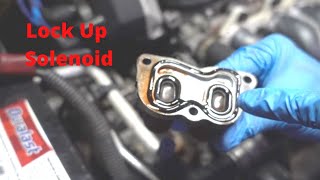
- Failed Shift Solenoid(s) or Torque Converter Clutch (TCC) Solenoid 🔴 High Probability Solenoids are a common failure point, often getting clogged with clutch material from internal wear or failing electrically. They are responsible for directing hydraulic pressure to shift gears and lock the torque converter.
How to confirm: Scan the TCM for specific solenoid-related codes (e.g., P0780, P0740, P1768). The solenoids can be tested with a multimeter for correct resistance (typically 12-25 ohms) and by applying 12V power to listen for a click. Clogged screens on the solenoid gaskets are also a common finding.
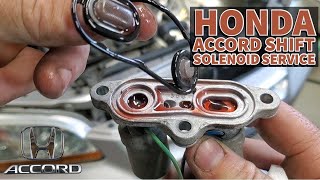
Typical fix: Replace the faulty solenoid pack. This often involves draining the transmission fluid and removing the solenoid assembly from the exterior of the transmission case. It is crucial to clean the mounting surface and replace the gasket/screen.
Est. part cost: $50-$200 - Low or Dirty Automatic Transmission Fluid (ATF) 🟡 Medium Probability The internal clutch packs on these transmissions are known to wear excessively, contaminating the fluid with friction material. This abrasive fluid can clog solenoid screens and hydraulic passages, leading to shifting problems.
How to confirm: Check the transmission fluid dipstick with the engine off and warm. The fluid should be at the correct level, pink/red in color, and not smell burnt. Dark, brown, or black fluid, especially with a burnt smell, indicates severe wear.
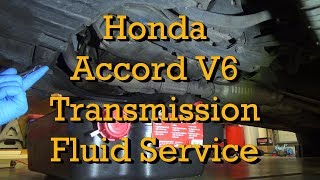
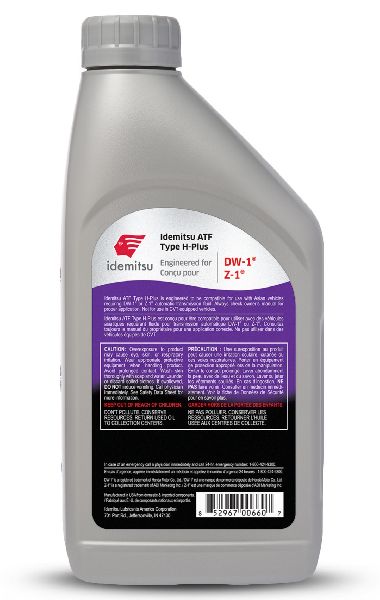
Typical fix: Perform a series of drain-and-fills (typically 3) of the transmission fluid. It is critical to use only Honda Genuine ATF (DW-1 is the modern equivalent for the original ATF-Z1). DO NOT perform a high-pressure 'flush' on these high-mileage, fragile transmissions as it can dislodge debris and cause more harm.
Est. part cost: $40-$120 - Internal Transmission Failure 🔴 High Probability The automatic transmissions in this generation of Accord (both 4-cylinder BAXA/MAXA and V6 B7XA) are infamous for a high failure rate due to design weaknesses in the 2nd and 3rd gear clutch packs and inadequate fluid lubrication in some areas.
How to confirm: This is often a diagnosis of exclusion after solenoids and fluid issues are ruled out. The presence of significant metal shavings or large amounts of clutch material in the transmission fluid pan is a definitive sign of catastrophic internal wear. A code like P0730 (Incorrect Gear Ratio) strongly points to internal mechanical problems like slipping clutches.
Typical fix: The transmission must be rebuilt or replaced with a used or remanufactured unit. A rebuild should include updated parts to address the original design flaws.
Est. part cost: $800-$2500+
Rare But Worth Checking
- Faulty Transmission Control Module (TCM): While possible, module failure is much less common than mechanical or solenoid issues. It should only be considered after all other possibilities, including wiring, have been thoroughly checked. In some cases, a faulty TCM can be the root cause if no other codes are present. NHTSA ODI #10631906 notes that the TCM monitors malfunctions of sensors and actuators relating to transmission control, and failures here can lead to abrupt changes in engine speed if the lock-up function fails.
- Damaged Wiring or Connectors: Corrosion or a broken wire at a solenoid connector or the main TCM harness can interrupt signals and trigger a fault code. A visual inspection is always worthwhile, as a corroded pin can mimic a failed solenoid.
Diagnosis Steps
- Check the level and condition of the automatic transmission fluid (ATF). The engine should be warm and turned OFF for an accurate reading on this vehicle.
- If the fluid is low, top it off with Honda ATF-DW1 and check for leaks.
- If the fluid is dark, smells burnt, or contains visible debris, a drain-and-fill is warranted, but be aware this may not solve a deeper mechanical issue.
- Use an OBD-II scanner capable of reading transmission codes to retrieve the specific P07xx or P1xxx codes from the TCM. The P0700 is just the messenger.
- Diagnose the specific code retrieved. For example, a P0740 or P1768 points to the lock-up/TCC solenoids.
- Visually inspect the wiring and connectors for the suspect component(s) for any damage, corrosion, or loose pins.
- Test the suspect solenoid. Check its resistance with a multimeter (should be 12-25 ohms) and apply 12V power to listen for an audible click.
- If solenoids and wiring test good, but symptoms and codes like P0730 persist, the issue is likely internal to the transmission (clutch packs, torque converter).
- Replace the faulty part (solenoid, sensor, etc.).
- Clear all trouble codes from both the ECM and TCM and perform a test drive, including city and highway speeds, to see if the code and symptoms return.
Parts You'll Likely Need

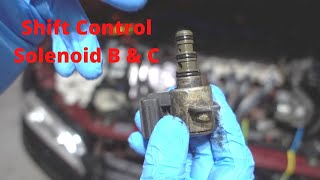
- Automatic Transmission Shift Solenoid Assembly (B or C)
(OEM #28400-P6H-013 (replaces 28400-P6H-003))— These are a very common failure point causing shifting problems and are often indicated by codes like P0780. 🎬 Watch: How to replace shift control solenoids B and C.
Trusted brands: Honda (OEM), WVE, Standard Motor Products (TCS79)
OEM price range: $85-$125
Aftermarket price range: $30-$70 - Torque Converter Clutch (Lock-Up) & Shift Solenoid Assembly
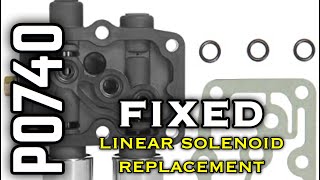
(OEM #28250-P6H-024 (replaces 28250-P6H-004))— This dual-linear solenoid assembly is responsible for locking the torque converter and controlling shift pressure. Failure is common and often triggers codes P0740 or P1768. 🎬 See this walkthrough for replacing the dual linear solenoid assembly.
Trusted brands: Honda (OEM), Rostra, Dorman
OEM price range: $250-$550
Aftermarket price range: $80-$200 - Automatic Transmission Fluid (ATF)
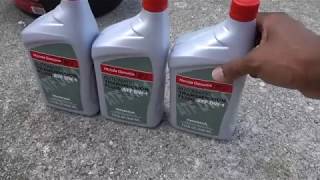
(OEM #08200-9008 (ATF-DW1))— Proper fluid level and condition are critical. Using the correct Honda-specific fluid is mandatory for these transmissions. Failure to do so can accelerate wear.
Trusted brands: Honda
OEM price range: $10-$15 per quart
Related Codes That Often Appear With This One
- P0730 — Indicates an incorrect gear ratio, often pointing to internal clutch pack slipping or hydraulic issues. This is a very common and serious companion code for P0700 on this platform.
- P0740 — Signifies a malfunction in the Torque Converter Clutch (TCC) circuit, often caused by a faulty TCC solenoid or debris blocking its function.
- P0780 — Indicates a general shift malfunction, frequently linked to a faulty shift control solenoid.
- P1758 — A Honda-specific code for a fault in the lock-up solenoid circuit, pointing directly to a specific solenoid failure.
Technical Service Bulletins (TSBs) & Recalls
- TSB 02-062: Extended the warranty on the 4-speed automatic transmission and torque converter to 7 years or 100,000 miles for certain 1999-2001 Odysseys, 2000-01 Accords, and 2000-01 Preludes due to known defects.
- TSB A00-012: An earlier bulletin that also addressed automatic transmission issues on these vehicles.
Platform-Specific Known Issues
- The automatic transmissions used in the 1998-2002 Honda Accord have a well-documented history of premature failure. This was the subject of a class-action lawsuit settled in 2006, which extended the transmission warranty for many owners.
Mechanic-Grade Diagnostic Values
- Shift Solenoid and Torque Converter Clutch (TCC) Solenoid Resistance — expected: 12 - 25 Ohms. Failure: A resistance reading outside of this range indicates a faulty solenoid coil. A user reported a reading of 31 Ohms on a failed solenoid.
Scan Tool Commands That Help
- Honda Diagnostic System (HDS) or equivalent advanced scanner: Read TCM/PCM Fault Codes — This is the primary and mandatory first step. P0700 is a generic code; a capable scanner is required to read the specific, actionable codes (like P0740, P0780, etc.) stored in the transmission control unit.
- Manual Procedure: ECU/PCM Hard Reset — To clear temporary glitches or after a repair, a hard reset can be performed by disconnecting the negative battery terminal for at least 15 minutes. This forces all control modules to reboot. Note that this will also reset radio presets and idle learn procedures.
Wiring & Ground Locations

- PCM (Powertrain Control Module) — On this generation Accord, the ECU and TCM are integrated into one module, the PCM. It is located in the center of the interior, under the dash, mounted to the floor in front of the SRS unit.. All transmission sensor inputs and solenoid outputs are processed here. A failure of the PCM itself, though rare, can cause transmission codes and symptoms.
- G101 — This is the main ground for the PCM. It is located in the engine bay on the driver's side, typically bolted to the intake manifold plenum or the thermostat housing.. A loose, corroded, or frayed G101 ground can cause intermittent and difficult-to-diagnose electrical problems, including erratic PCM behavior that may trigger false transmission codes or a no-start condition.
Real Owner Repair Stories
- YouTube channel 'rumrunner439' (1997 Honda CR-V (shares similar transmission electronics and codes with the Accord)) — Flashing 'D4' light, hard shifting (limp mode), and codes P0700 and P1768 (faulty linear solenoid).
❌ Tried (didn't work) Replacing the linear solenoid alone did not resolve the issue; the codes and symptoms remained immediately after clearing.
✅ What actually fixed it The problem was only resolved after replacing both the linear solenoid AND the main computer (PCM/ECU). After replacing both components, the codes were cleared and did not return, and the D4 light went out. - Reddit user in /r/MechanicAdvice (2002 Honda Accord Special Edition) — Codes P0700, P0780, P1751. Car revs up then shifts with a harsh pull when cold. Flashing D4 light and inability to shift into 4th gear, which is temporarily fixed by restarting the car.
❌ Tried (didn't work) The user was still in the diagnostic phase.
✅ What actually fixed it The user performed a diagnostic test on the lockup solenoids. They found one of the 'twin' solenoids had a resistance of 31 ohms, which was outside the specified range of 15-25 ohms, confirming a failed solenoid. The thread concludes with the user acknowledging the notorious transmission issues and the need to replace the faulty solenoid. - NHTSA ODI #10340249 — An owner reported that codes P0700 and P0740 were pulled on a vehicle with 76,474 miles, noting that the manufacturer was non-responsive regarding the issue.
- NHTSA ODI #10468114 — An owner experienced a jerk when shifting from reverse to drive and used a code reader to pull codes P0700 and P0740, both of which are associated with the transmission.
OEM Part Supersession History
28250-P6H-004→28250-P6H-024— Updated part for the dual linear solenoid assembly (TCC/Lock-up solenoid).
Heads up: The new part number, 28250-P6H-024, is the correct replacement for a wide range of Honda and Acura vehicles from this era, including the 1998-2007 Accord.
Model Year Variations Within This Range
- 1998-1999 vs 2000-2002: For the 4-cylinder (2.3L) engine, there are different part numbers for the complete automatic transmission assembly (BAXA type). Junkyards and Honda parts catalogs distinguish between 1998-1999 and 2000-2002 models. While they may bolt up, internal differences in sensors, wiring, or gear ratios may exist, making a direct swap ill-advised without swapping external components or confirming compatibility.
- 2001-2002: A mid-generation refresh occurred for the 2001 model year. This included a restyled front fascia, hood, and new taillight designs. V6 models received standard traction control, and side airbags became more widely available. While these changes don't directly affect the P0700 code's cause, it's important for identifying correct body parts and some feature-related wiring.
Diagnostic Flowchart
Real Owner Stories
Aggregated from forums and TSBs cited above. Mileages and costs reflect what owners reported in those sources.
2000 Honda Accord
Symptoms: Flashing D4 light and codes P0700, P0780, and P0730.
What fixed it: Identified as a classic symptom of the notorious transmission failure for this generation; a rebuild is likely needed.
Source hint: Honda-Tech.com: '2000 Honda Accord Check Engine / D4 Blink'
2002 Honda Accord
Symptoms: Morning shift flares, a flashing D4 light, and codes P0700, P0780, and P1751.
What fixed it: Confirmed by the community as hallmark signs of the well-known transmission failure for this model year, requiring major repair.
Source hint: Reddit r/MechanicAdvice: 'My Honda Accord gets a flashing D4'
2000 Honda Accord — 194900 miles
Symptoms: Failed BAXA transmission.
What fixed it: Replaced the failed BAXA transmission with a remanufactured unit that included a 3-year warranty.
Cost: $1839
Source hint: BobIsTheOilGuy.com: '98-02 Honda Accord BAXA Transmission Replacement'
1999 Honda Accord V6 — 210000 miles
Symptoms: Slipping in lower gears.
What fixed it: Faced the dilemma of repairing the known faulty transmission versus replacing the car entirely.
Source hint: Reddit r/accord: '6th gen transmission repair'
Related OBD-II Codes
Frequently Asked Questions
Does TSB 02-062 apply to my 1998-2002 Honda Accord for code P0700?
My D4 light is flashing along with the Check Engine Light. Is this related to P0700?
Should I get a transmission flush to fix the P0700 code on my Accord?
How do I check the transmission fluid level correctly on this generation Accord?
Are the solenoids a common cause for P0700 on the 1998-2002 Accord?
If I have P0700 and P0730, does that mean my transmission needs to be rebuilt?
Helpful Videos
We Have This Part in Stock



The information in this article is provided for general reference and educational purposes only. Vehicle specifications, procedures, and part compatibility can vary by production date, trim level, and region. Always consult your vehicle's factory service manual and verify part numbers before purchasing or performing repairs. Safety-critical components such as airbags, seat belts, and braking systems should be installed by a qualified professional.
- Honda Accord:
- 🎬 Helpful Videos
- 🛍️ Shop This Part
- What's Unique About the 1998-2002 Honda Accord
- Symptoms You May Notice
- Most Likely Causes
- Rare But Worth Checking
- Diagnosis Steps
- Parts You'll Likely Need
- Related Codes That Often Appear With This One
- Technical Service Bulletins (TSBs) & Recalls
- Platform-Specific Known Issues
- Mechanic-Grade Diagnostic Values
- Scan Tool Commands That Help
- Wiring & Ground Locations
- Real Owner Repair Stories
- OEM Part Supersession History
- Model Year Variations Within This Range
- Diagnostic Flowchart
- Real Owner Stories
- 2000 Honda Accord
- 2002 Honda Accord
- 2000 Honda Accord — 194900 miles
- 1999 Honda Accord V6 — 210000 miles
- Related OBD-II Codes
- Frequently Asked Questions
- 🎟️ Get 5% Off