

P0700 on 2004-2009 Dodge Durango 5.7L HEMI: Transmission Fault Causes and Fixes
P0700 on a 2004-2009 Dodge Durango indicates the transmission control module (TCM) has detected a fault and requested the check engine light. It's a general code that will be accompanied by more specific transmission codes. The first step is always to scan the TCM to find the underlying problem, which could range from low fluid to a faulty solenoid pack or speed sensor. Common accompanying codes point to the solenoid pack, speed sensors, or pressure sensors.
- P0700 is a general alert from your transmission; it is not a specific diagnosis.
- You MUST use a scan tool that can read transmission-specific codes to find the real problem.
- The most common issues are low/dirty fluid, a bad solenoid pack, or a failed speed sensor.
- Do not drive extensively with this code, as you risk causing more severe, expensive damage to the transmission.
- Always start diagnosis with the simplest things: check the fluid level and condition.
What's Unique About the 2004-2009 Dodge Durango
The 2004-2009 Dodge Durango with the 5.7L HEMI V8 was primarily equipped with the 5-speed 545RFE automatic transmission, known for its robustness but also for specific common failures. Some 3.7L and 4.7L models used the 42RLE, but the 5.7L HEMI was paired with the 545RFE. The P0700 code is a frequent issue, often leading to "limp mode," where the transmission defaults to a single gear to prevent damage. This is a well-documented experience for owners of this platform, with primary culprits being the solenoid pack and speed sensors located within or on the transmission.
Symptoms You May Notice
- Check Engine Light (Malfunction Indicator Lamp) is on.
- Transmission stuck in one gear (limp mode), often 3rd gear.
- Harsh, erratic, or delayed shifting.
- Vehicle hesitates or has trouble accelerating.
- Reduced fuel economy.
- Whining noise from the transmission area, which could indicate a failing torque converter or pump.
- Replacing the Powertrain Control Module (PCM/TCM) first. The PCM is rarely the point of failure; the problem is usually a sensor, solenoid, or fluid issue that the PCM is correctly reporting.
- Clearing the P0700 code without reading the transmission-specific codes. This erases the crucial information needed for a correct diagnosis.
- Replacing only one speed sensor when both are the same age and live in the same environment. It is often wise to replace both input and output sensors at the same time.
Most Likely Causes
- Faulty Transmission Solenoid Pack 🔴 High Probability The solenoid pack (or block) is a widely acknowledged weak point on the 545RFE transmission. It is constantly bathed in hot fluid, and the electronics are prone to failure over time, causing shifting issues and limp mode. This is one of the most discussed fixes in owner forums.
How to confirm: Requires a scan tool to check for specific solenoid-related codes (e.g., P0750, P0755, etc.). A technician can also test solenoid resistance; most shift solenoids should read around 1.3 Ohms, while the pressure control solenoid should be near 4.9 Ohms. A P0750 code (LR Solenoid Circuit) is a strong indicator the pack has an electrical fault.
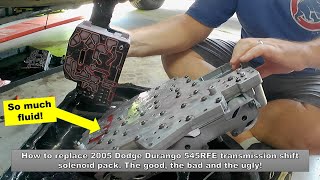
Typical fix: Replace the entire solenoid pack/block. This part is located inside the transmission oil pan and is bolted to the valve body. The job requires draining the fluid, dropping the pan, and replacing the part along with the pan gasket and filters.
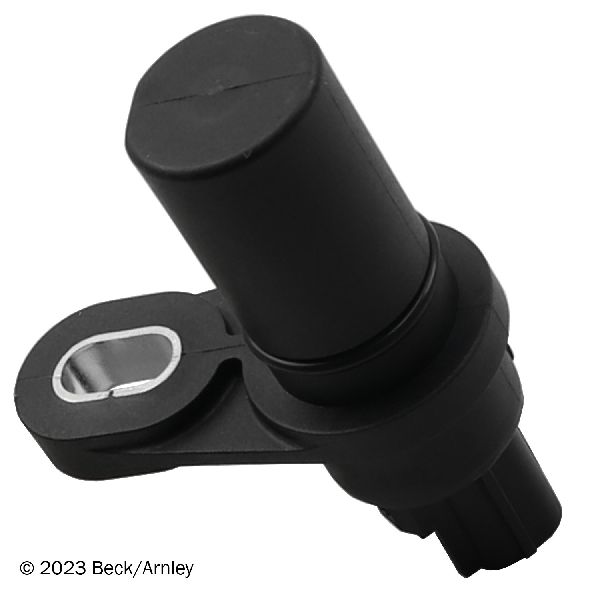
Est. part cost: $150-$450 - Failed Input/Output Speed Sensors 🟡 Medium Probability These magnetic sensors are mounted on the transmission case and can become contaminated with metallic debris from normal wear, leading to erratic or no signal. This confuses the TCM, which relies on comparing their speeds to verify gear ratios.
How to confirm: Look for specific codes like P0715 (Input Speed Sensor) or P0720 (Output Speed Sensor). The sensors can be tested for resistance; a good sensor should read between 1,000-2,000 ohms. On the 545RFE, both sensors are externally mounted on the driver's side of the transmission case, making them relatively easy to access.
Typical fix: Replace the faulty sensor(s). It is often recommended to replace both at the same time. The repair involves unplugging the electrical connector and removing a single 8mm bolt for each sensor. 🎬 See how to swap out these transmission speed sensors.
Est. part cost: $25-$75 per sensor - Low or Dirty Transmission Fluid 🟡 Medium Probability Leaks from the pan gasket, cooler lines, or the main 23-pin electrical connector O-rings can lead to low fluid levels. The 545RFE is sensitive to fluid level and condition for proper hydraulic pressure.
How to confirm: Check the transmission fluid level and condition using the dipstick with the engine running and transmission in neutral. The fluid should be bright red and not smell burnt. If it's dark, brown, or contains metal particles, there may be internal damage.
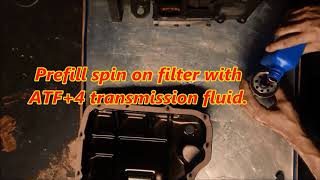
Typical fix: Top off with Mopar ATF+4. If the fluid is dirty or a leak is present, perform a transmission fluid and filter change and repair the source of the leak. The two transmission filters (a spin-on filter and a sump filter) should be changed. 🎬 Watch: How to change your fluid and filters without the mess.
Est. part cost: $50-$150 for fluid and filter kit - Faulty Transmission Control Module (TCM) ⚪ Low Probability While less common, the TCM (which is integrated into the PCM on this vehicle) can fail due to electrical issues, heat, or vibration. However, this is rarely the root cause.
How to confirm: This is a diagnosis of exclusion. If all sensors, wiring, and mechanical components test good, the PCM is the likely culprit. A professional scan tool may show a loss of communication with the module or internal processor faults.
Typical fix: Replace the PCM. This requires programming the new module to the vehicle's VIN and configuration.
Est. part cost: $200-$600 for a remanufactured unit
Rare But Worth Checking
- Damaged Wiring Harness or Connectors: The main round 23-pin electrical connector at the transmission is a known weak point for fluid leaks. Transmission fluid can wick up the harness, causing short circuits and erratic behavior. Also, check for physical damage to the harness from road debris or chafing against the chassis.
- Internal Mechanical Failure: If the transmission fluid contains a significant amount of metal shavings, it points to a severe internal problem like a failing clutch pack, torque converter, or pump, which would require a transmission rebuild or replacement. A sudden loss of all gears can point to a failed torque converter or internal pump seal.
- Faulty Transmission Range Sensor (TRS): The TRS (also known as the neutral safety switch) tells the TCM which gear is selected. If it fails, the TCM can receive conflicting information, triggering a P0700 code. This sensor is part of the solenoid pack assembly on the 545RFE and is replaced with it.
Diagnosis Steps
- Scan for Codes: Use an advanced scan tool capable of communicating with the Transmission Control Module (TCM). Do not use a basic code reader. Record all P07xx, P08xx, etc., codes present in the TCM before clearing anything.
- Check Transmission Fluid: With the vehicle warm, on a level surface, and in neutral, check the transmission fluid level and condition. Low, burnt, or contaminated fluid is a major red flag. Ensure Mopar ATF+4 is used.
- Analyze Specific Codes: The additional codes are your guide. A P0750 points to the solenoid pack. A P0720 points to the output speed sensor. A P0841 points to the pressure sensor (part of the solenoid pack).
- Inspect Wiring: Visually inspect the transmission wiring harness, especially the large round 23-pin connector on the driver's side of the transmission. Check for fluid leaks, corrosion, or pushed-out pins.
- Test Components: Based on the codes, test the suspected components. The input and output speed sensors are on the exterior of the driver's side of the case and can be easily unbolted and replaced. The solenoid pack requires dropping the transmission pan for access.
- Internal Inspection: If dropping the pan, inspect it for excessive metal shavings on the magnet. This indicates internal wear. A few fine particles are normal, but large flakes are a sign of serious trouble.
- Repair and Clear: After replacing the faulty component(s) (e.g., solenoid pack, sensors), install a new pan gasket and filters. Refill with the correct amount of Mopar ATF+4 fluid. Clear all codes from the TCM and PCM and perform a test drive, allowing the transmission to shift through all gears to confirm the repair.
Parts You'll Likely Need
- Transmission Solenoid Block (Pack)
(OEM #52119435AF (or superseding part numbers like 68376695AA))
Related Codes That Often Appear With This One
- P0750 — This code for 'Shift Solenoid 'A' (LR) Circuit Malfunction' is a very common partner to P0700 on this platform and points directly to a failure within the transmission solenoid pack.
- P0841 — This code for 'Transmission Fluid Pressure Sensor/Switch 'A' Circuit Range/Performance' often appears with P0700, pointing to an issue with the pressure sensor, which is part of the solenoid assembly on the 545RFE.
- P0720 — This code for 'Output Speed Sensor Circuit Malfunction' directly indicates a problem with the output speed sensor, a common cause for limp mode and the P0700 code.
- P0731 - P0735 — These codes for 'Incorrect Gear Ratio' in gears 1-5 are triggered when the TCM detects a mismatch between the input and output speed sensors. This can be caused by a failing sensor, a bad solenoid, or internal clutch slippage.
Technical Service Bulletins (TSBs) & Recalls
- While no TSB is a direct match for P0700 alone, bulletins like 18-095-19 exist for updating PCM software to address various drivability issues and sometimes resolve erroneous MIL illumination. It's worth checking if the vehicle's software is up to date.
- Manufacturer TSB Bulletin #S2321000006 notes that a "Service Transmission" message and MIL illumination may occur with DTC P0700-E4 (Transmission Control System MIL Request) set.
Platform-Specific Known Issues
- Real-World Repair Story: P0700, P0733, P0734: In a thread on 2CarPros.com, a 2005 Dodge truck owner with a 5.7L engine experienced P0700 with incorrect gear ratio codes P0733 and P0734. After replacing the solenoid pack, the issue persisted. He then replaced the speed sensors, which also did not fix it. The problem was ultimately resolved by replacing the solenoid pack a second time, indicating he received a defective aftermarket part initially. This highlights the importance of using quality parts and the diagnostic challenge when new parts are faulty.
Mechanic-Grade Diagnostic Values
- Shift Solenoid Resistance (LR, 2C, UD, OD, 4C) — expected: 1.0 - 1.5 Ohms (typically 1.3 Ohms). Failure: A reading outside this range indicates a faulty coil in the solenoid pack.
- Pressure Control Solenoid Resistance — expected: 4.5 - 5.5 Ohms (typically 4.9 Ohms). Failure: A reading outside this range indicates a fault in the pressure control portion of the solenoid pack.
- Input / Output Speed Sensor Resistance — expected: 1,000 - 2,000 Ohms. Failure: An open circuit (infinite resistance) or a reading significantly outside this range indicates a failed sensor.
- Solenoid Control Circuit Continuity — expected: Less than 5.0 Ohms. Failure: Resistance above 5.0 Ohms between the PCM connector and the transmission connector indicates an open or high resistance in the wiring harness.
Scan Tool Commands That Help
- Chrysler DRB III, Snap-on, Launch, or equivalent professional scanner: Quick Learn Procedure — This function must be performed after replacing the solenoid pack, valve body, or entire transmission. It resets all adaptive values to factory presets and learns the clutch volume indexes (CVIs) to ensure smooth shifting and prevent premature wear on the new components.
Wiring & Ground Locations
- Transmission Solenoid / TRS Assembly Connector — A large, round, 23-pin connector on the driver's side of the transmission case.. This is the main electrical interface for the entire transmission. It is a known point for fluid leaks where ATF can seep past the O-rings and contaminate the pins or wick up the wiring harness, causing shorts and communication errors that trigger P0700.
- Pin 20 (T20) - L/R Solenoid Control — At the 23-pin transmission connector.. This specific pin controls the Low/Reverse solenoid. If a P0750 code is present, testing for continuity and shorts to ground at this pin can isolate the fault between the wiring and the solenoid pack itself.
- Pin 12 - Pressure Control Solenoid — At the 23-pin transmission connector.. This pin controls the main line pressure solenoid. Faults here can cause erratic shifting and codes like P0841.
Real Owner Repair Stories
- YouTube user 'Major Dad's Garage' (2005 Dodge Durango 5.7L HEMI) — Check engine light with codes P0700 and P0750 (LR Solenoid Circuit Malfunction). Transmission was stuck in limp mode (3rd gear).
❌ Tried (didn't work) The user went straight for the most likely cause based on the codes.
✅ What actually fixed it Replacing the transmission solenoid pack. The video documents the entire process of dropping the pan, accessing the valve body, and swapping the solenoid pack, which resolved the codes and limp mode. - YouTube user 'A Guy And His Projects' (Jeep Commander with 545RFE (same transmission)) — Repeated "Transmission Overtemp" warning message on the dash, even when scan tool data showed fluid temperature was normal (150-170°F). The temperature would falsely spike to 350°F, triggering the warning and high-speed fan operation.
❌ Tried (didn't work) Initial diagnosis confirmed the engine and transmission were not actually overheating.
✅ What actually fixed it Replacing the solenoid pack. The temperature sensor for the transmission is integrated into the solenoid pack assembly. A faulty sensor was sending erratic readings to the computer. Replacing the entire pack, which included the new sensor, permanently fixed the false overtemp warnings. - NHTSA ODI #11492165 — An owner reported that their vehicle was diagnosed by an independent mechanic with DTC P0700, which was attributed to a transfer case motor and possibly a snap ring failure.
Documented NHTSA Reports
- NHTSA ODI #11655418: An owner reported that their vehicle failed to restart on several occasions and was towed. A dealer retrieved codes U0100 and P0700 and flashed the computer, but the failure persisted.
- NHTSA ODI #11085068: A report describes a vehicle experiencing a transaxle control system malfunction (P0700) along with a communication error (U1146), input speed sensor circuit no signal (P0717), and transmission fluid temperature sensor low input (P0712).
- NHTSA ODI #10846349: An owner experienced the check engine light with codes P0700 and P0760 at approximately 64,000 miles, which eventually required a transmission overhaul including fluid and filter changes.
OEM Part Supersession History
Various PNs with black connector (e.g., 5170877AA)→52119435AF (White Connector), which is further superseded by 68376695AA (Gray Connector)— Updated design for improved durability and reliability.
Heads up: When upgrading a pre-2004 vehicle from the original black connector solenoid to the newer white/gray connector style, the TRS cam plate (detent plate) inside the transmission must also be replaced to ensure compatibility with the new solenoid's integrated range sensor.
Model Year Variations Within This Range
- 1999-2003 (in other Dodge/Jeep applications): These early models used a solenoid pack with a black electrical connector. They are known to be less reliable.
- 2004-2008: These models came from the factory with an updated solenoid pack featuring a white electrical connector. This is the version most 2004-2009 Durangos will have.
- 2009+: Later models and service replacement parts may have a gray electrical connector (like PN 68376695AA). These are generally interchangeable with the white connector versions for the 2004-2009 Durango.
Diagnostic Flowchart
Used vs. New Parts: Buying Guide for This Vehicle
When a used part is the smart pick: Given the high failure rate of the electronics, a used solenoid pack is a significant gamble and generally not recommended. A used PCM (TCM) from a donor vehicle with the exact same part number can be a cost-effective option if the module is confirmed to be the fault, but it will require programming to the vehicle's VIN.
Donor-vehicle mileage cap: roughly under 80000 miles for the part to have meaningful remaining life.
What to inspect on the donor part:
- For a PCM: Match the part number exactly. Ensure the donor vehicle was not involved in a flood or fire.
- For a solenoid pack (if you must buy used): Ask for the mileage of the donor vehicle. Visually inspect the connector for any signs of corrosion, melted plastic, or fluid contamination.
OEM-only on this vehicle (don't cheap out):
- Transmission Solenoid Pack: While some aftermarket options exist, Mopar OEM parts have the highest rate of success and longevity. Many forum users report issues with cheaper aftermarket solenoids failing prematurely.
Aftermarket brands forum-validated for this vehicle:
- Sonnax (for valve body components and repair kits, not complete solenoids)
- Rostra (often considered a reliable aftermarket solenoid manufacturer)
Brands owners have reported issues with on this vehicle:
- Unbranded, no-name solenoid packs from online marketplaces are frequently cited as failing within months or even weeks of installation.
Real Owner Stories
Aggregated from forums and TSBs cited above. Mileages and costs reflect what owners reported in those sources.
2005 Dodge truck with a 5.7L engine
Symptoms: Experienced P0700 with incorrect gear ratio codes P0733 and P0734.
What fixed it: The problem was resolved by replacing the solenoid pack a second time, as the first replacement part was a defective aftermarket unit.
Source hint: Real-World Repair Story from 2CarPros.com
2006 Durango with 4.7L and 545RFE
Symptoms: Vehicle was in limp mode with codes P0700 and P0750.
What fixed it: The discussion confirmed that the correct fix was the replacement of the solenoid pack due to the P0750 electrical fault code.
Source hint: DodgeForum.com thread titled 'P0700 and P0750 on '06 4.7L with 545RFE'
Related OBD-II Codes
Frequently Asked Questions
What is the most common cause for a P0700 code on my 2004-2009 Durango's 545RFE transmission?
My Durango is stuck in 'limp mode' and won't shift out of one gear. What part is the likely culprit?
I have codes P0700 and P0750. What does this combination mean for my Durango?
What type of transmission fluid should I use in my 5.7L HEMI Durango?
Where are the input and output speed sensors located on the transmission?
If I'm replacing the solenoid pack, what other parts should I change at the same time?
How likely is it that the Transmission Control Module (TCM) is the cause of my P0700 code?
Helpful Videos
Used OEM Parts in Stock

New Aftermarket Parts Available


The information in this article is provided for general reference and educational purposes only. Vehicle specifications, procedures, and part compatibility can vary by production date, trim level, and region. Always consult your vehicle's factory service manual and verify part numbers before purchasing or performing repairs. Safety-critical components such as airbags, seat belts, and braking systems should be installed by a qualified professional.
- Dodge Durango:
- 🎬 Helpful Videos
- 🛍️ Shop This Part
- What's Unique About the 2004-2009 Dodge Durango
- Symptoms You May Notice
- Most Likely Causes
- Rare But Worth Checking
- Diagnosis Steps
- Parts You'll Likely Need
- Related Codes That Often Appear With This One
- Technical Service Bulletins (TSBs) & Recalls
- Platform-Specific Known Issues
- Mechanic-Grade Diagnostic Values
- Scan Tool Commands That Help
- Wiring & Ground Locations
- Real Owner Repair Stories
- Documented NHTSA Reports
- OEM Part Supersession History
- Model Year Variations Within This Range
- Diagnostic Flowchart
- Used vs. New Parts: Buying Guide for This Vehicle
- Real Owner Stories
- 2005 Dodge truck with a 5.7L engine
- 2006 Durango with 4.7L and 545RFE
- Related OBD-II Codes
- Frequently Asked Questions
- 🎟️ Get 5% Off