

P0700 on 2007-2013 Chevrolet Silverado 1500: Transmission Fault Causes and Fixes
P0700 on a 2007-2013 Silverado means the transmission has a problem. It's a general alert, so you must use an advanced scanner to read the specific codes from the Transmission Control Module (TCM). The most common culprits are faulty shift solenoids (4L60-E), a bad internal TCM/TEHCM (6L80), or a faulty internal mode switch (4L60-E).
- P0700 is a generic alert. You MUST use a scanner that can read transmission codes to find the real problem.
- The most common causes are faulty shift solenoids (especially on 4-speeds) or a bad Transmission Control Module (TCM).
- Always check the transmission fluid level and condition first; it's a simple check that can prevent a misdiagnosis.
- Do not drive the vehicle extensively with this code, as you risk severe transmission damage and unpredictable shifting behavior.
- This is a job best left to a professional unless you are an experienced DIYer with the correct diagnostic tools.
What's Unique About the 2007-2013 Chevrolet Silverado 1500

The 2007-2013 Silverado 1500 (GMT900 generation) used different transmissions, primarily the 4-speed 4L60-E and the 6-speed 6L80. Diagnostics for a P0700 code can differ significantly between them. For example, 4L60-E models are well-known for individual shift solenoid failures and internal mode switch (range sensor) failures, which are relatively accessible inside the pan. In contrast, 6L80-equipped trucks have the TCM integrated with the valve body inside the transmission pan (called a TEHCM), making a TCM failure a more involved and expensive repair that requires programming.
Symptoms You May Notice
- Check Engine Light is on
- Harsh, erratic, or delayed shifting
- Transmission getting stuck in one gear ('limp mode')
- Vehicle fails to move forward or reverse
- Slipping between gears
- Shuddering or shaking from the transmission
- Reduced fuel economy
- Blinking gear selector indicator light ('P R N D L') on the dash
- Replacing the entire transmission without first scanning the TCM for specific codes. The problem is often a much cheaper component like a single solenoid or sensor.
- Clearing the P0700 code without fixing the underlying issue. The code and the symptoms will almost certainly return.
- Replacing the TCM/TEHCM when the actual problem is a poor ground connection or a wiring issue.
Most Likely Causes

- Faulty Transmission Shift Solenoid(s) 🔴 High Probability Shift solenoids are a common wear item in automatic transmissions, especially the 4L60-E. They are electro-mechanical valves that control fluid flow to engage different gears and can fail or stick over time due to fluid contamination or simple wear.
How to confirm: Scan the TCM for specific solenoid-related codes (e.g., P0751 for 1-2 Shift Solenoid, P0756 for 2-3 Shift Solenoid). A mechanic can also test the solenoid's resistance with a multimeter after removing the transmission pan. For a 4L60-E, the 1-2 and 2-3 shift solenoids should have a resistance of 20-30 ohms.
Typical fix: Replace the faulty solenoid or solenoid kit. 🎬 Watch: Step-by-step guide to replacing 4L60E shift solenoids. This is done by removing the transmission pan to access the valve body where the solenoids are mounted.
Est. part cost: $20-$150 - Faulty Transmission Control Module (TCM/TEHCM) 🟡 Medium Probability On 6L80 transmissions, the TCM is located inside the transmission as part of the Transmission Electro-Hydraulic Control Module (TEHCM). This internal location subjects it to constant heat and vibration, leading to a higher failure rate. On 4L60-E models, the external TCM can still fail but it's less common.
How to confirm: Scan for communication error codes (like U0100) or specific TCM internal fault codes. If the scanner cannot communicate with the TCM at all, it's a strong indicator of TCM failure, assuming wiring and grounds are intact.
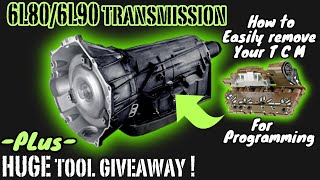
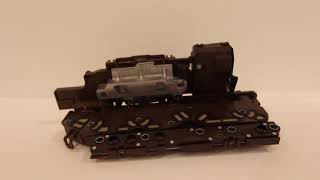
Typical fix: Replace the TCM. For 6L80 transmissions, this involves replacing the entire valve body/TEHCM unit inside the pan. 🎬 See this expert advice on 6-speed TEHCM and TCM replacements. The new module will require programming to the vehicle.
Est. part cost: $200-$800 - Low or Dirty Transmission Fluid 🟡 Medium Probability Leaks can develop over time from pan gaskets, cooler lines, or seals. Fluid also degrades with heat and mileage. Incorrect fluid levels or contaminated fluid can cause shifting problems, overheating, and solenoid issues.
How to confirm: Check the transmission fluid level and condition using the dipstick (if equipped) with the engine running and transmission warm. The fluid should be bright red and not smell burnt. If it's brown/black or has metal particles, there is likely a more serious internal problem.
Typical fix: If low, top off with DEXRON-VI fluid. If dirty, perform a transmission fluid and filter change. A fluid flush on a high-mileage, poorly maintained transmission can sometimes cause more issues.
Est. part cost: $50-$200 - Faulty Internal Mode Switch (Transmission Range Sensor) 🟡 Medium Probability On 4L60-E transmissions from 2009 onwards, the Transmission Range Switch (also called Neutral Safety Switch or Internal Mode Switch) was moved inside the transmission pan. This component tells the TCM what gear is selected. Its failure is a known issue, causing no gear indicator on the dash and harsh shifts.
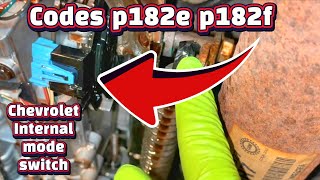
How to confirm: Symptoms include a loss of the gear indicator display on the dashboard and harsh shifting. Scan the TCM for codes like P182F or P182E. The switch can be tested with a multimeter for continuity across different pins depending on gear selection.
Typical fix: Replace the internal mode switch, which requires dropping the transmission pan and valve body. 🎬 Watch: How to replace the internal mode switch and range sensor.
Est. part cost: $40-$100 - Wiring or Ground Issues ⚪ Low Probability The wiring harness to the transmission is exposed to road debris, heat, and moisture. More specifically, poor ground connections are a known GM issue and can cause a host of electrical problems, including erratic TCM behavior. A bad ground from the engine block to the chassis or a faulty PCM ground can be the culprit.
How to confirm: Visually inspect the wiring harness leading to the transmission and the main connector. Check and clean all major ground straps from the battery to the frame, frame to the engine, and the specific PCM ground on the engine block.
Typical fix: Repair the damaged section of wiring, replace the affected connector, or clean/replace corroded ground straps.
Est. part cost: $10-$100
Rare But Worth Checking
- Internal Mechanical Failure: If the transmission fluid is full of metal shavings, it indicates a severe internal problem like a failed clutch pack, torque converter, or other hard parts. In this case, P0700 is just the initial warning for a much larger issue requiring a transmission rebuild or replacement. NHTSA ODI #11397361 describes a case where a vehicle would not shift into 6th gear, and the dealer found metal shavings in the pan and burnt fluid.
- Faulty Input/Output Speed Sensors: A failure of the transmission's input or output speed sensors can prevent the TCM from knowing how fast the transmission is spinning, leading to erratic shifts and limp mode. This will typically set a specific sensor code (like P0717) along with P0700.
Diagnosis Steps
- Connect an OBD-II scanner that can read manufacturer-specific transmission codes. A basic code reader will only show P0700.
- Record all codes from both the Engine Control Module (ECM) and the Transmission Control Module (TCM). The TCM codes are the key to the diagnosis.
- Check the transmission fluid level and condition. The fluid should be at the correct level, bright red, and free of debris or a burnt smell. NHTSA ODI #11505490 notes a case where P0700 was accompanied by glycol contamination in the transmission fluid.
- Inspect all major vehicle ground connections, especially the battery-to-chassis and engine block grounds. Clean any corrosion and ensure they are tight. This is a common and often overlooked cause of GM electrical issues.
- Based on the specific TCM codes, investigate the corresponding component. For solenoid codes (P075x), this involves testing the solenoid's resistance. For range sensor codes (P182x), this points to the internal mode switch.
- Inspect the transmission wiring harness and connectors for any visible damage, corrosion, or loose pins. Pay close attention to where the harness might rub against the frame or engine components.
- If communication codes (U-codes) are present or the TCM is unresponsive, test the power and ground circuits to the TCM before condemning the module.
- If no other clear cause is found and symptoms persist, the issue may be a failing TCM/TEHCM or an internal mechanical problem requiring professional diagnosis.
Parts You'll Likely Need

- Transmission Shift Solenoid Kit (4L60-E)
(OEM #24230298 (1-2 or 3-4 Shift Solenoid))— Shift solenoids are a very frequent cause for transmission shifting problems that trigger a P0700 code on the 4L60-E transmission.
Trusted brands: ACDelco, Duralast, Dorman
Related Codes That Often Appear With This One
- P0751 — Indicates an issue with Shift Solenoid 'A' (1-2 solenoid), a common failure point on the 4L60-E.
- P0756 — Indicates an issue with Shift Solenoid 'B' (2-3 solenoid), another common failure on the 4L60-E.
- P0741 — Points to a problem with the Torque Converter Clutch (TCC) solenoid circuit, which can also trigger a P0700. NHTSA ODI #11397361 reports this code appearing alongside P0700 before a full transmission replacement.
- U0100 — Signifies 'Lost Communication with ECM/PCM'. If seen with P0700, it strongly suggests a wiring issue, a bad ground, or a failed TCM.
- P182F — Points directly to a fault in the Internal Mode Switch (Range Sensor) on later 4L60-E models.
- P0717 — Indicates no signal from the Input Speed Sensor, which can cause erratic shifting and trigger the P0700 code.
- P0711 — Transmission Fluid Temperature Sensor circuit fault; NHTSA ODI #11648955 notes this code periodically appearing with P0700.
- P0796 — Pressure Control Solenoid performance; NHTSA ODI #11505490 describes this code occurring when a vehicle entered limp mode on the highway.
Technical Service Bulletins (TSBs) & Recalls
- 23-NA-210: Discusses a diagnostic check for DTCs P18AE and/or P0700 on low-mileage vehicles, instructing technicians to clear codes and perform a drive cycle to see if they return before proceeding with further diagnostics. This TSB applies to 2023-2024 models but the principle is relevant.
Platform-Specific Known Issues
- Internal Mode Switch Failure (2009+ 4L60-E): For the 2009 model year, GM moved the neutral safety switch/range sensor inside the transmission pan on the 4L60-E. This 'Internal Mode Switch' is a common failure item. Symptoms are classic for P0700: harsh shifting and, most notably, the gear selection indicator (PRNDL) on the dash goes blank. This often throws code P182F. A repair video for this specific issue shows the step-by-step replacement process.
- Poor Ground Connections: A recurring theme across GM trucks of this era is electrical issues caused by poor or corroded ground wires. A bad ground between the engine and chassis, or a faulty PCM ground on the back of the engine block, can cause voltage fluctuations that confuse the TCM, leading to a P0700 code and other seemingly unrelated electrical gremlins. Before replacing expensive modules, it is crucial to inspect, clean, and tighten all main ground points.
Mechanic-Grade Diagnostic Values
- 4L60-E 1-2 & 2-3 Shift Solenoid Resistance — expected: 20-30 Ohms (most healthy solenoids test in the 20-25 Ohm range).. Failure: A reading outside the 20-30 Ohm range indicates a failed solenoid.
- 4L60-E TCC (Torque Converter Clutch) Solenoid Resistance — expected: 20-40 Ohms.. Failure: Resistance outside this range suggests a faulty TCC solenoid.
- 6L80 On/Off Shift Solenoid Resistance — expected: 20-40 Ohms (some sources state a tighter 20-24 Ohms).. Failure: A reading outside of the specified range indicates a failed solenoid, requiring TEHCM replacement.
- 6L80 PWM (Pulse-Width Modulated) Solenoid Resistance (includes pressure control solenoids) — expected: 3-8 Ohms (some sources state a tighter 5-6 Ohms).. Failure: Resistance outside this range points to an internal failure in the TEHCM.
- Alternator Voltage Output at Idle — expected: 13.5 to 14.5 volts.. Failure: Low or fluctuating voltage can cause unpredictable behavior in the TCM and other modules, sometimes triggering a P0700.
Scan Tool Commands That Help

- GM Tech2 / GDS2: Solenoid Automated Cleaning Process — For 6L80 transmissions, if a solenoid performance DTC is present, a technician can run this automated process. The scan tool commands the TEHCM to cycle all solenoids to flush out potential debris before condemning the expensive TEHCM unit.
- GM Tech2 / GDS2: TEHCM Programming / VIN Relearn — This is mandatory after replacing the TEHCM on a 6L80 transmission. The new module must be programmed with the vehicle's VIN and specific calibration files before it will allow the vehicle to start or shift correctly.
- Advanced OBD-II Scanner (e.g., Launch, Autel): Live Data - Transmission Range Sensor — When diagnosing a suspected Internal Mode Switch (IMS) failure, view the live data for the range sensor. As you move the gear selector, the scanner display should match the selected gear (P, R, N, D, etc.) in real-time. If the display is incorrect, freezes, or shows an invalid range, it confirms the IMS is faulty.
Wiring & Ground Locations
- G103 & G104 — G103 is on the front of the right cylinder head. G104 is on the front of the left cylinder head.. These are primary engine block grounds. A poor connection at these points can cause voltage discrepancies and communication errors between the ECM and TCM, leading to a P0700 code.
- G107 — Located on the top left rear of the engine, often a braided strap from the engine to the firewall.. This is a critical engine-to-body ground. If this strap is loose, corroded, or broken (especially after an engine replacement), it can cause a wide range of electrical issues, including no-start conditions and transmission communication faults like P0700.
- Transmission Main Connector (X184 on some diagrams) — The main round connector on the passenger side of the transmission case.. This is the primary interface between the vehicle's main wiring harness and the transmission's internal components (solenoids, sensors, TEHCM). Corrosion, bent pins, or a loose connection here can cause nearly any transmission-related code, including P0700 and U-codes for lost communication.
- TCM Connector (4L60-E) — For models with an external TCM (primarily 4L60-E), it is often located in the engine compartment, near the battery.. The pins for power, ground, and communication lines at this connector are critical. A bad connection or corroded pin can mimic a failed TCM.
Real Owner Repair Stories
- Reddit user in r/MechanicAdvice (2013 Silverado 1500, high mileage) — P0700 code appeared after an engine replacement. Sometimes fails to move forward when put in Drive, but reverses fine. Other days it works perfectly.
❌ Tried (didn't work) Took it to a dealership, who suggested dropping the pan and likely replacing the transmission.
✅ What actually fixed it A commenter suggested checking the engine-to-firewall braided ground cables, implying they were likely not hooked up properly after the engine swap, which is a common cause for these exact symptoms. - NHTSA ODI #11694754 — An owner reported that after a transmission service (fluid and filter), the P0700 and P2727 codes continued. A shop eventually found burnt fluid and clutch material in the pan, necessitating a transmission replacement.
- NHTSA ODI #11674419 — An owner experienced shifts that resulted in the vehicle being unable to surpass 30 MPH. The CEL displayed codes P0747 and P0700, leading to a suspected transmission valve body issue.
OEM Part Supersession History
24256861 / 24256863→Varies by year; later numbers include 24274046, 24285393, 24294364— Original TEHCM units for the 6L80 had known issues with pressure switches and solenoid failures. Later revisions featured improved solenoids, updated logic, and better thermal tolerance.
Heads up: TEHCM units are NOT interchangeable between years. The internal calibration and logic are specific to the model year and vehicle platform. Installing the wrong year TEHCM will cause immediate limp mode and communication failures. The correct part must be identified by the Tag ID on the original unit.
Model Year Variations Within This Range
- 2009-2013 (4L60-E only): Starting in 2009, the Transmission Range Switch (also called Neutral Safety Switch) was moved from the outside of the transmission case to inside the oil pan, becoming the 'Internal Mode Switch' (IMS). This makes replacement more involved, requiring removal of the pan and valve body. Failure commonly sets codes P182E or P182F alongside P0700.
Diagnostic Flowchart
Used vs. New Parts: Buying Guide for This Vehicle
When a used part is the smart pick: For trucks with the external TCM (4L60-E), a used TCM from a reputable salvage yard can be a cost-effective option, as they are plug-and-play and do not typically require programming. A used external vehicle speed sensor is also a low-risk purchase.
Donor-vehicle mileage cap: roughly under 120000 miles for the part to have meaningful remaining life.
What to inspect on the donor part:
- For a used TCM, ensure the part number matches exactly and check for any signs of water intrusion or physical damage to the case and connectors.
- Verify the donor vehicle was not involved in a flood or fire.
- Ask for the donor vehicle's VIN to check for any major reported issues if possible.
OEM-only on this vehicle (don't cheap out):
- Transmission Electro-Hydraulic Control Module (TEHCM) for 6L80: Due to the complexity, high failure rate of non-OEM units, and mandatory VIN programming, using a new or professionally remanufactured OEM (ACDelco) unit is critical for a lasting repair.
- Internal Mode Switch (IMS): Aftermarket versions are known to have a high failure rate. Stick with ACDelco for this part to avoid a repeat repair.
- Shift Solenoids: While many aftermarket brands exist, ACDelco solenoids are strongly recommended by transmission specialists for reliability in 4L60-E transmissions.
Brands owners have reported issues with on this vehicle:
- Unbranded or 'white box' TEHCMs and shift solenoids from online marketplaces are extremely risky and often fail quickly.
Real Owner Stories
Aggregated from forums and TSBs cited above. Mileages and costs reflect what owners reported in those sources.
2013 Silverado 1500
Symptoms: Truck was throwing a P0700 code and would fail to move forward intermittently after an engine replacement.
What fixed it: The suggested fix was to check wiring and ground connections that may have been disturbed during the engine swap before condemning the transmission.
Source hint: Reddit r/MechanicAdvice - 'Chevy Silverado 1500 throwing P0700 Code'
2009+ Silverado with 4L60-E
Symptoms: Harsh shifting and the gear selection indicator (PRNDL) on the dash went blank.
What fixed it: The issue was resolved by replacing the Internal Mode Switch located inside the transmission pan.
Source hint: vehicle_specific_issues titled 'Internal Mode Switch Failure (2009+ 4L60-E)'
Chevrolet Silverado 1500 (GM truck of this era)
Symptoms: A P0700 code appeared along with other seemingly unrelated electrical gremlins.
What fixed it: The problem was traced to poor or corroded ground wires. The fix was to inspect, clean, and tighten all main ground points, such as the engine-to-chassis ground.
Source hint: vehicle_specific_issues titled 'Poor Ground Connections'
Chevrolet Silverado 1500
Symptoms: Intermittent P0700 and P0607 codes that would clear on their own.
What fixed it: The issue was determined to be a transient electrical glitch. The code did not indicate a hard failure as it did not consistently return, so no repair was immediately necessary.
Source hint: GM-Trucks.com - 'Random P0700 and P0607 Codes'
Documented NHTSA Reports
NHTSA ODI #11505490
An owner reported that while driving on a highway, the transmission went into limp mode, reducing speed to 1st gear. Codes P0700 and P0796 were present, and the transmission fluid was found to be contaminated with glycol.
NHTSA ODI #11648955
An owner experienced a P0711-Transmission Fluid Temperature Sensor "A" Circuit code and a P0700-Transmission Control System Malfunction. The P0711 code had periodically appeared multiple times in the past.
Related OBD-II Codes
Frequently Asked Questions
My 2009 Silverado's gear indicator (PRNDL) is blank and it's shifting very hard. Is this related to the P0700 code?
I have a 6L80 transmission in my Silverado. What's the most likely cause of a P0700 code for my specific truck?
My mechanic can't communicate with the TCM. Does that automatically mean the TCM is bad?
I just had my engine replaced and now I have a P0700 code. Is my transmission failing?
What should the resistance be for the shift solenoids in my 4L60-E transmission?
What type of transmission fluid should I use for a fluid change on my 2007-2013 Silverado?
Helpful Videos

Used OEM Parts in Stock

New Aftermarket Parts Available





The information in this article is provided for general reference and educational purposes only. Vehicle specifications, procedures, and part compatibility can vary by production date, trim level, and region. Always consult your vehicle's factory service manual and verify part numbers before purchasing or performing repairs. Safety-critical components such as airbags, seat belts, and braking systems should be installed by a qualified professional.
- Chevrolet Silverado 1500:
- 🎬 Helpful Videos
- 🛍️ Shop This Part
- What's Unique About the 2007-2013 Chevrolet Silverado 1500
- Symptoms You May Notice
- Most Likely Causes
- Rare But Worth Checking
- Diagnosis Steps
- Parts You'll Likely Need
- Related Codes That Often Appear With This One
- Technical Service Bulletins (TSBs) & Recalls
- Platform-Specific Known Issues
- Mechanic-Grade Diagnostic Values
- Scan Tool Commands That Help
- Wiring & Ground Locations
- Real Owner Repair Stories
- OEM Part Supersession History
- Model Year Variations Within This Range
- Diagnostic Flowchart
- Used vs. New Parts: Buying Guide for This Vehicle
- Real Owner Stories
- 2013 Silverado 1500
- 2009+ Silverado with 4L60-E
- Chevrolet Silverado 1500 (GM truck of this era)
- Chevrolet Silverado 1500
- Documented NHTSA Reports
- NHTSA ODI #11505490
- NHTSA ODI #11648955
- Related OBD-II Codes
- Frequently Asked Questions
- 🎟️ Get 5% Off