

OBD-II Code P0607: Control Module Performance
The Ultimate 2026 Guide to Diagnosing and Fixing P0607
- Never drive with a P0607 code, as the resulting sudden engine stalling or no-start conditions create an immediate, severe safety hazard.
- Always test the battery and charging system first, as voltage drops below 9.5V during cranking frequently trigger a false P0607 code.
- Perform a voltage drop test on the PCM ground circuit to ensure resistance is below 100 millivolts before condemning the $1,000+ computer module.
- Check for manufacturer Technical Service Bulletins (TSBs), as a $150 dealership software reflash permanently resolves this code on many modern vehicles.
What Does P0607 Mean?

P0607 means your car's main computer, known as the Powertrain Control Module (PCM) or Engine Control Module (ECM), failed an internal self-test. This computer acts as the 'brain' of your vehicle, managing the engine, transmission, and numerous other essential systems. To ensure its own integrity, the PCM constantly runs internal self-checks. When the result of one of these checks doesn't match the expected outcome, the computer flags itself as having a performance problem and stores the P0607 code.
Technical definition: The official SAE/OBD-II definition for P0607 is "Control Module Performance." This generic code indicates that the Powertrain Control Module (PCM) or one of its co-processors detected an internal fault during its self-check routine. This is a hardware failure on the circuit board, a software corruption issue, or a problem with one of the internal processors.
Can I Drive With P0607?
No — Do Not Drive. Do not drive with this code. The P0607 code signifies a critical fault in the vehicle's main computer (PCM), which causes sudden and unpredictable engine stalling, complete loss of power while driving, or a no-start condition that leaves you stranded. Continuing to drive causes further damage to other systems if the PCM sends incorrect commands.
Common Causes

- Low or Unstable Voltage (Very Common) — A weak battery, failing alternator, or parasitic drain provides unstable power to the PCM. Voltage fluctuations disrupt the PCM's self-tests and trigger a P0607, even if the module itself is fine. The PCM requires a stable supply above 9.5V during cranking to function correctly.
- Wiring and Grounding Issues (Common) — Damaged wires, loose pins in the PCM connector, or a corroded chassis ground interrupt the PCM's power or data signals. A poor ground is a frequent, often-overlooked cause that mimics internal PCM failure.
- Software Corruption or Outdated Firmware (Common) — An incomplete update, data corruption after a jump-start, or a manufacturer-issued software bug causes this code. A Technical Service Bulletin (TSB) reflash often resolves it.
- Internal PCM/ECM Failure (Common) — The internal processor, memory, or circuit board of the computer fails due to age, heat cycles, vibration, or electrical surges.
- External Sensor Failure (Less Common) — On specific vehicles (notably Toyota), a shorted external sensor wired directly to the PCM, like an oxygen sensor, sends incorrect voltage back to the module, triggering a P0607 code.
- Water Intrusion / Moisture Damage (Rare) — Water leaking onto the PCM or moisture wicking into its connectors causes short circuits on the module's circuit board.
- Aftermarket Modifications or Tuning (Rare) — Improperly installed performance chips or custom ECU tuning software conflicts with the PCM's factory programming and internal self-checks.
Symptoms

- Check Engine Light is On — The Malfunction Indicator Lamp (MIL) illuminates on the dashboard. In severe cases where a misfire is also detected, it flashes.
- Engine Stalls or Shuts Off While Driving — The engine stalls unexpectedly at idle or while cruising at speed, creating a significant safety hazard.
- No-Start or Hard-Start Condition — The engine cranks but fails to start, or does not crank at all because the PCM stops commanding the starter relay.
- Reduced Engine Power and Poor Acceleration — The vehicle feels sluggish and unresponsive as the PCM triggers a protective 'limp mode,' limiting speed and RPMs.
- Erratic Transmission Shifting — The transmission shifts harshly, gets stuck in one gear, or fails to shift entirely because the PCM controls its operation.
- Multiple Unrelated Warning Lights — Because the PCM communicates with many other modules, its failure causes other warning lights like ABS, Traction Control, or security lights to illuminate simultaneously.
- Poor Fuel Economy — If the PCM is unable to properly manage the engine's fuel and air mixture, a noticeable drop in fuel efficiency occurs.
Diagnostic Flowchart

Tap your situation to follow the diagnostic path that matches what you're seeing on this code.
Common Fixes & Costs
- Replace the Battery — Parts: $150-$300, Labor: $25-$75, ~0.5 hr book time (DIY)
- Reflash/Reprogram the PCM — Parts: $0, Labor: $150-$250, ~1 hr book time (Professional)
- Repair Wiring or Ground Connection — Parts: $10-$50, Labor: $150-$300, ~1.5 hr book time (Intermediate)
- Replacing a Faulty External Sensor (e.g., O2 Sensor)
— Parts: $50-$200, Labor: $50-$150, ~0.8 hr book time
(DIY)
Toyota RAV4 (2013-2018, Downstream): OEM 89465-0R050 (Alt: {"brand": "Denso (OE Supplier)", "part_number": "234-4622", "price_comparison": "$55-$75"}, {"brand": "Bosch", "part_number": "13355", "price_comparison": "$100-$120"}) - Replace the Alternator — Parts: $250-$500, Labor: $150-$350, ~2 hr book time (Intermediate)
- Replace the PCM/ECM
— Parts: $500-$1,200, Labor: $150-$300 (includes programming), ~1.5 hr book time
(Professional)
Ford F-150 (2007, 5.4L): OEM 7L3A-12A650-GKE, 7L3Z-12A650-GKE (Alt: {"brand": "Flagship One (Remanufactured)", "part_number": "7L3A-12A650-GKE"})
Ram 2500/3500 (2019-2022, 6.7L Cummins): OEM Mopar: 68363277AA, Cummins: 4384696
DIY vs Professional
- Replace the Battery — Beginner:
Tools: Wrench set, terminal brush, memory saver (optional). - Replacing a Faulty External Sensor (e.g., O2 Sensor) — Beginner:
Tools: Wrench set, O2 sensor socket, penetrating oil, safety glasses. - Repair Wiring or Ground Connection — Beginner:
Tools: Multimeter, wire strippers, crimpers, heat shrink, soldering iron (optional), wiring diagrams. - Replace the Alternator — Beginner:
Tools: Socket/wrench set, serpentine belt tool, multimeter. - Reflash/Reprogram the PCM — Beginner:
Tools: J2534 Pass-Thru device, stable power supply, manufacturer software subscription. - Replace the PCM/ECM — Beginner:
Tools: Socket/wrench set, trim removal tools.
Used vs. New Parts: Buying Guide
When a used part is worth it: A used or remanufactured PCM is a viable option for older, higher-mileage vehicles where the cost of a new OEM module is a significant percentage of the car's total value. It is necessary if new parts are discontinued.
Donor-vehicle mileage cap: roughly under 100000 miles for the part to have meaningful remaining life.
Donor quality checklist:
- Match the part number exactly. Superseded or similar numbers often do not work.
- Purchase from a reputable salvage yard or remanufacturer that offers a warranty and a return policy.
- Inspect the part for any signs of physical damage, corrosion, or water intrusion.
- Verify the donor vehicle was not scrapped due to flood, fire, or a similar electrical failure.
Decision logic:
- If Vehicle is under warranty or less than 5 years old → Use a new OEM part to ensure compatibility and reliability.
- If Vehicle is over 10 years old and budget is the primary concern → A warrantied used or remanufactured part is a reasonable choice, but accept the higher risk of premature failure.
- If A manufacturer TSB addresses the P0607 with a software update → Attempt a reflash of the existing module before considering any replacement.
Warranty tradeoff: Used parts typically come with a 30-90 day warranty. Remanufactured parts often offer a 1-year or limited lifetime warranty. New OEM parts carry a manufacturer's warranty, typically 12 months.
Worst-case if a used part fails: $300-$500. This represents non-refundable labor and programming costs if a used part is dead-on-arrival or fails shortly after the warranty period expires, requiring the job to be done a second time.
What Happens If You Wait — Timeline
- Immediate: Code P0607 is stored. The Check Engine Light illuminates. The vehicle immediately enters a no-start condition or stalls while driving, creating a high safety risk. (MPG impact: 0-5%% · Added cost: $100-$300 (Potential towing service))
- 1-4 weeks: If the car remains drivable, symptoms like rough idle, erratic shifting, and reduced power ('limp mode') become more frequent. The PCM, unable to properly control fuel and timing, causes a noticeable drop in fuel economy. (MPG impact: 5-15%% · Added cost: $50-$150 (Wasted fuel))
- 1-3 months: Sustained operation with incorrect air/fuel commands from the faulty PCM damages other components. Oxygen sensors fail, and the catalytic converter starts to degrade from overheating due to unburnt fuel. (MPG impact: 10-20%% · Added cost: $300-$1000 (O2 sensor replacement and early catalytic converter damage))
- 3+ months: Catastrophic failure of the catalytic converter becomes highly likely, a very expensive repair. Continued erratic commands to the transmission cause premature wear on internal clutches and solenoids. (MPG impact: 15-25%+% · Added cost: $1500-$4000+ (Catalytic converter replacement and potential transmission repairs))
Cost of Not Fixing It
- Immediate: High risk of being stranded. The vehicle fails to start or stalls unexpectedly in traffic, creating a severe safety hazard. (Added cost: $100-$300 (Towing service))
- 1-3 months: Continued operation with an incorrect air/fuel mixture damages oxygen sensors and degrades the catalytic converter due to overheating. (Added cost: $250-$800 (O2 sensor replacement + worsening fuel economy))
- 3+ months: Catastrophic failure of the catalytic converter requires a very expensive replacement. Erratic transmission commands cause premature wear to internal transmission components. (Added cost: $1500-$3500+ (Catalytic converter and/or transmission repair))
Diagnosis Steps
- Check for Other Codes
Scan for any other trouble codes. On many cars (especially Toyota), fixing another component's code (like a P0138 for an oxygen sensor) resolves the P0607, which is often a secondary or 'ghost' code.
Tools: OBD-II Scanner (Beginner) - Inspect the Battery and Charging System
Ensure battery terminals are clean and tight. Use a multimeter to test battery voltage. A healthy battery reads approximately 12.6V with the engine off (KOEO). With the engine running (KOER), alternator output is between 13.5V and 14.5V. Readings below 12.0V KOEO or outside the specified KOER range indicate a problem that must be fixed first.
Tools: Multimeter, Wrench Set, Terminal Brush (Beginner) - Attempt a Hard Reset
Disconnect the negative battery cable for at least 30 minutes to clear temporary software glitches in the PCM. This simple step resolves the issue temporarily, but the code returns if a hardware fault exists.
Tools: Wrench (Beginner) - Perform a Visual Inspection of Wiring and Grounds
Carefully inspect the wiring harnesses connected to the PCM. Look for any signs of damage, corrosion, melting, or loose pins. Trace and check the main PCM ground wires to ensure they are clean, free of corrosion, and securely attached to the vehicle's chassis.
Tools: Flashlight, Socket Set (Intermediate) - PRO TIP: Perform a Voltage Drop Test on Ground Circuits
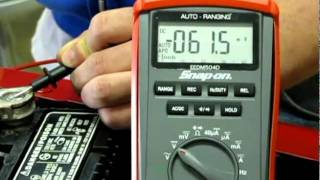
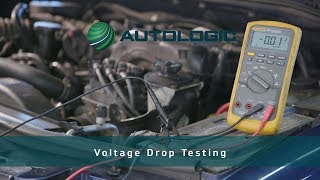
A visual check isn't enough. With the key on and engine running, set a multimeter to a low DC volts scale. Place the red lead on the negative battery terminal and the black lead on the PCM's metal case or ground pin at the connector. A reading above 100 millivolts (0.10V) indicates a poor ground connection causing excessive resistance that needs cleaning or repair.
Tools: High-Impedance Multimeter, Vehicle-Specific Wiring Diagram (Advanced) - Check for Software Updates (Professional Step)
A repair shop or dealership checks for Technical Service Bulletins (TSBs) or available software updates for your vehicle's PCM. Reflashing the module with updated software from the manufacturer fixes known bugs that cause a P0607.
Tools: Manufacturer-specific Scan Tool (J2534 device) (Advanced) - PRO TIP: Analyze Sensor Reference Voltage (VREF)
Use a scan tool with live data or a multimeter to check the 5-volt reference (VREF) circuit from the PCM. The VREF is a steady 5.0 volts (± 0.1V). If it's low (e.g., below 4.5V) or missing, a sensor connected to that circuit is shorted to ground. Unplug sensors on that VREF circuit one by one until the voltage returns to normal to identify the faulty component.
Tools: Advanced Scan Tool, Multimeter, Wiring Diagram (Advanced) - PRO TIP: Analyze Scan Tool PIDs
Using an advanced scan tool, monitor key live data PIDs (Parameter IDs). Look for values that are erratic, frozen, or clearly out of specification. Key PIDs include 'Calculated Load Value', 'Engine Coolant Temperature', 'Short/Long Term Fuel Trim', and 'O2 Sensor Voltage'.
Tools: Advanced Bi-Directional Scan Tool (Advanced) - Test the PCM (Professional Step)
If all other steps fail, the PCM itself is the culprit. A professional technician uses advanced diagnostic tools to confirm power, ground, and network communication at the PCM connector before recommending replacement. This confirms the module is faulty and not an external wiring issue.
Tools: Advanced Scan Tool, Oscilloscope, Multimeter (Advanced)
When This Code Triggers (Freeze-Frame Conditions)
- Fault Trigger: Key-On or Cranking (The P0607 is a continuous self-test. It triggers immediately upon key-on or during engine cranking when the PCM performs its initial power-on self-assessment. Low battery voltage at this time is a primary cause.)
- Engine RPM: 0 (KOEO) or 700-2500 RPM (The fault logs with the Key On, Engine Off (KOEO) or during normal driving conditions, including idle and steady-state cruise.)
- Battery Voltage: < 11.8V (Freeze frame data reveals low system voltage at the moment the code sets, pointing towards a battery, alternator, or connection issue rather than an internal PCM fault.)
- Engine Load: Any (Because P0607 is an internal module performance check, it is not dependent on a specific engine load. It occurs at idle (low load) or during acceleration (high load).)
Related Codes
- P0606 — This code for 'PCM Processor Fault' is a direct partner to P0607. Both indicate a critical internal self-test failure. Diagnostically, they are treated almost identically: rule out all external power, ground, and software issues before condemning the PCM. If both are present, an internal PCM failure is extremely likely.
- P0138 — This code for 'O2 Sensor Circuit High Voltage (Bank 1, Sensor 2)' is a major red flag when seen with P0607, especially on Toyota and some GM vehicles. A short in the O2 sensor or its wiring sends stray voltage to the PCM, causing it to fail its self-test and set a P0607. Always diagnose and fix P0138 first.
- U0100 — This code means 'Lost Communication With ECM/PCM'. The key difference is that with P0607, the PCM is still online and communicating that it has a problem. With U0100, the PCM is completely offline. If you see U0100, the diagnostic path shifts to checking the PCM's main power, grounds, and the vehicle's CAN data network wiring.
- P060A — This code for 'Internal Control Module Monitoring Processor Performance' is very similar to P0607. It indicates that the PCM failed an internal self-test, but points to a more specific failure of a secondary monitoring processor within the PCM. The diagnostic approach is identical, starting with external factors.
Climate & Environmental Factors
- High Humidity / Road Salt: Increases the rate of corrosion on PCM connectors, power distribution centers, and chassis ground points. This corrosion creates unwanted resistance, causing voltage drops that trigger a P0607.
- Extreme Cold: Cold temperatures significantly reduce a battery's cranking amperage and effective voltage. A weak battery struggling in the cold provides insufficient voltage during startup, causing the PCM to fail its initial self-test and log a P0607.
- Water Intrusion: Heavy rain or melting snow exploits bad seals around the windshield cowl or clogged sunroof/AC drains, leading to water dripping directly onto the PCM or its wiring harnesses, causing short circuits.
How to Talk to a Mechanic About This Code
Say this: "I have a P0607 'Control Module Performance' code and need a diagnostic. Please start by testing the battery, alternator, and performing a voltage drop test on the PCM's power and ground circuits before condemning the computer itself. Also, check for any available TSBs for a software reflash."
This signals that you know P0607 is frequently caused by external electrical issues, not just a failed PCM. It directs the shop to follow a logical, cost-effective diagnostic path instead of immediately quoting a $1,000+ module replacement.
Avoid saying:
- 'Just fix whatever's wrong'
- 'My check engine light is on, can you look at it?'
- 'Whatever you recommend'
Questions to ask before authorizing the repair:
- What were the battery's voltage readings with the engine off and running?
- What was the millivolt reading on the PCM ground circuit voltage drop test?
- Can you confirm that all power, ground, and communication network signals are good at the PCM connector?
- If you recommend a PCM replacement, have you confirmed there are no software updates (TSBs) available to fix this issue?
Where to Take It: Dealer vs Independent vs Chain
- Dealer:
A necessary choice if a software reflash is the confirmed fix. A good option for warranty work, but the most expensive for diagnosis and hardware replacement.
Best for: Vehicles still under powertrain or emissions warranty., Performing manufacturer-specific software updates (reflashes) required by a TSB., Complex, known manufacturer-specific quirks (e.g., Toyota, Ram, or German brand issues).
Downsides: Highest labor rates, often 1.5-2x an independent shop., Follows a rigid flowchart that leads to expensive module replacement without exploring all diagnostic avenues. (Typical cost: +50% vs. baseline) - Independent Shop:
Best overall fit. A reputable independent shop with strong electrical diagnostic skills offers the best balance of expertise and value for diagnosing the root cause of a P0607.
Best for: Out-of-warranty vehicles where cost is a factor., In-depth electrical diagnostics, as a good indie tech focuses on component-level diagnosis., Vehicles where the cause is likely a common failure (battery, alternator, wiring).
Downsides: Quality varies greatly; must vet shops based on reviews and ASE certifications., Lacks access to the latest manufacturer-specific software or reflash tools. (Typical cost: +0% vs. baseline) - Chain Shop:
AVOID for initial diagnosis. A P0607 is too complex for a typical chain shop environment. Only use them if you already diagnosed a simple part replacement, like the battery.
Best for: Simple, clear-cut fixes like a battery replacement if you already confirmed it is the cause.
Downsides: Technician skill varies dramatically., Not equipped for in-depth electrical or module-level diagnostics., High pressure to sell parts leads to misdiagnosis (e.g., selling a PCM when only a battery was needed). (Typical cost: -10% vs. baseline)
When to Walk Away From the Repair
Sell or trade in the vehicle if the estimated repair cost exceeds 50% of its private-party value.
- Car worth $3500, fix is $1800: Walk away. The repair cost is over 50% of the car's value, and other age-related issues will appear soon.
- Car worth $12000, fix is $1800: Fix it. The repair cost is well below the 50% threshold and restores a significant amount of value.
- Car worth $4000, fix is $400: Fix it. If the diagnosis confirms a simple fix like a battery or alternator, the repair is easily worth it.
What Scan Tool You Need for This Code
Minimum: A scanner that reads and clears codes, displays live data streams, and captures freeze frame data.
A basic $20 code reader only tells you the P0607 code exists. It cannot show live battery voltage dropping during startup or sensor data anomalies crucial for diagnosing the true cause, forcing you to guess at expensive parts.
Budget: BlueDriver Pro (~$99) — Connects to your smartphone and provides live data graphing for key PIDs like battery voltage and RPM. It reads freeze frame data to see the conditions when the fault occurred and pulls manufacturer-specific codes.
Mid-range: Innova 5610 or Foxwell NT510 Elite (~$320) — Offers bi-directional controls, allowing you to command specific components and run system tests. This actively tests circuits and confirms if the PCM is capable of sending commands, aiding in diagnosis.
Professional: Autel MaxiCOM MK808S (~$450) — A professional-level tablet scanner with full bidirectional control, extensive live data, and special functions. It provides the deep diagnostic data needed to confidently determine if the PCM itself failed before ordering a replacement.
Rent vs buy: For a one-time diagnosis, use the free loaner tool service from a parts store like AutoZone. Buy a scanner only if you plan to perform your own diagnostics regularly.
How to Clear the Code After You Fix It
- Ensure all repairs are complete and the battery is fully charged and reconnected.
- Use a quality OBD-II scan tool to erase the P0607 and any other related fault codes.
- Perform a complete drive cycle to allow the vehicle's readiness monitors to run and complete.
Drive cycle (~20 minutes): A general drive cycle includes: 1) A cold start (letting the vehicle sit for 8 hours). 2) Idle for 2-3 minutes. 3) Drive in stop-and-go city traffic for 5-10 minutes. 4) Drive at a steady highway speed (55-60 mph) for 5-10 minutes. 5) Allow the vehicle to cool down.
Readiness monitors affected: Comprehensive Component Monitor, Misfire Monitor, Catalyst (CAT) Monitor, Oxygen (O2) Sensor Monitor
Before emissions retest: drive at least 50 miles to fully set monitors.
Watch out for:
- Disconnecting the battery clears the code, but resets all readiness monitors to 'incomplete', causing an automatic failure at an emissions testing station.
- The code returns quickly if the underlying root cause (e.g., a weak alternator, bad ground, or faulty sensor) is not properly repaired.
Will This Fail Emissions / State Inspection?
Yes — this code typically fails an OBD-II emissions inspection.
- California: The California Smog Check fails a vehicle instantly for an illuminated MIL. After repair, a specific drive cycle must be completed to set all monitors before a re-test is possible.
- New York: The NYS Vehicle Inspection program includes an OBD-II scan. A P0607 code results in an emissions test failure, preventing you from renewing your vehicle's registration.
- Texas: In the 17 Texas counties requiring emissions testing, a P0607 causes the vehicle to fail its annual inspection. The MIL must be off and readiness monitors must be set.
Most Commonly Affected Vehicles
- Ford F-150 (2004-2008) — Often requires a PCM reflash or replacement. If other codes related to the throttle body are present, address the throttle body first. For this generation, a PCM reflash at a dealer is the first recommended step if P0607 appears alone.
- Toyota RAV4, Camry, Highlander, Prius (2010-2019) — This code is very frequently triggered by a failing downstream oxygen (O2) sensor, not an actual PCM failure. A short in the O2 sensor wiring or internal failure triggers P0607. Always diagnose and fix any O2 sensor codes (like P0138) first.
- Ram 2500/3500 (6.7L Cummins) (2019-2022) — Often caused by a software glitch. TSB 18-066-23 recommends a PCM software update, which frequently resolves this code, especially when it appears alongside other emissions-related DTCs like P2463.
- Chevrolet / Pontiac Tahoe, Silverado / Vibe (2005-2010 (Vibe), 2019-2022 (Trucks)) — On newer GM trucks, this points to a BCM software glitch. On Pontiac Vibe, TSB 10-06-04-010A notes a clogged A/C drain leaks water onto the O2 sensor harness, causing P0607 and P0138. 2005-2008 Vibe models were also subject to a recall for ECM failure (NHTSA Campaign ID: 10V389000).
- Subaru Impreza, WRX, Forester (2007-2014) — Commonly traced to wiring issues. Owners report finding loose or poorly seated main harness connectors at the ECM/PCM as the root cause. A thorough inspection and reseating of the connectors is a primary diagnostic step.
- Volkswagen Golf, Jetta, GTI (2015-2019) — Triggered by low battery voltage after sitting for extended periods. In some cases on models with DSG transmissions, it appears with a 'Transmission in Emergency Mode' warning and relates to the mechatronics unit electronics.
- BMW 5 Series, 3 Series (2012-2017) — On some models, the definition of P0607 points specifically to a fault in the knock sensor detection channel within the DME (BMW's term for the PCM). In other cases, it indicates a general internal processor failure requiring replacement.
- Honda Accord (2016-2020) — Known to trigger P0607 due to a faulty crankshaft position sensor disrupting communication with the ECM. A failing sensor sends erratic signals that the ECM interprets as an internal performance fault.
- Jeep Cherokee (2014-2019) — Prone to this code due to low voltage caused by a failing alternator. The unstable power supply leads to ECM instability and triggers a false P0607.
Manufacturer-Specific Notes
- Toyota: P0607 is very frequently caused by a faulty downstream oxygen (O2) sensor, not the PCM itself. Always diagnose and replace any accompanying O2 sensor codes (like P0138) first.
- Ram / Cummins: On 2019+ Ram trucks with the 6.7L Cummins engine, check for TSB 18-066-23. A PCM software reflash is the most common and manufacturer-recommended first step to fix a P0607, especially if other emissions codes are present.
- General Motors (Chevrolet/GMC/Pontiac): On late-model trucks (2019+), P0607 relates to a BCM software issue. On older models like the Pontiac Vibe, check TSB 10-06-04-010A, which points to a clogged A/C drain leaking water onto the O2 sensor harness.
- Ford: On many F-150s and other models from the mid-2000s, the first recommended step by dealers is to reflash the PCM with the latest software. If that fails to resolve the code, PCM replacement is the next logical step.
Real Owner Stories
2012 Toyota RAV4 with intermittent P0607
For a year, the Check Engine, TRAC OFF, and 4WD lights came on randomly. The only code was P0607.
What they tried:
- Reconnected a loose air intake hose, which made the lights go away for a few months.
- Cleaned corroded battery terminals, which worked for another month.
- Replaced the battery, but the code returned.
Outcome: The owner learned that on Toyotas, P0607 is a secondary code caused by a failing oxygen sensor or an exhaust leak.
Lesson: On Toyota models, don't assume P0607 means a bad PCM. It's often a 'ghost code' triggered by a faulty O2 sensor. Diagnose related sensor issues before considering PCM replacement.
2009 Scion xB with P0607 after sitting for a week
After the car sat unused for a week, the Check Engine and VSC OFF lights came on. The only code stored was P0607.
What they tried:
- The owner suspected an ECM issue and asked for diagnostic starting points.
Outcome: Forum members suggested the cause was low battery voltage from sitting. The owner fully charged and load-tested the battery, resolving the issue.
Lesson: A P0607 code appearing after a vehicle sits is a strong indicator of a weak battery. Always test the battery and charging system before suspecting a complex module failure.
2010 VW Jetta TDI with persistent P0607
The vehicle had a constant P0607 code with no other symptoms. The official repair procedure called for ECM replacement.
What they tried:
- A technician verified all power and ground connections to the ECM were good.
- The shop contacted a tuning company to reflash the ECM with updated software.
Outcome: The ECM successfully accepted the new software flash. The P0607 code was resolved, saving the cost of a new ECM.
Lesson: If electrical connections are good, a software reflash is a valid and cost-effective next step before condemning the PCM.
2019 Ram 3500 6.7L Cummins with P0607
The P0607 code appeared, accompanied by other warnings related to the emissions system.
What they tried:
- The standard diagnostic path suggested checking electrical systems and considering PCM replacement.
Outcome: The owner discovered TSB #18-066-23, which stated a PCM software update was the specific fix for P0607. A dealer reflash resolved the issue.
Lesson: Always check for TSBs on modern vehicles. The manufacturer often identifies software flaws that trigger false codes, and the fix is a simple reflash, not hardware replacement.
How to Prevent This Code From Triggering
- Replace the 12V battery proactively every 3-5 years (Once per 3-5 years) — A weak battery provides unstable voltage, a leading external cause of P0607. Proactive replacement prevents voltage drops that corrupt the PCM's self-tests.
- Clean battery terminals and main chassis ground points annually (Once per year) — Corrosion on terminals and ground straps creates high resistance, leading to voltage drops that trigger a false P0607. Cleaning these points ensures a stable power supply for the PCM.
- Apply dielectric grease to the PCM's main connector weather seal (When servicing nearby components) — Dielectric grease is a non-conductive sealant that protects the rubber seals of connectors from moisture and corrosion. This prevents water intrusion, a common cause of PCM short circuits.
- Ensure proper jump-starting procedures are always followed (As needed) — Connecting jumper cables in the wrong order creates a significant voltage spike, permanently damaging the sensitive microprocessors inside the PCM and leading to immediate failure.
- Regularly check and clear cowl and sunroof drains (Twice per year (Spring/Fall)) — Clogged drains cause rainwater to overflow and drip directly onto the PCM or its wiring harnesses, causing shorts and corrosion.
Frequently Asked Questions
Can a weak battery really cause a P0607 code?
Yes, absolutely. The PCM requires a stable voltage (above 12.0V KOEO and 9.5V cranking) to operate correctly. A weak battery or failing alternator provides inconsistent power, causing the PCM's internal self-tests to fail and trigger a P0607 code, even if the PCM itself is perfectly fine.
What are the most common mistakes when diagnosing P0607?
The biggest mistake is immediately assuming the PCM is bad and replacing it. Technicians must follow a strict diagnostic protocol: check for other codes, test the battery, and perform voltage drop tests on all PCM power and ground wires. Only after ruling out these external electrical issues should PCM replacement be considered.
Can a jump-start cause a P0607 code?
Yes, an improper jump-start causes a voltage spike that permanently damages the PCM's sensitive internal circuits or corrupts its software. Always connect jumper cables in the exact order specified by the vehicle manufacturer to prevent this.
What is the difference between an ECM and a PCM?
ECM stands for Engine Control Module, while PCM stands for Powertrain Control Module. A PCM controls both the engine and the transmission, whereas an ECM typically only controls the engine. Most modern vehicles use a PCM, but the terms are often used interchangeably in the industry.
If I replace the PCM, can I just plug a new one in?
No, you cannot simply plug in a new PCM. In almost all modern vehicles, a replacement PCM must be programmed or 'flashed' with software specific to your car's Vehicle Identification Number (VIN). Without this programming to sync the immobilizer and keys, the car will not start.
How much does it cost to fix a P0607 code?
Repair costs range from $200 for a simple battery replacement to over $1,500 for a new PCM. A software reflash at a dealership typically costs $150 to $250. Always diagnose the root cause before authorizing a $1,000+ module replacement.
What is a PCM 'reflash'?
A reflash is the process of updating the software on the PCM using a specialized J2534 pass-thru device. This installs the latest firmware provided by the manufacturer to fix known software bugs. A successful reflash often resolves a P0607 code without requiring a costly hardware replacement.
My mechanic says the P0607 means I need a new transmission. Is that right?
This is highly unlikely. The P0607 code indicates a fault within the PCM itself, which causes severe shifting problems because it controls the transmission. The root problem is almost always electrical or within the PCM, not a mechanical failure of the transmission.
Key Takeaways
- Never drive with a P0607 code, as the resulting sudden engine stalling or no-start conditions create an immediate, severe safety hazard.
- Always test the battery and charging system first, as voltage drops below 9.5V during cranking frequently trigger a false P0607 code.
- Perform a voltage drop test on the PCM ground circuit to ensure resistance is below 100 millivolts before condemning the $1,000+ computer module.
- Check for manufacturer Technical Service Bulletins (TSBs), as a $150 dealership software reflash permanently resolves this code on many modern vehicles.
Helpful Videos


The information in this article is provided for general reference and educational purposes only. Vehicle specifications, procedures, and part compatibility can vary by production date, trim level, and region. Always consult your vehicle's factory service manual and verify part numbers before purchasing or performing repairs. Safety-critical components such as airbags, seat belts, and braking systems should be installed by a qualified professional.
- 🎬 Helpful Videos
- What Does P0607 Mean?
- Can I Drive With P0607?
- Common Causes
- Symptoms
- Diagnostic Flowchart
- Common Fixes & Costs
- DIY vs Professional
- Used vs. New Parts: Buying Guide
- What Happens If You Wait — Timeline
- Cost of Not Fixing It
- Diagnosis Steps
- When This Code Triggers (Freeze-Frame Conditions)
- Related Codes
- Climate & Environmental Factors
- How to Talk to a Mechanic About This Code
- Where to Take It: Dealer vs Independent vs Chain
- When to Walk Away From the Repair
- What Scan Tool You Need for This Code
- How to Clear the Code After You Fix It
- Will This Fail Emissions / State Inspection?
- Most Commonly Affected Vehicles
- Manufacturer-Specific Notes
- Real Owner Stories
- 2012 Toyota RAV4 with intermittent P0607
- 2009 Scion xB with P0607 after sitting for a week
- 2010 VW Jetta TDI with persistent P0607
- 2019 Ram 3500 6.7L Cummins with P0607
- How to Prevent This Code From Triggering
- Frequently Asked Questions
- Can a weak battery really cause a P0607 code?
- What are the most common mistakes when diagnosing P0607?
- Can a jump-start cause a P0607 code?
- What is the difference between an ECM and a PCM?
- If I replace the PCM, can I just plug a new one in?
- How much does it cost to fix a P0607 code?
- What is a PCM 'reflash'?
- My mechanic says the P0607 means I need a new transmission. Is that right?
- Key Takeaways
- 🎟️ Get 5% Off