

P0606 on 2001-2007 Toyota Highlander: ECM Fault or a Bad Oxygen Sensor?
On a 2001-2007 Toyota Highlander, code P0606 almost never means the main computer (ECM) is bad. It's most likely caused by a failing Air/Fuel Ratio sensor (the front oxygen sensor) sending a glitchy signal. Replacing the correct sensor, which costs about $80-$150 for a quality part, usually fixes the problem. Do not replace the ECM unless all sensor and wiring possibilities have been exhausted.
- Do not replace the ECM for a P0606 code on a 2001-2007 Highlander until you have thoroughly tested the Air/Fuel Ratio and Oxygen sensors.
- The most likely cause is a faulty upstream Air/Fuel Ratio sensor or a downstream Oxygen sensor with an intermittent electrical fault.
- If other sensor-related codes are present, they are the real problem; fix them and the P0606 will likely disappear.
- Use a quality OEM brand like Denso for replacement sensors to avoid compatibility issues.
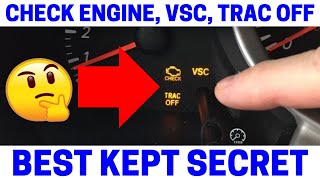
- Check for accompanying VSC/TRAC lights, which are a common and expected symptom.
- If the ECM does need replacement, it must be programmed by a professional with the correct tools.
What's Unique About the 2001-2007 Toyota Highlander
The 2001-2007 Highlander shares a common trait with many other Toyotas from this era: its ECM is highly sensitive to sensor inputs. An intermittent electrical fault within an oxygen sensor's heater circuit can send a voltage spike or a momentary high-resistance reading that the ECM's diagnostic logic misinterprets as an internal processor failure. This can happen for just a few frames of data, not long enough to set a specific sensor code, but enough to trigger the P0606. This leads many to mistakenly replace the expensive ECM when the actual problem is a much cheaper and simpler sensor replacement. Experienced Toyota technicians and knowledgeable forum members know to always investigate the oxygen sensors first when a P0606 code appears, especially if it appears alongside any other O2/AF sensor codes.
🎬 Watch: See how O2 sensor codes can trigger a false P0606.Symptoms You May Notice
- Check Engine Light is on
- VSC and/or TRAC lights are often on as well (as a fail-safe response to the CEL)
- Vehicle may enter 'limp mode' with reduced power
- Engine may stall, run rough, or hesitate
- Decrease in fuel economy
- Potential no-start condition
- Erratic shifting in automatic transmission
- Replacing the Engine Control Module (ECM) without first diagnosing the Air/Fuel Ratio and Oxygen sensors. This is a very expensive and common mistake for this specific code on Toyota vehicles.
Most Likely Causes
- Failing Air/Fuel Ratio (A/F) Sensor or Oxygen (O2) Sensor 🔴 High Probability An intermittent open, short, or high resistance in the sensor's internal heater circuit sends a voltage spike or signal dropout that the sensitive Toyota ECM logic misinterprets as a processor fault. This is the most common failure pattern for this code on this platform.
How to confirm: Scan for other codes first. If sensor-related codes (like P1135, P0137, P0138) are present, fix them. If only P0606 is present, use a scan tool to graph the A/F and O2 sensor voltage and impedance/resistance PIDs while wiggling the sensor wiring. A sudden drop-out, spike, or a resistance value that jumps to thousands of Ohms indicates a faulty sensor or connection. Freeze frame data may also capture the sensor fault at the moment the P0606 was triggered.
Typical fix: Replace the faulty sensor. It's critical to use high-quality OEM brands like Denso or NGK/NTK to ensure compatibility and longevity. Aftermarket sensors can cause persistent issues.
Est. part cost: $80-$180
Rare But Worth Checking
- Defective Engine Control Module (ECM): This is what the code definition points to, but it is rarely the actual cause on this vehicle. This should only be considered after thoroughly ruling out all sensors and wiring. Replacement requires professional programming to the vehicle's immobilizer.
- Poor ECM Power or Ground Connections: Corroded battery terminals, a failing alternator providing unstable voltage (outside 13.5-14.5V when running), or a loose/corroded main engine ground strap can cause unstable voltage, confusing the ECM and potentially triggering a P0606 code. Always ensure the battery and charging system are healthy before condemning expensive components.
Diagnosis Steps
- Read all stored diagnostic trouble codes. If any codes other than P0606 are present, diagnose and fix them first, as they are the likely cause.
- If only P0606 is present, the primary suspects are the Air/Fuel (upstream) and Oxygen (downstream) sensors.
- Inspect the wiring and connectors for all oxygen sensors for any visible damage, corrosion, or loose connections.
- Use a scan tool with live data capabilities. Graph the voltage and impedance for the upstream A/F sensor(s) and downstream O2 sensor(s).
- With the engine running, carefully wiggle the wiring harness for each sensor. Watch the live data graph for any sudden voltage spikes, dropouts, or flat lines. This indicates an intermittent fault in the sensor or its wiring.
- If a sensor shows a fault, replace it. Using an OEM brand like Denso is highly recommended.
- If sensors and wiring appear perfect, check the vehicle's charging system. With the engine running, use a multimeter to verify the battery voltage is stable and between 13.5 and 14.5 volts.
- Inspect the main engine and chassis ground connections for corrosion and tightness. A poor ground can cause numerous electrical gremlins.
- Only after all the above steps have been exhausted should you consider the possibility of a failed ECM.
Parts You'll Likely Need
- Air/Fuel Ratio Sensor (Bank 1 Sensor 1)
(OEM #Denso 234-9042 (For 3.3L V6, Bank 2 Front); Denso 234-9009 (For 3.0L V6); Denso 234-9023 (For 2.4L I4))— This upstream sensor is the most common cause of a false P0606 code on Toyotas due to intermittent heater circuit failures. V6 engines have two (Bank 1 and Bank 2). Bank 1 is near the firewall, Bank 2 is near the radiator.
Trusted brands: Denso, NGK/NTK
OEM price range: $150-$230
Aftermarket price range: $80-$150 - Oxygen Sensor (Downstream)
(OEM #Denso 234-4509 (For V6 models))— A failing downstream sensor can also trigger a false P0606, though it is slightly less common than the upstream A/F sensor.
Trusted brands: Denso, Bosch
OEM price range: $120-$200
Aftermarket price range: $60-$120
Related Codes That Often Appear With This One
- P1135 — This code indicates an 'A/F Sensor Heater Circuit Malfunction (Bank 1 Sensor 1)'. If you see this with P0606, the A/F sensor is almost certainly the root cause.
- P0136-P0161 — Any codes related to oxygen sensor circuits, performance, or heaters (e.g., P0137, P0138, P0158) can be the underlying trigger for a false P0606. The sensor code points to the real problem.
Technical Service Bulletins (TSBs) & Recalls
- While no TSB is specific to the Highlander for P0606, Toyota TSBs for other models (like T-SB-0089-09 for the Camry) confirm the pattern of a false P0606 being triggered by sensor faults, indicating a systemic issue across the brand's ECUs from this era.
Platform-Specific Known Issues
- On many Highlanders, the VSC and TRAC warning lights will illuminate simultaneously with the Check Engine Light for code P0606. This is a standard fail-safe procedure for many Toyota vehicles and does not necessarily indicate a separate problem with the stability control system. Resolving the P0606 cause will typically clear these lights as well. 🎬 Watch: How to fix simultaneous Check Engine, VSC, and Trac lights.
Mechanic-Grade Diagnostic Values
- A/F Sensor Heater Resistance — expected: 1.9 to 3.0 Ω at 20°C (68°F). Failure: A reading of OL (Open Loop) or jumping to thousands of Ohms, even momentarily, indicates an internal failure.
- A/F Sensor Harness Voltage (KOEO) — expected: Approximately 3.0V on the AF1 wire (often white) and 3.3V on the AF2 wire (often blue), measured at the vehicle-side harness connector with the sensor unplugged.. Failure: Absence of these voltages points to a wiring or ECM issue, not a sensor fault.
- Charging System Voltage (Engine Running) — expected: Stable voltage between 13.5V and 14.5V measured at the battery terminals.. Failure: Voltage consistently above 14.7V, below 13.2V, or fluctuating wildly indicates a faulty alternator or voltage regulator, which can trigger a false P0606.
- Alternator AC Ripple Voltage — expected: Less than 0.5V AC (500mV AC) with the engine running at 1500 RPM.. Failure: AC voltage exceeding 0.5V indicates failing alternator diodes are allowing 'dirty' power, which can confuse the ECM and set a P0606 code.
- ECM Ground Circuit Resistance — expected: Below 1.0 Ω between the ECM ground pins at the connector and a clean chassis ground point.. Failure: High resistance indicates a poor ground, a common cause of erratic module behavior and false processor codes.
Hidden / Shadow Codes Worth Checking
- Freeze Frame Data Analysis: This vehicle does not use proprietary 'shadow codes' for this issue. Instead, the critical hidden information is in the standard Freeze Frame data stored when the P0606 is set. A technician must analyze this data to find the root cause. (see via Use any OBD-II scanner capable of viewing Freeze Frame data. Look for an A/F or O2 sensor PID (voltage, resistance, or heater current) that is out of range for just a few frames of data at the moment the fault occurred. This glitch is often the trigger.)
Scan Tool Commands That Help
- Toyota Techstream or equivalent professional scan tool: Live Data Graphing (A/F Sensor Voltage, O2 Sensor Voltage, A/F Sensor Heater Resistance/Current) — This is the primary diagnostic method when only P0606 is present. Graphing the sensor data while performing a 'wiggle test' on the sensor's wiring harness can reveal intermittent opens or shorts as sudden spikes or dropouts on the graph, confirming a faulty sensor or connection is triggering the P0606.
Wiring & Ground Locations
- EA1 — On the 3MZ-FE (3.3L V6), this is a connector joining the engine wire and sensor wire, located on the right side of the cylinder head.. This is a key junction for sensor wiring. Corrosion or damage here can directly impact the signals from the A/F and O2 sensors to the ECM.
- Engine Block to Chassis Ground — A thick ground strap typically running from the engine block or cylinder head to the firewall or frame rail on the passenger side of the engine bay.. A corroded or loose main engine ground can cause unstable voltage across the entire engine management system, leading to various electrical faults including a false P0606.
- Driver's Side Kick Panel Ground — Behind the plastic kick panel to the left of the driver's side footwell. Multiple ground wires are often secured to a single bolt here.. This is a common interior grounding point for various modules. While not directly for the ECM in all cases, a fault here can introduce electrical noise into the system.
Real Owner Repair Stories
- iATN (International Automotive Technicians Network) post (2007 Toyota Camry 3.5L (platform relative)) — Check Engine Light with only code P0606 stored.
❌ Tried (didn't work) Following the factory service manual, which immediately recommended 'Replace ECM'.
✅ What actually fixed it The technician graphed the rear O2 sensor data on a scan tool, wiggled the wiring harness for the Bank 2 Sensor 2 O2 sensor, and saw the signal glitch on the graph. Replacing the faulty B2S2 oxygen sensor resolved the P0606 code permanently. - YouTube channel 'Pine Hollow Auto Diagnostics' (Toyota vehicle (model not specified, but behavior is relevant)) — No-start, no communication with ECM, P0606 and P0613 stored in other modules.
❌ Tried (didn't work) Initial scan could not establish communication with the ECM.
✅ What actually fixed it The technician observed very high charging voltage (15-16V) from the alternator. The failing alternator's voltage regulator was causing voltage spikes that took the ECM offline and triggered the P0606. Replacing the alternator fixed the issue. - ToyotaNation Forum Thread 1559322 (2007 Toyota Camry XLE V6 (platform relative)) — Intermittent P0606 code.
❌ Tried (didn't work) Initial diagnostics pointed towards sensors or the ECM.
✅ What actually fixed it The root cause was a faulty brake light. The forum post suggests a potential electrical feedback or grounding issue through the lighting circuit that was misinterpreted by the ECM. Replacing the faulty brake light bulb or addressing the circuit fault resolved the P0606.
Model Year Variations Within This Range
- 2001-2003: V6 models from these years primarily used the 3.0L 1MZ-FE engine. This requires a different A/F sensor (e.g., Denso 234-9009) than the later V6 models.
- 2004-2007: V6 models from these years used the 3.3L 3MZ-FE engine. This requires a different A/F sensor (e.g., Denso 234-9042 for Bank 2 Sensor 1) than the earlier V6. The 2.4L 2AZ-FE four-cylinder engine was also available throughout the generation and uses its own specific sensor (e.g., Denso 234-9023).
Diagnostic Flowchart
Other Known Issues on This Vehicle
Issues unrelated to this code that are worth knowing about as an owner of this generation:
- Stripped Cylinder Head Bolts (2.4L 2AZ-FE Engine) 🔴 High — Common on 2001-2007 models with the 4-cylinder engine, especially after an overheating event. The aluminum block threads pull out. (Ref: T-SB-0015-11 outlines a procedure for repairing the threads with inserts.)
- Engine Oil Sludge (3.0L 1MZ-FE & 3.3L 3MZ-FE V6) 🔴 High — Particularly noted in 2001-2003 models but can affect the whole generation. Caused by a combination of factors including a poor PCV baffle design, short-trip driving, and extended oil change intervals, leading to blocked oil passages and oil starvation. (Ref: Was subject to a class-action lawsuit settled in 2007, covering repairs for vehicles up to 8 years old at the time.)
- Ruptured VVT-i Oil Line (V6 Engines) 🔴 High — The original rubber section of the VVT-i oil supply line on V6 engines is known to burst suddenly, causing a massive and rapid oil leak that can destroy the engine if not shut down immediately. (Ref: An all-metal replacement line is the recommended fix.)
- EVAP System Faults (Charcoal Canister/VSV) 🟠 Medium — Check engine lights due to EVAP system codes are common. Often, the entire expensive charcoal canister is replaced when only a cheaper vacuum switching valve (VSV) attached to it has failed.
- Seized Brake Calipers 🟠 Medium — Brake caliper slide pins are prone to seizing if not regularly cleaned and lubricated, leading to uneven pad wear and braking issues.
Used vs. New Parts: Buying Guide for This Vehicle
When a used part is the smart pick: A used Engine Control Module (ECM) from a reputable recycler is a viable option ONLY after a professional has definitively condemned the original ECM by ruling out all other possibilities (sensors, wiring, grounds, power supply). It is almost never the first part to replace.
Donor-vehicle mileage cap: roughly under 150000 miles for the part to have meaningful remaining life.
What to inspect on the donor part:
- For a used ECM, ensure the part number matches exactly.
- Verify the donor vehicle was not involved in a flood or fire.
- Ask about the recycler's return policy in case the unit is also faulty.
- Be aware that the used ECM will need to be reprogrammed or 're-flashed' by a dealer or a qualified locksmith with Toyota-specific tools to sync with your vehicle's immobilizer system.
OEM-only on this vehicle (don't cheap out):
- Air/Fuel Ratio Sensor
- Oxygen Sensor
Aftermarket brands forum-validated for this vehicle:
- Denso (This is the Original Equipment Manufacturer for Toyota)
- NGK / NTK
Brands owners have reported issues with on this vehicle:
- Unbranded 'white-box' sensors
- Off-brand sensors with significantly lower prices, as they are known to have incorrect heater resistances or slow response times that can cause persistent codes on sensitive Toyota systems.
Real Owner Stories
Aggregated from forums and TSBs cited above. Mileages and costs reflect what owners reported in those sources.
2004 Toyota Highlander 4 cyl — 147000 miles
Symptoms: Goes into 'limp mode' when starting from a stop, gains normal power around 15mph. Jolts when put into reverse. Codes pulled were P2238, P0137, P0138, P0606 and P0776.
What fixed it: The owner was seeking advice; context indicates fixing the sensor codes (P2238, P0137, P0138) is the required first step to resolve the P0606.
Source hint: Reddit r/MechanicAdvice
2007 Lexus RX350 (Platform Mate)
Symptoms: Check Engine Light illuminated with codes P0158 and P0606.
What fixed it: Replacing the faulty O2 sensor with a Denso brand unit resolved both the P0158 (high voltage) and the P0606 processor code.
Source hint: ClubLexus thread 'CEL Light (saga) and Codes - P0158, P0606'
2007 Toyota Camry V6 (Platform Mate)
Symptoms: P0606 code appeared shortly after a P0305 (misfire) code was addressed.
What fixed it: The report highlights that the P0606 was precipitated by other engine faults.
Source hint: Reddit r/Toyota
2001-2007 Toyota Highlander (General)
Symptoms: Technician observed a P0606 signal glitch on a scanner while wiggling the B2S2 O2 sensor wires.
What fixed it: Repairing the intermittent fault in the O2 sensor wiring/connection.
Source hint: iATN (International Automotive Technicians Network)
Related OBD-II Codes
Frequently Asked Questions
Why are my VSC and TRAC lights on at the same time as the Check Engine Light for P0606?
Does Toyota TSB-0089-09 apply to my Highlander?
Should I replace my ECM immediately if I see code P0606?
Which brand of replacement sensor should I use for my Highlander to fix P0606?
Can a misfire cause a P0606 code on my Toyota?
Is there a TSB for the head bolt issues on my 2.4L Highlander?
Helpful Videos
We Have This Part in Stock


The information in this article is provided for general reference and educational purposes only. Vehicle specifications, procedures, and part compatibility can vary by production date, trim level, and region. Always consult your vehicle's factory service manual and verify part numbers before purchasing or performing repairs. Safety-critical components such as airbags, seat belts, and braking systems should be installed by a qualified professional.
- Toyota Highlander:
- 🎬 Helpful Videos
- 🛍️ Shop This Part
- What's Unique About the 2001-2007 Toyota Highlander
- Symptoms You May Notice
- Most Likely Causes
- Rare But Worth Checking
- Diagnosis Steps
- Parts You'll Likely Need
- Related Codes That Often Appear With This One
- Technical Service Bulletins (TSBs) & Recalls
- Platform-Specific Known Issues
- Mechanic-Grade Diagnostic Values
- Hidden / Shadow Codes Worth Checking
- Scan Tool Commands That Help
- Wiring & Ground Locations
- Real Owner Repair Stories
- Model Year Variations Within This Range
- Diagnostic Flowchart
- Other Known Issues on This Vehicle
- Used vs. New Parts: Buying Guide for This Vehicle
- Real Owner Stories
- 2004 Toyota Highlander 4 cyl — 147000 miles
- 2007 Lexus RX350 (Platform Mate)
- 2007 Toyota Camry V6 (Platform Mate)
- 2001-2007 Toyota Highlander (General)
- Related OBD-II Codes
- Frequently Asked Questions
- 🎟️ Get 5% Off