

P0606 on 2007-2016 GMC Acadia: ECM Processor Fault Causes and Fixes
P0606 indicates an Engine Control Module (ECM) processor fault, but on the Acadia and its platform mates, it's often caused by external issues. Before replacing the expensive ECM, thoroughly check for a weak battery, bad grounds (especially near the firewall and on the engine block), or a faulty camshaft position sensor circuit, as these are common false triggers documented in GM Technical Service Bulletins.
- P0606 is a critical code; do not drive the vehicle due to the risk of stalling.
- DO NOT immediately replace the Engine Control Module (ECM). This code is often a symptom of another problem on the GMC Acadia.
- Your first diagnostic steps should be to thoroughly test the battery and charging system.
- Inspect the camshaft position sensor and its wiring harness, as a fault here is a known cause for a false P0606 per a GM TSB.
- If the ECM must be replaced, it requires professional programming to work with your vehicle.
What's Unique About the 2007-2016 GMC Acadia
On many vehicles, P0606 is a direct condemnation of the engine computer. However, on GM's Lambda platform (which includes the Acadia, Chevrolet Traverse, Buick Enclave, and Saturn Outlook), this code is frequently misleading. GM has issued technical service bulletins warning that issues like a weak battery, faulty alternator, or an open in the camshaft position sensor circuit can incorrectly trigger a P0606 code during a no-start condition. TSB #17-NA-132 explicitly states that a cam sensor circuit fault can cause P0606 to set before the correct cam sensor code can be logged, because the crank signal is aborted prematurely. Furthermore, manufacturer bulletin #05-06-04-060A notes that P0606 is a control module DTC that can be shared across multiple modules within the electrical system, rather than being isolated to just one component.
Symptoms You May Notice
- Check Engine Light is on
- Engine enters 'Reduced Engine Power' mode
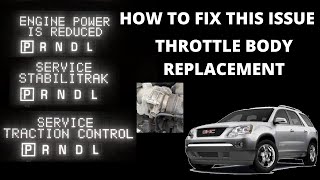
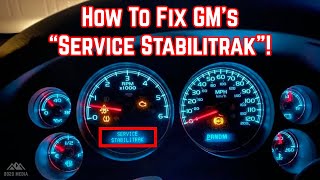
- Messages like 'Service Stabilitrak' and 'Traction Control Off' appear on the dash
- Engine stalls unexpectedly while driving
- Vehicle will not start or has a crank-no-start condition
- Erratic or harsh automatic transmission shifting
- The code may return immediately after being cleared
- Immediately replacing the Engine Control Module (ECM) without first testing the battery, alternator, ground connections, and the camshaft position sensor circuit. This is a very expensive mistake explicitly warned against in GM service bulletins.
Most Likely Causes
- Weak or Failing Battery / Faulty Alternator 🔴 High Probability Low voltage during cranking or unstable voltage from a bad alternator can cause the ECM to fail its internal self-test, falsely setting P0606. 🎬 Watch: How to diagnose an ECM processor error code GM TSB #24-NA-050 for other models confirms the platform's sensitivity to voltage fluctuations during cranking or jump-starts. The battery's location under the rear floor can lead to it being overlooked during initial diagnosis. 🎬 Watch: How to test and replace the Acadia battery
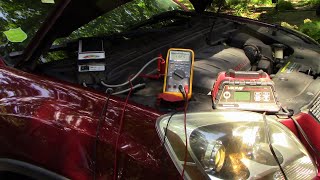
How to confirm: Test the battery with a digital multimeter; it should be ~12.6V with the engine off. With the engine running, alternator output should be 13.7-14.7V. A professional load test is crucial, as a simple voltage check can be misleading.
Typical fix: Replace the weak battery or faulty alternator.
Est. part cost: $150-$400 - Faulty Camshaft Position Sensor (or its circuit) 🟡 Medium Probability GM issued TSB #17-NA-132 specifically warning that an open in the camshaft position sensor circuit can cause a P0606 to set during cranking before the correct cam sensor code can be logged. The bulletin explicitly states, "Do Not replace the Engine Control Module (ECM) for this condition."
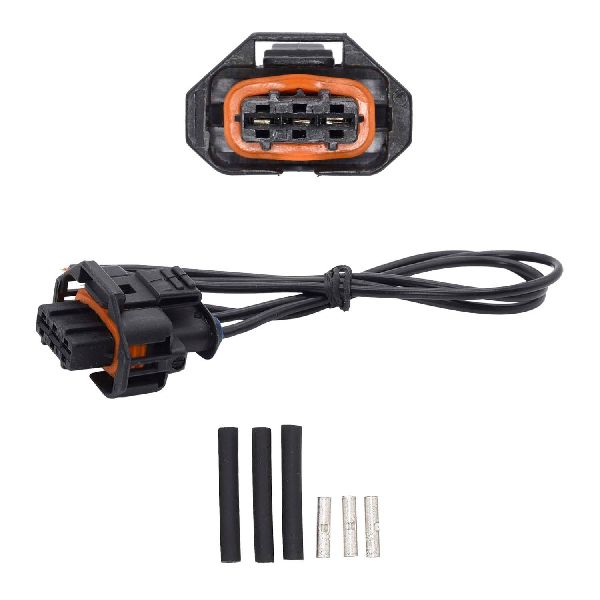
How to confirm: Inspect the camshaft position sensor wiring for damage, corrosion, or loose connections. Use a multimeter to check for continuity and proper voltage at the sensor connector according to the service manual. Given the TSB, this check is mandatory in a crank-no-start scenario. 🎬 See this 3.6L V6 camshaft position sensor replacement walkthrough
Typical fix: Repair the damaged wiring or replace the faulty camshaft position sensor(s).
Est. part cost: $30-$80 - Poor ECM Power or Ground Connections 🟡 Medium Probability Corroded or loose ground straps and power feeds to the ECM can create intermittent voltage drops, tricking the module into thinking it has an internal fault. Key locations to inspect on the Lambda platform include the main ground strap from the engine block to the frame and the smaller grounds near the driver-side firewall.
How to confirm: Visually inspect all main engine and chassis ground straps for tightness and corrosion. Check the ECM connector pins for corrosion or damage. Perform a voltage drop test on the ECM's power and ground circuits to find resistance that isn't visible.
Typical fix: Clean, tighten, or replace corroded ground straps. Repair any damaged wiring to the ECM.
Est. part cost: $5-$50 - Internal Engine Control Module (ECM) Failure ⚪ Low Probability While this is the direct definition of the code, it should only be considered after all external electrical and sensor circuit issues have been completely ruled out. The ECM on the Acadia is often an ACDelco E38 or similar model, which can fail from heat and vibration over time.
How to confirm: This is a process of elimination. If the battery, alternator, grounds, and all related sensor circuits (especially the cam sensor) test perfectly and no TSBs apply, the ECM itself is the likely point of failure. This is best confirmed by a professional shop.
Typical fix: Replace the Engine Control Module and have it professionally programmed to the vehicle's VIN.
Est. part cost: $400-$1000
Rare But Worth Checking
- Aftermarket Programming/Tuning: An improper or corrupted software flash from an aftermarket performance tuner can cause internal conflicts within the ECM's logic, leading to a P0606 code.
- Aftermarket Remote Starter or Alarm System: Poorly installed aftermarket electronics can interfere with or short out ECM power or communication lines, causing a false P0606. One owner on a GM forum traced an intermittent P0606 to a faulty remote starter installation.
- Software/Calibration Issue: On some GM vehicles, a software anomaly has been found to cause a false P0606. GM has issued updates to correct this. It is a valid diagnostic step to check with a dealer if a reflash is available before replacing the hardware.
Diagnosis Steps
- Check for any other stored DTCs with a quality OBD-II scanner that can read all modules (ECM, BCM, TCM).
- Perform a thorough visual inspection of the battery terminals, main power cables, and engine ground straps. Key points are the strap from the engine to the chassis and grounds near the firewall. Clean and tighten as necessary.
- Test the battery voltage with the engine off (~12.6V) and while running to check alternator output (13.7V-14.7V).
- Perform a battery load test to ensure it's not failing under the load of cranking.
- Per TSB #17-NA-132, carefully inspect the wiring and connector for the camshaft position sensor(s) for any signs of damage, corrosion, or looseness, especially in a crank-no-start situation.
- Check for available software updates (reflashes) for the ECM with a GM dealer or capable independent shop.
- If all external tests pass, perform voltage drop tests on the ECM power and ground pins directly at the module connector to rule out harness resistance.
- If all other possibilities are exhausted, the final step is to suspect the ECM itself. This diagnosis is best confirmed by a professional.
Parts You'll Likely Need
- Engine Control Module (ECM/PCM)
(OEM #Varies by year/VIN. Ex: 12651994 for 2012 models. Always verify with VIN.)— This is the ultimate fix if the module has truly failed internally, but it should be the last part replaced after ruling out all other causes.
Trusted brands: ACDelco (OEM)
OEM price range: $500-$1000
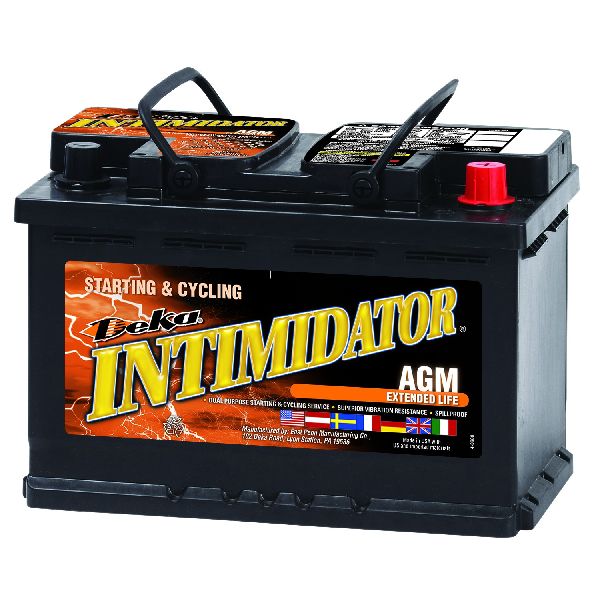
Aftermarket price range: $300-$700 (often remanufactured) - Battery — A weak battery is a very common cause of false P0606 codes on this vehicle due to low voltage during cranking.
Trusted brands: ACDelco, DieHard, Interstate
OEM price range: $200-$300
Aftermarket price range: $150-$250 - Camshaft Position Sensor
(OEM #ACDelco 12608424 or 12684186 (Varies by LY7/LLT engine and year). Verify with VIN.)— A fault in this sensor's circuit is a known cause for a false P0606 code, as documented in GM TSB #17-NA-132.
Trusted brands: ACDelco, Delphi, Bosch
OEM price range: $50-$90
Aftermarket price range: $30-$60
Related Codes That Often Appear With This One
- P069E — This code relates to a fault requested by the Fuel Pump Control Module (FPCM). Its presence suggests a wider electrical or network issue may be affecting multiple modules.
- P0562 — This code means 'System Voltage Low' and strongly suggests the P0606 is a symptom of a failing battery or alternator, not a primary ECM failure. TSB #24-NA-050 directly links P0562 with P0606.
- P0340-P0344 or P0365-P0369 — These are codes for the camshaft position sensor circuits. According to TSB #17-NA-132, a fault in this circuit may exist and cause P0606 *without* one of these codes being set. If one is present, it makes the cam sensor circuit the primary suspect.
Technical Service Bulletins (TSBs) & Recalls
- TSB #17-NA-132: Warns that an open in the camshaft position sensor circuit can cause a P0606 during a crank-no-start condition. It explicitly states, "Do Not replace the Engine Control Module (ECM) for this condition" because the P0606 may set before the correct cam sensor code has a chance to log.
- TSB #24-NA-050: While for newer models, this bulletin shows a pattern of GM vehicles setting P0606 in the EBCM due to low battery voltage (e.g., during a jump start) or high voltage from charging, reinforcing the platform's sensitivity to voltage fluctuations.
- TSB #20-NA-073: This bulletin for other GM models shows that a P0606 can be caused by a software anomaly and may be fixed by reprogramming the ECM, not replacing it.
- Bulletin #05-06-04-060A: This informational bulletin provides guidance to technicians regarding control module DTCs including P0606, noting that these codes can be shared across multiple modules within the vehicle's electrical system.
Platform-Specific Known Issues
- Battery Location: The battery in the first-gen Acadia is located inside the vehicle, under the floor behind the front passenger seat. This can make it easy to forget during diagnosis and more dif
Mechanic-Grade Diagnostic Values
- ECM Ground Circuit Voltage Drop — expected: Less than 0.2 Volts (200 mV). Failure: A reading higher than 0.2V indicates excessive resistance in the ground path, which can cause module errors.
- Voltage at ECM Connector X1, Pin 20 (Battery Positive Voltage) — expected: Should match battery voltage (approx. 12.6V with key on, engine off). Failure: A significant voltage drop compared to the battery terminals points to a power supply wiring issue.
- Charging System Voltage — expected: 13.7V - 14.7V with engine running. Failure: Voltage below 13.5V or above 14.8V indicates a charging system fault that can trigger module glitches.
- Camshaft Position Sensor Resistance — expected: 200 - 1,000 Ohms (General Specification). Failure: A reading of zero ohms (short circuit) or infinite/OL (open circuit) indicates a failed sensor.
Hidden / Shadow Codes Worth Checking
- Program Flow Monitoring Status (Parameter): This is not a DTC, but an internal ECM/BCM status parameter that indicates if the module's software is running correctly. An 'Active' status can be associated with a P0606. (see via A GM-specific scan tool like GDS2 is required. Navigate to Module Diagnostics > Body Control Module (or ECM) > Identification Information > Internal Control Module Performance Data.)
Scan Tool Commands That Help
- GDS2 / Tech2: Service Programming System (SPS) — This is mandatory after replacing the ECM. It is used to load the correct VIN-specific software and calibration files into the new module.
- GDS2 / Tech2: Vehicle Theft Deterrent (VTD) Learn — Must be performed after ECM programming to synchronize the new module with the vehicle's immobilizer system. The engine will not start until this is completed.
- GDS2 / Tech2: Crankshaft Position (CKP) System Variation Learn — Required after ECM replacement to allow the new module to learn the mechanical tolerances of the crankshaft reluctor wheel for accurate misfire detection.
Wiring & Ground Locations
- G101 — Located on the left side of the engine compartment, on the left frame rail.. This is a primary ground for the Engine Control Module (ECM). A poor connection here can directly affect the ECM's operation and cause false processor faults.
- G103 — Located at the rear of the left-hand (front) cylinder head.. This is a primary engine-related ground. A bad connection can cause erratic sensor readings which may confuse the ECM.
- G105 / G106 — Located on the engine block, often near the starter, or on the front frame cross rail under the crank pulley.. These are major engine and chassis grounds. High resistance at these points can cause a wide range of electrical faults, including unstable voltage to the ECM.
- ECM Connector X1, Pin 20 — On the main 73-pin connector (X1) at the Engine Control Module, located in the engine compartment.. This is a primary battery positive voltage feed to the ECM. A voltage drop test at this pin is crucial to confirm the ECM is receiving full battery power.
OEM Part Supersession History
12590907→12608424— Updated design for the Camshaft Position Sensor.
Model Year Variations Within This Range
- 2007-2008 (LY7 Engine): These models use the port-injected LY7 engine, which typically uses a different ECM (e.g., ACDelco E67) than later models. TSB PI0090D suggests that for a P0606-related hesitation on a 2008 model, the focus should be on the Bank 1 *Exhaust* Camshaft Position Sensor circuit.
- 2009-2016 (LLT Engine): These models use the direct-injected LLT engine with a different ECM (e.g., ACDelco E38). The direct injection system adds more complexity (high-pressure fuel pump, etc.) controlled by the ECM. For a P0606-related hesitation on 2009-2011 models, TSB PI0090D points towards the Bank 1 *Intake* Camshaft Position Sensor circuit.
Diagnostic Flowchart
Real Owner Stories
Aggregated from forums and TSBs cited above. Mileages and costs reflect what owners reported in those sources.
2012 GMC Acadia
Symptoms: Check Engine Light with P0606, Service Stabilitrak message, and reduced engine power mode.
What fixed it: Replacing and programming the Engine Control Module (ECM) after replacing the throttle body failed to resolve the issue.
Source hint: AcadiaForum.net thread titled '2012 Acadia P0606, Service Stabilitrak, Reduced Power - Fixed by ECM'
Chevrolet Traverse (3.6L V6)
Symptoms: P0606 code accompanied by reduced engine power mode.
What fixed it: Replacing an old, weak battery.
Source hint: TraverseForum.com thread titled 'P0606 on Traverse - Battery was the culprit'
2011 Buick Enclave CXL
Symptoms: Crank-no-start condition accompanied by a P0606 code.
What fixed it: Checking and repairing the camshaft sensors and grounds per GM TSB #17-NA-132 before condemning the ECM.
Source hint: EnclaveForum.net thread titled '2011 Enclave CXL crank-no-start P0606 code'
Related OBD-II Codes
Frequently Asked Questions
Why does my 2007-2016 Acadia show 'Service Stabilitrak' and 'Traction Control Off' alongside code P0606?
My Acadia has a crank-no-start condition and a P0606 code. Should I replace the ECM?
Could a bad battery cause a P0606 on my 3.6L V6 Acadia?
Is there a software update that fixes the P0606 code on the Lambda platform?
Where are the most critical ground connections to check for a P0606 on the Acadia?
Helpful Videos




Used OEM Parts in Stock


New Aftermarket Parts Available


The information in this article is provided for general reference and educational purposes only. Vehicle specifications, procedures, and part compatibility can vary by production date, trim level, and region. Always consult your vehicle's factory service manual and verify part numbers before purchasing or performing repairs. Safety-critical components such as airbags, seat belts, and braking systems should be installed by a qualified professional.
- GMC Acadia:
- 🎬 Helpful Videos
- 🛍️ Shop This Part
- What's Unique About the 2007-2016 GMC Acadia
- Symptoms You May Notice
- Most Likely Causes
- Rare But Worth Checking
- Diagnosis Steps
- Parts You'll Likely Need
- Related Codes That Often Appear With This One
- Technical Service Bulletins (TSBs) & Recalls
- Platform-Specific Known Issues
- Mechanic-Grade Diagnostic Values
- Hidden / Shadow Codes Worth Checking
- Scan Tool Commands That Help
- Wiring & Ground Locations
- OEM Part Supersession History
- Model Year Variations Within This Range
- Diagnostic Flowchart
- Real Owner Stories
- 2012 GMC Acadia
- Chevrolet Traverse (3.6L V6)
- 2011 Buick Enclave CXL
- Related OBD-II Codes
- Frequently Asked Questions
- 🎟️ Get 5% Off