

P0605 on 2011-2016 Chevrolet Cruze: ECM ROM Error Causes and Fixes
P0605 indicates an internal Engine Control Module (ECM) ROM error. However, on the 2011-2016 Cruze, this code is frequently caused by a faulty negative battery cable, which creates voltage issues that mimic ECM failure. Always inspect and replace this inexpensive cable before condemning the expensive ECM.
- Before considering an expensive ECM replacement for code P0605, you MUST first inspect and likely replace the negative battery cable.
- GM issued a special coverage program (#14311B) for this exact issue on 2011-2015 models because a faulty cable can mimic ECM failure.
- Symptoms are severe and include stalling or a no-start condition, making the vehicle unsafe to drive.
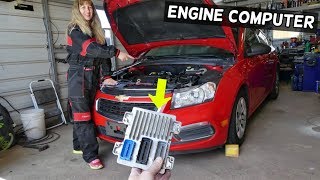
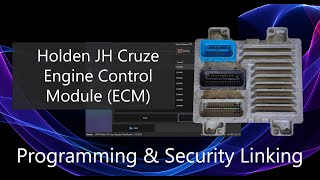
- If the ECM does need to be replaced, it is not a plug-and-play part and requires professional programming to your car's VIN.
What's Unique About the 2011-2016 Chevrolet Cruze
For the first-generation Chevrolet Cruze, the P0605 code is often a 'ghost code' triggered by a well-documented electrical flaw rather than actual ECM failure. General Motors issued a Special Coverage Adjustment (#14311B) for 2011-2015 models because of a faulty negative battery cable with a poor internal crimp. This defect causes high internal resistance, unstable voltage, and poor grounding, leading to numerous electrical problems and false module error codes like P0605. Technicians and owners widely report that replacing this cable is the most important first step, often resolving all symptoms.
Generation note: The 2011-2016 year range covers the first generation (J300) of the Chevrolet Cruze. A carryover model called the 'Cruze Limited' (first generation) was sold in 2016 alongside the all-new second-generation model. This guide applies to the first-generation models. The negative battery cable issue is specifically covered by GM for 2011-2015 models.
Symptoms You May Notice
- Check Engine Light is on
- Engine stalls intermittently or while driving
- Vehicle will not start, or has a crank-no-start condition
- ABS, Traction Control (Stabilitrak), and Power Steering warning lights may illuminate.
- "Service Stabilitrac" or "Service Steering" messages in the Driver Information Center (DIC).
- Reduced engine power or 'limp mode'
- Radio, HVAC display, or instrument cluster flickers, goes blank, or resets.
- Turn signal clicking sound may disappear.
- Battery terminal may be hot to the touch after cranking due to high resistance.
- Replacing the ECM without first replacing the faulty negative battery cable. The cable is a much more common and cheaper failure point that produces the exact same symptoms.
- Replacing the battery without testing or replacing the faulty negative battery cable, which is often the root cause of the charging system problems.
Most Likely Causes
- Faulty Negative Battery Cable 🔴 High Probability A known defect with a poor crimp causes high internal resistance and unstable voltage. GM issued Special Coverage #14311B for this issue on 2011-2015 models, extending the warranty to 10 years/120,000 miles.
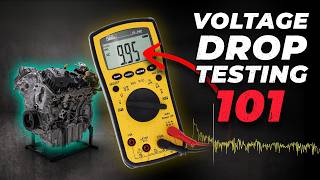
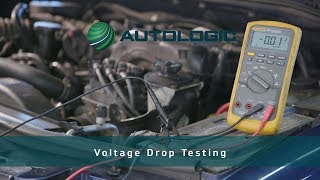
How to confirm: Visually inspect the cable end for corrosion or looseness. Perform a voltage drop test: with the engine running, place multimeter leads on the negative battery post and a clean chassis ground. A reading above 0.2V (200mV) indicates high resistance in the cable.
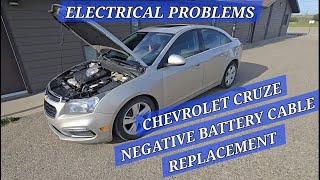
Typical fix: Replace the negative battery cable assembly with the updated OEM part. The new cable design requires a separate bolt for the small auxiliary wire.
Est. part cost: $25-$50 - Failed Engine Control Module (ECM) 🟡 Medium Probability While often triggered by voltage issues, the ACDelco E78 ECM can fail internally from heat cycles and vibration over time. It is a process-of-elimination diagnosis.
How to confirm: This is a process of elimination. If the battery, alternator, and all power/ground cables (especially the negative) are confirmed to be in perfect working order via load testing and voltage drop tests, and the code persists after clearing, the ECM is condemned.
Typical fix: Replace the Engine Control Module and have it programmed by a dealer or qualified shop. Some services offer cloning if you send in your old unit.
Est. part cost: $200-$600 - Weak Battery or Failing Alternator ⚪ Low Probability The sensitive electronics on the Cruze are intolerant of low or unstable voltage, which can cause the ECM to fail its internal self-test and trigger a false P0605 code. GM has a TSB (#PIP5482B) for other models noting that a weak battery can cause multiple false sensor codes.
How to confirm: Test the battery's state of health and charge with a digital battery tester. With the engine running, use a multimeter to check alternator output at the battery terminals. A healthy charging system should read between 13.5-14.5V.
Typical fix: Replace the weak battery or faulty alternator.
Est. part cost: $150-$400
Rare But Worth Checking
- Corroded or Loose ECM Connectors: Water intrusion or vibration can cause poor connections at the ECM itself, leading to a variety of errors including P0605. The valve cover is known to leak oil which can contaminate nearby connectors.
- Poor Main Engine Ground: A loose or corroded ground strap between the engine/transmission and the chassis can cause electrical issues that mimic module failure. There is a key ground strap on the intake manifold that should be checked.
Diagnosis Steps
- Check for GM Special Coverage #14311B. Contact a GM dealer with your VIN to see if your vehicle is covered for a free negative battery cable replacement (10 years/120,000 miles for 2011-2015 models).
- Inspect and Test the Battery and Charging System. Ensure the battery holds a charge above 12.4V and passes a load test. Verify the alternator provides a steady 13.5-14.5V when running.
- Replace the Negative Battery Cable. Due to the extremely high probability of this being the cause, it is recommended as a primary diagnostic step, even if it appears visually okay. This is the most common fix reported by owners.
- Perform a Voltage Drop Test. To confirm the cable is bad, test the voltage between the negative battery post and the chassis with the engine running. A reading over 200mV (0.2V) confirms high resistance.
- Inspect All Power and Ground Connections. Check the main engine ground strap (on the intake manifold) and the ECM power/ground circuits for tightness and corrosion.
- Inspect ECM Connectors. Disconnect the battery and check the two large ECM connectors for any signs of corrosion, moisture, or pushed-out pins.
- Attempt ECM Reflash. In rare cases, a dealer may be able to reflash the module to fix software corruption. This is unlikely to fix a true ROM hardware error but is a step before replacement.
- Replace and Reprogram the ECM. If all other steps fail, the ECM has an internal hardware fault and must be replaced and programmed to the vehicle.
Parts You'll Likely Need
- Negative Battery Cable
(OEM #22754271 (supersedes 95995010, 95460238, 95281536))— This is the most common cause of P0605 and related electrical issues on the 2011-2015 Cruze due to a known manufacturing defect. The updated part resolves the poor crimp issue.
Trusted brands: ACDelco, GM Genuine
OEM price range: $25-$50
Aftermarket price range: $20-$40 - Engine Control Module (ECM)
(OEM #25189682 (part number may vary, confirm with VIN))— If all electrical inputs and grounds are verified to be good, the ECM itself has failed its internal self-test and requires replacement. The specific model is an ACDelco E78.
Trusted brands: ACDelco (Remanufactured), GM Genuine
OEM price range: $400-$600
Aftermarket price range: $200-$400 (Remanufactured) - Negative Battery Cable Bolt
(OEM #11561025)— The updated negative battery cable design requires a separate bolt to fasten the small regulated voltage cable, which is not included with the new cable.
Trusted brands: GM Genuine
OEM price range: $5-$10
Related Codes That Often Appear With This One
- U0100 — If the ECM is failing internally (P0605), it can stop communicating on the vehicle's data network, causing other modules to log a 'Lost Communication With ECM' code. This also occurs when the bad battery cable causes network-wide voltage instability.
- P0700 — A failing ECM can send corrupt data to the Transmission Control Module (TCM), causing it to request the check engine light by setting a generic P0700 fault.
- Various BCM/ABS/TCS codes — The faulty negative battery cable causes widespread electrical instability, frequently logging Body Control Module, ABS, and Traction Control System codes related to low voltage or lost communication.
Technical Service Bulletins (TSBs) & Recalls
- Special Coverage #14311B: Details the insufficient crimp on the negative battery cable for 2011-2015 Cruze models, listing symptoms like flickering displays, various warning lights, and loss of power steering. It outlines the free replacement procedure.
- TSB #PIP5482B: While for other GM models, it's relevant context, noting that a weak battery can cause multiple simultaneous sensor codes (P0335, P0340, P0365), which supports the theory that voltage instability is a major issue for this platform's electronics.
Platform-Specific Known Issues
- GM Special Coverage #14311B: This program addresses a faulty negative battery cable on 2011-2015 models which is a primary cause of P0605 and other electrical faults. The warranty is extended to 10 years or 120,000 miles.
Mechanic-Grade Diagnostic Values
- Charging System Voltage — expected: 13.5V - 14.5V at battery terminals with engine running.. Failure: Voltage below 13.5V or above 14.5V indicates a potential alternator or battery issue, which can trigger a false P0605.
- Negative Battery Cable Voltage Drop — expected: Less than 0.2V (200mV). Failure: A reading above 0.2V between the negative battery post and a clean chassis ground point with the engine running signifies high resistance in the cable.
- Battery State of Charge (Engine Off) — expected: Above 12.4V. Failure: A reading below 12.4V suggests a weak or discharged battery that needs testing and charging before further diagnosis.
Scan Tool Commands That Help
- GDS2 (GM Tech Tool): Module Diagnostics > Reduced Engine Power History — To check if a 'Reduced Engine Power' message was triggered by a non-DTC event, such as running the vehicle out of fuel, which can sometimes accompany electrical faults.
- GDS2 (GM Tech Tool): Clear Codes Function — After disconnecting the battery for 5 minutes, this function in GDS2 can be used to reset the 'Reduced Engine Power History' status, which may not clear otherwise.
- GDS2 (GM Tech Tool): Output Controls (e.g., fuel injectors, cooling fans) — If the ECM is online but has a P0605, a technician can use bidirectional controls to test if the ECM can still command various components. An inability to control outputs further points to an internal ECM failure.
Wiring & Ground Locations
- ECM Connectors X1 & X2 — In the engine bay, next to the battery. The ACDelco E78 ECM has two large connectors. On many GM vehicles, X1 has a blue-colored secondary lock/cover, and X2 is black.. These are the main interface for all ECM power, ground, and sensor signals. Corrosion or pushed-out pins in these connectors can cause a loss of power or ground to the ECM, triggering a false P0605.
- G100 / Negative Cable Ground Stud — On the driver's side front of the vehicle, on the chassis frame rail or shock tower area. The main negative battery cable attaches here.. This is the primary ground point for the entire vehicle's electrical system. The faulty negative battery cable connects here; ensuring this stud is clean and the connection is tight is critical.
- G103 — On the driver's side front shock tower in the engine compartment.. This is a major chassis ground point for multiple components, including the Instrument Panel Cluster (IPC) and Body Control Module (BCM). A poor connection here can cause widespread electrical issues that mimic ECM failure.
- G105 — Located at the left front corner of the engine compartment, often near the cooling fan relays.. This ground serves various components in the front of the engine bay. While not a direct ECM ground, poor connections here contribute to overall electrical instability that can affect sensitive modules.
- Engine Harness Ground (near ignition coil) — A ground wire running from the main engine wiring harness to a bolt on the top of the engine, near the ignition coil pack.. This is a critical engine-to-harness ground. Owners have reported that a loose or corroded connection at this specific point can cause stalling and multiple random codes, similar to the symptoms of P0605.
Real Owner Repair Stories
- Reddit user in r/cruze (2012 Chevrolet Cruze) — Radio stopped turning on, check engine light was on. After two weeks, the radio issue returned, requiring a fuse pull to reset.
❌ Tried (didn't work) Replacing the negative battery cable initially fixed the problem, but symptoms returned after two weeks.
✅ What actually fixed it Another user suggested checking the ECM connectors for corrosion, specifically pins 1 and 2 on the second connector. A different user reported that cleaning a 'dirty ECM' fixed their similar electrical problems. A third user found their issues were resolved by tightening a loose positive battery terminal. - YouTube video by Drive By Reviews (2012 Chevrolet Cruze LTZ) — Stabilitrak error messages, radio turning on and off.
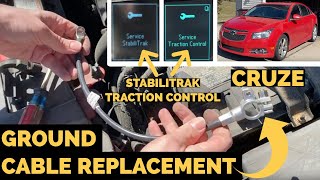
✅ What actually fixed it Replacing the faulty negative battery cable with the updated GM part (22754271) and the required new bolt (11561025) resolved the electrical issues.
OEM Part Supersession History
95281536, 95460238, 95995010→22754271— The original negative battery cables had an insufficient internal crimp, leading to high resistance and voltage fluctuations. The updated part resolves this manufacturing defect.
Heads up: The updated cable (22754271) requires a separate M6x1.0 bolt (GM P/N 11561025) for the small auxiliary ground wire, as the original design used an integrated stud and nut that is not present on the new part.
Model Year Variations Within This Range
- 2016: In 2016, Chevrolet sold both the first-generation 'Cruze Limited' and the all-new second-generation Cruze. This guide and its common fixes (especially the negative battery cable issue) apply specifically to the 'Cruze Limited' model, which is a carryover from the 2011-2015 generation.
- 2011-2012: The 1.4L Turbo engine was updated from the LUJ to the LUV design around this time. While there were internal engine changes, the ECM (ACDelco E78) and the relevant electrical diagnostics for P0605 remained consistent.
Diagnostic Flowchart
Other Known Issues on This Vehicle
Issues unrelated to this code that are worth knowing about as an owner of this generation:
- PCV System Failure (Valve Cover & Intake Manifold) 🔴 High — Extremely common, often occurs between 60,000-120,000 miles. A failed check valve in the intake manifold allows boost pressure to rupture a diaphragm in the valve cover, causing a large vacuum leak (P0171). (Ref: Special Coverage N202299080, N152062250 (extends warranty on valve cover for some years to 10 years/120,000 miles).)
- Leaking Water Pump 🔴 High — Very common failure item, with some owners replacing it multiple times. Leaks can be slow or sudden, leading to coolant loss and overheating. (Ref: Special Coverage #14371 (extends warranty on water pump for some years to 10 years/150,000 miles).)
- Coolant Leaks from Plastic Housings 🟠 Medium — The plastic thermostat housing/water outlet is prone to cracking and leaking over time due to heat cycles. Aftermarket aluminum replacements are a popular upgrade.
- Oil Leaks (Valve Cover Gasket, Oil Cooler Seals) 🟠 Medium — Gaskets for the valve cover and oil cooler seals are common failure points, leading to external oil leaks. Valve cover leaks can damage sensors and wiring below.
- Ignition Coil Pack Failure 🟠 Medium — The single cassette-style ignition coil pack is a common failure item, leading to misfires (P0300-P0304).
Used vs. New Parts: Buying Guide for This Vehicle
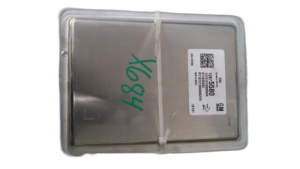
When a used part is the smart pick: A used Engine Control Module (ECM) from a junkyard or donor vehicle is a smart choice to save significant cost, BUT ONLY if you have access to a cloning service. A used ECM will not work without being programmed to your car's VIN and security information.
Donor-vehicle mileage cap: roughly under 100000 miles for the part to have meaningful remaining life.
What to inspect on the donor part:
- For a used ECM, inspect the connectors for any bent, broken, or corroded pins.
- Ensure the casing of the ECM is not cracked, dented, or shows signs of being forcibly opened.
- Verify the part number on the used ECM matches the original unit exactly.
OEM-only on this vehicle (don't cheap out):
- Negative Battery Cable: Do NOT buy a used negative battery cable. The failure is an invisible internal crimp defect, and a used part is highly likely to have the same problem or fail soon. The new OEM part is inexpensive and redesigned to fix the flaw.
Aftermarket brands forum-validated for this vehicle:
- ACDelco / GM Genuine: The recommended brand for both the negative battery cable and a replacement ECM.
Brands owners have reported issues with on this vehicle:
- For the ECM, avoid unverified sellers offering 'plug-and-play' units without requiring your original module for cloning. Programming is almost always required.
Real Owner Stories
Aggregated from forums and TSBs cited above. Mileages and costs reflect what owners reported in those sources.
2011 Chevrolet Cruze 1.4L Turbo
Symptoms: The owner reported a P0605 code fault occurring on the vehicle.
What fixed it: Replaced the negative battery cable.
Source hint: Opinautos - P0605 Discussion
2014 Chevrolet Cruze 1.4L Turbo — ~30000 miles
Symptoms: Radio cutting out, Stabilitrak errors, and no-start conditions. The owner described the original cable as a 'piece of garbage' that doesn't last.
What fixed it: Replacement of the negative battery cable assembly.
Source hint: CruzeTalk Forum - Multiple Threads
2011-2015 Chevrolet Cruze 1.4L Turbo
Symptoms: Radio and HVAC display flickering, 'Service Stabilitrac' or 'Service Steering' messages, and loss of power steering assist.
What fixed it: Replacement of the negative battery cable under Special Coverage #14311B.
Source hint: Special Coverage #14311B
Related OBD-II Codes
Frequently Asked Questions
Is there a recall or special coverage for the electrical issues causing P0605 on my 2013 Chevrolet Cruze?
My radio is flickering and the 'Service Stabilitrak' message appeared along with P0605. Are these related?
What is the specific replacement part number for the updated negative battery cable?
How can I confirm if my negative battery cable is bad before replacing the ECM?
Can a weak battery cause a false P0605 internal ROM error code on the Cruze?
Does the 2012 Chevrolet Sonic share this P0605 issue with the Cruze?
Helpful Videos
Used OEM Parts in Stock



New Aftermarket Parts Available


The information in this article is provided for general reference and educational purposes only. Vehicle specifications, procedures, and part compatibility can vary by production date, trim level, and region. Always consult your vehicle's factory service manual and verify part numbers before purchasing or performing repairs. Safety-critical components such as airbags, seat belts, and braking systems should be installed by a qualified professional.
- Chevrolet Cruze:
- 🎬 Helpful Videos
- 🛍️ Shop This Part
- What's Unique About the 2011-2016 Chevrolet Cruze
- Symptoms You May Notice
- Most Likely Causes
- Rare But Worth Checking
- Diagnosis Steps
- Parts You'll Likely Need
- Related Codes That Often Appear With This One
- Technical Service Bulletins (TSBs) & Recalls
- Platform-Specific Known Issues
- Mechanic-Grade Diagnostic Values
- Scan Tool Commands That Help
- Wiring & Ground Locations
- Real Owner Repair Stories
- OEM Part Supersession History
- Model Year Variations Within This Range
- Diagnostic Flowchart
- Other Known Issues on This Vehicle
- Used vs. New Parts: Buying Guide for This Vehicle
- Real Owner Stories
- 2011 Chevrolet Cruze 1.4L Turbo
- 2014 Chevrolet Cruze 1.4L Turbo — ~30000 miles
- 2011-2015 Chevrolet Cruze 1.4L Turbo
- Related OBD-II Codes
- Frequently Asked Questions
- 🎟️ Get 5% Off