

P0602 on 2019-2024 GMC Sierra 1500: Control Module Programming Error Causes and Fixes
P0602 on a 2019-2024 GMC Sierra 1500 means the Engine Control Module (ECM) or another key module has a software error, often triggered by low voltage. The most common fix is professional reprogramming, but always thoroughly test the battery, charging system, and ground connections first, as these are frequent root causes.
- P0602 is a serious code indicating a software failure in a key computer, usually the ECM.
- Do not immediately assume the expensive ECM is bad. Thoroughly test the battery, alternator, and all related power/ground connections first, as this is a very common cause.
- This is not a DIY repair. The fix requires professional-level reprogramming tools and software.
- If you see this code, do not continue driving. The truck could stall or enter limp mode at any time, creating a safety hazard.
What's Unique About the 2019-2024 GMC Sierra 1500
The 2019-2024 Sierra platform (T1XX) utilizes GM's complex Vehicle Intelligence Platform (VIP), also known as Global B electrical architecture, which relies heavily on inter-module communication and software integrity. While P0602 is a generic code, this specific truck generation is known for its sensitivity to voltage fluctuations. A weak battery, poor ground connection, or even an improper battery replacement procedure can trigger a cascade of communication errors and programming-related fault codes, including P0602 and others in the Brake System Control Module (BSCM). This platform's history of software-related recalls and bulletins for various modules, like TSB 20-NA-073 for the BSCM, underscores its sensitivity, making a P0602 code a significant diagnostic event that almost always requires dealer-level tools to resolve correctly.
Symptoms You May Notice
- Check Engine Light is on
- Vehicle will not start or cranks but does not fire
- Engine may stall unexpectedly while driving
- Reduced engine power (Limp Mode)
- "Service Brake System" or "Brake System Failure" messages on the driver information center
- Transmission may not shift correctly or may feel harsh
- "Service StabiliTrak" message may appear
- Multiple warning lights illuminating simultaneously after startup or a battery change
- Loss of power steering assist
- Replacing the Engine Control Module (ECM) without first verifying stable battery voltage and clean ground connections. A simple voltage or ground issue is a much more common and cheaper fix than replacing a module.
- Clearing the code without addressing the root cause. P0602 is a 'hard' fault that will almost certainly return immediately if the underlying programming or hardware issue is not resolved.
Most Likely Causes
- Weak or Failing Battery / Poor Charging System Performance 🔴 High Probability The T1XX platform has a high electrical demand. Low voltage during startup, an auto-stop/start event, or even just while sitting can corrupt module software. This is a very common trigger for programming-related codes across all modern GM vehicles. A battery replacement done incorrectly can also trigger these faults.
How to confirm: Test the battery with a digital multimeter (should be >12.4V at rest) and a professional load tester. Test the alternator output when the engine is running (should be 13.7-14.7V). Check for a valid battery registration with a scan tool if applicable.
Typical fix: Replace the weak battery and/or faulty alternator. Ensure the new battery is the correct type (AGM is common) and properly registered to the vehicle if required. It is critical to resolve the underlying power supply issue before reprogramming any modules.
Est. part cost: $200-$650 - Corrupted or Missing Module Software 🟡 Medium Probability This can occur after an interrupted software update (e.g., from a voltage drop), a battery disconnect at the wrong time, or sometimes spontaneously. The platform's complex software is sensitive to such events. GM TSB 20-NA-073 addresses a similar issue in the Brake System Control Module (BSCM) on these trucks, requiring a reflash to fix software-induced faults. Manufacturer Bulletin #05-06-04-060A notes that P0602 is an informational code that can be shared across multiple modules.
How to confirm: A professional technician will use a GM-compliant scan tool (like GDS2) to check the software and calibration IDs on the module against the official database for the vehicle's VIN.
Typical fix: Reprogram (reflash) the affected control module (e.g., ECM, TCM, BSCM) with the latest software from GM using the Service Programming System (SPS2). This requires a dealership or a properly equipped independent shop.
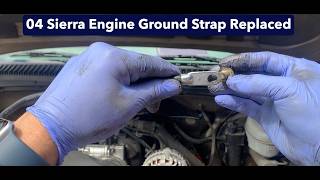
Est. part cost: $0 - Poor Power or Ground Connection to a Control Module 🟡 Medium Probability Vibration and corrosion can cause main ground straps or module connector pins to develop high resistance. On the T1XX platform, a known issue is a braided ground strap from the frame to the firewall on the passenger side becoming loose or corroded, causing a host of electrical issues.
How to confirm: Perform a voltage drop test on the main power and ground circuits for the affected module. A reading greater than 0.2 Volts (200 millivolts) indicates high resistance. Visually inspect the main engine-to-chassis ground straps, battery cables, and the specific frame-to-firewall ground strap for corrosion or damage. 🎬 Watch: How to find and fix bad Chevy truck grounds
Typical fix: Clean, tighten, or replace corroded ground straps and battery cables. Repair or clean the pins in the module connector.
Est. part cost: $20-$150
Rare But Worth Checking
- Faulty Engine Control Module (ECM): While often suspected first, the ECM itself is usually not the root cause unless all other possibilities (software, voltage, connections) have been ruled out. If reprogramming fails repeatedly with a stable power supply (using a dedicated programming power supply), the module itself is likely defective.
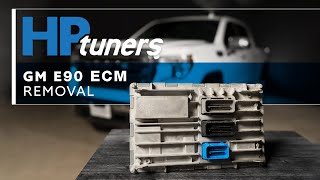
- Aftermarket Tuning or Performance Modifications: An improperly loaded aftermarket tune can cause conflicts with other vehicle modules or fail its internal self-check, triggering a P0602 code. Some tuners, like HP Tuners, offer services to unlock or modify the factory E90 ECM used in these trucks. 🎬 Watch: How to safely remove your GM E90 ECM
- Wiring Harness Chafing: There are documented cases on related GM platforms where the engine wiring harness can rub through on the edge of the transmission case, causing shorts and various module communication DTCs. While not specific to P0602, it's a plausible cause for complex electrical faults.
Diagnosis Steps
- Verify the code with a professional OBD-II scanner. Note which module is setting the P0602 code (e.g., ECM, TCM, BSCM).
- Perform a full vehicle scan to check for any other codes, especially communication (U-codes) or voltage codes.
- CRITICAL: Thoroughly test the battery and charging system. Use a professional load tester on the battery. Voltage must be stable and within spec (12.4V+ static, 13.7-14.7V running). Low voltage is a primary cause of this code.
- Inspect all main power and ground connections. Pay special attention to battery terminals, the main engine-to-chassis ground straps, and the braided ground strap on the passenger side frame-to-firewall, which is a known issue. Perform voltage drop tests on these connections; anything over 200mV (0.2V) is a problem.
- If power and grounds are perfect, the next step is to attempt to reprogram the module using GM's Service Programming System (SPS2) via Techline Connect. 🎬 See this guide on programming with GM's SPS2 This is a professional-only step and requires a stable programming power supply.
- If reprogramming is successful, clear all codes and perform an extended test drive, including multiple start/stop cycles, to ensure the code does not return.
- If reprogramming fails repeatedly, and all connections and voltages are confirmed to be good, the control module itself is likely faulty and requires replacement. The new module must also be programmed to the vehicle.
Parts You'll Likely Need
- Engine Control Module (ECM) Reprogramming Service — This is the most common solution when the existing module is functional but has corrupted software, often due to a voltage issue. It restores the factory programming.
Trusted brands: GM Service Programming System (SPS2)
OEM price range: $150-$350
Aftermarket price range: N/A - Engine Control Module (ECM)
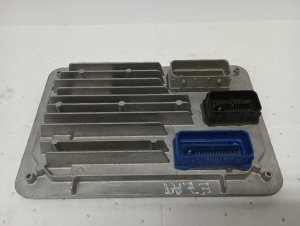
(OEM #ACDelco 12725132 (Example for 2019-2022 5.3L/6.2L))— This is replaced only when the module is confirmed to be internally faulty and cannot be reprogrammed. Part number varies by year and engine.
Trusted brands: ACDelco (GM Genuine Parts)
OEM price range: $800-$1200
Aftermarket price range: $400-$700 - Battery
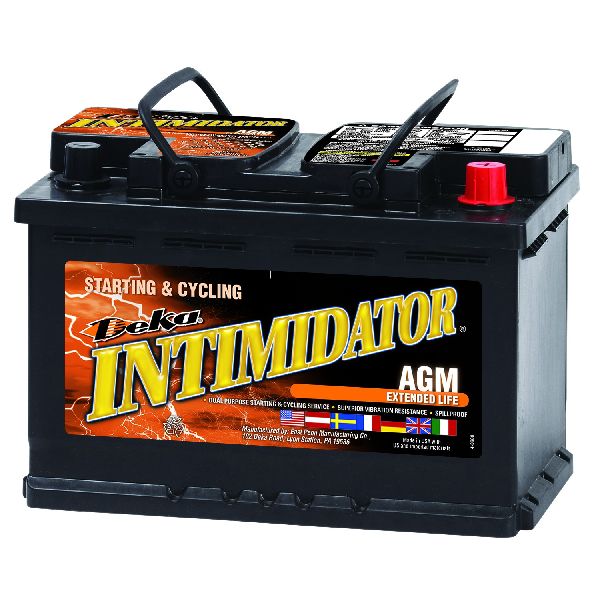
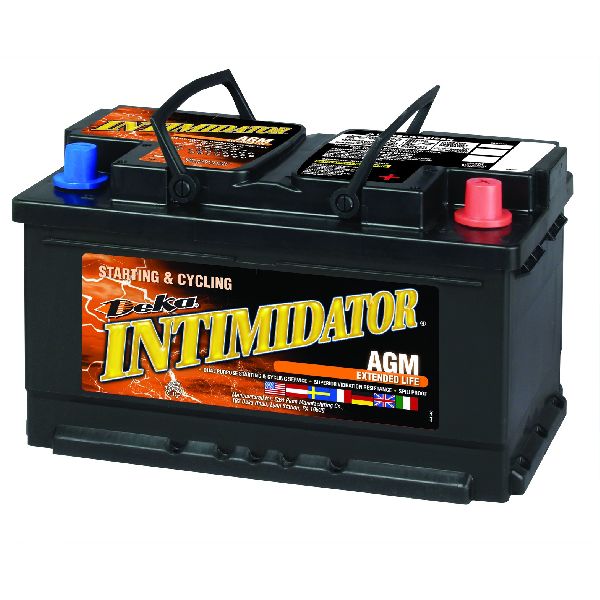
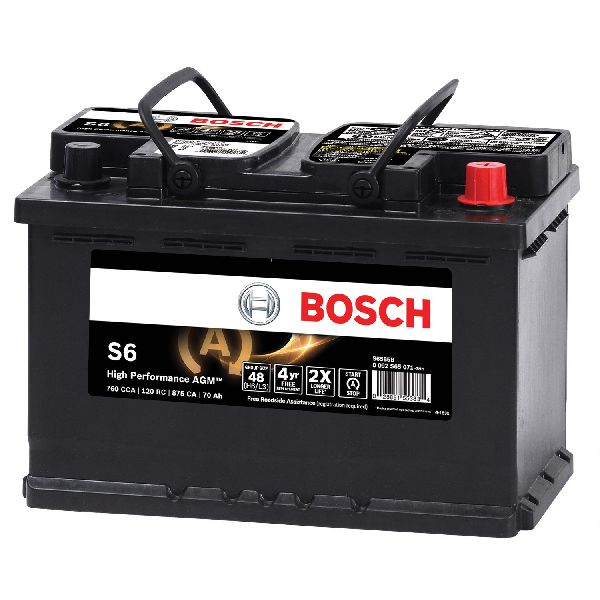
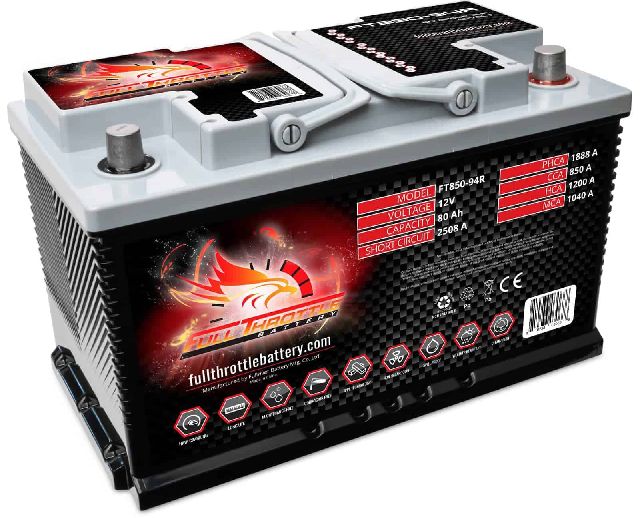
(OEM #ACDelco Gold 48AGM (Example))— A weak battery is a common root cause of software corruption. It must be replaced with the correct type (often AGM) to ensure a stable voltage supply.
Trusted brands: ACDelco, Odyssey, NorthStar
OEM price range: $250-$400
Aftermarket price range: $200-$350
Related Codes That Often Appear With This One
- P0606 — Control Module Internal Performance. This is a related code indicating a general internal fault. GM TSB 20-NA-073 specifically links P0606 in the Brake System Control Module with software issues on these trucks that require a reflash.
- U0100 — Lost Communication With ECM/PCM. This code often accompanies P0602 because if the ECM's software is corrupt, it may not be able to communicate properly on the vehicle's data network.
- P0601 — Internal Control Module Memory Check Sum Error. This is a related code that also points to a fatal internal error within the control module's memory.
- P25A2 — Brake System Control Module Requested MIL Illumination. This code is often seen after a battery replacement or brake work on 2019+ models and indicates the Brake System Control Module has detected a fault and is asking the ECM to turn on the Check Engine Light. It is a secondary code, meaning the primary fault lies within the brake module itself.
Technical Service Bulletins (TSBs) & Recalls
- TSB #05-06-04-060A: An informational bulletin from GM noting that internal control module fault codes like P0601, P0602, etc., can be set in various modules and often require module replacement if reprogramming doesn't work.
- TSB #PIT6474A: A preliminary information bulletin for 2022-2024 models that experience loss of brake assist with DTCs P0562 and P0606 after engine start. The cause is a voltage drop to the Brake System Control Module, and the fix involves cleaning/tightening battery connections and reprogramming the BSCM.
- Bulletin #PIT5518: Provides technicians with information regarding vehicles where P0602 is set in the Chassis Control Module. The recommended action involves removing and discarding fuse 19 (F19UA) from the under-hood fuse block.
Platform-Specific Known Issues
- This generation of Sierra/Silverado utilizes GM's Global B electrical architecture, which is highly sensitive to voltage drops. A simple battery change, if done incorrectly, can set a host of codes including P0602, P0606, and P25A2, often related to the Brake System Control Module.
- A specific braided ground strap on the passenger side, running from the frame to the firewall, is a known failure point that can cause widespread, difficult-to-diagnose electrical problems.
Mechanic-Grade Diagnostic Values
- Battery Voltage (Key Off, Static) — expected: >12.4 Volts. Failure: Voltage below 12.4V indicates a weak or discharged battery that is a primary cause of module data corruption.
- Charging System Voltage (Engine Running) — expected: 13.7V - 14.7V. Failure: Voltage outside this range points to a faulty alternator or voltage regulator, which can cause spikes or drops that trigger P0602.
- Voltage Drop on Main Ground Cables (e.g., engine to chassis) — expected: < 0.2 Volts (200 millivolts). Failure: A reading greater than 0.2V signifies high resistance in the ground circuit, which can starve the ECM of a stable ground reference and cause unpredictable behavior.
Scan Tool Commands That Help
- GM GDS2 (or equivalent professional scanner): Module Identification / ECU Information — This should be one of the first steps. Use this function to read the VIN, software calibration numbers, and part numbers currently stored in the suspect module. A blank or incorrect VIN is a direct confirmation of a P0602 programming error.
- GM Techline Connect (SPS2): Reprogram Control Module — This is the primary repair procedure for a software corruption issue. It re-flashes the module with the latest factory software. This requires a subscription, a J2534 interface, and a stable programming power supply to maintain battery voltage during the flash.
- GM Techline Connect (SPS2): Replace and Program Control Module — This function is used when installing a brand new module. It writes the vehicle's VIN, configures all RPO codes (vehicle options), and performs the necessary security linking to allow the vehicle to start.
Wiring & Ground Locations
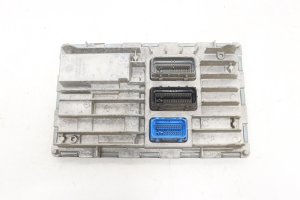
- E90 ECM — Located behind the driver's side front wheel well liner. Access requires removing the wheel and liner.. This is the physical location of the Engine Control Module. Technicians need to access its three main connectors (Blue, Gray, Black) for pin-out testing or replacement.
- Main Passenger Side Ground Strap — A braided ground strap connecting the frame to the firewall, typically on the passenger side of the engine compartment.. This is a known weak point mentioned in the Pass 2 data. Corrosion or looseness at this specific ground can cause a wide range of electrical faults and module communication errors, including those that trigger P0602.
Real Owner Repair Stories
- GM-Trucks.com forum user (2020-2021 AT4) — Multiple simultaneous warnings on the dash: "Brake system failure, 43mph top speed", "Service trailer brake system", "Service brake assist", "Service ESC". Brake pedal feel was diminished by 50%. Codes P25A2 and C05B0 were stored.
❌ Tried (didn't work) Restarting the truck multiple times. Disconnecting the negative battery terminal for 10 minutes. The dealer had previously performed a software update which did not prevent the issue from recurring.
✅ What actually fixed it The user's issue was intermittent. In one instance, after letting the truck sit for an hour, it started with only the check engine light on and normal brake function was restored. This points heavily towards a voltage-related or intermittent connection issue that temporarily corrupts module communication, a common trigger for P0602 and related brake module faults on this platform.
OEM Part Supersession History
12690388, 12703685, 12711852→12725132— Standard part evolution, likely incorporating minor hardware or firmware revisions for improved reliability or to address issues found in earlier versions.
Heads up: All these part numbers are for the E90 ECM used in 2019-2022 trucks and should be interchangeable as long as the correct software for the specific VIN is programmed.
Model Year Variations Within This Range
- 2022.5-2024: The mid-cycle refresh in 2022 introduced a completely new interior and the full implementation of GM's Vehicle Intelligence Platform (VIP) or 'Global B' architecture. While earlier 2019-2022 models have complex electronics, the Global B trucks have even stricter module security. Replacing a module like the ECM or BCM on a Global B truck requires online authorization via GM's Techline Connect; used modules from other vehicles generally cannot be reprogrammed and installed, as they are cryptographically locked to the original VIN.
Diagnostic Flowchart
Other Known Issues on This Vehicle
Issues unrelated to this code that are worth knowing about as an owner of this generation:
- AFM/DFM V8 Lifter Failure (5.3L & 6.2L) 🔴 High — Widespread issue across the generation. Can occur at various mileages, sometimes as low as 40k miles. Often presents as a ticking noise, misfires (P0300), and can lead to catastrophic engine damage if ignored. (Ref: Multiple internal bulletins exist, but no single public recall covers all instances. Dealer response varies.)
- 8-Speed and 10-Speed Transmission Shudder/Harsh Shifting 🟠 Medium — Common complaint, particularly with the 8-speed (8L90) in earlier years and some instances with the 10-speed. Can manifest as a shudder during light acceleration or harsh/jerky shifts. (Ref: Various TSBs have been issued over the years, often recommending a specific transmission fluid flush procedure or fluid type change.)
- Brake System Control Module (BSCM) Faults 🟠 Medium — Relatively common, especially on 2022+ models. Often triggered by low voltage on startup, causing loss of brake assist and multiple warnings on the dash. (Ref: TSB PIT6474A addresses this directly, recommending cleaning battery connections and reprogramming the BSCM.)
- Infotainment System Glitches / Black Screen 🟡 Low — Frequent owner complaints of the center screen going black, being unresponsive to touch, or features like Apple CarPlay/Android Auto disconnecting. (Ref: Software updates are often the prescribed fix, but some owners report persistent issues requiring hardware replacement.)
- Cracked Dashboard (Upper Dash) 🟡 Low — Some owners, particularly in hot climates, report cracks developing in the plastic of the upper dashboard, often near the passenger airbag outline or speaker grilles.
Used vs. New Parts: Buying Guide for This Vehicle
When a used part is the smart pick: For this specific vehicle generation (2019-2024), using a junkyard or second-hand Engine Control Module (ECM) is NOT a smart choice and is generally not possible, especially on 2022.5+ models with the Global B architecture. These modules are VIN-locked, and GM's current programming software (Techline Connect) is designed to prevent the reprogramming of used modules in another vehicle as a security measure.
What to inspect on the donor part:
- Not applicable, as used modules are not recommended or viable for this repair.
OEM-only on this vehicle (don't cheap out):
- Engine Control Module (ECM)
- Body Control Module (BCM)
- Brake System Control Module (BSCM)
- Any module tied to the Vehicle Theft Deterrent (VTD) system
Aftermarket brands forum-validated for this vehicle:
- For the physical ECM, only new GM Genuine Parts (ACDelco) are viable. For reprogramming services on a failed tune, companies like HP Tuners may be able to restore the factory file.
Brands owners have reported issues with on this vehicle:
- Avoid any 'pre-programmed' or used ECMs from online marketplaces for this vehicle generation. They will not work and can cause further issues by conflicting with other modules on the CAN bus.
Real Owner Stories
Aggregated from forums and TSBs cited above. Mileages and costs reflect what owners reported in those sources.
2019 GMC Sierra
Symptoms: After replacing the battery, the Check Engine Light came on immediately along with various 'service' messages. The truck stored codes U3006, P0606, C0021, C0002, and P25A2.
What fixed it: The dealer had to perform a diagnosis as the codes could not be cleared normally, highlighting the sensitivity of the platform to battery changes.
Source hint: Reddit r/gmcsierra: "What the hell"
2020 GMC Sierra Denali
Symptoms: Experienced power steering failure and malfunctioning running boards. Later, after a preventative battery replacement, the adaptive cruise control failed.
What fixed it: The initial electrical faults were fixed by replacing a bad grounding strap on the passenger side running from the frame to the firewall.
Source hint: GM-Trucks.com: "After battery replacement issues"
Related OBD-II Codes
Frequently Asked Questions
I just replaced the battery on my 2019 GMC Sierra and now I have a Check Engine Light and 'Service Brake System' messages. Is this related to P0602?
Does GM have a technical service bulletin for brake system software issues on these trucks?
My 2020 Sierra Denali has power steering failure and running board issues; could a ground strap be the cause?
Can I fix a P0602 code on my Sierra 1500 by just clearing the code with a basic scanner?
What should the battery voltage be on my 2019-2024 Sierra to avoid software corruption codes?
If reprogramming the module doesn't clear the P0602, what is the next step?
Helpful Videos

Used OEM Parts in Stock

New Aftermarket Parts Available


The information in this article is provided for general reference and educational purposes only. Vehicle specifications, procedures, and part compatibility can vary by production date, trim level, and region. Always consult your vehicle's factory service manual and verify part numbers before purchasing or performing repairs. Safety-critical components such as airbags, seat belts, and braking systems should be installed by a qualified professional.
- GMC Sierra 1500:
- 🎬 Helpful Videos
- 🛍️ Shop This Part
- What's Unique About the 2019-2024 GMC Sierra 1500
- Symptoms You May Notice
- Most Likely Causes
- Rare But Worth Checking
- Diagnosis Steps
- Parts You'll Likely Need
- Related Codes That Often Appear With This One
- Technical Service Bulletins (TSBs) & Recalls
- Platform-Specific Known Issues
- Mechanic-Grade Diagnostic Values
- Scan Tool Commands That Help
- Wiring & Ground Locations
- Real Owner Repair Stories
- OEM Part Supersession History
- Model Year Variations Within This Range
- Diagnostic Flowchart
- Other Known Issues on This Vehicle
- Used vs. New Parts: Buying Guide for This Vehicle
- Real Owner Stories
- 2019 GMC Sierra
- 2020 GMC Sierra Denali
- Related OBD-II Codes
- Frequently Asked Questions
- 🎟️ Get 5% Off