

P0600 on 2001-2005 Honda Civic: Multiplex (Serial Link) Failure Causes and Fixes
On a 2001-2005 Civic, P0600 usually points to a communication failure, often caused by a weak battery, bad alternator, poor ground connections, or a blown fuse. Check battery health, alternator output, and specific fuses (under-hood #9 10A, under-dash #10 7.5A) before suspecting a bad computer. A blinking 'D' light is a very common symptom.
- P0600 on this Civic means there's a communication problem between its computers, which Honda calls the 'Multiplex Control System.'
- A blinking 'D' light on the dash is a key symptom pointing to this code.
- Always start diagnosis with the easiest and most common fixes: check the battery, alternator, and the specific 10A under-hood and 7.5A under-dash fuses.
- Do not assume the transmission is bad. The problem is almost always electrical.
- If simple checks don't solve it, the problem is likely in the wiring or a control module and requires professional diagnosis.
What's Unique About the 2001-2005 Honda Civic
For the 7th generation Civic, this code is specifically tied to Honda's 'Multiplex Control System.' A very common and tell-tale symptom on this platform is a flashing 'D' (Drive) indicator light 🎬 Watch: What a blinking D light means for your Honda on the dashboard, which immediately points to a communication breakdown between the PCM and the transmission controls. Unlike generic interpretations, the diagnostic path for this Civic often starts with checking two specific fuses mentioned in the factory service manual: the No. 9 (10A) fuse in the under-hood box and the No. 10 (7.5A) fuse in the under-dash box, which can be a quick and easy fix. Poor ground connections, especially the main ground from the battery to the transmission housing and the strap from the engine to the frame, are another frequent and specific failure point on these cars that can trigger a P0600.
Symptoms You May Notice
- Check Engine Light is on
- Flashing 'D' (Drive) indicator light
- Engine may stall, run rough, or fail to start
- Erratic or harsh automatic transmission shifting
- Vehicle may enter 'limp mode' with reduced power
- Gauges on the instrument cluster may stop working or behave erratically
- Other warning lights (ABS, SRS, etc.) may illuminate simultaneously
- Replacing the transmission or transmission solenoids without diagnosing the electrical system first. The blinking 'D' light often points to an electrical or communication issue, not an internal mechanical failure of the transmission itself.
- Replacing the PCM without first verifying all power, ground, and fuse inputs are good. A bad ground or low battery voltage is a much more common and cheaper fix.
Most Likely Causes
- Low Battery Voltage or Failing Alternator 🔴 High Probability Control modules require a stable voltage (typically above 12V) to communicate. Low voltage from an old battery or a weak alternator is a frequent cause of network glitches across all modern vehicles, including the 7th gen Civic.
How to confirm: With the engine off, check the battery voltage with a multimeter; it should be above 12.4V. With the engine running, check the alternator output; it should be between 13.5V and 14.5V. Many auto parts stores will test your battery and alternator for free.
Typical fix: Charge or replace the battery. If the alternator output is low, it will need to be replaced. Ensure the alternator itself is properly grounded to the engine block for a stable charge.
Est. part cost: $120-$250 for a battery, $200-$400 for an alternator. - Blown Fuse(s) 🟡 Medium Probability The service manual for the 2001-2005 Civic specifically points to certain fuses that power the communication system. This is one of the first and easiest checks.
How to confirm: Check the No. 9 (10A) fuse in the under-hood fuse box and the No. 10 (7.5A) fuse in the under-dash fuse/relay box. 🎬 See this guide to find and replace your Civic's fuses Visually inspect the fuses to see if the internal filament is broken.
Typical fix: Replace the blown fuse. If the fuse blows again immediately, it indicates a short circuit in the wiring that needs to be traced.
Est. part cost: $1-$5 - Damaged Wiring or Corroded/Loose Ground Connections 🟡 Medium Probability This generation is now old enough that corrosion is common. The main engine-to-frame ground strap and the battery-to-transmission ground are known weak points that can corrode and cause a host of electrical issues, including P0600.
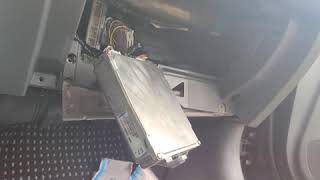
How to confirm: Visually inspect the wiring harnesses connected to the PCM (located behind the glove box), the transmission, the instrument cluster, and the under-dash fuse box. Look for any signs of chafing, breaks, or green corrosion on connector pins. Specifically inspect the main ground straps for corrosion or broken strands. Use a multimeter to check for continuity on ground circuits.
Typical fix: Repair the damaged section of wire or clean corroded connectors. Critically, replace corroded or broken ground straps. The OEM part number for the sub-ground cable (engine to frame) is 32610-S5A-000. 🎬 Watch: How to spot and fix a bad ground cable Clean all mating surfaces to bare metal before reattaching grounds.
Est. part cost: $10-$50 for repair materials or a new ground cable. - Faulty Powertrain Control Module (PCM) ⚪ Low Probability
How to confirm: This is a last resort after all other possibilities (power, fuses, grounds, wiring) have been exhaustively ruled out. Diagnosis requires a professional scan tool to attempt communication with the PCM and verify its internal processes.
Typical fix: Replace the PCM. The new unit will need to be programmed to the vehicle's specific VIN and immobilizer key information.
Est. part cost: $200-$500 for a used or remanufactured unit, $700-$1500+ for a new OEM unit.
Rare But Worth Checking
- Faulty Instrument Cluster or Under-Dash Fuse Box: On this Civic, the instrument cluster and the under-dash fuse box are active modules on the communication network. A failure within one of these components (e.g., a cracked solder joint on the cluster's circuit board or an internal fault in the fuse box's integrated multiplex unit) can disrupt the entire network, causing a P0600.
Diagnosis Steps
- Scan for any other trouble codes. Codes related to specific modules can help pinpoint the source of the communication loss.
- Check the battery and charging system. Ensure battery voltage is above 12.4V with the engine off. Start the engine and confirm the alternator is charging correctly (13.5V-14.5V).
- Inspect fuses. Specifically check the under-hood fuse #9 (10A) and the under-dash fuse #10 (7.5A). Replace if blown.
- Inspect all ground connections. Pay close attention to the battery-to-transmission ground and the engine-to-frame ground strap (Honda P/N 32610-S5A-000). Look for green corrosion and broken wires. Clean all contact points to bare metal.
- Perform a visual inspection. Check the main wiring harnesses to the PCM, TCM, and instrument cluster for any visible damage, corrosion, or loose connections.
- Inspect PCM connectors. With the battery disconnected, unplug the PCM connectors (behind glove box) and check for any corroded or bent pins.
- Isolate modules. If you have an advanced scan tool, you can try to communicate with each module individually. A simpler method is to disconnect modules one by one (e.g., instrument cluster) and see if communication with the others is restored. This is an advanced step.
- If all of the above checks out, the issue likely lies with a faulty control module (PCM, instrument cluster, or fuse box). This step requires professional-level diagnostics to isolate the failing component.
Parts You'll Likely Need
- Fuse — A blown fuse is a common and simple fix mentioned in service manual diagnostic procedures for this code.
Trusted brands: Bussmann, Littlefuse
OEM price range: $1-$5
Aftermarket price range: $1-$5 - Sub-Ground Cable
(OEM #32610-S5A-000)— The engine-to-frame ground strap is a known failure point due to corrosion, causing a wide range of electrical issues including P0600.
Trusted brands: Honda (OEM)
OEM price range: $15-$25
Aftermarket price range: $10-$20 - Powertrain Control Module (PCM/ECM)
(OEM #Varies by year/trim/transmission. Examples: 37820-PLR-L58 (01-03 EX AT), 37820-PZA-A56 (03 Hybrid MT).)— If all wiring, power, and ground checks pass, the PCM itself may have an internal fault, preventing communication. This is the least common, but most expensive, repair.
Trusted brands: Honda (OEM), Cardone, Standard Motor Products
OEM price range: $700-$1500+
Aftermarket price range: $200-$500 (remanufactured)
Related Codes That Often Appear With This One
- P0700 — P0700 is a generic code indicating the Transmission Control Module (TCM) has stored a fault. It often appears with P0600 because the communication loss prevents the PCM from knowing the specific transmission fault, so it sets both codes.
- U-series codes (e.g., U0100, U0101) — U-codes specifically relate to network communication failures. If the scan tool shows U-codes alongside P0600, it further confirms a communication bus problem.
Platform-Specific Known Issues
- Solved: Alternator Replacement Induced P0600: A user on a Honda forum reported that after replacing their alternator, the car would not start and threw a P0600 code. The issue was traced back to the main 100A battery fuse in the under-hood fuse box. Although the fuse did not look blown, it had an internal fracture from the electrical work. Replacing this main fuse resolved the communication error.
Mechanic-Grade Diagnostic Values
- Multiplex Communication Line Voltage (Wake-up/Active Mode) — expected: 4 - 10 V. Failure: Voltage outside this range, or stuck at battery voltage, indicates a communication problem.
- Multiplex Communication Line Voltage (Sleep Mode) — expected: Should change to battery voltage (approx. 12V). Failure: If voltage does not rise to battery level after about a minute of inactivity (doors closed, key out), the system is not entering sleep mode correctly.
- Parasitic Draw (Sleep Mode) — expected: Less than 10 mA. Failure: A current draw of 70-80 mA that does not drop indicates the multiplex system is not entering sleep mode, pointing to a faulty module or short.
Hidden / Shadow Codes Worth Checking
- 39-01: This is a Honda-specific manufacturer code that is equivalent to P0600, indicating a 'Serial Communication Link Failure'. It may be displayed by some scanners instead of the generic P-code. (see via Honda-specific diagnostic tools or some advanced professional scanners.)
Scan Tool Commands That Help
- Honda HDS (or compatible): Immobilizer Key Reprogramming — This function is required after replacing the PCM. The scanner guides the user through a sequence of turning keys to register the existing keys' transponder codes to the new PCM, allowing the engine to start.
- Honda HDS (or compatible): Multiplex Control System Test — This function can check the status of all modules on the multiplex network and see which ones are not communicating. It's a critical step to isolate whether the fault is with the PCM, gauge cluster, or another module without physically disconnecting them.
Wiring & Ground Locations
- PCM Connector E, Pin 24 — This is a Yellow wire at the PCM, which is located behind the glove box.. This is the primary serial communication line (designated SEFMJ) that links the PCM to the under-dash fuse box (Multiplex Control Unit). A break or short on this wire is a direct cause of P0600.
- G101 — Typically located on the top of the engine or on the chassis near the upper radiator support.. This is a primary engine and PCM ground point. Corrosion or a loose connection here can cause a floating ground, leading to unpredictable module behavior and communication errors.
- G501 — Located under the gauge assembly (instrument cluster).. This is the main ground for the instrument cluster. Since the cluster is an active module on the communication network, a bad ground here can make the cluster malfunction and disrupt the entire network, triggering P0600.
- Battery to Transmission Ground — A thick ground strap running from the negative battery terminal area to a bolt on the transmission case.. This is a critical ground path for the entire powertrain. It is highly susceptible to corrosion and breakage on older Civics, and its failure is a very common cause of P0600 and other electrical issues.
- Under-dash Fuse Box, Connector E, Pin 10 — A Yellow wire (or White/Green on some trims) at the under-dash fuse/relay box.. This is the other end of the communication line from the PCM. It's a key test point for checking voltage and continuity of the serial link.
Real Owner Repair Stories
- Honda-Tech forum user (2002 Honda Civic) — Intermittent shutdown in hot weather, hard starting, rough idle, code P0336 initially, then P0600 appeared.
❌ Tried (didn't work) Replacing the crankshaft position sensor.
✅ What actually fixed it The user suspected a ground issue. While the final resolution wasn't posted in a single comment, the diagnostic path focused heavily on locating and cleaning all engine bay ground points, implying the fault was found in a corroded ground connection. - CivicForums user (2001-2005 Honda Civic (general)) — Multiple electrical issues including turn signals, wipers, and windows failing, leading to a battery drain.
❌ Tried (didn't work) Initially suspected the Multiplex Control Unit was bad.
✅ What actually fixed it The issue was a faulty ground wiring connection for the dashboard. A technician had to disassemble parts of the dash to access and clean the corroded ground wires, which resolved all the electrical problems. - Honda Owner Report — An owner of a Honda vehicle reported a no-start condition where the vehicle was unable to be jump started, displaying code P0600 along with warning lights for emissions system problems, brake system failure, and anti-lock brake system failure (NHTSA ODI #11487159).
Model Year Variations Within This Range
- 2001-2003 vs 2004-2005: The 2004-2005 models received a facelift which included some wiring and component updates. While the fundamental multiplex system is the same, PCM part numbers are not interchangeable between the two ranges (e.g., 01-03 vs 04-05) even for the same trim level and transmission. Always verify the exact part number from the original PCM before ordering a replacement.
Diagnostic Flowchart
Other Known Issues on This Vehicle
Issues unrelated to this code that are worth knowing about as an owner of this generation:
- Automatic Transmission Failure 🔴 High — A widely documented problem for this generation, particularly in earlier years (2001-2003). Failures can occur at various mileages, sometimes under 100k miles. (Ref: Multiple TSBs were issued, though no widespread recall. Owners report slipping, harsh shifting, and eventual failure.)
- Head Gasket Failure 🔴 High — The D17 series engines are known to be prone to head gasket leaks, often leading to overheating and coolant loss.
- Cracked Exhaust Manifold 🟠 Medium — The factory exhaust manifold is prone to cracking, causing an exhaust leak, noise, and potentially triggering emissions-related trouble codes.
- Front Lower Control Arm (Compliance) Bushing Failure 🟡 Low — These bushings wear out, causing clunking noises from the front suspension when going over bumps.
- EVAP Canister Vent Solenoid Failure (P1457) 🟡 Low — A very common issue where the vent solenoid rusts and fails, causing the Check Engine Light to come on for code P1457. The bolts often break during removal.
Used vs. New Parts: Buying Guide for This Vehicle
When a used part is the smart pick: For a P0600 diagnosis, sourcing a used Powertrain Control Module (PCM) from a junkyard or online recycler is a very common and cost-effective strategy, as a new OEM unit can be prohibitively expensive for a vehicle of this age. Used instrument clusters or under-dash fuse boxes are also viable.
Donor-vehicle mileage cap: roughly under 150000 miles for the part to have meaningful remaining life.
What to inspect on the donor part:
- Verify the part number on the donor PCM EXACTLY matches your original unit. Even a single digit difference can mean incompatibility.
- Inspect the connectors on the donor unit for any signs of corrosion, bent pins, or water damage.
- Ask the seller if they offer a short warranty or guarantee that the part is functional.
- Choose a donor vehicle from a similar climate if possible to reduce the risk of corrosion-related issues.
Aftermarket brands forum-validated for this vehicle:
- Cardone (for remanufactured PCMs)
- Standard Motor Products (for remanufactured PCMs)
Brands owners have reported issues with on this vehicle:
- Unbranded, no-name electronics from online marketplaces should be avoided, as they often lack quality control and may not be programmed correctly.
Real Owner Stories
Aggregated from forums and TSBs cited above. Mileages and costs reflect what owners reported in those sources.
2001-2005 Honda Civic
Symptoms: After replacing the alternator, the car would not start and threw a P0600 code.
What fixed it: The main 100A battery fuse in the under-hood fuse box had an internal fracture, though it did not look visibly blown. Replacing this main fuse resolved the communication error.
Source hint: vehicle_specific_issues: 'Solved: Alternator Replacement Induced P0600'
Honda Owner Report (NHTSA ODI #11487159)
Symptoms: The vehicle would not start and was unable to be jump started. Diagnostic scanning revealed code P0600 along with warning lights for emissions system problems, brake system failure, and anti-lock brake system failure.
What fixed it: While the final repair was not fully confirmed, technicians were 75% certain of the root cause after the vehicle exhibited these widespread communication and electrical failures.
Related OBD-II Codes
Frequently Asked Questions
Which specific fuses should I check first for a P0600 code on my 2001-2005 Civic?
My 'D' (Drive) indicator light is flashing along with the Check Engine Light. Is this related to the P0600 code?
My engine-to-frame ground strap is corroded. What is the Honda part number for a replacement?
Where is the Powertrain Control Module (PCM) located on my 7th generation Civic?
Could my P0600 code and harsh shifting be related to the known automatic transmission problems on these Civics?
I have a 2004 Acura EL. Does this P0600 diagnostic information apply to my car?
Helpful Videos


Used OEM Parts in Stock


New Aftermarket Parts Available



The information in this article is provided for general reference and educational purposes only. Vehicle specifications, procedures, and part compatibility can vary by production date, trim level, and region. Always consult your vehicle's factory service manual and verify part numbers before purchasing or performing repairs. Safety-critical components such as airbags, seat belts, and braking systems should be installed by a qualified professional.
- Honda Civic:
- 🎬 Helpful Videos
- 🛍️ Shop This Part
- What's Unique About the 2001-2005 Honda Civic
- Symptoms You May Notice
- Most Likely Causes
- Rare But Worth Checking
- Diagnosis Steps
- Parts You'll Likely Need
- Related Codes That Often Appear With This One
- Platform-Specific Known Issues
- Mechanic-Grade Diagnostic Values
- Hidden / Shadow Codes Worth Checking
- Scan Tool Commands That Help
- Wiring & Ground Locations
- Real Owner Repair Stories
- Model Year Variations Within This Range
- Diagnostic Flowchart
- Other Known Issues on This Vehicle
- Used vs. New Parts: Buying Guide for This Vehicle
- Real Owner Stories
- 2001-2005 Honda Civic
- Honda Owner Report (NHTSA ODI #11487159)
- Related OBD-II Codes
- Frequently Asked Questions
- 🎟️ Get 5% Off