

P0563 on 2007-2018 Jeep Wrangler: System Voltage High Causes and Fixes
On a 2007-2018 Jeep Wrangler, code P0563 indicates the charging system voltage is too high. This is most often caused by a failing alternator, but can also be a faulty Powertrain Control Module (PCM) since the voltage regulator is internal to the PCM on these models. Expect to pay $300-$800 for a new alternator.
- P0563 means your Jeep's electrical system voltage is dangerously high.
- Before replacing any parts, use a multimeter to confirm the overcharging condition (voltage over 15V at the battery with the engine running).
- The most likely cause is a faulty alternator, but remember the voltage regulator is inside the PCM on a JK Wrangler.
- If a new alternator doesn't fix the issue, the PCM is the next likely culprit.
- Thoroughly check all battery and alternator wiring for corrosion, a common issue on Wranglers.
What's Unique About the 2007-2018 Jeep Wrangler

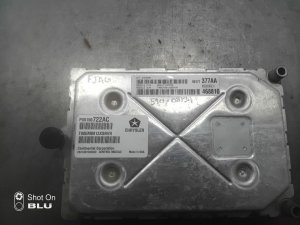
A critical detail for the 2007-2018 Jeep Wrangler (JK generation) is that the voltage regulator is not inside the alternator as it is on many other vehicles. Instead, the Electronic Voltage Regulator (EVR) is a circuit built directly into the Powertrain Control Module (PCM). The PCM directly controls the alternator's output by modulating the ground side of the field circuit. This design means that simply replacing the alternator will not fix the problem if the PCM's internal regulator has failed. This architecture is common across many Chrysler, Dodge, and Jeep vehicles of this era, making proper diagnosis essential to avoid replacing the wrong, expensive part.
Generation note: The 2007-2018 model years cover the entire Jeep Wrangler JK generation. However, there are two distinct engines: the 3.8L V6 (2007-2011) and the 3.6L Pentastar V6 (2012-2018). The fundamental cause (high voltage) and the location of the voltage regulator (in the PCM) are the same for both, but the specific alternator part numbers, PCM part numbers, and diagnostic procedures for the alternator field circuit will differ slightly.
Symptoms You May Notice

- Check Engine Light illuminated
- Battery or charging system warning light on the dashboard
- Headlights are excessively bright, or dim/flicker erratically
- Erratic gauge behavior, such as the speedometer getting stuck or all gauges going dead
- Engine stalling or running rough, sometimes followed by a complete shutdown
- Vehicle entering "limp mode" with reduced power and an unresponsive gas pedal
- Problems with electrical accessories (radio, interior lights, power windows)
- Warning messages on the dash like "STOP SAFELY VEHICLE WILL SHUT OFF SOON"
- Loss of power steering
- A "Service Transmission" message appearing in the Instrument Panel Cluster (IPC) as noted in Bulletin #18-003-26.
- Hybrid/EV Battery Pack Coolant Pump Performance issues as described in Bulletin #0817023.
- Replacing the alternator when the PCM is the actual cause. A forum user on JK-Forum.com reported their dealer replaced the alternator, but the code returned because the actual fault was the PCM's internal voltage regulator.
- Replacing the battery when it is a casualty of the overcharging, not the cause. The high voltage 'cooks' the battery, but the root cause is the alternator or PCM.
Most Likely Causes

- Faulty Alternator 🔴 High Probability Alternators are wear-and-tear items. While the regulator is external on this Jeep, the alternator's internal components (like the diode trio or rotor) can still fail in a way that causes it to produce excessive voltage, forcing the PCM to try and compensate until it can't.
How to confirm: With the engine running, use a multimeter to test the voltage across the battery terminals. A reading consistently above 15.0 volts points to an overcharging condition. Most auto parts stores can also bench-test the alternator for free. Also perform a voltage drop test on the positive and negative cables to rule out high resistance.
Typical fix: Replace the alternator.
Est. part cost: $250-$600 - Failed Powertrain Control Module (PCM) Voltage Regulator 🟡 Medium Probability The voltage regulator is a circuit inside the PCM. If this specific circuit fails, it can no longer properly control the alternator's output, leading to an overcharge condition. This is a known point of failure on Chrysler/Jeep platforms of this era, with some owners needing to replace the PCM after an alternator replacement fails to solve the issue.
How to confirm: This is typically diagnosed by exclusion. If the alternator, battery, and all wiring (especially the field control circuit) have been tested and confirmed to be good, but the high voltage condition persists, the PCM's internal regulator is the likely culprit. A technician can use a scan tool to actuate the generator field control circuit; if the circuit doesn't respond as commanded, it points to a bad PCM driver.
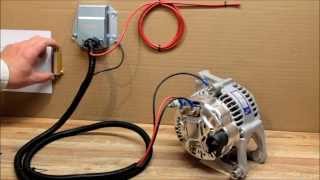
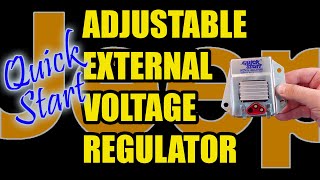
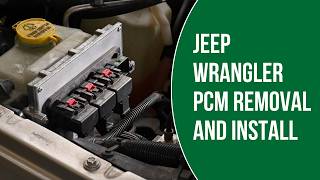
Typical fix: The PCM must be replaced and programmed 🎬 Watch this tutorial on how to remove and replace your PCM. to the vehicle. Alternatively, some owners opt to wire in an external, universal voltage regulator to bypass the faulty PCM circuit, which is a more complex but often cheaper solution.
Est. part cost: $400-$900 for a programmed PCM, or $40-$80 for an external regulator kit. - Corroded or Loose Wiring/Grounds 🟡 Medium Probability Wranglers are often used in harsh environments (off-road, water, mud, road salt) which accelerates corrosion on battery terminals, ground straps, and the alternator wiring harness. A poor ground can cause resistance and lead to voltage spikes.
How to confirm: Visually inspect all battery cables, terminals, and the main engine/chassis ground straps for looseness, corrosion, or damage. Check the wiring and connector at the alternator for corrosion or breaks, particularly the two smaller field control circuit wires running to the PCM. A voltage drop test can confirm high resistance in the ground or power circuits.
Typical fix: Clean battery terminals and cable ends with a wire brush. Tighten all connections. Replace any corroded or damaged cables or ground straps.
Est. part cost: $10-$150
Rare But Worth Checking
- Failing Battery: While a bad battery usually causes low voltage issues, a battery with an internal short or other failure can sometimes disrupt the charging system's ability to regulate voltage, leading to spikes that trigger P0563. It is more often a casualty of overcharging than the cause.
- Faulty Totally Integrated Power Module (TIPM): The TIPM is the main fuse box and power distribution center. It is a known failure point on 2007-2018 Wranglers, causing a wide range of electrical issues. While not a direct cause of P0563, a failing TIPM can create electrical noise and voltage irregularities that could potentially contribute to or be misdiagnosed as a charging system fault.
Diagnosis Steps
- Check for any other stored DTCs. Address those first if they are present, especially codes related to O2 sensors or charging output which can appear with P0563.
- With the engine OFF, use a multimeter to measure battery voltage. A healthy battery should read approximately 12.6 volts.
- Start the engine. Measure the voltage at the battery terminals again. The reading should be between 13.5 and 14.7 volts. If the voltage is consistently above 15.0V, you have confirmed an overcharging condition.
- Thoroughly inspect the battery terminals, battery cables, and main chassis ground straps for any signs of corrosion, damage, or looseness. Clean and tighten as necessary.
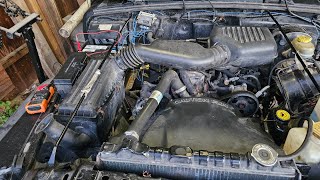
- Inspect the alternator's electrical connector and wiring harness. Look for any chafed, broken, or corroded wires. Pay close attention to the two smaller field control wires that run between the alternator and the PCM. 🎬 Watch: How to install a kit to bypass the internal regulator.
- Perform a voltage drop test on both the positive (B+ post on alternator to positive battery terminal) and negative (alternator housing to negative battery terminal) sides of the charging circuit. Readings should be very low, typically under 0.2V on the ground side and under 0.5V on the positive side. High readings indicate excessive resistance.
- If wiring and connections are good, have the alternator tested. This can be done on the vehicle or by removing it and taking it to an auto parts store.
- If the alternator tests good but the overcharging condition persists, the fault is very likely within the Powertrain Control Module's (PCM) internal voltage regulator circuit. Confirm by checking for proper voltage on the field control wires at the alternator connector with the engine running.
Parts You'll Likely Need
- Alternator
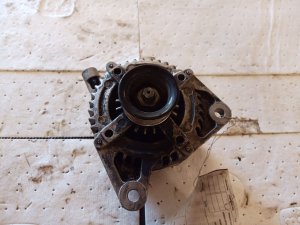
(OEM #68078950AB (Example for 3.6L V6, replaces 68078950AA))— This is the most common failure point for charging system issues, even though the regulator is external. Internal diode failure can lead to overcharging.
Trusted brands: Mopar, Denso, Remy
OEM price range: $400-$977
Aftermarket price range: $250-$500 - Powertrain Control Module (PCM)
(OEM #05150466AA / R5150468AA (Examples for 2009 3.8L V6, part numbers are VIN specific))— Because the voltage regulator is integrated into the PCM on the JK Wrangler, a P0563 code that persists after replacing the alternator and checking wiring often points to a failed PCM.
Trusted brands: Mopar (New or Remanufactured), Flagship One (Remanufactured), Vertex (Remanufactured)
OEM price range: $500-$900
Aftermarket price range: $340-$700 (Remanufactured)
Related Codes That Often Appear With This One
- P2504 - Charging System Output High
- P0152 - O2 Sensor Circuit High Voltage
- P0158 - O2 Sensor Circuit High Voltage
- P2B28 - Hybrid/EV Battery Pack Coolant Pump Performance (as noted in Bulletin #0817023)
Technical Service Bulletins (TSBs) & Recalls
- While no TSB is directly for P0563 on the 2007-2018 Wrangler, TSB 08-142-24 for newer 2024 eTorque models shows that P0563 can be caused by a software bug, highlighting that PCM software can be a cause for this code on Jeep platforms.
- Bulletin #18-050-24 notes that P0563 can occur alongside P0152 and P0158 (O2 Sensor High Voltage) and may cause the vehicle to run rough or display a "Service Transmission" message.
- Bulletin #18-003-26 confirms that P0563 (System Voltage High) is often found in conjunction with P2504 (Charging System Output High) and O2 sensor circuit high codes.
Platform-Specific Known Issues
- The most significant issue for this platform is the location of the voltage regulator within the PCM. This is a departure from many other vehicles where it is integrated into the alternator. This design choice means a relatively simple charging system fault can necessitate the replacement of the vehicle's main computer.
- A popular, though advanced, DIY fix is to bypass the failed internal PCM regulator by wiring in an external universal voltage regulator. This involves cutting the factory field control wire and splicing in the new regulator, which then takes over control of the alternator's output.
Mechanic-Grade Diagnostic Values
- Alternator Field Control Circuit (K125) Voltage — expected: Using a test light connected to ground, the light should illuminate brightly and flash on and off when the circuit is actuated via a scan tool (engine off, ignition on).. Failure: If the test light does not illuminate or flash, there is a fault in the PCM or the wiring between the PCM and alternator.
- Alternator Field Control Circuit (K125) Voltage Check for Short — expected: With the PCM C2 connector and alternator field connector disconnected, measuring voltage on the K125 wire should show less than 1 volt.. Failure: Voltage greater than 1 volt indicates a short to voltage in the harness.
- Alternator Mounting Bolt Torque Specs (3.6L) — expected: Top (15mm) bolts: 43 lb-ft. Bottom (13mm) bolts: 22 lb-ft.. Failure: Improper torque can lead to vibration or poor grounding through the alternator case.
Scan Tool Commands That Help
- wiTECH or equivalent professional scan tool: Actuate Gen Field Control Circuit — This bidirectional command is used to directly test the PCM's ability to control the alternator field circuit. With the engine off and alternator field connector disconnected, a technician can command the circuit on and off to check for a corresponding voltage signal on the control wire, isolating the fault to either the PCM or the alternator/wiring.
Wiring & Ground Locations
- Alternator Field Control Wire (3.8L, 2007-2011) — Dark Green/Brown wire in the 2-pin connector at the alternator, running to a pin on the PCM.. This wire carries the control signal from the PCM's internal voltage regulator to the alternator. A short or open on this wire will cause a loss of control, leading to either no charge or a full-field (max charge) condition.
- Alternator Field Control Wire (3.6L, 2012-2018) — Brown/Dark Green wire in the 2-pin connector at the alternator, running to Pin 17 of the C4 (Gray) PCM connector.. This is the primary control wire from the PCM to the alternator. Testing continuity and checking for shorts on this specific wire is a key diagnostic step after confirming an overcharge condition.
- G100 & G102 — Main battery and chassis grounds located on the passenger side of the engine compartment, near the battery.. High resistance at these primary ground points can cause the PCM to misread system voltage and command an incorrect charge rate, potentially leading to a P0563 code. These are critical to inspect on any Wrangler, especially those used off-road.
- PCM Connector C2 (3.8L) / C4 (3.6L) — The C2 connector on the 3.8L PCM or the C4 (Gray) connector on the 3.6L PCM, located on the firewall.. This is the connector that houses the alternator field control pin. Back-probing this connector is necessary to verify if the control signal is leaving the PCM, which helps differentiate a PCM failure from a wiring failure.
Real Owner Repair Stories
- JK-Forum.com user 'RoccoV' (Jeep Wrangler JK (year not specified, but within 2007-2015 range)) — Check Engine Light with code P0563.
❌ Tried (didn't work) The dealership replaced the alternator, assuming the internal voltage regulator was bad.
✅ What actually fixed it The code returned an hour after the alternator replacement. The actual cause was a failure of the Electronic Voltage Regulator (EVR) circuit inside the Powertrain Control Module (PCM), which is a known issue for this platform. The fix required replacing the PCM.
Model Year Variations Within This Range
- 2007-2011 (3.8L) vs 2012-2018 (3.6L): The wire color for the primary alternator field control circuit changes. On the 3.8L engine, it is typically a Dark Green/Brown wire. On the 3.6L Pentastar engine, it is a Brown/Dark Green wire going to pin 17 of the gray C4 PCM connector. While the function is identical, using the wrong color during diagnosis could lead to confusion.
Diagnostic Flowchart
Used vs. New Parts: Buying Guide for This Vehicle
When a used part is the smart pick: A used OEM alternator from a low-mileage, accident-damaged vehicle can be a cost-effective and reliable option, often superior to a low-quality new aftermarket unit. A used PCM is generally not recommended due to the need for VIN programming.
Donor-vehicle mileage cap: roughly under 75000 miles for the part to have meaningful remaining life.
What to inspect on the donor part:
- For an alternator, check for a clean housing, smooth pulley bearing rotation (no grinding or roughness), and no signs of overheating on the case or connectors.
- For a PCM, ensure the connectors are free of corrosion and the case is not physically damaged, but purchase is still risky without a warranty and programming service.
OEM-only on this vehicle (don't cheap out):
- Powertrain Control Module (PCM): While remanufactured units are available, they have very mixed reviews. Many owners and shops report receiving faulty units, experiencing long delays, and poor customer service from popular aftermarket suppliers. An OEM Mopar unit (new or remanufactured by Mopar) is the safest, albeit most expensive, choice to ensure compatibility and avoid programming headaches.
Aftermarket brands forum-validated for this vehicle:
- Denso (Often the OEM supplier)
- Remy (Quality remanufactured alternators)
Brands owners have reported issues with on this vehicle:
- Unbranded or 'white-box' alternators from online marketplaces.
- Some remanufactured PCM suppliers like Flagship One and Car Computer Exchange have a significant number of negative reviews from Jeep owners citing DOA parts, incorrect programming, and difficult warranty processes.
Real Owner Stories
Aggregated from forums and TSBs cited above. Mileages and costs reflect what owners reported in those sources.
2018+ Jeep Wrangler JL
Symptoms: Vehicle went 'totally haywire' with multiple warning lights, loss of power steering, ABS warnings, and a dash message reading 'Stop Safely Vehicle Will Shut Off Soon' before setting code P0563.
What fixed it: The final repair involved replacing the alternator, a relay, and the PCM.
Source hint: JLwranglerforums.com - Thread '"Stop Safely Vehicle Will Shut Off Soon"' (2021)
2015 Jeep Wrangler JK
Symptoms: The owner experienced a P0563 code and a dealer incorrectly diagnosed the issue.
What fixed it: After a dealer incorrectly replaced the alternator and the code returned, the owner learned the actual problem was the voltage regulator located inside the PCM, not the alternator.
Source hint: JK-Forum.com - Thread 'Code P0563' (2015)
Related OBD-II Codes
Frequently Asked Questions
I replaced the alternator on my Wrangler, but the P0563 code came back. What should I check next?
Is the voltage regulator part of the alternator on a 2007-2018 Jeep Wrangler?
I heard you can install an external voltage regulator instead of replacing the whole PCM. Is this possible on my Wrangler?
What is the correct charging voltage for my Jeep Wrangler at the battery terminals?
I use my Wrangler for off-roading. Could this be related to my P0563 code?
Is there a TSB for code P0563 on the 2007-2018 Wrangler?
Helpful Videos
We Have This Part in Stock




The information in this article is provided for general reference and educational purposes only. Vehicle specifications, procedures, and part compatibility can vary by production date, trim level, and region. Always consult your vehicle's factory service manual and verify part numbers before purchasing or performing repairs. Safety-critical components such as airbags, seat belts, and braking systems should be installed by a qualified professional.
- Jeep Wrangler:
- 🎬 Helpful Videos
- 🛍️ Shop This Part
- What's Unique About the 2007-2018 Jeep Wrangler
- Symptoms You May Notice
- Most Likely Causes
- Rare But Worth Checking
- Diagnosis Steps
- Parts You'll Likely Need
- Related Codes That Often Appear With This One
- Technical Service Bulletins (TSBs) & Recalls
- Platform-Specific Known Issues
- Mechanic-Grade Diagnostic Values
- Scan Tool Commands That Help
- Wiring & Ground Locations
- Real Owner Repair Stories
- Model Year Variations Within This Range
- Diagnostic Flowchart
- Used vs. New Parts: Buying Guide for This Vehicle
- Real Owner Stories
- 2018+ Jeep Wrangler JL
- 2015 Jeep Wrangler JK
- Related OBD-II Codes
- Frequently Asked Questions
- 🎟️ Get 5% Off