

P0524 on 2017 Ford Fusion 2.7L EcoBoost: Engine Oil Pressure Too Low Causes and Fixes
On a 2017 Ford Fusion with the 2.7L EcoBoost engine, P0524 is a critical warning often linked to a serious factory defect. A Ford Technical Service Bulletin (TSB 19-2243) points to faulty cylinder head valve guides causing excessive oil consumption, leading to dangerously low oil levels. This is a major engine repair, not a simple sensor replacement. If this code appears with misfire codes (P03xx), a full engine replacement may be required.
- P0524 on a 2017 Fusion 2.7L is a CRITICAL code. Stop driving immediately to prevent engine seizure.
- Check your vehicle's build date. If it's between April 2016 and January 2017, the cause is very likely a known defect requiring cylinder head replacement per Ford TSB 19-2243.
- Do not automatically assume the problem is a cheap oil pressure sensor. On this engine, the code often signals a major, expensive internal problem.
- Look for associated symptoms like blue/white exhaust smoke, rapid oil loss, and misfire codes (P03xx), which are strong indicators of the TSB issue.
What's Unique About the 2017-2017 Ford Fusion
For the 2017 Fusion with the 2.7L EcoBoost engine, P0524 is uniquely tied to a specific manufacturing issue. Ford issued TSB 19-2243 for engines built between April 1, 2016, and January 1, 2017, which links this code to faulty cylinder head valve guides. This defect causes an 'hourglass' wear pattern on the valve guides, allowing oil to leak into the cylinders and be consumed, which starves the engine of oil and triggers the low-pressure code. While a bad sensor is a possibility on any car, on this specific platform, P0524 must be treated as a potential major internal engine problem until proven otherwise, especially if accompanied by codes like P06DD or any misfires.
Symptoms You May Notice
- Check Engine Light (Malfunction Indicator Lamp) is on
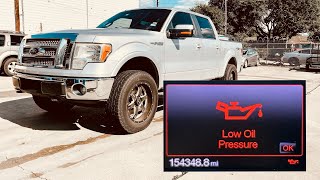
- Oil pressure warning light illuminated on the dashboard
- Excessive oil consumption (e.g., 1 quart in less than 3,000 miles)
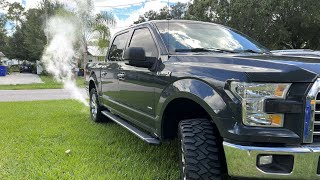
- White or blue smoke from the exhaust, especially after a hot restart 🎬 See what the blue smoke symptom looks like on startup.
- Rough idle, especially at normal operating temperature or after a hot restart
- Abnormal engine noises (ticking, grinding, or knocking)
- Reduced engine power or hesitation
- Replacing the oil pressure sensor without first checking for the known TSB issue. On this engine, P0524 is a strong indicator of the valve guide defect, and simply replacing the sensor will not fix the underlying oil consumption and low pressure problem.
Most Likely Causes
- Faulty Cylinder Head Valve Guides (per TSB 19-2243) 🔴 High Probability A known manufacturing defect affects 2.7L EcoBoost engines built between April 1, 2016, and January 1, 2017, causing excessive oil consumption that leads to low oil levels and pressure.
How to confirm: Check the vehicle's build date on the driver's door jamb sticker. Perform an oil consumption test (Ford's threshold is >1 quart per 3,000 miles). Look for other related codes like P03xx (misfires) and P06DD, and check for blue/white exhaust smoke after a hot soak. A dealership can confirm if the TSB applies.
Typical fix: Replace both left and right cylinder heads and associated gaskets. If P0524 or P06DD are present with misfire codes, Ford's procedure may call for a complete long block engine replacement. This is a major engine repair.
Est. part cost: $1000-$2000+ - Critically Low Engine Oil Level 🟡 Medium Probability This is often a symptom of the primary issue (faulty valve guides), but can also result from other issues like a leaking oil pan gasket or normal consumption if the TSB does not apply.
How to confirm: Check the engine oil dipstick immediately after turning off the engine on a level surface. The level being at or below the minimum mark confirms the condition.
Typical fix: Top up the oil to the correct level using the manufacturer-specified oil type (e.g., Motorcraft SAE 5W-30 Synthetic Blend). Then, investigate the reason for the oil loss, starting with the TSB applicability.
Est. part cost: $20-$50 - Faulty Engine Oil Pressure Sensor ⚪ Low Probability While less common on this specific platform due to the known TSB, any sensor can fail. It can send false low-pressure readings to the PCM. On the 2.7L EcoBoost, the sensor is typically located on the oil filter housing assembly.
How to confirm: After verifying the oil level is correct, use a mechanical oil pressure gauge to test the actual engine oil pressure. If the mechanical gauge shows good pressure but the code persists, the sensor is likely faulty.
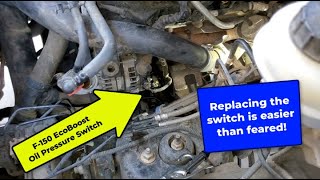
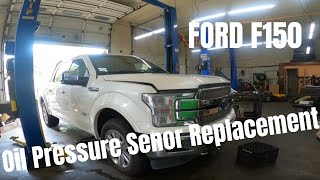
Typical fix: Replace the engine oil pressure sensor (switch) and clean the electrical connector. 🎬 Watch: How to replace the oil pressure sensor yourself. This is often done during an oil change due to its location.
Est. part cost: $25-$75
Rare But Worth Checking
- Failing Oil Pump or Clogged Oil Pickup Tube: This would cause a true low oil pressure condition. It's a serious mechanical failure but less specifically documented for this vehicle than the cylinder head issue. Sludge or debris from other internal failures can clog the pickup tube.
- Incorrect Oil Viscosity or Clogged Oil Filter: Using the wrong type of oil (e.g., too thin) or a severely clogged/improperly installed filter can reduce pressure. This is usually caused by improper maintenance.
- Wiring Harness Damage: Damage to the wires between the oil pressure sensor and the PCM can cause a short or open circuit, leading to a false P0524 code. TSB 16-0159 notes this possibility on related engines.
- Damaged Oil Filter Housing O-Ring: An owner of an F-150 with the 2.7L engine reported a P0524 code that was resolved by replacing a bad O-ring on the cartridge-style oil filter housing, which may have caused an air leak on the suction side of the oil system.
Diagnosis Steps
- CRITICAL: Immediately stop the engine to prevent damage. Do not drive the vehicle.
- Check the engine oil level using the dipstick. If it is low, top it off with the correct grade of oil (Motorcraft SAE 5W-30 Synthetic Blend or equivalent).
- Check the vehicle's build date on the driver's door jamb sticker to determine if it falls within the range specified in TSB 19-2243 (April 1, 2016 - January 1, 2017).
- Scan for additional trouble codes. The presence of P06DD and/or P03xx misfire codes strongly suggests the TSB issue.
- If the oil level was correct, the next step is to verify the actual oil pressure using a mechanical gauge. This will differentiate between a true low-pressure condition and a faulty sensor.
- If mechanical pressure is good, inspect the oil pressure sensor and its electrical connector for damage or oil contamination. Replace the sensor if necessary.
- If mechanical pressure is low, and the vehicle matches the TSB criteria, the cause is almost certainly the faulty cylinder heads. The vehicle should be taken to a qualified technician or dealership for confirmation and repair.
Parts You'll Likely Need
- Cylinder Head Assembly
(OEM #FT4Z-6049-E (Left), FT4Z-6049-F (Right))— This is the required fix for the known TSB 19-2243 issue involving faulty valve guides, which is the most probable cause of P0524 on these specific vehicles. The part number FT4Z-6049-E supersedes FT4Z-6049-D and FT4Z-6049-B.
Trusted brands: Motorcraft (OEM)
OEM price range: $800-$1200 per head
Aftermarket price range: N/A - Cylinder Head Gasket Kit
(OEM #FL3Z-6079-D)— Required when replacing the cylinder heads as part of the TSB 19-2243 repair.
Trusted brands: Motorcraft (OEM), Fel-Pro
OEM price range: $200-$350
Aftermarket price range: $150-$250 - Engine Oil Pressure Sensor
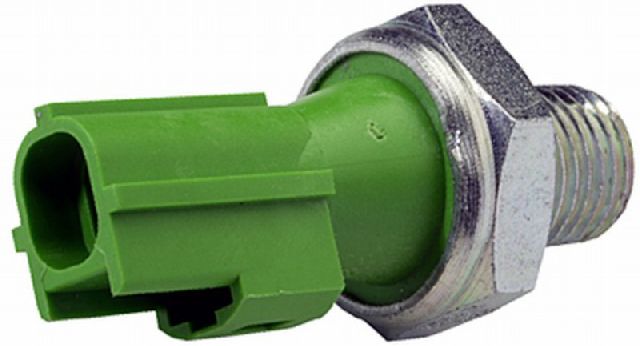
(OEM #SW-7628 (Motorcraft))— This is a potential, but less likely, cause. It would be replaced if a mechanical gauge confirms good oil pressure, indicating the sensor is sending a false signal.
Trusted brands: Motorcraft, Bosch, Standard Motor Products
OEM price range: $40-$75
Aftermarket price range: $25-$50
Related Codes That Often Appear With This One
- P06DD — This code for 'Engine Oil Pressure Control Circuit Stuck Off' is specifically mentioned in TSB 19-2243 as appearing with P0524, indicating a severe lubrication system fault.
- P0300, P0301-P0306 — These are random and specific cylinder misfire codes. The TSB notes that excessive oil consumption from the faulty valve guides can foul spark plugs and cause misfires.
- P0316 — Misfire Detected on Startup. This is also related to the oil contamination of spark plugs from the valve guide issue mentioned in the TSB.
Technical Service Bulletins (TSBs) & Recalls
- TSB 19-2243: Supersedes TSB 17-2235. Details the issue of excessive oil consumption (>1 quart/3000 miles), rough idle, smoke, and DTCs P0524/P06DD due to faulty valve guides on 2017 Fusion 2.7L engines within a specific build date range (April 1, 2016 - Jan 1, 2017), and instructs to replace the cylinder heads.
- TSB 17-2235: The predecessor to 19-2243, which first documented the widespread issue across Fusion, Edge, MKX, and Continental models.
- TSB 19-2384: A parallel TSB for the Ford F-150 with the same 2.7L engine, confirming the problem is engine-specific, not vehicle-specific.
- SSM 46363: An early Special Service Message that advised technicians to suspect the entire long block may need replacement if P0524/P06DD are present with misfire codes, indicating severe damage.
Platform-Specific Known Issues
- TSB 19-2243 / SSM 54504: Ford identified an issue with faulty valve guides in 2.7L EcoBoost engines built from April 2016 to January 2017. This causes excessive oil consumption, leading to low oil pressure (P0524), misfires (P03xx), and smoke from the exhaust. The official repair is to replace the cylinder heads.
Mechanic-Grade Diagnostic Values
- Engine Oil Pressure (Mechanical Gauge) — expected: Minimum 30 psi at 1500 RPM with engine at normal operating temperature.. Failure: Pressure significantly below 30 psi at 1500 RPM indicates a true mechanical low-pressure condition (pump, pickup tube, bearings, or internal leak from valve guide issue).
- Engine Oil Pressure (EOP) Sensor Voltage — expected: Approximately 0.5V to 4.5V, varying with pressure. The sensor is typically a 3-wire design with a 5V reference, a ground, and a signal return wire.. Failure: Voltage that is static, at 0V, or at 5V regardless of engine RPM suggests a faulty sensor or wiring issue. A signal shorted to ground can cause a false low-pressure reading.
- Engine Oil Pressure (Scan Tool PID) — expected: At hot idle, pressure may be in the 12-25 psi range. At 1500-2000 RPM, it should rise to over 30 psi.. Failure: Readings that are extremely low (e.g., <5 psi at idle) or do not rise with RPM, especially if a mechanical gauge reads higher, point to a sensor or wiring problem.
Scan Tool Commands That Help
- FORScan / Ford IDS: Live Data Monitoring (PID: EOP_PRESS) — This is the first step before any mechanical testing. It allows the technician to see the oil pressure value the PCM is receiving from the sensor in real-time. Comparing this value at idle and while revving the engine to the expected specifications can quickly indicate if the reported pressure is illogical, justifying a mechanical gauge test.
Wiring & Ground Locations
- Engine Oil Pressure Sensor Connector — On the 2.7L EcoBoost, the sensor is located near the oil filter housing assembly, on the driver's side of the engine. It can be accessed from the top, though some components may need to be moved.. This is the primary connection point to test. The connector can become contaminated with oil if the sensor fails internally, causing incorrect readings. The three pins are typically 5V reference, signal return, and ground.
- G104 — A major chassis ground point located on the left (driver's side) front of the engine compartment, often near the strut tower.. The oil pressure sensor circuit requires a stable ground reference provided by the PCM, which in turn relies on clean chassis grounds. A corroded or loose G104 can introduce electrical noise and voltage instability across multiple engine systems, potentially causing erroneous sensor readings and phantom codes.
- Crankshaft Pulley Bolt Torque — Front of the crankshaft.. While not a direct electrical point, TSB 19-2243 explicitly warns that achieving the proper 4-stage torque on the crankshaft pulley bolt is critical during the cylinder head replacement. Incorrect torque can cause the bolt to loosen, leading to timing gear failure, catastrophic engine damage, and a sudden loss of oil pressure.
Real Owner Repair Stories
- Ford F150 Forum (2015 Ford F-150 2.7L EcoBoost) — Low oil pressure light came on immediately after an oil change. Scan tool showed only 4 PSI at 1800 RPM. Also developed VVT timing codes.
❌ Tried (didn't work) Draining some oil to correct a potential overfill., Performing a second oil change with a new filter and O-rings.
✅ What actually fixed it The user did not post a final resolution, but the immediate next steps recommended by other forum members were to perform a manual pressure check with a mechanical gauge and, if that was not possible, to replace the oil pressure sensor as the next cheapest diagnostic step. The discussion highlighted the importance of ensuring all O-rings on the cartridge filter were installed correctly. - Reddit r/Ford (2017 Ford Fusion Sport 2.7L EcoBoost with 3,700 miles) — Sudden, rapid loss of power with "Low Oil Pressure" warning on the dash. Oil level was found to be barely on the dipstick.
❌ Tried (didn't work) The issue was intermittent; the warning did not reappear on the drive to the dealership.
✅ What actually fixed it The user was advised by the dealership and forum members that this was a symptom of the known cylinder head and seal issues on early 2.7L engines, pointing towards the TSB for faulty valve guides as the root cause of the oil consumption and subsequent low pressure. The resolution is the TSB repair (cylinder head replacement).
OEM Part Supersession History
FT4Z-6049-B, FT4Z-6049-D→FT4Z-6049-E (Left Cylinder Head)— The original cylinder heads were manufactured with defective valve guides that would wear prematurely, causing excessive oil consumption. The superseding part numbers are the corrected versions required by TSB 19-2243.
Heads up: Installing a used cylinder head from a donor vehicle built between April 2016 and January 2017 will likely re-introduce the same defect. Only new, post-revision heads or a complete engine from outside the affected build range should be used.
Model Year Variations Within This Range
- 2017 (Build dates from April 1, 2016 to January 1, 2017): Vehicles built within this specific date range are highly susceptible to the valve guide defect outlined in TSB 19-2243. For a 2017 Fusion with a build date outside this window, P0524 is much more likely to be caused by a conventional failure (bad sensor, low oil, wiring) rather than the widespread manufacturing defect.
Diagnostic Flowchart
Other Known Issues on This Vehicle
Issues unrelated to this code that are worth knowing about as an owner of this generation:
- Carbon Buildup on Intake Valves 🟠 Medium — Common on first-generation direct-injection engines like this one. Performance degradation can be noticed after 50,000-70,000 miles. The 2018+ 2.7L added port injection to mitigate this.
- Coolant Intrusion / Cracked Cylinder Head 🔴 High — Some owners have reported coolant loss with no external leaks, leading to a diagnosis of a cracked cylinder head, requiring major engine repair or replacement. This appears less common than the valve guide issue but is a known failure mode for EcoBoost engines.
- Leaking Plastic Oil Pan 🟡 Low — The oil pan on the 2.7L EcoBoost is made of a composite plastic and is known to develop leaks from the RTV sealant over time, requiring the pan to be dropped and resealed. (Ref: TSB 20-2330 (for later models, but relevant to engine family))
- Faulty EVAP Purge Valve 🟡 Low — A common failure on many Ford models, including the Fusion. Symptoms include difficulty starting after refueling and an EVAP system error code.
Used vs. New Parts: Buying Guide for This Vehicle
When a used part is the smart pick: For this specific repair, sourcing a used part is only advisable for a complete engine assembly, and it is CRITICAL to verify the donor engine's build date is outside the TSB range (i.e., built after January 2017). A used sensor or wiring harness from a low-mileage vehicle could be a cost-effective option if the TSB does not apply.
Donor-vehicle mileage cap: roughly under 80000 miles for the part to have meaningful remaining life.
What to inspect on the donor part:
- Verify the engine block casting date and vehicle build date are well after January 2017.
- Obtain maintenance records if possible, specifically looking for regular oil changes with the correct 5W-30 oil.
- Inspect for external oil leaks, especially from the oil pan RTV seal, which is another known issue on these engines.
- If possible, perform a compression test before purchasing the engine.
OEM-only on this vehicle (don't cheap out):
- Cylinder Head Assembly: Due to the specific manufacturing defect, aftermarket heads are not available, and using a used OEM head from the affected period is a guaranteed repeat failure. Only new Motorcraft heads (FT4Z-6049-E/F) should be used.
Brands owners have reported issues with on this vehicle:
- Avoid using off-brand, cheap oil filter cartridges. Forum discussions suggest that poor quality filter media could potentially break down or that improper dimensions could lead to pressure issues. Stick with reputable brands like Motorcraft or WIX.
Real Owner Stories
Aggregated from forums and TSBs cited above. Mileages and costs reflect what owners reported in those sources.
2017 Ford Fusion Sport 2.7L EcoBoost — 3500 miles
Symptoms: Excessive oil consumption (bone dry in 3500 miles) and random misfires.
What fixed it: Complete long block engine replacement after codes started showing up.
Source hint: r/Ford
Related OBD-II Codes
Frequently Asked Questions
Does TSB 19-2243 apply to my 2017 Ford Fusion Sport?
Why is my Fusion Sport blowing white or blue smoke after a hot restart?
Can I just top off the oil to fix the P0524 code?
Is it true that I might need a whole new engine for a P0524 code?
Where is the oil pressure sensor located on the 2.7L EcoBoost?
My build date is outside the TSB range, but I have P0524. What else could it be?
Helpful Videos

Used OEM Parts in Stock


New Aftermarket Parts Available


The information in this article is provided for general reference and educational purposes only. Vehicle specifications, procedures, and part compatibility can vary by production date, trim level, and region. Always consult your vehicle's factory service manual and verify part numbers before purchasing or performing repairs. Safety-critical components such as airbags, seat belts, and braking systems should be installed by a qualified professional.
- Ford Fusion:
- 🎬 Helpful Videos
- 🛍️ Shop This Part
- What's Unique About the 2017-2017 Ford Fusion
- Symptoms You May Notice
- Most Likely Causes
- Rare But Worth Checking
- Diagnosis Steps
- Parts You'll Likely Need
- Related Codes That Often Appear With This One
- Technical Service Bulletins (TSBs) & Recalls
- Platform-Specific Known Issues
- Mechanic-Grade Diagnostic Values
- Scan Tool Commands That Help
- Wiring & Ground Locations
- Real Owner Repair Stories
- OEM Part Supersession History
- Model Year Variations Within This Range
- Diagnostic Flowchart
- Other Known Issues on This Vehicle
- Used vs. New Parts: Buying Guide for This Vehicle
- Real Owner Stories
- 2017 Ford Fusion Sport 2.7L EcoBoost — 3500 miles
- Related OBD-II Codes
- Frequently Asked Questions
- 🎟️ Get 5% Off