

P0522 on 2012-2018 Mazda CX-5 SKYACTIV-D 2.2L: Engine Oil Pressure Sensor Circuit Low Explained
This code indicates a low voltage signal from the engine oil pressure sensor. The most common cause is a faulty oil pressure sensor itself. It could also point to wiring issues or, more seriously, actual low oil pressure, which is a known catastrophic failure point on this specific diesel engine.
- P0522 specifically points to a low voltage signal from the oil pressure sensor circuit, not necessarily low oil pressure itself.
- The most likely fix is replacing the oil pressure sensor (OEM Part #: SH01-18-501), which is a relatively simple DIY job.
- Crucially, you MUST verify actual mechanical oil pressure before assuming it's just a sensor. This engine has known catastrophic failure modes (oil pump chain, clogged strainer) that lead to zero oil pressure.
- Check the oil for a high level and diesel smell, as this points to underlying issues like leaking injector seals or DPF problems that are the root cause of many SKYACTIV-D engine failures.
What's Unique About the 2012-2018 Mazda CX-5

For the SKYACTIV-D 2.2L engine, this code requires immediate attention. While often a simple sensor failure, these diesel engines are known to have several critical failure modes that lead to a catastrophic loss of oil pressure, such as oil pump chain failure or a blocked oil strainer from soot contamination. An owner's first step should always be to verify the actual oil level and condition. A rising oil level that smells of diesel is a major red flag for issues with DPF regeneration cycles or leaking injector seals, which are common on this platform. The sensor itself also integrates an oil temperature reading, making it a dual-function component.
Symptoms You May Notice
- Check Engine Light is on
- Oil pressure warning light may be illuminated on the dashboard
- Instrument cluster message: 'Low Oil Pressure' or 'Engine Inspection Required'.
- Engine may enter a 'fail-safe' mode with limited power and RPM.
- In case of actual low oil pressure, you may hear mechanical noises like ticking, knocking, or rumbling from the engine.
- Replacing the oil pump without verifying actual low oil pressure with a mechanical gauge.
- Replacing the PCM before thoroughly testing the sensor and wiring harness.
- Ignoring the possibility of fuel dilution (rising oil level) as a contributing factor to sensor malfunction or a symptom of a larger problem like injector seal failure.
Most Likely Causes

- Faulty Engine Oil Pressure Sensor 🔴 High Probability Sensors are electronic components that can fail over time due to heat cycles and exposure to contaminated oil. Given the known oil dilution and soot issues with the SKYACTIV-D, the sensor's environment is harsh.
How to confirm: Test the sensor's output voltage with a multimeter or a capable scan tool. If the 🎬 Watch: How to test the oil pressure sensor with a scan tool. sensor's output is incorrect or non-existent despite good wiring and verified oil pressure, the sensor is bad. A diagnostic scan tool can also read the sensor's output in real-time.
Typical fix: Replace the engine oil pressure sensor. The sensor is located on the front of the engine block, often above the starter motor, and typically requires a 27mm deep socket for removal.
Est. part cost: $90-$140 - Wiring Harness or Connector Issue 🟡 Medium Probability The engine bay environment can cause wiring to become brittle or connectors to corrode or become loose. The sensor's 4-pin connector can be a point of failure.
How to confirm: Visually inspect the wiring and connector for the oil pressure sensor for any signs of damage, corrosion, or loose pins. Perform a continuity test on the wiring between the sensor and the PCM to check for shorts to ground or open circuits.
Typical fix: Repair or replace the damaged section of the wiring harness or clean/replace the connector. Pigtail repair kits are available.
Est. part cost: $20-$60 for repair materials - Critically Low Engine Oil Level or Pressure ⚪ Low Probability While the code is for a circuit fault, it can be triggered by a legitimate pressure issue. The SKYACTIV-D has known issues with oil pump chain failure and oil strainer blockage from failed injector seals, both of which cause a complete loss of pressure.
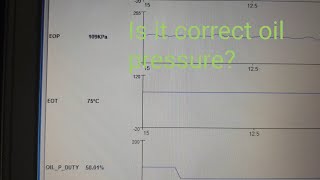
How to confirm: Immediately check the engine oil level using the dipstick. Note if the level is above the 'X' mark, indicating diesel fuel dilution. Use a mechanical oil pressure gauge to test the actual engine oil pressure and compare it to the manufacturer's specifications. Expected pressure is 140-190 kPa (20-27.5 psi) at 1,500 RPM with oil at 70-80°C.
Typical fix: If the oil level is low, top it up and check for leaks. If the pressure is low, further diagnosis is required to find the cause, which could be a failing oil pump, clogged oil pickup tube (strainer), or internal engine wear. This is often a major engine-out repair.
Est. part cost: $15-$8000+ depending on the root cause
Rare But Worth Checking
- Faulty Powertrain Control Module (PCM): This is extremely rare and should only be considered after all other possibilities (sensor, wiring, actual oil pressure) have been exhaustively ruled out.
- Broken Oil Pump/Balance Shaft Chain: A catastrophic failure specific to the SKYACTIV-D 2.2L engine that results in zero oil pressure. This would be accompanied by significant engine noise and other codes like P0524 (Engine Oil Pressure Too Low). Forum users and mechanics have documented this failure, which requires a full engine teardown or replacement.
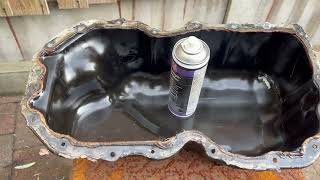
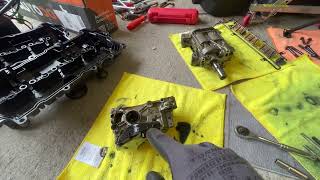
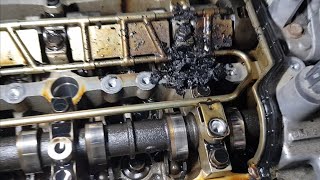
- Clogged Oil Pump Strainer: Leaking injector seals (copper washers) allow combustion gases and soot to contaminate the engine oil. This soot can form a sludge that blocks the oil pump pickup strainer, starving the engine of oil. This is a well-documented issue in owner forums and requires dropping the oil pan 🎬 See this walkthrough on removing and replacing the oil strainer. to inspect and clean.
Diagnosis Steps

- Check the engine oil level and condition. If the level is low, top it off. Crucially, check if the oil level is *above* the 'X' on the dipstick and smells of diesel, which indicates fuel dilution from DPF regeneration or leaking injector seals.
- Connect an OBD-II scanner to read the code and view Freeze Frame data to see the conditions when the code was set. Check for other related codes like P0524 or P253F.
- Inspect the oil pressure sensor's 4-pin electrical connector and wiring for any visible damage, corrosion, or loose connections.
- Using a multimeter, check for a short to ground or an open circuit in the wiring between the sensor connector and the PCM.
- If wiring is confirmed to be good, test the sensor itself. This can be done by monitoring its voltage output with a scan tool while the engine is running.
- For a definitive diagnosis, connect a mechanical oil pressure gauge in place of the sensor to measure the actual engine oil pressure. Compare this reading to Mazda's specifications: 140-190 kPa (20-27.5 psi) at 1,500 RPM with oil at 70-80°C.
- If the actual oil pressure is good but the code persists with good wiring, the oil pressure sensor is faulty and should be replaced.
- If the actual oil pressure is low, the problem is mechanical. Do not drive the vehicle. The next step is to drop the oil pan and inspect the oil pump pickup strainer for blockage and look for debris from a broken oil pump chain.
Parts You'll Likely Need

- Engine Oil Pressure Sensor
(OEM #SH01-18-501)— This is the most common failure point for a P0522 circuit code, assuming actual oil pressure is confirmed to be within specification. The SKYACTIV-D uses a specific sensor, sometimes cross-referenced with Bosch part number 0 261 230 341. Note: The gas engine uses a different part (PE01-18-501B).
Trusted brands: Mazda (OEM), Bosch, VEMO
OEM price range: $110-$140
Aftermarket price range: $80-$110
Related Codes That Often Appear With This One
- P0524 — If the engine's oil pressure is genuinely too low, you will likely also see P0524 (Engine Oil Pressure Too Low), which indicates a performance problem rather than just a circuit fault.
- P253F — This code for 'Engine Oil Deteriorated' is common on these engines and points to excessive fuel dilution or soot contamination, which is a root cause for many of the oil pressure-related mechanical failures.
- P06DE — Seen in a forum post, 'Engine Oil Pressure Control Circuit Stuck On' can appear alongside other pressure-related codes, indicating a problem with the oil pressure control system.
Technical Service Bulletins (TSBs) & Recalls
- While no TSB is directly for P0522, related TSBs highlight systemic engine issues. TSB 01-012/19 addresses carbon buildup on intake valves, a common problem with direct injection engines.
- TSB 01-018/18 deals with oil seepage from the engine front cover, indicating potential sealing issues on the engine.
Platform-Specific Known Issues
- Some SKYACTIV-D 2.2L engines have experienced failures of the oil pump drive chain, leading to a sudden and complete loss of oil pressure. While P0522 is a circuit code, it's critical to rule out this severe mechanical issue.
- Leaking injector seals (copper washers) are a known issue that leads to soot contaminating the engine oil, which can clog the oil pump strainer and cause oil starvation.
- Oil dilution from diesel fuel is common, caused by incomplete DPF regeneration cycles, especially on vehicles used for short trips. This thins the oil, reduces its protective properties, and can lead to a rising level on the dipstick.
Mechanic-Grade Diagnostic Values

- Engine Oil Pressure Sensor Signal Voltage at PCM — expected: Greater than 0.14 V. Failure: A voltage less than 0.14 V for 2.5 seconds will trigger DTC P0522.
- Engine Oil Pressure Sensor Voltage (Key On, Engine Off) — expected: Approx. 0.5 V. Failure: Voltage significantly different from 0.5 V indicates a faulty sensor.
- Mechanical Oil Pressure at 1,500 RPM — expected: 140 - 190 kPa (20.3 - 27.5 psi) with oil at 70-80°C. Failure: Pressure below this range indicates a mechanical issue (e.g., clogged strainer, failing pump).
- Mechanical Oil Pressure at 3,000 RPM — expected: 310 - 450 kPa (45 - 65.3 psi). Failure: Pressure below this range confirms a mechanical low-pressure condition.
Scan Tool Commands That Help
- M-MDS (Mazda Modular Diagnostic System): PID/DATA Monitor - EOP (Engine Oil Pressure) — To monitor the oil pressure value being reported by the sensor to the PCM in real-time. This helps verify if the sensor is responding to changes in engine RPM.
Wiring & Ground Locations
- PCM Terminal 1DM — This is the pin on the Powertrain Control Module (PCM) connector that receives the signal from the oil pressure sensor.. This is the specific terminal where the PCM measures the voltage. Testing for a short to ground or an open circuit should be done on the wire leading to this pin.
- PCM Terminal 1DN — This is the pin on the PCM connector that provides the ground for the oil pressure sensor.. A fault in this ground circuit can cause incorrect voltage readings. A continuity test should be performed between this pin and the corresponding pin on the sensor connector.
- G03 — A primary ground point located on the left front of the engine compartment.. While the sensor grounds through the PCM, this is a major engine bay ground point. Corrosion or looseness here can cause various electrical issues, and it's good practice to check all major grounds when diagnosing circuit faults.
Real Owner Repair Stories
- Reddit user on r/mazda (2013 Mazda CX-5 2.2 diesel, ~100k miles) — Initial 'Low Oil Pressure – Stop Immediately' warning. Car went into limp mode with light ticking sounds before shutdown.
❌ Tried (didn't work) Cleaning the oil pickup strainer and changing the oil/filter. This worked temporarily for about 1500 miles before the warning returned.
✅ What actually fixed it The underlying issue was identified by another mechanic as leaking injector washers. The leaking washers allow soot to mix with the oil, creating sludge that repeatedly clogs the oil pickup strainer. The final fix requires removing the camshafts, cleaning all the sludge, and replacing the injector washers with the updated parts. - Mazda6 forum user (same engine) (2014 Mazda 6 2.2d, 145k miles) — Low oil pressure warning, engine sounded extremely loud on tick-over, like it had no oil.
❌ Tried (didn't work) Clearing codes with an OBD reader; they came back instantly.
✅ What actually fixed it The consensus from experienced forum members was that the issue is a blocked oil strainer due to diesel fuel diluting the oil and creating carbon-like substances. The recommended, and often successful, resolution is to have a Mazda dealership diagnose the issue, as many of these engine failures (even out of warranty) were being replaced by Mazda due to the known design flaw.
OEM Part Supersession History
Original copper injector washers (part number not specified)→Modified silver-colored injector washers (P/N SH01-13-H51)— The original copper washers were prone to leaking combustion gases into the crankcase, leading to oil contamination, sludge formation, and clogged oil strainers.
Heads up: It is critical not to mix old and new parts. When replacing washers, the corresponding nuts (P/N SHY1-13-148A) should also be used.
Model Year Variations Within This Range
- 2012-2014 (Pre-facelift KE): Engines produced before January 2014 had a different, lower injector tightening torque specification and were originally fitted with copper injector washers, making them more susceptible to the seal failure that causes oil contamination and pressure issues.
- 2012-2016 (approx.): Earlier versions of the SKYACTIV-D 2.2L engine met Euro 6 emission standards without requiring AdBlue (Diesel Exhaust Fluid), simplifying ownership. Later versions introduced an AdBlue system to further reduce NOx emissions.
Diagnostic Flowchart
Other Known Issues on This Vehicle
Issues unrelated to this code that are worth knowing about as an owner of this generation:
- Injector Seal Failure & Clogged Oil Strainer 🔴 High — Common, especially on vehicles over 75,000 miles. Can occur earlier. Mazda reportedly added seal replacement to the 75k service schedule in some regions.
- Oil Pump Chain / Balance Shaft Chain Failure 🔴 High — Less common than injector seals, but a known catastrophic failure mode. Can happen without warning, often leading to complete engine replacement.
- Intake Manifold Carbon Buildup 🟠 Medium — Common to all direct-injection engines, including the SKYACTIV-D. Can cause performance issues, rough idle, and misfire codes over time (e.g., after 50,000+ miles). (Ref: Mazda TSB 01-012/19 (for gas engines, but the principle applies))
- Oil Dilution from DPF Regeneration 🟠 Medium — Very common, especially for vehicles used primarily for short trips. Leads to a rising oil level on the dipstick and requires more frequent oil changes.
- Premature Cylinder Head Gasket Failure / Overheating 🔴 High — A widely reported issue in owner forums, sometimes occurring without prior warning from temperature gauges. Can lead to major engine repair or replacement.
Used vs. New Parts: Buying Guide for This Vehicle
When a used part is the smart pick: For this specific repair, using used parts is generally not recommended for the core components. The oil pressure sensor is an electronic part prone to failure from a harsh environment, and a used one carries a high risk of being faulty or having a short remaining life. Major mechanical components like the oil pump should never be sourced used due to the engine's history of catastrophic oiling issues.
Donor-vehicle mileage cap: roughly under 50000 miles for the part to have meaningful remaining life.
What to inspect on the donor part:
- If considering any used engine component, verify the donor vehicle has a documented service history with regular oil changes using Mazda-specified oil.
- Avoid parts from any donor vehicle that shows signs of sludge in the oil filler cap or has a high oil level on the dipstick smelling of diesel.
- For external parts like wiring harnesses or connectors, visually inspect for any signs of brittleness, corrosion, or previous repairs.
OEM-only on this vehicle (don't cheap out):
- Engine Oil Pressure Sensor: Given the criticality of this sensor and forum anecdotes about issues with aftermarket electronics on modern cars, using an OEM (Mazda) or OEM-supplier (Bosch) part is strongly advised.
- Injector Seals/Washers: Only use the updated OEM silver washers (SH01-13-H51) and nuts to ensure a proper seal and prevent a recurrence of the root problem.
Aftermarket brands forum-validated for this vehicle:
- Bosch: Bosch is the OEM supplier for the sensor (P/N 0 261 230 341), making it a reliable alternative to the Mazda-branded part.
Brands owners have reported issues with on this vehicle:
- Unbranded/white-box sensors: Cheap, unbranded electronic sensors from online marketplaces are a significant risk and often fail prematurely or provide inaccurate readings, leading to repeat diagnostics and repairs.
Real Owner Stories
Aggregated from forums and TSBs cited above. Mileages and costs reflect what owners reported in those sources.
2012-2018 Mazda CX-5 SKYACTIV-D 2.2L
Symptoms: The owner received low oil pressure warnings on the dashboard and multiple diagnostic codes were present.
What fixed it: A mechanic investigated and discovered that the oil pump seal was not the original part, pointing to a fault or previous incorrect repair in the oil pump assembly.
Source hint: mazdas247.com forum thread titled 'cx-5-diesel-2-2l-engine-oil-pressure-issue'
2012-2018 Mazda CX-5 SKYACTIV-D 2.2L — ~85000 miles
Symptoms: Low oil pressure warnings appeared due to soot from leaking injector seals contaminating the engine oil and clogging the oil pump's pickup strainer.
What fixed it: The issue was resolved by replacing the faulty injector seals (copper washers) and thoroughly cleaning the oil pump strainer to restore proper oil flow.
Source hint: Known Issues: Injector Seal Failure & Clogged Oil Strainer
2012-2018 Mazda CX-5 SKYACTIV-D 2.2L
Symptoms: A sudden and complete loss of oil pressure occurred without warning, accompanied by severe mechanical engine noises, leading to catastrophic engine failure.
What fixed it: The root cause was a broken oil pump chain, a known failure mode for this engine. The damage was extensive, requiring a complete engine replacement.
Source hint: Known Issues: Oil Pump Chain / Balance Shaft Chain Failure
Related OBD-II Codes
Frequently Asked Questions
My oil level on the dipstick is above the 'X' mark. Is this a problem on my SKYACTIV-D CX-5?
With a P0522 code, how concerned should I be about the oil pump chain on my 2.2L diesel?
What are the signs of injector seal failure on this engine and how does it relate to P0522?
What is the correct engine oil pressure for my 2012-2018 CX-5 SKYACTIV-D?
Where is the oil pressure sensor located on the SKYACTIV-D 2.2L engine?
My Mazda 6 has the same 2.2L diesel engine. Does it suffer from the same oil pressure issues?
Helpful Videos

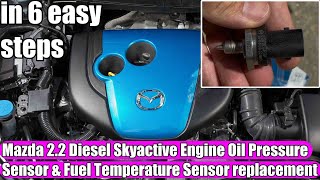
We Have This Part in Stock


The information in this article is provided for general reference and educational purposes only. Vehicle specifications, procedures, and part compatibility can vary by production date, trim level, and region. Always consult your vehicle's factory service manual and verify part numbers before purchasing or performing repairs. Safety-critical components such as airbags, seat belts, and braking systems should be installed by a qualified professional.
- Mazda CX-5:
- 🎬 Helpful Videos
- 🛍️ Shop This Part
- What's Unique About the 2012-2018 Mazda CX-5
- Symptoms You May Notice
- Most Likely Causes
- Rare But Worth Checking
- Diagnosis Steps
- Parts You'll Likely Need
- Related Codes That Often Appear With This One
- Technical Service Bulletins (TSBs) & Recalls
- Platform-Specific Known Issues
- Mechanic-Grade Diagnostic Values
- Scan Tool Commands That Help
- Wiring & Ground Locations
- Real Owner Repair Stories
- OEM Part Supersession History
- Model Year Variations Within This Range
- Diagnostic Flowchart
- Other Known Issues on This Vehicle
- Used vs. New Parts: Buying Guide for This Vehicle
- Real Owner Stories
- 2012-2018 Mazda CX-5 SKYACTIV-D 2.2L
- 2012-2018 Mazda CX-5 SKYACTIV-D 2.2L — ~85000 miles
- 2012-2018 Mazda CX-5 SKYACTIV-D 2.2L
- Related OBD-II Codes
- Frequently Asked Questions
- 🎟️ Get 5% Off