

P0521 on 2007-2013 Chevrolet Avalanche V8: Engine Oil Pressure Sensor Causes and Fixes
On a 2007-2013 Avalanche, P0521 is almost always caused by a faulty oil pressure sensor and its small, clogged filter screen. The parts are cheap (~$40-$80), but located at the back of the engine, making replacement a difficult 2-4 hour job. Using a non-ACDelco oil filter is another common trigger.
- Do not drive your vehicle with code P0521 until the actual oil pressure has been verified with a mechanical gauge.
- The most common fix is to replace BOTH the oil pressure sensor and the small filter screen located underneath it.
- Due to the sensor's difficult location, this repair is considered challenging for a DIYer and may take 2-4 hours.
- Always use the correct 5W-30 oil and a high-quality oil filter (ACDelco PF48E is specified) to prevent issues.
- If your engine consumes a lot of oil, it may be related to the Active Fuel Management (AFM) system, a known issue that can lead to this code.
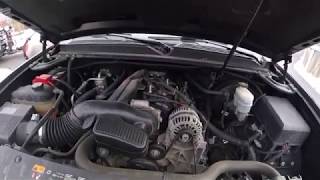
What's Unique About the 2007-2013 Chevrolet Avalanche 🎬 Watch this step-by-step sensor replacement on a 2013 Avalanche.
On these GM V8 engines (part of the GMT900 platform), the P0521 code is exceptionally common and directly tied to three well-documented issues. First, the oil pressure sensor and its tiny filter screen are known to fail frequently. Second, many of these V8s feature Active Fuel Management (AFM), which can cause excessive oil consumption (as noted in GM TSB 10-06-01-008H), leading to low oil levels that can also trigger this code. The AFM system's pressure relief valve can spray excess oil into the crankcase, leading to carbon buildup on piston rings, which exacerbates oil consumption. Third, the sensor's location at the rear of the engine block, tucked under the cowl, makes what should be a simple repair notoriously difficult.
Symptoms You May Notice
- Check Engine Light is on
- Oil pressure gauge reads erratically (e.g., pegged at 80 PSI or dropped to 0 PSI)
- "Low Oil Pressure" warning message on the instrument cluster
- Engine ticking or knocking noises (in cases of actual low oil pressure)
- With the key on but engine off, the gauge may incorrectly read a pressure value like 60 PSI instead of zero.
- Replacing only the oil pressure sensor without also replacing the small filter screen underneath it. A clogged screen will cause the new sensor to read incorrectly, and the code will return.
- Replacing the sensor and screen when the root cause is an incorrect (non-ACDelco) oil filter that was recently installed.
Most Likely Causes
- Faulty Engine Oil Pressure Sensor (Sending Unit) 🔴 High Probability The sensor is a very common failure item on this engine platform, often failing electronically and sending incorrect voltage readings. Owners report aftermarket sensors can fail quickly, making an OEM part the recommended fix.
How to confirm: After confirming actual oil pressure is normal with a mechanical gauge, the sensor is the prime suspect. A gauge reading pegged at max (80 psi) or zero is a classic sign of sensor failure. A scan tool can also be used to monitor the sensor's voltage for erratic behavior.
Typical fix: Replace the oil pressure sensor. It is critical to also replace the filter screen underneath it at the same time. The job requires a special 1-1/16" (or 27mm) deep oil pressure sensor socket, often with a swivel and extensions.
Est. part cost: $30-$60 - Clogged Oil Pressure Sensor Filter Screen 🔴 High Probability GM issued TSB PIP4786A for this specific issue. Engine sludge, often exacerbated by the AFM system, can clog this small, thimble-sized screen, starving the sensor of oil pressure and causing it to send a false low reading. Manufacturer bulletin #PIP4786C further advises technicians to check for this code in the Engine Control Module when a "Low Oil Pressure" message is displayed.
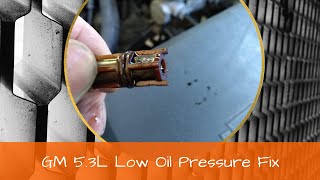
How to confirm: The screen is located under the sensor and cannot be inspected without first removing the sensor. It is considered a primary cause and should be replaced whenever the sensor is serviced. A pick or a coarse-threaded screw (like a 5/16" lag bolt) is often used to pull the old screen out of its bore.
Typical fix: Remove the old screen with a pick or small screwdriver and install a new one before installing the new sensor.
Est. part cost: $5-$15 - Low Engine Oil Level or Incorrect Oil/Filter 🟡 Medium Probability V8 engines with Active Fuel Management (AFM) are known to consume oil (see TSB 10-06-01-008H). Manufacturer bulletin #PIP5276G notes that dealers must determine if this oil consumption bulletin was previously completed when diagnosing P0521. Also, using a non-spec oil filter is a known cause of this code on these trucks. GM TSB PIP5276E specifically warns that filters other than the ACDelco PF48E can trigger P0521, especially if the light appears immediately after an oil change.
How to confirm: Check the engine oil level via the dipstick. For the 2007-2013 5.3L V8, the correct oil is 6.0 quarts of SAE 5W-30. Inspect the oil filter to see if it is the recommended ACDelco PF48 or PF48E model.
Typical fix: Top off or change the oil with the correct grade (5W-30). Replace the oil filter with an ACDelco PF48E. Monitor for oil consumption.
Est. part cost: $40-$80 - Damaged Wiring or Connector ⚪ Low Probability The sensor's location at the hot rear of the engine makes its connector and wiring susceptible to heat damage and oil contamination over time. The plastic connector can become brittle and break during removal.
How to confirm: Visually inspect the sensor's 3-wire connector for broken plastic, corrosion, or oil saturation. Check for continuity and voltage at the connector with a multimeter.
Typical fix: Clean the connector with electrical contact cleaner. If the connector or wiring is damaged, replace the pigtail. The ACDelco pigtail is part number PT2712 (GM 13584094).
Est. part cost: $15-$30
Rare But Worth Checking
- Failing Oil Pump or Sticking Pressure Relief Valve: This is a serious mechanical failure. If a mechanical oil pressure test confirms that the engine's actual oil pressure is low, the oil pump is a likely culprit. This is an extensive and expensive repair.
- Worn Internal Engine Bearings: In very high-mileage engines or those with a history of poor maintenance, worn crankshaft or camshaft bearings can cause a true loss of oil pressure, leading to a P0521 code. This requires an engine rebuild or replacement.
Diagnosis Steps
- Check the engine oil level and condition. The correct oil for the 5.3L V8 in this generation is 6.0 quarts of 5W-30. If low, top it off, clear the code, and see if it returns.
- Verify the correct oil filter is installed (ACDelco PF48E is recommended). If an aftermarket filter is present, consider changing the oil and filter as a first step.
- CRITICAL STEP: Connect a mechanical oil pressure gauge to the engine. The port is located at the rear of the engine where the sensor is. Compare the mechanical reading to the dashboard gauge and scan tool data. Expected pressure for a healthy 5.3L V8 is ~25-35 PSI at hot idle and 45-65 PSI while cruising. If mechanical pressure is good, the problem is in the sensor circuit. If mechanical pressure is low, you have a serious internal engine problem that needs immediate attention.
- If mechanical pressure is good, inspect the oil pressure sensor connector and wiring for damage, corrosion, or oil saturation. The connector can become brittle from heat cycles.
- If the wiring is okay, the most likely cause is a failed sensor and/or a clogged filter screen.
- Replace both the oil pressure sensor and the filter screen located in the block underneath it. This requires a special 1-1/16" oil pressure sensor socket, a universal swivel, and several extensions.
- Clear the code and perform a drive cycle to confirm the repair.
Parts You'll Likely Need
- Engine Oil Pressure Sensor
(OEM #12677836)— This is the most common part to fail, causing erratic or incorrect readings. ACDelco D1846A is the corresponding service part, which supersedes older numbers like 12616646.
Trusted brands: ACDelco, Delphi, Standard Motor Products
OEM price range: $45-$75
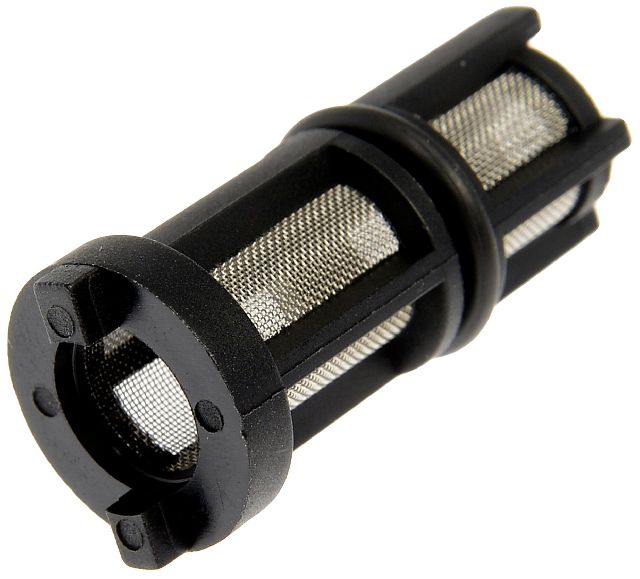
Aftermarket price range: $25-$50 - Engine Oil Pressure Sensor Filter Screen
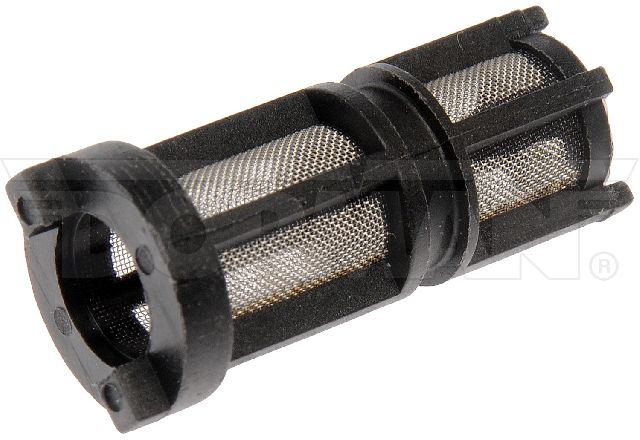
(OEM #12585328)— This small screen, located under the sensor, frequently clogs with sludge and is a primary cause of the code. It must be replaced with the sensor. A common aftermarket part number is Dorman 917-143.
Trusted brands: Dorman, Standard Motor Products, ACDelco
OEM price range: $5-$15
Aftermarket price range: $5-$10 - Oil Pressure Sensor Socket — A special deep socket is required to remove and install the sensor due to its shape and tight location. The size is 1-1/16 inch (27mm). The Lisle 13250 is a commonly cited tool for this job.
Trusted brands: Lisle, OTC, GearWrench
OEM price range: $10-$20
Aftermarket price range: $10-$20
Related Codes That Often Appear With This One
- P0011: 'A' Camshaft Position - Timing Over-Advanced. This can sometimes appear with P0521 as camshaft phasers rely on correct oil pressure to function.
Technical Service Bulletins (TSBs) & Recalls
- PIP4786A: Addresses low oil pressure messages and P0521, specifically advising technicians to inspect the 'Valve Lifter Oil Filter' (the screen under the sensor) for debris and to clean or replace it.
- 10-06-01-008H: Details diagnosis and repair for excessive engine oil consumption on V8 engines with Active Fuel Management (AFM), a condition that can lead to low oil levels and trigger P0521. The fix can involve installing an AFM shield (P/N 12639759), cleaning carbon from pistons, and potentially replacing piston rings.
- PIP5276E: Cites P0521 occurring after an oil change and recommends using a PF48E oil filter, highlighting the system's sensitivity to filter choice. A technician should also inspect the engine for any oil leaks and repair as needed.
- PIP4786C: Provides information to technicians regarding vehicles displaying a "Low Oil Pressure" message and DTC P0521, emphasizing the use of a scan tool to verify if oil pressure is truly low.
- PIP5276G: Covers multiple engine codes (including LMG and LC9) and notes that P0521 or a "Low Oil Pressure" message may require verification of whether oil consumption bulletin 10-06-01-008 was previously performed.
Platform-Specific Known Issues
- The sensor is located in a very difficult position at the top rear of the engine block, partially under the firewall cowl. Access often requires special tools like a 1-1/16" sensor socket, wobble extensions, and significant patience. Many DIYers perform the job by feel from the driver's side of the engine bay.
- Many V8 engines in this range have Active Fuel Management (AFM), which is known to cause oil consumption issues as documented in TSB 10-06-01-008H. This can be a root cause of the low oil level that triggers P0521.
Mechanic-Grade Diagnostic Values
- Oil Pressure Sensor Connector Pin A (Tan/White wire) to Ground — expected: Variable voltage; this is the signal wire to the ECM. Should change with engine RPM.. Failure: No voltage or a fixed voltage that doesn't respond to RPM changes.
- Oil Pressure Sensor Connector Pin B (Gray wire) to Ground, Key On Engine Off — expected: 5.0 Volts (Reference Voltage from ECM). Failure: 0 volts or significantly less than 5.0 volts, indicating a wiring or ECM issue.
- Oil Pressure Sensor Connector Pin C (Black wire) to Ground — expected: Near 0 Ohms (Low Reference/Ground). Failure: High resistance, indicating a bad ground connection.
- Scan Tool Oil Pressure Reading vs. RPM — expected: With the engine on and in park, varying the engine speed by 500 RPM should result in the oil pressure changing by more than 5 PSI.. Failure: Pressure reading is static or does not change appropriately with RPM, suggesting a sensor or circuit performance issue.
- Oil Pressure Sensor Internal Resistance — expected: A healthy sensor should have low resistance, typically between 60 and 2000 ohms (0.06-2.0 kOhms).. Failure: Very high resistance, such as 18 kOhms or more, indicates a failed sensor.
Scan Tool Commands That Help
- Tech2 / GDS2: Engine Data List - Oil Pressure Sensor Voltage/Pressure — This is used to monitor the live data stream from the oil pressure sensor. It allows a technician to see the exact voltage and calculated pressure the ECM is receiving, which can be compared against specifications and the reading from a mechanical gauge to confirm if the sensor is faulty.
Wiring & Ground Locations
- Oil Pressure Sensor Connector (3-wire) — At the top rear of the engine block, behind the intake manifold, slightly to the driver's side.. This connector and its wiring are prone to heat damage and oil contamination. A bad connection here is a common cause of P0521. Pin A: Tan/White (Signal), Pin B: Gray (5V Reference), Pin C: Black (Low Reference/Ground).
- G103 — On the front of the passenger side (right side) cylinder head.. This is a primary engine ground. While not directly for the sensor's own ground wire, a poor connection here can introduce electrical noise and voltage discrepancies that affect various engine sensors and the ECM's reference points.
- G104 — On the rear of the driver's side (left side) cylinder head.. This ground is physically close to the sensor's location. A bad ground here can cause erratic sensor behavior. It often serves as the ground point for a braided strap to the firewall.
- G102 — Located at the left rear of the engine, grounding the 8 ignition coils.. Poor grounding for the ignition system can create significant electrical interference (RFI), which can affect sensitive sensor signals like the oil pressure sensor, potentially causing false readings.
Real Owner Repair Stories
- Reddit user in r/ChevyTrucks (Chevrolet Truck with P0521) — Persistent P0521 Check Engine Light.
❌ Tried (didn't work) Replacing the oil pressure switch/sensor multiple times., Removing the filter screen under the sensor.
✅ What actually fixed it Switching to a high-quality aftermarket oil filter (Mobil 1 M1-113A) and ensuring the oil level was correct. The code did not return after 5,000 miles. This confirms that incorrect oil filters can be a direct cause.
OEM Part Supersession History
12616646, 12614969, 12573107, 12569323, 12562230, 12559780→12677836 (current ACDelco D1846A)— Revisions to improve reliability and performance of the sensor.
Heads up: While older numbers may still be found, using the latest revision (12677836) is highly recommended to benefit from the most recent design improvements.
Diagnostic Flowchart
Used vs. New Parts: Buying Guide for This Vehicle
When a used part is the smart pick: For this specific repair, a used part is never a smart choice. The primary failure parts are a low-cost electronic sensor and a filter screen that are known to fail and clog with age and mileage. The risk of a used part failing quickly is extremely high, and the labor to replace it is significant.
What to inspect on the donor part:
- Not applicable. Do not use a salvaged oil pressure sensor or screen for this repair.
OEM-only on this vehicle (don't cheap out):
- Engine Oil Pressure Sensor
- Engine Oil Filter
Aftermarket brands forum-validated for this vehicle:
- Oil Filter: Mobil 1, WIX, K&N
Brands owners have reported issues with on this vehicle:
- Unknown or budget brands for the oil pressure sensor. Many forum users report that non-OEM sensors fail prematurely or are inaccurate out of the box, causing the code to return.
Real Owner Stories
Aggregated from forums and TSBs cited above. Mileages and costs reflect what owners reported in those sources.
2007 Chevrolet Avalanche V8
Symptoms: The oil pressure gauge was pegged at 80 PSI and the Check Engine Light was on with code P0521.
What fixed it: The discussion points to replacing the faulty oil pressure sensor, noting the extreme difficulty of accessing it against the firewall.
Source hint: ChevroletForum.com: A user with a 2007 Avalanche reported the classic P0521 symptom of the oil pressure gauge being pegged at 80 PSI. The thread discusses the extreme difficulty of accessing the sensor against the firewall.
2011 Chevrolet Tahoe V8
Symptoms: The vehicle had an error code P0521.
What fixed it: Forum users immediately identified the oil pressure sensor and the filter screen underneath it as the primary culprits, indicating a replacement of both parts resolved the issue.
Source hint: GM-Trucks.com: In a thread about a 2011 Tahoe with P0521, users immediately point to the sensor and the screen underneath as the primary culprits, confirming the widespread nature of this failure on the GMT900 platform.
Chevrolet Truck V8
Symptoms: A recurring P0521 code that would not go away even after the oil pressure sensor was replaced.
What fixed it: The problem was solved by switching from a standard aftermarket oil filter to a Mobil 1 M1-113A oil filter.
Source hint: Reddit (r/ChevyTrucks): A user with a recurring P0521 found their solution by switching to a Mobil 1 M1-113A oil filter after a standard sensor replacement didn't fix the issue, corroborating claims that oil filter choice is critical.
2007 GM 6.2L V8
Symptoms: High engine oil consumption of approximately 1 ounce per 100 miles, a known root cause for low oil levels that can trigger P0521.
What fixed it: The owner followed the procedure in TSB 10-06-01-008M, which involved a piston soak to unstick the piston rings, successfully reducing oil consumption.
Source hint: BobIsTheOilGuy.com: A forum member details their successful battle with high oil consumption on a 2007 GM 6.2L V8 by following TSB 10-06-01-008M, which involved a piston soak procedure to unstick the rings...
Related OBD-II Codes
Frequently Asked Questions
My 2008 Avalanche's oil pressure gauge is stuck at 80 PSI. Does this mean my oil pump is failing?
I just had my oil changed and now the P0521 code is on. What's the most likely cause?
Is it really necessary to replace the small filter screen when I replace the oil pressure sensor?
My Avalanche seems to be burning a lot of oil. Could this be related to the P0521 code?
How difficult is it to replace the oil pressure sensor on my 2011 Avalanche myself?
I replaced the sensor and screen, but the P0521 code came back. What should I check next?
Helpful Videos
We Have This Part in Stock

The information in this article is provided for general reference and educational purposes only. Vehicle specifications, procedures, and part compatibility can vary by production date, trim level, and region. Always consult your vehicle's factory service manual and verify part numbers before purchasing or performing repairs. Safety-critical components such as airbags, seat belts, and braking systems should be installed by a qualified professional.
- Chevrolet Avalanche:
- 🎬 Helpful Videos
- 🛍️ Shop This Part
- What's Unique About the 2007-2013 Chevrolet Avalanche
- Symptoms You May Notice
- Most Likely Causes
- Rare But Worth Checking
- Diagnosis Steps
- Parts You'll Likely Need
- Related Codes That Often Appear With This One
- Technical Service Bulletins (TSBs) & Recalls
- Platform-Specific Known Issues
- Mechanic-Grade Diagnostic Values
- Scan Tool Commands That Help
- Wiring & Ground Locations
- Real Owner Repair Stories
- OEM Part Supersession History
- Diagnostic Flowchart
- Used vs. New Parts: Buying Guide for This Vehicle
- Real Owner Stories
- 2007 Chevrolet Avalanche V8
- 2011 Chevrolet Tahoe V8
- Chevrolet Truck V8
- 2007 GM 6.2L V8
- Related OBD-II Codes
- Frequently Asked Questions
- 🎟️ Get 5% Off