

P0520 on 2019-2024 Ram 1500 5.7L Hemi: Engine Oil Pressure Sensor Circuit Fixes
On a 2019-2024 Ram 1500 with the 5.7L Hemi, code P0520 is almost always caused by a failed engine oil pressure sensor. A key symptom is the oil pressure gauge on the dashboard getting stuck at a high reading, like 99 PSI. Replacing the sensor with a new Mopar part (around $50-$75) is the most common fix and is a DIY-friendly job that requires a special deep socket.
- P0520 on a 5.7L Hemi almost always points to a bad oil pressure sensor.
- Before starting repairs, check your oil level and inspect the sensor's connector for oil contamination.
- Always use a genuine Mopar replacement sensor (part #68334877AA) for a lasting repair; aftermarket sensors are known to be unreliable.
- The repair is straightforward and requires a 1-1/16" or 27mm deep socket, making it a good DIY task for most owners.
- Do not ignore the code, as it makes your oil pressure gauge unreliable, putting the engine at risk if a real pressure problem occurs.
What's Unique About the 2019-2024 Ram 1500
The 5.7L Hemi engine, and Mopar vehicles in general, have a well-documented history of oil pressure sensor failures. The issue was so common on previous generations that a Technical Service Bulletin (TSB 18-034-14) was issued to replace the sensor with an updated part. This trend continues with the 5th generation Ram (DT), where a faulty sensor is the primary cause for P0520. A classic symptom on this platform is the dashboard oil pressure gauge reading erratically or getting stuck at its maximum reading (e.g., 96 or 99 PSI), even when the engine is off.
Symptoms You May Notice
- Check Engine Light is illuminated
- Oil pressure gauge on the dashboard reads erratically, is stuck at maximum (e.g., 99 PSI), or shows zero.
- Red oil pressure warning light may be on
- Remote start feature is disabled
- Engine may enter a limited power or 'limp' mode
- Replacing the oil pump. P0520 is an electrical circuit code. Unless a mechanical gauge confirms that actual oil pressure is low, the oil pump is almost certainly not the problem.
Most Likely Causes
- Faulty Engine Oil Pressure Sensor 🔴 High Probability This is a very common failure part across the Mopar/Stellantis lineup, including the 5.7L Hemi in Rams, Jeeps, and Dodges. The sensor can fail internally or leak oil through its body into the electrical connector, causing a short circuit or incorrect readings.
How to confirm: Visually inspect the sensor's electrical connector. If oil is present inside the connector, the sensor has failed and must be replaced. Given the high failure rate and classic symptom of a maxed-out gauge, if the wiring appears intact, replacing the sensor is the most logical next step.
Typical fix: Replace the engine oil pressure sensor with a new OEM Mopar part. A special 1-1/16" or 27mm deep socket that is hollow all the way through is required for the job.
Est. part cost: $50-$75 - Damaged Wiring or Connector 🟡 Medium Probability The sensor is located on the engine block and is exposed to heat and vibration, which can cause wiring to become brittle or the connector to break over time. Oil leaking from a faulty sensor can also saturate and damage the connector pigtail.
How to confirm: Inspect the wiring harness leading to the sensor for any signs of cracking, fraying, or melting. Check that the connector clicks securely into place and that the terminals are clean and free of corrosion or oil.
Typical fix: Repair the damaged section of wire or replace the pigtail connector if it is broken or corroded. The Mopar pigtail connector is available as a separate part.
Est. part cost: $20-$45 - Incorrect or Clogged Oil Filter ⚪ Low Probability The 5.7L Hemi is known to be sensitive to oil filter specifications and quality. Using a low-quality or incorrect aftermarket filter can cause oil pressure reading abnormalities that may, in some cases, trigger a P0520 code, though it's more commonly associated with code P1524.
How to confirm: Check the brand of the oil filter currently installed. If it is not a Mopar OEM filter or a high-quality equivalent, it should be considered a potential cause.
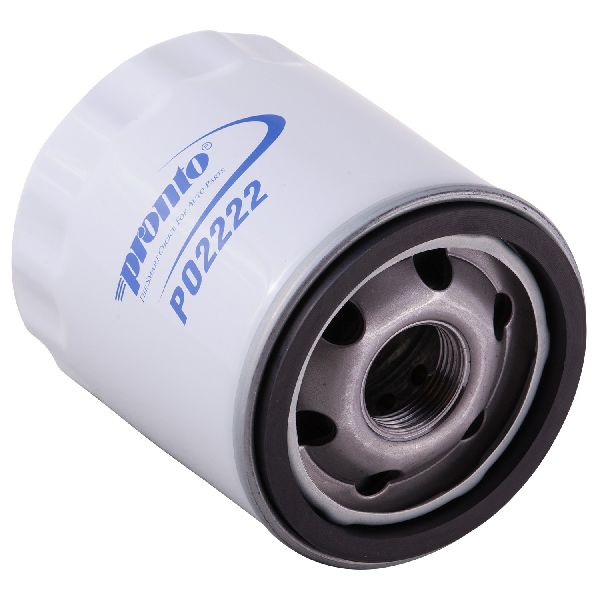
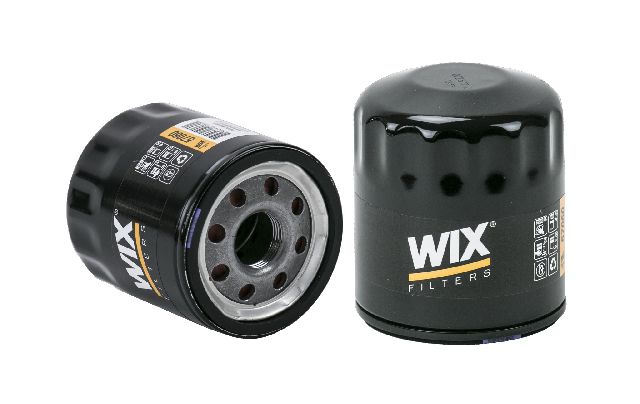
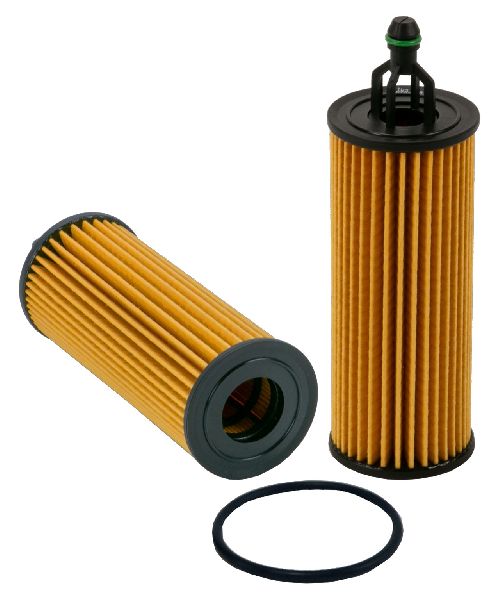
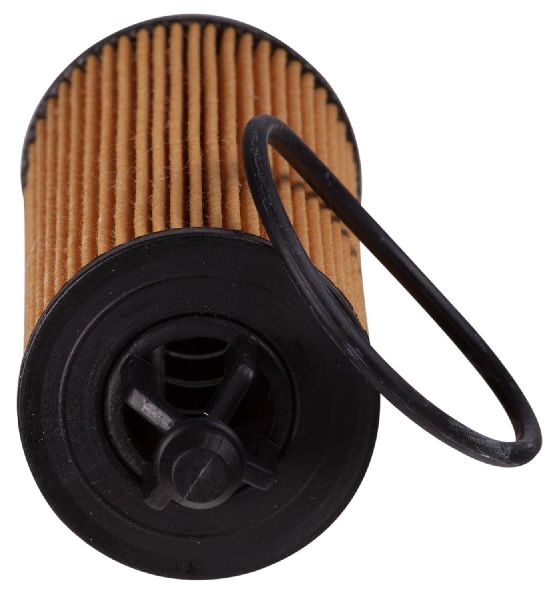
Typical fix: Perform an oil change using the correct grade of oil (5W-20) and install a Mopar OEM oil filter (Part No. MO-339).
Est. part cost: $10-$20
Rare But Worth Checking
- Low Engine Oil Level: While P0520 is an electrical code, extremely low oil levels can cause erratic pressure that might be misinterpreted by the PCM. Always check the oil level first as a basic step.
- Faulty Powertrain Control Module (PCM): This is extremely rare. The PCM should only be considered after all other possibilities, including the sensor and wiring, have been thoroughly ruled out by a professional.
Diagnosis Steps
- Check the engine oil level and condition on the dipstick. Top off if necessary.
- Read the trouble codes with an OBD-II scanner to confirm P0520 and check for any other related codes.
- Observe the oil pressure gauge behavior. A reading stuck at 99 PSI is a classic indicator of sensor failure.
- Locate the oil pressure sensor. On the 5.7L Hemi, it is on the engine block, just above the oil filter, and can be accessed from the top of the engine bay.
- Disconnect the electrical connector from the sensor. This involves sliding a red locking tab before depressing the release clip.
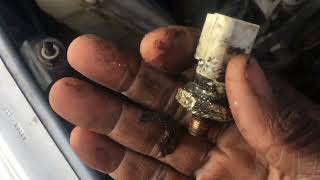
- Carefully inspect the connector and the sensor port for any signs of engine oil. If oil is present, the sensor has failed internally.
- Inspect the wiring leading to the connector for any visible damage, such as cracks, melting, or corrosion.
- If no oil is found and the wiring looks good, the most probable cause is still an internally failed sensor. Proceed with replacement.
- For absolute certainty, a mechanic can test the actual engine oil pressure using a mechanical gauge threaded into the sensor's port to rule out a mechanical engine problem.
- After repair, clear the trouble code with the scanner and drive the vehicle to ensure the code does not return.
Parts You'll Likely Need
- Engine Oil Pressure Sensor
(OEM #68334877AA)— This is the most common failure point for code P0520 on this engine. Using an OEM Mopar part is highly recommended as aftermarket sensors are known to fail prematurely or be faulty out of the box.
Trusted brands: Mopar
OEM price range: $50-$75
Aftermarket price range: $25-$50 - Oil Pressure Sensor Connector Pigtail
(OEM #5019913AA or 68302333AB (superseded by 68530586AA))— If the original connector is broken, corroded, or saturated with oil from the failed sensor, it must be replaced to ensure a good connection.
Trusted brands: Mopar
OEM price range: $20-$45
Aftermarket price range: $15-$30 - Engine Oil Filter
(OEM #MO-339)— If the code is accompanied by P1524 or if a low-quality filter is installed, replacing it with an OEM filter during an oil change is a crucial diagnostic step.
Trusted brands: Mopar
OEM price range: $10-$20
Aftermarket price range: $5-$15
Related Codes That Often Appear With This One
- P0521 — This code indicates 'Engine Oil Pressure Sensor/Switch Performance,' suggesting the sensor's readings are illogical, which often happens when the sensor is failing.
- P0522 — This code for 'Engine Oil Pressure Sensor/Switch Circuit Low' can appear alongside P0520, often pointing to the same faulty sensor or a wiring issue.
- P1524 — This code means 'Oil Pressure Out of Range - Camshaft Advance/Retard Disabled.' It often appears when the oil pressure sensor provides faulty data, causing the PCM to disable the VVT system as a precaution.
Technical Service Bulletins (TSBs) & Recalls
- 18-034-14 REV. A: While officially for 2013-2014 models, this TSB confirms a known history of faulty oil pressure sensors causing P0520 on the 5.7L Hemi, recommending replacement with a revised part. This establishes a long-term pattern of this specific component failure across FCA/Stellantis vehicles.
Platform-Specific Known Issues
- Real Owner Experience: A user on RamForum.com with a 2021 Ram 1500 experienced the check engine light and the oil pressure gauge pegged at 99 PSI. After confirming code P0520, they replaced the original sensor with a new Mopar part, which resolved the issue.
- Aftermarket Part Warning: A user on RamForum.com reported that after installing a BWD-branded aftermarket sensor, the P0520 code persisted with erratic low readings. This reinforces the common advice to use genuine Mopar sensors for this repair.
Mechanic-Grade Diagnostic Values
- 5-Volt Reference at Sensor Connector — expected: Approximately 5.0 Volts with key on, engine off.. Failure: Voltage significantly higher or lower than 5.0V points to a PCM or wiring issue.
- Sensor Signal Voltage at Connector — expected: Varies with pressure, typically 0.5V at idle to 4.5V at high RPM.. Failure: A stuck voltage (e.g., 5.0V) or a reading that doesn't change with RPM indicates a failed sensor or a short/open in the signal wire.
- Sensor Ground Circuit at Connector — expected: 0 Volts (continuity to ground).. Failure: Any voltage present indicates a bad ground.
- Wiring Harness Resistance — expected: Below 5.0 Ohms on the signal, ground, and 5V supply circuits when measured end-to-end (from sensor connector to PCM connector).. Failure: Resistance above 5.0 Ohms indicates corrosion or a break in the wire.
Scan Tool Commands That Help
- Professional Scan Tool (e.g., wiTECH): Jumper Wire Test Simulation — A technician can jump the sensor ground and signal circuits at the connector. With the key on, the scan tool's live data for sensor voltage should drop from ~5.0V to less than 0.5V. If it does, the wiring to the PCM is confirmed good, isolating the fault to the sensor itself.
Wiring & Ground Locations
- Engine Oil Pressure Sensor Connector — A 3-pin black connector located on the engine block, just above the oil filter housing.. This is the primary point for testing. Pin 1 is the 5V supply (often Pink/Yellow), Pin 2 is the signal wire (often Violet/Gray), and Pin 3 is the sensor ground (often Dark Blue/Dark Green). Oil contamination from a leaking sensor is common here.
- (G6) Engine Oil Pressure Signal Circuit — The wire running from Pin 2 of the sensor connector to the PCM.. A short to ground or voltage on this wire will directly cause an incorrect reading and trigger P0520. A maxed-out gauge (99 PSI) often points to the signal wire being shorted.
- (F855) 5-Volt Supply Circuit — The wire running from the PCM to Pin 1 of the sensor connector.. A loss of this reference voltage will prevent the sensor from operating, causing a circuit code.
- (K900) Sensor Ground Circuit — The wire running from Pin 3 of the sensor connector back to the PCM, which provides the ground reference.. A high-resistance or open ground will cause the sensor's voltage readings to be skewed and inaccurate.
Real Owner Repair Stories
- Reddit user in r/ram_trucks (2013 Ram 1500 5.7L) — Check engine light with code P0520 and oil pressure gauge reading 99 PSI.
❌ Tried (didn't work) Installed a cheap Dorman replacement sensor. The pressure read correctly on the gauge, but the P0520 trouble code would not clear.
✅ What actually fixed it Replacing the Dorman sensor with one from NAPA (a higher quality aftermarket brand) resolved the issue and cleared the code. - RamForum.com user 'spdfrkaby' ('13 Ram 1500 CC Sport 5.7L) — P0520 code, oil pressure gauge reading low (12-15 PSI) at startup and only maxing out around 21 PSI. Sometimes would work correctly after a restart.
❌ Tried (didn't work) Replaced the original sensor with a BWD-branded aftermarket sensor.
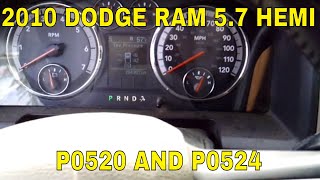
✅ What actually fixed it The user purchased a Mopar-branded sensor with the intent to install it, based on forum advice that aftermarket sensors are 'hit or miss'. The clear implication and community consensus was that the OEM part would solve the lingering issue. - YouTube creator 'Hoopties Garage' (2010 Dodge Ram 1500 5.7L Hemi) — Check engine light with codes P0520 and P0524. Oil pressure gauge reading high.
✅ What actually fixed it After verifying 5V reference and good ground at the connector, the creator replaced the oil pressure sensor. This fixed the issue and cleared the codes, concluding that 9 times out of 10, the sensor itself is the culprit.
OEM Part Supersession History
68302333AB→68530586AA— Part number update/revision by Mopar.
Diagnostic Flowchart
Other Known Issues on This Vehicle
Issues unrelated to this code that are worth knowing about as an owner of this generation:
- Hemi Lifter Tick / Camshaft Failure 🔴 High — A widely known issue, often appearing after 80,000 miles but can occur earlier. It starts as a light ticking noise, especially on cold starts, and can progress to a misfire (P0300 code) and catastrophic engine damage if ignored.
- Cracked Exhaust Manifold / Broken Bolts 🟠 Medium — Very common. Owners often report a ticking or puffing sound on a cold start that quiets as the engine warms up. This is caused by manifold bolts breaking from heat cycles, creating an exhaust leak. (Ref: TSB 09-011-22 and 09-019-23 apply to 2019-2022 models, instructing technicians to inspect and replace manifolds if cracked. Repair is typically covered only under the original powertrain warranty.)
- Rear Window / 3rd Brake Light Water Leak 🟠 Medium — Common on 2019-2021 models. The plastic frame of the rear sliding window can crack, or the third brake light seal can fail, allowing water into the cab. This can lead to water stains on the headliner, wet carpets, and potentially damage to the RF Hub module located on the rear cab wall, causing the truck to not start. (Ref: Multiple TSBs exist (e.g., 23-016-21, 23-098-23 REV. A) and a warranty extension was issued for affected vehicles, though repair procedures have been revised over time.)
- eTorque System Faults 🟠 Medium — Less common than other issues but notable. Problems can range from the 48V battery failing to charge, causing a no-start condition, to issues with the auto start/stop system. (Ref: Recalls have been issued for related electrical issues, such as battery ground fasteners.)
- Electrical System Glitches 🟡 Low — Numerous complaints exist regarding the Uconnect infotainment system (freezing, black screens) and intermittent issues with the rearview camera. (Ref: Software updates are often released to address these issues. Several recalls exist for various electrical components on this generation.)
Used vs. New Parts: Buying Guide for This Vehicle
When a used part is the smart pick: For this specific repair, a used part is almost never a smart choice. The sensor is a known high-failure item with a limited lifespan. The low cost of a new, reliable part makes saving a few dollars on a used one an unnecessary risk.
Donor-vehicle mileage cap: roughly under 15000 miles for the part to have meaningful remaining life.
What to inspect on the donor part:
- If considering a used OEM sensor, it should only be from a very low-mileage wreck.
- Ensure the plastic connector housing is not brittle or cracked.
- There should be absolutely no sign of oil residue on or in the electrical connector pins.
OEM-only on this vehicle (don't cheap out):
- Engine Oil Pressure Sensor
Aftermarket brands forum-validated for this vehicle:
- NAPA-branded sensors have been reported to work successfully where other aftermarket brands failed.
Brands owners have reported issues with on this vehicle:
- Dorman
- BWD
- Generic Amazon/eBay sensors
Real Owner Stories
Aggregated from forums and TSBs cited above. Mileages and costs reflect what owners reported in those sources.
2021 Ram 1500 5.7L Hemi
Symptoms: Check engine light illuminated and the oil pressure gauge was pegged at 99 PSI.
What fixed it: Replaced the original sensor with a new Mopar part.
Source hint: RamForum.com thread titled 'CEL and High Oil Pressure.'
2018 Ram 1500 5.7L Hemi
Symptoms: Oil pressure sensor failure; noted as a widespread issue across the FCA lineup including Jeeps and Vipers.
What fixed it: Replacement of the oil pressure sensor.
Source hint: RamForum.com - P0520 Oil Pressure Sensor Failure
2011-2022 Jeep Grand Cherokee (WK2) 5.7L Hemi
Symptoms: P0520 code with erratic or maxed-out gauge readings.
What fixed it: Replacement of the oil pressure sensor; owner noted that an aftermarket one lasted less than a year and had to be replaced with a Mopar unit.
Source hint: Reddit.com/r/GrandCherokee thread discussing P0520 on a 5.7L Hemi
Related OBD-II Codes
Frequently Asked Questions
My 2021 Ram 1500 oil pressure gauge is stuck at 99 PSI. Is this a common issue?
Does TSB 18-034-14 REV. A apply to my 5th Gen Ram 1500?
Can I use an aftermarket sensor to fix the P0520 code on my Ram?
Why is my remote start disabled on my 2019 Ram 1500?
What specific tools do I need to replace the sensor on my 5.7L Hemi?
Is the P0520 code related to the 'Hemi Tick' or cracked exhaust manifolds?
Helpful Videos
Used OEM Parts in Stock


New Aftermarket Parts Available

The information in this article is provided for general reference and educational purposes only. Vehicle specifications, procedures, and part compatibility can vary by production date, trim level, and region. Always consult your vehicle's factory service manual and verify part numbers before purchasing or performing repairs. Safety-critical components such as airbags, seat belts, and braking systems should be installed by a qualified professional.
- Ram 1500:
- 🎬 Helpful Videos
- 🛍️ Shop This Part
- What's Unique About the 2019-2024 Ram 1500
- Symptoms You May Notice
- Most Likely Causes
- Rare But Worth Checking
- Diagnosis Steps
- Parts You'll Likely Need
- Related Codes That Often Appear With This One
- Technical Service Bulletins (TSBs) & Recalls
- Platform-Specific Known Issues
- Mechanic-Grade Diagnostic Values
- Scan Tool Commands That Help
- Wiring & Ground Locations
- Real Owner Repair Stories
- OEM Part Supersession History
- Diagnostic Flowchart
- Other Known Issues on This Vehicle
- Used vs. New Parts: Buying Guide for This Vehicle
- Real Owner Stories
- 2021 Ram 1500 5.7L Hemi
- 2018 Ram 1500 5.7L Hemi
- 2011-2022 Jeep Grand Cherokee (WK2) 5.7L Hemi
- Related OBD-II Codes
- Frequently Asked Questions
- 🎟️ Get 5% Off