

OBD-II Code P1524: System Disabled Due to Low Oil Pressure
What P1524 means, why it triggers, and how to fix it
- Replacing a cheap aftermarket oil filter with an OEM Mopar filter resolves P1524 in the majority of Ram, Dodge, and Jeep cases.
- Inspect the engine valley on 3.6L Pentastar V6s; a cracked plastic oil filter housing is a primary leak source requiring a $600-$1,000 replacement.
- Never replace the oil pump without first verifying true oil pressure using a mechanical gauge, as faulty $50 sensors frequently mimic catastrophic pump failures.
- Stop driving immediately when P1524 appears; operating an engine with genuine low oil pressure causes irreversible bearing and camshaft damage within minutes.
What Does P1524 Mean?

Code P1524 means the Powertrain Control Module (PCM) detects oil pressure is too low to operate Variable Valve Timing (VVT) or the Multi-Displacement System (MDS). To prevent catastrophic damage, the PCM shuts these systems down, triggers the check engine light, and stores the code.
Technical definition: The SAE/ISO definition is "Oil Pressure Out Of Range - Camshaft Advance/Retard Disabled." The engine oil pressure failed to reach the specification required to enable variable camshaft timing. On Chrysler/Jeep/Dodge vehicles, the VVT system requires 42 PSI to enable and disables if pressure drops below 31 PSI.
Can I Drive With P1524?

No — Do Not Drive. Do not drive the vehicle. This code indicates dangerously low oil pressure. Every minute of runtime causes progressive, irreversible engine damage. Continuing to drive escalates a simple $100 filter issue into a $10,000 engine replacement. Tow the vehicle to a safe location.
Common Causes

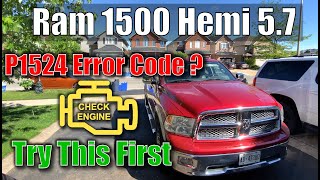
- Incorrect or Low-Quality Oil Filter (Very Common) — Cheap, restrictive, or incorrect aftermarket oil filters fail to provide adequate flow, causing an immediate pressure drop that triggers P1524. Chrysler, Dodge, Jeep, and Ram engines are highly sensitive to filter flow rates. 🎬 Watch: Try this easy filter fix for Dodge Ram trucks.
- Low, Incorrect, or Contaminated Engine Oil (Very Common) — Low oil levels allow the pump to suck in air, destroying pressure. Using the wrong viscosity (e.g., 5W-30 instead of 5W-20), old sludgy oil, or thick oil additives prevents the system from building necessary pressure.
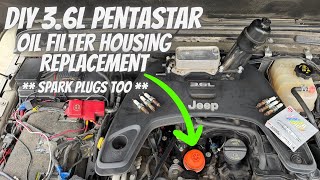
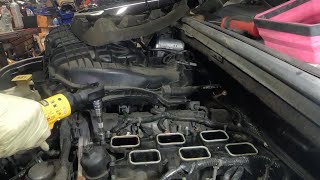
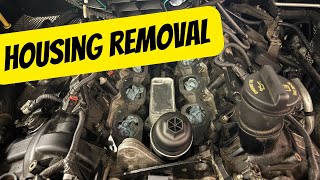
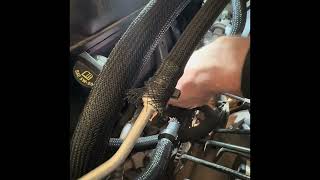
- Cracked Oil Filter Housing Assembly (3.6L Pentastar) (Common) — The factory plastic oil filter housing on 3.6L Pentastar engines warps and cracks from heat cycles. This leaks oil into the engine valley, causing massive pressure loss. 🎬 See how to replace a leaking Pentastar oil filter housing.
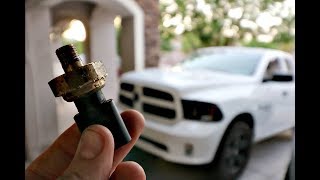
- Faulty Engine Oil Pressure Sensor (Common) — The sensor measuring oil pressure fails and sends false low-pressure readings to the PCM. This frequent electrical issue mimics a mechanical failure.
- Failing Variable Valve Timing (VVT) Solenoid (Less Common) — The VVT solenoid directs oil flow to adjust camshaft timing. Sludge buildup or electronic failure restricts flow, causing localized pressure drops.
- Failing Engine Oil Pump or Internal Gaskets (Rare) — In high-mileage engines, a worn oil pump or blown internal oil gallery gaskets fail to generate system-wide pressure. This is a severe mechanical failure.
Symptoms

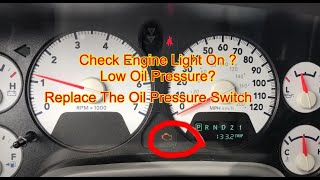
- Check Engine Light is On — The check engine light is the primary and immediate indicator of this fault.
- Reduced Engine Performance — The engine feels sluggish, hesitates during acceleration, and idles roughly because the VVT system is disabled.
- Engine Rattling or Ticking Noises — A ticking sound from the top of the engine indicates oil starvation in the valvetrain or timing chain tensioners.
- Remote Start is Disabled — The vehicle automatically disables remote start when powertrain faults are active to prevent unattended engine damage.
- Increased Fuel Consumption — Operating with the VVT system disabled significantly reduces engine efficiency.
Diagnostic Flowchart

Tap your situation to follow the diagnostic path that matches what you're seeing on this code.
Common Fixes & Costs
- Engine Oil and Filter Change — Parts: $50-$120, Labor: $30-$70, ~0.5 hr book time (DIY)
- Replace Oil Filter Housing Assembly (3.6L Pentastar) — Parts: $150-$350, Labor: $400-$800, ~3.5 hr book time (Advanced)
- Replace Engine Oil Pressure Sensor — Parts: $25-$70, Labor: $75-$150 (Hemi) / $450-$650 (Pentastar), ~4 hr book time (diy (Hemi) / professional (Pentastar))
- Replace Variable Valve Timing (VVT) Solenoid — Parts: $50-$270, Labor: $75-$170, ~1 hr book time (Intermediate)
- Replace Engine Oil Pump — Parts: $100-$500, Labor: $800-$2,500+, ~8.5 hr book time (Professional)
Used vs. New Parts: Buying Guide
When a used part is worth it: Never buy used electronic sensors. Used OEM aluminum filter housings are acceptable, but new aftermarket aluminum is preferred.
Donor-vehicle mileage cap: roughly under 60000 miles for the part to have meaningful remaining life.
Donor quality checklist:
- Verify the donor engine wasn't scrapped for internal failure.
- Check the filter housing for cracks around sensor ports and cap threads.
- Match part numbers exactly.
Decision logic:
- If Part is an electronic sensor → Always buy new. Used sensors risk premature failure and repeated labor costs.
- If Part is the 3.6L plastic oil filter housing → Buy a new aftermarket aluminum unit (Dorman 926-959) to correct the factory flaw.
- If Part is a VVT solenoid → Used is acceptable if cleaned thoroughly before installation.
Warranty tradeoff: Used parts offer 30-90 days. New aftermarket offers 1-year to lifetime.
Worst-case if a used part fails: $900 (Labor to replace a failed used oil filter housing).
What Happens If You Wait — Timeline
- 0-2 weeks: VVT disabled. Sluggish performance. No physical damage if caused by a bad sensor. (MPG impact: 3-5%% · Added cost: $0)
- 2 weeks - 2 months: Accelerated valvetrain wear begins. Ticking noises start. (MPG impact: 5-10%% · Added cost: $50-$150)
- 2-6 months: Scored camshaft lobes and damaged lifters require significant repair. (MPG impact: 10-15%% · Added cost: $1,500-$3,000)
- 6+ months: Catastrophic failure. Spun bearings or thrown rod require engine replacement. (MPG impact: 15-25%% · Added cost: $7,000-$10,000+)
Cost of Not Fixing It
- 0-1 month: Reduced fuel economy and sluggish performance due to disabled VVT system. (Added cost: $0)
- 1-6 months: Accelerated wear on camshafts, lifters, and bearings begins. Ticking noises start. (Added cost: $1,500-$4,000)
- 6+ months: Catastrophic engine failure. Spun bearings, seized crankshaft, or a thrown rod. (Added cost: $5,000-$10,000+)
Diagnosis Steps
- Check Engine Oil Level and Condition
Check the dipstick. Ensure the oil is between the 'Full' and 'Add' marks. If the oil is low, dark, gritty, or milky, change it immediately.
Tools: Rag or paper towel (Beginner) - Inspect the Oil Filter
Identify the brand of the installed oil filter. If it is a budget aftermarket brand, replace it with an OEM (Mopar) or high-quality equivalent filter.
Tools: Flashlight (Beginner) - Inspect Oil Filter Housing (3.6L Pentastar)
On 3.6L V6 engines, shine a flashlight into the engine valley below the intake manifold. Pooled oil or fresh wet spots indicate a cracked housing requiring replacement.
Tools: Flashlight (DIY) - Perform an Oil and Filter Change
Drain the old oil and install a high-quality OEM-spec filter with the correct oil viscosity. Clear the code and test drive to see if it returns.
Tools: Wrench set, oil filter wrench, oil drain pan, new oil, new oil filter (DIY) - Verify Actual Oil Pressure
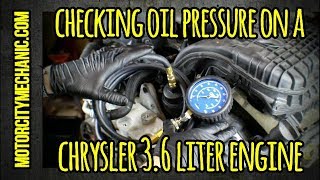
Remove the electronic oil pressure sensor and connect a mechanical oil pressure gauge. Compare the gauge reading to factory specifications. If mechanical pressure is good but the scanner shows low pressure, the sensor is bad.
Tools: Mechanical oil pressure gauge kit, socket set, wrench set (Intermediate) - Inspect Sensor Wiring and Connector
Check the 3-wire connector for chafing, melted wires, or corrosion. Test for a 5V reference signal using a multimeter.
Tools: Multimeter, flashlight (Intermediate) - Test the VVT Solenoid
Remove the VVT solenoid, inspect mesh screens for sludge, and test internal coil resistance (typically 5-20 ohms) with a multimeter.
Tools: Multimeter, jumper wires, socket/wrench set, brake cleaner (Intermediate) - Inspect Oil Pump and Internal Components
If mechanical pressure is genuinely low, inspect the oil pump, pickup tube, and internal bearings for wear. This requires professional teardown.
Tools: Extensive mechanical tools, engine hoist (Advanced)
When This Code Triggers (Freeze-Frame Conditions)
- Engine Coolant Temp: 185-210°F (Fully warmed up, thermostat open.)
- RPM: 1500-2500 RPM (Light acceleration or steady cruise.)
- Engine Load: 25-50% (The engine is under moderate load, demanding VVT activation.)
- Vehicle Speed: 30-60 mph (Often triggered during city or highway driving, not at idle.)
Related Codes
- P0520 — Indicates an electrical fault in the sensor's circuit. If paired with P1524, the problem is electrical (sensor, wiring), not mechanical.
- P0521 — Indicates the sensor's reading is illogical. Pairing with P1524 strongly suggests a bad sensor or a genuine pressure drop.
- P06DD — Points to a dual-stage oil pump stuck in low-pressure mode or a highly restrictive filter. P06DD is the cause; P1524 is the effect.
- P0011 — A direct result of low oil pressure preventing the camshaft phaser from moving to its commanded position.
Climate & Environmental Factors
- Cold Weather: Extreme cold thickens incorrect oil viscosity, preventing it from reaching the top of the engine quickly and triggering P1524 on startup.
- High Temperatures: Sustained heat accelerates oil breakdown and stresses the plastic oil filter housing in Pentastar engines, causing warping and cracking.
How to Talk to a Mechanic About This Code
Say this: "I have a P1524 code. Please verify actual oil pressure with a mechanical gauge before exploring complex causes."
Establishes a clear diagnostic path and prevents immediate upsells to expensive oil pump replacements.
Avoid saying:
- 'I think my oil pump is failing.'
- 'Just fix whatever is wrong.'
Questions to ask before authorizing the repair:
- What were the mechanical gauge readings at warm idle?
- Are you using an OEM Mopar filter?
- What is the cost difference between an OEM plastic housing and an aftermarket aluminum one?
Where to Take It: Dealer vs Independent vs Chain
- Dealer:
Recommended only if under warranty.
Best for: Vehicles under powertrain warranty
Downsides: Highest labor rates, Quick to blame non-OEM parts to deny warranty coverage. (Typical cost: +50% vs. baseline) - Independent Shop:
Best overall fit. Familiar with common Chrysler/Dodge issues.
Best for: Out-of-warranty vehicles, Installing aftermarket upgrades like aluminum filter housings
Downsides: Quality varies. Look for domestic vehicle specialists. (Typical cost: +0% vs. baseline) - Chain Shop:
Avoid for diagnosis. Acceptable for directed oil changes only.
Best for: Directed oil and filter changes using specified parts
Downsides: Technician skill varies dramatically, May have caused the problem using cheap filters. (Typical cost: -10% vs. baseline)
When to Walk Away From the Repair
If repair exceeds 50% of vehicle value, consider selling.
- Car worth $15000, fix is $800: Fix it. Restores full function.
- Car worth $8000, fix is $3500: Borderline. Get a second opinion.
- Car worth $5000, fix is $7000: Walk away. Repair exceeds value.
What Scan Tool You Need for This Code
Minimum: Read/clear codes and display live data for 'Engine Oil Pressure' PID.
Live oil pressure readings distinguish between a bad sensor and a bad pump.
Budget: BlueDriver Pro (~$100) — Graphs live oil pressure PID to identify erratic or stable readings.
Mid-range: Foxwell NT510 Elite (~$180) — Adds manufacturer-specific diagnostics.
Professional: Autel MaxiCOM MK808 (~$500-1200) — Overkill for initial diagnosis.
Rent vs buy: AutoZone offers free loaners. Buy a Bluetooth scanner for regular DIY.
How to Clear the Code After You Fix It
- Clear the code using an OBD-II scan tool.
- Start the engine and idle for 3 minutes to check for immediate return.
- Perform a complete drive cycle to reset readiness monitors.
Drive cycle (~20 minutes): Cold start and idle for 3 minutes. Drive in stop-and-go traffic for 10 minutes. Cruise at 55-65 mph for 10 minutes. Cool down completely.
Readiness monitors affected: Comprehensive Component Monitor, VVT System Monitor
Before emissions retest: drive at least 50 miles to fully set monitors.
Watch out for:
- Disconnecting the battery resets readiness monitors, causing automatic emissions failure.
- The code returns immediately if the root cause (e.g., bad filter, faulty sensor) remains.
Will This Fail Emissions / State Inspection?
Yes — this code typically fails an OBD-II emissions inspection.
- California: An active P1524 causes automatic smog check failure. Complete a full drive cycle after repairs before re-testing.
- New York: NYS DMV inspection includes an OBD-II scan. P1524 is an automatic failure.
- Texas: Illuminated check engine lights result in automatic failure. Drive 50-100 miles after clearing to reset monitors.
Most Commonly Affected Vehicles
- Ram 1500 (5.7L & 6.4L Hemi) (2011-2023) — Extremely common due to sensitivity to non-OEM oil filters and oil viscosity.
- Dodge Charger, Challenger, Durango (5.7L Hemi & 3.6L Pentastar) (2011-2023) — Hemi models share filter sensitivity. Pentastar models are highly susceptible to cracked oil filter housings.
- Jeep Grand Cherokee, Wrangler (3.6L Pentastar & 5.7L Hemi) (2011-2021) — The 3.6L Pentastar plastic oil filter housing cracking is a leading cause of P1524.
- Chrysler 300 (3.6L Pentastar & 5.7L Hemi) (2011-2023) — Prone to the same oil filter and oil pressure sensor issues as Dodge and Ram platform mates.
- Fiat 500 (1.4L MultiAir) (2012-2015) — P1524 is often caused by low oil or a failing MultiAir actuator unit ('brick').
- Volkswagen / Audi Golf, Passat, A3, A4 (1998-2010) — IMPORTANT: On VW/Audi, P1524 means 'Fuel Pump Relay - Open Circuit/Short to Ground.' It is a fuel system code, not oil pressure.
- BMW Various models with VANOS (2000-2015) — Indicates an electrical problem with the VANOS (VVT) solenoid or wiring, not necessarily oil pressure.
- Hyundai Various models (2001-2012) — May indicate an issue with the CVVT oil pressure control system or an electrical fault in a sensor power circuit.
Manufacturer-Specific Notes
- Chrysler/Dodge/Ram/Jeep: Highly sensitive to non-OEM oil filters. Budget filters restrict flow and trigger P1524.
- Jeep/Dodge/Chrysler (3.6L Pentastar): The plastic oil filter housing cracks and leaks. The oil pressure sensor is buried under the intake manifold, inflating labor costs.
- Fiat: On 1.4L MultiAir engines, P1524 indicates a failing MultiAir actuator unit ('brick') due to neglected oil changes.
- Volkswagen/Audi: P1524 indicates a fault in the fuel system: 'Fuel Pump Relay - Open Circuit/Short to Ground.' Start diagnosis at the fuel pump relay.
Real Owner Stories
Ram 1500 5.7L Hemi with a cheap aftermarket oil filter
Check engine light for P1524 appeared after a quick lube oil change. Oil pressure read low (35 PSI).
Outcome: Oil pressure immediately returned to normal (55-60 PSI). The code cleared and did not return.
Lesson: Hemi engines require precise filter flow rates. Always use Mopar OEM or high-quality aftermarket filters.
2014 Jeep Grand Cherokee 3.6L Pentastar with 110K miles
Oil puddle on garage floor, burning oil smell, and code P1524.
Outcome: Replaced the cracked OEM plastic housing with an aftermarket aluminum version (Dorman 926-959). Leak fixed, pressure stabilized.
Lesson: An external oil leak combined with P1524 on a 3.6L Pentastar points to a cracked housing. Upgrade to aluminum.
2018 Ram 1500 5.7L Hemi with 102K miles and a misdiagnosis
Code P1524 with low oil pressure (26 PSI at idle).
Outcome: Pressure restored to 41 PSI at idle. Code resolved.
Lesson: Don't assume the oil pump failed. A restrictive filter is the easiest and cheapest problem to rule out first.
How to Prevent This Code From Triggering
- Use OEM or High-Quality Oil Filters (Every oil change) — Ensures oil pressure does not drop due to excessive restriction, a primary cause of P1524.
- Strict Adherence to Oil Viscosity (Per manufacturer schedule) — Prevents sludge buildup and ensures oil flows properly through VVT passages.
- Proactively Replace Plastic Oil Filter Housing (Once per 100K miles) — Eliminates the known factory flaw that causes major oil leaks and pressure loss on 3.6L engines.
- Regularly Inspect for Oil Leaks (Monthly) — Catches small leaks before they cause a low-pressure situation.
Frequently Asked Questions
Can I fix P1524 just by changing the oil?
Yes, an oil and filter change resolves this code frequently. This is especially true if the oil is old, low, or a cheap aftermarket filter was used. Always use the manufacturer-recommended oil viscosity and an OEM filter.
What is the most common misdiagnosis for P1524?
The most costly misdiagnosis is replacing the engine oil pump without verifying actual oil pressure. A faulty sensor or clogged filter mimics a bad pump perfectly. Always confirm true pressure with a mechanical gauge first.
Is P1524 a serious code?
Yes, treat this code as a critical warning. While a faulty sensor poses low risk, genuine low oil pressure destroys engines rapidly. Stop driving and diagnose the root cause immediately.
Why is the oil pressure sensor so expensive to replace on my Jeep?
On 3.6L Pentastar V6 engines, the sensor sits underneath the upper and lower intake manifolds. Accessing it requires hours of labor, making the labor cost significantly higher than the part itself.
What happens if I ignore P1524?
Ignoring P1524 risks catastrophic engine failure. Lack of lubrication causes bearings to spin and camshafts to seize. This turns a minor repair into a $5,000-$10,000 complete engine replacement.
Can using a bigger oil filter help prevent P1524 on my Ram Hemi?
Some owners of 2013+ Hemi engines use the larger oil filter specified for pre-2013 models. The larger filter has more media, reducing restriction and stabilizing oil pressure. Verify fitment before attempting this unconventional fix.
Why did my remote start stop working with code P1524?
Modern vehicles automatically disable remote start when a powertrain-related check engine light illuminates. This safety feature prevents a potentially damaged engine from running unattended.
Key Takeaways
- Replacing a cheap aftermarket oil filter with an OEM Mopar filter resolves P1524 in the majority of Ram, Dodge, and Jeep cases.
- Inspect the engine valley on 3.6L Pentastar V6s; a cracked plastic oil filter housing is a primary leak source requiring a $600-$1,000 replacement.
- Never replace the oil pump without first verifying true oil pressure using a mechanical gauge, as faulty $50 sensors frequently mimic catastrophic pump failures.
- Stop driving immediately when P1524 appears; operating an engine with genuine low oil pressure causes irreversible bearing and camshaft damage within minutes.
Helpful Videos

The information in this article is provided for general reference and educational purposes only. Vehicle specifications, procedures, and part compatibility can vary by production date, trim level, and region. Always consult your vehicle's factory service manual and verify part numbers before purchasing or performing repairs. Safety-critical components such as airbags, seat belts, and braking systems should be installed by a qualified professional.
- 🎬 Helpful Videos
- What Does P1524 Mean?
- Can I Drive With P1524?
- Common Causes
- Symptoms
- Diagnostic Flowchart
- Common Fixes & Costs
- Used vs. New Parts: Buying Guide
- What Happens If You Wait — Timeline
- Cost of Not Fixing It
- Diagnosis Steps
- When This Code Triggers (Freeze-Frame Conditions)
- Related Codes
- Climate & Environmental Factors
- How to Talk to a Mechanic About This Code
- Where to Take It: Dealer vs Independent vs Chain
- When to Walk Away From the Repair
- What Scan Tool You Need for This Code
- How to Clear the Code After You Fix It
- Will This Fail Emissions / State Inspection?
- Most Commonly Affected Vehicles
- Manufacturer-Specific Notes
- Real Owner Stories
- Ram 1500 5.7L Hemi with a cheap aftermarket oil filter
- 2014 Jeep Grand Cherokee 3.6L Pentastar with 110K miles
- 2018 Ram 1500 5.7L Hemi with 102K miles and a misdiagnosis
- How to Prevent This Code From Triggering
- Frequently Asked Questions
- Can I fix P1524 just by changing the oil?
- What is the most common misdiagnosis for P1524?
- Is P1524 a serious code?
- Why is the oil pressure sensor so expensive to replace on my Jeep?
- What happens if I ignore P1524?
- Can using a bigger oil filter help prevent P1524 on my Ram Hemi?
- Why did my remote start stop working with code P1524?
- Key Takeaways
- 🎟️ Get 5% Off