

P0520 on 2015-2020 Cadillac Escalade 6.2L: Engine Oil Pressure Sensor Circuit Causes and Fixes
P0520 on a 2015-2020 Escalade almost always means the engine oil pressure sensor has failed or its filter screen is clogged. The sensor is in a very difficult-to-reach spot at the back of the engine, making this a challenging DIY repair. Replacing both the sensor and the screen is the most common and recommended fix.
- P0520 on this Escalade is an electrical circuit code, but you must first rule out a real mechanical oil pressure problem with a mechanical gauge.
- The most likely cause is a failed oil pressure sensor, which is located in a very difficult-to-access position at the rear of the engine.
- Always inspect and replace the small filter screen underneath the sensor during the repair to prevent the code from returning.
- Due to the sensor's location and the need for special tools, this is a challenging DIY job with a high degree of difficulty (4/5).
What's Unique About the 2015-2020 Cadillac Escalade
On the L86 V8 engine, the P0520 code is frequently caused by one of two very specific issues: the oil pressure sensor failing and leaking oil into its own electrical connector, or a small, removable filter screen located directly beneath the sensor becoming clogged with sludge. This screen is a known issue addressed in GM Technical Service Bulletin PIP4786B. The sensor's location at the top rear of the engine, tucked under the cowl and behind the intake manifold against the firewall, makes what should be a simple part swap a notoriously difficult and labor-intensive job that many owners and even some shops find challenging.
Symptoms You May Notice
- Check Engine Light is on
- Oil pressure warning light on the dashboard
- Oil pressure gauge reading zero, erratically, or an incorrect value (e.g., stuck at max)
- Engine may enter reduced power or "limp mode"
- "Service Oil" or similar message on the driver information center
- Knocking or clunking sounds from the engine if a true low oil pressure condition exists
- Replacing the oil pump. P0520 specifically points to an electrical circuit fault. A mechanical pump issue would typically set different performance-related codes (like P0521) and must be verified with a mechanical gauge test first.
- Replacing the ECM. While technically possible for the ECM to fail, it is extremely rare and should only be considered after all other possibilities (sensor, screen, wiring) have been exhaustively ruled out.
Most Likely Causes
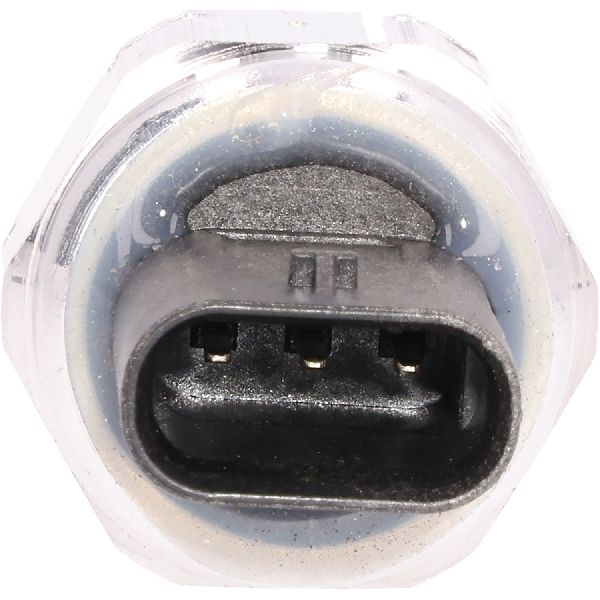
- Faulty Engine Oil Pressure Sensor 🔴 High Probability The sensor is a very common failure point on GM V8 engines. It is known to fail internally or leak oil directly into the 3-pin electrical connector, causing a short or poor connection. Aftermarket sensors are noted to have a higher failure rate.
How to confirm: After verifying actual oil pressure is good with a mechanical gauge, inspect the sensor's electrical connector for any signs of engine oil. If oil is present, the sensor is definitively bad. A scan tool showing pressure with the engine off also points to a bad sensor.
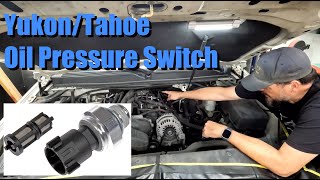
Typical fix: Replace the engine oil pressure sensor. This requires a special 1-1/16" (or 27mm) oil pressure sensor socket, a swivel joint, and multiple extensions due to its difficult location. Some technicians remove the intake manifold for better access. 🎬 Watch: Replace the sensor without removing the intake manifold
Est. part cost: $30-$60 - Clogged Oil Pressure Sensor Filter Screen 🟡 Medium Probability A small, thimble-sized filter screen (GM Part #12623757) sits in the oil passage directly below the sensor to protect it. This screen can become clogged with engine sludge or debris, particularly from the Active Fuel Management (AFM) system, restricting oil flow to the sensor and causing it to report low or no pressure. This is a well-documented issue (TSB PIP4786B).
How to confirm: When the oil pressure sensor is removed, the screen will be visible in the threaded port. Visually inspect it for blockage. It can often be extracted with a small pick or screw. 🎬 See how to extract the filter screen
Typical fix: Remove the screen with a pick or small screw and discard it. It is highly recommended to install a new screen when replacing the sensor. Do not simply clean and reinstall the old one, as debris can be trapped within the mesh.
Est. part cost: $5-$15 - Damaged Wiring or Connector ⚪ Low Probability The sensor's location at the back of the engine exposes the wiring to extreme heat and vibration, which can lead to brittle insulation, corrosion, or loose pins in the connector over time. The harness can also be damaged by rodents or during unrelated repairs.
How to confirm: Visually inspect the wiring harness leading to the sensor for any signs of cracking, melting, or chafing. Wiggle the connector with the engine running to see if the oil pressure reading fluctuates.
Typical fix: Repair the damaged section of wire or replace the connector pigtail.
Est. part cost: $15-$30
Rare But Worth Checking
- Incorrect Engine Oil or Clogged Oil Filter: Using oil of the wrong viscosity (e.g., too thick or too thin) or a severely clogged/failed oil filter can affect oil pressure readings and potentially trigger a circuit code, though this is less common for P0520 specifically.
- Failing Oil Pump or Internal Engine Wear: While P0520 is an electrical code, it can in rare cases be triggered alongside other codes (like P06DD) if there is a genuine mechanical issue causing low oil pressure, such as a failing oil pump, a clogged oil pickup tube O-ring, or worn engine bearings. This would be confirmed by a low reading on a mechanical gauge.
Diagnosis Steps
- Check the engine oil level and condition. Ensure it is full and not sludgy or contaminated.
- CRITICAL: Connect a mechanical oil pressure gauge to the engine to verify the actual oil pressure. This test determines if you have a simple sensor issue or a serious mechanical problem. The port is often near the oil filter housing, requiring an adapter (like Bonbo EN-47971).
- If mechanical pressure is good (e.g., >25 psi at 2000 RPM when warm), proceed. If pressure is low, stop and diagnose the mechanical cause (e.g., oil pump, internal wear).
- Locate the oil pressure sensor at the back of the engine, behind the intake manifold, against the firewall. Access is extremely limited.
- Inspect the sensor's electrical connector for oil saturation, corrosion, or damage. If oil is present, the sensor has failed internally and must be replaced.
- If the connector is clean, test the circuit. The 3-wire sensor should have a 5-volt reference, a ground, and a signal wire. Check for proper voltage and ground using a multimeter.
- If the circuit tests okay, the sensor is the most likely culprit. Remove the sensor using a 1-1/16" or 27mm oil pressure sensor socket, a universal swivel joint, and several long extensions. 🎬 Watch: The easy way to replace the sensor
- Once the sensor is out, use a pick or small screw to carefully extract the small filter screen located in the port underneath the sensor.
- Install the new filter screen and new oil pressure sensor. The sensor thread is M12-1.75. Torque to specification (typically 15 lb-ft).
- Reconnect the electrical connector, clear the trouble codes with a scan tool, and perform a test drive to ensure the code does not return.
Parts You'll Likely Need
- Engine Oil Pressure Sensor
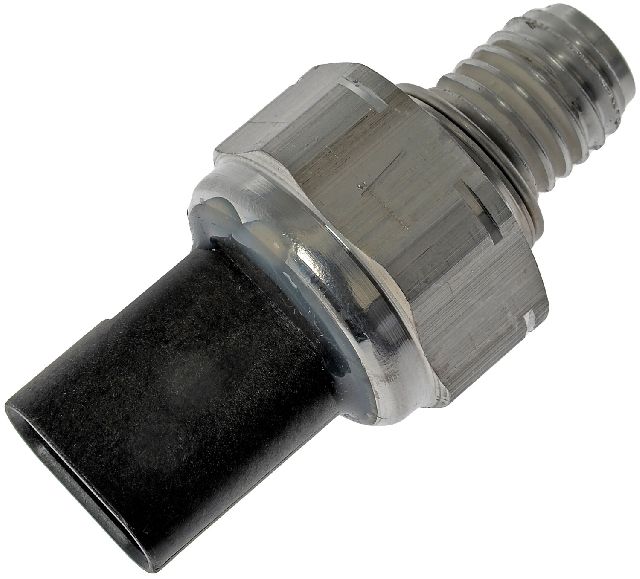
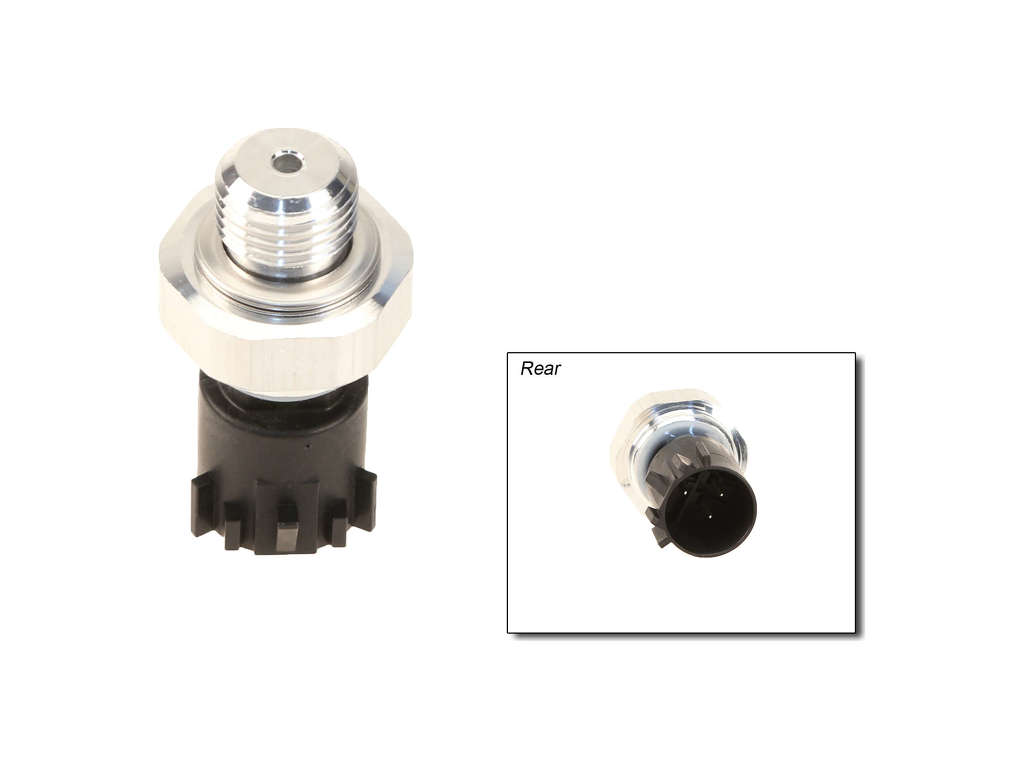
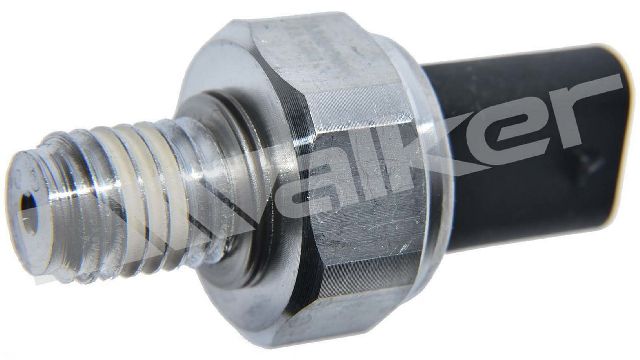
(OEM #12673134 (Superseded by 12727099))— This is the most common failure part for code P0520. It fails internally, providing incorrect readings or leaking oil into the connector. Part number 12673134 is the primary replacement, but GM has released a newer number, 12727099, for some applications.
Trusted brands: ACDelco (GM Genuine), Dorman
OEM price range: $40-$70
Aftermarket price range: $25-$45 - Oil Pressure Sensor Filter Screen
(OEM #12623757)— This screen often clogs with sludge, causing a false reading at the sensor. It is best practice to replace it whenever the sensor is replaced. Failure to do so is a common reason for the code to return.
Trusted brands: ACDelco (Chevrolet Performance)
OEM price range: $5-$15
Aftermarket price range: $5-$10
Related Codes That Often Appear With This One
- P0521 — P0521 indicates 'Engine Oil Pressure Sensor/Switch Performance'. This code often appears with P0520 as the sensor's readings are not just faulty (P0520) but also irrational or out of their expected performance range (P0521).
- P0522 — Indicates 'Engine Oil Pressure Sensor/Switch Circuit Low', meaning the ECM is seeing a sustained low voltage signal. This can be caused by the same faulty sensor or wiring issues that trigger P0520.
- P0523 — Indicates 'Engine Oil Pressure Sensor/Switch Circuit High', meaning the ECM is seeing a sustained high voltage signal. This is the opposite of P0522 but is also caused by a faulty sensor or a short in the wiring.
- P0300-P0308 — If oil pressure is genuinely low or erratic (which can sometimes accompany the sensor fault), it can affect the operation of the Active Fuel Management (AFM) lifters, leading to cylinder misfire codes.
Technical Service Bulletins (TSBs) & Recalls
- PIP4786B: Addresses low oil pressure readings or DTC P0521 (related to P0520) caused by a restricted Valve Lifter Oil Filter (the screen under the sensor). It advises technicians to inspect, clean, or replace this filter.
Platform-Specific Known Issues
- A known issue on these GM V8 engines is the clogging of the small filter screen under the oil pressure sensor, as documented in TSB PIP4786B. Failure to clean or replace this screen can lead to a repeat P0520 code even with a new sensor.
- The extreme difficulty in accessing the sensor is a major vehicle-specific issue. Many DIY videos and forum posts detail the frustration and special tool combinations needed to reach it without removing the intake manifold.
Mechanic-Grade Diagnostic Values
- 5-Volt Reference Circuit Voltage — expected: 4.8 - 5.2 Volts DC with key on, engine off, sensor unplugged.. Failure: Voltage outside this range indicates a short, open, or issue with the ECM. If high, check for a short to voltage. If low or zero, check for an open/high resistance or short to ground.
- Low Reference Circuit Resistance — expected: Less than 1.0 Ohm between the Low Reference circuit terminal on the harness connector and a known good ground.. Failure: Resistance greater than 1.0 Ohm indicates high resistance or an open in the ground circuit.
- Signal Circuit Voltage (Engine Stationary) — expected: Approximately 0.5 Volts.. Failure: A significantly different voltage may indicate a faulty sensor or a circuit issue.
- Scan Tool Oil Pressure Reading (Normal Operation) — expected: Between 41 and 448 kPa (6 and 65 psi) with the engine running.. Failure: A reading fixed at zero, max, or one that doesn't correlate with engine RPM suggests a sensor/circuit fault.
Wiring & Ground Locations
- Engine Oil Pressure Sensor Connector (B75) — Top rear of the engine block, behind the intake manifold, near the firewall.. This is the primary connection point. It is prone to oil contamination from a leaking sensor, causing circuit faults. Pin 1 is Low Reference, Pin 2 is 5V Reference, Pin 3 is Signal.
- Engine to Firewall Ground Strap — A braided strap connecting the rear of the engine/cylinder head to the vehicle's firewall.. This is a critical ground path for the engine block. Corrosion or a loose connection here can cause various electrical issues, including an unstable ground reference for sensors like the oil pressure sensor. A similar ground is noted as G102 (left rear of engine) on other GM platforms.
- Frame Ground Points — On the K2XX platform, there are ground points on the frame below the driver's side area.. While not the primary ground for this specific sensor, poor frame grounds can introduce electrical noise and unstable voltage references throughout the vehicle, potentially affecting sensitive sensor readings.
OEM Part Supersession History
12596951, 12621234→12673134— Standard part evolution, likely for improved reliability or manufacturing process changes.
Diagnostic Flowchart
Other Known Issues on This Vehicle
Issues unrelated to this code that are worth knowing about as an owner of this generation:
- 8L90 Transmission Torque Converter Shudder 🔴 High — Very common in 2015-2019 models. Feels like driving over rumble strips at 35-55 mph under light throttle. (Ref: TSB 18-NA-355 recommends a fluid flush with an updated Mobil 1 LV ATF HP (Blue Label) fluid.)
- CUE Infotainment Screen Delamination 🟠 Medium — Extremely common on 2014-2017 models. The screen develops bubbles, cracks ('spider-webbing'), and becomes unresponsive to touch. (Ref: Subject of multiple TSBs (e.g., PIC6055C) and class-action lawsuits. GM offered a limited reimbursement program.)
- Active Fuel Management (AFM) Lifter Failure 🔴 High — A significant issue for Gen V V8s, including the L86. A lifter can collapse or get stuck, causing a misfire (P0300 codes), ticking noise, and potential camshaft damage. Often occurs between 80,000 and 150,000 miles. (Ref: No specific recall, but a widely known issue. The common fix is to replace the lifters or perform an 'AFM delete'.)
- Carbon Buildup on Intake Valves 🟠 Medium — Common to all direct-injection engines like the L86. Can cause rough idle, hesitation, and misfires over time.
- A/C Condenser Failure 🟠 Medium — The A/C condenser is prone to developing cracks and leaking refrigerant, leading to a loss of cooling. This was common enough to warrant a special coverage adjustment from GM in some cases. (Ref: NHTSA ID: 10167438)
Used vs. New Parts: Buying Guide for This Vehicle
When a used part is the smart pick: For this specific repair, using a used part is NEVER a smart choice. The primary failure component, the oil pressure sensor, is a known high-failure item with a limited lifespan. The labor to access it is extremely difficult and expensive. The risk of a used sensor failing shortly after installation far outweighs the minimal cost savings.
What to inspect on the donor part:
- Do not purchase a used sensor for this repair.
OEM-only on this vehicle (don't cheap out):
- Engine Oil Pressure Sensor
Aftermarket brands forum-validated for this vehicle:
- ACDelco (GM Genuine)
Brands owners have reported issues with on this vehicle:
- Unnamed or 'white box' brands. While some major aftermarket brands (like Dorman, Standard Motor Products) offer a replacement, owner forums frequently report that only the genuine ACDelco/GM part provides a lasting fix without recurring codes.
Real Owner Stories
Aggregated from forums and TSBs cited above. Mileages and costs reflect what owners reported in those sources.
2018 GMC Yukon Denali 6.2L L86 — 88000 miles
Symptoms: Owner experienced AFM lifter failure; discussed the high cost of repairs and the potential for a non-AFM camshaft setup to resolve long-term reliability issues.
What fixed it: Fixed with a non-AFM cam setup (AFM delete).
Cost: $4,000-$6,000
Source hint: tahoeyukonforum.com thread titled '2018 L86 6.2L Lifter Failure - Fix or get rid of?'
Related OBD-II Codes
Frequently Asked Questions
Does TSB PIP4786B apply to my 2015-2020 Cadillac Escalade with the L86 engine?
What is the specific GM part number for the filter screen I should replace while fixing P0520?
Can I use any socket to remove the oil pressure sensor on my Escalade?
Is it true that aftermarket sensors fail more often on the L86 6.2L V8?
Why is my oil pressure gauge stuck at the maximum value on my 2016 Escalade?
Could my P0520 code be related to the Active Fuel Management (AFM) system?
Helpful Videos
Used OEM Parts in Stock
New Aftermarket Parts Available


The information in this article is provided for general reference and educational purposes only. Vehicle specifications, procedures, and part compatibility can vary by production date, trim level, and region. Always consult your vehicle's factory service manual and verify part numbers before purchasing or performing repairs. Safety-critical components such as airbags, seat belts, and braking systems should be installed by a qualified professional.
- Cadillac Escalade:
- 🎬 Helpful Videos
- 🛍️ Shop This Part
- What's Unique About the 2015-2020 Cadillac Escalade
- Symptoms You May Notice
- Most Likely Causes
- Rare But Worth Checking
- Diagnosis Steps
- Parts You'll Likely Need
- Related Codes That Often Appear With This One
- Technical Service Bulletins (TSBs) & Recalls
- Platform-Specific Known Issues
- Mechanic-Grade Diagnostic Values
- Wiring & Ground Locations
- OEM Part Supersession History
- Diagnostic Flowchart
- Other Known Issues on This Vehicle
- Used vs. New Parts: Buying Guide for This Vehicle
- Real Owner Stories
- 2018 GMC Yukon Denali 6.2L L86 — 88000 miles
- Related OBD-II Codes
- Frequently Asked Questions
- 🎟️ Get 5% Off