

P0507 on 2011-2018 Volkswagen Jetta 2.5L: High Idle Causes and Fixes
On a 2011-2014 VW Jetta 2.5L, code P0507 means the engine is idling higher than the computer expects, typically over 900 RPM. This is most often caused by a massive vacuum leak from a torn PCV valve diaphragm integrated into the valve cover. A less common cause is a dirty throttle body needing cleaning and adaptation. An aftermarket PCV diaphragm repair kit is under $50, while a new OEM valve cover can be over $200.
- For a VW Jetta 2.5L, P0507 almost always points to a vacuum leak.
- The most likely source of the vacuum leak is a torn PCV diaphragm on the valve cover; check this first.
- A dirty throttle body is the second most likely cause; clean it and perform a relearn procedure.
- Before replacing expensive parts, check for vacuum leaks with a smoke test.
- For 2011-2014 models, be aware that a rare but possible fix is a dealer-installed software update per TSB 01-14-23.
What's Unique About the 2011-2018 Volkswagen Jetta

The 2.5L I5 engine (codes CBUA, CBTA) in the Jetta is known for specific failure points that lead to the P0507 code, particularly related to its crankcase ventilation system. Unlike generic causes, a failed rubber PCV diaphragm is an extremely common culprit on this specific engine, creating a significant vacuum leak that results in a high, erratic idle and often a loud whistling noise. Additionally, Volkswagen has issued a Technical Service Bulletin (TSB 01-14-23) for some 2011-2014 models, indicating that a simple software update for the engine controller can sometimes resolve this code, especially when it appears with P0106.
Generation note: The 2011-2018 Jetta range covers the end of the A5 (Mk5) generation (Wagon only) and the majority of the A6 (Mk6) generation. However, the 2.5L I5 engine was primarily used in the Mk6 Jetta from 2011 until it was phased out around 2014 in favor of smaller turbocharged engines. This guide is most relevant for the 2011-2014 Jetta models with the 2.5L engine (CBUA, CBTA).
Symptoms You May Notice
- Check Engine Light is on
- Engine idling higher than normal (e.g., above 900 RPM)
- Fluctuating, surging, or erratic idle speed
- A 'coasting' or 'pushing' sensation when trying to slow down, requiring more brake pressure
- A noticeable whistling, sucking, or 'honking' sound from the engine bay at idle
- Engine may stall when coming to a stop or when the oil cap is removed
- Replacing the throttle body without cleaning it first. Often, a thorough cleaning and electronic adaptation is all that's needed.
- Replacing O2 sensors or the MAP sensor without addressing the root cause. A vacuum leak is the most likely cause of the high idle, and a bad PCV can foul the MAP sensor with oil, but the sensor itself is not the primary failure.
- Ignoring the PCV system. On this specific engine, the PCV diaphragm is the primary suspect and should be the first component checked.
- Mistaking a leaking brake booster for another vacuum leak. The booster itself can leak internally, causing a high idle.
Most Likely Causes

- Failed PCV Valve / Diaphragm 🔴 High Probability The rubber diaphragm inside the PCV (Positive Crankcase Ventilation) valve assembly is a well-documented weak point on the 2.5L engine. It becomes brittle and tears over time, creating a large, un-metered vacuum leak directly into the intake manifold, which pulls crankcase air in uncontrollably.
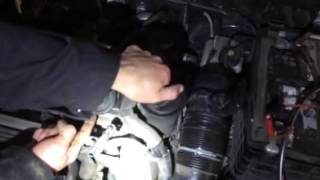
How to confirm: With the engine idling, try to remove the oil filler cap. If there is extremely strong suction holding it down, making it difficult to remove, the PCV diaphragm has failed. You may also hear a loud sucking or whistling noise from the round, black PCV cap on the valve cover; placing a finger over the small vent hole on the cap may cause the idle to smooth out, confirming the leak.
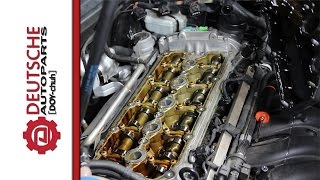
Typical fix: Replace the PCV diaphragm using an aftermarket repair kit or replace the entire valve cover assembly. 🎬 See this walkthrough on how to replace the full valve cover. While VW only sells the full cover, diaphragm kits are a cost-effective DIY repair.
Est. part cost: $25-$75 for a diaphragm kit, $150-$250 for a full valve cover assembly. - Dirty or Faulty Throttle Body 🟡 Medium Probability Carbon and oil vapor from the PCV system can build up around the throttle plate, preventing it from closing completely at idle. This allows extra air to sneak past, raising the idle speed.
How to confirm: Remove the intake tube connected to the throttle body and visually inspect the throttle plate and bore for black carbon deposits. If it's dirty, it can't seal properly.
Typical fix: Clean the throttle body thoroughly with a dedicated throttle body cleaner and a soft brush. After cleaning or replacement, a throttle body adaptation/relearn procedure using a capable scan tool (like VCDS by Ross-Tech, using Basic Settings Group 060) is required to reset the idle position.
Est. part cost: $10-$20 for cleaner - Vacuum Leak (Other) 🟡 Medium Probability Beyond the PCV system, plastic and rubber vacuum hoses can become brittle and crack with age and heat cycles. The large vacuum hose going to the brake booster is a potential leak point.
How to confirm: Perform a smoke test. This involves injecting low-pressure smoke into the intake system and looking for smoke escaping from cracked hoses, gaskets, or seals. Pay close attention to the brake booster line and intake manifold gaskets.
Typical fix: Identify and replace the specific cracked hose or failed gasket.
Est. part cost: $15-$100 - Outdated Engine Control Module (ECM) Software ⚪ Low Probability Volkswagen released TSB 01-14-23 (also listed as TPI 2034012) for 2011-2014 Jettas with the 2.5L engine (CBTA, CBUA). The bulletin states the diagnostic strategy for the MAP sensor and idle control is too sensitive and can set P0507, P0106, and P050A incorrectly.
How to confirm: A VW dealership or a specialized shop with access to VW's Service-Net can check your vehicle's software version against the TSB. This is usually checked after physical causes like vacuum leaks are ruled out. The TSB explicitly states not to replace parts before performing the update.
Typical fix: Flash update the Engine Control Module with the revised software.
Est. part cost: $0-$200 (dealer labor)
Rare But Worth Checking
- Faulty EVAP Purge Valve (N80): If the EVAP purge valve (N80) sticks open, it can create a constant vacuum leak from the charcoal canister into the intake manifold, leading to a high idle. This would often be accompanied by other EVAP system codes like P0441.
Diagnosis Steps

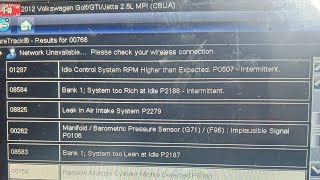
- Scan for codes and confirm P0507 is present. Note any other codes, especially P0106, P2279, and P2187, 🎬 Watch a quick fix for these common vacuum leak codes. as they strongly point to a vacuum leak.
- With the engine running, listen for an audible vacuum leak (whistling/sucking). Pay close attention to the round PCV valve area on the top of the valve cover.
- Perform the oil cap test: With the engine idling, attempt to remove the oil filler cap. If it is held on by strong vacuum and is difficult to remove, the PCV diaphragm is almost certainly torn.
- If the PCV seems okay, inspect the intake air tube for cracks and ensure it is properly seated on the throttle body and airbox.
- Remove the intake tube from the throttle body and inspect the throttle plate for heavy carbon buildup. Clean if necessary.
- If no obvious cause is found, perform a smoke test on the intake system to find hidden vacuum leaks. Check the brake booster vacuum hose carefully.
- If no physical faults are found, contact a dealer or qualified shop to check if TSB 01-14-23 (for a software update) applies to your vehicle's VIN.
- After any repairs involving the throttle body or a significant vacuum leak fix, perform a throttle body adaptation using a VCDS or equivalent scan tool.
Parts You'll Likely Need

- PCV Valve Diaphragm Repair Kit — This is the most frequent failure point on the 2.5L engine that causes a large vacuum leak and triggers code P0507. It's a cost-effective alternative to replacing the entire valve cover.
Trusted brands: URO Parts, Dorman (P/N: 917-064)
OEM price range: $200-$300 (for full valve cover, P/N: 07K103469L)
Aftermarket price range: $25-$50 (for diaphragm kit) - Throttle Body
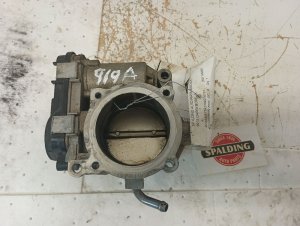
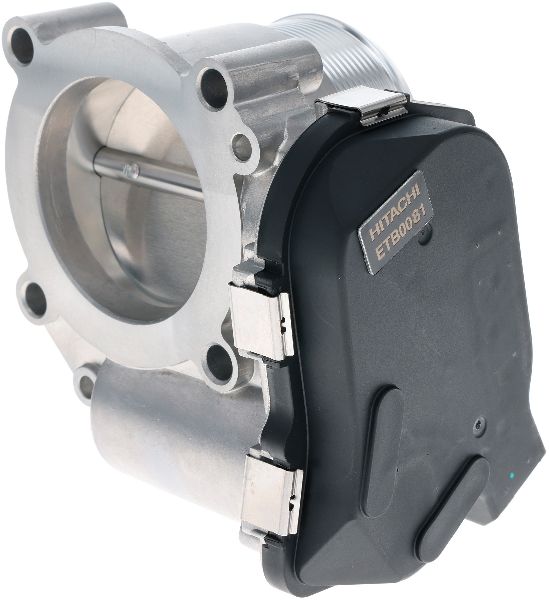
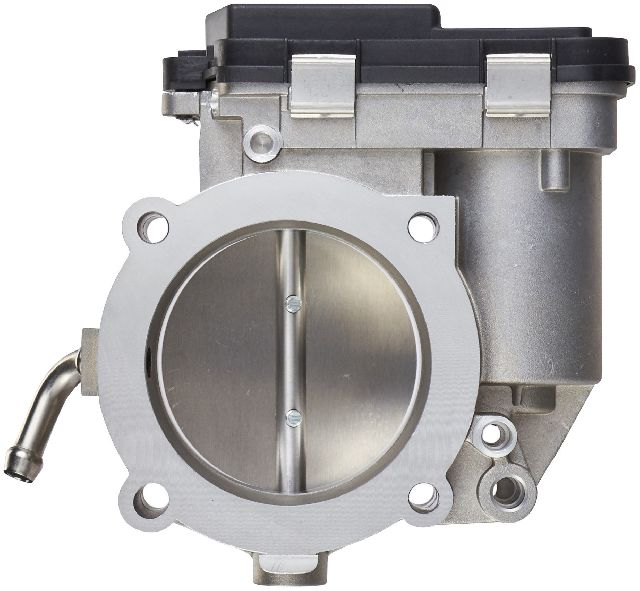
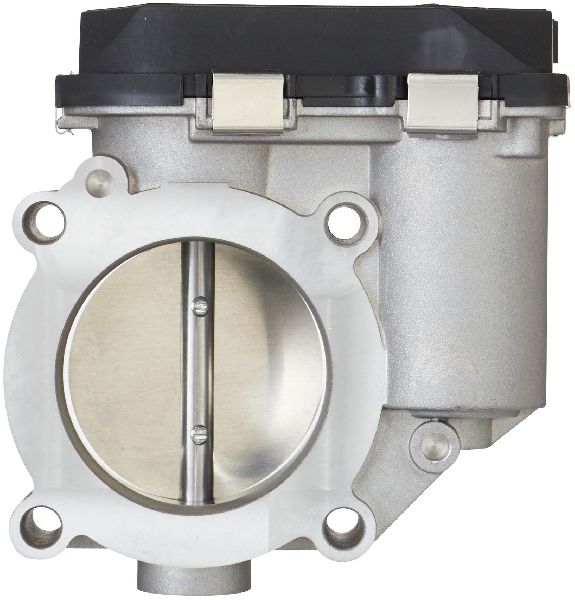
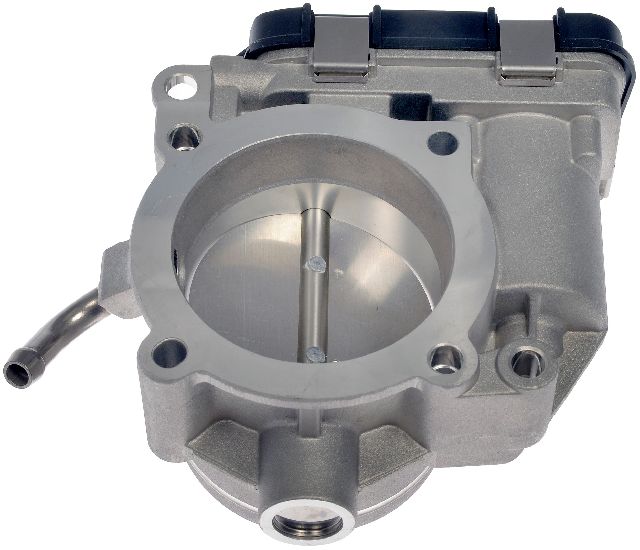
(OEM #07K133062A)— If cleaning does not resolve the issue or if the internal electronics have failed, replacement is necessary. This is less common than a simple cleaning and adaptation.
Trusted brands: Bosch (OEM supplier), VDO
OEM price range: $300-$450
Aftermarket price range: $150-$250
Related Codes That Often Appear With This One
- P0106 — Manifold Absolute Pressure/Barometric Pressure Sensor Range/Performance. A significant vacuum leak from a bad PCV can cause erratic readings from the MAP sensor. The VW TSB specifically mentions this code combination and advises a software update as a potential fix.
- P2279 — Intake Air System Leak. This code is a direct confirmation of the unmetered air leak that is also causing the P0507 high idle. They frequently appear together when the PCV diaphragm fails.
- P2187 — System Too Lean at Idle. This code indicates the engine is detecting too much air at idle, which is the direct result of the vacuum leak causing the P0507.
Technical Service Bulletins (TSBs) & Recalls
- TSB 01-14-23 / TPI 2034012: For 2011-2014 2.5L engines (CBTA, CBUA), addresses DTCs P0106, P0507, and P050A with an ECM software update due to overly sensitive monitoring strategies.
Platform-Specific Known Issues
- The PCV system is integrated into the valve cover. While aftermarket diaphragms are available, some owners report difficulty getting the new cap to seal properly, leading to continued leaks. Replacing the entire valve cover (P/N 07K103469L) is the more robust, albeit more expensive, repair.
Mechanic-Grade Diagnostic Values
- Short-Term Fuel Trim (Bank 1) at Idle — expected: Close to 0% (within +/- 5%). Failure: A large positive value (e.g., > +10%, maxing out at +21% or higher) indicates the ECM is adding excessive fuel to compensate for un-metered air from a vacuum leak.
- MAP Sensor Voltage at Idle — expected: ~1.0 - 1.5 Volts (high vacuum). Failure: Voltage that remains high (e.g., > 2.0V) at idle suggests a significant vacuum leak is present, preventing the manifold from reaching its expected vacuum level.
- Engine Idle Speed (VCDS Measuring Blocks) — expected: Specified idle is ~680 RPM. If battery voltage is low, it may increase to 780 RPM.. Failure: Actual idle speed is consistently higher than specified, often >900 RPM, and the idle speed deviation in VCDS is more than -80 RPM from target.
- Throttle Position Sensor (G79) Voltage — expected: Smoothly sweeps from ~0.5V (closed) to ~4.5V (wide open) as the throttle is manually opened and closed.. Failure: Voltage readings that are erratic, jump, or have dead spots indicate a failing sensor within the throttle body assembly.
Scan Tool Commands That Help

- VCDS (VAG-COM): Engine (01) -> Basic Settings (04) -> Group 060 — This is the Throttle Body Adaptation (TBA) procedure. It MUST be performed after cleaning or replacing the throttle body. The tool cycles the throttle plate to relearn its closed, part-throttle, and open positions. Failure to do this will result in an incorrect and unstable idle.
- VCDS (VAG-COM): Engine (01) -> Measuring Blocks (08) -> Groups 001, 002, 032 — Use these groups to monitor live data. Group 001 shows engine speed (RPM). Group 002 shows engine load and throttle position. Group 032 shows learned fuel trims (additive and multiplicative), which are critical for identifying a vacuum leak (lean condition).
Wiring & Ground Locations
- Engine to Chassis Ground Strap — A primary ground strap connects the engine block to the vehicle's chassis/frame, often near the engine mount or transmission.. A corroded or loose main engine ground can cause unstable voltage for all engine sensors, including the MAP sensor and throttle body position sensors, leading to erratic behavior and fault codes. Resistance should be less than a few ohms from the engine block to the negative battery terminal.
- Ground Point 13 — Located in the engine compartment on the right side (passenger side in US).. This is a common grounding point for various components in the engine bay. Corrosion here can lead to intermittent sensor issues that are hard to diagnose.
- ECM Connector T121 — The main 121-pin connector at the Engine Control Module (ECM).. When diagnosing a suspected throttle body or sensor wiring issue, technicians check for resistance between the sensor connector pins and the corresponding pins at the T121 connector to find breaks in the harness. The specified maximum resistance is 1.5 ohms.
Real Owner Repair Stories
- Reddit user /u/mattacosta (mechanic) (2011 VW Jetta SE 2.5L, 180k miles) — P0106 code (often seen with P0507), bad gas mileage, high emissions.
❌ Tried (didn't work) Owner replaced the PCV valve., Owner cleaned the MAP sensor.
✅ What actually fixed it The mechanic found that the intake manifold bolts had loosened over time, creating a vacuum leak. Tightening the manifold bolts to the proper torque specification resolved the codes. He noted this is a common issue and the sensor itself is rarely the cause. - Reddit user (2011 Jetta 2.5L, 120k miles) — High idle that creeps up to 1000 RPMs, requires longer braking distance.
❌ Tried (didn't work) Replaced PCV/valve cover (1 year prior), Cleaned MAP sensor, Cleaned and relearned throttle body, Replaced cam sensor
✅ What actually fixed it The user's issue was still ongoing, but they noted finding metal shavings when changing the cam sensor, leading them to suspect a timing chain guide issue. While not a confirmed fix, this points to a rare mechanical cause for idle issues if all vacuum/electronic causes are ruled out. - NHTSA ODI #10393886 — An owner of a similar Volkswagen model reported that the car was revving on its own, and after 10 minutes the check engine light came on with code P0507, which the owner noted was pointing at the air intake system.
"I Checked Everything" — The Actual Cause
- A known failure pattern on the 2.5L engine is a faulty brake booster check valve or a hairline crack in the main vacuum hose leading to the booster. This creates a vacuum leak that a standard smoke test of the intake manifold might miss, as the leak is part of the braking vacuum circuit. Symptoms include a high idle (P0507) that may worsen when the brakes are applied, a hard brake pedal, or a hissing sound from the driver's footwell.
OEM Part Supersession History
07K103469F, 07K103469D, 07K103469G→07K103469L, 07K103469M— Revisions to the valve cover assembly, likely to improve the longevity of the integrated PCV system.
Heads up: All listed part numbers for the 2.5L engine valve cover are generally interchangeable for the 2011-2014 model years. However, it is always best to use the latest revision (L or M) for the most updated design.
Model Year Variations Within This Range
- 2011-2014: The 2.5L engine was available with two primary engine codes: CBUA and CBTA. The main difference is emissions-related; the CBUA (SULEV) has an additional oxygen sensor compared to the CBTA (ULEV). While the P0507 fault is common to both, diagnostics involving O2 sensor data may differ slightly. The TSB for the ECM software update applies to both engine codes.
Diagnostic Flowchart
Other Known Issues on This Vehicle
Issues unrelated to this code that are worth knowing about as an owner of this generation:
- Leaking Brake Vacuum Pump 🟠 Medium — Extremely common. The gasket on the engine-driven vacuum pump fails, causing an oil leak onto the transmission housing. Often misdiagnosed as a rear main seal leak.
- Ignition Coil Failure 🟡 Low — Occurs intermittently, often after 60,000 miles. Causes engine misfires (P0300-P0305). Generally recommended to replace as a set.
- Timing Chain Wear/Tensioner Issues 🟠 Medium — More common on pre-2008 models, but can still occur on later models, especially with extended oil change intervals. Listen for a brief rattle on cold starts.
- Water Pump Failure 🟡 Low — Less common on the 2.5L than on the 2.0T TSI engine, but the plastic impeller can still degrade over time, leading to coolant leaks or overheating. Often replaced preventatively with the serpentine belt.
- EVAP Purge Valve (N80) Failure 🟡 Low — A common failure on many VW models. Can cause a rough idle and EVAP-related codes (P0441), and if stuck open, can contribute to vacuum leak symptoms.
Used vs. New Parts: Buying Guide for This Vehicle
When a used part is the smart pick: A used throttle body from a low-mileage donor vehicle can be a cost-effective option, as they are generally reliable parts. A complete used valve cover assembly can also be considered if it comes from a verified low-mileage car and the PCV diaphragm is confirmed to be intact (no suction at oil cap on donor car).
Donor-vehicle mileage cap: roughly under 70000 miles for the part to have meaningful remaining life.
What to inspect on the donor part:
- For a Valve Cover: Ask the seller to perform the 'oil cap test' on the donor car before removal. If there's strong suction, the PCV has failed and the part is worthless.
- For a Throttle Body: Visually inspect the throttle plate for deep scoring or damage (light carbon is okay and can be cleaned). Check the electrical connector for any bent or corroded pins.
- Verify the donor vehicle's mileage and check for signs of front-end collision damage, which could have impacted engine components.
OEM-only on this vehicle (don't cheap out):
- MAP Sensor: Aftermarket MAP sensors are notoriously unreliable for VWs. Given the labor to access it and its critical function, using an OEM sensor (like Bosch) is strongly recommended to avoid repeat failures.
Aftermarket brands forum-validated for this vehicle:
- PCV Diaphragm Kit: Dorman (917-064) and URO Parts are widely used and accepted as reliable, cost-effective alternatives to a full valve cover replacement.
- Throttle Body: Bosch is the Original Equipment Manufacturer and is the most trusted brand. VDO is another reputable OEM supplier.
Brands owners have reported issues with on this vehicle:
- Unbranded, no-name throttle bodies and valve covers from online marketplaces should be avoided. Forum discussions frequently mention these parts failing prematurely or not fitting correctly, leading to more diagnostic time and wasted money.
Real Owner Stories
Aggregated from forums and TSBs cited above. Mileages and costs reflect what owners reported in those sources.
2012 Jetta 2.5 SE
Symptoms: The car was throwing multiple codes including P0507, P0106, and P2187. The community suggested checking the PCV valve and hoses as the most likely culprit.
What fixed it: Checking the PCV valve and associated vacuum hoses.
Source hint: Reddit r/Volkswagen: 2012 Jetta 2.5 SE throwing multiple codes (P0106, P0507, P2407, P2187)
2011-2014 Jetta 2.5L (CBTA/CBUA)
Symptoms: Diagnostic strategy for the MAP sensor and idle control was too sensitive, causing the P0507 code to set incorrectly along with P0106 and P050A.
What fixed it: Flash update the Engine Control Module (ECM) with revised software per TSB 01-14-23.
Cost: $0-$200
Source hint: TSB 01-14-23 / TPI 2034012
2011-2018 Jetta 2.5L
Symptoms: P0507 code present due to a torn PCV diaphragm, which was causing oil to be sucked into the intake and fouling the MAP sensor.
What fixed it: Used a Dorman 917-064 diaphragm kit to repair the PCV valve within the valve cover.
Cost: $25-$75
Source hint: YouTube: 'P0106 VW 2.5L Jetta Manifold Sensor Implausible Signal'
Related OBD-II Codes
Frequently Asked Questions
Does TSB 01-14-23 apply to my 2012 Jetta 2.5L?
Can I fix the PCV issue without replacing the entire valve cover on my 2.5L I5?
Why is my Jetta harder to brake when the idle is high?
How can I tell if my PCV diaphragm is torn using just my hands?
Do I need special tools to reset the idle after cleaning the throttle body?
Helpful Videos
Used OEM Parts in Stock




New Aftermarket Parts Available


The information in this article is provided for general reference and educational purposes only. Vehicle specifications, procedures, and part compatibility can vary by production date, trim level, and region. Always consult your vehicle's factory service manual and verify part numbers before purchasing or performing repairs. Safety-critical components such as airbags, seat belts, and braking systems should be installed by a qualified professional.
- Volkswagen Jetta:
- 🎬 Helpful Videos
- 🛍️ Shop This Part
- What's Unique About the 2011-2018 Volkswagen Jetta
- Symptoms You May Notice
- Most Likely Causes
- Rare But Worth Checking
- Diagnosis Steps
- Parts You'll Likely Need
- Related Codes That Often Appear With This One
- Technical Service Bulletins (TSBs) & Recalls
- Platform-Specific Known Issues
- Mechanic-Grade Diagnostic Values
- Scan Tool Commands That Help
- Wiring & Ground Locations
- Real Owner Repair Stories
- "I Checked Everything" — The Actual Cause
- OEM Part Supersession History
- Model Year Variations Within This Range
- Diagnostic Flowchart
- Other Known Issues on This Vehicle
- Used vs. New Parts: Buying Guide for This Vehicle
- Real Owner Stories
- 2012 Jetta 2.5 SE
- 2011-2014 Jetta 2.5L (CBTA/CBUA)
- 2011-2018 Jetta 2.5L
- Related OBD-II Codes
- Frequently Asked Questions
- 🎟️ Get 5% Off