

OBD-II Code P2407: EVAP Leak Detection Pump Sense Circuit Intermittent/Erratic
The Ultimate Expert Guide to Diagnosing and Fixing P2407
- P2407 is an electrical circuit fault, not a physical vapor leak; skip the $150 smoke test and do not replace your gas cap.
- Inspect the leak detection pump's electrical connector first; green or white corrosion on the pins causes over 60% of P2407 codes.
- You can safely drive with P2407, but the active Check Engine Light guarantees an automatic failure on state emissions inspections.
- Volkswagen and Audi owners must check for Technical Service Bulletins (TSBs) like 01-21-09 before buying parts, as a $150 dealer software update is often the only fix.
What Does P2407 Mean?

P2407 means your car's engine computer (ECM) receives an erratic or jumpy electrical signal from the leak detection pump (LDP). The LDP gently pressurizes the evaporative emission (EVAP) system to test for fuel vapor leaks. This code points strictly to an electrical problem with the pump's communication circuit, not a physical gas leak. The 'sense circuit' is a specific wire connected to a sensor inside the pump that reports status back to the computer. When the computer sees this voltage fluctuating erratically, it logs P2407.
Technical definition: The SAE/OBD-II definition is "Evaporative Emission System (EVAP) Leak Detection Pump Sense Circuit Intermittent/Erratic". The Powertrain Control Module (PCM) detects an unstable voltage signal from the sensor within the EVAP leak detection pump. During an EVAP self-test, the PCM expects a stable voltage (a clean switch between 0V and battery voltage, or a steady 4.5-5.0V). Erratic deviations, spikes, or dropouts trigger this fault.
Can I Drive With P2407?
Yes, But With Caution. Yes, you can drive safely, as P2407 does not affect engine performance or safety. However, the active Check Engine Light guarantees an automatic failure on state emissions inspections. Ignoring the code long-term stresses the catalytic converter by altering fuel trims, risking a $1,000+ replacement.
Common Causes

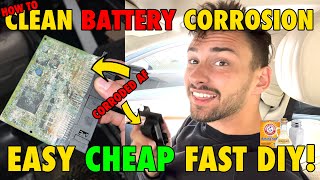
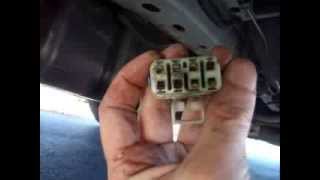
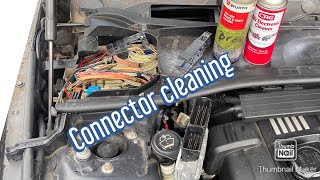
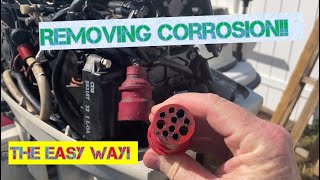
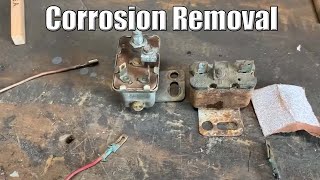
- Corroded Electrical Connector (Very Common) — The LDP is mounted under the car, exposing the connector to road salt and water. Green or white corrosion on the pins disrupts the voltage signal, making this the #1 cause of P2407. 🎬 Watch: How to clean green corrosion off electrical connectors.
- Faulty EVAP Leak Detection Pump (LDP) (Very Common) — The internal magnetic reed switch or Hall-effect sensor wears out, sending a glitchy signal back to the ECM.
- Damaged Wiring Harness (Common) — Wires leading to the pump chafe against the chassis, sustain damage from road debris, or get chewed by rodents, causing an intermittent connection.
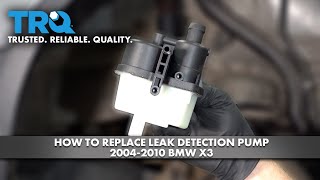
- Faulty ECM Software (VW/Audi Specific) (Common) — Volkswagen and Audi ECM diagnostic software is often too sensitive, falsely triggering P2407. A dealer software update (via TSB) is the required fix. 🎬 See this walkthrough for replacing a BMW leak detection pump.
- Internal Pump Contamination (Less Common) — Overfilling the gas tank pushes liquid fuel or charcoal particles into the LDP, clogging its filter or shorting the internal sensor.
- Blown Fuse or Faulty Relay (Rare) — A failing relay or partially blown fuse causes intermittent power loss to the pump circuit.
Symptoms

- Check Engine Light is On — The primary and often only noticeable symptom.
- Failed Emissions Test — The vehicle fails state inspections because the EVAP monitor cannot run to completion.
- Faint Fuel Smell — Occasionally, a slight gasoline odor is present near the rear wheels.
- EVAP Monitor Not Ready (scan-tool only — no driver-felt sign) — Scan tools show the EVAP system monitor as "incomplete" or "not ready".
Diagnostic Flowchart

Tap your situation to follow the diagnostic path that matches what you're seeing on this code.
Common Fixes & Costs
- Clean or Replace Electrical Connector Pigtail
— Parts: $0-$60, Labor: $100-$150, ~1.0 hr book time
(Intermediate)
: OEM - Replace EVAP Leak Detection Pump
— Parts: $100-$250, Labor: $100-$250, ~1.0 hr book time
(Intermediate)
: OEM
: OEM - Update ECM Software (TSB) — Parts: $0, Labor: $100-$200, ~1.0 hr book time (Professional)
- Repair Damaged Wiring — Parts: $5-$20, Labor: $120-$300, ~1.5 hr book time (Intermediate)
Used vs. New Parts: Buying Guide
When a used part is worth it: A used OEM pump from a low-mileage, salt-free donor vehicle is a cost-effective alternative to aftermarket pumps, which frequently suffer compatibility issues.
Donor-vehicle mileage cap: roughly under 80000 miles for the part to have meaningful remaining life.
Donor quality checklist:
- Verify the donor vehicle is from a salt-free region to avoid pre-existing connector corrosion.
- Match the OEM part number exactly, cross-referencing superseded numbers.
- Inspect the used part's electrical connector for green or white corrosion.
Decision logic:
- If The cause is a corroded connector → Buy a new connector pigtail. Never buy a used connector.
- If Vehicle has >100K miles and budget is tight → Buy a used OEM pump. Avoid cheap aftermarket pumps due to sensor incompatibility.
- If A new OEM pump is available for < $150 → Buy new OEM for guaranteed compatibility and warranty.
Warranty tradeoff: Salvage yard parts carry 30-90 day warranties excluding labor. New OEM parts carry 1-year minimum warranties.
Worst-case if a used part fails: $200-$400 for repeat labor and a second replacement part if a used pump fails.
What Happens If You Wait — Timeline
- 0-4 weeks: Code P2407 logs, Check Engine Light illuminates. Automatic emissions test failure. (MPG impact: 0%% · Added cost: $0.)
- 1-6 months: Inability to run EVAP monitor masks other developing leaks. Slight decrease in fuel economy. (MPG impact: 0-2%% · Added cost: $0-$25 in wasted fuel.)
- 6-18 months: Non-operational EVAP cycle alters long-term fuel trims, stressing the catalytic converter. (MPG impact: 0-2%% · Added cost: $50-$100 in wasted fuel.)
- 18+ months: Prolonged stress contributes to premature catalytic converter failure. Connector corrosion becomes unrepairable. (MPG impact: 0-2%% · Added cost: $1,000-$3,000 for catalytic converter replacement.)
Cost of Not Fixing It
- 0-6 months: Guaranteed failure of state emissions/smog tests. Slight decrease in fuel economy as vapors are not recycled. (Added cost: $0, excluding failed inspection fees.)
- 6-18 months: A non-functioning EVAP system forces a richer fuel mixture, stressing the catalytic converter. (Added cost: $50-$100 in wasted fuel.)
- 18+ months: Prolonged rich running conditions contribute to premature catalytic converter failure. (Added cost: $1,000-$3,000+ for catalytic converter replacement.)
Diagnosis Steps
- Read Codes and Freeze Frame Data
Confirm P2407 is active. Check freeze frame data for operating conditions. Note related codes like P2406, P0442, or P0456, which dictate the diagnostic path.
Tools: OBD-II Scanner (Beginner) - Analyze Live Data
Command the LDP to activate using a bi-directional scanner. Monitor the 'LDP Sense Circuit' voltage. A healthy circuit switches cleanly (e.g., 0V to 5.0V). Rapid fluctuation or dropouts confirm the erratic fault.
Tools: Advanced Bi-Directional Scan Tool (Intermediate) - Inspect the Pump and Connector
Raise the vehicle and locate the LDP near the charcoal canister. Unplug the connector and inspect pins for green/white corrosion, moisture, or damage. This is the most critical physical check.
Tools: Jack, Jack Stands, Flashlight, Small Pick (Beginner) - Check Power and Ground
With the key on, measure for battery voltage at the harness power wire. Measure resistance between the ground wire and the chassis; it must be less than 1.0 ohm.
Tools: Multimeter, Wiring Diagram (Intermediate) - Test LDP Internal Resistance
Measure resistance across the pump's pins. VW/Audi pumps typically read 640-720 Ω between terminals 1 and 3. Readings outside manufacturer specs confirm internal pump failure.
Tools: Multimeter, Wiring Diagram (Advanced) - Test Sense Circuit Continuity
Disconnect the LDP and ECM connectors. Measure resistance of the sense wire from end to end. Resistance above 1.5 ohms or 'OL' indicates a broken wire requiring repair.
Tools: Multimeter, Wiring Diagram (Advanced) - Perform a Voltage Drop Test
Connect the multimeter between the battery negative and the LDP ground pin. Activate the pump. A reading above 200 millivolts (0.2V) indicates a poor ground connection.
Tools: Multimeter, Advanced Scan Tool (Advanced) - Waveform Analysis
Connect an oscilloscope to the sense wire. An active pump should produce a clean square wave. A noisy waveform with dropouts confirms sensor failure or wiring damage.
Tools: Oscilloscope, Wiring Diagram (Professional) - Test the PCM Input Circuit
Disconnect the LDP and ECM. Apply a fused 5-volt reference to the sense pin at the ECM. If the scanner still shows erratic values, the PCM's internal driver is faulty.
Tools: Multimeter, Fused Jumper Wire, Scan Tool (Professional)
When This Code Triggers (Freeze-Frame Conditions)
- Fuel Tank Level: 15-85% (The EVAP monitor aborts if the tank is full or nearly empty.)
- Engine Coolant Temp (at startup): 40-95°F (4-35°C) (Requires a 'cold soak'; ECT must match Intake Air Temperature (IAT) at startup.)
- Vehicle Speed: 30-65 mph (The test runs during steady-state cruising, not stop-and-go traffic.)
- Engine Load: 20-60% (Requires part-throttle, steady driving without heavy acceleration.)
- Barometric Pressure: >75 kPa (The EVAP test disables at high altitudes (typically above 8,000 feet).)
Related Codes
- P2404 — Indicates an implausible signal from the sense circuit. P2404 means the signal is stuck, while P2407 means it is erratic. Diagnostic steps are identical.
- P2406 — Indicates an issue with the LDP Control Circuit. If present with P2407, it strongly suggests a shared wiring harness or connector failure.
- P0456 — Indicates a very small EVAP leak. Often a 'ghost' code triggered by the P2407 electrical fault. Always diagnose P2407 first.
Climate & Environmental Factors
- Road Salt and Brine: Salt spray accelerates corrosion of the LDP electrical connector, directly causing the erratic signal.
- High Humidity / Heavy Rain: Moisture penetrates aging weather seals on the LDP connector, causing intermittent electrical faults.
- Cold Weather: Freezing temperatures make plastic wiring insulation brittle, exacerbating existing wiring damage.
How to Talk to a Mechanic About This Code
Say this: "I have a P2407 code. I understand this is an electrical circuit fault, not a system leak. Please inspect the leak detection pump's connector and wiring harness for corrosion before quoting a new pump."
Signals you've done your research, steering the technician away from a time-wasting smoke test and directly toward the most common causes.
Avoid saying:
- 'Just fix whatever's wrong'
- 'My check engine light is on, can you look at it?'
- 'I think I have an EVAP leak, can you do a smoke test?'
Questions to ask before authorizing the repair:
- Did you find corrosion on the connector? Can you show me a picture?
- If the wiring looks good, did you test for power, ground, and signal continuity?
- How did you confirm the old pump failed?
- Did you check for Technical Service Bulletins related to this code?
Where to Take It: Dealer vs Independent vs Chain
- Dealer:
Mandatory for VW/Audi owners to rule out software issues. Best for vehicles under warranty.
Best for: Vehicles under emissions warranty., Volkswagen or Audi vehicles requiring a dealer-only software update.
Downsides: Highest labor rates., May default to replacing assemblies instead of repairing wiring. (Typical cost: +50% vs. baseline) - Independent Shop:
Best fit for most situations. Efficiently diagnoses wiring and pump failures at a lower cost.
Best for: Out-of-warranty vehicles., Diagnosing electrical faults like corroded connectors.
Downsides: May lack access to dealer-only software updates. (Typical cost: +0% vs. baseline) - Chain Shop:
AVOID. High risk of misdiagnosis and returning codes.
Best for: Routine maintenance only.
Downsides: Lacks advanced electrical diagnostic experience., High risk of unnecessary parts replacement. (Typical cost: -10% vs. baseline)
When to Walk Away From the Repair
If the estimated repair cost exceeds 40-50% of the car's private-party value, consider alternatives.
- Car worth $4000, fix is $400: Fix it. Necessary to pass emissions and sell the car.
- Car worth $2500, fix is $500: Likely fix it. You cannot pass inspection without this repair. Get a firm quote.
What Scan Tool You Need for This Code
Minimum: A scanner that reads and graphs live data.
A $20 reader only shows the code. You must see the erratic, fluctuating voltage in a live data graph to confirm the electrical fault.
Budget: BlueDriver Pro Scan Tool (~$100) — Graphs live data from the EVAP system to visually confirm the erratic signal.
Mid-range: XTOOL D7 (~$350) — Provides bidirectional control to command the LDP on, allowing definitive testing of the pump and wiring.
Professional: Autel MaxiCOM MK808S (~$500) — Offers full bidirectional control and guided diagnostics for P2407 based on vehicle model.
Rent vs buy: Buy. Parts store rental scanners lack the live data capability needed for P2407.
How to Clear the Code After You Fix It
- Use an OBD-II scan tool to clear the code.
- Ensure fuel level is between 1/4 and 3/4 full.
- Perform a complete EVAP drive cycle.
Drive cycle (~30 minutes): Requires a cold start after sitting for 8+ hours. 1) Idle for 2-5 minutes. 2) Drive at a steady 45-65 mph for 10-15 minutes. 3) Drive in stop-and-go traffic for 10 minutes. 4) Park with the engine off so the post-shutdown vacuum test runs.
Readiness monitors affected: EVAP System Monitor, Catalyst Monitor, O2 Sensor Monitor
Before emissions retest: drive at least 100 miles to fully set monitors.
Watch out for:
- Clearing the code does not set the readiness monitor; a full drive cycle is mandatory.
- Fuel levels outside the 15-85% range prevent the EVAP monitor from running.
- VW/Audi vehicles often require several hundred miles of driving for the monitor to reset.
Will This Fail Emissions / State Inspection?
Yes — this code typically fails an OBD-II emissions inspection.
- California: Automatic failure of the OBD-II Smog Check. A full drive cycle must set the EVAP readiness monitor before retesting.
- New York: Illuminated Check Engine Light is an automatic failure. Monitors must read 'ready' to pass.
- Texas: Active P2407 causes automatic OBD-II test failure in the 17 emissions-testing counties.
Most Commonly Affected Vehicles
- Volkswagen Jetta, Golf, Passat, Atlas (2015-2022) — Highly prone due to LDP location in the rear wheel well. VW issued TSBs (01-21-09, 24-23-07) for software updates to fix overly sensitive diagnostics.
- Audi A3, A4, Q3, Q5 (2006-2023) — Shares VW components and software sensitivity. TSB 2071770/x applies to 2022-2023 Q3/Q5 models for a software update.
- Subaru Outback, Forester, Impreza (2010-2019) — Pump failure is common. On some models, the pump is integrated into the charcoal canister, increasing repair costs.
- BMW 3-Series, 5-Series, X3, X5 (2007-2018) — BMW's DMTL pump suffers internal motor and heater circuit failures that manifest as P2407.
- Chevrolet Cruze, Sonic, Silverado (2012-2020) — Pump is often mounted to the frame rail, making the wiring harness vulnerable to debris and corrosion.
Manufacturer-Specific Notes

- Volkswagen/Audi: Software is often too sensitive. Check TSBs (01-21-09, 24-23-07, 2071770/x) before replacing parts; a dealer update is frequently the only fix.
- Subaru: The LDP is sometimes integrated into the charcoal canister assembly. Check if the 'Evaporative Leak Check Module' is covered under extended emissions warranties.
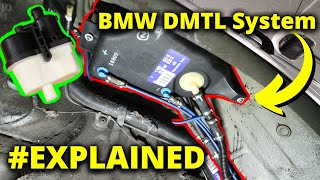
- BMW: Uses a DMTL pump containing a motor and heater. Failures in either internal circuit trigger P2407.
Real Owner Stories
2014 VW Jetta GLI with P2407 & P2450
Check Engine Light on. Needed to pass smog inspection.
What they tried:
- Visual inspection found no obvious wiring damage.
Outcome: Replaced the EVAP Leak Detection Pump (LDP). This resolved both codes and the vehicle passed smog.
Lesson: On VW/Audi models, if the connector is clean, P2407 strongly indicates a failed internal LDP sensor.
BMW E90 3-Series with recurring DMTL codes
Replaced DMTL pump and gas cap, but codes returned immediately.
What they tried:
- Replaced DMTL pump.
- Replaced gas cap.
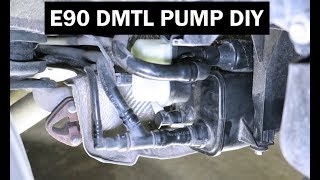
Outcome: Discovered a shorted wire in the harness 6 inches above the DMTL connector. Splicing a new wire permanently fixed the issue.
Lesson: If replacing the pump fails, the problem is in the wiring. Thoroughly inspect the harness in the wheel well.
2018-2021 VW Atlas with P2407 and P0456
Check Engine Light on with P2407 (circuit) and P0456 (small leak).
What they tried:
- Considered a smoke test and LDP replacement.
Outcome: Found VW TSB 01-21-09 stating overly sensitive software causes both codes. A dealer ECM software update fixed the issue without parts.
Lesson: Always check TSBs when multiple codes are present. A software update is often the only fix for modern VW/Audi vehicles.
Car with rodent-damaged wiring
P2407 appeared alongside unrelated electrical problems (lights/wipers failing).
What they tried:
- Checked fuses and bulbs.
Outcome: Dealer found chewed wires in the engine bay harness. Required extensive splicing.
Lesson: If P2407 appears with bizarre electrical faults, suspect rodent damage before replacing EVAP components.
How to Prevent This Code From Triggering
- Apply dielectric grease to the LDP connector (Whenever disconnected) — Seals out moisture and prevents copper corrosion ('green crust') on the pins, the #1 cause of P2407.
- Clean the vehicle's undercarriage (After winter season in salt-belt regions) — Washes away road salt, slowing the degradation of connectors and wire insulation.
- Use rodent deterrents (As needed if parking outdoors) — Capsaicin-infused tape prevents rodents from chewing soy-based wiring insulation.
Frequently Asked Questions
Can a loose gas cap cause code P2407?
No. A loose gas cap causes EVAP leak codes like P0455 or P0457. Code P2407 specifically points to an electrical circuit problem with the leak detection pump.
Is a smoke test useful for diagnosing P2407?
No. A smoke test finds physical leaks in hoses and seals. P2407 is an electrical fault code, meaning the problem is in the wiring, connector, or pump sensor.
What is the most common misdiagnosis for P2407?
The most common misdiagnosis is replacing the gas cap or performing a smoke test. Technicians see 'EVAP' and assume a leak, ignoring that P2407 is strictly an electrical circuit code.
I replaced the pump, but the P2407 code came back. What now?
If the code returns, the issue is in the wiring harness or connector. Re-inspect the connector for hidden corrosion and perform a continuity test on the sense wire. For VW/Audi models, a dealer software update is often the required fix.
How much does it cost to fix P2407?
Professional diagnosis costs $120-$180. Cleaning a connector costs under $150, while replacing the pump at a shop runs $250-$500. A dealer software update usually costs $100-$200.
Can I fix P2407 myself?
Yes, cleaning the connector or replacing the pump are accessible DIY repairs requiring basic hand tools.
Will a weak battery cause P2407?
No. While a failing battery causes random electrical codes, it is not a direct cause of a specific circuit fault like P2407. The code will return after replacing the battery.
Key Takeaways
- P2407 is an electrical circuit fault, not a physical vapor leak; skip the $150 smoke test and do not replace your gas cap.
- Inspect the leak detection pump's electrical connector first; green or white corrosion on the pins causes over 60% of P2407 codes.
- You can safely drive with P2407, but the active Check Engine Light guarantees an automatic failure on state emissions inspections.
- Volkswagen and Audi owners must check for Technical Service Bulletins (TSBs) like 01-21-09 before buying parts, as a $150 dealer software update is often the only fix.
Helpful Videos


The information in this article is provided for general reference and educational purposes only. Vehicle specifications, procedures, and part compatibility can vary by production date, trim level, and region. Always consult your vehicle's factory service manual and verify part numbers before purchasing or performing repairs. Safety-critical components such as airbags, seat belts, and braking systems should be installed by a qualified professional.
- 🎬 Helpful Videos
- What Does P2407 Mean?
- Can I Drive With P2407?
- Common Causes
- Symptoms
- Diagnostic Flowchart
- Common Fixes & Costs
- Used vs. New Parts: Buying Guide
- What Happens If You Wait — Timeline
- Cost of Not Fixing It
- Diagnosis Steps
- When This Code Triggers (Freeze-Frame Conditions)
- Related Codes
- Climate & Environmental Factors
- How to Talk to a Mechanic About This Code
- Where to Take It: Dealer vs Independent vs Chain
- When to Walk Away From the Repair
- What Scan Tool You Need for This Code
- How to Clear the Code After You Fix It
- Will This Fail Emissions / State Inspection?
- Most Commonly Affected Vehicles
- Manufacturer-Specific Notes
- Real Owner Stories
- 2014 VW Jetta GLI with P2407 & P2450
- BMW E90 3-Series with recurring DMTL codes
- 2018-2021 VW Atlas with P2407 and P0456
- Car with rodent-damaged wiring
- How to Prevent This Code From Triggering
- Frequently Asked Questions
- Can a loose gas cap cause code P2407?
- Is a smoke test useful for diagnosing P2407?
- What is the most common misdiagnosis for P2407?
- I replaced the pump, but the P2407 code came back. What now?
- How much does it cost to fix P2407?
- Can I fix P2407 myself?
- Will a weak battery cause P2407?
- Key Takeaways
- 🎟️ Get 5% Off