

P0507 on 2005-2010 Chevrolet Cobalt: High Idle Causes and Fixes
On a 2005-2010 Chevrolet Cobalt, code P0507 is most often caused by a dirty electronic throttle body or a vacuum leak from a bad PCV valve or cracked hose. Cleaning the throttle body and performing an idle relearn procedure is the most common fix. In many cases, the high idle condition begins immediately after cleaning the throttle body because the computer's learned values are no longer accurate.
- Start by checking for simple vacuum leaks from cracked hoses, especially the PCV hose.
- The most likely fix is cleaning the carbon buildup from the electronic throttle body.
- Be prepared to perform an idle relearn procedure after cleaning the throttle body or disconnecting the battery. The idle may not return to normal immediately.
- Do not replace expensive sensors like the MAF or the entire throttle body before checking for vacuum leaks and cleaning the existing throttle body first.
What's Unique About the 2005-2010 Chevrolet Cobalt

The key challenge with this code on the 2005-2010 Cobalt is its electronic "drive-by-wire" throttle. While a dirty throttle body is a very common cause, the act of cleaning it can itself cause a persistent high idle. Manually moving the throttle plate during cleaning can upset the PCM's learned position, which was compensating for the carbon buildup. As a result, an "idle relearn" procedure is often required after cleaning the throttle body or even after disconnecting the battery. This relearn process can sometimes take several days of normal driving to complete on its own.
Symptoms You May Notice
- Check Engine Light is on
- Engine idling higher than normal (e.g., 1,200-2,000 RPM)
- Engine RPM may surge or fluctuate at idle, sometimes dropping to normal after a delay.
- Vehicle may feel like it's pushing forward when stopped
- Slightly increased braking effort needed to hold the vehicle at a stop.
- Increased fuel consumption.
- Replacing the Mass Airflow (MAF) sensor. A bad MAF sensor typically causes other codes and different drivability issues, not just a high idle.
- Looking for an Idle Air Control (IAC) valve. This vehicle does not have one; idle is controlled by the electronic throttle body.
Most Likely Causes

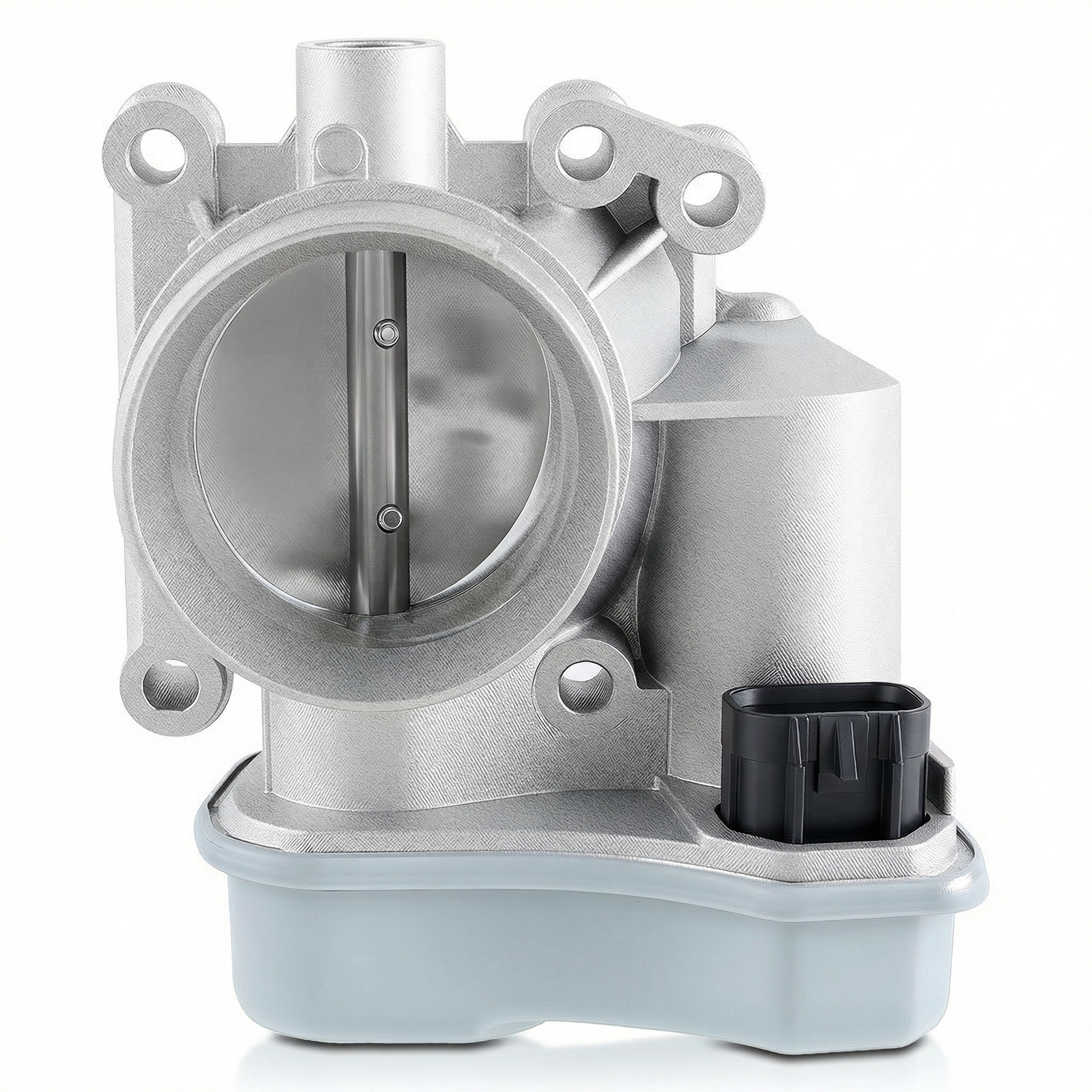
- Dirty Throttle Body 🔴 High Probability The PCV system routes oil vapors and combustion byproducts back into the intake, which can build up as carbon and sludge on the throttle plate and bore over time. This buildup restricts airflow at idle, causing the PCM to learn a new, slightly more open throttle position. When cleaned, this learned position allows too much air, causing a high idle.
How to confirm: Visually inspect the throttle body bore and plate for black, sticky carbon buildup. The plate should be shiny metal, not black. The issue often becomes apparent immediately after cleaning, with the idle jumping to 1500-2000 RPM.
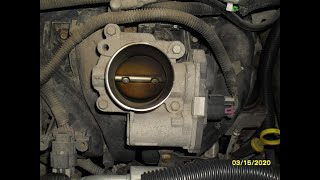
Typical fix: Remove the air intake duct and carefully clean the throttle body bore and plate with a dedicated throttle body cleaner and a soft cloth or brush. 🎬 Watch: How to properly clean your Cobalt's throttle body. An idle relearn procedure is almost always necessary afterward.
Est. part cost: $5-$15 for cleaner - Vacuum Leak 🟡 Medium Probability Rubber and plastic vacuum hoses become brittle and crack with age and heat cycles. The intake manifold gasket can also fail. A vacuum leak allows unmetered air into the engine, which the PCM tries to compensate for, leading to an unstable or high idle.
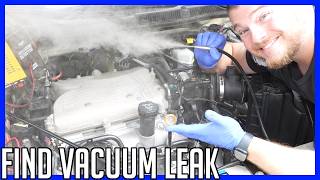
How to confirm: Listen for a distinct hissing sound around the engine bay at idle. You can also carefully spray short bursts of brake cleaner or use an unlit propane torch around vacuum lines and intake gaskets; a change in idle RPM indicates you've found the leak. A professional smoke test is the most definitive method. 🎬 See this easy guide on finding engine vacuum leaks.
Typical fix: Replace the cracked vacuum hose or faulty gasket. Common culprits include the PCV hose, brake booster hose, and intake manifold gasket.
Est. part cost: $10-$100 depending on the hose or gasket - Faulty PCV Valve 🟡 Medium Probability The Positive Crankcase Ventilation (PCV) valve can get stuck open with oil sludge and carbon, creating a constant vacuum leak into the intake manifold.
How to confirm: Remove the PCV valve and shake it. If it doesn't rattle, it's likely stuck. You can also check for strong, continuous suction at the valve when the engine is running. A faulty PCV system is a very common cause of vacuum leaks.
Typical fix: Replace the PCV valve. It's an inexpensive and easy-to-replace maintenance item.
Est. part cost: $10-$25
Rare But Worth Checking
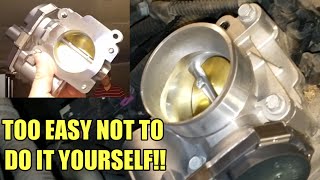
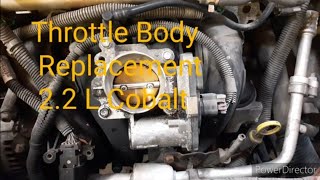
- Failing Throttle Body: While cleaning usually resolves the issue, the electronic motor or position sensor within the throttle body can fail, requiring a complete replacement. This is much less common than it simply being dirty, but can happen if the internal plastic gears are damaged. 🎬 Watch: Step-by-step walkthrough for replacing the throttle body assembly.
- Faulty Manifold Absolute Pressure (MAP) Sensor: A skewed MAP sensor can report incorrect pressure readings to the PCM, leading to improper idle control. This was noted as a possibility in service manual diagnostics and forum discussions.
- EVAP System Leak: A leak in the EVAP system, such as a cracked canister or a faulty purge valve, can sometimes manifest as a vacuum leak that affects idle speed. This would typically be accompanied by other EVAP-related trouble codes.
Diagnosis Steps

- Scan for other codes. Address any other codes first, especially those related to the EVAP system, throttle position, or MAP/MAF sensors.
- Visually inspect the engine bay. Look for any obviously disconnected, cracked, or broken vacuum hoses, particularly around the intake manifold, PCV system, and brake booster.
- Check for vacuum leaks. With the engine running, listen for hissing noises. Carefully spray carb cleaner around the intake manifold gasket, vacuum lines, and the base of the throttle body. If the engine idle changes, you have found a leak. A smoke test is the most reliable method.
- Inspect the PCV system. Remove and inspect the PCV valve and its hoses for blockages or damage. A stuck-open valve is a common cause and should be replaced if it doesn't rattle when shaken.
- Inspect and clean the throttle body. Disconnect the air intake hose and examine the throttle plate for heavy carbon buildup. Clean it thoroughly with throttle body cleaner and a rag. Do not use harsh tools that could scratch the bore. Be aware that cleaning it will likely cause a temporary high idle.
- Perform an idle relearn procedure. After cleaning the throttle body or disconnecting the battery, the idle will likely be high. The PCM needs to relearn the new closed position of the clean throttle plate.
- Idle Relearn (Official Method): Start the engine and let it reach operating temperature. Let the engine idle with the transmission in Drive (for automatics) or neutral (for manuals) for at least 3 minutes. The A/C should be on. Turn the engine off for at least 60 seconds. Restart and let idle for another 3 minutes. The idle should now be stable. A scan tool can also force a relearn.
- Idle Relearn (Real-World Method): Many owners report that simply driving the car for a few days (50-500 miles) will allow the PCM to adapt and the idle will gradually return to normal. For manual transmission cars, some owners have had success 'forcing' the idle down by putting the car in 1st gear with the e-brake on and slipping the clutch to bring RPMs to the target idle speed repeatedly.
- If idle is still high, consider a faulty throttle body assembly or a skewed sensor like the MAP sensor.
Parts You'll Likely Need

- Throttle Body Cleaner
(OEM #ACDelco 10-201)— This is the most common first step, as carbon buildup on the throttle plate is the leading cause of P0507.
Trusted brands: CRC, ACDelco
OEM price range: $10-$15
Aftermarket price range: $5-$10 - PCV Valve
(OEM #12589440)— A stuck PCV valve creates a vacuum leak, which is a frequent cause of high idle. It's a cheap and easy part to replace during diagnosis.
Trusted brands: ACDelco, Dorman
OEM price range: $10-$20
Aftermarket price range: $5-$15 - Electronic Throttle Body Assembly
(OEM #ACDelco 217-3153 (or 217-3150/217-3151 depending on engine/year))— If cleaning the throttle body doesn't work and there are no vacuum leaks, the internal electronics of the throttle body itself may have failed.
Trusted brands: ACDelco, Bosch, Dorman (e.g., 977-000)
OEM price range: $200-$300
Aftermarket price range: $100-$200
Technical Service Bulletins (TSBs) & Recalls
- While no specific TSB number was found directly for P0507 on the Cobalt, the issue of high idle after throttle body service is a well-documented phenomenon across many GM vehicles with electronic throttle control.
Platform-Specific Known Issues
- A high idle is a very common issue after cleaning the throttle body or disconnecting the battery because the PCM's learned idle values are lost or no longer correct. An idle relearn procedure is almost always necessary to resolve this.
- Some owners on forums report that the only solution that worked after cleaning the throttle body was to simply wait and drive the car for several days, allowing the adaptive PCM to relearn the idle trim on its own.
Mechanic-Grade Diagnostic Values
- Throttle Position Sensor 1 (TPS1) Resistance — expected: Approximately 3.5 kΩ between terminals C (5V reference) and G (Low reference) on the throttle body connector.. Failure: An open circuit (infinite resistance) or a reading significantly different from the expected value indicates a faulty sensor.
- Scan Tool Live Data: Desired vs. Actual Idle RPM — expected: Actual RPM should be within approximately 25 RPM of the Desired RPM at stable idle.. Failure: When P0507 is active, the Actual RPM will be consistently 100-200+ RPM higher than the Desired RPM.
Scan Tool Commands That Help
- Tech2 / GDS2: Idle Learn Reset / Reset ECM Learned Values — This function should be used after cleaning or replacing the throttle body to force the ECM to discard old learned idle airflow values and begin a new learning process. This is often required to resolve a high idle that persists after service.
Wiring & Ground Locations
- G105 / G107 — On the lower left front of the transmission case.. These are primary engine grounds. For the 2.2L engine, G105 grounds the ECM, MAF/IAT sensor, and Ignition Control Module. A poor connection here can cause erratic sensor readings and incorrect idle control calculations.
- G103 — On the body behind the driver's side headlight assembly.. A ground cable runs from the G105 stud on the transmission to G103 on the body, making this ground point part of the critical engine control ground path. Corrosion or looseness here can interrupt the ground for the entire engine management system.
- Throttle Body Connector (6-pin L61 2.2L) — The electrical connector on the electronic throttle body.. Correct voltage and ground signals are required here. Pin E (Gray) is the 5-Volt Reference, Pin C (Tan) is the Low Reference, and Pins A (Brown) and B (Yellow) are the Throttle Actuator Control (TAC) motor signals. Checking for 5V at Pin E and good ground at Pin C is a key diagnostic step.
Real Owner Repair Stories
- Reddit user in r/MechanicAdvice (2006 Chevrolet Cobalt LS) — After cleaning the throttle body by hand, the engine began idling at 1500 RPM and would not decrease.
❌ Tried (didn't work) Waiting for the idle to come down on its own.
✅ What actually fixed it The user was advised to perform a full idle relearn procedure: disconnect the battery for 20 minutes, reconnect, turn the key to RUN for 15 seconds, start the car and let it idle for 3 minutes, turn off, restart and idle for another 3 minutes. Driving the car to allow the PCM to adapt was the secondary solution. - CobaltSS.net forum user (2006 Cobalt SS/SC (2.0L)) — P0507 code with high idle (1200 RPM) that would slowly drop to the normal 800 RPM after about 45 seconds. The issue started after cleaning the throttle body.
❌ Tried (didn't work) Cleaning the throttle body again., Removing and cleaning the entire intake manifold., Waiting for the code to clear on its own.
✅ What actually fixed it The user suspected a faulty MAP sensor or PCV valve was the underlying issue, as cleaning all components and checking for leaks did not resolve the fluctuating high idle. The final resolution was not posted, but the diagnostic path pointed away from the throttle body itself toward related sensors.
Documented NHTSA Reports
- An owner of a related GM model reported in NHTSA ODI #11721239 that P0507 appeared alongside several other codes (P0325, P0505, P0700, P1101, P2714) during a failure where the vehicle had delayed engagement between Park and Drive and eventually stopped moving forward on an incline.
- In NHTSA ODI #10593542, a driver noted that the P0507 code appeared in conjunction with a traction control disabled message and a loss of reverse gear.
OEM Part Supersession History
GM 12601387→ACDelco 217-3153— Part number update and consolidation across GM platforms.
Heads up: While ACDelco 217-3153 is listed for many GM V8 applications, it is also cross-referenced for some Cobalt models. However, different engines (2.2L L61, 2.4L LE5, 2.0L LSJ/LNF) used different throttle bodies. Always verify the correct part number by VIN, as physical fit does not guarantee electronic compatibility.
Model Year Variations Within This Range
- 2005-2006 vs 2007-2010: The 2.2L L61 engine was used through 2008, while the 2.2L LAP engine (with VVT) was introduced in 2009. The 2.4L LE5 (VVT) was available from 2006-2008. These engine differences can lead to variations in the engine wiring harness and ECM programming, although the fundamental cause of P0507 (throttle body/vacuum leak) remains consistent. Swapping engines between certain years may require swapping the harness and ECU.
Diagnostic Flowchart
Used vs. New Parts: Buying Guide for This Vehicle
When a used part is the smart pick: A used throttle body assembly from a junkyard can be a cost-effective option, especially if the failure is confirmed to be the internal motor or sensor and not just carbon buildup. Given the high cost of a new OEM unit, a low-mileage used part is a reasonable gamble.
Donor-vehicle mileage cap: roughly under 80000 miles for the part to have meaningful remaining life.
What to inspect on the donor part:
- Check for a relatively clean throttle plate; excessive black buildup suggests a hard life or high mileage.
- Ensure the electrical connector pins are straight and free of corrosion.
- Avoid units from vehicles with obvious signs of front-end collision damage.
- If possible, manually (and gently) move the throttle plate to feel for any binding or grinding, which could indicate damaged internal gears.
OEM-only on this vehicle (don't cheap out):
- While not strictly 'OEM-only', the electronic throttle body is a sensitive component. A new OEM (ACDelco) part is the most reliable, surefire fix if you want to avoid potential compatibility or longevity issues with aftermarket units.
Aftermarket brands forum-validated for this vehicle:
- Bosch (often an OEM supplier)
- ACDelco (OEM)
Brands owners have reported issues with on this vehicle:
- Some owners have reported short lifespans or out-of-the-box failures with certain budget-friendly Dorman throttle position sensor kits (977-000), though others report success. It can be a gamble compared to a full OEM assembly.
Real Owner Stories
Aggregated from forums and TSBs cited above. Mileages and costs reflect what owners reported in those sources.
Chevrolet Cobalt
Symptoms: After cleaning the throttle body, the engine idled high at around 1200 RPM instead of the usual 800. It would sometimes surge to 1600 RPM, drop to 1100, then after a delay, finally settle at 800.
What fixed it: The owner's diagnostic trouble code went away after cleaning and re-sealing everything, but the idle issue persisted. The final confirmed fix was not stated in the report, but the owner was considering replacing the MAP sensor and PCV valve next.
Source hint: The Chevrolet Cobalt SS Forum
Chevrolet Cobalt SS
Symptoms: A high idle of 1500-2000 RPM occurred immediately after cleaning the throttle body and manually moving the throttle plate.
What fixed it: The provided context confirms this is a common scenario that requires an idle relearn procedure, but the specific user's final fix is not detailed in the citation.
Source hint: CobaltSS.net - "High Idle after Cleaning Throttle Body Fix/Solution/Answers"
Related OBD-II Codes
Frequently Asked Questions
I just cleaned the throttle body on my Cobalt and now the engine is idling really high, around 1500-2000 RPM. Did I break it?
What is the idle relearn procedure for a 2005-2010 Chevrolet Cobalt?
My Cobalt has a P0507 code but I haven't touched the throttle body. What else could be causing the high idle?
How can I check for a vacuum leak on my Cobalt at home?
Is this high idle issue after a throttle body cleaning also common on the Pontiac G5 or Chevy HHR?
Helpful Videos
We Have This Part in Stock





The information in this article is provided for general reference and educational purposes only. Vehicle specifications, procedures, and part compatibility can vary by production date, trim level, and region. Always consult your vehicle's factory service manual and verify part numbers before purchasing or performing repairs. Safety-critical components such as airbags, seat belts, and braking systems should be installed by a qualified professional.
- Chevrolet Cobalt:
- 🎬 Helpful Videos
- 🛍️ Shop This Part
- What's Unique About the 2005-2010 Chevrolet Cobalt
- Symptoms You May Notice
- Most Likely Causes
- Rare But Worth Checking
- Diagnosis Steps
- Parts You'll Likely Need
- Technical Service Bulletins (TSBs) & Recalls
- Platform-Specific Known Issues
- Mechanic-Grade Diagnostic Values
- Scan Tool Commands That Help
- Wiring & Ground Locations
- Real Owner Repair Stories
- Documented NHTSA Reports
- OEM Part Supersession History
- Model Year Variations Within This Range
- Diagnostic Flowchart
- Used vs. New Parts: Buying Guide for This Vehicle
- Real Owner Stories
- Chevrolet Cobalt
- Chevrolet Cobalt SS
- Related OBD-II Codes
- Frequently Asked Questions
- 🎟️ Get 5% Off