

P0506 on 2015-2020 Cadillac Escalade 6.2L: Low Idle Causes and Fixes
On a 2015-2020 Escalade, P0506 is most often a dirty throttle body causing a low idle. Cleaning it costs about $15. However, if paired with code P0106, it strongly points to a more serious, known issue: a broken valve spring, which is a professional repair costing $800-$1,500. This is a well-documented failure on the L86 engine, confirmed by multiple GM Technical Service Bulletins (TSBs).
- For code P0506 alone, your first and most likely fix is to clean the electronic throttle body.
- If you also have codes P0106 or P0300, stop and have the vehicle inspected for a broken valve spring. This is a known, serious issue on this engine.
- Do not replace the MAP sensor if you have code P0106; it is almost certainly a symptom, not the cause.
- The engine may stall in traffic, so address this code promptly for safety.
What's Unique About the 2015-2020 Cadillac Escalade
While a dirty throttle body is a common cause for P0506 on many vehicles, the 2015-2020 Escalade with the 6.2L L86 engine has a well-documented, more severe potential issue. GM has issued Technical Service Bulletins (TSBs), specifically PIP5423B, advising that P0506, especially when seen with code P0106, is a strong indicator of a broken valve spring. This elevates the code from a simple maintenance issue to a potential internal engine problem requiring immediate and careful diagnosis.
Symptoms You May Notice
- Engine idle speed is lower than normal (e.g., below 600 RPM)
- Rough or vibrating idle
- Engine stalls when coming to a stop or at low speeds.
- Audible rhythmic ticking or tapping noise from the top of the engine (if a valve spring is broken).
- Check Engine Light is on
- Engine may feel hesitant or sluggish during light acceleration.
- Replacing the MAP (Manifold Absolute Pressure) sensor when code P0106 is present. The MAP sensor is usually not faulty; it is accurately reporting the erratic manifold pressure caused by a broken valve spring.
Most Likely Causes
- Dirty or Carbon-Fouled Throttle Body 🔴 High Probability The PCV (Positive Crankcase Ventilation) system routes oil vapors and combustion byproducts back into the intake. This can mix with dust and form carbon deposits around the throttle plate, restricting the small amount of air needed for a stable idle. This is a common issue on direct-injection engines like the L86.
How to confirm: Remove the air intake tube connected to the throttle body and visually inspect the throttle bore and plate for a black, sticky layer of carbon buildup.
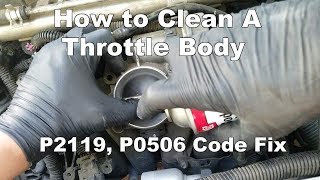
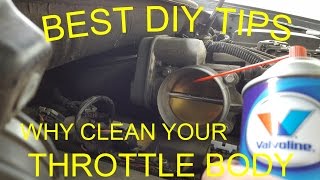
Typical fix: Thoroughly clean the throttle body using a dedicated throttle body cleaner and a soft cloth or brush. 🎬 Watch: How to clean your throttle body to fix a low idle. A throttle relearn procedure is required afterward. This can sometimes be achieved by disconnecting the battery for 10-15 minutes, then letting the vehicle idle for about 10 minutes to allow the ECU to relearn idle trim.
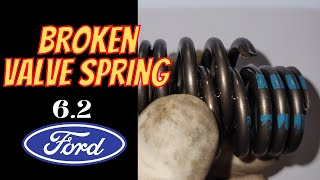
Est. part cost: $10-$25 - Broken Valve Spring 🟡 Medium Probability The 6.2L L86 engine family has a documented history of valve spring failures. GM has released multiple TSBs (e.g., PIP5423B, PIP5752) acknowledging this issue. The problem has also been the subject of class-action lawsuits regarding valvetrain reliability.
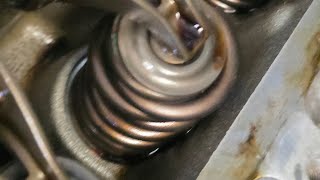
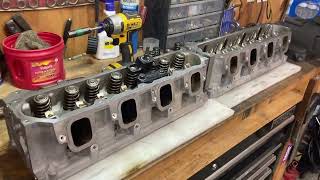
How to confirm: This is the most likely cause if codes P0106 (MAP Sensor Performance) and/or P0300 (Random Misfire) are also present. A definitive diagnosis involves listening for a top-end ticking noise and removing the valve covers for visual inspection of the springs. 🎬 See how to diagnose P0106 and P0300 codes on this engine. A cylinder leak-down test on the affected cylinder can also confirm a valve sealing issue.
Typical fix: Requires professional replacement of the broken valve spring. Per TSBs, GM sometimes recommends replacing all springs on the affected bank or both banks. The original spring (p/n 12691120) was updated to a more durable part (p/n 12728729).
Est. part cost: $10-$15 per spring, plus gaskets 🎬 Watch: Step-by-step guide to replacing a broken 6.2L valve spring.
- Vacuum Leak ⚪ Low Probability Hoses (like PCV lines), intake manifold gaskets, and other seals can degrade over time, creating a source of unmetered air that disrupts the engine's air-fuel mixture and can affect idle stability. The PCV tube connection at the intake manifold is a common point of failure. The intake manifold itself can also develop hairline cracks.
How to confirm: A visual inspection may reveal cracked or disconnected hoses. The most effective method is to have a professional perform a smoke test, which forces smoke into the intake system to reveal the exact location of any leaks.
Typical fix: Replace the leaking hose, gasket, or seal.
Est. part cost: $20-$200
Rare But Worth Checking
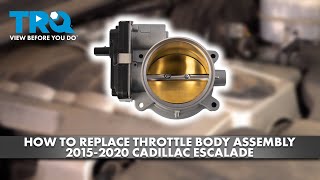
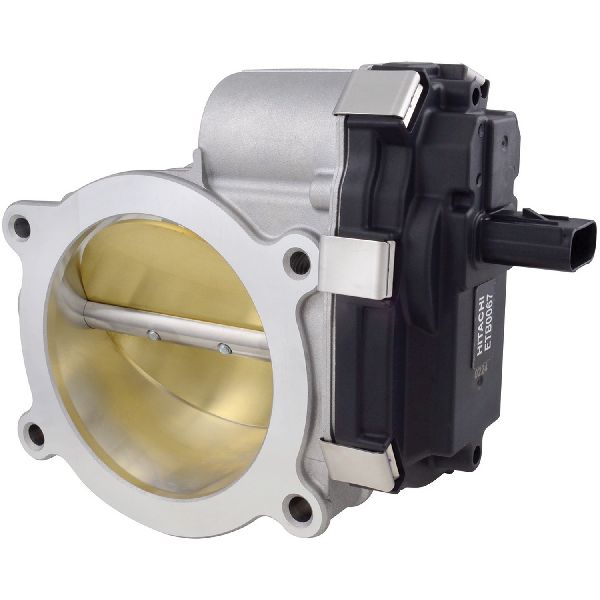
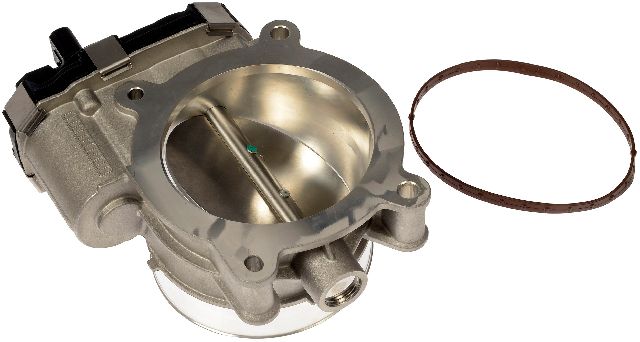
- Failed Electronic Throttle Body: If cleaning the throttle body doesn't resolve the issue and no other causes are found, the internal electronic motor or position sensor may have failed. This requires replacing the entire assembly (GM Part #12678223, superseded by #12740727).
Diagnosis Steps
- Scan for all stored DTCs. If P0106 or P0300 are present with P0506, immediately suspect a broken valve spring as per GM TSB PIP5423B.
- If P0506 is the only code, start with the simplest fix: remove the air intake duct and inspect the throttle body for carbon buildup.
- If dirty, clean the throttle body thoroughly with a dedicated cleaner and a soft cloth. Do not use abrasive materials.
- After cleaning, perform a throttle relearn procedure. This can be done by disconnecting the negative battery cable for 10-15 minutes, reconnecting, and letting the vehicle idle for at least 10 minutes to allow the ECM to relearn idle values.
- If the problem persists or if P0106/P0300 were present, listen for a rhythmic ticking noise from the valve cover areas. This is a classic sign of a broken valve spring.
- If a tick is heard or codes point to a spring, the vehicle should be taken to a professional for confirmation. This involves removing the valve covers to inspect the springs directly.
- If no other codes are present and cleaning the throttle body did not work, check for vacuum leaks using a smoke machine. Pay close attention to the PCV hoses and intake manifold gaskets.
Parts You'll Likely Need
- Throttle Body Cleaner — This is the most common and inexpensive first step to fix a low idle caused by carbon buildup.
Trusted brands: ACDelco, CRC, Gumout
OEM price range: $15-$25
Aftermarket price range: $10-$20 - Valve Spring
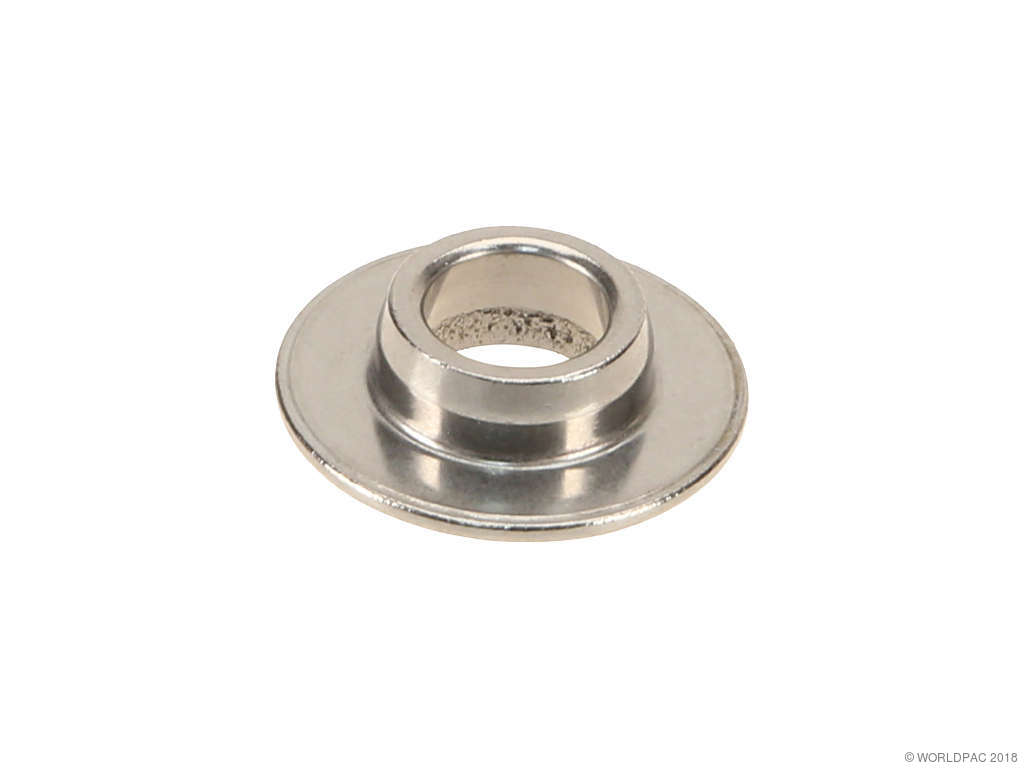
(OEM #12728729)— A known failure point on the L86 engine that directly causes codes P0506 and P0106, as per TSB #PIP5423B. The original part (12691120) was superseded by this more durable version.
Trusted brands: ACDelco (GM Genuine)
OEM price range: $7-$15 per spring
Aftermarket price range: $5-$10 per spring - Electronic Throttle Body Assembly
(OEM #12678223)— If cleaning does not resolve the issue and the internal electronics have failed, the entire assembly must be replaced. This part has been superseded by GM part #12740727.
Trusted brands: ACDelco, Bosch, Hitachi
OEM price range: $250-$400
Aftermarket price range: $150-$250
Related Codes That Often Appear With This One
- P0106 — Stands for 'Manifold Absolute Pressure (MAP) Sensor Performance'. GM TSB #PIP5423B explicitly states that P0106 and P0506 together strongly suggest a broken valve spring. The broken spring allows exhaust to push back into the intake, causing erratic pressure readings that the MAP sensor correctly reports as a fault.
- P0300 — Stands for 'Random/Multiple Cylinder Misfire Detected'. A broken valve spring prevents the valve from seating properly, causing a loss of compression and a misfire in that cylinder. This code is a common companion to P0506 when a spring fails.
Technical Service Bulletins (TSBs) & Recalls
- PIP5423B: Advises technicians to inspect for a broken valve spring when DTCs P0106 and P0506 are present on 2015-2019 models. Explicitly states this as the likely cause.
- PIP5752 (and its revisions): A related TSB that also points to a possible valve spring concern when P0106, P0300, and P0506 are present, affecting 2020-2021 models.
Platform-Specific Known Issues
- A widely documented issue of broken valve springs on the 6.2L L86 engine is covered by GM Technical Service Bulletin #PIP5423B and #PIP5752. This is the primary concern if P0506 is accompanied by P0106 or P0300.
- The valvetrain issues on this engine family (including lifters and springs) have been the subject of class-action lawsuits against GM.
Mechanic-Grade Diagnostic Values
- Manifold Absolute Pressure (MAP) Sensor Voltage at Idle — expected: 0.8V to 1.2V at normal operating temperature and idle speed (approx. 680 RPM) with no vacuum leaks. A stock engine should show around 30 kPa, which corresponds to high vacuum.. Failure: A voltage significantly lower or higher than the 0.8V-1.2V range at idle can indicate a sensor fault, a major vacuum leak, or the erratic pressure caused by a broken valve spring.
- Manifold Absolute Pressure (MAP) Sensor Voltage, Key-On-Engine-Off (KOEO) — expected: Approximately 3.8V to 5.5V, depending on altitude. This reading reflects atmospheric pressure.. Failure: A reading significantly outside this range with the key on and engine off suggests a faulty MAP sensor or a wiring issue.
Scan Tool Commands That Help
- GM GDS2: Idle Speed Control — After cleaning or replacing the throttle body, a technician can use this function to command the ECM to perform an idle learn procedure, which is more robust than the battery-disconnect method. It can also be used to command a specific idle RPM to test the throttle body's response.
- GM GDS2: Engine Output Controls — This function within the GDS2 software allows a technician to perform various bidirectional tests, such as commanding specific throttle positions to verify the electronic throttle body motor and sensor are responding correctly, helping to isolate a faulty throttle body from other potential causes.
Wiring & Ground Locations
- G102 / G104 — Located on the left rear of the engine block/cylinder head.. This is a primary engine ground point. A loose or corroded connection here can cause erratic behavior from multiple engine sensors, including the MAP and throttle position sensors, potentially mimicking symptoms of P0506 or its associated codes.
- G103 — Located on the right front of the passenger side cylinder head.. This ground serves various engine components. Ensuring it is clean and tight is a critical step in ruling out electrical issues before replacing expensive parts like the ECM or throttle body.
- ECM/TCM Ground — G101, located at the front of the engine on the lower block, serves as a ground for the Engine Control Module (ECM) and Transmission Control Module (TCM).. A poor ground at G101 can directly impact the ECM's ability to accurately read sensor data and control the electronic throttle, leading to idle control faults.
Real Owner Repair Stories
- gm-trucks.com forum member (2016 Chevrolet Silverado 6.2L L86) — Violent shaking, flashing check engine light, limp mode, codes P0106 and P0300 present.
❌ Tried (didn't work) The user did not attempt repairs and immediately had the vehicle towed.
✅ What actually fixed it The dealership diagnosed and replaced a broken pushrod on cylinder #4. This indicates a valvetrain failure similar in nature and symptom to a broken valve spring.
"I Checked Everything" — The Actual Cause
- In cases where a smoke test reveals no vacuum leaks and cleaning the throttle body provides no fix, the root cause is almost certainly the internal mechanical failure of a valve spring. The TSBs from GM exist because the symptoms (erratic manifold pressure, low idle) perfectly mimic a vacuum leak, but the cause is mechanical, not a failed seal.
OEM Part Supersession History
12678223→12740727— Standard part update and consolidation by GM.
Heads up: Part #12740727 is a direct replacement for #12678223 and several other older throttle body part numbers for Gen V V8 engines. No known incompatibilities for this application.12691120→12728729— The original spring design was prone to failure. The updated part is more durable.
Heads up: The new part is a direct, improved replacement. It is recommended to replace all springs, not just the failed one, with the updated part number.
Model Year Variations Within This Range
- 2015-2017 vs 2018-2020: For the 2015 model year, the Escalade initially used an 8-speed (8L90) automatic transmission. By MY2018, this was replaced with a 10-speed automatic transmission. While this doesn't directly change the cause of P0506, the ECM software and idle strategies may differ slightly between these transmission pairings.
Diagnostic Flowchart
Other Known Issues on This Vehicle
Issues unrelated to this code that are worth knowing about as an owner of this generation:
- 8L90 Transmission Torque Converter Shudder 🟠 Medium — Very common, especially on 2015-2018 models. Can occur at low mileage. (Ref: Multiple TSBs including 15389 and PIP5337G. The fix often involves a complete fluid flush with an updated fluid type or torque converter replacement.)
- AFM/DFM Lifter Failure 🔴 High — Common across the entire Gen V V8 lineup, including the L86. Can occur at any mileage, leading to misfires (P0300), ticking noises, and potential camshaft damage. (Ref: Multiple TSBs, including 15-06-01-002H, address diagnosis and repair. Subject of class-action lawsuits.)
- CUE Infotainment Screen Delamination/Failure 🟡 Low — Extremely common. The screen develops a 'spiderweb' crack appearance and becomes unresponsive to touch. Typically occurs after 3-5 years. (Ref: No recall, but a well-known issue with a class-action lawsuit filed. Repair involves replacing the screen, often with an improved gel-free aftermarket unit.)
- Air Suspension Compressor Failure / Leaks 🟠 Medium — Common issue where the air compressor runs excessively due to leaks in the air shocks or lines, eventually leading to compressor burnout.
- Cracked Radiator 🟠 Medium — Some owners report cracks developing in the plastic end tanks of the radiator, leading to coolant leaks.
Used vs. New Parts: Buying Guide for This Vehicle
When a used part is the smart pick: A used electronic throttle body from a low-mileage donor vehicle can be a cost-effective option if the original has failed electronically. Given the high cost of a new OEM unit, a used part from a reputable salvage yard with a warranty is a reasonable choice.
Donor-vehicle mileage cap: roughly under 50000 miles for the part to have meaningful remaining life.
What to inspect on the donor part:
- Check for a clean throttle plate with minimal carbon buildup, suggesting good engine health.
- Ensure the electrical connector pins are straight and free of corrosion.
- Verify the part number matches or is a compatible interchange for your vehicle.
- Avoid parts from vehicles that show signs of a major engine fire or flood damage.
OEM-only on this vehicle (don't cheap out):
- Valve Springs: Due to the known defect with the original parts, it is critical to only use new, updated OEM valve springs (p/n 12728729) for this repair. Using used springs from a salvage yard is extremely risky as they may be from the same defective batch or have significant fatigue.
- Intake Manifold Gaskets: These are single-use seals and are inexpensive. Always use new gaskets when the intake manifold is removed.
Aftermarket brands forum-validated for this vehicle:
- Throttle Body: Bosch and Hitachi are reputable OEM suppliers and offer quality aftermarket replacements.
- Valve Springs: While OEM (ACDelco) is strongly recommended, performance brands like Texas Speed & Performance offer dual-spring kits for those looking to upgrade during the repair.
Brands owners have reported issues with on this vehicle:
- Avoid unbranded, 'white-box' electronic throttle bodies and valve springs from online marketplaces. These often lack proper quality control and can fail prematurely, leading to repeated repairs.
Real Owner Stories
Aggregated from forums and TSBs cited above. Mileages and costs reflect what owners reported in those sources.
2015 Chevrolet Silverado 1500 6.2L L86
Symptoms: The vehicle exhibited P0506, P0106, and P0300 codes accompanied by a rough idle and stalling. Cleaning the throttle body and replacing the MAP sensor did not resolve the issue.
What fixed it: A dealer diagnosed and replaced a broken valve spring on cylinder #7.
Source hint: gm-trucks.com forum citation
2015-2020 Cadillac Escalade 6.2L L86
Symptoms: A technician observed a melted intake runner on the engine.
What fixed it: The damage was caused by a broken exhaust valve spring which required repair to prevent further engine damage.
Source hint: reddit.com/r/Justrolledintotheshop
2015-2020 GMC Yukon / Yukon XL 6.2L L86
Symptoms: Owners reported a combination of P0506, P0106, and P0300 codes.
What fixed it: Dealership-confirmed replacement of broken valve springs.
Source hint: tahoeyukonforum.com
Related OBD-II Codes
Frequently Asked Questions
My 2016 Escalade has P0506 and P0106; does GM TSB PIP5423B apply to my vehicle?
I have a 2020 Escalade with a low idle and P0506. Is there a specific bulletin for newer models?
If I need to replace a broken valve spring on my L86 engine, what is the updated part number?
Can I perform a throttle relearn on my Escalade without a scan tool after cleaning the carbon buildup?
Why is the L86 engine in my Escalade prone to carbon buildup in the throttle body?
Is the valvetrain issue on the 6.2L V8 limited to just the valve springs?
Helpful Videos
Used OEM Parts in Stock

New Aftermarket Parts Available


The information in this article is provided for general reference and educational purposes only. Vehicle specifications, procedures, and part compatibility can vary by production date, trim level, and region. Always consult your vehicle's factory service manual and verify part numbers before purchasing or performing repairs. Safety-critical components such as airbags, seat belts, and braking systems should be installed by a qualified professional.
- Cadillac Escalade:
- 🎬 Helpful Videos
- 🛍️ Shop This Part
- What's Unique About the 2015-2020 Cadillac Escalade
- Symptoms You May Notice
- Most Likely Causes
- Rare But Worth Checking
- Diagnosis Steps
- Parts You'll Likely Need
- Related Codes That Often Appear With This One
- Technical Service Bulletins (TSBs) & Recalls
- Platform-Specific Known Issues
- Mechanic-Grade Diagnostic Values
- Scan Tool Commands That Help
- Wiring & Ground Locations
- Real Owner Repair Stories
- "I Checked Everything" — The Actual Cause
- OEM Part Supersession History
- Model Year Variations Within This Range
- Diagnostic Flowchart
- Other Known Issues on This Vehicle
- Used vs. New Parts: Buying Guide for This Vehicle
- Real Owner Stories
- 2015 Chevrolet Silverado 1500 6.2L L86
- 2015-2020 Cadillac Escalade 6.2L L86
- 2015-2020 GMC Yukon / Yukon XL 6.2L L86
- Related OBD-II Codes
- Frequently Asked Questions
- 🎟️ Get 5% Off