

P0502 on 2011-2015 Honda Civic: Vehicle Speed Sensor Circuit Low Causes and Fixes
This code means the engine computer is getting a low or no signal from the Vehicle Speed Sensor (VSS). The most common fix is replacing the VSS on the transmission, which costs about $40-$100 for the part and is a DIY-friendly job. On CVT models, erratic shifting is a primary symptom.
- P0502 on a 2011-2015 Civic points to a problem with the Vehicle Speed Sensor (VSS) on the transmission.
- Symptoms will include a non-working speedometer, no cruise control, and possible erratic shifting.
- The most likely fix is replacing the VSS, a relatively inexpensive part.
- The job is DIY-friendly, but requires removing the air filter housing to access the sensor.
- Ensure you buy the correct sensor, as the part is different for the 2011 model (28810-RPC-013) versus 2012-2015 models (28810-R90-003).
What's Unique About the 2011-2015 Honda Civic
On the 2011-2015 Honda Civic, the P0502 code almost always points to the main Vehicle Speed Sensor located on the transmission, not the individual ABS wheel speed sensors. The key challenge for this platform is that the sensor's location and part number differ between the 8th generation (2011 model year) and the 9th generation (2012-2015 model years), requiring careful part identification before purchase. A single failure of this sensor can cause a cascade of warning lights on the dash, including ABS, VSA, and power steering, as multiple systems rely on this speed data.
Generation note: This range covers two Civic generations. The 2011 model is the final year of the 8th generation, while 2012-2015 models belong to the 9th generation. The Vehicle Speed Sensor is in a slightly different location on the transmission and uses a different part number for each generation. Part number 28810-RPC-013 is for the 8th gen, while 28810-R90-003 is for the 9th gen.
Symptoms You May Notice
- Check Engine Light is on
- Speedometer reads 0 MPH or behaves erratically.
- Cruise control will not engage.
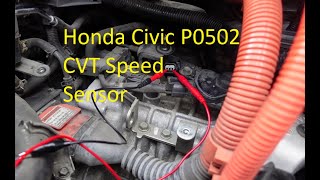
- Automatic or CVT transmission shifts harshly, late, or unpredictably. 🎬 Watch how to diagnose a P0502 CVT speed sensor circuit code
- ABS or Vehicle Stability Assist (VSA) warning light may be illuminated.
- Power Steering (EPS) warning light may illuminate.
- Odometer may not accumulate mileage.
- Replacing an ABS wheel speed sensor. While wheel speed sensors also measure speed, the P0502 code specifically refers to the primary VSS 'A' circuit, which on the Civic is the sensor on the transmission. Other codes (like C-codes) would be present if a wheel speed sensor were the issue.
Most Likely Causes
- Failed Vehicle Speed Sensor (VSS) 🔴 High Probability The sensor is an electronic component exposed to constant heat and vibration on the transmission housing, leading to internal failure of the sensor element over time. It is the most common point of failure for this code on Civics.
How to confirm: Use a scan tool with live data capability to monitor 'Vehicle Speed'. If it remains at 0 MPH while driving, the sensor or its circuit is faulty. If the circuit tests good (see diagnosis steps), the sensor is the cause. A failing sensor may output a low AC voltage (e.g., under 3V AC at highway speeds) when it should be higher (e.g., over 5-6V AC).
Typical fix: Replace the Vehicle Speed Sensor on the transmission.
Est. part cost: $40-$100 - Damaged Wiring or Connector 🟡 Medium Probability The wiring harness to the transmission can be damaged by road debris, improper service, or degradation from heat and oil exposure. The connector pins can also corrode from moisture intrusion.
How to confirm: Visually inspect the wiring harness and connector leading to the VSS for any signs of fraying, corrosion, or loose pins. Perform a continuity and voltage check on the power, ground, and signal wires using a multimeter. Wiggling the harness while testing can help identify intermittent breaks.
Typical fix: Repair the damaged section of the wire or replace the connector pigtail.
Est. part cost: $10-$30
Rare But Worth Checking
- Faulty Instrument Cluster: On some Honda models, the VSS signal passes through the instrument cluster before going to the PCM. A failure inside the cluster can interrupt this signal. This is uncommon but possible if a new VSS and good wiring do not solve the issue.
- Faulty Powertrain Control Module (PCM): This is the least likely cause. The PCM's internal circuit for processing the speed signal can fail, but all other possibilities should be exhausted before condemning the PCM.
- Metal Debris on Sensor: The VSS is often magnetic. An accumulation of metallic debris from normal transmission wear can build up on the sensor tip, interfering with its ability to read the reluctor wheel. This is more common on higher-mileage vehicles. Cleaning the sensor may be a temporary fix, but significant debris could indicate a larger transmission issue.
Diagnosis Steps
- Read the codes: Use an OBD-II scanner to confirm P0502 is the primary code. Note any other codes, but be aware that VSS failure can trigger other system lights (ABS, VSA) without separate codes.
- Monitor Live Data: Use a scan tool to view the live data stream for 'Vehicle Speed'. Drive the vehicle slowly (or lift the drive wheels and run in gear) to see if the reading changes from 0 MPH. If it stays at 0, proceed with diagnosis.
- Visual Inspection: Locate the VSS on the transmission. You will likely need to remove the air filter box for access. Inspect the sensor's connector and wiring for obvious damage, corrosion, or loose connections. The sensor is held in by a single 10mm bolt.
- Test the Circuit: Disconnect the VSS connector (it's a 3-pin connector). With the key in the 'ON' position, use a multimeter to check for reference voltage (typically 5V) between pin 1 and pin 2 (ground). Schematics are recommended for pin identification.
- Check the Signal Wire: If power and ground are present, check the signal wire (often the middle pin) for a short to ground. You can also check for continuity between the signal pin at the sensor connector and the corresponding pin at the PCM.
- Replace the VSS: If the wiring, power, and ground are all confirmed to be good, the Vehicle Speed Sensor itself is faulty and should be replaced. Ensure the O-ring is lubricated and properly seated.
- Final Test: After replacing the sensor, clear the code and take the vehicle for a test drive to ensure the speedometer works, the transmission shifts smoothly, and the code does not return.
Parts You'll Likely Need
- Vehicle Speed Sensor (VSS)
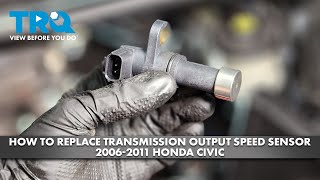
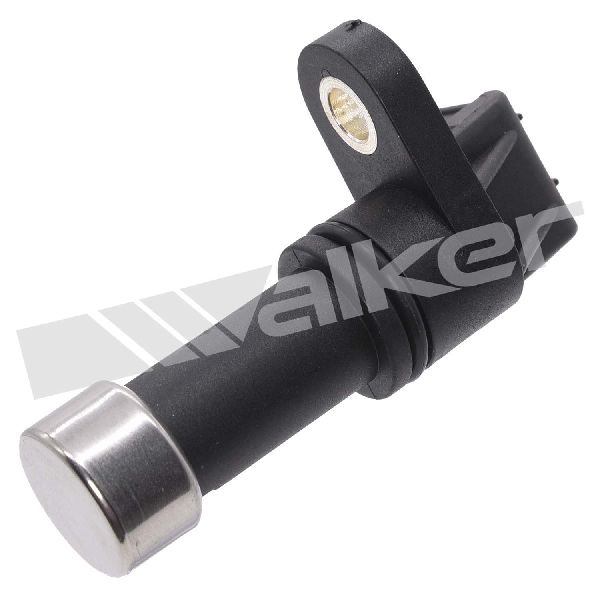
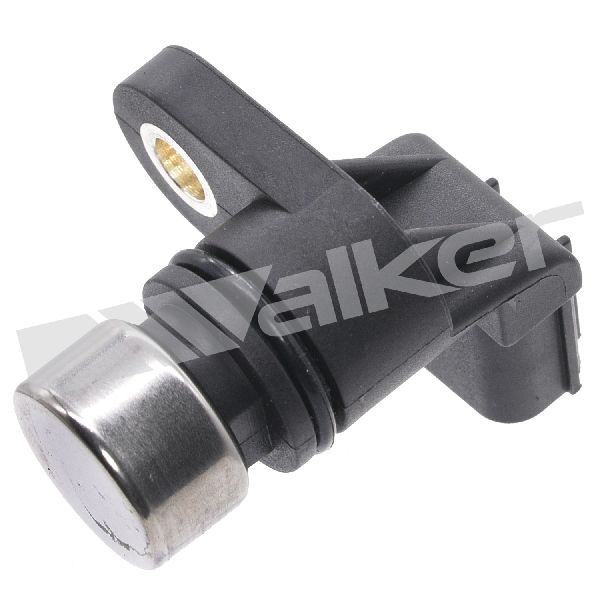
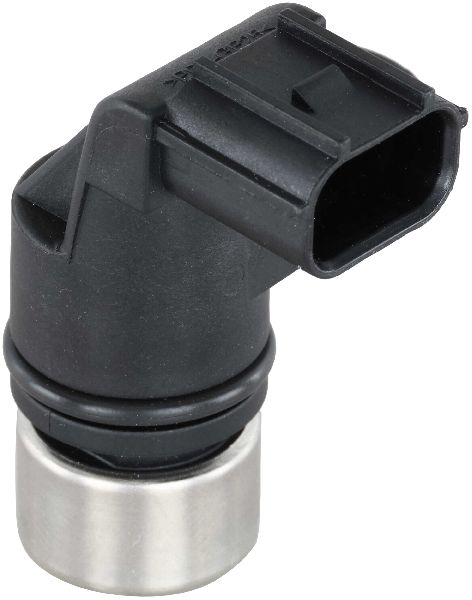
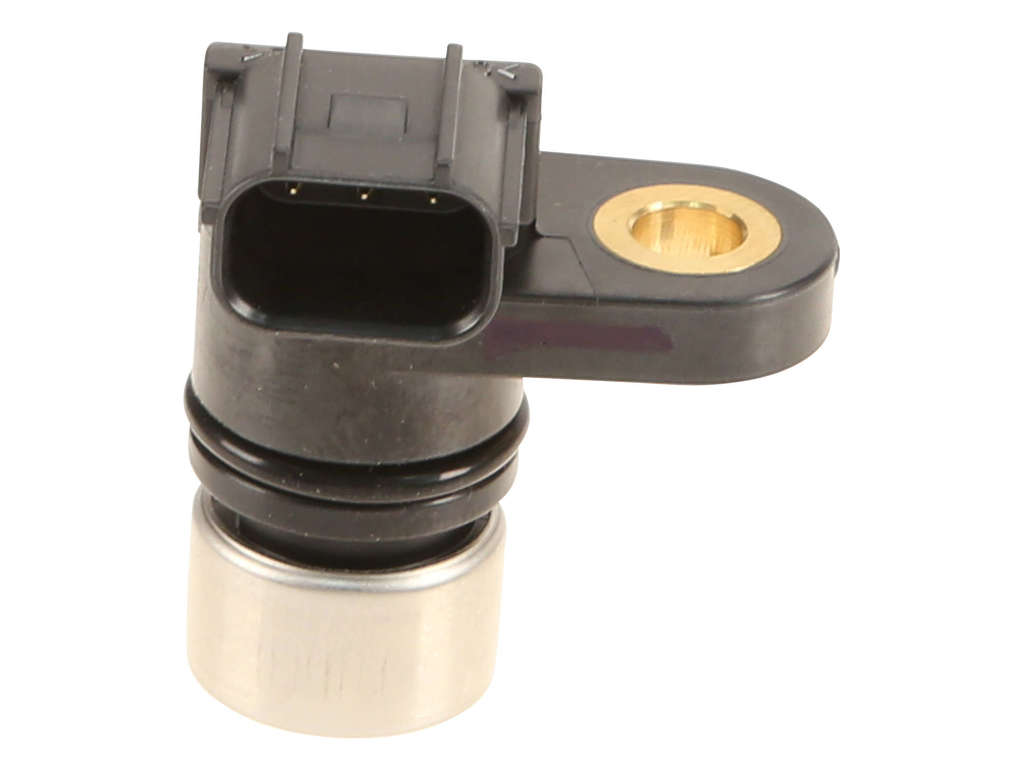
(OEM #28810-RPC-013 (8th Gen, 2011) 🎬 Watch this step-by-step guide to replacing the 8th gen speed sensor, 28810-R90-003 (9th Gen, 2012-2015, check VIN))— This sensor is the most common failure point for the P0502 code. It is an electronic part that wears out over time. The 2011 model (8th gen) uses part 28810-RPC-013, which supersedes 28810-RPC-003. The 2012-2015 models (9th gen) typically use 28810-R90-003, which is superseded by 28810-R90-013.
Trusted brands: Honda (OEM), NTK, Denso, Standard Motor Products (SMP)
OEM price range: $80-$120
Aftermarket price range: $40-$80
Platform-Specific Known Issues
- Intermittent Failure After Idling: A user on Honda-Tech.com with a 2014 Civic EX (CVT) at 160,000 miles reported an intermittent P0502 code where the speedometer would drop to 0 after idling for a few minutes (e.g., at a long light or in a drive-thru). The issue persisted even after replacing the VSS and ABS sensors, with the shop suspecting a faulty ABS modulator as the next step. This highlights a potentially complex diagnostic path if a simple VSS replacement doesn't work.
- Cascade of Warning Lights on Hybrid Model: A 2013 Civic Hybrid owner documented on YouTube how a failing VSS triggered a P0502 code and caused the entire dashboard to 'lose its mind'. Warning lights for the restraint system, ABS, forward collision warning, and hydro-boost all illuminated due to the single bad speed signal. Jiggling the connector provided a temporary fix, but replacing the sensor was the ultimate solution. 🎬 See how a bad VSS causes severe dash errors on Civic Hybrids
Mechanic-Grade Diagnostic Values
- VSS Signal Wire (to PCM) Frequency at 60 MPH — expected: ~67 Hz. Failure: No frequency or a significantly lower/erratic frequency indicates a failing sensor or circuit issue.
- VSS Power Supply Wire Voltage (at sensor connector) — expected: Approximately 5V with Key On, Engine Off. Failure: 0V or significantly lower voltage points to a wiring or PCM power supply issue.
- VSS Ground Wire Resistance (at sensor connector to chassis ground) — expected: Near 0 Ohms (good continuity). Failure: High or infinite resistance (open loop) indicates a bad ground connection, often at G101.
Scan Tool Commands That Help
- Honda Diagnostic System (HDS): Live Data - Vehicle Speed — Use this to monitor the vehicle speed as seen by the PCM during a test drive. If the HDS shows 0 MPH while the vehicle is moving, it confirms the PCM is not receiving a valid signal from the VSS or its circuit.
- Honda Diagnostic System (HDS): Clear DTCs — Used after the repair is complete to erase the P0502 code from the PCM's memory. A test drive is required afterward to confirm the code does not return.
Wiring & Ground Locations
- G101 — Bolted to the thermostat housing on the engine block.. This is a primary ground point for the engine and PCM. A loose or corroded G101 can cause an unstable ground reference for multiple sensors, including the VSS, leading to erratic signals and codes like P0502.
- VSS 3-Pin Connector — On top of the transmission housing, plugged directly into the Vehicle Speed Sensor.. This is the most common point for visual inspection and electrical testing. The pins for power, ground, and signal must be clean and have a secure connection. Wiggling this connector while monitoring live data can help identify intermittent connection problems.
Real Owner Repair Stories
- YouTube Commenter (2012 Honda Civic) — P0502 code, speedometer not working, erratic shifting.
❌ Tried (didn't work) Replaced the Vehicle Speed Sensor (VSS) twice with aftermarket parts., Replaced the VSS with an OEM part.
✅ What actually fixed it The ground wire in the VSS pigtail connector was corroded and broken internally. The owner cut back the insulation, found the break, and soldered the wire back together, which resolved all symptoms.
OEM Part Supersession History
28810-R90-003→28810-R90-013— Standard part revision by Honda for improvement or change in supplier.
Heads up: The parts are interchangeable for the 9th generation (2012-2015) Civics.
Model Year Variations Within This Range
- 2011: Belongs to the 8th generation. Uses VSS part number 28810-RPC-013. The sensor location and transmission design are different from the 2012-2015 models.
- 2012-2015: Belongs to the 9th generation. Uses VSS part number 28810-R90-003 (or its supersession 28810-R90-013). The transmission is typically a CVT, and the sensor is located accordingly.
Diagnostic Flowchart
Other Known Issues on This Vehicle
Issues unrelated to this code that are worth knowing about as an owner of this generation:
- Peeling/Cracking Paint 🟠 Medium — Widespread, especially on dark colors (black, blue, gray). Can start after 3-5 years. (Ref: Honda Service Bulletin 14-034 extended the paint warranty to 7 years/unlimited miles for certain 2006-2013 models, but many owners report issues outside the warranty window.)
- Failing A/C Compressor or Clutch 🟠 Medium — Common failure around 70,000-120,000 miles. Symptoms include no cold air and noise from the compressor. (Ref: Honda extended the warranty on the A/C compressor shaft seal to 10 years for some later models due to leaks, but full compressor failure is a common out-of-pocket repair.)
- Excessive Oil Consumption / Piston Ring Issues (R18 Engine) 🔴 High — Affects some 2008-2013 models with the R18 engine. Can lead to spark plug fouling and misfire codes (P0301-P0304). (Ref: Honda settled a class-action lawsuit and issued TSBs (e.g., 13-082) extending the powertrain warranty to 8 years/unlimited miles for this specific issue.)
- Cracked Engine Block (2006-2009 models) 🔴 High — Primarily affected early 8th generation Civics (pre-2011), but worth noting for the generation's history. Can cause coolant leaks and overheating. (Ref: Honda had a warranty extension for this issue, but it has long since expired.)
- Failing Engine Mounts 🟡 Low — The passenger-side hydraulic engine mount is prone to leaking and collapsing, causing excessive vibration at idle and in reverse.
Used vs. New Parts: Buying Guide for This Vehicle
When a used part is the smart pick: A used Vehicle Speed Sensor is generally not recommended. It is a relatively inexpensive electronic part that fails due to age and heat cycles. The labor to replace it is low, but not zero, so installing a used part with an unknown lifespan is a poor gamble. You are better off buying a new aftermarket or OEM part.
Donor-vehicle mileage cap: roughly under 50000 miles for the part to have meaningful remaining life.
What to inspect on the donor part:
- If forced to buy used, inspect the connector for any signs of corrosion or cracked plastic.
- Ensure the O-ring is present and not flattened or brittle.
- Avoid sensors from vehicles with obvious signs of transmission leaks or damage.
OEM-only on this vehicle (don't cheap out):
- While not strictly 'OEM-only', many forum users report higher success rates and longevity with OEM (Honda) or OEM-supplier (Denso, NTK) sensors compared to generic, no-name aftermarket parts. Given the low cost, OEM is a smart choice.
Aftermarket brands forum-validated for this vehicle:
- Denso
- NTK
- Standard Motor Products (SMP)
Brands owners have reported issues with on this vehicle:
- Unbranded, 'white-box' parts from online marketplaces have a higher reported failure rate.
Real Owner Stories
Aggregated from forums and TSBs cited above. Mileages and costs reflect what owners reported in those sources.
2014 Civic EX CVT — 160000 miles
Symptoms: Speedometer would drop to 0 after idling for a few minutes (e.g., at a long light or in a drive-thru).
What fixed it: The issue was not resolved by VSS or ABS sensor replacement; the shop suspected a faulty ABS modulator.
Source hint: Honda-Tech.com - "2014 Honda Civic speedometer randomly reads 0"
2013 Civic Hybrid
Symptoms: Dashboard 'lost its mind' with warning lights for the restraint system, ABS, forward collision warning, and hydro-boost all illuminating.
What fixed it: Replacing the Vehicle Speed Sensor (VSS).
Source hint: YouTube - "2013 Civic Hybrid P0502 CVT Speed Sensor"
2011-2015 Honda Civic (9th Gen)
Symptoms: Intermittent P0502 code; original OEM sensor was outputting a low AC voltage (2.8-3.4V) at highway speed.
What fixed it: Installing a new aftermarket sensor that produced a stronger signal (over 6V AC).
Source hint: ScannerDanner Forum - "P0502 code with bad attitude"
Related OBD-II Codes
Frequently Asked Questions
Why did my 2013 Civic Hybrid dashboard light up with ABS, restraint system, and collision warnings all at once?
My 2014 Civic speedometer drops to 0 only when I'm idling at a red light. Is it just the VSS?
I'm seeing a low AC voltage reading from my speed sensor; what should the output be for a 9th gen Civic?
Is there a specific part number I should look for if I have a related Honda model like the Fit?
Where is the VSS located on the 2011-2015 Civic and how do I get to it?
Can a bad speed sensor cause my Civic's power steering light to come on?
Helpful Videos
We Have This Part in Stock


The information in this article is provided for general reference and educational purposes only. Vehicle specifications, procedures, and part compatibility can vary by production date, trim level, and region. Always consult your vehicle's factory service manual and verify part numbers before purchasing or performing repairs. Safety-critical components such as airbags, seat belts, and braking systems should be installed by a qualified professional.
- Honda Civic:
- 🎬 Helpful Videos
- 🛍️ Shop This Part
- What's Unique About the 2011-2015 Honda Civic
- Symptoms You May Notice
- Most Likely Causes
- Rare But Worth Checking
- Diagnosis Steps
- Parts You'll Likely Need
- Platform-Specific Known Issues
- Mechanic-Grade Diagnostic Values
- Scan Tool Commands That Help
- Wiring & Ground Locations
- Real Owner Repair Stories
- OEM Part Supersession History
- Model Year Variations Within This Range
- Diagnostic Flowchart
- Other Known Issues on This Vehicle
- Used vs. New Parts: Buying Guide for This Vehicle
- Real Owner Stories
- 2014 Civic EX CVT — 160000 miles
- 2013 Civic Hybrid
- 2011-2015 Honda Civic (9th Gen)
- Related OBD-II Codes
- Frequently Asked Questions
- 🎟️ Get 5% Off